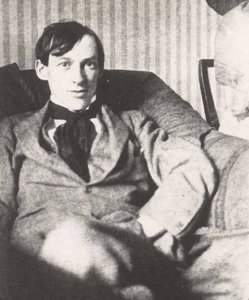
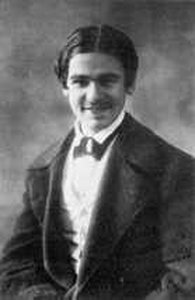
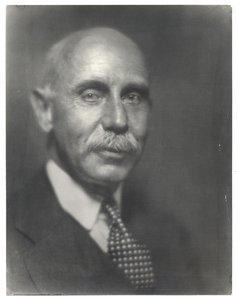
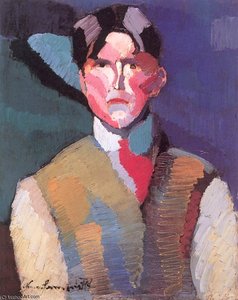
Post-impressionist, one artist at a time

88 Famous Post-impressionist Artists Who Shaped the Movement

Vincent van Gogh (1853–1890) is the most famous Post-impressionist artist, whose singular vision gave us Sunflowers and The Potato Eaters. Next stand Paul Cézanne, Paul Gauguin, Henri De Toulouse-Lautrec and Paul Signac. These 88 artists, from George Henry (born 1828) to Yuri Ivanovych Khymych (born 1928), came from 23 countries.

Our selection. Artists whose works our catalogue attaches to Post-impressionist, in the order of our fame ranking. Artists born after 1955 with no Wikidata identifier stay out until verified. The Wikipedia figure counts our 32 languages with an article on the artist.

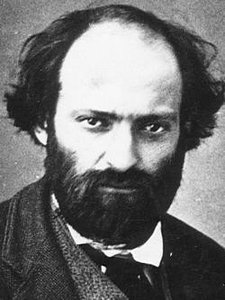
  1. Sunflowers by Vincent van Gogh1Vincent van Gogh
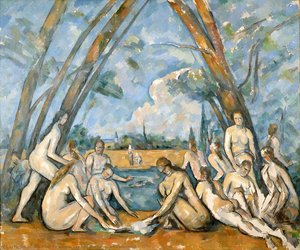
  2. The bathers Sun by Paul Cézanne2Paul Cézanne
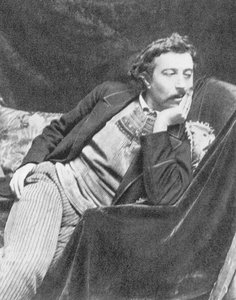
  3. Sunken Path, Wooded Rise by Paul Gauguin3Paul Gauguin

In brief

Post-impressionist in brief

  • 88Artists
  • 1828–1928Years of birth
  • 23Countries of birth
  • 4Women
  • 17,657Works in our catalogue
Cities with most births
Paris (4), Zundert (2), Budapest (2), Adelaide (2)

One artist at a time

88 Post-impressionist Artists and their signature works

1of 88

Vincent van Gogh

Born in Zundert Wikipedia in 32/32 languages
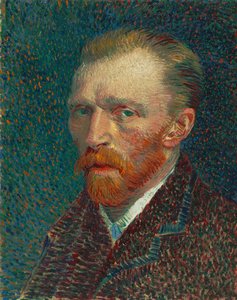
Vincent van Gogh

In 1886, the move to Paris changed the way he saw light and color. He spent time absorbing the techniques of masters like Monet, Renoir, and Pissarro. His approach to color and form helped clear a path for Expressionism, moving art away from the need to mirror the physical world.

Where to see To see the physical traces of his brushwork, one can travel to several specific collections.

Signature works · The 100 signature works

2of 88

Paul Cézanne

French Born in Aix-en-Provence Post-Impressionism Wikipedia in 32/32 languages

Paul Cézanne

While his father’s ambitions leaned toward the law, the young artist found his footing under the guidance of Joseph Gibert at the Free Municipal School of Drawing. The move to Paris in 1862 marked a period of both struggle and essential exposure. Pablo Picasso and Georges Braque drew heavily from this method, finding in his work a way to organize space through volume rather than mere light.

Where to see The physical presence of his vision remains scattered across several major institutions, allowing the viewer to trace his evolution from the dark, expressive brushwork of his youth to the structured clarity of his later years.

Signature works · The 100 signature works

3of 88

Paul Gauguin

French Born in Paris ['Post-Impressionist', 'Symbolist', 'Synthetism', 'Primitivism'] Wikipedia in 32/32 languages

Paul Gauguin

The years between 1886 and 1891 were marked by a restless search for a visual language that could transcend mere observation. In 1887, a shift in scenery brought him to Panama and Martinique alongside Charles Laval. By prioritizing the expression of internal meaning over the accurate depiction of the external world, he helped shift the focus of the French avant-garde toward a more subjective, symbolic language.

Where to see In Paris, the Musée d'Orsay preserves a significant portion of his output, offering a glimpse into the evolution of his color and form.

Signature works · The 100 signature works

4of 88

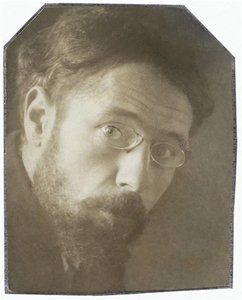
Henri De Toulouse-Lautrec

French Born in Albi Post-Impressionism Wikipedia in 31/32 languages

Henri De Toulouse-Lautrec

His hand moved with a precision that transformed simple lines into instruments of character and emotion. By rejecting traditional depth, he achieved a directness that mirrored the immediacy of the Parisian nightlife he inhabited. The transition from Impressionism to modern art found a distinct voice in the works of Henri de Toulouse-Lautrec.

Where to see The Musée Toulouse-Lautrec, housed within the Palais de la Berbie, maintains the most significant collection, containing over 1000 works that trace his evolution from an aristocratic youth to a chronicler of the Parisian night.

Signature works · The 100 signature works

5of 88

Paul Signac

French Born in Paris Neo-Impressionism, Pointillism Wikipedia in 29/32 languages

Paul Signac

He moved away from the traditional method of mixing pigments on a palette, which he believed could dull the true intensity of color. In 1899, he articulated these complex theories in his writing, From Eugène Delacroix to Neo-Impressionism. Signac’s approach to the canvas inspired artists like Henri Matisse and André Derain, who would later push the boundaries of color even further.

Where to see The Musée d'Orsay holds nine of his works, offering a significant gathering of his vision.

Signature works · The 100 signature works

6of 88

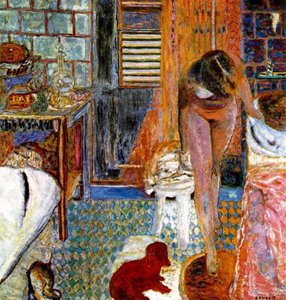
Pierre Bonnard

French Born in Fontenay-aux-Roses Post-Impressionism, Intimism, Les Nabis Wikipedia in 27/32 languages

Pierre Bonnard

He became a founding member of Les Nabis, a group of artists who sought to move beyond mere representation. The prints of Hokusai and other Japanese masters offered him a new way to organize space and line. While his early years were defined by his membership in Les Nabis alongside Edouard Vuillard and Paul Serusier, his work eventually moved beyond the group's specific boundaries.

Where to see The physical presence of Bonnard’s vision remains scattered across several major institutions, allowing his specific approach to light and domesticity to be studied in various contexts.

Signature works · The 100 signature works

7of 88

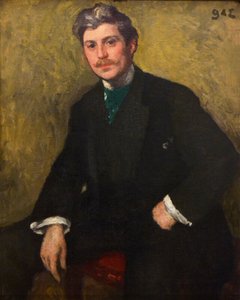
Émile Bernard

Born in Lille Wikipedia in 28/32 languages

Émile Bernard

Key Relationship: A pivotal moment came in August 1886 when he met Paul Gauguin in Pont-Aven. He also associated with Vincent van Gogh, forming part of the “School of Petit-Boulevard” alongside Anquetin and Toulouse-Lautrec.

Signature works · The 100 signature works

8of 88

Suzanne Valadon

French Born in Bessines-sur-Gartempe Post-Impressionism Wikipedia in 27/32 languages

Suzanne Valadon

For nearly a decade, Valadon worked as an artist’s model, posing for prominent figures like Pierre-Auguste Renoir, Henri de Toulouse-Lautrec, and Edgar Degas. Toulouse-Lautrec, recognizing her innate talent, encouraged her to pursue drawing, and it was Degas who provided more formal guidance, solidifying her foundational skills. In 1894, she became the first woman painter admitted to the prestigious Société Nationale des Beaux-Arts, a significant milestone in breaking down barriers for female artists.

Teacher of Maurice Utrillo #12

Signature works · The 100 signature works

9of 88

Maurice Denis

French Born in Granville Nabis, Symbolism Wikipedia in 26/32 languages

Maurice Denis

Throughout his career, Denis’s style underwent a fascinating evolution. While remaining committed to the principles of symbolism and spiritual expression, he experimented with various techniques and influences. He was also a prolific writer and art critic, articulating his aesthetic theories in numerous essays and articles.

Signature works · The 100 signature works

10of 88

Édouard Vuillard

French Born in Cuiseaux Les Nabis, Intimism Wikipedia in 23/32 languages

Édouard Vuillard

Jean-Édouard Vuillard was born on 11 November 1868 in Cuiseaux, France. He faced setbacks when he failed to enter the École des Beaux-Arts in both 1886 and 1887. His tenure as a prominent member of the Nabis, a group of post-impressionist artists, allowed him to experiment with a visual language that prioritized subjective experience over mere imitation.

Where to see The quiet, patterned interiors that defined his career are preserved in several major international collections.

Signature works · The 100 signature works

11of 88

Amrita Sher-Gil

Hungarian-Indian Born in Budapest Modern Indian art, Avant-garde Wikipedia in 20/32 languages

Amrita Sher-Gil

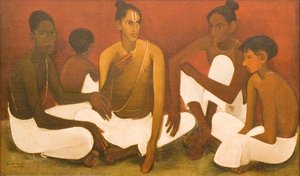
Amrita Sher-Gil’s style is instantly recognizable for its bold use of color, simplified forms, and expressive figures. She didn’t merely depict what she saw; she imbued her paintings with emotion, creating works that are both visually stunning and deeply moving. She is rightfully regarded as a pioneer of modern Indian painting, bridging Western artistic techniques with indigenous traditions and paving the way for future generations of artists.

Signature works · The 100 signature works

12of 88

Maurice Utrillo

French Born in 18th arrondissement of Paris Post-Impressionism, School of Paris Wikipedia in 25/32 languages

Maurice Utrillo

He often chose to work on cardboard rather than traditional canvas, a choice that influenced the weight and presence of his compositions. This method allowed him to capture the weathered walls and timeworn facades of the Montmartre streets he knew so well. Utrillo remains a singular figure in the history of the School of Paris, largely because he was one of the few notable painters of Montmartre who was actually born and raised within the district.

Where to see To experience the quiet, textured streets of Montmartre through his eyes, one can travel to several major institutions.

Pupil of Suzanne Valadon #8

Signature works · The 100 signature works

13of 88

Félix Vallotton

Swiss and French Born in Lannes Post-Impressionism, Symbolism, Les Nabis

Félix Vallotton

His style blended elements of Post-Impressionism and Symbolism, often resulting in a look that felt both modern and strangely still. He used brushstrokes characteristic of Neo-Impressionism, layering pigment to create depth and luminosity. Vallotton left behind a body of work that felt singular, often leaving those who viewed it with a sense of disquiet.

Where to see To encounter the quiet tension of Vallotton’s interiors, one might travel to the Cantonal Museum of Fine Arts in Lausanne, Switzerland, where The Red Room is kept.

Signature works · The 100 signature works

14of 88

Tom Thomson

Canadian Born in Claremont Canadian Modernism Wikipedia in 18/32 languages

Tom Thomson

Before dedicating himself to art, Thomson explored various trades: he worked at an iron foundry, briefly attended business college, and even ventured west to Seattle where he honed his skills as a commercial artist. Paintings like The Jack Pine, The West Wind, Moonlight Sail, and Birch Grove, Autumn have become iconic representations of Canadian identity and the nation’s natural beauty.

Signature works · The 100 signature works

15of 88

Emily Carr

Canadian Born in Victoria Modernism, Post-Impressionism

Emily Carr

She pursued formal training at the San Francisco Art Institute (1890-1892) and later at the Westminster School of Art in London (1899), immersing herself in European artistic currents. Yet, she found herself increasingly drawn back to her native British Columbia, recognizing that true artistic expression lay not in imitation but in authentic representation of her own experience. Though recognition came relatively late in life, Emily Carr is now widely celebrated as “the Mother of Modern Canadian Art.” Her paintings are treasured for their beauty, their emotional depth, and their historical significance.

Signature works · The 100 signature works

16of 88

Giovanni Segantini

Italian Born in Arco Symbolism, Divisionism Wikipedia in 19/32 languages

Giovanni Segantini

Key Influences: His work was significantly influenced by Anton Mauve and Jean-François Millet, introduced to him through Vittorio Grubicy de Dragon, who became his advisor and dealer. Divisionism: Segantini adopted a Divisionist painting approach, which involved applying small dots or strokes of pure color side by side on the canvas.

Signature works · The 100 signature works

17of 88

Paul Sérusier

French Born in Paris Post-Impressionism, Nabis, Synthetism Wikipedia in 21/32 languages

Paul Sérusier

This shift was driven by the principles of Synthetism, a method defined by simplified drawing and clearly-defined contours. His technical execution relied heavily on Cloisonnism, a style characterized by bold, flat forms separated by dark, heavy outlines.

Where to see It holds The Talisman, the work that defined his early departure from academicism.

Signature works · The 100 signature works

18of 88

Henri Edmond Cross

French Born in Douai Neo-Impressionism Wikipedia in 21/32 languages

Henri Edmond Cross

Cross’s initial artistic explorations leaned towards the Realist tradition, manifesting in portraits and still lifes that demonstrated technical skill but lacked a distinctive spark. He didn’t simply replicate Seurat's pointillism; instead, he evolved it, favoring larger, more mosaic-like brushstrokes that retained the luminosity of divided color while allowing for greater expressive freedom. His first individual exhibition at the Galerie Druet in 1905, followed by a retrospective organized by Félix Fénéon at the Galerie Bernheim-Jeune in 1908, cemented his reputation as a leading figure in Neo-Impressionism.

Signature works · The 100 signature works

19of 88

Theo van Rysselberghe

Belgian Born in Ghent Neo-Impressionism Wikipedia in 19/32 languages

Theo van Rysselberghe

He forged close friendships with other Neo-Impressionist painters like Paul Signac, traveling with him along the French Riviera and exchanging ideas about technique and theory. His works are now held in prominent museum collections worldwide, including the Musée du Luxembourg in Paris and the Museum voor Schone Kunsten in Ghent, ensuring that his contribution to the history of art continues to be celebrated and appreciated by generations to come.

Signature works · The 100 signature works

21of 88

Roger Fry

British Born in London Post-Impressionism Wikipedia in 19/32 languages

Roger Fry

Roger Eliot Fry, a name synonymous with the introduction of modern art to Britain, was far more than simply a painter or critic; he was a cultural catalyst. Born in 1866 into a prosperous Quaker family in Highgate, London, Fry’s early life was steeped in intellectual curiosity and a liberal atmosphere that fostered his burgeoning artistic sensibilities.

Signature works · The 100 signature works

22of 88

Tivadar Csontváry Kosztka

Hungarian Born in Sabinov Post-Impressionism, Expressionism Wikipedia in 19/32 languages

Tivadar Csontváry Kosztka

However, it wasn't merely technical proficiency that drove him; Csontváry sought something deeper, a unique visual language to express his inner world. From 1890 onwards, his travels expanded beyond Europe, taking him to North Africa and the Middle East —to Dalmatia, Italy, Greece, Lebanon, Palestine, Egypt, and Syria. His paintings are held in prestigious collections such as the Hungarian National Gallery in Budapest and the Csontváry Museum in Pécs, ensuring that his legacy will endure for generations to come.

Signature works · The 100 signature works

23of 88

Joos Vincent De Vos

Dutch Born in Zundert Romanesque art

Joos Vincent De Vos

His artistic journey began at the Academy of Kortrijk, where he received instruction from Philip De Witte, known for his portraits and genre scenes, and Edward Woutermaetens, who introduced him to the world of animal painting. Furthermore, there’s a discernible connection to the Dutch Golden Age painters like Nicolaes Berchem, whose idyllic landscapes and meticulous rendering of objects share similarities with De Vos’s compositions.

Signature works · The 100 signature works

24of 88

Duncan Grant

Scottish Born in Aviemore Post-Impressionism Wikipedia in 13/32 languages

Duncan Grant

Duncan James Corrowr Grant, born in 1885 amidst the rugged beauty of Rothiemurchus Forest District in Scotland, embarked on a life that would indelibly mark the landscape of British art. His education continued with studies in Italy and Paris, absorbing influences from masters like Masaccio and Matisse, experiences which ignited his passion for capturing light, color, and form. His legacy is preserved in museums worldwide, including the Musée des Arts Décoratifs in Paris and numerous collections within the United Kingdom.

Signature works · The 100 signature works

25of 88

Moïse Kisling

Polish-French Born in Kraków Post-Impressionism, Expressionism Wikipedia in 19/32 languages

Moïse Kisling

However, the outbreak of World War I proved a turning point. The elegance of rounded forms became a hallmark of his work, frequently echoing the influence of Amedeo Modigliani – a close friend whose elongated necks, almond-shaped eyes, and delicately rendered lips resonated within Kisling’s own portraits. Large Nude Josan on Red Couch, painted in 1953, stands as a powerful example of his mature style – a sensual masterpiece showcasing vibrant colors and expressive brushwork.

Signature works · The 100 signature works

26of 88

Edward Seago

British Impressionism

Edward Seago

His ability to document the beauty of the English coast and rural life resonated deeply with the British Royal Family. The prestige of being collected by figures such as Queen Elizabeth The Queen Mother and Prince Philip solidified his standing as a premier chronicler of the British landscape. While he was largely a self-taught artist, his path was illuminated by the guidance of luminaries such as Sir Alfred Munnings and Bertram Priestman.

Signature works · The 100 signature works

27of 88

Paul Ranson

French Born in Limoges Post-Impressionism Wikipedia in 16/32 languages

Paul Ranson

Born in the historic French city of Limoges in 1861, Paul Elie Ranson emerged as a transformative force within the late nineteenth-century avant-garde. From Cézanne, he inherited a respect for geometric simplification and the structural integrity of the canvas; from Gauguin, he drew an inspiration for primal emotion and the use of flattened, decorative planes. The legacy of Paul Elie Ranson extends far beyond the boundaries of the Nabi movement.

Signature works · The 100 signature works

29of 88

Henri Lebasque

French Born in Champigné Post-Impressionism Wikipedia in 13/32 languages

Henri Lebasque

These Intimist painters prioritized domestic scenes and intimate moments, fostering in Lebasque a similar inclination toward capturing the quiet poetry of everyday existence. The Nabis’ emphasis on flattened forms, decorative patterns, and subtle color harmonies resonated deeply with his own artistic inclinations. Simultaneously, exposure to the theories of Georges Seurat and Paul Signac introduced him to the principles of Chromoluminarism – the scientific application of complementary colors to create luminous effects.
Signature works · The 100 signature works

30of 88

József Rippl-Rónai

Hungarian Born in Kaposvár ['Impressionism', 'Post-Impressionism', 'Symbolism'] Wikipedia in 15/32 languages

József Rippl-Rónai

Rippl-Rónai's formal artistic education began at the Munich Academy of Fine Arts before continuing at the Académie Julian in Paris. His early works demonstrated a vibrant use of color, bold brushstrokes, and innovative compositions, reflecting his engagement with Impressionism, Post-Impressionism, and Symbolism. Design Contributions: Beyond painting, he contributed significantly to design, undertaking commissions such as the interior design of the Andrássy palace and creating stained-glass windows for the Ernst Museum.

Signature works · The 100 signature works

31of 88

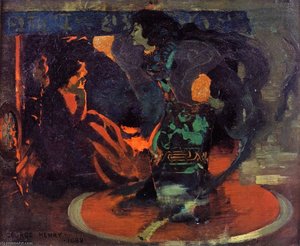
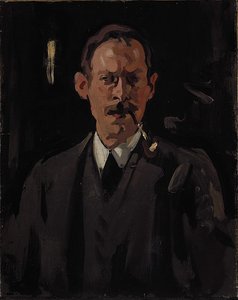
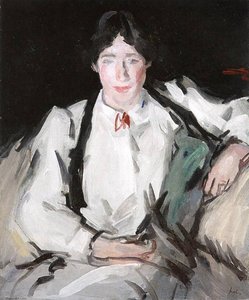
George Henry

Scottish Glasgow Boys

George Henry

The foundations of Henry’s aesthetic were laid during his formative years at the Glasgow School of Art. It was here that he forged deep connections with contemporaries such as John Singer Sargent, creating a shared intellectual space where new ideas could flourish. While George Henry may have experienced periods of relative obscurity during his lifetime, the historical significance of his work has undergone a profound resurgence.

Signature works · The 100 signature works

32of 88

Maxime Maufra

French Born in Nantes Post-impressionism; Pointillism Wikipedia in 11/32 languages

Maxime Maufra

This pivotal decision coincided with the arrival of fellow artists Paul Gauguin and Paul Sérusier at the Bateau-Lavoir, fostering a collaborative environment conducive to experimentation and innovation. The rugged Breton coastline served as an inexhaustible source of inspiration for Maufra’s canvases—studies of dramatic skies, turbulent seascapes, and serene harbors—each imbued with palpable emotion and atmospheric depth. “ Study for Pont-Aven Red Sky (Former Title: L)” remains a cornerstone of Breton art history, housed in the Musée de Pont-Aven —a poignant reminder of Maufra’s enduring contribution to Impressionist and Symbolist aesthetics.

Signature works · The 100 signature works

33of 88

Roderic O'Conor

Irish Born in Castleknock Post-Impressionism

Roderic O'Conor

Initially, his subject matter centered on Breton life – peasants, landscapes, and scenes of rural existence. Yellow Landscape (1892), La Jeune Bretonne (1895), Mixed Flowers on Pink Cloth (circa 1916), and Landscape, Cassis (1913) stand as testaments to this artistic evolution. He exhibited at the Paris Salon and the Salon des Indépendants, gaining some recognition within Parisian art circles, but widespread acclaim eluded him.

Signature works · The 100 signature works

34of 88

Charles van den Eycken

Belgian Born in Brussels Post-Impressionism

Charles van den Eycken

While van den Eycken developed a unique voice, his artistic style wasn’t formed in isolation. The influence of Post-Impressionism is subtly present in his work, particularly in his use of color and brushwork. He also shared affinities with Dutch Golden Age painters known for their meticulous depictions of interiors and domestic life —a legacy perhaps inherited through his family’s artistic lineage.

Signature works · The 100 signature works

35of 88

Augustus Edwin John

Welsh Born in Tenby Post-Impressionism

Augustus Edwin John

Simultaneously, he absorbed the innovations of French contemporaries like Matisse and Gauguin, embracing their expressive use of color and rejection of traditional academic constraints. The subtle tonal harmonies of Puvis de Chavannes also left an indelible mark on his aesthetic vision. John’s artistic sensibilities were deeply rooted in the Old Masters, particularly Peter Paul Rubens, whose dynamic compositions and rich color palettes resonated with him.

Signature works · The 100 signature works

36of 88

Georges Lemmen

Belgian Born in Schaerbeek Neo-Impressionism, Pointillism Wikipedia in 12/32 languages

Georges Lemmen

In the vibrant tapestry of late nineteenth-century European art, few threads shimmer with as much scientific precision and poetic grace as those woven by Georges Lemmen. Born in Schaerbeek, Belgium, in 1865, his early life was shaped by an unusual intersection of disciplines. His legacy is found in: Technical Innovation: His role in refining Pointillism within the Belgian context, moving it from a French experiment to a cornerstone of local avant-garde practice.

Signature works · The 100 signature works

37of 88

Nicolas Tarkhoff

Russian/French ['Impressionism', 'Post-Impressionism', 'Fauvism']

Nicolas Tarkhoff

However, the young Tarkhoff possessed an innate artistic inclination, described as a “fervent desire to be a painter.” Tragedy marked his childhood; he lost his mother at age three and his father eight years later, experiences that perhaps fostered a sensitivity reflected in his later work. He also studied with Luc- Olivier Merson, yet it was the works of Van Gogh, Gauguin, and Cézanne that truly ignited his artistic evolution.

Signature works · The 100 signature works

38of 88

Jan Sluijters

Dutch Born in 's-Hertogenbosch Expressionism, Luminism Wikipedia in 8/32 languages

Jan Sluijters

He produced a diverse collection of portraits, ranging from formal studio studies to informal snapshots of everyday life. Throughout his career, he remained committed to pushing the boundaries of Dutch painting, forging his own unique path amidst the shifting currents of modern art. While renowned for his landscapes, Sluijters was also a prolific portrait painter.

Signature works · The 100 signature works

39of 88

Charles Cottet

French Born in Le Puy-en-Velay Post-Impressionism, Symbolism, Pont-Aven School, Bande Noire Wikipedia in 12/32 languages

Charles Cottet

cottet's artistic style is characterized by dark, evocative paintings of rural brittany and seascapes. he led a school of painters known as the bande noire or "nubians" group, which was influenced by the realism and dark colors of courbet. his work is also associated with the picturesque seaside symbolism of the pont-aven school.

Signature works · The 100 signature works

40of 88

Émile Schuffenecker

French Born in Fresne-Saint-Mamès Post-Impressionism Wikipedia in 12/32 languages

Émile Schuffenecker

In pieces such as In the Woods, one can observe his mastery of pastel and oil to create a sense of depth through soft, rhythmic brushwork. His technique often utilized: Atmospheric Subtlety: A focus on the weight and texture of air and light to create mood. Schuffenecker’s artistic soul was forged in the crucible of Parisian bohemianism, where he found kindred spirits in the likes of Paul Gauguin and Odilon Redon.

Signature works · The 100 signature works

41of 88

Roger Eliot Fry

British Post-Impressionism

Roger Eliot Fry

His father, Sir Edward Fry, was a respected judge and zoologist, instilling in young Roger a deep appreciation for observation and analytical thought – qualities that would profoundly shape his artistic journey. Though initially drawn to the natural sciences at Cambridge University, Fry’s true calling lay elsewhere, beckoning him towards the vibrant world of art.

Signature works · The 100 signature works

42of 88

Frank Bramley

English Born in Sibsey Post-Impressionism Wikipedia in 8/32 languages

Frank Bramley

Interestingly, Bramley was a founding member of the New English Art Club but later resigned following disagreements with fellow artist Walter Sickert, demonstrating his independent spirit and unwavering commitment to his artistic vision.

Signature works · The 100 signature works

43of 88

Spencer Gore

British Born in Epsom Post-Impressionism Wikipedia in 9/32 languages

Spencer Gore

This meticulous attention to detail extended beyond mere representation; Gore sought to convey not just what he saw but also how he felt, reflecting the emotional intensity inherent in capturing fleeting moments of experience. His paintings like “Hartington Square” exemplify this stylistic commitment, demonstrating a masterful command of color and form. Tate curator Helena Bonett noted that Gore's death from pneumonia was sudden, leaving behind an unfinished masterpiece—a testament to his unwavering pursuit of artistic excellence.

Signature works · The 100 signature works

44of 88

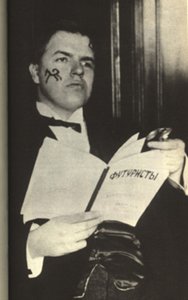
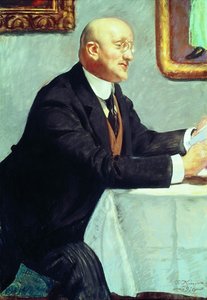
Igor Grabar

Russian Born in Buda Post-Impressionism Wikipedia in 16/32 languages

Igor Grabar

This role evolved as the political landscape shifted, and he eventually served as the Head of the State Tretyakov Gallery from 1918 to 1925. His administrative reach extended to the highest levels of the state when he was named the Director of the All-Russian Academy of Arts in 1943. He managed art-restoration workshops during two distinct periods, from 1918 to 1930 and again from 1944 to 1960.

Where to see His paintings can be found in several major collections across Russia and Ukraine.

Signature works · The 100 signature works

45of 88

Samuel Peploe

Scottish Born in Edinburgh Post-Impressionism, Colourist Wikipedia in 8/32 languages

Samuel Peploe

The influence of Édouard Manet is particularly evident in his fluid brushwork and the interplay of light and shadow, while Paul Cézanne’s structural approach to composition also began to subtly inform his work. Beyond financial recognition, Peploe’s influence extends into contemporary literature; his works are referenced in novels by Alexander McCall Smith and Rosamunde Pilcher, further cementing his place in Scottish cultural consciousness.

Signature works · The 100 signature works

48of 88

Henry Lamb

British Born in Adelaide Post-Impressionism

Henry Lamb

John's emphasis on drawing from life, a direct lineage from the Slade School tradition, instilled in Lamb a commitment to observation and expressive line work. Lamb’s early years were also deeply intertwined with the bohemian circles of London, where he encountered and befriended prominent figures like Lytton Strachey, whose penetrating portrait would become one of Lamb's most celebrated achievements. Lamb’s involvement in the Camden Town Group in 1911 and later the London Group in 1913 solidified his position within the progressive art movement challenging conventional artistic norms.

Signature works · The 100 signature works

49of 88

Maurice Prendergast

Newfoundlander-American Born in St. John's Post-Impressionism Wikipedia in 12/32 languages

Maurice Prendergast

At Colarossi, he studied under Gustave Courtois and Jean-Joseph Benjamin-Constant. Through the Canadian painter James Morrice, Prendergast was introduced to the English avant-garde, specifically the work and influence of Walter Sickert and Aubrey Beardsley. Rather than following the social realism of his contemporaries in The Eight, he pushed the movement toward a more decorative and rhythmic sensibility.

Where to see Prendergast’s presence in major American collections confirms his lasting impact on the development of modernism.

Signature works · The 100 signature works

50of 88

Gustave Loiseau

French Born in 16th arrondissement of Paris Post-Impressionism Wikipedia in 9/32 languages

Gustave Loiseau

Born in Paris on October 3rd, 1865, and passing away there on October 10th, 1935, Loiseau’s life was deeply intertwined with the evolving artistic landscape of his city and the broader currents of modernism. While he never achieved the same level of fame as some of his peers, Loiseau’s work found its way into important museum collections, including the Musée Maurice Denis in France.

Signature works · The 100 signature works

52of 88

Konstantin Yuon

Russian Born in Moscow Impressionism, Symbolism, Socialist Realism Wikipedia in 10/32 languages

Konstantin Yuon

There, he came under the tutelage of distinguished masters like Konstantin Savitsky and Konstantin Korovin, absorbing their techniques and philosophies that would shape his initial artistic trajectory. These formative years weren’t confined to Russia; Yuon embarked on journeys to Western Europe, particularly Paris, where he encountered the burgeoning Impressionist movement. Notable Works: New Planet, Bean Vine, Parade on the Red Square on November 7, 1941.

Signature works · The 100 signature works

53of 88

Albert André

French Born in 2nd arrondissement of Lyon Post-Impressionism Wikipedia in 7/32 languages

Albert André

André’s influence extends beyond his own artistic output. His meticulous study of Renoir's work and his dedication to preserving the artist's legacy resulted in one of the most comprehensive and insightful biographies of Renoir ever written—a testament to André’s deep appreciation for his friend and mentor. He wasn't a painter who sought fame or recognition; his primary motivation was to capture the beauty and complexity of the world around him—particularly the intimate corners of domestic life.

Signature works · The 100 signature works

56of 88

David Jandi

Hungarian Impressionism & Post-Impressionism

David Jandi

Jandi's artistic sensibilities were decisively molded by the burgeoning Hungarian landscape school, spearheaded by József Szilágyi. Despite this influence, Jandi skillfully blended tonal considerations with Impressionistic color harmonies, resulting in paintings that possessed both depth and luminosity. His works are housed in several Hungarian museums, including the Széchényi National Museum and the Hungarian National Gallery, ensuring that his vision of Hungarian landscape painting endures.

Signature works · The 100 signature works

57of 88

Francisco Iturrino

Spanish Born in Santander Post-Impressionism, Fauvism Wikipedia in 7/32 languages

Francisco Iturrino

Iturrino’s association with Pablo Picasso further enriched his early career, culminating in a joint exhibition at the prestigious Vollard Gallery in 1901—a landmark moment that signaled his arrival on the Parisian art scene. His travels throughout Spain, France, and Morocco were not simply geographical shifts but immersive experiences that infused his canvases with the essence of each locale. Initially, his work resonated with the principles of Impressionism and Post-Impressionism, but he soon began to push boundaries, embracing a more radical use of color that aligned him with the burgeoning Fauvist movement.

Signature works · The 100 signature works

58of 88

Charles-François-Prosper Guérin

French Born in Sens Post-Impressionism Wikipedia in 9/32 languages

Charles-François-Prosper Guérin

In works such as his Italian Woman with Tambourine or his evocative 1911 portrait of a woman in a hat, one observes how he could render objects with precision while maintaining an overarching sense of atmospheric beauty. Intimate Still Lifes where everyday objects were transformed through light and color;. As the son of the nineteenth-century painter Jean Michel Prosper Guérin, his path toward the canvas was almost predorsed, a journey shaped by familial devotion to visual expression.

Signature works · The 100 signature works

59of 88

Emmanuel Zairis

Greek Realism, Impressionism

Emmanuel Zairis

He spent considerable time there, capturing scenes from the Trinità dei Monti – the iconic church overlooking the city – and other bustling corners of the Eternal City. The influence of Roman art is evident in Zairis’s compositions, his use of light and shadow, and his meticulous attention to detail. Works like “ The Old Egg Seller ” exemplify this style—a solitary figure bathed in sunlight, conveying both resilience and vulnerability.

Signature works · The 100 signature works

62of 88

James Dickson Innes

British Born in Llanelli Post-Impressionism, Fauvism Wikipedia in 5/32 languages

James Dickson Innes

Perhaps most importantly, he was included in the groundbreaking Armory Show in New York City, Chicago, and Boston in 1913—a watershed moment that introduced modernist art to an American audience and brought international attention to Innes's unique vision.

Signature works · The 100 signature works

63of 88

Edouard Cortès

French Born in Lagny-sur-Marne Post-Impressionism Wikipedia in 9/32 languages

Edouard Cortès

Post-Impressionist artists like Eugène Boudin also influenced his approach to capturing fleeting moments and atmospheric conditions. His dedication to depicting everyday life aligns him with Realist painters, yet his romanticized vision of Paris elevates his work beyond mere documentation. His work was first exhibited in North America in 1945, introducing his Parisian scenes to a wider audience and solidifying his international reputation.

Signature works · The 100 signature works

64of 88

Konstantinos Maleas

Greek Born in Istanbul Post-Impressionism Wikipedia in 6/32 languages

Konstantinos Maleas

The Munich School’s influence remained strong, favoring academic realism and traditional subject matter. He traveled extensively throughout Greece, Western Europe, Palestine, and Egypt, constantly seeking new inspiration and refining his artistic vision. Beyond painting, Maleas actively engaged in public discourse, contributing to discussions about modernizing the Greek language and illustrating the first alphabet book in Demotiki—the new modern Greek vernacular.

Signature works · The 100 signature works

66of 88

William Henry Margetson

British Born in Denmark Hill Victorian Elegance & Post-Impressionism Wikipedia in 4/32 languages

William Henry Margetson

William Henry Margetson, born in Camberwell, Surrey, in December 1861, was a painter whose career unfolded across the shifting tides of Victorian and early 20th-century British art. His journey began with formal training at Dulwich College, followed by studies at the prestigious Royal College of Art and the Royal Academy Schools – a path typical for aspiring artists of his time, yet one he navigated with distinct talent and sensitivity.

Signature works · The 100 signature works

67of 88

Filippo De Pisis

Italian Born in Ferrara Post-Impressionism Wikipedia in 8/32 languages

Filippo De Pisis

His legacy is found in: The fusion of poetry and painting: Proving that visual art can be as lyrical and metaphorically rich as the written word. He remains a celebrated figure in the annals of Italian art, remembered not just as a painter of scenes, but as a chronicler of the ephemeral soul. Despite the disruptions of World War II and his eventual return to Italy, De Pisis never lost the cosmopolitan spirit that had defined his youth.

Signature works · The 100 signature works

68of 88

Henry Ottmann

French Born in Ancenis Impressionism/Post-Impressionism Wikipedia in 6/32 languages

Henry Ottmann

His portraiture stands out for its ability to capture not just the likeness but also the inner character of his subjects. And his scenes of modern life offer glimpses into the changing social landscape of early 20th-century France, depicted with a keen eye for detail and atmosphere. His active participation in key Parisian salons—the Salon des Indépendants from 1905 onward, the Salon d'Automne, and others—placed him squarely amongst the leading figures of his time.

Signature works · The 100 signature works

69of 88

Ernest Zobole

Welsh Expressionism

Ernest Zobole

Ernest Zobole (1927-1999) remains a singular voice in Welsh art history, an artist whose canvases breathed with the grit and beauty of the Rhondda Valleys during the twilight years of industrial Britain. Born in Tylorstown, within the heart of Rhondda Cynon Taf, Zobole’s formative years were deeply steeped in the atmosphere of coal mining communities. Though his recognition was largely concentrated within Wales during his lifetime, the historical significance of Ernest Zobole cannot be overstated.

Signature works · The 100 signature works

70of 88

Allen Tucker

American Born in Brooklyn Post-Impressionism Wikipedia in 3/32 languages

Allen Tucker

During World War I, he demonstrated a profound sense of civic duty by serving with the American Ambulance Service in France, later working in a Red Cross hospital. Throughout his career, he continued to paint prolifically, spending summers exploring diverse landscapes—from the rugged coast of New England to the majestic Rockies and the sun-drenched vistas of New Mexico. While often compared to Van Gogh for his expressive brushwork and emotional intensity, Tucker carved out his own distinct niche in American art history.

Signature works · The 100 signature works

73of 88

Yuriy Khymych

Yuriy Khymych

This isn’t an abandonment of realism, but rather a transformation of it; Khymych seeks to convey the emotional truth of his subjects through poetic abstraction. He doesn't paint what he sees, but what he feels when he looks at Ukraine. He also demonstrates an affinity for the bold color palettes and expressive brushwork of Vincent van Gogh and the post-impressionists.

Signature works · The 100 signature works

74of 88

Bertalan Pór

Hungarian Born in Babiná Modernism, Fauvism, Cubism Wikipedia in 5/32 languages

Bertalan Pór

Though they only mounted three collective exhibitions, their impact was seismic, introducing Hungary to the radical aesthetics of Fauvism, Cubism, and Expressionism. Pór, along with Kernstok, proved particularly receptive to these influences, skillfully integrating elements of both German and French theories into his own unique style. Influence: Ferdinand Hodler, Jean Paul Laurens, Gabriel von Hackl.

Signature works · The 100 signature works

75of 88

Hayley Lever

Australian/American Born in Adelaide Post-Impressionism Wikipedia in 4/32 languages

Hayley Lever

Ives in 1906 marked a period of personal stability that coincided with an intensification of his artistic exploration, culminating in the evocative “ Van Gogh’s Hospital, Holland” series of 1908—a clear indication of the profound influence Van Gogh's expressive use of color and emotion had on his developing style.

Signature works · The 100 signature works

76of 88

Liu Kang

Born in Henan

Liu Kang

He moved away from strict realism towards a more emotive representation of his subjects. Oil Painting Mastery: He primarily worked with oil paints, demonstrating a skillful technique in rendering light, shadow, and atmosphere. Cultural Immersion: Living and working in Southeast Asia profoundly shaped his artistic vision.

Signature works · The 100 signature works

79of 88

William Penhallow Henderson

American Born in Medford Post-Impressionism Wikipedia in 3/32 languages

William Penhallow Henderson

Beyond his landscape paintings, Henderson made an indelible mark on the world of stage design. The costumes he created – particularly ‘ Two of Spades,’ a striking clown ensemble—were bold, expressive, and deeply rooted in the spirit of the story. He drew inspiration from a diverse range of sources, including the works of J.M.W.

Signature works · The 100 signature works

80of 88

Julio Vila y Prades

Spanish Born in Valencia Post-Impressionism Wikipedia in 4/32 languages

Julio Vila y Prades

His artistic soul was forged in the prestigious halls of the Real Academia de Bellas Artes de San Carlos, where, despite his parents' initial reservations, he pursued a calling that would eventually define his existence.

Signature works · The 100 signature works

81of 88

Malcolm Drummond

British Born in Maidenhead Post-Impressionism, Camden Town Group Wikipedia in 3/32 languages

Malcolm Drummond

The tensions within the group, particularly surrounding Sickert’s relationships, ultimately led to its dissolution, but it served as a crucial incubator for artistic experimentation and innovation. His paintings of interiors—densely packed rooms filled with furniture, figures, and a palpable sense of atmosphere—are particularly compelling, offering glimpses into the lives of ordinary Londoners. During this period, he produced some of his most memorable works, including depictions of the Hammersmith Palais de Danse and the London Law Courts – scenes that capture the energy and dynamism of early 20th-century London.

Signature works · The 100 signature works

82of 88

Bernard Meninsky

British Born in Konotop Post-Impressionism Wikipedia in 4/32 languages

Bernard Meninsky

Meninsky's style is often described as Post-Impressionist, yet he developed a unique voice that transcended simple categorization. The impact of his wartime experiences undoubtedly shaped his artistic vision. He absorbed the bold colors and expressive brushwork of artists like Cézanne and Van Gogh, but tempered them with a distinctly British sensibility.

Signature works · The 100 signature works

84of 88

Jozsef Nemes Lamperth

Hungarian Born in Budapest Post-Impressionism, Secessionism Wikipedia in 1/32 languages

Jozsef Nemes Lamperth

Born in Budapest, Hungary, in 1891, József Nemes Lamperth’s life was tragically cut short at the young age of thirty-three. Lamperth’s artistic journey began during a period of intense social and political change in Hungary. The Memorial Exhibition held at the Hungarian National Gallery in 2014, titled “The Painter and the Museum,” served as a crucial step in recognizing his contribution to the country’s artistic heritage.

Signature works · The 100 signature works

85of 88

Josep Mompou i Dencausse

Spanish Born in Barcelona Post-Impressionism & Fauvism Wikipedia in 2/32 languages

Josep Mompou i Dencausse

His journey into the heart of visual expression was deeply personal, rooted in a lineage of creativity; as the son of a painter, his eyes were trained from childhood to perceive the subtle shifts in atmosphere and the rhythmic dance of color across the Spanish landscape. Mompou Dencausse remains a vital figure for students and connoisseurs alike, offering a window into a period of intense artistic transformation where the boundaries of color, light, and emotion were being perpetually redefined.

Signature works · The 100 signature works

86of 88

Charles Cundall

British Born in Stretford Post-Impressionism, Fauvism Wikipedia in 1/32 languages

Charles Cundall

Born in Stretford, Lancashire, Charles Ernest Cundall emerged as a remarkably versatile figure within the British art landscape of the early twentieth century. His election as a Royal Academician in 1944 was a crowning achievement, reflecting his standing among the most distinguished painters of his generation.

Signature works · The 100 signature works

87of 88

Theophrastos Triantafyllidis

Greek Born in İzmir Impressionism, Post-Impressionism, Expressionism Wikipedia in 1/32 languages

Theophrastos Triantafyllidis

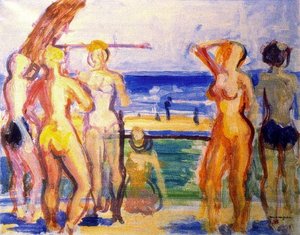
Photographer: Impressionistic watercolor captures a nostalgic scene of an artist & children. Bathers on the boat: An evocative oil painting blending expressionism & impressionism, capturing a moment of transition with fluid forms and atmospheric depth. This approach aligns him with artists like Edvard Munch and Vincent van Gogh —figures who championed subjective experience as paramount to artistic endeavor.

Signature works · The 100 signature works

Signature works

Signature Post-impressionist works

  1. Sunflowers by Vincent van Gogh

    Sunflowers

    Vincent van Gogh

    1888 · Bayerische Staatsgemaldesammlungen, Munich

  2. The bathers Sun by Paul Cézanne

    The bathers Sun

    Paul Cézanne

  3. Sunken Path, Wooded Rise by Paul Gauguin

    Sunken Path, Wooded Rise

    Paul Gauguin

    1884 · Museum of Fine Arts, Boston

  4. La Goulue Dancing (also known as Les Almees) by Henri De Toulouse-Lautrec

    La Goulue Dancing (also known as Les Almees)

    Henri De Toulouse-Lautrec

    1895 · Musée d'Orsay, Paris

  5. The Jetty, Cassis, Opus 198 by Paul Signac

    The Jetty, Cassis, Opus 198

    Paul Signac

    1889 · Metropolitan Museum of Art, new york

  6. The Dining Room in the countryside by Pierre Bonnard

    The Dining Room in the countryside

    Pierre Bonnard

  7. Iron Bridges at Asnières by Émile Bernard

    Iron Bridges at Asnières

    Émile Bernard

    1887 · MOMA - Museum of Modern Art, New York City

A timeline

Post-impressionist through its signature works

  1. 1881
  2. 1884
  3. 1887
  4. 1888
  5. 1889
  6. 1890
  7. 1894
  8. 1895
  9. 1899
  10. 1907
  11. 1912
  12. 1917
  13. 1920
  14. 1929

Figures

The figures

Country of birth
France24
United Kingdom10
Hungary5
Italy4
Netherlands3
Canada3
Belgium3
Ukraine3
Decade of birth
1820s1
1830s1
1840s1
1850s11
1860s25
1870s20
1880s12
1890s7
1900s3
1910s2
1920s3
Museums holding their key works
Musée d'Orsay9
Art Institute of Chicago4
Metropolitan Museum of Art3
MOMA - Museum of Modern Art3
Tate Gallery3
Van Gogh Museum2
Museum of Fine Arts2
Courtauld Gallery2

Every name

List of 88 famous Post-impressionist artists, every name

  1. 1Vincent van GoghVincent van Gogh1853–1890
  2. 2Paul CézannePaul CézanneFrench · 1839–1906
  3. 3Paul GauguinPaul GauguinFrench · 1848–1903
  4. 4Henri De Toulouse-LautrecHenri De Toulouse-LautrecFrench · 1864–1901
  5. 5Paul SignacPaul SignacFrench · 1863–1935
  6. 6Pierre BonnardPierre BonnardFrench · 1867–1947
  7. 7Émile BernardÉmile Bernard1868–1941
  8. 8Suzanne ValadonSuzanne ValadonFrench · 1865–1938
  9. 9Maurice DenisMaurice DenisFrench · 1870–1943
  10. 10Édouard VuillardÉdouard VuillardFrench · 1868–1940
  11. 11Amrita Sher-GilAmrita Sher-GilHungarian-Indian · 1913–1941
  12. 12Maurice UtrilloMaurice UtrilloFrench · 1883–1955
  13. 13Félix VallottonFélix VallottonSwiss and French · 1865–1925
  14. 14Tom ThomsonTom ThomsonCanadian · 1877–1917
  15. 15Emily CarrEmily CarrCanadian · 1871–1945
  16. 16Giovanni SegantiniGiovanni SegantiniItalian · 1858–1899
  17. 17Paul SérusierPaul SérusierFrench · 1864–1927
  18. 18Henri Edmond CrossHenri Edmond CrossFrench · 1856–1910
  19. 19Theo van RysselbergheTheo van RysselbergheBelgian · 1862–1926
  20. 20Walter SickertWalter SickertBritish · 1860–1942
  21. 21Roger FryRoger FryBritish · 1866–1934
  22. 22Tivadar Csontváry KosztkaTivadar Csontváry KosztkaHungarian · 1853–1919
  23. 23Joos Vincent De VosJoos Vincent De VosDutch · 1853–1890
  24. 24Duncan GrantDuncan GrantScottish · 1885–1978
  25. 25Moïse KislingMoïse KislingPolish-French · 1891–1953
  26. 26Edward SeagoEdward SeagoBritish · 1910–1974
  27. 27Paul RansonPaul RansonFrench · 1861–1909
  28. 28David BurliukDavid BurliukRussian/Ukrainian · 1882–1967
  29. 29Henri LebasqueHenri LebasqueFrench · 1865–1937
  30. 30József Rippl-RónaiJózsef Rippl-RónaiHungarian · 1861–1927
  31. 31George HenryGeorge HenryScottish · 1828–1895
  32. 32Maxime MaufraMaxime MaufraFrench · 1861–1918
  33. 33Roderic O'ConorRoderic O'ConorIrish · 1860–1940
  34. 34Charles van den EyckenCharles van den EyckenBelgian · 1859–1923
  35. 35Augustus Edwin JohnAugustus Edwin JohnWelsh · 1878–1961
  36. 36Georges LemmenGeorges LemmenBelgian · 1865–1916
  37. 37Nicolas TarkhoffNicolas TarkhoffRussian/French · 1871–1930
  38. 38Jan SluijtersJan SluijtersDutch · 1881–1957
  39. 39Charles CottetCharles CottetFrench · 1863–1925
  40. 40Émile SchuffeneckerÉmile SchuffeneckerFrench · 1851–1934
  41. 41Roger Eliot FryRoger Eliot FryBritish · 1866–1934
  42. 42Frank BramleyFrank BramleyEnglish · 1857–1915
  43. 43Spencer GoreSpencer GoreBritish · 1878–1914
  44. 44Igor GrabarIgor GrabarRussian · 1871–1960
  45. 45Samuel PeploeSamuel PeploeScottish · 1871–1935
  46. 46Herbert F RoyleHerbert F RoyleBritish · 1870–1958
  47. 47Medardo RossoMedardo RossoItalian, French · 1858–1928
  48. 48Henry LambHenry LambBritish · 1883–1960
  49. 49Maurice PrendergastMaurice PrendergastNewfoundlander-American · 1858–1924
  50. 50Gustave LoiseauGustave LoiseauFrench · 1865–1935
  51. 51Yuri Ivanovych KhymychYuri Ivanovych KhymychUkrainian · 1928–2003
  52. 52Konstantin YuonKonstantin YuonRussian · 1875–1958
  53. 53Albert AndréAlbert AndréFrench · 1869–1954
  54. 54Charles Langton LocktonCharles Langton LocktonBritish · 1856–1932
  55. 55Georges D'EspagnatGeorges D'EspagnatFrench · 1870–1950
  56. 56David JandiDavid JandiHungarian · 1893–1944
  57. 57Francisco IturrinoFrancisco IturrinoSpanish · 1864–1924
  58. 58Charles-François-Prosper GuérinCharles-François-Prosper GuérinFrench · 1875–1939
  59. 59Emmanuel ZairisEmmanuel ZairisGreek · 1878–1948
  60. 60Konstantin GorbatovKonstantin GorbatovRussian · 1876–1945
  61. 61Mark GertlerMark GertlerBritish · 1891–1939
  62. 62James Dickson InnesJames Dickson InnesBritish · 1887–1914
  63. 63Edouard CortèsEdouard CortèsFrench · 1882–1969
  64. 64Konstantinos MaleasKonstantinos MaleasGreek · 1879–1928
  65. 65Jules Alexandre GrunJules Alexandre GrunFrench · 1868–1938
  66. 66William Henry MargetsonWilliam Henry MargetsonBritish · 1861–1940
  67. 67Filippo De PisisFilippo De PisisItalian · 1896–1956
  68. 68Henry OttmannHenry OttmannFrench · 1877–1927
  69. 69Ernest ZoboleErnest ZoboleWelsh · 1927–1999
  70. 70Allen TuckerAllen TuckerAmerican · 1866–1939
  71. 71Antonio SicurezzaAntonio SicurezzaItalian · 1905–1979
  72. 72Anna Ostroumova-LebedevaAnna Ostroumova-LebedevaRussian · 1871–1955
  73. 73Yuriy KhymychYuriy Khymych
  74. 74Bertalan PórBertalan PórHungarian · 1880–1964
  75. 75Hayley LeverHayley LeverAustralian/American · 1876–1958
  76. 76Liu KangLiu Kang
  77. 77Eduardo VianaEduardo VianaSpanish · 1881–1967
  78. 78Fikret Muallâ SaygıFikret Muallâ SaygıFrench · 1903–1967
  79. 79William Penhallow HendersonWilliam Penhallow HendersonAmerican · 1877–1943
  80. 80Julio Vila y PradesJulio Vila y PradesSpanish · 1873–1930
  81. 81Malcolm DrummondMalcolm DrummondBritish · 1880–1945
  82. 82Bernard MeninskyBernard MeninskyBritish · 1891–1950
  83. 83Panagiotis TetsisPanagiotis TetsisGreek · 1925–2016
  84. 84Jozsef Nemes LamperthJozsef Nemes LamperthHungarian · 1891–1924
  85. 85Josep Mompou i DencausseJosep Mompou i DencausseSpanish · 1888–1968
  86. 86Charles CundallCharles CundallBritish · 1890–1971
  87. 87Theophrastos TriantafyllidisTheophrastos TriantafyllidisGreek · 1881–1955
  88. 88Theodor KernTheodor KernAustrian · 1900–1969

Questions

Your questions

Read

Stories on OriginalUniqueArt.com

Other movements

Famous artists of other movements

Other periods

Famous artists across the periods

Famous paintings

Masterpieces that inspire us, by movement

Discover more

More artists to discover