Inspiration · Renaissance

The 100 Famous Renaissance Paintings That Inspire Our Artists

1425 – 1595

The most famous Renaissance paintings are Leonardo da Vinci's Mona Lisa (La Gioconda) (1503–1519, The Louvre), Hieronymus Bosch's The Garden of Earthly Delights (1504, Museo del Prado) and Leonardo da Vinci's The Last Supper (1497, Church Santa Maria delle Grazie). The list runs to 100 paintings by 31 artists, from 1425 to 1595, each with the collection that holds it today.

Mona Lisa (La Gioconda) by Leonardo da Vinci, 1503–1519, The Louvre — famous Renaissance painting
No. 1 · Leonardo da VinciMona Lisa (La Gioconda)1503–1519 · The Louvre, Paris
100singular works
31masters · Masaccio – Pieter Brueghel the Younger
41homes in 23 cities
13kept at the Galleria degli Uffizi

Singular works

100 Renaissance paintings that exist only once

Every original here is unique and kept in one place. Its story, its home, and the detail that makes it unmistakable.

  1. Mona Lisa (La Gioconda) by Leonardo da Vinci, 1503–1519, The Louvre
    1

    The Louvre, Paris1503–1519Oil on poplar panel77 × 53 cm

    The gaze of the woman in Mona Lisa (La Gioconda) meets the viewer with a quiet, unsettling presence. The creation of this portrait spans a significant period of the High Renaissance, with Leonardo da Vinci working on the panel between 1503 and 1519. King Francis I acquires the work after 1519, ensuring its place within the French royal collections. On 21 August 1911, the painting vanishes from its place, stolen by Vincenzo Peruggia.

    Painted for you from $200 A print, from $58

  2. The Garden of Earthly Delights by Hieronymus Bosch, 1504, Museo del Prado
    2

    Museo del Prado, Madrid1504Oil on oak panel220 × 389 cm

    The triptych unfolds in three distinct movements across oak panels. A strange fountain rises from the earth, its pink waters reflecting a quiet, primordial light.

    Painted for you from $600 A print, from $58

  3. The Last Supper by Leonardo da Vinci, 1497, Church Santa Maria delle Grazie
    3

    Church Santa Maria delle Grazie, Milan1497Fresco460 × 880 cm

    "The Last Supper" exemplifies the High Renaissance style, characterized by its balance, harmony, and idealized beauty. "The Last Supper" is deeply symbolic, depicting the moment when Jesus announces his betrayal. The bread and wine on the table symbolize the Eucharist, a central sacrament in Christianity.

    The singular detaildynamic composition with Jesus at the centeremotional range captured in apostles' expressions

    Its story

  4. The Birth of Venus by Sandro Botticelli, 1485, Galleria degli Uffizi
    4

    Galleria degli Uffizi, Florence1485Tempera on panel172.5 × 278.5 cm

    At the center of this movement, Venus stands upon the pearl-like surface of her vessel, her form defined by soft, flowing lines that seem to ripple like the water itself. This scene emerges from the intellectual heart of Florence, born from a period when classical myths were being breathed into new life through Neoplatonic thought.

    Painted for you from $200 A print, from $58

  5. The Creation of Adam by Michelangelo, 1508–1512, Sistine Chapel
    5

    Sistine Chapel, Vatican City1508–1512Fresco280 × 570 cm

    The composition centers on the near-contact of two hands: one belonging to a reclining, muscular Adam and the other to an elderly, powerful God. Commissioned by Pope Julius II, this work emerged during the High Renaissance, a period defined by a renewed interest in classical antiquity and human potential.

    Its story

  6. Lady with an Ermine by Leonardo da Vinci, 1490, National Museum in Kraków
    6

    National Museum in Kraków, Krakow1490Oil and tempera on walnut panel54 × 39 cm

    Painted around 1489-1491 during Da Vinci’s first Milanese period, this artwork offers a glimpse into the opulent world of Renaissance court life and showcases the artist's exceptional skill in capturing human likeness and emotion. The presence of the lion cub at Cecilia’s feet further reinforces her connection to the Duke, symbolizing his power and lineage.

    Painted for you from $200 A print, from $58

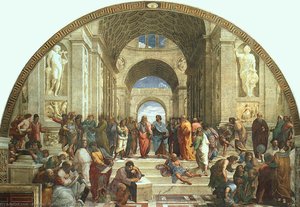
  7. The School of Athens by Raphael, 1509–1511, Apostolic Palace
    7

    RaphaelHigh Renaissance

    The School of Athens

    Apostolic Palace, Vatican City1509–1511Fresco500 × 770 cm

    Books represent knowledge and learning, while the architectural details—columns, arches, and statues—echo the grandeur of ancient Greece and Rome, reinforcing the theme of classical wisdom. It served as an inspiration for countless artists who followed, including Leonardo da Vinci and Michelangelo, solidifying Raphael's position as a leading figure of the era.

    The singular detailchiaroscurophilosophers

    Painted for you from $200 A print, from $58

  8. Salvator Mundi by Leonardo da Vinci, 1500, Louvre Abu Dhabi
    8

    Louvre Abu Dhabi1500Oil on walnut panel65 × 45 cm

    The Salvator Mundi depicts Jesus Christ as the savior of the world, giving a benediction with his right hand raised and two fingers extended, while holding a transparent rock crystal orb in his left hand. A painting attributed to Leonardo da Vinci, dated to c. 1500.

    Painted for you from $200 A print, from $58

  9. The Sleeping Venus by Giorgione, 1510, Gemäldegalerie Alte Meister
    9

    GiorgioneHigh Renaissance

    The Sleeping Venus

    Gemäldegalerie Alte Meister, Dresden1510Oil on canvas109 × 175 cm

    The provenance of the work traces back to 1695, when it was acquired from a French dealer for Augustus the Strong of Saxony. While traditionally attributed to Giorgione, it is widely believed that Titian completed the work following the artist's death in 1510.

    Painted for you from $200 A print, from $58

  10. The Transfiguration by Raphael, 1520, Vatican Museums
    10

    RaphaelHigh Renaissance

    The Transfiguration

    Vatican Museums, Vatican City1520Oil on panel410 × 279 cm

    The painting portrays the Transfiguration of Christ on Mount Tabor, as recounted in the Gospels. Commissioned for the church of San Pietro in Montorio in Rome, “The Transfiguration” was intended as an altarpiece.

    The singular detailearthly realmsdramatic lighting

    Painted for you from $500 A print, from $58

  11. Christ Among the Doctors by Albrecht Dürer, 1506, Thyssen-Bornemisza Museum
    11

    Thyssen-Bornemisza Museum, Madrid1506Oil on panel65 × 80 cm

    This oil on panel painting offers a rare glimpse into an intimate moment – the twelve-year-old Jesus engaging in scholarly debate with learned men in the Temple of Jerusalem, as recounted in the Gospel of Luke. The composition is tightly focused, drawing the viewer into the heart of the intellectual exchange. Unlike the High Renaissance emphasis on idealized beauty, this piece prioritizes a raw, almost palpable realism, reflecting the artistic sensibilities prevalent in Northern Europe.

    The singular detailintense focus on faceshands

    Painted for you from $325 A print, from $58

  12. The Hunters in the Snow (Winter) by Pieter Brueghel the Elder, 1565, Kunsthistorisches Museum
    12

    Kunsthistorisches Museum, Vienna1565Oil on wood panel117 × 162 cm

    Executed in oil on wood panel, Bruegel demonstrates exceptional technical skill. Winter as Transition: The winter setting may represent a period of hardship or transition, reflecting both the literal climate and the broader societal changes occurring at the time.

    The singular detailhuntersvillage scene

    Painted for you from $275 A print, from $58

  13. The Haywain Triptych by Hieronymus Bosch, 1504, Museo del Prado
    13

    Museo del Prado, Madrid1504Oil on panel100 × 100 cm

    Hieronymus Bosch, born around 1450 in's-Hertogenbosch, Netherlands, was a prominent Dutch painter known for his surreal and imaginative depictions of religious themes. The Haywain Triptych follows a similar narrative to Bosch's other works, such as The Garden of Earthly Delights.

    The singular detailinfernal beings pulling the wagon towards HellChrist in the sky observing the scene

    Painted for you from $550 A print, from $58

  14. Primavera by Sandro Botticelli, 1482, Galleria degli Uffizi
    14

    Sandro BotticelliEarly Renaissance

    Primavera

    Galleria degli Uffizi, Florence1482Tempera on panel (likely poplar)203 × 314 cm

    Primavera unfolds as a lavish scene drawn from classical mythology. Venus, goddess of love and beauty, presides at the center, anchoring the composition. It’s believed that Botticelli collaborated with the poet Poliziano to devise the complex iconography, drawing inspiration from ancient texts like Ovid's Metamorphoses and Lucretius’ De Rerum Natura.

    The singular detailmercurycupid

    Painted for you from $400 A print, from $58

  15. The Last Judgment by Michelangelo, 1537, Sistine Chapel
    15

    Sistine Chapel, Vatican City1537Fresco1370 × 1220 cm

    It marked a significant shift away from High Renaissance ideals of balance and harmony towards a more expressive and turbulent style. At the center stands Christ as Judge, powerfully depicted with a muscular physique and a gesture of both authority and mercy.

    The singular detailsaint Bartholomew's flayed skinhundreds of nude figures

    Its story

  16. Adoration of the Trinity by Albrecht Dürer, 1511, Kunsthistorisches Museum
    16

    Kunsthistorisches Museum, Vienna1511Oil on lime panel1234 × 1350 cm

    In 1585, Emperor Rudolf II acquires the painting, bringing it into his imperial sphere. Today, the painting rests within the Kunsthistorisches Museum in Vienna. In 1498, the Apocalypse series emerges, a collection of fourteen woodcuts that capture the intense energy of the Book of Revelation.

    Painted for you from $200 A print, from $58

  17. The Ambassadors by Hans Holbein the Younger, 1533, National Gallery
    17

    National Gallery, London1533Oil on oak panel207 × 209 cm

    Perhaps most famously, an anamorphic skull stretches across the foreground, visible only from a specific oblique angle. France and England were navigating a delicate diplomatic dance, while the Reformation was reshaping the spiritual landscape of Europe.

    The singular detaillute with broken stringterrestrial globe

    Painted for you from $225 A print, from $58

  18. The Sistine Madonna by Raphael, 1513–1514, Staatliche Kunstsammlungen Dresden
    18

    RaphaelHigh Renaissance

    The Sistine Madonna

    Staatliche Kunstsammlungen Dresden1513–1514Oil on canvas265 × 196 cm

    Raphael, also known as Raffaello Sanzio da Urbino, was a renowned Italian painter and architect of the High Renaissance. The painting was commissioned by Pope Julius II for the church of San Sisto in Piacenza, Italy.

    Painted for you from $200 A print, from $58

  19. Adoration of the Magi by Sandro Botticelli, 1475, National Gallery of Art
    19

    National Gallery of Art, Washington1475Tempera on panel111 × 134 cm

    These gifts aren’t merely symbolic; they foreshadow Jesus's role as King, God, and ultimately, his human mortality. The inclusion of contemporary figures within the scene – potentially portraits of patrons and influential individuals – was a common practice, subtly integrating the present with the biblical narrative.

    The singular detailrich colorssymbolic gifts (gold

    Painted for you from $550 A print, from $58

  20. The Tempest by Giorgione, 1506, Gallerie dell'Accademia di Venezia
    20

    GiorgioneHigh Renaissance

    The Tempest

    Gallerie dell'Accademia di Venezia, Venice1506Oil on canvas82 × 73 cm

    Giorgione’s enigmatic painting transports viewers to a world steeped in atmosphere and veiled symbolism. The painting features two figures set against a dramatic landscape. This artwork exemplifies the distinctive qualities of the Venetian School of painting.

    The singular detailgrieving womanclassical ruins

    Painted for you from $225 A print, from $58

  21. The Venus of Urbino by Titian, 1538, Galleria degli Uffizi
    21

    TitianHigh Renaissance

    The Venus of Urbino

    Galleria degli Uffizi, Florence1538Oil on canvas119 × 165 cm

    Unlike the rigid anatomical precision favored by some of his contemporaries, Titian prioritized a sensual beauty and refined elegance that relied heavily on his peerless ability to manipulate light and color.

    Painted for you from $200 A print, from $58

  22. The Annunciation by Fra Angelico, 1430, Museo del Prado
    22

    Fra AngelicoEarly Renaissance

    The Annunciation

    Museo del Prado, Madrid1430Fresco194 × 194 cm

    Fra Angelico's use of color is both vibrant and restrained, with earthy tones of greens, browns, and blues accented by rich reds and golds. The architectural framework, featuring arches and columns, guides the viewer's eye towards the central figures, creating a sense of depth and structure.

    The singular detailenclosed garden symbolizing Mary's virginitypredella with scenes from the life of Mary

    Its story

  23. Last Judgement central panel of the triptych by Hieronymus Bosch, 1490–1500
    23

    1490–1500Oil on panel

    At the very heart of this swirling composition sits Jesus Christ, depicted not as a triumphant conqueror, but as a solemn judge. As a cornerstone of the Northern Renaissance, this central panel exemplifies the incredible technical skill of Bosch.

    Painted for you from $200 A print, from $58

  24. The Tower of Babel by Pieter Brueghel the Elder, 1563, Kunsthistorisches Museum
    24

    Kunsthistorisches Museum, Vienna1563Oil on oak panel155 × 114 cm

    God, perceiving this hubris, confounded their language, halting construction and scattering humankind across the earth. Bruegel cleverly uses a Flemish-style port city as a base, dwarfed by the immense tower rising above. The Tower of Babel is rich in symbolism.

    The singular detaildetailed architecturebustling construction site

    Painted for you from $275 A print, from $58

  25. The Mocking of Christ by Matthias Grünewald, 1503, Alte Pinakothek
    25

    Alte Pinakothek, Munich1503Oil on wood109 × 74 cm

    Unlike the idealized forms favored in Italy, Grünewald embraces a gritty realism. The scene draws directly from the biblical accounts of the Passion of Christ, specifically the events leading up to his crucifixion where he was subjected to ridicule and torment by Roman soldiers.

    The singular detailintense emotiondetailed figures

    Painted for you from $400 A print, from $58

  26. The Triumph of Death by Pieter Brueghel the Elder, 1562, Museo del Prado
    26

    Museo del Prado, Madrid1562Oil on panel117 × 162 cm

    Pieter Bruegel the Elder, a towering figure in Renaissance painting, created "The Triumph of Death" around 1562. The scene is filled with dynamic movement and intense action, showcasing Bruegel's mastery of composition and narrative storytelling. "The Triumph of Death" is rich in symbolism, reflecting the societal fears and anxieties of the mid-16th century.

    The singular detailsymbolism of mortality and fragilityarmy of skeletons wreaking havoc

    Painted for you from $350 A print, from $58

  27. Assumption of the Virgin by Titian, 1518, Santa Maria Gloriosa dei Frari
    27

    Santa Maria Gloriosa dei Frari, Venice1518Oil on panel360 × 690 cm

    The lighting, particularly focused on Mary and the ascending angels, is dramatic and theatrical, reminiscent of Baroque painting but filtered through a distinctly American sensibility. The inclusion of numerous figures surrounding Mary—some reaching out, others gazing upwards—suggests a collective yearning for salvation and divine grace.

    The singular detaildetailed figures

    Painted for you from $200 A print, from $58

  28. The Annunciation by Leonardo da Vinci, 1472–1476, Galleria degli Uffizi
    28

    Galleria degli Uffizi, Florence1472–1476Oil and tempera on poplar panel98 × 217 cm

    Leonardo da Vinci's "Annunciation" (c. 1472–1476) is one of the most celebrated depictions of this sacred moment in Christian art. The work was initially housed at the Olivetan monastery of San Bartolomeo near Florence before being brought to the Uffizi in 1867.

    The singular detailsemi-transparent veil under the Holy Scripturesangel Gabriel announcing to Mary

    Painted for you from $225 A print, from $58

  29. Triptych of Temptation of St Anthony by Hieronymus Bosch, 1506, Museu Nacional de Arte Antiga
    29

    Museu Nacional de Arte Antiga, Lisbon1506Oil on panel131 × 119 cm

    Central to the composition is Saint Anthony himself, depicted in a moment of intense prayer and contemplation, confronting the temptations and vices that threaten his spiritual purity. Produced during the height of the Northern Renaissance, this work reflects Bosch’s fascination with religious themes and moral allegory.

    The singular detailmoral allegorysurreal creatures

    Painted for you from $550 A print, from $58

  30. French Ambassadors by Hans Holbein the Younger, 1533, National Gallery
    30

    National Gallery, London1533Oil on panel

    Created during a period of religious upheaval, The Ambassadors reflects the tensions between humanist ideals and Catholic dogma. For more information on Hans Holbein the Younger and his remarkable oeuvre, visit https://AllPaintingsStore.com. Handmade oil painting reproductions of The Ambassadors are available at https://AllPaintingsStore.com.

    Painted for you from $200 A print, from $58

  31. The Calumny of Apelles by Sandro Botticelli, 1495, Galleria degli Uffizi
    31

    Galleria degli Uffizi, Florence1495Tempera on panel91 × 62 cm

    Central to the scene is the figure of Slander, dragging an innocent victim, surrounded by symbolic characters such as Ignorance, Suspicion, and Envy, all set within an architectural framework reminiscent of a grand classical temple. Executed in the refined style of the Italian Renaissance, this painting exemplifies Botticelli’s signature elegance and mastery of linearity. The donkey ears of King Midas, for example, symbolize foolishness and ignorance, while the torch held by Slander signifies destructive passion.

    The singular detaildetailed architectural frameworkallegory of slander

    Painted for you from $300 A print, from $58

  32. Saint John the Baptist by Leonardo da Vinci, 1515, The Louvre
    32

    The Louvre, Paris1515Oil on panel69 × 57 cm

    The background of the painting is dark, which dramatically emphasizes the figure of Saint John, drawing the viewer’s eye directly to his expressive countenance. This careful consideration of composition and tonal harmony exemplifies Da Vinci’s meticulous attention to detail and his unwavering commitment to achieving artistic perfection.

    Painted for you from $200 A print, from $58

  33. Holy Family (Doni Tondo) by Michelangelo, 1506, Galleria degli Uffizi
    33

    Galleria degli Uffizi, Florence1506Oil on panel120 × 120 cm

    Michelangelo eschews traditional static arrangements in favor of a swirling, energetic grouping centered around the Virgin Mary and the Christ Child. Commissioned during a period of immense artistic flourishing in Florence – alongside the works of Leonardo da Vinci and Raphael – the Doni Tondo reflects the city’s vibrant intellectual climate.

    The singular detailspiral compositionnude figures in background

    Painted for you from $250 A print, from $58

  34. Susanna and the Elders by Jacopo Tintoretto, 1557, Kunsthistorisches Museum
    34

    Kunsthistorisches Museum, Vienna1557Oil on canvas147 × 194 cm

    Crafted by the renowned Venetian master Jacopo Tintoretto in 1557, this work captures a moment of vulnerability, moral tension, and divine justice. Painted during the Venetian Renaissance, this work reflects Tintoretto’s innovative approach to storytelling and his fascination with human emotion.

    The singular detailnatural settingrealistic human anatomy

    Painted for you from $225 A print, from $58

  35. The Battle of Alexander at Issus by Albrecht Altdorfer, 1529, Alte Pinakothek
    35

    Alte Pinakothek, Munich1529Oil on lime panel158 × 120 cm

    The Battle of Alexander at Issus, painted by Albrecht Altdorfer in 1529, is a dramatic depiction of the historical conflict between Alexander the Great and Darius III of Persia. This pivotal battle, which took place in 333 BC, marked a significant turning point in Alexander's campaign against the Persian Empire.

    The singular detaildetailed figures and horsesturbulent sky

    Painted for you from $800 A print, from $58

  36. Portrait of Federico da Montefeltro by Piero della Francesca, 1465, Galleria degli Uffizi
    36

    Galleria degli Uffizi, Florence1465Tempera on panel47 × 33 cm

    Furthermore, the meticulous attention to anatomical accuracy—particularly evident in Federico’s hands—reflects a deep understanding of human form, honed through years of observation and study. Federico da Montefeltro was a pivotal figure in the Italian Renaissance, not just for his military leadership but also for his patronage of the arts and sciences.

    The singular detailgeometric perspective

    Painted for you from $200 A print, from $58

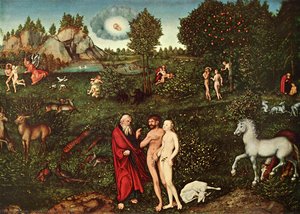
  37. Adam and Eve in the Garden of Eden by Lucas Cranach the Elder, 1530, Kunsthistorisches Museum
    37

    Kunsthistorisches Museum, Vienna1530Oil on panel81 × 114 cm

    Executed with meticulous craftsmanship, this piece exemplifies Cranach’s mastery of early Renaissance realism combined with detailed iconography. Cranach, a court painter to the Electors of Saxony, was deeply engaged with the spiritual and intellectual currents of his time.

    The singular detailsymbolic depiction of the serpentapple

    Painted for you from $250 A print, from $58

  38. The Baptism of Christ by Leonardo da Vinci, 1475, Galleria degli Uffizi
    38

    Galleria degli Uffizi, Florence1475Oil on panel151 × 177 cm

    The painting captures the pivotal moment when John the Baptist baptizes Jesus Christ in the Jordan River. This event, central to Christian theology, symbolizes purification, repentance, and the beginning of Christ’s public ministry. The collaboration between Verrocchio and Leonardo exemplifies the dynamic exchange of ideas that characterized Renaissance art production.

    The singular detailangel painted by Leonardo da Vincidepiction of the Holy Spirit as a dove

    Painted for you from $275 A print, from $58

  39. Lucretia by Paolo Veronese, 1580, Kunsthistorisches Museum
    39

    Kunsthistorisches Museum, Vienna1580Oil on canvas109 × 91 cm

    The central figure, adorned in luxurious attire, exudes an air of regal bearing that suggests wealth and status. Paolo Veronese, alongside Titian and Tintoretto, was part of the "great trio" that dominated Venetian painting during this era. This painting is a prime example of Veronese's ability to blend narrative depth with aesthetic beauty.

    The singular detaildramatic use of light and shadow (chiaroscuro)opulent detailing in attire and jewelry

    Painted for you from $200 A print, from $58

  40. Portrait of a Young Venetian Lady by Albrecht Dürer, 1505, Kunsthistorisches Museum
    40

    Kunsthistorisches Museum, Vienna1505Oil on panel245 × 325 cm

    Even the simple presence of a ribbon acts as a visual anchor, connecting the subject to her opulent surroundings and mirroring Dür and's deliberate compositional harmony.

    Painted for you from $200 A print, from $58

  41. The Seven Deadly Sins by Hieronymus Bosch, 1480, Museo del Prado
    41

    Museo del Prado, Madrid1480Tempera on panel120 × 150 cm

    The artwork's central focus is a large, meticulously rendered circular wheel set against a dramatically dark background. Within each segment of the wheel, miniature scenes unfold, depicting humanity’s fluctuating fortunes – moments of prosperity and success juxtaposed with episodes of hardship and downfall. Executed with remarkable detail, this work exemplifies the characteristics of early Netherlandish painting. “The Wheel of Fortune” motif itself was deeply ingrained in medieval thought, representing both the arbitrary nature of fate and the potential for spiritual redemption.

    The singular detailcircular compositiondetailed figures

    Painted for you from $200 A print, from $58

  42. Lamentation Over the Dead Christ by Andrea Mantegna, 1483, Pinacoteca di Brera
    42

    Pinacoteca di Brera, Milan1483Tempera on canvas68 × 81 cm

    Unlike many contemporaries who drew inspiration from classical models, Mantegna possessed a singular fervor for recreating the spirit of Rome within the burgeoning Italian Renaissance. This technique, perfected in monumental frescoes like “The Camera degli Sposi,” revolutionized artistic practice and established Mantegna as a pioneer of Renaissance innovation.

    Painted for you from $200 A print, from $58

  43. Madonna della Seggiola by Raphael, 1514, Palazzo Pitti
    43

    Palazzo Pitti, Florence1514Oil on panel71 × 71 cm

    The painting depicts a serene and deeply human scene: Mary tenderly embracing the Christ Child while seated in a chair. While the original commissioner remains unknown, the painting entered the collection of the Medici family in the 16th century and has remained a treasured possession ever since.

    The singular detailtondo formnaturalistic representation of the Madonna

    Painted for you from $250 A print, from $58

  44. Netherlandish Proverbs by Pieter Brueghel the Younger, 1595, Rockox House
    44

    Rockox House, Antwerp1595Oil on canvas123 × 164 cm

    The scene unfolds like a bustling village square during a time of crisis or upheaval. Proverbs were popular in Bruegel's time, often illustrated in books and prints. The original title, "The Blue Cloak " or "The Folly of the World," indicates Bruegel's intent to catalogue human folly.

    The singular detailbanging one's head against a brick wallarmed to the teeth

    Painted for you from $475 A print, from $58

  45. The Isenheim Altarpiece by Matthias Grünewald, 1515, Musée d'Unterlinden
    45

    Musée d'Unterlinden, Colmar1515Oil on wood panels

    Commissioned for a hospital monastery, the Isenheim Altarpiece was designed to serve both as a devotional object and a source of comfort for the suffering. This work reflects the spiritual and medical concerns of early 16th-century Europe, blending religious devotion with compassionate understanding.

    The singular detailsymbolic figurescrucifixion scene

    Painted for you from $200 A print, from $58

  46. Peasant Wedding by Pieter Brueghel the Elder, 1568, Kunsthistorisches Museum
    46

    Kunsthistorisches Museum, Vienna1568Oil on panel114 × 164 cm

    Bruegel's use of lines guides the viewer's eye through the scene, with horizontal tables and benches providing structure, while vertical wooden beams add balance. The color palette consists of earthy tones —browns, greens, and muted reds—interspersed with brighter accents like white aprons and red hats.

    The singular detailvariety of activitiesinteractions among figures

    Painted for you from $525 A print, from $58

  47. Venus and the Three Graces Presenting Gifts to a Young Woman by Sandro Botticelli, 1483–1486, Musée du Louvre
    47

    Musée du Louvre1483–1486Fresco

    The painting Venus and the Three Graces Presenting Gifts to a Young Woman is a renowned work by the Italian Renaissance master Sandro Botticelli. It is now housed in the Musée du Louvre in Paris. Sandro Botticelli's work is available as handmade oil painting reproductions on Wahoo Art.

    Painted for you from $200 A print, from $58

  48. The Ambassadors by Hans Holbein the Younger, 1533, National Gallery
    48

    National Gallery, London1533Oil on panel

    Both men are depicted in opulent attire, reflecting their high social standing and intellectual pursuits. A broken lute string alludes to disharmony, while a Lutheran hymnbook placed alongside Catholic texts suggests the growing tensions of the Reformation. Perhaps the most famous element of The Ambassadors is the anamorphic skull stretched across the foreground.

    The singular detaillutebooks)

    Painted for you from $225 A print, from $58

  49. Concert Champetre by Titian, 1510
    49

    1510Oil on canvas105 × 136.5 cm

    The painting is divided into two distinct sections: the foreground, where the figures are situated, and the background, featuring a serene landscape with trees, distant buildings, and rolling hills. The style is characteristic of Renaissance or Mannerist art, with meticulous attention to detail, naturalistic forms, and a harmonious balance.

    The singular detailnude figures and clothed individualsserene landscape with trees and distant buildings

    Painted for you from $275 A print, from $58

  50. The Battle of San Romano - The Counter-Attack by Mich by Paolo Uccello, 1456, The Louvre
    50

    The Louvre, Paris1456Tempera on panel182 × 317 cm

    Uccello's distinctive style is evident in this artwork, characterized by its intricate details, bold lines, and innovative use of perspective. " The Battle of San Romano - The Counter-Attack by Mich" conveys a sense of drama, intensity, and conflict.

    The singular detailbold, diagonal lines emphasizing movementdynamic and chaotic battle scene

    Painted for you from $200 A print, from $58

  51. Jupiter and Io by Antonio da Correggio, 1531, Kunsthistorisches Museum
    51

    Kunsthistorisches Museum, Vienna1531Oil on canvas163 × 70 cm

    This piece not only exemplifies the artistic mastery of its time but also captures the Renaissance’s spirit of discovery and celebration of human beauty.

    The singular detailrealismmythological themes

    Painted for you from $200 A print, from $58

  52. The Descent from the Cross by Rogier van der Weyden, 1449, Detroit Institute of Arts
    52

    Detroit Institute of Arts1449Oil on panel50.2 × 31 cm

    Within this shallow, compressed space, the limp, pale body of Christ begins its slow descent from the cross. The light catches the sickly, translucent flesh of his skin, contrasting sharply against the deep, saturated crimson of a man's robe and the dark teal of a woman's garment.

    Painted for you from $250 A print, from $58

  53. The Trinity by Masaccio, 1428, Santa Maria Novella
    53

    MasaccioEarly Renaissance

    The Trinity

    Santa Maria Novella, Florence1428Fresco667 × 317 cm

    The Trinity by Masaccio is a fresco painting that marked the beginning of the Renaissance in Italy. The painting is housed in the Santa Maria Novella church in Florence, Italy. The Trinity by Masaccio was a groundbreaking work that introduced several artistic innovations.

    Its story

  54. Venus and Mars by Sandro Botticelli, 1483, National Gallery
    54

    National Gallery, London1483Oil and tempera on poplar panel69 × 173 cm

    The artwork is rich in symbolism, with Venus and Mars representing the eternal struggle between love and war. Created during the High Renaissance, this painting reflects the cultural and artistic ideals of the period.

    The singular detailrich textures and vibrant colorsmythological narrative

    Painted for you from $250 A print, from $58

  55. Virgin of the Rocks - London by Leonardo da Vinci, 1486, National Gallery
    55

    National Gallery, London1486Oil on panel189.5 × 120 cm

    Central to the composition are the Virgin Mary, tenderly cradling the infant Jesus, and the infant John the Baptist, kneeling in prayer. An archangel, Uriel, gracefully guides the scene, pointing towards John while observing the divine interaction. Created during the High Renaissance, this work exemplifies Leonardo da Vinci’s mastery of realism and atmospheric depth.

    The singular detailuse of chiaroscurosfumato technique

    Painted for you from $250 A print, from $58

  56. Portrait of Battista Sforza by Piero della Francesca, 1465, Galleria degli Uffizi
    56

    Galleria degli Uffizi, Florence1465Oil and tempera on panel47 × 33 cm

    Created by the master Piero della Francesca in 1465, this work exemplifies Early Renaissance artistry characterized by meticulous realism, balanced composition, and pioneering perspective. Commissioned during the height of the Italian Renaissance, this portrait reflects the era’s emphasis on individualism, humanism, and the celebration of noble virtues.

    The singular detaildetailed landscape backgroundrealistic textures

    Painted for you from $225 A print, from $58

  57. The Parnassus: Mars and Venus by Andrea Mantegna, 1497, The Louvre
    57

    The Louvre, Paris1497Fresco192 × 159 cm

    The fresco features several prominent figures from Greek mythology —Mars, god of war, juxtaposed with Venus—representing the delicate balance between conflict and harmony. Andrea Mantegna on AllPaintingsStore Musée du Louvre Experience the beauty of Renaissance art with hand-made oil painting reproductions from AllPaintingsStore.

    Painted for you from $200 A print, from $58

  58. Portrait of Bindo Altoviti by Raphael, 1515, National Gallery of Art
    58

    National Gallery of Art, Washington1515Oil on panel60 × 44 cm

    Raphael's "Portrait of Bindo Altoviti" is a quintessential example of High Renaissance artistry, capturing the essence of its subject with unparalleled grace and precision. The portrait depicts Bindo Altoviti, a prominent Florentine banker and patron of the arts. Raphael presents him in profile, exuding an air of quiet contemplation and intellectual depth.

    The singular detailuse of chiaroscuro for dramatic effectcontrast between light and dark background

    Painted for you from $200 A print, from $58

  59. Christ Glorified in the Court of Heaven by Fra Angelico, 1430, National Gallery
    59

    National Gallery, London1430Oil on canvas32 × 63 cm

    Emerging from Florence at the dawn of the fifteenth century, this era witnessed a fervent revival of classical learning alongside burgeoning humanism. Artists like Michelangelo and Leonardo da Vinci interrogated the role of man in the cosmos, mirroring the broader philosophical shift away from medieval dogma toward a celebration of earthly beauty and intellect.

    Painted for you from $200 A print, from $58

  60. The Battle of San Romano by Paolo Uccello, 1456, Galleria degli Uffizi
    60

    Galleria degli Uffizi, Florence1456Oil on wood panel

    Uccello's style is characterized by its detailed depiction of figures, use of bold colors, and emphasis on narrative content. "The Battle of San Romano" conveys themes of war, violence, and the brutality of conflict.

    The singular detaildynamic battle compositionvivid colors and bold lines

    Painted for you from $200 A print, from $58

  61. Pietà by Michelangelo, 1498–1499, St. Peter's Basilica
    61

    MichelangeloHigh Renaissance

    Pietà

    St. Peter's Basilica, Vatican City1498–1499Carrara marble

    Commissioned by French Cardinal Jean de Billheres for his funeral chapel in Old St. Peter's Basilica, the Pietà quickly gained renown. The sculpture’s creation coincided with a period of artistic flourishing in Rome and marked Michelangelo as a leading figure of the High Renaissance – an era defined by intellectual curiosity, humanism, and artistic innovation. Though tragically vandalized in 1972 (and now protected by bulletproof glass), its beauty remains undiminished.

    Painted for you from $225 A print, from $58

  62. Body of the Dead Christ in the Tomb by Hans Holbein the Younger, 1520–1522, Kunstmuseum Basel
    62

    Kunstmuseum Basel1520–1522Oil on panel30.5 × 200 cm

    Pale flesh, marked by the wounds of the side, hands, and feet, meets the dark, near-black void of the background. There is a starkness to the anatomy; ribs and tendons are rendered with a precision that refuses to look away from the physical reality of death.

    Painted for you from $200 A print, from $58

  63. The Virgin and Child with Saint Anne by Leonardo da Vinci, 1510, The Louvre
    63

    The Louvre, Paris1510Oil painting168 × 130 cm

    This oil painting, created around 1510, captures a serene moment of intimate interaction between three figures set against a tranquil landscape. The painting was commissioned as the high altarpiece for the Church of Santissima Annunziata in Florence. The lamb held by the Christ Child symbolizes His future sacrifice and the redemption of humanity.

    The singular detailmary sitting on Saint Anne's laptriangular composition of three figures

    Painted for you from $250 A print, from $58

  64. Judith with the Head of Holofernes by Lucas Cranach the Elder, 1540, Kunsthistorisches Museum
    64

    Kunsthistorisches Museum, Vienna1540Oil on lime panel560 × 870 cm

    When one gazes upon Judith, one does not simply see a heroine from scripture, but a symbol of righteous strength standing against overwhelming oppression.

    Painted for you from $200 A print, from $58

  65. An Old Man and His Grandson by Domenico Ghirlandaio, 1490, The Louvre
    65

    The Louvre, Paris1490Tempera on poplar panel62 × 46 cm

    The painting presents us with an elderly man, his face etched with the wisdom of years, tenderly cradling a young child. Clad in rich, crimson robes that catch the light, both figures are locked in a silent, soulful exchange.

    Painted for you from $200 A print, from $58

  66. Madonna and Child with an Angel by Sandro Botticelli, 1470, Isabella Stewart Gardner Museum
    66

    Isabella Stewart Gardner Museum, Boston1470Tempera on panel84 × 65 cm

    The composition captures a tender moment between the Madonna and the Christ Child, accompanied by an angel, evoking themes of divine love, protection, and maternal bond. The painting follows a pyramidal composition, with the Madonna holding the Christ Child at its apex.

    The singular detailsoft, diffused lightingbackground landscape providing depth

    Painted for you from $250 A print, from $58

  67. The Nativity by Piero della Francesca, 1470, National Gallery
    67

    National Gallery, London1470Oil on panel124 × 122 cm

    “The Nativity” is rich in symbolic detail, each element carefully chosen to convey a specific meaning. The magpie, a detail often noted in Piero’s work, adds an intriguing element of folklore and symbolism.

    The singular detailgeometric perspective

    Painted for you from $200 A print, from $58

  68. The Torment of Saint Anthony by Michelangelo, 1487, Kimbell Art Museum
    68

    Kimbell Art Museum, Fort Worth1487Oil47 × 34 cm

    While Michelangelo would later become synonymous with the monumental strength of marble sculpture, this early foray into painting reveals a sensitive observer capable of translating visceral terror onto a miniature canvas. The technical execution of this work reflects the rigorous training Michelangelo received under the Florentine master Domenico Ghirlandaio.

    Painted for you from $200 A print, from $58

  69. Death and the Maiden by Hans Baldung Grien, 1519, Kunstmuseum Basel
    69

    Kunstmuseum Basel1519Tempera on panel31.1 × 18.7 cm

    At its core, it depicts a serene yet emotionally charged interaction between a nude maiden and a skeletal figure representing Death. Although the exact date of creation remains unknown, the style and thematic elements suggest influence from the European Renaissance and Baroque periods, eras renowned for their focus on realism and spiritual symbolism.

    The singular detailtranscendencecentral nude female figure

    Painted for you from $225 A print, from $58

  70. Madonna of the Goldfinch by Raphael, 1505
    70

    1505Oil on panel107 × 77 cm

    Beside her, the Christ Child and a young Saint John the Baptist interact with a gentle, unhurried energy. Mary holds a book, her fingers resting upon its pages, which bear the inscription Sedes Sapientiae. This title, meaning Seat of Wisdom, suggests that the very rock upon which she sits acts as her throne.

    Painted for you from $250 A print, from $58

  71. Portrait of Henry VIII by Hans Holbein the Younger, 1535, Greenwich
    71

    Greenwich1535Oil on panel28 × 20 cm

    Employing oil on panel, he utilized a technique that allowed for layering colors and textures with remarkable precision. The portrait is laden with symbolic elements designed to reinforce Henry VIII's status.

    Painted for you from $200 A print, from $58

  72. Sacred and Profane Love by Titian, 1514, Galleria Borghese
    72

    TitianVenetian Renaissance

    Sacred and Profane Love

    Galleria Borghese, Rome1514Oil on canvas118 × 279 cm

    The transformation of a Roman sarcophagus into a flowing water trough is a powerful metaphor for rebirth, suggesting that even within the structures of mortality, life and love find a way to flourish.

    Painted for you from $250 A print, from $58

  73. The Mystical Nativity by Sandro Botticelli, 1500, National Gallery
    73

    National Gallery, London1500Oil on canvas109 × 75 cm

    The lower section focuses on the Virgin Mary kneeling before the Christ Child, with various figures gathered around the manger. Botticelli's style is characteristic of the Italian Renaissance, emphasizing realism, proportion, and harmony. The painting reflects these anxieties and hopes for Christ's millennium as stated in the Book of Revelation.

    The singular detaildevils fleeing to the underworldcelestial beings in the upper section

    Painted for you from $425 A print, from $58

  74. The Three Philosophers by Giorgione, 1509, Kunsthistorisches Museum
    74

    GiorgioneVenetian Renaissance

    The Three Philosophers

    Kunsthistorisches Museum, Vienna1509Oil on canvas125.5 × 146.2 cm

    This deliberate alteration speaks volumes about the artist’s intent and the evolving tastes of his patrons. More recently, the Pythagorean school – Pythagoras, Thales, and Pherecydes—has gained traction, fueled by the presence of the painter’s tools and astronomical texts.

    The singular detaillandscapesfumato

    Painted for you from $200 A print, from $58

  75. Knight, Death, and the Devil by Albrecht Dürer, 1513
    75

    1513Engraving

    A knight rides through a landscape of mortality, facing a skeleton and a devil in sharp engraving.

    Painted for you from $200 A print, from $58

  76. The Tribute Money by Masaccio, 1425
    76

    MasaccioEarly Renaissance

    The Tribute Money

    1425Fresco255 × 598 cm

    Here, the fresco titled The Tribute Money by Masaccio brings a biblical narrative to life upon the chapel walls. In 1746, the upper levels of the work face a transformation as the artist Vincenzo Meucci paints over them, obscuring the original vision.

    Its story

  77. The Flagellation by Piero della Francesca, 1455, Galleria Nazionale delle Marche
    77

    Galleria Nazionale delle Marche, Urbino1455Fresco59 × 82 cm

    The painting portrays a pivotal moment from the Passion of Christ – His flagellation by Roman soldiers. However, Piero doesn’t present a chaotic scene of brutality. Created during the Early Renaissance, The Flagellation reflects the period’s burgeoning interest in classical antiquity and humanistic ideals.

    The singular detailperspectivedepiction of flagellation scene

    Its story

  78. Parable of the Blind by Pieter Brueghel the Elder, 1568, Museo di Capodimonte
    78

    Museo di Capodimonte, Naples1568Tempera on canvas86 × 154 cm

    At first glance, the viewer is met with a somber procession of six men traversing a rugged Brabant terrain. Bruegel’s technical execution represents the pinnacle of the Flemish Renaissance style.

    Painted for you from $200 A print, from $58

  79. Allegory of Gluttony and Lust by Hieronymus Bosch, 1500, Yale University Art Gallery
    79

    Yale University Art Gallery, New Haven1500Oil on panel36 × 32 cm

    Bosch’s meticulous attention to detail is immediately apparent. Artistic Significance: ‘Allegory of Gluttony and Lust’ is a fragment of a larger triptych alongside ‘ The Ship of Fools’ and ‘ Death and the Miser,’ collectively representing the seven deadly sins.

    The singular detailvicessymbolic figures

    Painted for you from $200 A print, from $58

  80. Adoration of the Magi by Leonardo da Vinci, 1480, Galleria degli Uffizi
    80

    Galleria degli Uffizi, Florence1480Oil on panel243 × 246 cm

    The painting depicts the biblical scene of the Magi’s arrival to worship the infant Jesus. Even in its unfinished state, The Adoration showcases Leonardo’s groundbreaking artistic techniques. The palm tree at the center alludes to the Virgin Mary, referencing the “stately palm” from the Song of Solomon.

    The singular detailunfinished statesketches

    Painted for you from $425 A print, from $58

  81. Separation of Light from Darkness by Michelangelo, 1511–1512, Sistine Chapel
    81

    Sistine Chapel, Vatican City1511–1512Fresco180 × 260 cm

    Located within the awe-inspiring confines of the Vatican City’s Cappella Sistina, it remains one of the most intensely studied and deeply moving works in Western art history. Michelangelo di Lodovico Buonarroti Simoni was born on March 6, 1475, in Caprese Michelangelo, Tuscany. His next landmark work was the colossal statue of David (1501-1504), symbolizing Florentine republican ideals. Michelangelo began working on the Sistine Chapel ceiling in 1508 and completed it in 1512. The “Separation of Light from Darkness” was painted during the final stage of this project, between the winter of 1511 and October 1512.

    The singular detailmedallionsignudi

    Painted for you from $200 A print, from $58

  82. Feast in the House of Levi by Paolo Veronese, 1573, Gallerie dell'Accademia di Venezia
    82

    Gallerie dell'Accademia di Venezia, Venice1573Oil on canvas555 × 1280 cm

    At first glance, the painting appears chaotic – a teeming throng of nobles, merchants, musicians, and servants all engaged in a boisterous feast. These details were deemed irreverent and inappropriate for a depiction of Christ's Last Supper, violating the strict guidelines established by the Church regarding the representation of sacred events.

    The singular detailcomplex composition

    Painted for you from $200 A print, from $58

  83. The Madonna of the Meadow by Giovanni Bellini, 1505, National Gallery
    83

    National Gallery, London1505Oil and egg tempera on wood, transferred to canvas in 1949

    Bellini's style is characterized by its luminous colors, atmospheric landscapes, and meticulous attention to detail. Painted during the height of the Venetian Renaissance, "Madonna of the Meadow" reflects Bellini's influence on the art world. The raven perched in the tree symbolizes death, subtly reminding viewers of Christ's future sacrifice.

    The singular detailraven symbolizing deathlandscape with everyday life details

    Painted for you from $225 A print, from $58

  84. Adoration of the Magi by Fra Angelico, 1433, Convent of San Marco
    84

    Convent of San Marco, Florence1433Tempera on poplar panel39 × 56 cm

    The use of a black background serves not as emptiness but as a deliberate choice to highlight the intricate details and vibrant colors of the artwork, drawing the viewer's attention directly to the central figures – Mary, Joseph, and the Christ Child.

    Painted for you from $200 A print, from $58

  85. The Entombment by Raphael, 1507, Galleria Borghese
    85

    RaphaelHigh Renaissance

    The Entombment

    Galleria Borghese, Rome1507Oil on wood panel

    Measuring 184 x 176 cm, The Entombment showcases Raphael’s exceptional technical skill. Raphael was at the height of his career when he undertook this commission, having recently arrived in Rome and eager to establish himself as a leading artist of his time.

    The singular detaildeposition of Christlamentation of Christ

    Painted for you from $375 A print, from $58

  86. Mercury and the Graces by Jacopo Tintoretto, 1576, Doge's Palace
    86

    Doge's Palace, Venice1576Oil on canvas146 × 155 cm

    At first glance, the painting presents a serene tableau—Mercury, the Roman messenger god, positioned centrally amidst three nude women known as the Graces. The painting's commission for the Palazzo Ducale underscores Venice’s position as a cultural powerhouse—a city that actively fostered artistic creativity and celebrated its heritage.

    Painted for you from $200 A print, from $58

  87. The entombment by Giovanni Battista Salvi da Sassoferrato, Galleria Borghese
    87

    Galleria Borghese, RomeOil on panel174.5 × 178.5 cm

    The body of Jesus lies heavy against the earth, arms outstretched in a final, rigid gesture of surrender. Mary holds him, her hands tracing the pale contours of a son no longer breathing. The scene unfolds beneath the shadow of a solitary tree, where the light falls with a quiet, steady gravity.

    Painted for you from $200 A print, from $58

  88. The Ship of Fools by Hieronymus Bosch, 1500, The Louvre
    88

    Hieronymus BoschNorthern Renaissance

    The Ship of Fools

    The Louvre, Paris1500Oil on panel58 × 32.5 cm

    A small boat drifts through a desolate landscape, crowded with figures engaged in disordered behavior. Figures consume food from plates while floating upon the water, an act that symbolizes moral decay. The imagery draws upon the Ship of Fools trope, a concept found in classical literature and popularized by Sebastian Brant’s 1493 satire.

    Painted for you from $425 A print, from $58

  89. Madonna of the Harpies by Andrea del Sarto, 1517, Galleria degli Uffizi
    89

    Galleria degli Uffizi, Florence1517Oil on panel208 × 178 cm

    Flanking Mary are two angelic figures, their presence adding a celestial weight to the composition. This deliberate juxtaposition reflects the humanist spirit of the era, illustrating the Renaissance struggle to reconcile the pagan imagery of the classical past with the sacred dogmas of the Christian faith.

    Painted for you from $200 A print, from $58

  90. The Annunciation by Antonello da Messina, 1476, Galleria Regionale della Sicilia
    90

    Galleria Regionale della Sicilia, Palermo1476Oil on panel45 × 34 cm

    The painting depicts a young woman in profile view, wearing a blue headscarf that covers her hair. The scarf is draped over her shoulders and down to her chest.

    The singular detaildetaillight & shadow

    Painted for you from $200 A print, from $58

  91. Portrait of Emperor Charles V Seated by Titian, 1548, Museo del Prado
    91

    Museo del Prado, Madrid1548Oil on canvas335 × 283 cm

    The painting captures this momentous occasion with remarkable immediacy, reflecting the prevailing artistic sensibilities of the era. Notably, Dürer’s Knight, Death and the Devil served as a visual precedent for conveying themes of nobility and mortality—a duality skillfully mirrored in Titian's composition. Unlike conventional equestrian depictions—where the animal dominates— Titian deliberately minimizes the horse’s movement, grounding it with only its hind legs touching the earth.

    Painted for you from $200 A print, from $58

  92. St George and the Dragon by Paolo Uccello, 1456, National Gallery
    92

    National Gallery, London1456Oil on canvas57 × 73 cm

    Created in 1456, this painting exemplifies the Early Renaissance period's fascination with perspective and narrative depth. The maiden, often interpreted as Princess Sabra, signifies innocence and purity. From classic interiors to modern spaces, "St. George and the Dragon" complements a variety of design styles.

    The singular detailsymbolic narrative elementsdynamic composition with detailed figurative representation

    Painted for you from $225 A print, from $58

  93. Portrait of Ginevra Benci by Leonardo da Vinci, 1476, National Gallery of Art
    93

    National Gallery of Art, Washington1476Oil on panel42 × 37 cm

    The Portrait of Ginevra Benci exemplifies the shift towards realism that defined the High Renaissance. Infrared analysis has even revealed traces of another motto associated with Bernardo Bembo, a Venetian diplomat believed to have been romantically linked to Ginevra, suggesting his possible involvement in the commission.

    The singular detailpalmjuniper wreath with inscription 'Virtutem Forma Decorat'

    Painted for you from $200 A print, from $58

  94. Pastoral Concert by Giorgione, 1509, The Louvre
    94

    GiorgioneHigh Renaissance

    Pastoral Concert

    The Louvre, Paris1509Oil on canvas110 × 138 cm

    The painting exemplifies High Renaissance style —characterized by balanced composition and harmonious arrangement—reflecting a desire for order and elegance. The exact patronage of the Pastoral Concert remains elusive, though it's believed to have been commissioned during Venice’s precarious position amidst the League of Cambrai’s War in 1509—a period marked by political instability and military conflict.

    Painted for you from $200 A print, from $58

  95. Darmstadt Madonna by Hans Holbein the Younger, 1526–1530, Johanniterkirche
    95

    Johanniterkirche, Schwäbisch Hall1526–1530Oil146 × 102 cm

    The painting also includes the Bürgermeister of Basel, Jakob Meyer zum Hasen, his first wife (who had passed away), his current wife, and their daughter, grouped around the central figures. This composition not only highlights the sacred nature of the scene but also reflects the personal devotion of the patrons.

    The singular detailinfluenced by Andrea Mantegna's 'Madonna della Vittoria'contains elements of Netherlandish portrait painting

    Painted for you from $300 A print, from $58

  96. Portinari Triptych by Hugo van der Goes, 1476, Galleria degli Uffizi
    96

    Galleria degli Uffizi, Florence1476Oil on oak panel253 × 586 cm

    Before Van der Goes, Flemish painting largely adhered to stylized depictions prioritizing decorative elegance; he boldly rejected these constraints, injecting his canvases with an unprecedented level of observational accuracy and psychological insight. Hugo van der Goes's influence extended far beyond the confines of Florence, inspiring subsequent generations of painters across Europe.

    Painted for you from $200 A print, from $58

  97. Self-portrait at 22 by Albrecht Dürer, 1493, The Louvre
    97

    Albrecht DürerNorthern Renaissance

    Self-portrait at 22

    The Louvre, Paris1493Oil painting on panel or canvas57 × 45 cm

    This early self-portrait offers a glimpse into the artist's burgeoning talent and his ability to convey complex emotions through meticulous detail. The intricate patterns in the armor-like garment and the rough texture of the thistle further demonstrate Dürer's attention to detail.

    The singular detailmuted color palette with dark tones and red accentshighly detailed and realistic portrayal

    Painted for you from $200 A print, from $58

  98. The Fall and Expulsion from Garden of Eden by Michelangelo, 1509–1512, Sistine Chapel
    98

    Sistine Chapel, Vatican City1509–1512Fresco280 × 570 cm

    Created between 1509 and 1512, this monumental fresco captures the precise heartbeat where paradise was lost. Michelangelo uses the landscape itself to tell this story; the left side of the composition hints at a verdant, albeit fading, Eden, while the right side descends into a barren, rocky wasteland.

    Its story

  99. The Peasant Dance by Pieter Brueghel the Elder, 1567, Kunsthistorisches Museum
    99

    Kunsthistorisches Museum, Vienna1567Oil on panel114 × 164 cm

    Created during a period of social upheaval and religious conflict in the Netherlands, The Peasant Dance reflects Bruegel’s keen observation of everyday life. It is believed that Bruegel intended this painting – like its companion piece, The Peasant Wedding – to carry a moral undertone.

    The singular detailvillage festivalbagpiper

    Painted for you from $350 A print, from $58

  100. Adoration of the Shepherds with a Donor by Palma Vecchio, 1523, The Louvre
    100

    The Louvre, Paris1523Oil on canvas140 × 210 cm

    There is a palpable weight to the drapery and a soft, tactile quality to the skin tones that suggest the influence of the great Titian and Giorgione. Palma Vecchio was a master of embedding quiet narratives within his compositions.

    Painted for you from $200 A print, from $58

Lineages

The famous Renaissance paintings by lineage

Where they live

The one place you can see each famous Renaissance painting

Florence keeps 16 of these originals; the Galleria degli Uffizi, 13.

The masters

The Renaissance masters our artists look to

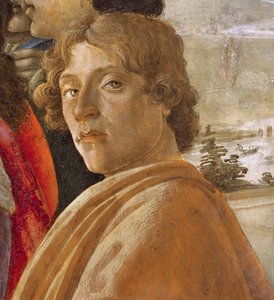
Portrait of Sandro Botticelli

Sandro Botticelli

1445–1510 · Italy · 8

Italian Early Renaissance painter of lyrical grace and ethereal figures with flowing contours, known for mythological and religious scenes.

4. The Birth of Venus, 14. Primavera, 19. Adoration of the Magi, 31. The Calumny of Apelles, 47. Venus and the Three Graces Presenting Gifts to a Young Woman, 54. Venus and Mars, 66. Madonna and Child with an Angel, 73. The Mystical Nativity

Portrait of Hieronymus Bosch

Hieronymus Bosch

1450–1516 · Netherlands · 7

Netherlandish painter of grotesque demons and surreal symbolism in intricate oil triptychs, capturing human folly through vivid, hybrid beings.

2. The Garden of Earthly Delights, 13. The Haywain Triptych, 23. Last Judgement central panel of the triptych, 29. Triptych of Temptation of St Anthony, 41. The Seven Deadly Sins, 79. Allegory of Gluttony and Lust, 88. The Ship of Fools

Portrait of Michelangelo

Michelangelo

1475–1564 · Italy · 7

Italian High Renaissance sculptor and painter of muscular figures and the Sistine Chapel frescoes, known for carving life from marble.

5. The Creation of Adam, 15. The Last Judgment, 33. Holy Family (Doni Tondo), 61. Pietà, 68. The Torment of Saint Anthony, 81. Separation of Light from Darkness, 98. The Fall and Expulsion from Garden of Eden

Portrait of Raphael

Raphael

1483–1520 · Italy · 7

Italian High Renaissance master of harmonious Madonnas and monumental Vatican frescoes, known for clarity of form and graceful composition.

7. The School of Athens, 10. The Transfiguration, 18. The Sistine Madonna, 43. Madonna della Seggiola, 58. Portrait of Bindo Altoviti, 70. Madonna of the Goldfinch, 85. The Entombment

Portrait of Pieter Brueghel the Elder

Pieter Brueghel the Elder

1525–1569 · Netherlands · 6

Flemish Renaissance painter of vast landscapes and boisterous peasant scenes, known for capturing the intricate rhythms of rural village life.

12. The Hunters in the Snow (Winter), 24. The Tower of Babel, 26. The Triumph of Death, 46. Peasant Wedding, 78. Parable of the Blind, 99. The Peasant Dance

Portrait of Hans Holbein the Younger

Hans Holbein the Younger

1497–1543 · Germany · 6

Northern Renaissance portraitist known for hyper-realistic detail and symbolic objects, serving the Tudor court of Henry VIII in England.

17. The Ambassadors, 30. French Ambassadors, 48. The Ambassadors, 62. Body of the Dead Christ in the Tomb, 71. Portrait of Henry VIII, 95. Darmstadt Madonna

+24more masters our artists study Renaissance Masters Their stories

In confidence

About these Renaissance paintings

Hover gently over a question to read the answer.

Can I own a copy of a famous Renaissance painting?

Yes: 92 of the 100 can be ordered as a hand-painted oil reproduction, from $200, and 92 as a canvas print, from $58.

How was this list of Renaissance paintings ranked?

By recognition: Wikipedia articles in the most languages (Wikidata sitelinks), our manual ranking and page visits. Several records of one painting count once; details, copies and studies are excluded.

One of a kind

92 of the 100, painted for you alone

92 of these works can be painted by hand for a single owner, from $200.

Mona Lisa (La Gioconda) by Leonardo da VinciThe Garden of Earthly Delights by Hieronymus BoschThe Last Supper by Leonardo da VinciThe Birth of Venus by Sandro BotticelliThe Creation of Adam by Michelangelo

Discover original art

How the selection is made

We went through every Renaissance painting in our catalogue and placed the best-known first: those Wikipedia describes in the most languages, those our artists and curators rank highest and those most viewed on our pages. Each original appears once — no details or copies.

Other movements that inspire us

The periods that inspire us