Inspiration · Symbolism

The 100 Famous Symbolism Paintings That Inspire Our Artists

1869 – 1934

The most famous Symbolism paintings are Gustav Klimt's Death and Life (1908, Leopold Museum), Gustave Moreau's The Apparition (1876, Fogg Museum) and Hugo Simberg's The Wounded Angel (1903, Finnish National Gallery). This ranking lists the 100 best-known Symbolism paintings, painted between 1869 and 1934 by 51 artists, with the museum where each one hangs today.

Death and Life by Gustav Klimt, 1908, Leopold Museum — famous Symbolism painting
No. 1 · Gustav KlimtDeath and Life1908 · Leopold Museum, Vienna
100singular works
51masters · Luc Olivier Merson – Kuzma Petrov-Vodkin
42homes in 26 cities
3kept at the Tretyakov Gallery

Singular works

100 Symbolism paintings that exist only once

Every original here is unique and kept in one place. Its story, its home, and the detail that makes it unmistakable.

  1. Death and Life by Gustav Klimt, 1908, Leopold Museum
    1

    Leopold Museum, Vienna1908Oil on canvas178 × 198 cm

    The painting's vibrant color palette is a feast for the eyes. The artwork exemplifies Klimt's mastery of Symbolism and Art Nouveau. Created during Klimt's Golden Phase, "Death and Life" reflects his evolving artistic vision and his deep engagement with themes of life, death, and the human condition. This period marked a shift towards more decorative and symbolic elements in his work, influenced by his involvement with the Vienna Secession movement.

    The singular detailcontrast between geometric and organic shapesmosaic-like patterns on the figure representing Death

    Its story

  2. The Apparition by Gustave Moreau, 1876, Fogg Museum
    2

    Fogg Museum, Cambridge1876Watercolor72 × 105 cm

    This watercolor, housed in the Musée d'Orsay, captures the biblical moment when Salome dances before Herod Antipas, her vision haunted by the severed head of John the Baptist. Moreau was a pioneer of the Symbolist movement, which sought to convey emotional states and ideas through dreamlike imagery rather than realistic depiction.

    The singular detaillavishly decorated palace inspired by the Alhambrasalome dancing in front of Herod Antipas

    Its story

  3. The Wounded Angel by Hugo Simberg, 1903, Finnish National Gallery
    3

    Finnish National Gallery, Helsinki1903Oil on canvas127 × 154 cm

    The Wounded Angel is an oil painting by the Finnish symbolist Hugo Simberg, executed in 1903. In 2006, it was voted Finland's national painting in a poll conducted by the Ateneum art museum. This status was reinforced in 2013 when it was voted the second most important painting in a vote held by Suomen Moneta.

    Its story

  4. Three Muses by Maurice Denis, 1893, Musée d'Orsay
    4

    Musée d'Orsay, Paris1893Oil on canvas171 × 137.5 cm

    Maurice Denis, a pioneer of modern art, was deeply influenced by these movements, which sought to convey emotions and ideas through symbolic imagery rather than realistic representation. Maurice Denis was an important figure in the transitional period between impressionism and modern art. The overall atmosphere of "Three Muses" is one of tranquility and mystery.

    The singular detailintimate moment between two women at a tableblending of human figures with natural environment

    Its story

  5. La Guerre by Arnold Böcklin, 1896, Kunsthaus Zürich
    5

    Kunsthaus Zürich, Zurich1896Tempera on panel222 × 170 cm

    Arnold Böcklin's La Guerre (1896) is a dramatic exploration of conflict and chaos. The composition is dense and layered, featuring a central cluster of figures in intense action. Arnold Böcklin (1827-1901) was a Swiss Symbolist painter known for his haunting and mythological works.

    The singular detailwoman with flowing hair in distressdark figure with animalistic features

    Its story

  6. Agni Yoga by Nicholas Roerich, 1929
    6

    1929Tempera on canvas

    The painting is rich in symbolism, reflecting the core tenets of Agni Yoga, a spiritual teaching developed by Roerich and his wife, Helena. The painting gained prominence as a visual representation of the Agni Yoga teachings, which emphasize conscious striving in daily life and the pursuit of inner transformation.

    Its story

  7. The Burial of Casagemas. Evocation by Pablo Picasso, 1903–1904
    7

    1903–1904Oil on canvas

    This work resides firmly within Picasso’s “Blue Period” (1901-1904), a time defined by melancholic themes and monochromatic palettes reflecting personal hardship and social alienation. The central figure—Casagemas' shrouded corpse—represents not only physical death but also the loss of youth, potential, and companionship.

    The singular detailimpasto techniqueshrouded corpse

    Its story

  8. The Race Track by Albert Pinkham Ryder, Cleveland Museum of Art
    8

    Cleveland Museum of ArtOil on canvas70.5 × 90 cm

    The artwork's muted earthy tones —browns, greens, and yellows—are contrasted by the dramatic blues and grays of the sky, creating a sense of tension and mystery. Ryder's work was influenced by the French Barbizon school and the Dutch Hague School, which he studied during his trips to Europe.

    The singular detaildramatic sky with hints of lightinclusion of a snake

    Its story

  9. Schreitende by Gustav Klimt, Lentos Kunstmuseum Linz
    9

    Lentos Kunstmuseum LinzRed pencil on paper56 × 37 cm

    “Schreitende” (Walking) offers a rare, intimate look into Gustav Klimt’s preparatory work. Gustav Klimt (1862-1918) was a pivotal figure in the Vienna Secession movement, challenging traditional artistic conventions. Klimt’s involvement with the Vienna Secession – a group of artists who broke away from established artistic institutions – marked a turning point in Austrian art.

    Its story

  10. Bathing of a Red Horse by Kuzma Petrov-Vodkin, 1912, Tretyakov Gallery
    10

    Tretyakov Gallery, Moscow1912Oil on canvas160 × 186 cm

    Through this unconventional spatial arrangement, Petrov-Vodkin achieves a sense of monumental stability even amidst the swirling energy of the scene. The tension present in the painting—the weight of the horse against the lightness of the rider—mirrors the turbulent social and political shifts occurring in Russia at the dawn of the new century.

    Its story

  11. Kiss by Edvard Munch, 1906, The Munch Museum
    11

    Edvard MunchSymbolism

    Kiss

    The Munch Museum, Oslo1906Oil100 × 70 cm

    The work exists as a vital part of the artist's Frieze of Life, a series that seeks to map the recurring cycles of human existence. The painting resides within the Munch Museum, a vast repository of creative energy located in Oslo, Norway. The museum itself has been a guardian of these works since it was established in 1963. The artist's brush often traces the jagged lines of existential dread, most notably in the piercing terror of The Scream from 1893.

    Its story

  12. Avatar by Henry John Lintott, 1916, Royal Scottish Academy of Art - Architecture
    12

    Royal Scottish Academy of Art - Architecture, Edinburgh1916Oil on canvas102 × 128 cm

    At its heart, the composition presents three female figures, positioned with a deliberate, rhythmic balance that guides the eye across a landscape of uncertainty. As a prominent figure at the Royal Scottish Academy, Lintott was a master of capturing the struggle between light and darkness.

    Its story

  13. La siesta by Julio Romero de Torres
    13

    Painting

    This intentional use of color allows the viewer to almost feel the heat of the Spanish sun on their own skin, making the experience of the painting deeply visceral. Through his precise technique, Romero de Torres achieves a balance that is both realistic in its detail and symbolic in its emotional resonance.

    Its story

  14. Mount of five treasures (Two worlds) by Nicholas Roerich, 1933, Nicholas Roerich Museum
    14

    Nicholas Roerich Museum, NYC1933Tempera on wooden panel47 × 79 cm

    “Mount of Five Treasures (Two Worlds)” was created during a period of significant personal and artistic exploration for Roerich. The 1930s were also marked by global political instability, and Roerich's work often reflected a yearning for peace and spiritual harmony. Christ (The Nicholas Roerich Museum, Moscow, Russia) Himalayas.

    Its story

  15. Lucifer by Franz von Stuck, 1890, National Gallery of Bulgaria
    15

    National Gallery of Bulgaria, Sofia1890Oil on canvas

    On 25 December 1930, King Boris III added the painting to the National Museum. By 1948, it had transitioned into the National Art Gallery. In 1972, it appeared in Berlin for an exhibition focused on German art around 1900. The display explored the development of German symbolism between 1870 and 1920.

    Its story

  16. Garden of Opportunity by Maxfield Parrish, 1913–1915
    16

    1913–1915Oil on canvas

    This specific composition functions as the centre panel of a larger triptych. Maxfield Parrish, born in Philadelphia, United States, developed a distinct approach to color and light through the use of glazing techniques.

    Its story

  17. Mother with Children by Gustav Klimt, 1910
    17

    1910Oil on canvas

    The flattened perspective and emphasis on decorative patterns reflect Klimt’s engagement with both Japanese art —particularly ukiyo-e woodblock prints—and the broader aesthetic principles of the Vienna Secession movement. The painting's subtle yet sophisticated aesthetic complements a range of design styles, from Art Nouveau and Bohemian to contemporary minimalist interiors.

    Its story

  18. Self-portrait with Death Playing the Violin by Arnold Böcklin, 1872, Alte Nationalgalerie
    18

    Alte Nationalgalerie, Berlin1872Oil on canvas75 × 61 cm

    A man sits in formal attire, his suit and tie lending a sense of somber dignity to his presence. There is no struggle here, only a shared, rhythmic movement.

    Its story

  19. Phaeton by Gustave Moreau, 1878, The Louvre
    19

    The Louvre, Paris1878Oil on canvas

    The scene is not one of triumphant glory, but rather a chaotic struggle. Phaeton exemplifies his unique style—a meticulous attention to detail combined with an otherworldly atmosphere. Emerging in the late 19th century, Symbolism was a reaction against the perceived materialism and scientific rationalism of the era.

    The singular detailchiaroscuro effectsallegorical narrative

    Its story

  20. Judgement Day by Viktor Vasnetsov, 1885–1896
    20

    1885–1896Fresco

    Within the sacred walls of St. Vladimir's Cathedral in Kiev, Ukraine, the fresco Judgement Day unfolds in a grand display of spiritual narrative. In 1904, he presents The Last Judgement, a work that carries the weight of spiritual reckoning.

    Its story

  21. Three Ages of Woman by Gustav Klimt, 1905, Galleria Nazionale d'Arte Moderna e Contemporanea
    21

    Galleria Nazionale d'Arte Moderna e Contemporanea, Rome1905Oil on canvas

    The painting presents three female figures – a young girl, a mature woman, and an elderly woman – arranged in a unified composition against a dark, almost abstract background punctuated by shimmering gold circles. Three Ages of Woman is a quintessential example of Klimt's “Golden Phase.” The extensive use of gold leaf, inspired by Byzantine mosaics he encountered during his travels in Italy, imbues the painting with an otherworldly quality. The painting is currently housed in the Galleria Nazionale d'Arte Moderna e Contemporanea in Rome, Italy.

    The singular detailgeometric shapesgold leaf

    Its story

  22. Four Ages in Life by Edvard Munch, 1902, Bergen Kunstmuseum
    22

    Bergen Kunstmuseum1902Oil on canvas130 × 110 cm

    Like many modernist artists, Munch sought to capture not just what he saw, but what he felt.

    The singular detailfour figuressymbolism

    Its story

  23. Interior, Strandgade 30 by Vilhelm Hammershøi, 1909, Niedersächsisches Landesmuseum
    23

    Niedersächsisches Landesmuseum, Hanover1909Oil on panel65 × 54 cm

    The Vilhelm Hammershøi collection on AllPaintingsStore.com offers a range of handmade oil painting reproductions, allowing art enthusiasts to bring a piece of Danish history into their own homes. With its high-quality and detailed reproductions, AllPaintingsStore.com is the perfect destination for those looking to appreciate the beauty of Vilhelm Hammershøi's work.

    Its story

  24. Semmering Landscape by Koloman Moser
    24

    Oil on canvas36 × 48 cm

    The landscape of the Semmering region finds a quiet, symbolic expression in this work. Mountains rise against a sky saturated with purple hues, while a rising sun casts a warm glow over the peaks. Scattered trees provide texture and depth to the composition, grounding the ethereal light in the physical reality of the terrain.

    Its story

  25. The Soldier of Marathon by Luc Olivier Merson, 1869
    25

    1869Oil on canvas114 × 147 cm

    Its story

  26. Moon Light by Edvard Munch, 1893, National Museum of Art, Architecture and Design
    26

    National Museum of Art, Architecture and Design, Oslo1893Oil on canvas140 × 135 cm

    This oil on canvas artwork is a quintessential representation of the Symbolism movement, characterized by its emphasis on emotional experience and subjective interpretation. A chair near the woman suggests she was sitting before moving to the porch, further enhancing the enigmatic atmosphere.

    Its story

  27. Astarte Syriaca by Dante Gabriel Rossetti, 1878, Manchester Art Gallery
    27

    Manchester Art Gallery1878Oil on canvas106 × 183 cm

    The painting presents a mesmerizing tableau of three women, draped in the flowing elegance of ancient Greek attire, standing beneath a serene sky dappioned with soft clouds.

    Its story

  28. The Cyclops by Odilon Redon, 1914, Kröller-Müller Museum
    28

    Kröller-Müller Museum, Otterlo1914Oils on board51 × 64 cm

    The myth itself centers on Polyphemus's violent pursuit of Galatea, but Redon subtly subverts this narrative. Furthermore, Redon's background research into Japanese art heavily influenced his work during this period.

    The singular detailone large eyesleeping nymph

    Its story

  29. Treasure of the World Chintamani by Nicholas Roerich, 1924, Nicholas Roerich Museum
    29

    Nicholas Roerich Museum, New York City1924Canvas & tempera

    Influenced by figures like Helena Blavatsky, Roerich envisioned the Himalayas as a sacred realm—a nexus of cosmic energies—and sought to depict these landscapes as conduits for spiritual transformation.

    Its story

  30. Vampyren by Edvard Munch, 1893, Munch Museum
    30

    Edvard MunchSymbolism/Expressionism

    Vampyren

    Munch Museum, Oslo1893Oil on canvas77.5 × 98.5 cm

    The composition is dominated by their intertwined bodies, creating an immediate sense of closeness and vulnerability. The figures are set against a dark, indistinct background which serves to isolate them and intensify the emotional weight of their interaction. ‘Vampyren’ is characterized by Munch's signature expressive style – a precursor to Expressionism.

    The singular detaildramatic red lightingloose brushwork

    Its story

  31. Sirin and Alkonost The Birds of Joy and Sorrow by Viktor Vasnetsov, 1896
    31

    1896Oil on canvas

    It is an oil on canvas, rendered with a scale that commands the space it occupies. The dimensions of the work are 133 x 250 cm. Vasnetsov integrates pictorial realism with the decorative elegance of Art Nouveau. This work draws upon a traditional subject in Russian art, specifically the depiction of paradisal birds.

    Its story

  32. Dante's 'divine Comedy by Franz von Bayros
    32

    Illustration

    This work emerges from the imagination of Franz von Bayros, an Austrian painter and illustrator whose hand brings this specific moment to life. The influence of Gustav Klimt and Alphonse Mucha emerges in the decorative complexity and the way the light interacts with the forms, creating a dreamlike, almost phantasmagoric atmosphere.

    Its story

  33. The Garden of Death by Hugo Simberg, 1896, Ateneum Art Museum
    33

    Ateneum Art Museum, Helsinki1896Oil on canvas17 × 16 cm

    Here, the inevitable passage of time and decay are not presented as terrifying specters, but rather as gentle companions tending to life in miniature. As a leading figure in Finnish Symbolism, Simberg imbued his work with the ethereal quality characteristic of the movement.

    Its story

  34. Famine by John Charles Dollman, 1904, Salford Museum - Art Gallery
    34

    Salford Museum - Art Gallery, Greater Manchester1904Oil122 × 213 cm

    A heavy, somber atmosphere clings to the scene as a man stands amidst a gathering of the starving. It is a study of what happens when the inner self is abandoned, leaving only a shell behind.

    Its story

  35. The Intrigue by James Ensor, 1890, Koninklijk Museum voor Schone Kunsten
    35

    James EnsorExpressionist Symbolism

    The Intrigue

    Koninklijk Museum voor Schone Kunsten, Antwerp1890Oil on canvas90 × 150 cm

    The scene presents a group of individuals, many adorned with painted faces and masks, gathered in what appears to be a social gathering or a theatrical performance.

    Its story

  36. Frenzy of Exultations by Władysław Podkowiński, 1893, National Museum in Kraków
    36

    National Museum in Kraków, Krakow1893Oil on canvas310 × 275 cm

    The drama reaches a violent peak on the morning of 23 April 1894. This act of desecration leaves the public reeling and fuels dark speculation regarding the artist's private life and his unfulfilled affections. This placement follows a significant chapter in its history when Feliks Jasieński acquired the work in 1901 for 1,000 rubles.

    Its story

  37. Inferno by Franz von Stuck, 1908, Metropolitan Museum of Art
    37

    Metropolitan Museum of Art, New York1908Oil on canvas130 × 209 cm

    The piece is situated within the movements of German Symbolism, Symbolism, and Expressionism. It translates the themes of Hell and Dante's Inferno into a visual language of nightmare and torment. The subject matter focuses on the landscape of the underworld, incorporating elements of demons and suffering.

    Its story

  38. Swan Princess by Mikhail Vrubel, 1900, Tretyakov Gallery
    38

    Tretyakov Gallery, Moscow1900Oil on canvas

    The Swan Princess (Царевна-Лебедь) is a significant work by the Russian artist Mikhail Vrubel. Upon its completion, the painting was immediately sought after by prominent Russian art patrons. It remained in private hands for a time before eventually entering the permanent collection of the State Tretyakov Gallery.

    Its story

  39. Hope II by Gustav Klimt, MOMA
    39

    MOMA, New YorkOil on canvas

    This painting is a perfect example of his unique style and mastery over symbolism. ' Hope II ' is an oil painting on canvas, which allows Klimt to create rich textures and intricate details in the work. This painting is an excellent representation of Klimt's unique style and his contribution to the Symbolist movement.

    The singular detailskull motifgold leaf

    Its story

  40. Woman Reading by Georges D'Espagnat
    40

    Oil on canvas

    The painting reflects the sensibilities of a man who understood the subtle shifts in light and atmosphere. D'Espagnat’s background allowed him to navigate the transition between different artistic movements, moving from the structured realism of his early influences toward a more lyrical, Post-Impressionist approach.

    Its story

  41. Il ritorno al paese natio by Giovanni Segantini, 1895, Alte Nationalgalerie
    41

    Alte Nationalgalerie, Berlin1895Oil on canvas161.5 × 299 cm

    There is a quiet sense of movement here, a collective migration through the peaks. Two horses occupy the foreground, their forms rendered with a clarity that anchors the viewer in the immediate physical reality of the trek. The composition suggests a shared purpose, a group of people navigating the vastness of the mountains as they move toward a destination known only to them.

    Its story

  42. Christ in the Garden of Gethsemane by Arkhip Kuindzhi, 1901
    42

    1901Oil on canvas

    This oil on canvas, titled Christ in the Garden of Gethsemane, was painted by Arkhip Kuindzhi in 1901. The work measures 107.5 x 143.5 cms, or 42 ¼ x 56 ¼ ins. It is currently held within the collection at the Vorontsov Palace in Alupka.

    Its story

  43. Melancholy by Jean-Jacques Henner
    43

    Oil painting

    This work depicts a single female subject positioned in a contemplative pose. The composition focuses on the woman, capturing her from the upper chest upward as she engages with a book. The piece is held within the public domain.

    Its story

  44. Von Lucifer by Franz von Stuck, 1890
    44

    1890Oil on canvas

    The painting titled von Lucifer emerged from the brush of Franz von Stuck about 1890. In 1891, Ferdinand I of Bulgaria acquired the work, bringing it into the royal collection in Sofia. On 25 December 1930, King Boris III placed the canvas within the National Museum.

    Its story

  45. The Girl by the Window by Edvard Munch, 1893, Art Institute of Chicago
    45

    Art Institute of Chicago1893Oil on canvas96.5 × 65.4 cm

    To fully appreciate “The Girl by the Window,” it's crucial to understand the context of Edvard Munch’s life. “The Girl by the Window” can be seen as a quieter, more introspective cousin to " The Scream," offering a glimpse into the quiet despair that often underlies moments of intense emotional distress.

    The singular detailfigureswindow

    Its story

  46. The Annunciation under the Arch with Lilies by Maurice Denis, 1913
    46

    1913Oil, canvas74 × 48 cm

    The piece exists today within a private collection, preserved away from the public eye. In this composition, Maurice Denis explores the weight of the celestial message through a structured, symbolic lens. The work dates to 1913, a period when the artist's vision was deeply engaged with the intersection of faith and modern form.

    Its story

  47. The Sin by Franz von Stuck, 1893, Bavarian State Painting Collections
    47

    Bavarian State Painting Collections, Munich1893Oil on canvas94.5 × 59.5 cm

    The Sin is an 1893 painting by the German artist Franz von Stuck. It was first presented to the public in 1893 during the inaugural exhibition of that group. In 1899, while in Vienna, the painting was awarded the state gold medal intended for foreign artists.

    Its story

  48. Philosophie by Gustav Klimt, Belvedere Collection
    48

    Gustav KlimtSymbolism and Art Nouveau

    Philosophie

    Belvedere CollectionOil on canvas

    Symbolism emerged as a reaction to naturalism and impressionism, focusing on subjectivity, the occult, and the irrational. The symbolist painters sought ways for color and line to express ideas rather than merely represent reality. Gustav Klimt's work, including 'Philosophie', has left an indelible mark on art history.

    The singular detailpatternsabstract shapes

    Its story

  49. The Vision of the Young Bartholomew by Mikhail Nesterov, 1890, Tretyakov Gallery
    49

    Tretyakov Gallery, Moscow1890Oil on canvas211 × 160 cm

    Its story

  50. The death peeing by Max Klinger
    50

    Painting

    The act of urination into the stream demystifies the specter, pulling the concept of mortality away from the realm of the divine or the purely terrifying and into the realm of the living, breathing, and even the decaying. This piece, created around 1881, captures that transition perfectly.

    Its story

  51. Sonia de Klamery (echada) by Hermenegildo Anglada Camarasa, 1913
    51

    1913Oil on canvas

    The oil on canvas work titled Sonia de Klamery is a portrait by the Catalan artist Hermenegildo Anglada Camarasa. The subject of the painting is Countess Sonia de Klamery, a young Polish aristocrat. Hermenegildo Anglada Camarasa rendered the figure of the Countess in a reclining position. The work belongs to the period when the artist was establishing a distinct visual language within the context of Catalan Modernisme. The provenance of the painting is linked to the Legado de Daniel Carballo Prat, Conde de Pradère.

    Its story

  52. Christ and his disciples entered the Garden of Gethsemane by Nikolai Ge, 1888
    52

    1888Oil painting65 × 85 cm

    The religious subject matter focuses on the group of figures gathered in the garden. The composition centers on a cluster of figures gathered around Jesus, who is positioned prominently with outstretched arms.

    Its story

  53. Little Corporal by Nils Kreuger, 1893
    53

    1893Oil

    The scene is centered on a man mounted upon a horse, moving through a world blanketed in white. There is a certain melancholy in the muted colors and the solitary nature of the rider, a quality that defines much of the Swedish landscape art from this period.

    Its story

  54. A Traveller in a Landscape Near a Bridge by Eugeniusz Zak
    54

    Oil

    A man stands upon a grassy hillside, his gaze drifting toward something unseen just beyond the frame. Two other figures linger in the distance, one near the center and another toward the edge, adding a sense of shared existence to this quiet moment.

    Its story

  55. Music by Gustav Klimt, 1895–1905, Bavarian State Painting Collections
    55

    Gustav KlimtSymbolism

    Music

    Bavarian State Painting Collections, Munich1895–1905Oil on canvas27.5 × 35.5 cm

    Music I is deeply rooted in both Symbolism and Impressionism. During this time Klimt also worked on several other allegorical works like Death and Life, demonstrating his fascination with philosophical themes and the human condition.

    The singular detailroseswoman in dark dress

    Its story

  56. A Sea Spell by Dante Gabriel Rossetti, 1877, Fogg Museum
    56

    Fogg Museum, Cambridge1877Oil on canvas88 × 106 cm

    The crown of flowers adorning her hair is a poignant emblem of fertility and the cyclical rebirth of nature, while the apple resting nearby introduces a subtle, haunting allusion to biblical themes of temptation and knowledge.

    Its story

  57. Saint Sergius' labours by Mikhail Nesterov, 1896
    57

    1896Oil

    Created in 1896, this central panel captures a moment where the earthly and the divine intersect through the rhythmic motion of manual labor. As a painter deeply immersed in the spiritual soul of Russia, Nesterov uses the act of cutting wood as a powerful metaphor for the cultivation of the spirit.

    The singular detailgroup of people cutting a tree trunk

    Its story

  58. The Lady in Distress by James Ensor, 1882, Musée d'Orsay
    58

    Musée d'Orsay, Paris1882Oil on canvas100.4 × 79.7 cm

    It’s a hauntingly beautiful and psychologically complex work that offers a glimpse into the burgeoning Symbolist movement and Ensor’s unique artistic vision. Examine paintings by Symbolist artists such as Edvard Munch and Gustave Moreau to understand the broader artistic context of this work.

    The singular detailserene atmosphereplay of light

    Its story

  59. The Isle of the Dead by Max Klinger
    59

    Painting

    Born in Leipzig in 1857, Klinger moves through a world of shifting aesthetics, eventually passing away in 1920. Klinger brings a unique perspective to this piece, one that bridges the gap between the tangible details of Realism and the deeper, more subjective realms of Symbolism.

    Its story

  60. The Black Sun by Odilon Redon
    60

    Oil

    The Black Sun is a post-impressionist work by Odilon Redon. It is a vision of the unseen, rendered with the sensitivity of a man who spent decades mastering the textures of charcoal and light. Odilon Redon, who lived until 1916, sought to give form to the intangible.

    Its story

  61. Flight of Faust and Mephisto by Mikhail Vrubel, 1886
    61

    1886Oil on canvas

    High above a sleeping town, the boundary between the physical and the supernatural thins to a translucent veil. A man rides a horse through the sky, his form caught in a moment of frantic, soaring motion.

    Its story

  62. Christ Almighty by Viktor Vasnetsov, 1896
    62

    1896Oil

    Notable paintings include A Knight at the Crossroads and Bogatyrs (Three Warriors). Other subjects from his repertoire include Alyonushka and Ivan Tsarevich Riding the Grey Wolf. In 1896, Vasnetsov produced a series of paintings that addressed spiritual and historical subject matter.

    Its story

  63. Youth of Saint Sergiy Radonezhsky by Mikhail Nesterov
    63

    Oil

    From his beginnings in Ufa to his final days in Moscow, where he passed away on October 18th, 1942, Nesterov remained a visual poet. Other depictions of the saint exist within his body of work, such as the painting Venerable Sergius of Radonezh, created about 1899.

    Its story

  64. Orpheus on the Tomb of Euridice by Gustave Moreau, Musée Gustave Moreau
    64

    Musée Gustave Moreau, ParisOil on canvas

    Orpheus on the Tomb of Euridice is a work by Gustave Moreau. In Jason and Medea (1865), the artist engages with the complexities of ancient legend, much like the tragic undertones found in the Orpheus myth. The institution was established in 1895 to house his extensive creative output.

    Its story

  65. The Wise Judges by James Ensor, 1891, Royal Museums of Fine Arts
    65

    James EnsorExpressionist Symbolism

    The Wise Judges

    Royal Museums of Fine Arts1891Tempera38 × 46 cm

    Created in Brussels during a period of significant social and political upheaval, “The Wise Judges” can be understood as a commentary on the established order. WahooArt offers meticulously crafted hand-painted reproductions that faithfully recreate Ensor’s unique style and symbolic depth.

    The singular detailempty chairschildlike faces

    Its story

  66. The Military Band on Karl Johan Street by Edvard Munch, 1889, Kunsthaus Zürich
    66

    Kunsthaus Zürich, Zurich1889Oil on canvas

    Munch, deeply influenced by the philosophical currents of his time, used this painting to dissect the psychological impact of modern life – a theme he would repeatedly return to throughout his prolific career.

    Its story

  67. Love by Gustav Klimt, 1895, Kunstmuseum
    67

    Gustav KlimtSymbolism

    Love

    Kunstmuseum, St. Gallen1895Oil on canvas60 × 44 cm

    The work is currently housed at the Kunstmuseum St. Gallen, Switzerland. Similarly, the Portrait of Adele Bloch-Bauer I was painted in 1907, showcasing his ability to merge the human figure with intricate, ornamental environments.

    Its story

  68. Descent into Hell by Viktor Vasnetsov, 1904
    68

    1904Oil

    At the center of this swirling darkness, a figure moves with a quiet, divine purpose.

    Its story

  69. Workers Returning Home by Edvard Munch, 1915, Kommunes Kunstsam
    69

    Kommunes Kunstsam1915Oil on canvas

    Born in 1863 amidst a backdrop of familial tragedy – the early deaths of his mother and sister from tuberculosis – Munch grappled with themes of mortality and psychological distress throughout his career. “Workers Returning Home,” while less overtly dramatic than these paintings, offers a quieter, more contemplative exploration of similar themes.

    The singular detailurban sceneworkers

    Its story

  70. Rex III by Mikalojus Konstantinas Čiurlionis, 1904
    70

    1904Oil74 × 61 cm

    A monumental statue of a man rises from the water, his form commanding the space with a quiet, heavy authority.

    Its story

  71. The Pinch of Snuff by Marc Chagall, 1912
    71

    Marc ChagallExpressionist Symbolism

    The Pinch of Snuff

    1912Oil on canvas

    The subject, a man rendered with Chagall's signature loose brushwork and vibrant palette, sits bathed in an ethereal light, his gaze fixed downwards, lost in thought. This isn’t a depiction of a specific individual but rather a composite figure, a reflection of Chagall himself and perhaps a broader representation of the artist’s own anxieties and aspirations. The small town, with its unique cultural blend of Russian Orthodox and Jewish traditions, served as the wellspring for much of his imagery.

    The singular detailbooksmoking man

    Its story

  72. Woman on her deathbed by Ferdinand Hodler
    72

    Oil on canvas

    A quietude settles over the canvas, rendered in a muted palette of whites, creams, and somber browns. A dark wooden headboard provides a stark, structural contrast to the pale tones of the bedding and the figure's skin, which possesses a chalky, fragile quality.

    Its story

  73. Evening in the Garden by Jakub Schikaneder, 1909
    73

    1909Oil

    Created in 1909, the piece reflects the atmospheric interests of an artist born in 1855 and deceased in 1924. In 1906, he produced Evening Street, a well-known piece that captures a winter night-time scene in Prague. Around 1909-10, he also created By the Girl's Bed, an interpretation of the theme of childhood illness.

    Its story

  74. Fig Tree in front of Red Soil by Hans Emmenegger, 1911
    74

    1911Oil on canvas55 × 33 cm

    The painting presents a solitary tree positioned against a solid, saturated red background. The dark, textured lines of the branches extend into the red space, creating a sharp silhouette. The trunk and primary limbs are the central focus, showing a detailed application of oil on canvas that provides a tactile quality to the surface.

    Its story

  75. Demeter Mourning for Persephone by Evelyn de Morgan, 1906
    75

    1906Oil on canvas

    The scene unfolds within the oil on canvas titled Demeter Mourning for Persephone. The painting measures 51.2 x 45.8 cm, a scale that brings the viewer close to the heavy atmosphere of the goddess's sorrow. This signature and the date of 1906 anchor the piece to a specific point in the artist's career.

    Its story

  76. Portrait of Maurice Barrès by Ignacio Zuloaga
    76

    Oil paint on canvas

    There is a certain weight to his presence, a sense of a man deeply connected to the history he contemplates. The city of Toledo emerges not as a mere backdrop, but as a character in itself, its buildings—the Alcázar and the cathedral—standing as silent witnesses to the passage of time.

    Its story

  77. Self-Portrait by Kazimir Malevich, 1907
    77

    1907Tempera on cardboard69 × 70 cm

    This work, created before his groundbreaking Suprematist period, showcases a blend of Symbolist and early Cubist influences, providing valuable insight into the development of one of modern art’s most revolutionary figures. While still recognizable as a portrait, the painting deviates significantly from realistic depiction.

    Its story

  78. Circe by Wright Barker, 1889
    78

    Wright BarkerSymbolism

    Circe

    1889Oil on canvas138 × 188 cm

    The figure of Circe occupies the center of the scene, a woman of grace standing upon a staircase.

    Its story

  79. Trees and Pink Sky by Sidney Herbert Sime
    79

    Painting22 × 22 cm

    Trees and Pink Sky is a painting by Sidney Herbert Sime. The work captures a specific moment of light through a landscape of silhouettes and color. Sidney Herbert Sime approached the canvas with a focus on the atmosphere of the evening.

    Its story

  80. Der Junge Siegfried Im Wald an Einer Quelle by Ferdinand Leeke
    80

    Oil

    In the center, a young woman lies in a relaxed pose upon the earth, her eyes closed in a state of serene repose. A prominent tree trunk anchors the right foreground, providing a sense of scale and depth to the woodland setting.

    Its story

  81. Le vestibule d’entrée du Petit Palais by Paul Albert Besnard, 1905, Petit Palais
    81

    Petit Palais, Paris1905Fresco

    The ceiling arches upward, drawing the eye into a vast, painted sky that seems to pulse with a divine energy. Figures on horseback charge through the clouds, their forms caught in a moment of eternal movement as they ride toward a distant, fortified castle. This approach creates a specific visual rhythm: The rhythmic repetition of the arches that frame the central mural. The mural does not sit apart from the building; it is woven into the very fabric of the Petit Palais.

    Its story

  82. Jeunesse by Herman Richir, Dundee Art Gallery And Museum
    82

    Dundee Art Gallery And MuseumOil on canvas

    A woman stands with her back to the viewer, her form draped in a long, flowing white dress. The work reflects the Belgian Idealist movement, prioritizing the expression of an internal state over mere physical replication.

    Its story

  83. Nocturne: Blue and Gold by James McNeill Whistler, 1872, Art Institute of Chicago
    83

    Art Institute of Chicago1872Oil on canvas

    The scene unfolds before us: a tranquil stretch of Southampton Water bathed in the fading glow of sunset. “Nocturne” is inextricably linked to the rise of the Aesthetic movement, which flourished in late 19th-century Europe.

    The singular detailsunsetboats

    Its story

  84. Revolt by Carlos Schwabe
    84

    Chaos erupts across the canvas as a group of nude figures tangles in a desperate, rhythmic struggle. Bodies twist and heave in a frantic dance of resistance, some reaching toward a turbulent sky while others lie collapsed upon the earth.

    Its story

  85. The Dream by Vasily Alexandrovich Kotarbinsky
    85

    Oil on canvas

    Around her, the surface is alive with the presence of ducks, their forms scattered across the water in a silent congregation. It is a study of stillness, where the only movement is the imagined, slow drift of hair and the silent paddling of wings beneath the surface.

    Its story

  86. Great rider. Rigden Jyepo by Nicholas Roerich, 1927, Mongolia National Art Gallery
    86

    Mongolia National Art Gallery, Ulaanbaatar1927Oil on canvas

    Nicholas Roerich's "Great Rider. The painting is firmly rooted in the Symbolist movement, characterized by its emphasis on subjective experience and the exploration of hidden meanings. However, Roerich’s symbolism goes far beyond typical Symbolist conventions.

    The singular detailcloudsmandorla

    Its story

  87. Portrait of a Lady by Gustav Klimt, 1897, Galleria d'arte moderna Ricci Oddi
    87

    Galleria d'arte moderna Ricci Oddi, Piacenza1897Oil on canvas60 × 55 cm

    The painting's presence in Piacenza is tied to the history of the Ricci Oddi Gallery, which opened to the public in 1931. The work was originally acquired in 1925 by the Piacenza aristocrat Giuseppe Ricci Oddi for his private collection.

    Its story

  88. Montague Street in London by Vilhelm Hammershøi, 1906, Ny Carlsberg Glyptotek
    88

    Ny Carlsberg Glyptotek, Copenhagen1906Oil on panel57 × 64 cm

    The scene presents an empty London street, stripped of the frantic energy typically associated with urban life. Historically, Hammershøi occupies a singular position within the late 19th and early 20th-century art movements.

    Its story

  89. Riverbank in Autumn by Maxfield Parrish
    89

    Oil

    A singular, prominent tree anchors the scene, its trunk and branches reaching out over the water's edge. A small boat rests upon the river, its presence adding a quiet depth to the composition and suggesting a moment of stillness in a world otherwise in motion.

    Its story

  90. The Two Mothers (Le due Madri) by Giovanni Segantini, 1899
    90

    1899Oil on canvas

    The scene is set upon a sloping hillside, where two women are positioned amidst a rugged terrain of rocks and boulders. One woman is preoccupied with her sheep, her attention anchored to the living creatures that share her space, while the other stands in quiet proximity.

    Its story

  91. Amor sagrado by Julio Romero de Torres
    91

    The painting Amor sagrado, amor profano is a creation of Julio Romero de Torres. This work emerged from the hand of an artist who spent his life within the walls of Córdoba, Spain. He was born there in 1874 and remained tied to this soil until his death in 1930. Julio Romero de Torres lived through a period of intense cultural change in Spain. This connection to his roots is further felt in Poema de Córdoba 3 and Poema de Córdoba 4, the latter created about 1915.

    Its story

  92. Nocturne: Blue and Gold - St Mark's, Venice by James McNeill Whistler, 1879, National Gallery of Wales
    92

    National Gallery of Wales, Cardiff1879Oil on canvas

    Whistler, born in Lowell, Massachusetts, arrived in Europe seeking a new artistic language. The prominent arched structure, likely a church or significant building within St. Mark’s Square, anchors the view while allowing the eye to wander through the reflections shimmering in the canals.

    The singular detailmoonlit cityscape

    Its story

  93. The girl at the desk by Kuzma Petrov-Vodkin, 1934
    93

    1934Oil

    The artwork titled The girl at the desk is a painting by the artist Kuzma Petrov-Vodkin. The work is categorized within the Symbolism style and belongs to the genre of genre painting.

    Its story

  94. Rex by Mikalojus Konstantinas Čiurlionis, 1909
    94

    1909Oil painting

    Within the composition, several layers of meaning emerge through specific motifs: The presence of an Eternal Flame burning on an altar. The juxtaposition of a Light Ruler on a throne against a larger, looming Dark Ruler. The painting reflects the Symbolist movement of the early 20th century, focusing on the expression of ideas through suggestion.

    Its story

  95. Y sin embargo! by Max Klinger
    95

    Graphite or charcoal on paper

    This specific work reflects his interest in the intersection of the human form and the natural landscape. The piece is a monochromatic composition rendered in shades of grey and white.

    Its story

  96. The Dream by Odilon Redon, 1908
    96

    1908Oil

    The painting depicts a woman positioned as the central focus, her head tilted slightly downward. Behind her, a clock is mounted on the wall, providing a sense of spatial depth.

    Its story

  97. Sadko by Mikhail Vrubel, 1899
    97

    1899Oil

    The painting titled Sadko is an artwork created by the artist Mikhail Vrubel. This composition is dated 1899. In 1890, he created The Seated Demon. He also produced the painting The Pearl in 1904, alongside The Swan Princess from the same year.

    Its story

  98. Prometheus by Arnold Böcklin, 1882
    98

    1882Olio su tela

    A rocky cliff dominates the foreground, its jagged edges cutting into a lush, green landscape. Amidst this natural expanse, figures emerge from the terrain. One person stands near the center of the composition, while another is positioned toward the right.

    Its story

  99. Bendición by Julio Romero de Torres
    99

    Oil

    The background of the piece features a red hue, which provides depth to the composition. The artwork was created by the artist Julio Romero de Torres using oil media.

    Its story

  100. Nocturne in Blue and Gold by James McNeill Whistler, 1872, Tate Gallery
    100

    Tate Gallery, London1872Oil on canvas67 × 49 cm

    “Broken color” -thin, translucent layers of paint built up through subtle gradations. It represented a crucial link between the burgeoning industrial heart of the city and the more established West End.

    The singular detailbridgeboat

    Its story

Lineages

The famous Symbolism paintings by lineage

Where they live

The one place you can see each famous Symbolism painting

Paris keeps 5 of these originals; the Tretyakov Gallery, 3.

The masters

The Symbolism masters our artists look to

Portrait of Gustav Klimt

Gustav Klimt

1862–1918 · Austria · 9

Austrian Symbolist known for shimmering gold leaf and intricate, mosaic-like patterns that envelop the female form in a luminous, decorative glow.

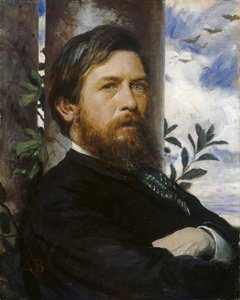
1. Death and Life, 9. Schreitende, 17. Mother with Children, 21. Three Ages of Woman, 39. Hope II, 48. Philosophie, 55. Music, 67. Love, 87. Portrait of a Lady

Portrait of Edvard Munch

Edvard Munch

1863–1944 · Norway · 7

Norwegian Expressionist of soul painting and rhythmic lines, using distorted forms to capture the tremors of anxiety and existential dread.

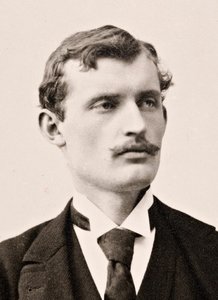
11. Kiss, 22. Four Ages in Life, 26. Moon Light, 30. Vampyren, 45. The Girl by the Window, 66. The Military Band on Karl Johan Street, 69. Workers Returning Home

Portrait of Nicholas Roerich

Nicholas Roerich

1874–1947 · Russia · 4

Russian Symbolist of luminous Himalayan landscapes and spiritual, graphic compositions, known for vibrant tempera on panel and stage designs.

6. Agni Yoga, 14. Mount of five treasures (Two worlds), 29. Treasure of the World Chintamani, 86. Great rider. Rigden Jyepo

Portrait of Franz von Stuck

Franz von Stuck

1863–1928 · Germany · 4

German Symbolist known for dramatic mythological scenes and psychological depictions of the femme fatale, often featuring seductive female nudes.

15. Lucifer, 37. Inferno, 44. Von Lucifer, 47. The Sin

Portrait of Viktor Vasnetsov

Viktor Vasnetsov

1848–1926 · Russia · 4

Russian revivalist painter of folklore and mythology, blending realism with fairytale themes like bogatyrs and epic legends.

20. Judgement Day, 31. Sirin and Alkonost The Birds of Joy and Sorrow, 62. Christ Almighty, 68. Descent into Hell

Portrait of Gustave Moreau

Gustave Moreau

1826–1898 · France · 3

French Symbolist of dreamlike mythological scenes rendered with rich textures and gold leaf, capturing the spiritual essence of ancient stories.

2. The Apparition, 19. Phaeton, 64. Orpheus on the Tomb of Euridice

Portrait of Arnold Böcklin

Arnold Böcklin

1827–1901 · Switzerland · 3

Swiss Symbolist of haunting mythological realms and the silent, spectral Isle of the Dead, rendered with expressive impasto and deep shadows.

5. La Guerre, 18. Self-portrait with Death Playing the Violin, 98. Prometheus

+44more masters our artists study Symbolism Masters Their stories

In confidence

About these Symbolism paintings

Hover gently over a question to read the answer.

How was this list of Symbolism paintings ranked?

By recognition: Wikipedia articles in the most languages (Wikidata sitelinks), our manual ranking and page visits. Several records of one painting count once; details, copies and studies are excluded.

How the selection is made

We went through every Symbolism painting in our catalogue and placed the best-known first: those Wikipedia describes in the most languages, those our artists and curators rank highest and those most viewed on our pages. Each original appears once — no details or copies.

Other movements that inspire us

The periods that inspire us