Inspiration · Baroque

The 100 Famous Baroque Paintings That Inspire Our Artists

1589 – 1719

Rembrandt's Night Watch (1642, Rijksmuseum), Johannes Vermeer's Girl with a Pearl Earring (1665, Mauritshuis) and Diego Velázquez's Las Meninas (The Maids of Honor) or the Royal Family (1656, Museo del Prado): these are the most famous Baroque paintings. The list runs to 100 paintings by 37 artists, from 1589 to 1719, each with the collection that holds it today.

Night Watch by Rembrandt, 1642, Rijksmuseum — famous Baroque painting
No. 1 · RembrandtNight Watch1642 · Rijksmuseum, Amsterdam
100singular works
37masters · Annibale Carracci – Il Maltese
47homes in 27 cities
9kept at the The Louvre

Singular works

100 Baroque paintings that exist only once

Every original here is unique and kept in one place. Its story, its home, and the detail that makes it unmistakable.

  1. Night Watch by Rembrandt, 1642, Rijksmuseum
    1

    Rijksmuseum, Amsterdam1642Oil on canvas363 × 437 cm

    Captain Frans Banninck Cocq and Lieutenant van Ruytenburch appear to be stepping forward, leading their company into action. There is an organized chaos at work; the Kloveniers civic militia are not preparing for a grim battle, but rather assembling for what feels like a parade or a drill. The composition avoids the stiff, formal rows typical of many 17th-century portraits. Created in 1642, this work emerged during a period when the Dutch Republic was experiencing significant growth and social change.

    Painted for you from $500 A print, from $58

  2. Girl with a Pearl Earring by Johannes Vermeer, 1665, Mauritshuis
    2

    Mauritshuis, The Hague1665Oil on canvas44 × 38 cm

    In the quiet corridors of art history, few images possess the magnetic pull of Johannes Vermeer’s Girl with a Pearl Earring. To understand this work is to understand the spirit of 17th-century Delft.

    Painted for you from $200 A print, from $58

  3. Las Meninas (The Maids of Honor) or the Royal Family by Diego Velázquez, 1656, Museo del Prado
    3

    Museo del Prado, Madrid1656Oil on canvas318 × 276 cm

    The painting features Infanta Margaret Theresa, the daughter of King Philip IV, surrounded by her entourage, including maids of honor, chaperones, bodyguards, and dwarves. This intricate composition offers a rare glimpse into the opulent and formal world of 17th-century Spanish royalty.

    The singular detailinfanta Margaret Theresa surrounded by her entourageself-portrait of Velázquez

    Painted for you from $475 A print, from $58

  4. Calling of Saint Matthew by Caravaggio, 1599, San Luigi dei Francesi
    4

    San Luigi dei Francesi, Rome1599Oil on canvas322 × 340 cm

    This scene, commissioned for the Contarelli Chapel in Rome’s San Luigi dei Francesi church, aimed to inspire devotion through its strikingly realistic depiction of faith. Caravaggio boldly rejected idealized forms prevalent at the time, opting instead for a raw and unflinching realism.

    The singular detailshadowtenebrism

    Painted for you from $325 A print, from $58

  5. The Anatomy Lesson of Dr Nicolaes Tulp by Rembrandt, 1632, Mauritshuis
    5

    Mauritshuis, The Hague1632Oil on canvas169 × 216 cm

    As the eye enters the dimly lit lecture room, one is immediately struck by the visceral tension held within the frame. The composition pulls the viewer into a tight circle of observers, each face etched with a unique spectrum of intellectual fervor, ranging from quiet contemplation to intense, wide-eyed fascination.

    Painted for you from $200 A print, from $58

  6. Narcissus by Caravaggio, 1599, Galleria Nazional d Art Antica
    6

    Galleria Nazional d Art Antica, Rome1599Oil on canvas110 × 92 cm

    Unlike earlier interpretations that often idealized the subject, Caravaggio presents a strikingly human and vulnerable Narcissus, kneeling transfixed by his image in still water. Painted during the height of the Baroque period, Narcissus broke from the prevailing Mannerist style.

    The singular detailreflectionpsychological depth

    Painted for you from $225 A print, from $58

  7. Christ in the Storm on the Sea of Galilee by Rembrandt, 1633, Isabella Stewart Gardner Museum
    7

    Isabella Stewart Gardner Museum, Boston1633Oil on canvas128 × 168 cm

    This monumental oil painting plunges viewers directly into one of the most dramatic episodes from the Gospels – Christ calming the storm on the Sea of Galilee. The work reflects the influence of earlier masters like Pieter Lastman, while simultaneously forging Rembrandt's own distinctive style.

    Painted for you from $475 A print, from $58

  8. The Surrender of Breda by Diego Velázquez, 1634, Museo del Prado
    8

    Museo del Prado, Madrid1634Oil on canvas307 × 367 cm

    Commissioned by Philip IV of Spain for the Palacio del Buen Retiro in Madrid, this painting was intended as a celebration of Spanish military prowess. The contrasting postures and expressions of the Dutch commander, offering the keys with respectful resignation, and the Spanish General Spinola, accepting them with measured grace, are particularly compelling.

    The singular detaillancesdramatic lighting

    Painted for you from $375 A print, from $58

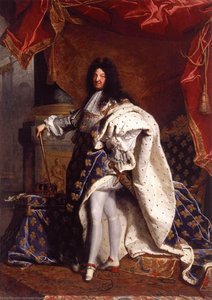
  9. Portrait of Louis XIV by Hyacinthe Rigaud, 1701, The Louvre
    9

    The Louvre, Paris1701Oil on canvas277 × 194 cm

    Created by the renowned French Baroque painter Hyacinthe Rigaud in 1701, this artwork exemplifies the grandeur and meticulous detail characteristic of the Baroque era. Commissioned during a pivotal moment in European history, this portrait was painted in 1701, a year marked by political upheaval and the impending War of Spanish Succession.

    The singular detailcrownscepter

    Painted for you from $200 A print, from $58

  10. The Arcadian Shepherds by Nicolas Poussin, 1638, Chatsworth House
    10

    Chatsworth House, Bakewell1638Oil on canvas85 × 121 cm

    The phrase echoes a sentiment explored by the Florentine Renaissance and popularized during the 16th century in Venice as a memento mori —a reminder of mortality.

    The singular detailmemento mori

    Painted for you from $200 A print, from $58

  11. The Triumph of Death by Jan Brueghel the Elder, 1610, Museo del Prado
    11

    Museo del Prado, Madrid1610Oil on panel117 × 162 cm

    The sprawling composition guides the viewer through layers of turmoil, from the frantic foreground to the bleak horizon, emphasizing the relentless march of death that spares no one. Created in the early 17th century, this painting exemplifies the Northern Renaissance’s fascination with detailed realism and symbolic depth.

    The singular detailsymbolic allegorychaos

    Painted for you from $375 A print, from $58

  12. The Jewish Bride by Rembrandt, 1665
    12

    1665Oil on canvas122 × 167 cm

    The central focus is on the couple's interaction, with the man's protective arm around the woman and her hand gently resting on his chest. This painting is not only a beautiful representation of human emotion but also a historical artifact that reflects the cultural and artistic values of the Dutch Golden Age.

    The singular detailuse of chiaroscuro for dramatic light and shadow effectsorganic and flowing shapes in drapery and figures

    Painted for you from $225 A print, from $58

  13. Beheading of Saint John the Baptist by Cecco del Caravaggio, 1608, St John's Co-Cathedral
    13

    St John's Co-Cathedral, Valletta1608Oil on canvas361 × 520 cm

    Near the center, a knife catches the light. Soldiers of King Herod move through the gloom, their actions driving the momentum of the struggle. It occupies a central place in the Conventual Church of St. John. Visitors find the work at the Saint John Museum, located in Valletta.

    Painted for you from $200 A print, from $58

  14. Self-Portrait as the Allegory of Painting by Artemisia Gentileschi, 1639, Royal Collection
    14

    Royal Collection, London1639Oil on canvas96 × 73 cm

    The 16th-century Iconologia by Cesare Ripa provided a framework for representing allegorical figures, and Gentileschi skillfully adapted this system to her own identity. Women artists faced significant obstacles during the 17th century, often denied formal training and limited to domestic commissions.

    Painted for you from $200 A print, from $58

  15. The Art of Painting by Johannes Vermeer, 1665, Kunsthistorisches Museum
    15

    Kunsthistorisches Museum, Vienna1665Oil on canvas120 × 100 cm

    Created during the Dutch Golden Age, a period of great cultural and economic prosperity, "The Art of Painting" reflects the era's fascination with domestic scenes and intellectual pursuits. The large map of the Low Countries, flanked by views of prominent Dutch cities, suggests themes of exploration and knowledge.

    The singular detailgolden chandelierlarge map of the Low Countries

    Painted for you from $225 A print, from $58

  16. The Return of the Prodigal Son by Rembrandt, 1669, Hermitage Museum
    16

    Hermitage Museum, Saint Petersburg1669Oil on canvas262 × 206 cm

    This deliberate manipulation of light and shadow creates a psychological depth that is rare even among the masters of the Dutch Golden Age.

    Painted for you from $200 A print, from $58

  17. The Fall of the Damned by Peter Paul Rubens, 1620, Alte Pinakothek
    17

    Alte Pinakothek, Munich1620Oil on panel286 × 224 cm

    The painting portrays Lucifer and his fallen angels descending into Hell after their failed rebellion against God. The figures are rendered with astonishing anatomical accuracy—a hallmark of Rubens’ style—yet imbued with palpable emotion. Currently housed in Munich’s Alte Pinakothek, “The Fall of the Damned” holds a significant place in art history.

    Painted for you from $200 A print, from $58

  18. Crucifixion of Saint Peter by Caravaggio, 1600–1601, Santa Maria del Popolo
    18

    Santa Maria del Popolo, Rome1600–1601Oil on canvas230 × 175 cm

    In a striking detail rooted in tradition, Peter requested to be crucified upside down, deeming himself unworthy to die as Christ had. The early 17th century was a period of religious upheaval, with the Catholic Church actively responding to the challenges posed by the Protestant Reformation.

    The singular detailinverted crossrealism

    Painted for you from $250 A print, from $58

  19. Las Meninas or The Family of Philip IV by Diego Velázquez, 1656, Museo del Prado
    19

    Museo del Prado, Madrid1656Oil on canvas318 × 276 cm

    However, what sets this work apart is the inclusion of the artist himself, Diego Velázquez, depicted standing before a large canvas, seemingly engaged in painting. The painting reflects the intricate social hierarchy and courtly rituals of 17th-century Spain.

    The singular detailmirror reflecting King Philip IVqueen Mariana

    Painted for you from $400 A print, from $58

  20. Judith Slaying Holofernes by Artemisia Gentileschi, 1613, Museo di Capodimonte
    20

    Museo di Capodimonte, Naples1613Oil on canvas158.8 × 125.4 cm

    Behind her, the maidservant Abra assists by holding the figure in place. The composition is tightly structured, focusing on the physical struggle and the movement of the arms.

    Painted for you from $250 A print, from $58

  21. The Rape of the Sabine Women by Nicolas Poussin, 1634, Metropolitan Museum of Art
    21

    Metropolitan Museum of Art, New York1634Oil on canvas104 × 210 cm

    This analysis delves into the artistic and historical significance of both versions – one residing at the Metropolitan Museum of Art, New York, and the other at the Musée du Louvre, Paris – revealing layers of meaning within their dynamic compositions. The event depicted—the abduction of Sabine women by Romulus’s followers—is a foundational myth in Roman history. Executed in oil on canvas (104 x 210 cm for the 1634 version), Poussin’s technique is characterized by precise brushwork and a restrained palette dominated by warm earth tones, punctuated by flashes of red and cool blues.

    Painted for you from $425 A print, from $58

  22. Jacob wrestling the angel by Pietro Ricchi, 1650
    22

    1650Oil on canvas

    The canvas holds a heavy, dark atmosphere where light struggles to find its footing. In the center, a muscular figure, Jacob, exerts every ounce of his strength. Beside him, an ethereal presence unfolds wings that catch the dim light. Shadows swallow the edges of the composition, leaving only the essential conflict visible.

    Its story

  23. Judith Beheading Holofernes by Caravaggio, 1620, Galleria Nazional d Art Antica
    23

    Galleria Nazional d Art Antica, Rome1620Oil on canvas199 × 162.5 cm

    The scene captures the precise moment Judith, aided by her maidservant Abra, severs the head of Holofernes, the Assyrian general who threatened her people. Caravaggio eschews glorification, instead presenting a raw and intensely human portrayal of violence and courage.

    The singular detailchiaroscurodramatic lighting

    Painted for you from $250 A print, from $58

  24. Venus at Her Mirror by Diego Velázquez, 1648, National Gallery
    24

    National Gallery, London1648Oil on canvas122 × 177 cm

    Velázquez's work is a quintessential example of Baroque art, characterized by its dramatic use of light and shadow, rich textures, and dynamic compositions. However, Velázquez's unique approach sets his work apart. Despite this, it was collected by Spanish courtiers and later brought to England, where it became part of the National Gallery's collection.

    The singular detailred curtainmirror

    Painted for you from $225 A print, from $58

  25. The Astronomer by Johannes Vermeer, 1668, The Louvre
    25

    The Louvre, Paris1668Oil on canvas50 × 45 cm

    This intimate portrait of an astronomer engrossed in study offers a glimpse into the intellectual pursuits of 17th-century scholars, rendered with Vermeer's signature luminosity and meticulous detail. These works reflect the Dutch Golden Age's fascination with scientific exploration and intellectual achievement.

    The singular detailcelestial globe by Jodocus Hondiuspainting of the Finding of Moses on the wall

    Painted for you from $225 A print, from $58

  26. Massacre of the Innocents by Peter Paul Rubens, 1611, Art Gallery of Ontario
    26

    Art Gallery of Ontario, Toronto1611Oil on oak panel142 × 182 cm

    In 1902, the Royal Museums of Fine Arts of Belgium in Brussels acquired the work, though it was identified at that time as a piece by Antoon Sallaert. He painted The Raising of the Cross in 1610–1611 and The Descent from the Cross around 1616–1617.

    Painted for you from $475 A print, from $58

  27. River Landscape by Annibale Carracci, 1589, National Gallery of Art
    27

    National Gallery of Art, Washington1589Oil on canvas89 × 148 cm

    Created in 1589, this painting exemplifies the realistic style characteristic of the late Renaissance transitioning into early Baroque. The scene’s idyllic quality echoes the Renaissance ideals of harmony and balance, while also hinting at the Romantic fascination with the sublime and the awe-inspiring power of nature.

    The singular detaildistant mountainssmall boat with figures

    Painted for you from $200 A print, from $58

  28. Mary Untier of Knots by Johann Georg Melchior Schmittner, 1700
    28

    1700Oil182 × 110 cm

    Executed about 1700, the work originated in Augsburg, Bavaria, Germany. In Buenos Aires, a copy of the work was commissioned for the Church of San José del Talar, where it has been enshrined since 1996. This location preserves the work in the same sacred space for which it was commissioned around 1700.

    Painted for you from $550 A print, from $58

  29. The Merry Family by Jan Steen, 1668, Rijksmuseum
    29

    Jan SteenBaroque Painting

    The Merry Family

    Rijksmuseum, Amsterdam1668Oil on canvas141 × 110 cm

    This remarkable work, now residing within the esteemed halls of the Rijksmuseum in Amsterdam, offers a rare glimpse into the everyday exuberance and subtle social commentary prevalent during the Golden Age of the Netherlands.

    The singular detailfamily gathering

    Painted for you from $200 A print, from $58

  30. The Feast of Belshazzar by Rembrandt, 1635, National Gallery
    30

    National Gallery, London1635Oil on canvas

    The scene portrays a moment of divine intervention where a spectral hand writes an ominous message on the wall, foretelling the king's downfall. Created around 1635, The Feast of Belshazzar reflects Rembrandt's ambition to establish himself as a painter of large-scale historical works.

    The singular detailexpressive figureshebrew inscription

    Painted for you from $300 A print, from $58

  31. Susanna and the Elders by Artemisia Gentileschi, 1610, Schloss Weissenstein
    31

    Schloss Weissenstein, Poppenhausen1610Oil on canvas170 × 121 cm

    One of Gentileschi's most remarkable talents was her ability to depict the female form with great naturalism. The contorted pose of Susanna, her twisted body and distressed expression, convey a sense of urgency and desperation. Experience the emotional intensity and artistic brilliance of one of the most accomplished painters of the 17th century. Experience the emotional intensity and artistic brilliance of one of the most accomplished painters of the 17th century.

    The singular detailstrong use of light and shadow for dramatic effectdynamic composition with three central figures

    Painted for you from $225 A print, from $58

  32. Battle of the Amazons by Peter Paul Rubens, 1618, Alte Pinakothek
    32

    Alte Pinakothek, Munich1618Oil on panel120.3 × 165.3 cm

    The scene is alive with movement, emotion, and chaos, immersing viewers in a mythic battle that symbolizes heroism, strength, and the chaos of war. Inspired by classical themes, this painting reflects Rubens’ admiration for historical and mythological subjects, particularly the legendary Amazonomachy—a mythic battle between the Greek warriors and the all-female Amazon warriors.

    The singular detailmythological figureshorses

    Painted for you from $250 A print, from $58

  33. The Death of the Virgin by Caravaggio, 1601, The Louvre
    33

    CaravaggioBaroque Dramatic Intensity

    The Death of the Virgin

    The Louvre, Paris1601Oil on canvas369 × 245 cm

    The city pulsed with artistic fervor but also wrestled with social tensions, offering a fertile ground for an artist determined to forge his own path. Commissioned by Laerzio Cherubini for the Santa Maria della Scala church in Rome, “Death of the Virgin” initially faced resistance from ecclesiastical authorities.

    Painted for you from $200 A print, from $58

  34. The Martyrdom of Saint Matthew by Cecco del Caravaggio, 1600, San Luigi dei Francesi
    34

    San Luigi dei Francesi, Rome1600Oil on canvas323 × 343 cm

    The Martyrdom of Saint Matthew captures the precise, harrowing instant of the saint's passing, presenting a tableau that is as much about the spiritual struggle as it is about physical upheaval. The central figure of Saint Matthew is depicted lying upon the ground, his vulnerability exposed to the surrounding chaos.

    Painted for you from $200 A print, from $58

  35. Samson and Delilah by Gerard van Honthorst, 1615, Cleveland Museum of Art
    35

    Cleveland Museum of Art1615Oil on canvas129 × 94 cm

    The painting immediately commands attention with its intensely focused composition, drawing the viewer into a small, intimate chamber dominated by a sprawling dining table. The Cleveland Museum of Art holds a remarkably similar version, offering valuable insights into the artist’s technique and compositional choices.

    The singular detaildramatic lightingtenebrism

    Painted for you from $200 A print, from $58

  36. Judith Beheading Holofernes by Artemisia Gentileschi, 1611, Museo di Capodimonte
    36

    Museo di Capodimonte, Naples1611Oil on canvas159 × 126 cm

    The painting depicts the pivotal moment from the Book of Judith, where the Jewish widow Judith, aided by her maidservant Abra, slays the Assyrian general Holofernes after drugging him and presenting him to his soldiers as a severed head.

    The singular detailsworddramatic lighting

    Painted for you from $200 A print, from $58

  37. Dance to the Music of Time by Nicolas Poussin, 1638, Wallace Collection
    37

    Wallace Collection, London1638Oil on canvas82 × 104 cm

    Furthermore, the inclusion of Aurora, the goddess of dawn, symbolizes new beginnings and the promise of renewal. The painting is a large oil on canvas by the artist Nicolas Poussin titled "Dance to the Music of Time." The scene features several people dancing in front of a statue, with some of them holding hands.

    The singular detailfour figures dancing

    Painted for you from $200 A print, from $58

  38. David with the Head of Goliath by Caravaggio, 1610, Kunsthistorisches Museum
    38

    Kunsthistorisches Museum, Vienna1610Oil on canvas125 × 101 cm

    A vertical arrangement dominates the canvas, emerging from an impenetrable black background that offers no sense of depth or horizon. Created in 1610, this work reflects the late Baroque period's focus on visceral reality. The period was marked by the Counter-Reformation, a time when the Catholic Church utilized dramatic imagery to engage the faithful.

    Its story

  39. Still Life with Lemons, Oranges and Rose by Francisco de Zurbarán, Norton Simon Museum
    39

    Norton Simon Museum, PasadenaOil on canvas

    Executed with a high level of realism, this artwork exemplifies classical techniques reminiscent of the Baroque era. While the exact date of creation remains unknown, the style aligns with the rich tradition of 17th-century European still life painting.

    The singular detailrealistic texturesvibrant fruit

    Painted for you from $200 A print, from $58

  40. The Adoration of the Shepherds by Georges de la Tour, 1644
    40

    1644Oil on wood

    Surrounding this central figure are shepherds, their faces etched with a mixture of reverence, awe, and contemplative stillness. What distinguishes De La Tour as a titan of the French Baroque is his revolutionary command over light.

    Painted for you from $200 A print, from $58

  41. St Filippo Neri in Ecstasy by Guido Reni, 1614, Chiesa di Santa Maria in Vallicella
    41

    Chiesa di Santa Maria in Vallicella, Rome1614Painting180 × 110 cm

    The backdrop is simple yet effective, featuring a wall and a chair, grounding the scene within a domestic setting – likely St. Filippo’s cell – and reinforcing the idea of a private, intensely personal encounter with God. However, he quickly moved beyond mere imitation, developing a unique style that drew inspiration from the works of Raphael and Michelangelo. "St. Filippo Neri in Ecstasy" reflects the religious fervor of 17th-century Italy, a period marked by intense spiritual seeking and the rise of Catholic piety.

    The singular detailecstatic moment

    Painted for you from $200 A print, from $58

  42. Still-Life Citron Trees and Violin by Il Maltese, 1719
    42

    1719Oil on canvas72 × 93 cm

    The composition centers on a violin, its curved silhouette anchoring a collection of organic and man-made objects. Scattered across the scene, apples and a banana provide a rhythmic distribution of color and shape, while a book rests to the right, adding a sense of intellectual stillness to the arrangement.

    Painted for you from $200 A print, from $58

  43. The Lion Hunt by Peter Paul Rubens, 1621, Alte Pinakothek
    43

    Alte Pinakothek, Munich1621Oil on canvas249 × 377 cm

    Rubens, a titan of his time, wasn't simply aiming for accuracy. Influenced by classical ideals of heroism and Christian narratives of triumph over adversity, Rubens infused his work with an unmistakable spiritual resonance. It aligns perfectly with the Counter-Reformation's desire to inspire piety and reaffirm faith through art.

    Painted for you from $200 A print, from $58

  44. The Little Street by Johannes Vermeer, 1657–1658, Rijksmuseum
    44

    Rijksmuseum, Amsterdam1657–1658Oil on canvas54 × 44 cm

    This intimate urban landscape depicts a quiet street scene with narrow cobblestone streets and traditional architecture, offering a glimpse into the serene and orderly world of the Dutch Golden Age. This work is considered an important piece of Dutch Golden Age art, reflecting the period's emphasis on realism and attention to detail.

    The singular detailuse of linear perspective and natural lightingmeticulous attention to architectural details

    Painted for you from $225 A print, from $58

  45. The Four Evangelists by Jacob Jordaens, 1620, The Louvre
    45

    The Louvre, Paris1620Oil on canvas133 × 118 cm

    The tightly framed composition focuses on the upper bodies and heads of the figures, arranged in a dynamic diagonal line that draws the viewer's eye across the canvas. This arrangement creates a sense of movement and collaboration, emphasizing the intellectual pursuit at the heart of the scene.

    Painted for you from $275 A print, from $58

  46. Philosopher in Meditation by Rembrandt, 1632, The Louvre
    46

    The Louvre, Paris1632Oil on wood28 × 34 cm

    Measuring just 28 x 34 cm, this oil on wood panel possesses an emotional depth that belies its modest size. This reinterpretation stems from an auction catalogue dating back to 1738, the earliest known source referencing the painting.

    The singular detailspiral staircasebooks

    Painted for you from $250 A print, from $58

  47. Diana and Callisto by Sebastiano Ricci, 1712, Gallerie dell'Accademia di Venezia
    47

    Gallerie dell'Accademia di Venezia, Venice1712Oil on canvas64 × 76 cm

    The scene is charged with drama and emotion, capturing the moment of revelation and the ensuing turmoil among the divine figures. The painting's subject matter is steeped in symbolism, drawing from the myth of Diana and Callisto as recounted in Ovid's Metamorphoses.

    The singular detaildynamic composition with multiple figuresearthy color palette with warm tones

    Painted for you from $350 A print, from $58

  48. Landscape with Nymph and Satyr Dancing by Claude Lorrain, 1641, Toledo Museum of Art
    48

    Toledo Museum of Art1641Oil on canvas330 × 997 cm

    The scene unfolds with a rhythmic grace, where the boundaries between the natural world and the mythological realm dissolve under a soft, golden glow.

    Painted for you from $200 A print, from $58

  49. The Laughing Cavalier by Frans Hals, 1624, Wallace Collection
    49

    Wallace Collection, London1624Oil on canvas83 × 67.3 cm

    The Laughing Cavalier is a portrait by Frans Hals, executed in 1624. The image has escaped the quiet halls of the Wallace Collection, appearing in public view for the first time since 1888 during a special exhibition. In a work from about 1622, titled Portrait of a Man (17), he captured a singular presence.

    Painted for you from $200 A print, from $58

  50. The Entombment of Christ by Caravaggio, 1603–1604, Vatican Pinacoteca
    50

    Vatican Pinacoteca1603–1604Oil on canvas

    The composition is structured around a central diagonal line formed by Christ’s limp form, drawing the viewer’s eye through the scene with a sense of movement and urgency. Surrounding figures, including Mary Magdalene and the Virgin Mary, express grief in poignant detail, their expressions and gestures conveying deep sorrow and reverence.

    The singular detaildiagonal composition with mournersdramatic use of chiaroscuro

    Painted for you from $275 A print, from $58

  51. Agnus dei by Francisco de Zurbarán, 1640, Музей мистецтва Сан-Дієго
    51

    Музей мистецтва Сан-Дієго1640Oil on canvas36 × 52 cm

    Zurbarán frequently depicted religious subjects, particularly those associated with monastic orders in Spain, reflecting the deeply Catholic context of his work. Multiple versions exist (GMG Foundation Switzerland, Plandiura, San Diego Museum), each offering slight variations in detail and size, but maintaining the central symbolic power.

    The singular detailrealistic texturereligious symbolism

    Painted for you from $200 A print, from $58

  52. Portrait of Pope Innocent X by Diego Velázquez, 1650, Galleria Doria Pamphilj
    52

    Galleria Doria Pamphilj, Rome1650Oil on canvas140 × 120 cm

    Before embarking on my second voyage to Italy in 1649, I was plagued by an unsettling indifference toward Diego Velázquez’s oeuvre. Then came Rome, and with it, the Galleria Doria Pamphilj, where Velázquez’s Portrait of Pope Innocent X resided. The portrait depicts Pope Innocent X, the head of the Catholic Church from 1644 to 1655.

    Painted for you from $200 A print, from $58

  53. Orpheus and Eurydice by Nicolas Poussin, 1650–1653, The Louvre
    53

    The Louvre, Paris1650–1653Oil on canvas124 × 200 cm

    Currently residing in the Musée du Louvre, this large-scale oil on canvas (124 x 200 cm) exemplifies Poussin's distinctive blend of classical idealism and Baroque drama. The ruins of Castel Sant'Angelo and the Torre delle Milizie are visible in the distance, grounding the mythological event within a recognizable, historical context.

    Painted for you from $325 A print, from $58

  54. Two Satyrs by Peter Paul Rubens, 1608, Alte Pinakothek
    54

    Alte Pinakothek, Munich1608Oil on canvas76 × 66 cm

    Created in 1608, this artwork exemplifies the grandeur and emotional depth characteristic of Baroque art. The man holding grapes may symbolize abundance, temptation, or Dionysian themes, while the contemplative figure with a vessel suggests reflection or restraint.

    The singular detailsymbolic elements like grapeslaurel

    Painted for you from $225 A print, from $58

  55. The Anatomy Lecture of Dr. Nicolaes Tulp by Rembrandt, 1632, Mauritshuis
    55

    Mauritshuis, The Hague1632Oil on canvas

    Rembrandt van Rijn's "The Anatomy Lesson of Dr. Nicolaes Tulp" (1632) is a seminal work from the Dutch Golden Age, celebrated for its dramatic chiaroscuro and meticulous anatomical detail. Painted in 1632, this work reflects the intellectual and scientific advancements of the Dutch Golden Age.

    The singular detaildramatic use of light and shadow (chiaroscuro)detailed anatomical demonstration

    Painted for you from $400 A print, from $58

  56. Charles I in Three Positions by Anthony van Dyck, 1635–1636, Royal Collection
    56

    Royal Collection, London1635–1636Oil on canvas

    The artwork features three distinct portraits of Charles I, each from a different angle: left full profile, face on, and right three-quarter profile. The bust, sent by Pope Urban VIII to Queen Henrietta Maria, aimed to foster reconciliation between the Roman Catholic Church and the Church of England.

    Painted for you from $250 A print, from $58

  57. Christ Blessing the Children by Nicolaes Maes, 1652–1653, National Gallery
    57

    National Gallery, London1652–1653Oil on canvas206 × 154 cm

    The composition is a masterclass in chiaroscuro, a technique Maes perfected during his formative years in the legendary studio of Rembrandt van Rijn. The painting functions as a visual sermon on nurturing, protection, and the sanctity of the family unit—values that were the bedrock of Dutch society.

    Painted for you from $200 A print, from $58

  58. The Last Supper by Philippe de Champaigne, 1652, The Louvre
    58

    The Louvre, Paris1652Oil on canvas158 × 233 cm

    The scene unfolds with meticulous grace around a long, richly appointed dining table, where Jesus Christ shares bread and wine with his twelve apostles. The symbolism inherent in this work is as deep as the theological currents that shaped 17th-century art.

    Painted for you from $200 A print, from $58

  59. Christ Before the High Priest by Gerard van Honthorst, 1617, National Gallery
    59

    National Gallery, London1617Oil on canvas272 × 183 cm

    Honthorst, deeply influenced by the revolutionary techniques of Caravaggio, transports us to a dimly lit chamber, thick with secrecy and foreboding, where the fate of Jesus hangs precariously in the balance. The composition is strikingly vertical, drawing the viewer’s eye inexorably towards the central figures: Christ and Caiaphas.

    The singular detailchiaroscurocandle

    Painted for you from $300 A print, from $58

  60. The Choice of Heracles by Annibale Carracci, 1596, Museo di Capodimonte
    60

    Museo di Capodimonte, Naples1596Oil on canvas167 × 273 cm

    The painting depicts the pivotal moment when the hero Heracles must choose between a life of virtue and one of pleasure. Commissioned by Cardinal Odoardo Farnese for the ceiling of his camerino in the Farnese Palace, The Choice of Heracles was later moved to the Farnese ducal seat in Parma.

    The singular detaildramatic use of chiaroscurohercules' moral dilemma between Virtue and Pleasure

    Painted for you from $225 A print, from $58

  61. St. Rufina by Francisco de Zurbarán, 1637, National Gallery of Ireland
    61

    National Gallery of Ireland, Dublin City1637Oil on canvas176 × 107.5 cm

    Painted circa 1630-1632, this work offers a rare glimpse into the artist's deeply personal approach to religious subject matter – a style that earned him the moniker “Spanish Caravaggio.” The painting depicts a young woman, identified as Saint Rufina, holding two simple earthenware pots or vases. Spain during the 17th century – the height of the Spanish Golden Age – was a nation deeply influenced by Catholicism, and religious art flourished under royal patronage.

    The singular detailstatuetenebrism

    Painted for you from $200 A print, from $58

  62. Magdalen with the Smoking Flame by Georges de la Tour, 1640, Los Angeles County Museum of Art
    62

    Los Angeles County Museum of Art1640Oil on canvas117 × 92 cm

    At first glance, Magdalene with the Smoking Flame presents a seemingly simple scene: a woman seated before a table laden with objects. The Louvre version, for instance, emphasizes her moment of conversion, while another iteration in the Los Angeles County Museum of Art depicts her as a solitary hermit contemplating life’s vanity.

    The singular detailflamebooks

    Painted for you from $200 A print, from $58

  63. The Conversion of St Paul by Caravaggio, 1600–1601, Santa Maria del Popolo
    63

    Santa Maria del Popolo, Rome1600–1601Oil on canvas230 × 175 cm

    The painting depicts the immediate aftermath of Paul’s fall from his horse, blinded by divine light. This final version demonstrates his unique vision fully realized. Symbolizes spiritual blindness and the former life of Saul as a persecutor of Christians. The Conversion of St Paul is not a painting that offers easy comfort.

    The singular detaildramatic lightingchiaroscuro

    Painted for you from $250 A print, from $58

  64. Landscape with Polyphemus by Nicolas Poussin, 1648, Hermitage Museum
    64

    Hermitage Museum, Saint Petersburg1648Oil on canvas150 × 199 cm

    At 150 x 199 cm, the painting immediately impresses with its serene grandeur and deliberate composition. Alongside other celebrated works by Poussin, such as The Holy Family with St. Elizabeth and John the Baptist —also housed in St. Petersburg—demonstrates Poussin’s lasting impact on European art history.

    Painted for you from $200 A print, from $58

  65. The Three Graces by Peter Paul Rubens, 1630, Museo del Prado
    65

    Museo del Prado, Madrid1630Oil on panel220.5 × 182 cm

    Light emanates from an unseen source, bathing the luminous skin of Euphrosyne, Aglaea, and Thalia in a warm, ethereal glow that seems to radiate from within their very bodies.

    Painted for you from $200 A print, from $58

  66. La Anunciación by Claudio Coello
    66

    Oil, canvas

    This work emerges from a period of transition in Madrid, where the grandiosity of the High Baroque began to meet new sensibilities. The light fades into the edges of the canvas, leaving only the quiet glow of the child.

    Painted for you from $200 A print, from $58

  67. Madonna of Loreto by Cecco del Caravaggio, 1604, Basilica of St. Augustine in Campo Marzio
    67

    Basilica of St. Augustine in Campo Marzio, Rome1604Oil on canvas260 × 150 cm

    A woman stands within this frame, her feet bare and touching the earth, holding a naked infant who reaches out to bless the weary. The depiction of the Virgin Mary as an ordinary mother, stripped of idealized ornamentation. The use of a dilapidated doorway to represent the Holy House of Nazareth.

    Painted for you from $200 A print, from $58

  68. Two Children Eating a Melon and Grapes by Bartolomé Esteban Murillo, 1646, Bavarian State Painting Collections
    68

    Bavarian State Painting Collections, Munich1646Oil on canvas146 × 104 cm

    Two young boys sit close together on the dusty ground, lost in the simple, tactile pleasure of their meal. This scene emerges from the heart of the Spanish Baroque, a period where the line between the sacred and the everyday often blurred.

    The singular detailbananasgrapes

    Painted for you from $200 A print, from $58

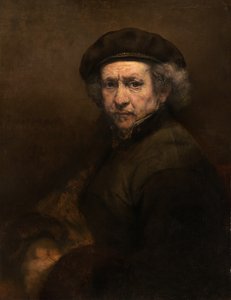
  69. Self-Portrait with Two Circles by Rembrandt, 1665
    69

    1665Oil on canvas

    Having experienced financial difficulties and the loss of loved ones, Rembrandt’s self-portraits from this era often reflect a somber introspection. The painting offers insight into the working life of an artist in 17th-century Amsterdam, showcasing his tools – palette and brushes – as symbols of dedication to his craft.

    The singular detailtwo circles (canvases)palette

    Painted for you from $200 A print, from $58

  70. The Tears of St. Peter by Georges de la Tour, 1645, Cleveland Museum of Art
    70

    Cleveland Museum of Art1645Oil on canvas114 × 95 cm

    The painting presents St. Peter in the heavy, suffocating aftermath of his denial of Christ, caught in a moment of agonizing introspection. Beside the repentant saint, a rooster perches in the shadows—a poignant, almost haunting reminder of the biblical prophecy that Peter would deny Jesus three times before the cock crowed.

    Painted for you from $200 A print, from $58

  71. The Geographer by Johannes Vermeer, 1669, Städel Museum
    71

    Städel Museum, Frankfurt1669Oil on canvas45 × 51 cm

    The central figure is a scholar—likely a geographer, as suggested by the prominent compass in his hand—seated at a desk bathed in the diffused light filtering through a window. The painting emerged during a pivotal period in European history – the burgeoning Enlightenment.

    Painted for you from $200 A print, from $58

  72. Las Hilanderas (The Spinners) by Diego Velázquez, 1655, Museo del Prado
    72

    Museo del Prado, Madrid1655Oil on canvas220 × 289 cm

    Executed in 1657, the work was created for a courtier of King Philip IV. Las Meninas (The Maids of Honor) or the Royal Family, painted in 1656, creates a mirror of perception. The Fable of Arachne (detail), 1657 Fragments of the myth exist in isolation.

    Painted for you from $200 A print, from $58

  73. Medusa by Caravaggio, 1597, Galleria degli Uffizi
    73

    Galleria degli Uffizi, Florence1597Oil60 × 55 cm

    The painting captures the legendary Gorgon at a moment of agonizing metamorphosis, her face contorted in a silent, piercing scream that seems to vibrate against the very surface of the canvas.

    Painted for you from $200 A print, from $58

  74. The Annunciation by Artemisia Gentileschi, 1630, Museo di Capodimonte
    74

    Museo di Capodimonte, Naples1630Oil on canvas257 × 179 cm

    The painting depicts a pivotal moment in Christian theology – the Annunciation, wherein Mary receives divine news of Jesus’s imminent birth from Gabriel, an angel dispatched by God to deliver this momentous proclamation.

    Painted for you from $200 A print, from $58

  75. Witches' Sabbath by Francisco Goya, Museo Lázaro Galdiano
    75

    Museo Lázaro Galdiano, MadridOil on canvas

    This haunting oil painting by Francisco de Goya plunges the viewer into the heart of a nocturnal Witches’ Sabbath. Witches’ Sabbath is a prime example of Goya's transition towards the darker, more expressive style that characterizes his later works. Painted in 1798, this work reflects a period of social and political upheaval in Spain.

    The singular detailwitches' coveninfants

    Painted for you from $200 A print, from $58

  76. Echo and Narcissus by Nicolas Poussin, 1627–1628, The Louvre
    76

    The Louvre, Paris1627–1628Oil on canvas74 × 100 cm

    Et in Arcadia Ego by Nicolas Poussin Echo and Narcissus by Nicolas Poussin The Rape of the Sabine Women (Poussin) AllPaintingsStore.com offers a unique opportunity to own a piece of art history with its handmade oil paintings reproductions.

    Painted for you from $200 A print, from $58

  77. Return of the Prodigal Son by Bartolomé Esteban Murillo, 1670, National Gallery of Art
    77

    National Gallery of Art, Washington1670Oil on canvas236 × 262 cm

    The painting "Return of the Prodigal Son" by Bartolome Esteban Murillo, created in 1670, is a quintessential example of Baroque art. Murillo's work is characterized by its emotional depth and vivid storytelling. The scene depicts the prodigal son kneeling before his father, who welcomes him back with open arms.

    Painted for you from $200 A print, from $58

  78. The Raising of the Cross by Peter Paul Rubens, 1610–1611, Onze-Lieve Vrouwekathedraal
    78

    Onze-Lieve Vrouwekathedraal, Antwerp1610–1611Oil on panel460 × 640 cm

    The triptych was commissioned by Cornelis van der Geest, a wealthy merchant and churchwarden of the Catholic Church of St. Walburga, after Rubens returned to Antwerp from Italy. Some notable works include: The Descent from the Cross (1612–1614), another triptych painting depicting the moment when Jesus Christ's body is taken down from the cross.

    Painted for you from $200 A print, from $58

  79. Mary Magdalene in Ecstasy by Artemisia Gentileschi, 1620, National Gallery
    79

    National Gallery, London1620Oil on canvas81 × 105 cm

    Created in 1620 by the renowned artist Artemisia Gentileschi, this work exemplifies the dramatic intensity and realism characteristic of the Baroque period. As one of the few women artists of the Baroque era, Gentileschi’s work challenged traditional gender roles and artistic conventions, bringing a distinctive perspective to biblical narratives.

    The singular detailrealistic anatomyemotional intensity

    Painted for you from $200 A print, from $58

  80. St Peter Healing St Agatha by Giovanni Lanfranco, 1614, Galleria Nazionale
    80

    Galleria Nazionale, Parma1614Oil on canvas100 × 133 cm

    The painting St Peter Healing St Agatha by Giovanni Lanfranco is a remarkable example of Baroque art, characterized by its dramatic use of light and shadow, as well as the emotional intensity of the figures' expressions and poses. St Peter Healing St Agatha, St Ursula and the Virgins.

    Painted for you from $200 A print, from $58

  81. The Family of Louis XIV by Jean Nocret, 1670, Château de Versailles
    81

    Château de Versailles1670Oil on canvas305 × 420 cm

    Executed with the meticulous precision characteristic of the late French Baroque, Nocret’s technique is a triumph of oil on canvas. Commissioned for Monsieur Philippe d’Orléans, the King's brother, this artwork was born from a desire to decorate the most prestigious spaces of the French aristocracy with scenes of mythic importance. The painting reflects the era's obsession with French Classicism —a style defined by harmony, regularity, and an unshakeable sense of majesty.

    Painted for you from $200 A print, from $58

  82. The Triumph of Divine Providence by Pietro da Cortona, 1633, Palazzo Barberini
    82

    Palazzo Barberini, Rome1633Fresco

    Commissioned by the Barberini family—specifically Cardinal Barberini, who would later become Pope Urban VIII—the artwork was designed to celebrate the divine right and the providential rise of his lineage.

    Its story

  83. Danae by Rembrandt, 1636, Hermitage Museum
    83

    RembrandtBaroque

    Danae

    Hermitage Museum, Saint Petersburg1636Oil on canvas185 × 202.5 cm

    Danaë's creation coincided with Rembrandt’s personal life—his marriage to Saskia van Uylenburgh—and he famously reworked the painting after her death in 1642, incorporating the likeness of his mistress Geertje Dircx. The ensuing restoration effort—spanning from 1985 to 1997—involved meticulous cleaning, consolidation, and pigment retouching, overseen by experts at the Hermitage Museum.

    Painted for you from $200 A print, from $58

  84. Saint Francis of Assisi in His Tomb by Francisco de Zurbarán, 1630, Milwaukee Art Museum
    84

    Milwaukee Art Museum1630Oil on canvas204 × 113 cm

    To understand this work is to understand the heart of the Counter- Reformation. Representing the presence of the Holy Spirit amidst the darkness of the earthly tomb.

    Painted for you from $200 A print, from $58

  85. Penitent St Jerome by Georges de la Tour, 1620, Nationalmuseum
    85

    Nationalmuseum, Stockholm1620Oil on canvas152 × 109 cm

    The painting centers on St. Jerome, not in triumphant glory, but during a period of intense penance. Several symbolic elements enrich the painting's meaning: The Rope: Represents Jerome’s self-imposed restraints and commitment to a life of austerity. Paintings like Penitent St Jerome served as powerful visual tools for promoting piety and devotion.

    Painted for you from $200 A print, from $58

  86. The Sacrifice of Isaac by Caravaggio, 1601, Galleria degli Uffizi
    86

    Galleria degli Uffizi, Florence1601Oil on canvas104 × 135 cm

    Just as Abraham raises his knife, poised to obey, an angel intervenes, halting the act and providing a ram for sacrifice in its place. However, unlike earlier depictions that often glorified the divine intervention, Caravaggio focuses intensely on the human drama of the moment – Abraham's internal struggle and Isaac’s vulnerability.

    The singular detailcompositiondramatic Lighting (tenebrism)

    Painted for you from $225 A print, from $58

  87. Magdalena Ventura with Her Husband and Son by Jusepe de Ribera, 1631, Fundación Lerma
    87

    Fundación Lerma, Toledo1631Oil on canvas127 × 196 cm

    The brushstrokes were later carried away to the Napoleon Museum in Paris in 1808. History returned the work to Spain by order of Louis XVIII in 1813. In 1612, he painted The Tears of Saint Peter. Later, in 1636, he composed The Duel of Women.

    Painted for you from $200 A print, from $58

  88. The Poet's Inspiration by Nicolas Poussin, 1630, The Louvre
    88

    The Louvre, Paris1630Oil on canvas182 × 213 cm

    This painting represents Poussin at his most compelling – blending rigorous composition with emotive storytelling and technical brilliance. Every element within The Poet’s Inspiration is imbued with symbolic meaning: The Lyre: Represents Apollo's dominion over poetry and music, the very essence of artistic expression.

    Painted for you from $250 A print, from $58

  89. The Procuress by Johannes Vermeer, 1656, Gemäldegalerie
    89

    Gemäldegalerie, Dresden1656Oil on canvas143 × 130 cm

    Measuring 143 x 130 cm, it’s a substantial work that rewards close observation. The painting is rich with symbolic elements that add layers of meaning: The Oriental Rug & Kelim: These luxurious textiles suggest wealth and indulgence, hinting at the financial transactions taking place.

    The singular detailchiaroscuro lightingjug

    Painted for you from $300 A print, from $58

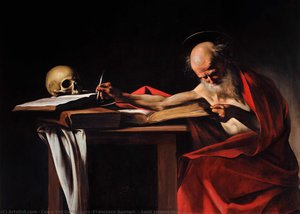
  90. Saint Jerome Writing by Cecco del Caravaggio, 1605, Galleria Borghese
    90

    Galleria Borghese, Rome1605Oil on canvas112 × 157 cm

    While history often focuses on Michelangelo Merisi da Caravaggio, Cecco del Caravaggio (Francesco Buoneri) emerged as a vital pulse within the Caravaggisti movement, absorbing the master's revolutionary naturalism and infusing it with his own psychological intensity.

    Painted for you from $200 A print, from $58

  91. The Repentant Magdalen by Georges de la Tour, 1635, National Gallery of Art
    91

    National Gallery of Art, Washington1635Oil on canvas113 × 93 cm

    De La Tour’s formative years were marked by exposure to Italian Baroque painting, notably Caravaggio’s groundbreaking use of chiaroscuro (the dramatic interplay between light and dark). De La Tour’s artistic output was overwhelmingly devoted to religious subjects, reflecting the fervent piety of his era and aligning with the Counter-Reformation's emphasis on visual piety. The meticulous layering of glazes creates an astonishingly realistic depiction of texture—particularly evident in the folds of Mary Magdalene’s dress and the surface of the skull—underscoring De La Tour's commitment to artistic precision.

    Painted for you from $200 A print, from $58

  92. Two Women at a Window by Bartolomé Esteban Murillo, 1660, National Gallery of Art
    92

    National Gallery of Art, Washington1660Oil on canvas125 × 105 cm

    Murillo’s patrons were often these prosperous individuals, commissioning portraits that celebrated their status and reflected prevailing aesthetic ideals. The clothing and setting clearly indicate the women’s privileged social standing, reflecting the importance of wealth and status in 17th-century Spain.

    The singular detailwindowfigures

    Painted for you from $200 A print, from $58

  93. Judith by Jan Massys, 1600, Koninklijk Museum voor Schone Kunsten
    93

    Koninklijk Museum voor Schone Kunsten, Antwerp1600Oil on panel115 × 80 cm

    Massys’s technique reveals a sophisticated command of the Fontainebleau School’s influence, moving away from the exaggerated distortions of Mannerism toward a more luminous and idealized aesthetic. During Massys’s lifetime, Antwerp was a thriving cosmopolitan hub, a melting pot of ideas where the Habsburg court championed humanist ideals.

    Painted for you from $200 A print, from $58

  94. Triumph of the Order of the Benedictines by Antonio Vassilacchi
    94

    Painting

    A group of figures, some clad in the heavy, structured armor of a bygone era and others in the flowing garments of medieval attire, occupy the space with a sense of solemnity. The painting, located in Perugia, reflects a skill in managing large-scale compositions that demand the viewer's full attention.

    Painted for you from $200 A print, from $58

  95. The Allegory of Simulation by Lorenzo Lippi
    95

    Oil on canvas

    An enigmatic woman holds a mask and a pomegranate, blending themes of femininity and deceit.

    Painted for you from $200 A print, from $58

  96. LA MORT de SAINT FRANCOIS by Jean Jouvenet
    96

    Oil painting on canvas

    The scene captures the final moments of Saint Francis, lying upon a simple wooden bed within a crowded monastic cell. From above, an angel descends, extending a crown of leaves toward the dying man. This gesture signals a divine reward and the transition from earthly suffering to spiritual ascension.

    Painted for you from $375 A print, from $58

  97. The Supper at Emmaus by Caravaggio, 1601, National Gallery
    97

    CaravaggioBaroque Dramatic Intensity

    The Supper at Emmaus

    National Gallery, London1601Oil on canvas141 × 196 cm

    On the third day after the Crucifixion two of Jesus’s disciples were walking to Emmaus when they met the resurrected Christ. And their eyes were opened, and they knew him; and he vanished out of their sight’ (Luke 24: 30–31).Painted at the height of Caravaggio’s fame, this is among his most impressive domestic religious pictures.

    Painted for you from $200 A print, from $58

  98. Rape of the Daughters of Leucippus by Peter Paul Rubens, 1618, Alte Pinakothek
    98

    Alte Pinakothek, Munich1618Oil on canvas224 × 210 cm

    The scene depicts a pivotal moment from classical mythology: the abduction of Phoebe and Hilaeira, daughters of Leucippus, by the twin brothers Castor and Pollux. Muscular figures of Castor and Pollux wrestle with the daughters of Leucippus, their bodies intertwined amidst rearing horses.

    Painted for you from $200 A print, from $58

  99. St. Elizabeth of Portugal by Francisco de Zurbarán, 1635, Museo del Prado
    99

    Museo del Prado, Madrid1635Oil on canvas184 × 98 cm

    A rich, warm color palette —dominated by ochre, deep reds, and contrasted with cool blue-greys—creates an atmosphere of opulent dignity befitting a queen and saint. The flowers she delicately holds symbolize beauty, virtue, and perhaps even fertility – representing not only her personal qualities but also the blossoming of faith through charitable acts.

    Painted for you from $200 A print, from $58

  100. The Galleria Farnese by Annibale Carracci, 1597–1602, Palazzo Farnese
    100

    Palazzo Farnese, Rome1597–1602Fresco

    Carracci’s genius lies in his ability to marry the classical grace of the High Renaissance with a new, pulsating naturalism. While the scenes are populated by figures from classical mythology —such as the transformative Apollo and Daphne or the heroic Hercules—they are far from mere pagan decorations.

    Its story

Lineages

The famous Baroque paintings by lineage

Where they live

The one place you can see each famous Baroque painting

Rome keeps 12 of these originals; the The Louvre, 9.

The masters

The Baroque masters our artists look to

Portrait of Peter Paul Rubens

Peter Paul Rubens

1577–1640 · Germany · 8

Flemish Baroque painter of muscular figures and dynamic compositions, known for luminous skin tones and energetic, swirling religious scenes.

17. The Fall of the Damned, 26. Massacre of the Innocents, 32. Battle of the Amazons, 43. The Lion Hunt, 54. Two Satyrs, 65. The Three Graces, 78. The Raising of the Cross, 98. Rape of the Daughters of Leucippus

Portrait of Nicolas Poussin

Nicolas Poussin

1594–1665 · France · 7

French Classicist of geometric, rational compositions and mythological scenes, using wax figures and light boxes to plan every detail.

10. The Arcadian Shepherds, 21. The Rape of the Sabine Women, 37. Dance to the Music of Time, 53. Orpheus and Eurydice, 64. Landscape with Polyphemus, 76. Echo and Narcissus, 88. The Poet's Inspiration

Portrait of Johannes Vermeer

Johannes Vermeer

1632–1675 · Netherlands · 6

Dutch Golden Age painter of quiet domestic interiors, using luminous light and ultramarine to capture a single, private moment.

2. Girl with a Pearl Earring, 15. The Art of Painting, 25. The Astronomer, 44. The Little Street, 71. The Geographer, 89. The Procuress

Portrait of Artemisia Gentileschi

Artemisia Gentileschi

1593–1653 · Italy · 6

Italian Baroque painter of dramatic tenebrism and powerful female protagonists, known for visceral depictions of Judith Slaying Holofernes.

14. Self-Portrait as the Allegory of Painting, 20. Judith Slaying Holofernes, 31. Susanna and the Elders, 36. Judith Beheading Holofernes, 74. The Annunciation, 79. Mary Magdalene in Ecstasy

+30more masters our artists study Baroque Masters Their stories

In confidence

About these Baroque paintings

Hover gently over a question to read the answer.

Can I own a copy of a famous Baroque painting?

Yes: 96 of the 100 can be ordered as a hand-painted oil reproduction, from $200, and 96 as a canvas print, from $58.

How was this list of Baroque paintings ranked?

Each painting is ranked by how widely it is known: the number of Wikipedia language editions with an article on it (Wikidata sitelinks), its place in our catalogue's manual ranking and the visits its page receives. The same painting catalogued several times counts once, and details, copies and studies are left out.

One of a kind

96 of the 100, painted for you alone

96 of these works can be painted by hand for a single owner, from $200.

Night Watch by RembrandtGirl with a Pearl Earring by Johannes VermeerLas Meninas (The Maids of Honor) or the Royal Family by Diego VelázquezCalling of Saint Matthew by CaravaggioThe Anatomy Lesson of Dr Nicolaes Tulp by Rembrandt

Discover original art

How the selection is made

We went through every Baroque painting in our catalogue and placed the best-known first: those Wikipedia describes in the most languages, those our artists and curators rank highest and those most viewed on our pages. Each original appears once — no details or copies.

Other movements that inspire us

The periods that inspire us