Text size

() ·

A painting made for you, by hand

Judith Beheading Holofernes

Hand Made Oil Reproduction

Hand-painted oil on canvas in your size and frame, made to order by our artists. ( Switch to Print Switch to Digital Image)

Collectible Description

Artist Biography

Artemisia Gentileschi (1593-1656): Italian Baroque painter celebrated for dramatic realism, powerful depictions of women like Judith, & her resilience against adversity. A pioneering artist!

from ·

Chapter 1

How large should it be?

Slide to change the size; the picture on the left shows the frame at its real width. The proportions of the original are kept.

Standard
custom
CM
INCH

Pick from our preset sizes that match the artwork's original proportions.

width
height

Type the width and the height you need, to fit your frame or your wall. This is hand-painted, so for a size with a different shape the artist can paint a bit more around the picture, or cut a bit — you choose. We send you a digital mockup to approve before the painting starts. The picture shown on this page does not show the real result — only the mockup does.

Chapter 2

How should it arrive?

Choose the edges of the stretched canvas

Choose your frame

Corner sample of the WhiteWrap canvas edge finish, stretched on solid wood bars
White $1
Corner sample of the BlurSideWrap canvas edge finish, stretched on solid wood bars
Blurside $1
Corner sample of the ExtendedWrap canvas edge finish, stretched on solid wood bars
Extended $1
Corner sample of the P118B picture frame: moulded polystyrene, 5 cm wide and 3 cm thick
P118B $10
Corner sample of the P118H picture frame: moulded polystyrene, 5 cm wide and 3 cm thick
P118H $10
Corner sample of the P118W picture frame: moulded polystyrene, 5 cm wide and 3 cm thick
P118W $10
Corner sample of the P438Z picture frame: moulded polystyrene, 5.5 cm wide and 3.5 cm thick
P438Z $10
Corner sample of the P508JH picture frame: moulded polystyrene, 7 cm wide and 3.5 cm thick
P508JH $12
Corner sample of the P508YH picture frame: moulded polystyrene, 7 cm wide and 3.5 cm thick
P508YH $12
Corner sample of the P805H picture frame: moulded polystyrene, 5 cm wide and 3.5 cm thick
P805H $10
Corner sample of the P805Z picture frame: moulded polystyrene, 5 cm wide and 3.5 cm thick
P805Z $10
Corner sample of the P919BZ picture frame: moulded polystyrene, 7 cm wide and 3.5 cm thick
P919BZ $10
Corner sample of the P919G picture frame: moulded polystyrene, 7 cm wide and 3.5 cm thick
P919G $10
Corner sample of the P919XJ picture frame: moulded polystyrene, 7 cm wide and 3.5 cm thick
P919XJ $10
Corner sample of the P959ZH picture frame: moulded polystyrene, 5 cm wide and 3 cm thick
P959ZH $10
Corner sample of the P968JZ picture frame: moulded polystyrene, 6 cm wide and 4 cm thick
P968JZ $12
Corner sample of the W106C picture frame: solid wood, 5 cm wide and 3 cm thick
W106C $8
Corner sample of the W218G picture frame: solid wood, 5 cm wide and 3 cm thick
W218G $10
Corner sample of the W218JH picture frame: solid wood, 5 cm wide and 3 cm thick
W218JH $8
Corner sample of the W218Y picture frame: solid wood, 5 cm wide and 3 cm thick
W218Y $10
Corner sample of the W307PJ picture frame: solid wood, 6 cm wide and 3 cm thick
W307PJ $10
Corner sample of the W316G picture frame: solid wood, 6 cm wide and 3 cm thick
W316G $10
Corner sample of the W316PJ picture frame: solid wood, 6 cm wide and 3 cm thick
W316PJ $8
Corner sample of the W316Y picture frame: solid wood, 6 cm wide and 3 cm thick
W316Y $10
Corner sample of the W398PJ picture frame: solid wood, 5 cm wide and 3 cm thick
W398PJ $8
Corner sample of the W4111J picture frame: solid wood, 6.5 cm wide and 3.5 cm thick
W4111J $10
Corner sample of the W500HY picture frame: solid wood, 7 cm wide and 5 cm thick
W500HY $15
Corner sample of the W500JH picture frame: solid wood, 7 cm wide and 5 cm thick
W500JH $15
Corner sample of the W692G picture frame: solid wood, 8 cm wide and 4 cm thick
W692G $12
Corner sample of the W849H picture frame: solid wood, 5 cm wide and 3 cm thick
W849H $8
Corner sample of the W940BG picture frame: solid wood, 7.5 cm wide and 4.5 cm thick
W940BG $15
Corner sample of the W953PJ picture frame: solid wood, 6 cm wide and 3.5 cm thick
W953PJ $8
Corner sample of the H24-GOLD picture frame: carved wood with gesso, 10 cm wide and 6 cm thick
H24-GOLD $30
Corner sample of the H24-SILVER picture frame: carved wood with gesso, 10 cm wide and 6 cm thick
H24-SILVER $30
Corner sample of the H36-GOLD picture frame: carved wood with gesso, 15 cm wide and 6.5 cm thick
H36-GOLD $45
Corner sample of the H36-SILVER picture frame: carved wood with gesso, 15 cm wide and 6.5 cm thick
H36-SILVER $45
Frame preview
Framed

Moulding: . Overall size with the frame: .

Chapter 3

Who paints it, and should anything change?

Examples of what can be changed: Replace face with customer photo; Add pet (e.g., replace cat with dog); Include hidden message in background; Change background landscape or elements.
After order, OriginalUniqueArt.com team will email client for instructions and provide a mockup preview

Worldwide Delivery () in 3/4 weeks instead of standard 5 weeks. (2 November). No compromise on quality.

Chapter 4

The finishing touches

A nameplate, as in a museum?

Engraved Bronze Plaque Details

This elegant plaque features the artist's name and the title of the artwork, finely engraved for a timeless presentation.

It is made from bronze with a refined, elegant finish. The text is precisely laser-engraved for a sharp and permanent result. Measuring 9x2 cm, the plaque is compact yet easy to read. It's built to be durable and scratch-resistant, offering a professional, museum-quality look. Mounting is simple thanks to the included adhesive backing.

Transparent Acrylic Plaque Details

The plaque includes essential engraved details such as the artist's name, the title of the artwork, the date it was created, the type of media used-like oil on canvas or watercolor-a brief description of the piece, and a QR code that links to the complete artwork information.

It is crafted from clear acrylic, offering a sleek, modern appearance. The text is UV-engraved in black to ensure strong visual contrast. With a size of 10x15 cm, it ensures optimal readability. It comes equipped with two metal hooks for secure wall mounting. The plaque is designed to be weather-resistant, making it suitable for various environments, and it includes interactive features that work seamlessly with smartphone scanning.

Black Acrylic Plaque Details

This elegant plaque includes engraved information such as the artist's name, the title of the artwork, the date it was created, the type of media used (like oil on canvas or watercolor), a short description of the artwork, and a QR code for quick access to more information.

The plaque itself is made from refined black acrylic with a premium finish. The text is laser-engraved in white for high contrast and readability. Its size is 10x15 cm, designed to be easy to read. It comes with two metal hooks for professional mounting. The design is sleek and fits any interior style. It is also weather-resistant and durable, with built-in digital integration for mobile compatibility.

A protective varnish?

When do you need it?

Chapter 5

Your painting, as you ordered it

Judith Beheading Holofernes

Reproduction Medium

Reproduction Size

-

Elite Senior Artist

More detail, finesse, and extra production time

-

Reproduction Frame

-

-

For artworks or reproductions larger than 105 cm (approximately 41 inches) on any side, the frame will be shipped as a kit, disassembled. This method ensures safe delivery and prevents damage during transport.

Professional assembly required - this is not a DIY product.
The kit must be assembled and the canvas stretched by an experienced professional framer, using wood glue (not supplied), a canvas stretching plier and clamps to hold the bars square while the glue dries. Incorrect assembly or uneven canvas tension can permanently damage the artwork and is not covered by our warranty.

  • All solid wood bars are included, precisely cut to size.

  • Assembled with the screws provided, plus wood glue for the corner joints, which is not supplied and must be sourced by your framer.

  • Professional tools are required and not included: a canvas stretching plier (tensioner) and clamps to hold the bars square while the glue dries.

Important:
The corner joints require wood glue, the bars must be held with clamps until the glue is fully dry, and tightening the canvas on the assembled frame requires a canvas stretching plier. None of these are included in the kit. Please arrange an experienced professional framer before ordering this size.

Nameplate

-

-

Protective Varnish

Glossy Varnish (enhances colors, protects against light/moisture)

-

Customize My Artwork

Examples of what can be changed: Replace face with customer photo; Add pet (e.g., replace cat with dog); Include hidden message in background; Change background landscape or elements.

-

Urgent

Worldwide Delivery () in 3/4 weeks instead of standard 5 weeks. (2 November). No compromise on quality.

-

Express Shipping

Worldwide Delivery () in 5 weeks. (9 November).

Included

Total Price

$ 300

Total Price $ 300

Glass option is only available in size under 110 CM

Included with every order

  • Free Worldwide Express Shipping
  • High-Quality Linen Canvas
  • Full Shipping Insurance
  • Customs Tax Refund Guarantee
  • True Color Matching Guarantee
  • 100-Day Return Policy (Defects Only)
  • 100% Money-Back Guarantee
  • Bulk Discount Offer

The Raw Nerve of History: Artemisia Gentileschi's Dramatic Depiction

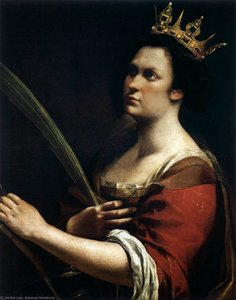
Artemisia Gentileschi’s “Judith Beheading Holofernes,” painted in 1611, isn’t merely a biblical scene rendered on canvas; it’s a visceral eruption of defiance and a profound exploration of female agency. This arresting work, measuring 159 x 126 cm, immediately commands attention with its stark realism and the unsettling intensity of its central figures. The painting depicts the pivotal moment from the Book of Judith, where the Jewish widow Judith, aided by her maidservant Abra, slays the Assyrian general Holofernes after drugging him and presenting him to his soldiers as a severed head. It’s a story steeped in revenge, courage, and ultimately, liberation – themes that resonate powerfully within Gentileschi's masterful execution.

The scene unfolds within a dimly lit chamber, the shadows emphasizing the drama and creating an atmosphere of palpable tension. The composition is remarkably dynamic; Judith, clad in a striking blue dress—a deliberate choice by the artist, likely referencing royalty and divine authority – dominates the foreground, her face etched with grim determination as she wields the sword with brutal efficiency. Holofernes lies sprawled on his bed, his body contorted in a grotesque tableau of defeat. The secondary figures, standing to the left and behind Judith, are rendered with a subtle yet crucial awareness, their expressions conveying shock, horror, and perhaps even a hint of admiration for Judith’s decisive action. The use of chiaroscuro, borrowed directly from Caravaggio's revolutionary style, intensifies the emotional impact, highlighting key elements while plunging the rest into shadow – a technique that amplifies the sense of immediacy and violence.

A Revolutionary Brushstroke: Gentileschi’s Artistic Language

Artemisia Gentileschi’s artistic approach was profoundly shaped by her father, Orazio Gentileschi, a painter who himself admired Caravaggio. However, Artemisia didn't simply imitate; she transformed these influences into something uniquely her own. Her style is characterized by an unflinching realism and a dramatic use of light and shadow – qualities that were rarely afforded to female artists at the time. Notice how she doesn’t shy away from depicting the brutality of the act, presenting it with a stark honesty that was considered shocking for its era. The musculature of Holofernes is rendered with anatomical precision, emphasizing his vulnerability and defeat. Conversely, Judith's physique is powerfully sculpted, conveying strength and resolve.

  • Chiaroscuro: Gentileschi masterfully employs dramatic contrasts between light and dark to heighten the emotional impact of the scene.
  • Dynamic Composition: The swirling movement and diagonal lines create a sense of urgency and instability, mirroring Judith’s decisive action.
  • Realistic Detail: From the texture of Holofernes' skin to the gleam of the sword, every detail is rendered with meticulous accuracy.

Symbolism and Narrative Power

Beyond its immediate depiction of a violent act, “Judith Beheading Holofernes” is rich in symbolic meaning. Judith’s act of decapitation represents not just personal revenge but also the liberation of her people from Assyrian oppression. The blue dress she wears symbolizes her elevated status and divine favor – suggesting that she is acting as an instrument of justice and a champion of her nation. Holofernes himself embodies tyranny and foreign domination, his demise signifying the triumph of righteousness over evil. The painting subtly challenges patriarchal power structures by portraying a woman taking control of her own destiny and enacting retribution against a powerful male figure.

A Timeless Masterpiece: Reproduction and Artistic Legacy

OriginalUniqueArt offers meticulously crafted hand-painted reproductions of Artemisia Gentileschi’s “Judith Beheading Holofernes,” allowing you to experience the raw power and emotional depth of this iconic work in your own space. These reproductions capture not only the visual details but also the artist's masterful use of light, shadow, and composition. Whether adorning a grand salon or a more intimate setting, this painting’s dramatic intensity will undoubtedly serve as a focal point, sparking conversation and reflecting on themes of courage, resilience, and the enduring strength of the female spirit. Consider it an investment in art history—a testament to one of the most remarkable artists of the Baroque period.

Questions & Answers

What subjects appear in "Judith Beheading Holofernes" by Artemisia Gentileschi?

The subjects of "Judith Beheading Holofernes" are judith, holofernes, beheading, violence, women, power, drama, caravaggio.

How do I preview a reproduction of "Judith Beheading Holofernes" by Artemisia Gentileschi?

To preview a reproduction of "Judith Beheading Holofernes" by Artemisia Gentileschi, open the artwork's Preview page.

Is "Judith Beheading Holofernes" more bright or more dark overall?

"Judith Beheading Holofernes" is deep_shadow overall, and its luminance is dark.

More about this painting

Preview AR preview Switch to Print Switch to Digital Image Send
Details Guide Add to favorites Download Similars X-Ray Diaporama Q&A Stats

In numbers

  • 1611the year it was painted
  • 29frames to choose from
  • standard sizes, in its own proportions
  • 5weeks to paint and deliver it
Artemisia Gentileschi

Artemisia Gentileschi

1593 - 1656, Italy

Quick facts about Artemisia Gentileschi

  • Artistic Movement Or Style: Baroque painting
  • Artists Or Movements Influenced By This Artist:
    • Feminist art
    • Baroque painters
  • Artists Who Influenced This Artist:
    • Caravaggio
    • Orazio Gentileschi
  • Date Of Birth: 1593
  • Date Of Death: 1656
  • Full Name: Artemisia Gentileschi
  • Nationality: Italian
  • Notable Artworks:
    • Judith Slaying Holofernes
    • Susanna and the Elders
    • Danaë
    • Judith & her Maidservant
  • Place Of Birth: Rome, Italy

Artist Biography

A Daughter of Rome: The Life and Art of Artemisia Gentileschi

Artemisia Gentileschi’s name echoes through the halls of art history, resonating not simply as that of a painter, but as an emblem of resilience, defiance, and extraordinary artistic talent in a world determined to silence female voices. Born in Rome in 1593, she entered a milieu steeped in artistry—her father, Orazio Gentileschi, was a respected painter deeply influenced by the revolutionary realism of Caravaggio. From her earliest years, Artemisia’s gift was undeniable, nurtured within her father's workshop where she absorbed techniques of composition and the dramatic use of light and shadow that would become hallmarks of her distinctive style. This formative training wasn’t merely about mastering brushstrokes; it was an immersion into a world of artistic ambition, one typically closed to women. Recognizing his daughter’s exceptional talent, Orazio provided opportunities unavailable to most females of the era, allowing her to study from life models—a crucial step in developing anatomical accuracy and expressive power.

Shadows and Strength: Artistic Development

Gentileschi's artistic development was profoundly shaped by Caravaggio’s tenebrism—the stark contrast between light and darkness that imbued his paintings with an intense emotionality. Yet, she didn’t simply mimic her father or Caravaggio; she forged her own unique voice, characterized by a raw psychological depth and a compelling focus on female subjects often depicted with unprecedented agency and strength. Even in her early works, like *Susanna and the Elders* (1610), a biblical scene depicting Susanna being spied upon by two lecherous old men, Artemisia’s interpretation diverges from traditional portrayals. Here, Susanna isn't passively vulnerable; she displays a quiet dignity and resistance, foreshadowing the powerful female figures that would dominate her later oeuvre. But it is *Judith Slaying Holofernes* (existing in multiple versions between 1614-1620) that cemented her reputation as a master of dramatic narrative and psychological realism. The painting isn’t merely a depiction of violence; it's an exploration of courage, determination, and the righteous fury of a woman defending her people. The visceral intensity, the unflinching portrayal of the act itself, shocked and captivated audiences then—and continues to do so today. Other notable works like *Judith and her Maidservant* (1625) and *Danaë* (c. 1636-1639) further demonstrate her evolving style, showcasing both vulnerability and power in her female protagonists. Her ability to render flesh with such realism, combined with a masterful use of chiaroscuro, created scenes that were both terrifying and deeply moving.

A Trial by Fire: Trauma and Triumph

Artemisia’s life was irrevocably altered by a horrific event: her rape at the hands of Agostino Tassi, a fellow painter and colleague of her father. The ensuing trial (1611-1612) became a public spectacle, subjecting Artemisia to grueling questioning and societal scrutiny. While she bravely testified against Tassi, the proceedings were marred by bias and attempts to discredit her character. This trauma profoundly impacted her life and art, imbuing her work with an emotional intensity that some scholars believe is directly linked to her personal experiences. The trial itself became a symbol of the challenges faced by women seeking justice in a patriarchal society. Despite this ordeal, Artemisia refused to be defined by it. She continued to paint, moving between Rome, Florence, and Naples, establishing herself as a successful artist in her own right. In 1616, she achieved another milestone: becoming the first woman admitted to the Accademia di Arte del Disegno in Florence—a testament to her talent and perseverance. This achievement was not merely symbolic; it opened doors for future generations of female artists.

Legacy of a Pioneer

Artemisia Gentileschi’s career spanned decades, marked by both artistic innovation and personal resilience. She worked for prominent patrons, including the Medici family, and established a thriving workshop, proving that women could not only excel as artists but also succeed in a traditionally male-dominated profession. For centuries, her work was often overshadowed by the circumstances of her life, viewed through the lens of scandal rather than artistic merit. However, beginning in the 20th century, there has been a significant reevaluation of her art, recognizing her as one of the most important and innovative painters of the Baroque period. Her paintings are now celebrated for their emotional depth, dramatic realism, and powerful depictions of women—not as passive objects but as active agents in their own narratives. Artemisia Gentileschi is more than just an artist; she’s a feminist icon, a trailblazer who defied societal expectations and left behind a legacy that continues to inspire generations. Her story serves as a potent reminder of the importance of recognizing and celebrating the contributions of women throughout history—and of ensuring that their voices are never silenced again. She painted not just with her hands, but with her soul, leaving an indelible mark on the world of art.

Key Works

  • Judith Slaying Holofernes (1614-1620): Perhaps her most famous work, showcasing dramatic realism and female empowerment.
  • Susanna and the Elders (1610): An early masterpiece demonstrating her unique interpretation of a classic biblical scene.
  • Judith and Her Maidservant (1625): A compelling portrayal of female solidarity and strength after a violent act.
  • Danaë (c. 1636-1639): A sensual and psychologically complex depiction of the mythological figure.

Quick Facts

  • Medium: Oil on canvas
  • Notable elements: Dramatic lighting, sword
  • Title: Judith Beheading Holofernes
  • Subject or theme: Biblical narrative
  • Location: Private Collection
  • Year: 1611

Art Quiz

There is only one correct answer for each question.

Question 1:
What biblical story does Artemisia Gentileschi’s ‘Judith Beheading Holofernes’ depict?
Question 2:
What is a notable characteristic of Artemisia Gentileschi’s style, evident in this painting?
Question 3:
Considering the dimly lit setting, what atmosphere does the painting primarily convey?
Question 4:
What is the significance of Judith’s blue dress in the painting?
Question 5:
Based on the historical context, what does Artemisia Gentileschi’s success as an artist primarily represent?