The Silent Partner: Understanding the Frame's Role in Visual Narrative
 The Frame as Argument: An Expert Guide to Selecting the Perfect Frame for Your Masterpiece
The Silent Partner: Understanding the Frame's Role in Visual Narrative The Frame as Argument: An Expert Guide to Selecting the Perfect Frame to Elevate Your Art The Silent Partner: Understanding the Frame's Role in Visual Narrative The Frame as Argum...
To the casual observer, a frame may appear as nothing more than a functional boundary, a wooden perimeter designed to separate the vibrant world of the canvas from the static reality of the wall. However, for those who truly inhabit the space of visual culture, we understand that the frame is far more than a mere border; it is a silent partner in the profound dialogue between the artwork and the observer. It acts as a curated gateway, a threshold that prepares the mind for the emotional journey ahead. Throughout history, the frame has functioned as much more than a protective casing; it is an integral component of a work's narrative, providing the necessary punctuation to the artist's visual sentence.
When we contemplate a masterpiece, our perception is immediately shaped by this structural introduction. The frame establishes the initial context, setting the stage upon which the artist’s vision performs. It provides the essential weight and gravity required to transform an image from a mere depiction into a curated object of contemplation. This relationship is deeply psychological, acting as an act of intentionality that elevates a piece of imagery from a simple arrangement of pigment and oil into a window through which we glimpse another era, another light, and another soul. It defines the limit where the painted world ends and our own reality begins, focusing our attention and directing the gaze inward.
Architectural Harmony: Aligning Frame Styles with Interior Design Eras
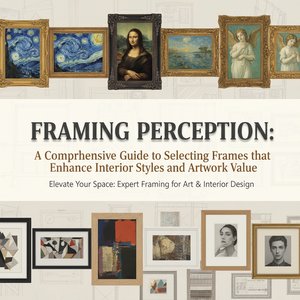 Framing Perception: A Comprehensive Guide to Selecting Frames that Enhance Interior Styles and Artwork Value
The Art of Framing: Beyond Protection – Elevating Interiors & Artwork Value Wikipedia: Interior design Interior design is the art and science of enhancing the interior of a building to achieve a healthier and more aesthetically pleasing environment f...
The selection of a frame is an act of profound architectural consideration, one that must resonate with the broader design language of a room. Just as the great architect Stanford White collaborated with master craftsmen like William Charles Lebrocq to ensure that frames were an extension of grand Beaux Arts visions, a modern collector must seek harmony between the artwork and their environment. In spaces defined by Neoclassical or Renaissance sensibilities, characterized by symmetry and grandeur, a frame featuring ornate detailing—such as acanthus leaves or egg-and-dart molding—can reinforce the room's inherent dignity.
Conversely, an interior embracing the sleek, geometric energy of Art Deco or the stripped-back elegance of modern minimalism requires a different approach. In such settings, heavy, gilded carvings might feel intrusive, disrupting the clean lines and intentional voids of the space. Instead, one might look toward the revolutionary influence of Robert Kulicke, whose "floating frames" and polished aluminum bands provided a minimalist sanctuary for mid-century modern masterpieces. Whether your home reflects the soaring arches of a Byzantine inspiration or the structured clarity of a contemporary loft, the frame must serve as the bridge that connects the historical soul of the painting to the physical reality of your architecture.
The Psychology of the Border: How Framing Shapes Perception and Focus
 The Frame as Argument: How the Right Frame Completes or Ruins a Painting
The Silent Partner: Defining the Frame's Role in Visual Narrative The Frame as Argument: An Expert Guide to Selecting the Perfect Frame to Elevate Your Art The Silent Partner: Understanding the Frame's Role in Visual Narrative The Frame as Argument: ...
There is a subtle, yet powerful, psychological impact inherent in the border. Much like the concept of framing in our own lives—where we use mental filters to organize and interpret reality—the physical frame provides a cognitive structure for visual information. It tells us precisely where the world of the painting ends and our own reality begins, preventing the eye from wandering into the periphery of the room. This containment is essential for deep immersion; it creates a sense of intimacy and privacy, much like the contemplative atmosphere found in works such as John William Godward’s depictions of classical beauty.
A well-chosen frame can manipulate the viewer's focus, either by drawing the eye inward toward a central subject or by expanding the perceived depth of the composition. A wide, deep matting can create an illusion of distance, pulling the viewer into a landscape, while a thin, tight frame can push the energy of an abstract work forward into the room. By controlling this threshold of perception, the frame dictates the tempo of our interaction with the art, deciding whether we approach the work with a sense of reverence and slow observation or with a sudden, striking impact.
Materiality and Craftsmanship: From Gilded Renaissance to Modern Minimalism
 robert kulicke
The Architect of the Frame and the Soul of Still Life Robert Moore Kulicke was far more than a mere craftsman; he was a visionary who understood that the boundary between an artwork and its environment is where true magic resides. Born in Philadelphi...
The history of framing is a history of materiality. During the Renaissance, frames evolved into elaborate displays of wealth and status, where gilded carvings became symbols of patronage and power. These works utilized gold leaf and intricate woodcarvings to reflect the light and the prestige of the era. The craftsmanship involved was not merely about protection but about creating a luxurious object in its own right. This tradition of excellence is something we strive to honor at OriginalUniqueArt.com, where our artists use 100% cotton canvas and meticulous layering techniques to ensure that every reproduction possesses the tactile depth of an original.
As art moved into the modern era, the materials shifted from the heavy and ornate to the light and industrial. The transition from the rich, dark stains of mahogany and oak to the polished surfaces of aluminum and simple wood reflects a broader cultural shift toward transparency and minimalism. Today, the connoisseur appreciates this spectrum, understanding that the choice between a traditional gilded frame and a modern canvas wrap is a choice between different modes of expression. Whether it is the visible impasto of a Van Gogh-style reproduction or the clean edges of an ExtendedWrap, the material integrity of the frame must match the academic excellence of the painting itself.
Preserving the Legacy: Technical Considerations for Longevity and Protection
 The Frame as Argument: An Expert Guide to Selecting the Perfect Frame for Your Art
The Silent Partner: Understanding the Frame's Role in Visual Narrative Beyond the Canvas: Framing as a Catalyst for Value & Aesthetic Impact in Luxury Art Reproduction The Historical Significance of Framing: Beyond Protection For centuries, the frame...
Beyond aesthetics, the frame serves a vital role in the preservation of art history. For centuries, frames were born of necessity, protecting fragile surfaces from handling and the elements. In a modern context, this responsibility extends to managing light, moisture, and atmospheric pollutants. To protect a significant investment, one must consider the chemistry of the materials used. At our studios, we utilize flexible gesso to prevent cracking and specific oils, such as safflower, for whites to prevent yellowing over time. Every painting is finished with a protective coat of Damar varnish, ensuring that the pigments remain vibrant for generations.
For those displaying prints or Giclée works, technical care is equally paramount. The use of acid-free matting is essential to create an air gap between the artwork and the glass, preventing moisture buildup that can lead to degradation. Furthermore, the structural engineering of the frame itself—using solid wood, properly braced stretcher bars to prevent warping, and high-quality mounting—is what separates a mere decoration from a museum-grade heirloom. True luxury lies in the details that are often invisible: the stability, the archival quality, and the long-term resilience of the presentation.
Curating Your Masterpiece: Expert Strategies for Bespoke Selection
 william charles lebrocq
The Silent Architect of Impressionistic Vision In the grand tapestry of American art history, certain figures operate not through the stroke of a brush, but through the meticulous curation of the viewer's gaze. William Charles Lebrocq (1862-1950) was...
Selecting the perfect frame is ultimately an act of curation. It requires a balance of historical knowledge, an understanding of your personal interior style, and a keen eye for color and composition. For the collector looking to commission a custom reproduction or a "remixed" piece of history—perhaps transforming a modern photograph into a 17th-century Rembrandt-style portrait—the framing process should begin long before the final brushstroke is applied. It is an integrated part of the artistic journey.
We recommend engaging with expert art consultants to explore how different styles might "place" art on your specific walls through digital mockups. Whether you are looking for a multi-panel layout to adorn a grand staircase or a single, impactful centerpiece for a study, the goal is to create a cohesive visual narrative. At OriginalUniqueArt.com, we assist collectors in navigating these choices, ensuring that every hand-painted oil reproduction is presented in a manner that honors its subject and elevates your entire interior landscape. Through thoughtful selection, you do not just hang a painting; you curate an experience.