Worldwide Shipping
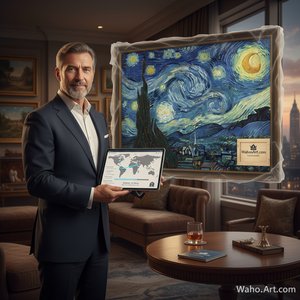
APS is proud to provide worldwide free shipping to over 70 countries. Whether your residence is in London, New York, Geneva, Dubai, Hong Kong, or São Paulo, your order will be shipped with the same level of care and precision. Every artwork is handled as if it were a museum piece — carefully packaged, insured, and entrusted only to the world’s most reliable couriers, such as DHL and FedEx. This ensures that your investment arrives not only quickly but also in pristine condition.
Collectors may choose between standard free shipping and express premium shipping. With free shipping, prints typically arrive within 28 days or less, while handmade oil reproductions — which require 3–4 weeks of meticulous creation and drying — usually arrive within 5–6 weeks. Express delivery shortens this timeframe to just 7–10 business days for prints and 3–4 weeks total for paintings. In every case, you receive a detailed tracking number and regular status updates by email and SMS, allowing you to follow your artwork’s journey in real time.
Because our clientele includes interior designers, gallery owners, and collectors with strict timelines, APS also offers Priority Production. This service accelerates both the painting and the shipping stages, ensuring delivery within approximately 2 weeks. It is a preferred choice for clients preparing for exhibitions, luxury gifts, or corporate presentations where timing is critical.
Tracking & Notifications
From the moment your artwork leaves our atelier, you are kept informed at every stage. Our system automatically sends real-time updates, including departure confirmation, customs clearance, and final delivery notifications. Tracking links connect directly to DHL or FedEx dashboards for transparent oversight.
Our logistics team also proactively monitors each shipment. If an unexpected delay occurs, we contact you before you even notice it — providing an updated delivery estimate and alternative solutions if necessary. For large projects or multiple-piece orders, APS assigns a dedicated logistics concierge who supervises your shipment personally until it reaches your address.
Customs & Duties Support
Purchasing fine art internationally often raises questions about customs, duties, and paperwork. At APS, these concerns are addressed with comprehensive customs support. Our team prepares all necessary documentation in advance to avoid unnecessary delays at borders. For example, in Brazil we assist with CPF numbers; in Mexico, RFC requirements; and in Italy, we include reproduction declarations when applicable. This ensures that your order passes customs as smoothly as possible, regardless of jurisdiction.
Should import duties or VAT fees be charged in your country, APS guarantees that you will not bear these costs. Simply send us a copy of the payment invoice, and we will refund the full amount directly to your original payment method. This transparent policy gives collectors complete peace of mind, eliminating hidden fees or unexpected costs — especially important for large-scale commissions or high-value reproductions.
For our elite clientele, this level of service transforms international art acquisition into a frictionless experience — as effortless as purchasing within your own city.
Packaging & Protection
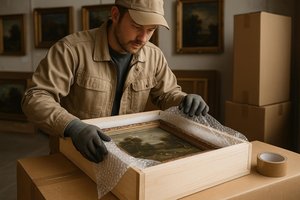
The packaging of an artwork is not simply a matter of logistics — it is part of the collector’s experience and an extension of our brand’s commitment to excellence. APS employs a multi-layer protection process designed to withstand global transport while treating each piece as irreplaceable.
- Rolled Canvases: Unframed or oversized artworks are rolled carefully with acid-free protective sheets and placed inside museum-grade rigid tubes. These tubes resist crushing, humidity, and temperature fluctuations.
- Framed or Stretched Paintings: Works on stretcher bars or within frames are wrapped in several layers of bubble wrap, cushioned with foam, and reinforced with double-corrugated edges for maximum stability.
- Insurance: Every shipment is 100% insured against loss or damage during transit.
In the rare case of transit damage, APS provides immediate solutions — either a full refund or a free replacement. Every claim is handled personally by our support team to ensure swift resolution with minimal inconvenience. For collectors, this means your investment is protected from studio to delivery.
Art Handling Standards
Each painting is crafted, dried, and handled by professionals trained in museum-grade procedures. All artworks undergo a final quality control inspection before shipping — including photographic documentation of the finished piece, frame integrity, and surface condition. These photos are archived in our system to maintain traceability and authenticity.
APS collaborates exclusively with fine art couriers who comply with temperature, humidity, and vibration standards suitable for oil paintings and delicate frames. This guarantees that your artwork’s arrival mirrors its studio condition — pristine, vivid, and perfectly preserved.
Returns & Warranty
APS offers a 30-Day Money-Back Guarantee on all artworks. If you are not completely satisfied, you may return your piece in its original condition and packaging for a full refund. This includes dissatisfaction with size, tone, or aesthetic preference — no justification required.
Our warranty applies across the full order lifecycle:
- 24-Hour Cancellation: Cancel within 24 hours for an immediate full refund.
- Preview Approval: Before shipping, you receive high-resolution images of your completed artwork. You may request unlimited revisions or cancel your order with a full refund.
- Post-Delivery Returns: Return within 30 days for a full refund or exchange.
This flexible policy reflects APS’s commitment to trust, transparency, and long-term relationships with collectors worldwide. Every purchase is a guaranteed investment in both artistry and service excellence.
Lost, Delayed, or Urgent Orders
While DHL and FedEx make lost or delayed shipments exceedingly rare, APS maintains a zero-risk protocol. Should your order be lost, we will either recreate your artwork at no cost or issue a full refund. Extended delays may also qualify for additional compensation or exclusive discount vouchers toward future purchases.
During peak seasons such as Christmas or Lunar New Year, we communicate proactively about extended timelines. For our premium clients, APS provides concierge-level tracking with direct human updates throughout the shipping process.
For urgent needs — such as last-minute gifts, hotel openings, or exhibitions — our Priority Production Service can deliver fully hand-painted works within as little as two weeks without sacrificing quality or drying integrity.
Sustainability & Environmental Responsibility
APS is committed to sustainable practices in every stage of production and shipping. We use eco-certified materials for packaging, avoid unnecessary plastics, and optimize shipping routes to minimize carbon emissions. Wherever possible, frames are crafted from FSC-certified wood and paints are selected for low environmental impact.
By choosing APS, clients participate in an environmentally conscious art ecosystem that balances luxury craftsmanship with ethical responsibility.
Collector Experience Promise
From creation to delivery, every aspect of the APS experience is designed to reflect professionalism, care, and trust. We believe that acquiring art should be inspiring — not complicated. That’s why our policies, communication, and logistics are guided by one principle: the collector always comes first.
Our dedicated support team is available to assist you before, during, and after your purchase. Whether you are acquiring your first masterpiece or expanding a private collection, APS ensures that your journey is seamless, transparent, and deeply rewarding.