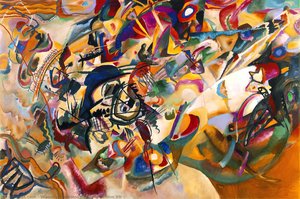
19th Century, one artist at a time

Famous 19th Century Painters: 100 Original Voices

Vincent van Gogh (1853–1890) is the most famous 19th Century painter, whose singular vision gave us Sunflowers and The Potato Eaters. Next stand Claude Monet, Paul Cézanne, Henri Matisse and Wassily Kandinsky. These 100 painters, from Bertel Thorvaldsen (born 1770) to Henri Matisse (born 1869), came from 23 countries.

Our selection. Artists whose works our catalogue attaches to 19th Century, in the order of our fame ranking. Artists born after 1955 with no Wikidata identifier stay out until verified. The Wikipedia figure counts our 32 languages with an article on the artist.

  1. Sunflowers by Vincent van Gogh1Vincent van Gogh
  2. Water Lilies (or Nympheas) by Claude Monet2Claude Monet
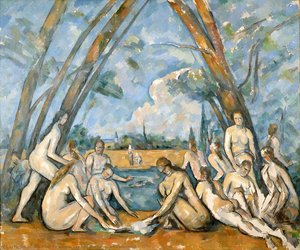
  3. The bathers Sun by Paul Cézanne3Paul Cézanne

In brief

19th Century in brief

  • 100Artists
  • 1770–1869Years of birth
  • 23Countries of birth
  • 6Women
  • 55,299Works in our catalogue
Cities with most births
Paris (13), London (2), Edo (2), Bordeaux (2)
Museums holding the most key works
Musée d'Orsay (22), Metropolitan Museum of Art (13), The Louvre (7), Museum of Fine Arts (6)

One artist at a time

100 19th Century Painters and their signature works

1of 100

Vincent van Gogh

Born in Zundert Wikipedia in 32/32 languages
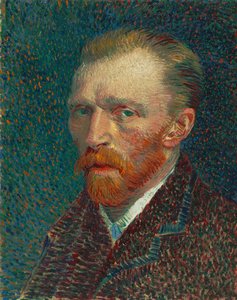
Vincent van Gogh

In 1886, the move to Paris changed the way he saw light and color. He spent time absorbing the techniques of masters like Monet, Renoir, and Pissarro. His approach to color and form helped clear a path for Expressionism, moving art away from the need to mirror the physical world.

Where to see To see the physical traces of his brushwork, one can travel to several specific collections.

Signature works · The 100 signature works

2of 100

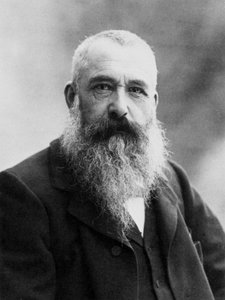
Claude Monet

French Born in Paris Impressionism Wikipedia in 32/32 languages

Claude Monet

This pursuit was defined by plein air landscape painting, a method that required him to work directly on large-scale canvases out of doors. He would often return to his studio to rework and complete these pieces, bridging the gap between the immediate observation of the outdoors and the controlled environment of the studio. Throughout his career, he worked and exhibited alongside figures such as Edgar Degas and Édouard Manet, contributing to a collective shift in how light and atmosphere were perceived on canvas.

Pupil of Eugène Louis Boudin #61, Johan Jongkind #88

Signature works · The 100 signature works

3of 100

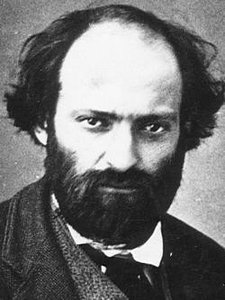
Paul Cézanne

French Born in Aix-en-Provence Post-Impressionism Wikipedia in 32/32 languages

Paul Cézanne

While his father’s ambitions leaned toward the law, the young artist found his footing under the guidance of Joseph Gibert at the Free Municipal School of Drawing. The move to Paris in 1862 marked a period of both struggle and essential exposure. Pablo Picasso and Georges Braque drew heavily from this method, finding in his work a way to organize space through volume rather than mere light.

Where to see The physical presence of his vision remains scattered across several major institutions, allowing the viewer to trace his evolution from the dark, expressive brushwork of his youth to the structured clarity of his later years.

Signature works · The 100 signature works

4of 100

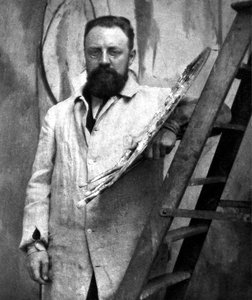
Henri Matisse

French Born in Le Cateau-Cambrésis Fauvism, Post-impressionism, Cubism Wikipedia in 32/32 languages

Henri Matisse

Later, he moved to the École Nationale des Beaux-Arts. He looked closely at the works of Jean-Baptiste-Siméon Chardin, Nicolas Poussin, and Antoine Watteau.

Where to see Walking through the halls of the Hermitage Museum in Saint Petersburg, one can find his work held within the collection.

Pupil of Gustave Moreau #36

Signature works · The 100 signature works

5of 100

Wassily Kandinsky

Russian Born in Moscow ['Expressionism', 'Abstract painting', 'Der Blaue Reiter'] Wikipedia in 32/32 languages

Wassily Kandinsky

By about 1896, he had moved to Munich to begin formal studies in art. He sought out the Anton Ažbe School and the Academy of Fine Arts to learn the mechanics of his chosen craft.

Where to see His canvases are scattered across several major institutions, inviting a close look at how his use of color and form evolved.

Signature works · The 100 signature works

6of 100

Edvard Munch

Norwegian Born in Ådalsbruk ['Expressionism', 'Symbolism']

Edvard Munch

Munch did not aim to replicate the physical world as it appeared to the eye. Instead, he sought to externalize his internal state, a method he called soul painting. In Paris, he encountered the techniques of artists like Paul Gauguin and Vincent van Gogh.

Where to see The Munch Museum is the primary guardian of his legacy, housing a vast collection that spans the full range of his artistic output.

Signature works · The 100 signature works

7of 100

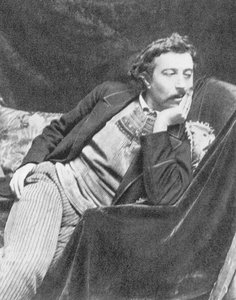
Paul Gauguin

French Born in Paris ['Post-Impressionist', 'Symbolist', 'Synthetism', 'Primitivism'] Wikipedia in 32/32 languages

Paul Gauguin

The years between 1886 and 1891 were marked by a restless search for a visual language that could transcend mere observation. In 1887, a shift in scenery brought him to Panama and Martinique alongside Charles Laval. By prioritizing the expression of internal meaning over the accurate depiction of the external world, he helped shift the focus of the French avant-garde toward a more subjective, symbolic language.

Where to see In Paris, the Musée d'Orsay preserves a significant portion of his output, offering a glimpse into the evolution of his color and form.

Pupil of Camille Pissarro #30

Signature works · The 100 signature works

8of 100

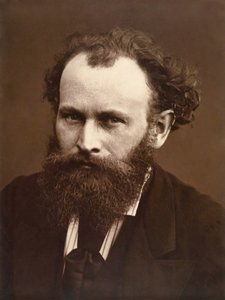
Édouard Manet

French Born in former 10th arrondissement of Paris Realism, Impressionism, Avant-garde Wikipedia in 31/32 languages

Édouard Manet

The surface of a canvas reveals a deliberate departure from the polished, invisible finish required by the Salon. This approach prioritizes the physical reality of the paint itself. He shared spaces and ideas with Claude Monet and Edgar Degas, men who were also pushing against the boundaries of what a painting could be.

Pupil of Thomas Couture #83

Signature works · The 100 signature works

9of 100

Gustav Klimt

Austrian Born in Baumgarten ['Art Nouveau', 'Symbolism', 'Vienna Secession'] Wikipedia in 32/32 languages

Gustav Klimt

Around 1900, a transformation took hold of his brush, ushering in a period that would define his legacy. He moved away from the heavy, academic shadows of his youth to embrace a luminous, decorative language. His influence was felt most keenly by those who followed in his footsteps, such as his younger peer Egon Schiele, who drew from the expressive possibilities Klimt had carved out.

Where to see Within those walls, the gold leaf seems to retain a warmth that defies the passage of time.

Signature works · The 100 signature works

10of 100

Eugène Delacroix

Born in Saint-Maurice Wikipedia in 31/32 languages

Eugène Delacroix

As Talleyrand navigated the shifting political tides, serving both the Restoration and King Louis-Philippe, he ensured Delacroix remained positioned within the center of Parisian life. Charles Auguste Louis Joseph, duc de Morny, acted as another vital shield for the painter. This passion for North African landscapes and traditions provided the essential spark for the Symbolist movement.

Where to see The traces of Delacroix’s life remain anchored in Paris.

Signature works · The 100 signature works

11of 100

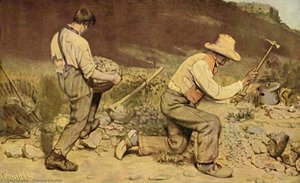
Gustave Courbet

French Born in Ornans Realism Wikipedia in 31/32 languages

Gustave Courbet

This meant looking at what was actually present rather than what tradition suggested should be there. He focused on the truth of the subject, often choosing to present the mundane and the unidealized as his primary focus. The shift from Romanticism toward the modern era found its momentum in the way he handled paint and subject.

Where to see His canvases are scattered across several major collections, inviting a close look at the textures of his paint.

Signature works · The 100 signature works

12of 100

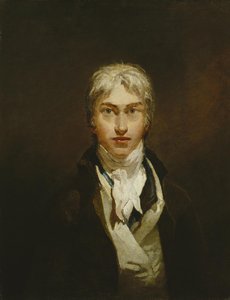
J. M. W. Turner

British Born in Maiden Lane Romanticism Wikipedia in 31/32 languages

J. M. W. Turner

In his early years, he followed the path of the eighteenth-century topographical tradition, producing precise renderings of architecture and landscapes. These early efforts showed a disciplined hand, yet a restless spirit was already beginning to stir beneath the surface of his technical proficiency. His ascent to widespread acclaim was aided by a significant turning point in 1840, when a prominent critic became his great champion.

Where to see The Tate Britain houses much of his life's work, allowing a viewer to trace his development through the decades.

Signature works · The 100 signature works

13of 100

Caspar David Friedrich

German Born in Greifswald Romanticism Wikipedia in 31/32 languages

Caspar David Friedrich

Born in the Baltic port city of Greifswald in 1774, Caspar David Friedrich’s early years were shaped by a profound sense of loss. His technical skills were further honed in Copenhagen, where he was exposed to landscape traditions that he would eventually transform into a medium for expressing inner emotional states. His reputation underwent a significant rediscovery in the late 20th century, as he was recognized as a central figure in German Romanticism.

Signature works · The 100 signature works

14of 100

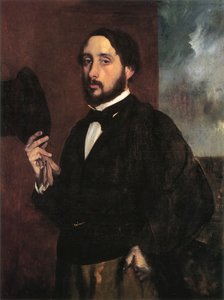
Edgar Degas

French Born in Paris Realism Wikipedia in 32/32 languages

Edgar Degas

He prefers the term "Realist," a choice that dictates his entire approach to the canvas. He avoids the outdoor landscape and the loose, flickering brushstrokes favored by his contemporaries. The shift in late 19th-century art finds a central figure in Degas.

Where to see The traces of Degas's observation remain scattered across major institutions, preserved in the quiet halls of Paris and beyond.

Signature works · The 100 signature works

15of 100

Pierre-Auguste Renoir

French Born in Limoges Impressionism Wikipedia in 32/32 languages

Pierre-Auguste Renoir

His early years were defined by a preoccupation with the way light interacts with the physical world. He utilized loose brushstrokes and a palette of saturated colors to capture the fleeting atmosphere of a moment.

Where to see The distribution of his canvases across the globe reflects the widespread reach of his influence.

Signature works · The 100 signature works

16of 100

Jean-Auguste-Dominique Ingres

French Born in Montauban Neoclassicism Wikipedia in 32/32 languages

Jean-Auguste-Dominique Ingres

Having won the Grand Prix de Rome in 1801, Ingres arrives in Rome to begin a residency that will define his middle years. His presence in Italy is long-lasting, eventually leading to his appointment as the Director of the Academy of France in Rome in 1834. When he died in 1867, the landscape of French art had shifted.

Where to see The traces of his hand remain scattered across major global institutions.

Signature works · The 100 signature works

17of 100

Georges Seurat

French Born in former 5th arrondissement of Paris ['Neo-Impressionism', 'Post-Impressionism', 'Pointillism', 'Divisionism', 'Chromoluminarism'] Wikipedia in 30/32 languages

Georges Seurat

Seurat replaced the spontaneous, intuitive brushwork of his predecessors with a calculated, systematic approach to light. He developed Pointillism, a method defined by the application of small, distinct dots of pure color onto a canvas. The Fauvists adopted his emphasis on bold, non-naturalistic color, while the Cubists drew from his ability to deconstruct forms into geometric components.

Signature works · The 100 signature works

18of 100

Théodore Géricault

French Born in Rouen Romanticism Wikipedia in 30/32 languages

Théodore Géricault

While The Raft of the Medusa remains his most celebrated achievement, Géricault's artistic output extended beyond this singular masterpiece. Sadly, Géricault’s life was cut short by illness at the age of 32 in 1824, following years of suffering from riding accidents and a chronic tubercular infection. He continually returned to military themes, evident in works like Wounded Cuirassier (1814) and The Derby of Epsom (1821), demonstrating a fascination with drama and expressive force.

Signature works · The 100 signature works

19of 100

Jean-François Millet

French Born in Gréville-Hague Realism, Barbizon school Wikipedia in 30/32 languages

Jean-François Millet

In 1837, he moved to Paris to enroll at the École des Beaux-Arts. His first submission to the Salon, Saint Anne Instructing the Virgin, was rejected by the jury. His insistence on depicting the working class with dignity provided the necessary groundwork for the emergence of Social Realism and the later developments of Impressionism.

Where to see Paris remains the primary destination for his work.

Pupil of Paul Delaroche #55

Signature works · The 100 signature works

20of 100

Hilma af Klint

Swedish Born in Solna Abstract art, Spiritualism Wikipedia in 24/32 languages

Hilma af Klint

Coming from a family steeped in naval tradition yet also possessing an interest in botany and mathematics, she received a traditional artistic education at the Tekniska Skolan (Technical School) and subsequently at the Royal Academy of Fine Arts in Stockholm, graduating with honors in 1887. Her encounters with Rudolf Steiner, founder of Anthroposophy, further refined her spiritual beliefs and artistic approach.

Signature works · The 100 signature works

21of 100

Jean-Baptiste-Camille Corot

French Born in Paris Neoclassicism, Realism, Impressionism Wikipedia in 30/32 languages

Jean-Baptiste-Camille Corot

He spent time sketching and making preliminary paintings directly in the landscape to capture the immediate light. This method allowed him to build up his compositions through a specific layering of thin washes of oil paint onto the canvas. By the time he reached his final decade, he was known in Parisian circles as "Père Corot." This title reflected more than just his age; it spoke to his position as a central figure for those navigating the shift from academic traditions toward new ways of seeing.

Where to see To find his traces, one often looks to Paris.

Teacher of Berthe Morisot #23

Signature works · The 100 signature works

22of 100

James McNeill Whistler

American Born in Lowell Tonalism & Aestheticism Wikipedia in 30/32 languages

James McNeill Whistler

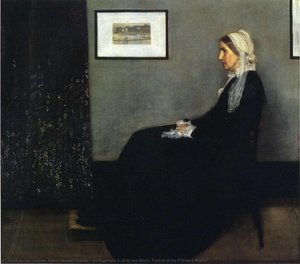
In 1855, Whistler left the familiar surroundings of his youth to move to Paris, a city where he could finally devote himself entirely to his art. He sought out formal training, studying under Sébastien Bouré and later entering the studio of Gleyre in 1856. Arrangement in Grey and Black No. 1 (1871).

Where to see Finding the traces of Whistler's hand requires traveling through the cities that shaped his life and his restless spirit.

Signature works · The 100 signature works

23of 100

Berthe Morisot

French Born in Bourges Impressionism Wikipedia in 30/32 languages

Berthe Morisot

Her mother, Marie-Joseph-Cornélie Thomas, brought a connection to the Rococo tradition as the great-niece of Jean-Honoré Fragonard. By 1858, she was spending her time in the Louvre, learning the mechanics of paint by copying the Old Masters.

Where to see To see her brushwork in person, one might start in Paris.

Pupil of Jean-Baptiste-Camille Corot #21

Signature works · The 100 signature works

24of 100

John Constable

British Born in East Bergholt Romanticism Wikipedia in 30/32 languages

John Constable

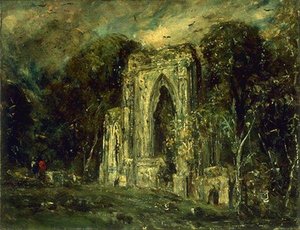
Instead, he sought a truthful representation of the natural world. This required a slow, methodical process of observation. He also looked toward the compositions of Thomas Gainsborough and the textures of Peter Paul Rubens.

Where to see Tracing his presence across different collections reveals how his views of the English countryside have been gathered over time.

Signature works · The 100 signature works

25of 100

Winslow Homer

American Born in Boston American Realism Wikipedia in 24/32 languages

Winslow Homer

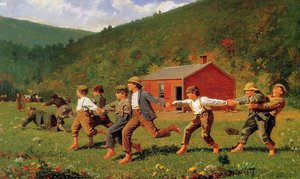
In 1859, Homer moved to New York City and opened a studio in the Tenth Street Studio Building. The years that followed saw him traveling through New York State, Virginia, and Massachusetts. This commitment to seeing things as they were—from the aftermath of the Civil War to the shifting landscapes of the coast—ensures his place among the most important artists in the American tradition.

Where to see Tracing the physical presence of his work requires visiting several major institutions across the United States.

Signature works · The 100 signature works

26of 100

Alphonse Mucha

Czech Born in Ivančice Art Nouveau Wikipedia in 31/32 languages

Alphonse Mucha

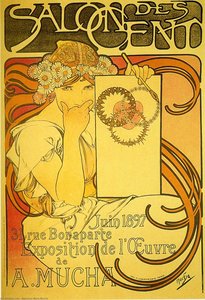
Notable Works: The Slavonic Uprising - Showcases blending traditional Czech motifs with modern Art Nouveau elements. Paintings inspired by works like The Daughters of Tespio by Gustave Moreau, and La Ribambelle des Gobelins by Piero Dorazio. Influenced by Czech artistic traditions and modern European art movements.

Signature works · The 100 signature works

27of 100

Henri De Toulouse-Lautrec

French Born in Albi Post-Impressionism Wikipedia in 31/32 languages

Henri De Toulouse-Lautrec

His hand moved with a precision that transformed simple lines into instruments of character and emotion. By rejecting traditional depth, he achieved a directness that mirrored the immediacy of the Parisian nightlife he inhabited. The transition from Impressionism to modern art found a distinct voice in the works of Henri de Toulouse-Lautrec.

Where to see The Musée Toulouse-Lautrec, housed within the Palais de la Berbie, maintains the most significant collection, containing over 1000 works that trace his evolution from an aristocratic youth to a chronicler of the Parisian night.

Signature works · The 100 signature works

28of 100

William-Adolphe Bouguereau

French Born in La Rochelle Academic realism Wikipedia in 29/32 languages

William-Adolphe Bouguereau

Working primarily in oil, Bouguereau constructs scenes through academic realism, focusing heavily on the female human body. This structural choice, reminiscent of Renaissance artists, provides a sense of depth and order to his mythological themes and realistic genre paintings. The height of the nineteenth century finds him as the quintessential salon painter, a figure of immense popularity in France and the United States.

Where to see The physical presence of his canvases remains scattered across major international institutions.

Signature works · The 100 signature works

29of 100

Dante Gabriel Rossetti

English Born in London Pre-Raphaelite Brotherhood, Symbolism Wikipedia in 31/32 languages

Dante Gabriel Rossetti

He did not merely paint scenes; he constructed them through a lens of medieval revivalism, looking back to the sincerity of the era before Raphael to find a way to express modern sentiment. This later phase drew heavily from the later Italian Renaissance, trading early clarity for a sense of saturated, heavy texture. She was the face of several significant paintings, including Proserpine, The Day Dream, and Pia de' Tolomei.

Where to see The Tate Gallery holds the largest concentration of his work, with 16 pieces available for study.

Signature works · The 100 signature works

30of 100

Camille Pissarro

Danish-French Born in Charlotte Amalie ['Impressionism', 'Neo-Impressionism', 'Post-Impressionism'] Wikipedia in 31/32 languages

Camille Pissarro

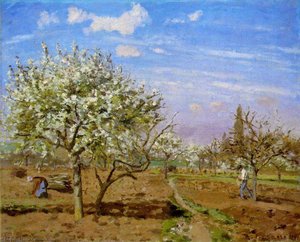
The transition from academic tradition to the open air marks a fundamental shift in his approach. He moves away from the stifling constraints of formal training to embrace plein air painting, working directly from nature to capture the immediate sensations of the landscape. Without his stabilizing presence and willingness to experiment—even venturing into the pointillist techniques of Neo-Impressionism —the development of Post-Impressionism might have taken a different shape.

Where to see The weight of Pissarro's influence is felt most heavily in Paris.

Teacher of Paul Gauguin #7

Signature works · The 100 signature works

31of 100

Ilya Repin

Ukrainian-born Russian Born in Chuhuiv Realism Wikipedia in 32/32 languages

Ilya Repin

Repin established himself as the foremost exponent of the Russian Realist style, a movement that sought to strip away academic idealization in favor of the unvarnished truth of contemporary life. During his time in France and Italy, he encountered the burgeoning Impressionist movement, and the influence of French plein-air techniques became evident in his later work. Ivan the Terrible and His Son Ivan (1885).

Where to see The physical presence of Repin's oeuvre is scattered across several major institutions, reflecting the breadth of his influence.

Signature works · The 100 signature works

32of 100

Henri Rousseau

Born in Laval Wikipedia in 31/32 languages

Henri Rousseau

Rousseau was largely self-taught as an artist, beginning to paint seriously in his early forties after receiving encouragement from a friend. His style is characterized by its naïve or primitive quality, marked by flat perspectives, simplified forms, and vibrant, often unrealistic colors. He admired artists like Eugène Delacroix and drew inspiration from their use of color and exotic subject matter.

Signature works · The 100 signature works

33of 100

Alfred Sisley

British Born in former 4th arrondissement of Paris Impressionism Wikipedia in 31/32 languages

Alfred Sisley

While many of his contemporaries drifted between different genres, Sisley’s focus remained remarkably singular. This devotion to the immediate, lived experience of nature made him perhaps the most consistent of the Impressionists in his method. He acted as a vital link between the Barbizon school, with its grounded realism, and the full flowering of Impressionism.

Where to see In Paris, his presence is felt strongly within the Musée d'Orsay, which holds a significant number of his canvases.

Signature works · The 100 signature works

34of 100

Gustave Doré

French Born in Strasbourg Romanticism Wikipedia in 30/32 languages

Gustave Doré

He does not wait for formal instruction to master the line. At fifteen, he enters the bustling, satirical atmosphere of the French journal Le Journal pour rire. His 1866 illustrations for the Bible achieved massive success, cementing a visual language for sacred texts that persists in the public imagination.

Where to see The physical remnants of Doré’s prolific output are scattered across several continents, preserved in institutions that hold his diverse range of media.

Signature works · The 100 signature works

35of 100

John Singer Sargent

American Born in Florence Impressionism Wikipedia in 27/32 languages

John Singer Sargent

To further refine his skills, he enrolled at the École des Beaux-Arts, drawing from life models and casts to solidify his foundation. The unveiling of Madame X (Portrait of Madame Pierre Gautreau) at the 1884 Salon ignited a scandal that threatened his burgeoning career. By the time of his death on April 15, 1925, the scope of Sargent's output had reached a vast scale, encompassing roughly 900 oil paintings and over 2,000 watercolors.

Signature works · The 100 signature works

36of 100

Gustave Moreau

French Born in Paris Symbolism Wikipedia in 28/32 languages

Gustave Moreau

He did not merely observe the works of the masters; he lived among them, spending his time making hundreds of copies and studies of Old Master paintings. His time in Italy allowed him to synthesize these diverse influences, blending the classical precision of the Renaissance with a more modern, expressive use of color. By the 1890s, Moreau had become a central figure in the Symbolist movement.

Where to see To experience his art in the most intimate way, one can visit the Musée Gustave Moreau in Paris, France.

Signature works · The 100 signature works

37of 100

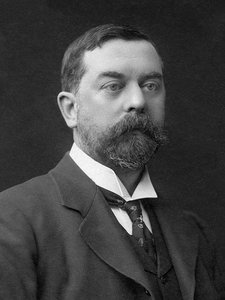
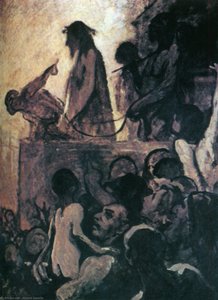
Honoré Daumier

French Born in Marseille Realism, Satire Wikipedia in 29/32 languages

Honoré Daumier

While Daumier is most celebrated for his lithography, to confine him solely to the realm of caricature would be a grave disservice. He was also a dedicated painter and sculptor, though recognition for these works came later in life. His unflinching social commentary influenced artists like Gustave Courbet and Édouard Manet, while his innovative use of lithography revolutionized printmaking.

Signature works · The 100 signature works

38of 100

Paul Signac

French Born in Paris Neo-Impressionism, Pointillism Wikipedia in 29/32 languages

Paul Signac

He moved away from the traditional method of mixing pigments on a palette, which he believed could dull the true intensity of color. In 1899, he articulated these complex theories in his writing, From Eugène Delacroix to Neo-Impressionism. Signac’s approach to the canvas inspired artists like Henri Matisse and André Derain, who would later push the boundaries of color even further.

Where to see The Musée d'Orsay holds nine of his works, offering a significant gathering of his vision.

Signature works · The 100 signature works

39of 100

Ivan Aivazovsky

Russian Born in Feodosiia Russian Romanticism Wikipedia in 32/32 languages

Ivan Aivazovsky

As a Russian Romantic painter, he prioritized the visceral impact of light and movement over static accuracy. He achieved this through a specific technical discipline: applying paint in thin, translucent layers. In 1845, he traveled to the Aegean Sea, the Ottoman capital Constantinople, and the Greek islands of Patmos and Rhodes.

Where to see Aivazovsky’s presence in modern collections remains substantial, ensuring his technical approach to light and water is still accessible to those studying marine art.

Signature works · The 100 signature works

40of 100

Utagawa Hiroshige

Japanese Born in Edo Ukiyo-e Wikipedia in 30/32 languages

Utagawa Hiroshige

His life unfolded during a period of relative peace and prosperity under the Tokugawa shogunate, yet also one marked by increasing social change and eventual westernization – forces that would ultimately contribute to the decline of ukiyo-e even as they amplified Hiroshige’s enduring legacy. Artists like Édouard Manet, Claude Monet, and Edgar Degas were captivated by the bold compositions, flattened perspectives, and unconventional color schemes of ukiyo-e, incorporating these elements into their own work.

Signature works · The 100 signature works

41of 100

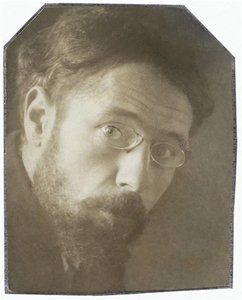
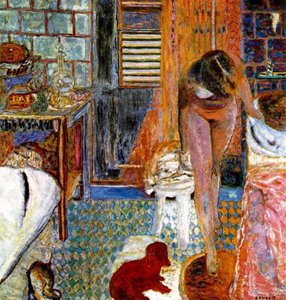
Pierre Bonnard

French Born in Fontenay-aux-Roses Post-Impressionism, Intimism, Les Nabis Wikipedia in 27/32 languages

Pierre Bonnard

He became a founding member of Les Nabis, a group of artists who sought to move beyond mere representation. The prints of Hokusai and other Japanese masters offered him a new way to organize space and line. While his early years were defined by his membership in Les Nabis alongside Edouard Vuillard and Paul Serusier, his work eventually moved beyond the group's specific boundaries.

Where to see The physical presence of Bonnard’s vision remains scattered across several major institutions, allowing his specific approach to light and domesticity to be studied in various contexts.

Signature works · The 100 signature works

42of 100

Odilon Redon

Born in Bordeaux Wikipedia in 28/32 languages

Odilon Redon

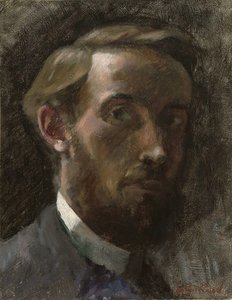
To achieve greater precision, he often applied fabricated black chalk to outline specific compositional elements over broad, soft passages of charcoal. These works were often described as a synthesis of nightmares and dreams, where the boundaries between the physical and the imagined became blurred. The ripples of Redon’s vision reached far beyond the quiet rooms of the Symbolist circle, touching the very foundations of the coming century.

Where to see In Paris, the Musée d'Orsay holds several of his works, offering a glimpse into the evolution of his vision.

Pupil of Jean-Léon Gérôme #45

Signature works · The 100 signature works

44of 100

Mary Cassatt

American Born in Allegheny Impressionism Wikipedia in 32/32 languages

Mary Cassatt

Her training expands as she moves through Courance and Écouen, studying under Édouard Frère and Paul Soyer. In 1872, the scene shifts to Parma, Italy. Her impact is recognized by her induction into the National Women's Hall of Fame in 1973.

Pupil of Jean-Léon Gérôme #45, Thomas Couture #83

Signature works · The 100 signature works

45of 100

Jean-Léon Gérôme

French Born in Vesoul Academicism, Orientalism, Neo-Grec Wikipedia in 29/32 languages

Jean-Léon Gérôme

The story of Jean-Léon Gérôme begins in Vesoul, Haute-Saône, where he was born on 11 May 1824. Upon returning to Paris, he sought further refinement within the atelier of Charles Gleyre in 1844 and eventually entered the École des Beaux-Arts. Among those who passed through his doors were Thomas Eakins, John Singer Sargent, and Mary Cassatt.

Where to see In Paris, the Musée d'Orsay preserves his paintings, offering a direct connection to the academic rigor he once championed.

Pupil of Paul Delaroche #55 · Teacher of Odilon Redon #42, Mary Cassatt #44, Thomas Eakins #77, Édouard Vuillard #73, Gustave Caillebotte #58

Signature works · The 100 signature works

46of 100

Frederic Edwin Church

American Born in Hartford Hudson River School Wikipedia in 24/32 languages

Frederic Edwin Church

His paintings are characterized by an astonishing level of detail, capturing the textures of foliage, the play of light on water, and the imposing scale of mountains with breathtaking accuracy. However, this wasn’t simply photographic representation; Church infused his work with a dramatic flair, employing sweeping panoramic views, vibrant color palettes, and a masterful command of atmospheric perspective. This influence is evident in Church’s later expeditions to South America and his attempts to convey not just the visual beauty of these landscapes but also their underlying geological and botanical complexities.

Pupil of Thomas Cole #62

Signature works · The 100 signature works

47of 100

Émile Bernard

Born in Lille Wikipedia in 28/32 languages

Émile Bernard

Key Relationship: A pivotal moment came in August 1886 when he met Paul Gauguin in Pont-Aven. He also associated with Vincent van Gogh, forming part of the “School of Petit-Boulevard” alongside Anquetin and Toulouse-Lautrec.

Signature works · The 100 signature works

48of 100

Frederic Leighton

British Born in Scarborough Academic, Pre-Raphaelite Wikipedia in 26/32 languages

Frederic Leighton

He was a gifted sculptor, and his Athlete Wrestling with a Python, created between 1888 and 1891, marked a pivotal moment in British sculpture—often credited with initiating a renaissance in contemporary sculptural practice known as the “New Sculpture.” This work, carved from pristine white marble, embodies both physical power and dramatic tension. He was knighted in 1878, made a baronet in 1886, and remarkably, granted a peerage just one day before his passing—a testament to the immense respect he commanded within the art world and beyond.

Signature works · The 100 signature works

49of 100

John William Waterhouse

British (English) Born in Rome Pre-Raphaelite, Romanticism, Symbolism Wikipedia in 29/32 languages

John William Waterhouse

His approach was characterized by a meticulous technique that relied upon a deep understanding of symbolism to convey meaning. He often placed strong, sensuous female characters within dreamlike settings, creating an atmosphere that felt both introspective and distant. He was named an Associate of the Royal Academy in 1885, a distinction that preceded his election as a full Academician in 1895.

Where to see The physical presence of Waterhouse's canvases can be found within several major art museums and galleries across the United Kingdom and beyond.

Signature works · The 100 signature works

50of 100

Frédéric Bazille

French Born in Montpellier Impressionism Wikipedia in 28/32 languages

Frédéric Bazille

He frequently combined figure painting with landscape, placing his subjects thoughtfully within their environment, as seen in masterpieces like Family Reunion (1867-1868). He was deeply influenced by Eugène Delacroix, whose vibrant use of color resonated with his own artistic sensibilities, yet he moved beyond academic conventions to embrace a more modern sensibility. The blossoming career of Jean Frédéric Bazille was brutally interrupted by the Franco-Prussian War in 1870.

Signature works · The 100 signature works

51of 100

Théodore Rousseau

French Born in Paris Barbizon School, Realism Wikipedia in 29/32 languages

Théodore Rousseau

Rejecting the idealized and polished representations favored by Romanticism, Rousseau embraced the Barbizon School aesthetic, characterized by muted colors, sketchy brushwork, and a profound focus on atmospheric perspective. His work often featured: Complex textures that mirrored the organic irregularities of the forest floor and tree bark. His dedication to portraying the natural world with uncompromising accuracy helped pave the way for future movements, most notably Impressionism.

Signature works · The 100 signature works

52of 100

Carl Larsson

Swedish Born in Storkyrkoförsamlingen Arts and Crafts movement Wikipedia in 28/32 languages

Carl Larsson

His work reflects the principles of the Arts and Crafts movement, favoring a sense of handcrafted beauty over the heavy, dark furnishings common in the homes of his contemporaries. His style often blended elements of Art Nouveau with National Romanticism, using flowing lines and organic forms to frame the people within them.

Signature works · The 100 signature works

53of 100

Jan Matejko

Polish Born in Free City of Kraków Romanticism, History painting Wikipedia in 30/32 languages

Jan Matejko

In the city of Kraków, Poland, the child Jan Matejko entered a world shaped by the quiet rhythms of music and the heavy weight of history. Ann's High School, the rigors of formal schooling proved difficult, and he left the institution in 1851 after struggling with his grades. He was remembered as Poland's most famous painter, a man who earned the title of "national painter" by turning the heavy weight of history into something the people could see and feel.

Where to see To follow the traces of his brush is to travel through the great halls of Europe, where his visions of the past remain held in trust.

Signature works · The 100 signature works

54of 100

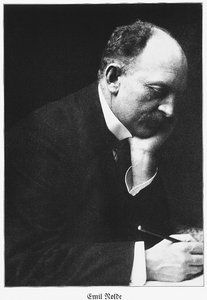
Emil Nolde

German-Danish Born in Nolde German Expressionism Wikipedia in 28/32 languages

Emil Nolde

Born Hans Emil Hansen, he grew up on a farm in the Duchy of Schleswig. His parents were Danish and Frisian peasants, and the rhythms of rural life shaped his early years. He looked toward the work of Paul Gauguin and found a way to move beyond simple representation.

Where to see Tracing his presence in public collections reveals a scattered but significant trail.

Signature works · The 100 signature works

55of 100

Paul Delaroche

French Born in Paris Romanticism & Neoclassicism Wikipedia in 26/32 languages

Paul Delaroche

Born in Paris in 1797 into a family where art was woven into the very fabric of daily life, Delaroche was destined for greatness.

Pupil of Antoine-Jean Gros #72 · Teacher of Jean-François Millet #19, Jean-Léon Gérôme #45

Signature works · The 100 signature works

56of 100

James Ensor

Belgian Born in Ostend ['Symbolism', 'Expressionism'] Wikipedia in 25/32 languages

James Ensor

James Ensor was born on April 13, 1860, in Ostend, Belgium. His identity was shaped by a specific cultural intersection: his father, James Frederic Ensor, was born in Brussels to English parents, while his mother, Maria Catherina Haegheman, was Belgian.

Where to see Ensor’s presence in major international collections confirms his lasting impact on the development of modernism.

Signature works · The 100 signature works

57of 100

John Everett Millais

British Born in Southampton Pre-Raphaelite Brotherhood Wikipedia in 28/32 languages

John Everett Millais

Following the annulment of her marriage to a prominent critic, Effie Chalmers entered his life, and the two were married in 1855. This union was not merely a private matter but a turning point that coincided with a departure from his earlier, more rigid methods. The ripples of his influence moved through the decades, reaching far beyond the initial stirrings of the Pre-Raphaelite Brotherhood.

Where to see In London, the Tate Britain holds ten of his paintings, offering a significant window into the evolution of his hand.

Signature works · The 100 signature works

58of 100

Gustave Caillebotte

French Born in Paris Realism and Impressionism Wikipedia in 26/32 languages

Gustave Caillebotte

His technique often felt closer to the heavy, grounded depictions of Courbet or Millet than the atmospheric experiments of Monet or Morisot. He prioritized a precise rendering of form and a clear, structured depiction of modern life, avoiding the blurred edges that characterized much of the era's avant-garde output. A first comprehensive international retrospective in 1994–1995 finally solidified this standing, presenting his vision to a global audience on a scale that matched his historical importance.

Where to see The Musée d'Orsay holds a substantial portion of his output, including the large-scale Boating Party and the gritty, realistic The Floor Scrapers.

Pupil of Jean-Léon Gérôme #45

Signature works · The 100 signature works

59of 100

Ivan Shishkin

Russian Born in Yelabuga Realism, Peredvizhniki Wikipedia in 30/32 languages

Ivan Shishkin

After his early schooling, Shishkin moved to the Saint Petersburg Imperial Academy of Arts, where he studied from 1857 to 1860. In 1861, he visited Munich, Germany, to observe the works of established artists.

Where to see To experience the quiet presence of Shishkin’s forests, one can visit several significant collections across Russia.

Signature works · The 100 signature works

60of 100

Joaquín Sorolla

Spanish Born in Valencia Luminism, Impressionism, Social Realism Wikipedia in 27/32 languages

Joaquín Sorolla

He was a painter who preferred the directness of the outdoors, choosing to paint almost all of his works en plein air. This commitment to working in the open air allowed him to confront the shifting elements head-on. The Return from Fishing; Hauling the Boat (1894).

Where to see For those wishing to walk through the spaces that shaped his life, the Museo Sorolla in Madrid offers a rare glimpse into his private world.

Signature works · The 100 signature works

61of 100

Eugène Louis Boudin

French Born in Honfleur Precursor to Impressionism Wikipedia in 26/32 languages

Eugène Louis Boudin

Born on 12 July 1824 in the port town of Honfleur, Normandy, France, Eugène Louis Boudin was a child of the sea. His formal path toward painting became clear when he earned a scholarship in 1850, which allowed him to leave Normandy for Paris. A significant shift in his direction occurred when he met the Dutch painter Johan Jongkind.

Where to see In Paris, the Musée d’Orsay preserves several of his canvases, allowing viewers to stand before the very brushstrokes that once inspired a generation of painters.

Signature works · The 100 signature works

62of 100

Thomas Cole

Anglo-American Born in Bolton Hudson River School Wikipedia in 25/32 languages

Thomas Cole

His approach often involved placing small figures or solitary structures against moody, expansive natural landscapes. He possessed a keen ability to render the textures of the American wilderness, often using the interplay of light and shadow to create a sense of atmosphere and depth. As the founder of the Hudson River School, he provided the first significant vocabulary for a nation seeking to define itself through its own soil and sky.

Where to see The Museum of Fine Arts in Boston also maintains a collection of his paintings, offering further insight into his development.

Teacher of Frederic Edwin Church #46

Signature works · The 100 signature works

63of 100

Albert Bierstadt

German-American Born in Solingen Hudson River School, Luminism Wikipedia in 23/32 languages

Albert Bierstadt

Bierstadt’s approach to the canvas was shaped by his time in Düsseldorf, where he moved away from the simple crayon sketches of his youth toward a more disciplined, naturalistic style. His later works in the Bahamas showed a shift toward a more expressive use of color, moving away from the controlled Luminist style toward bolder, more brilliant tones. Bierstadt was an important interpreter of the western landscape, providing a way for people to see the scale of the American West.

Where to see His canvases can be found in several collections across different continents.

Signature works · The 100 signature works

64of 100

Lawrence Alma-Tadema

Dutch Born in Dronryp Victorian realism, Classical representation Wikipedia in 26/32 languages

Lawrence Alma-Tadema

When Lourens was four years old, his father passed away, leaving his mother, Hinke Dirks Brouwer, to raise five children. In 1852, he entered The Royal Academy of Antwerp. Even writers found his imagery useful, incorporating his specific visual details into their descriptions of ancient Rome to ground their stories in a sense of physical reality.

Where to see Finding the traces of his brushwork requires a bit of travel across Europe, as his paintings are held in several significant collections.

Signature works · The 100 signature works

65of 100

Edward Burne-Jones

British Born in Birmingham ['Pre-Raphaelite Brotherhood', 'Aestheticism', 'Symbolism', 'Arts and Crafts'] Wikipedia in 27/32 languages

Edward Burne-Jones

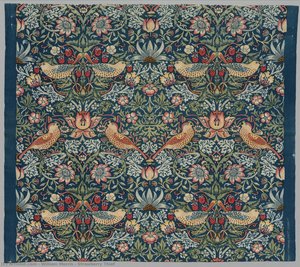
His path led him to an apprenticeship under Dante Gabriel Rossetti, a move that anchored him within the Pre-Raphaelite Brotherhood. His early work often carried the weight of Rossetti’s influence, particularly in the way he handled shadows and the heavy, soulful presence of his figures. Through his partnership with Morris & Co., he helped bring a renewed focus to traditional crafts, moving art away from the canvas and into the textures of daily life.

Where to see To see his hand in person, one might start in Walthamstow at the William Morris Gallery, which holds nine of his works.

Signature works · The 100 signature works

66of 100

Suzanne Valadon

French Born in Bessines-sur-Gartempe Post-Impressionism Wikipedia in 27/32 languages

Suzanne Valadon

For nearly a decade, Valadon worked as an artist’s model, posing for prominent figures like Pierre-Auguste Renoir, Henri de Toulouse-Lautrec, and Edgar Degas. Toulouse-Lautrec, recognizing her innate talent, encouraged her to pursue drawing, and it was Degas who provided more formal guidance, solidifying her foundational skills. In 1894, she became the first woman painter admitted to the prestigious Société Nationale des Beaux-Arts, a significant milestone in breaking down barriers for female artists.

Signature works · The 100 signature works

67of 100

Auguste Rodin

French Born in Paris Modern Sculpture

Auguste Rodin

By the turn of the 20th century, Rodin had achieved international acclaim, becoming arguably the most celebrated sculptor of his time.

Signature works · The 100 signature works

68of 100

Käthe Kollwitz

German Born in Königsberg Expressionism Wikipedia in 28/32 languages

Käthe Kollwitz

Käthe Kollwitz, born Käthe Schmidt on July 8, 1867, in Königsberg (now Kaliningrad, Russia), emerged from a family deeply rooted in both intellectual ferment and social conscience. She continued her studies in Berlin and Munich, immersing herself in the artistic currents of the late 19th century, but always returning to the human condition as her central subject. In 1919, she achieved a historic milestone by becoming the first woman elected to the Prussian Academy of Arts—a testament to her artistic achievements and growing influence.

Signature works · The 100 signature works

69of 100

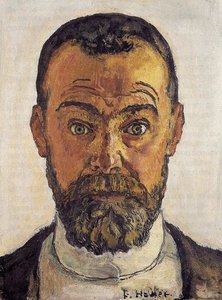
Ferdinand Hodler

Swiss Born in Bern Symbolism, Parallelism, Realism Wikipedia in 26/32 languages

Ferdinand Hodler

Born in Bern, Switzerland, in 1853, Ferdinand Hodler’s early years were defined by a quiet, persistent grief. His move to Geneva in 1871 marked a departure from the commercial demands of his youth. In works such as The Night, completed in 1890, he explored themes of repose and mortality through recumbent figures, a subject that challenged the prevailing tastes of the time.

Signature works · The 100 signature works

70of 100

William Holman Hunt

British Born in London Pre-Raphaelitism Wikipedia in 28/32 languages

William Holman Hunt

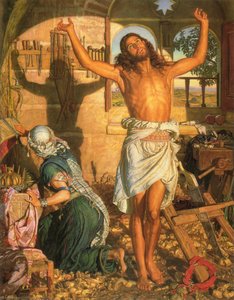
William Holman Hunt, born in Cheapside, London on April 2, 1827, was more than simply a painter; he was a philosophical and spiritual seeker who translated his deepest convictions onto canvas. He passed away on September 7, 1910, and was honored with burial in St Paul’s Cathedral—a testament to his significant contribution to British art and culture.

Signature works · The 100 signature works

72of 100

Antoine-Jean Gros

French Born in Paris Neoclassicism & Romanticism Wikipedia in 26/32 languages

Antoine-Jean Gros

The influence of Venetian masters like Titian and Veronese, with their rich color palettes and dynamic compositions, became increasingly apparent. His portraits, such as Equestrian Portrait of Prince Boris Yusupov, demonstrate a remarkable ability to capture both physical likeness and psychological depth. Following Napoleon’s downfall, Gros faced a period of artistic uncertainty.

Signature works · The 100 signature works

73of 100

Édouard Vuillard

French Born in Cuiseaux Les Nabis, Intimism Wikipedia in 23/32 languages

Édouard Vuillard

Jean-Édouard Vuillard was born on 11 November 1868 in Cuiseaux, France. He faced setbacks when he failed to enter the École des Beaux-Arts in both 1886 and 1887. His tenure as a prominent member of the Nabis, a group of post-impressionist artists, allowed him to experiment with a visual language that prioritized subjective experience over mere imitation.

Where to see The quiet, patterned interiors that defined his career are preserved in several major international collections.

Pupil of Jean-Léon Gérôme #45

Signature works · The 100 signature works

74of 100

Adolph von Menzel

German Born in Wrocław Realism Wikipedia in 24/32 languages

Adolph von Menzel

While largely self-taught, Menzel was not immune to artistic influences. However, he forged a distinctly German path, rejecting the overt romanticism prevalent in some contemporary circles in favor of a more objective, analytical approach. He admired the Dutch Masters —their mastery of light and shadow, their ability to elevate everyday life to artful significance—and elements of this influence can be seen in his compositions and use of color.

Signature works · The 100 signature works

75of 100

Aristide Maillol

French Born in Banyuls-sur-Mer Classical sculpture, Symbolism Wikipedia in 26/32 languages

Aristide Maillol

His deliberate rejection of Rodin’s dramatic realism and his embrace of classical principles paved the way for a new generation of sculptors, including Henry Moore, who were inspired by his emphasis on simplified forms and monumental scale.

Pupil of Jean-Léon Gérôme #45, Alexandre Cabanel #95

Signature works · The 100 signature works

76of 100

Bertel Thorvaldsen

Born in Copenhagen Wikipedia in 29/32 languages

Bertel Thorvaldsen

Rome proved to be the ideal environment for Thorvaldsen’s artistic development. He immersed himself in the study of classical antiquity, meticulously copying ancient sculptures and absorbing their principles of form and proportion. However, he gradually moved away from Canova’s more flamboyant style towards a greater emphasis on simplicity and restraint.

Signature works · The 100 signature works

77of 100

Thomas Eakins

American Born in Philadelphia Realism Wikipedia in 24/32 languages

Thomas Eakins

Born in Philadelphia, Thomas Eakins was shaped by a household defined by precision. In 1866, he left Philadelphia for Paris to further his studies. The house he occupied in North Philadelphia, a structure that witnessed his lifelong devotion to his craft, was designated a National Historic Landmark in 1965.

Where to see The physical presence of Eakins's vision remains scattered across several major institutions, primarily concentrated in the American Northeast.

Pupil of Jean-Léon Gérôme #45

Signature works · The 100 signature works

78of 100

Charles-François Daubigny

French Born in Paris Barbizon School, Impressionism precursor Wikipedia in 28/32 languages

Charles-François Daubigny

He studied under Jean-Victor Bertin, Jacques Raymond Brascassat, and Paul Delaroche. In 1835, a small scholarship allowed him to leave Paris for Italy. This commitment to observing the world as it appeared, rather than how it was traditionally taught, helped establish the Barbizon School.

Where to see Walking through the Musée d'Orsay in Paris, one finds much of his output.

Signature works · The 100 signature works

79of 100

Henri Fantin-Latour

French Born in Grenoble Realism and Symbolism Wikipedia in 25/32 languages

Henri Fantin-Latour

This meticulousness was not limited to his portraits; it defined his entire visual language, whether he was working in oil-on-canvas, watercolor, or through the fine lines of engraving and lithography. He drew inspiration from the austere compositions of 17th-century Dutch flower paintings and the flattened perspectives found in Japanese prints.

Where to see His presence is felt in the quiet halls of the Musée d'Orsay in Paris, where his canvases reside among the great shifts of nineteenth-century art.

Signature works · The 100 signature works

80of 100

Pierre Puvis de Chavannes

French Born in Lyon Symbolism Wikipedia in 24/32 languages

Pierre Puvis de Chavannes

Pierre Cécile Puvis de Chavannes, a name often simply rendered as Puvis de Chavannes, occupies a unique and pivotal position in 19th-century French art. His influence on subsequent artists, particularly those aligned with Symbolism and Art Nouveau, is undeniable, and his collaborative spirit extended to working alongside medallists, offering designs and insightful suggestions. The monumental murals at the Panthéon in Paris, illustrating the life of St.

Signature works · The 100 signature works

81of 100

Rosa Bonheur

French Born in Bordeaux Realism, Animalière Wikipedia in 24/32 languages

Rosa Bonheur

She eschewed sentimentality, opting instead for a scientific approach to her subjects. Her paintings are characterized by their anatomical accuracy, dynamic compositions, and an ability to capture the unique personality of each creature. Beyond her artistic contributions, Bonheur's life story serves as a powerful example of female empowerment and artistic independence.

Signature works · The 100 signature works

82of 100

Philipp Otto Runge

German Born in Wolgast Romanticism Wikipedia in 23/32 languages

Philipp Otto Runge

His formal training began later than most, initially through a commercial apprenticeship in Hamburg at his brother Daniel’s firm. This marked the true beginning of Runge's journey toward becoming one of Germany’s most innovative and spiritually driven artists. His exploration of color theory influenced generations of artists, including those associated with the Bauhaus movement.

Signature works · The 100 signature works

83of 100

Thomas Couture

French Born in Senlis Romanticism & Realism Wikipedia in 23/32 languages

Thomas Couture

This painting wasn't merely a historical depiction; it was a scathing social commentary, inspired by the satirical writings of Juvenal, portraying the moral decay and opulent excess within Roman society. Born in 1815 in Senlis, France, Thomas Couture emerged as a pivotal figure bridging Romanticism and Realism —a painter who dared to challenge academic convention while simultaneously mastering its techniques.

Pupil of Antoine-Jean Gros #72, Paul Delaroche #55 · Teacher of Édouard Manet #8, Henri Fantin-Latour #79, Pierre Puvis de Chavannes #80

Signature works · The 100 signature works

84of 100

Jean-Baptiste Carpeaux

French Born in Valenciennes Naturalism, Realism Wikipedia in 22/32 languages

Jean-Baptiste Carpeaux

Immersed in the masterpieces of Michelangelo, Donatello, and Verrocchio, he absorbed their mastery of anatomy, composition, and emotional intensity. However, rather than simply imitating these Renaissance giants, Carpeaux began to forge his own path, rejecting the rigid formality that characterized much of Neoclassical sculpture. Despite facing financial difficulties and health challenges in later life, Carpeaux continued to create until his untimely death in 1875.

Signature works · The 100 signature works

86of 100

Ford Madox Brown

British Born in Calais Pre-Raphaelite Wikipedia in 22/32 languages

Ford Madox Brown

Though never formally a member of the Pre-Raphaelite Brotherhood, Ford Madox Brown exerted a significant influence on its development and shared many of its core tenets. Work, begun in 1852 and painstakingly completed over thirteen years, stands as perhaps his most ambitious and iconic achievement. Beyond his easel paintings, Ford Madox Brown’s artistic legacy is indelibly linked to the Manchester Murals.

Signature works · The 100 signature works

87of 100

Yoshitoshi

Japanese Born in Edo Ukiyo-e Wikipedia in 15/32 languages

Yoshitoshi

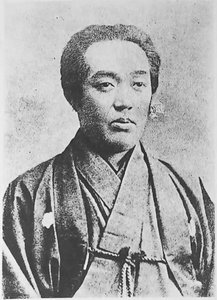
He was a pioneer in using new printmaking techniques, constantly seeking ways to achieve finer details and more intense colors. This fusion allowed him to create complex compositions that felt both grounded in history and strikingly modern. He lived through a time when the old social structures were dissolving and Western influences were beginning to reshape Japanese life.

Signature works · The 100 signature works

88of 100

Johan Jongkind

Dutch Born in Lattrop Impressionism forerunner Wikipedia in 19/32 languages

Johan Jongkind

Jongkind entered the studios of Eugène Isabey and François-Édouard Picot, immersing himself in the French art scene. He quickly gained recognition, exhibiting at the Salon as early as 1848, earning praise from influential critics like Charles Baudelaire and Émile Zola. His work can be found in prominent museums such as the Van Gogh Museum in Amsterdam and the Musée d'Orsay in Paris, testaments to his enduring artistic merit.

Signature works · The 100 signature works

89of 100

Raja Ravi Varma

Indian Born in Kilimanoor Academic & Indian fusion Wikipedia in 22/32 languages

Raja Ravi Varma

He wasn’t merely a painter; he was a cultural bridge, skillfully blending European academic techniques with the rich tapestry of Indian mythology and aesthetics. From an early age, Ravi Varma displayed a remarkable aptitude for art, nurtured by his uncle Raja Raja Varma, who initiated him into the world of drawing and painting, primarily within the Tanjore School tradition. Museums like The Raja Ravi Varma Heritage Foundation in Bangalore and The Ganesh Shivaswamy Foundation continue to preserve and celebrate his art, ensuring that his vision endures for future generations.

Signature works · The 100 signature works

90of 100

Johann Friedrich Overbeck

German Born in Lübeck Nazarene, Romanticism Wikipedia in 21/32 languages

Johann Friedrich Overbeck

Rome provided fertile ground for Overbeck and his fellow artists – including Peter von Cornelius, Friedrich Wilhelm Schadow, and Philipp Veit – to establish a communal living and working space in the old Franciscan convent of San Isidoro. Francis" created for the Porziuncola in the Basilica of Santa Maria degli Angeli near Assisi (1830) that truly exemplified Overbeck’s commitment to depicting religious themes with reverence and clarity.

Signature works · The 100 signature works

92of 100

Viktor Vasnetsov

Born in Lopyal Wikipedia in 29/32 languages

Viktor Vasnetsov

Early works reflected realist tendencies, influenced by the Peredvizhniki (Wanderers) movement, focusing on scenes of peasant life. A pivotal shift occurred when Vasnetsov became captivated by Russian folklore, mythology, and historical epics – byliny.

Signature works · The 100 signature works

93of 100

Anders Zorn

Swedish Born in Mora Parish Impressionism Wikipedia in 28/32 languages

Anders Zorn

His time spent with artists like Albert Edelfelt in Paris exposed him to new ideas and techniques, but he always remained true to his own artistic instincts. His paintings from this period, such as “A Fisherman in St Ives,” demonstrate a newfound confidence and mastery of the medium. While Zorn’s style is often categorized as Impressionistic, it was far from a simple imitation of French trends.

Signature works · The 100 signature works

94of 100

Karl Friedrich Schinkel

Prussian Born in Neuruppin Neoclassical, Gothic Revival Wikipedia in 30/32 languages

Karl Friedrich Schinkel

Karl Friedrich Schinkel, born in Neuruppin, Germany, in 1781, occupies a singular position within the annals of 19th-century art and architecture. The devastating fire that ravaged Neuruppin in 1787, tragically claiming his father’s life while Schinkel was still a young boy, cast a long shadow over his formative years. He received early mentorship under Friedrich Gilly and his father David Gilly, both influential architects in Berlin, absorbing their classical principles while simultaneously encountering more experimental ideas – a crucial blend that shaped his developing aesthetic sensibilities.

Signature works · The 100 signature works

95of 100

Alexandre Cabanel

French Born in Montpellier Academic realism Wikipedia in 26/32 languages

Alexandre Cabanel

Alexandre Cabanel was born on September 28, 1823, in Montpellier, France. In 1839, a scholarship allowed him to move to Paris to continue his education.

Where to see To find the heart of Cabanel’s legacy, one often begins in Montpellier, France.

Signature works · The 100 signature works

96of 100

Francesco Hayez

Italian Born in Venice Italian Romanticism Wikipedia in 27/32 languages

Francesco Hayez

He spent time studying the use of colour in classes held by Lattanzio Querena, a painter from Bergamo. This victory granted him a year of study at the Accademia di San Luca in Rome, a period that would fundamentally alter the course of his development.

Where to see To walk through the halls of Milan is to encounter the spirit of Hayez in many forms.

Signature works · The 100 signature works

97of 100

Antoine-Louis Barye

French Born in Paris Romanticism Wikipedia in 17/32 languages

Antoine-Louis Barye

It was infused with the emotional fervor characteristic of the Romantic movement. But it was with sculptures such as "Tiger Devouring a Gavial Crocodile" (1831) – a monumental plaster that caused a sensation at the Salon – and “Lion Crushing a Serpent” (1832), cast in bronze, that Barye truly established his signature style. Antoine-Louis Barye, born in Paris on September 24, 1795, emerged as a pivotal figure in the world of 19th-century sculpture.

Signature works · The 100 signature works

98of 100

Akseli Gallen-Kallela

Finnish Born in Pori National Romanticism Wikipedia in 26/32 languages

Akseli Gallen-Kallela

A pivotal moment came with his journey to Kenya in 1909-1910, where he encountered a different culture and landscape that profoundly impacted his artistic vision. Even during periods of political turmoil, such as the Finnish Civil War in 1917-1918, Gallen-Kallela remained actively engaged, designing uniforms and decorations for the newly independent Finnish army. National Romanticism: Gallen-Kallela is considered a central figure in Finnish National Romanticism, an artistic movement that sought to celebrate Finland’s unique culture and identity.

Signature works · The 100 signature works

99of 100

Niko Pirosmani

Georgian Born in Mirzaani Primitivism, Naive art Wikipedia in 27/32 languages

Niko Pirosmani

Rather than seeking the polished finish of traditional canvas, he often turned to black oilcloth or black waxed cloth to receive his pigments. This choice of surface dictated a specific visual language, one where simplified forms and bold colors emerged from the dark background. Even the great Pablo Picasso was deeply impressed by the energy found within his compositions.

Signature works · The 100 signature works

100of 100

Giovanni Fattori

Italian Born in Livorno Macchiaioli, plein air Wikipedia in 17/32 languages

Giovanni Fattori

After 1880, Fattori found himself increasingly drawn to the Maremma region, a wild and untamed landscape south of Florence. He also dedicated considerable energy to etching after 1884, demonstrating his versatility as an artist and exploring new avenues for expressing his artistic vision. Perhaps most importantly, Fattori’s depictions of Italian life—particularly during the Risorgimento—helped to forge a sense of national identity through art.
Signature works · The 100 signature works

Signature works

Signature 19th Century works

  1. Sunflowers by Vincent van Gogh

    Sunflowers

    Vincent van Gogh

    1888 · Bayerische Staatsgemaldesammlungen, Munich

  2. Water Lilies (or Nympheas) by Claude Monet

    Water Lilies (or Nympheas)

    Claude Monet

    1916 · National Museum of Western Art, Tokyo

  3. The bathers Sun by Paul Cézanne

    The bathers Sun

    Paul Cézanne

  4. Woman with a Hat by Henri Matisse

    Woman with a Hat

    Henri Matisse

    1905

  5. Composition VIII by Wassily Kandinsky

    Composition VIII

    Wassily Kandinsky

    1923 · Solomon R. Guggenheim Museum, New York City

  6. The Scream by Edvard Munch

    The Scream

    Edvard Munch

    1893 · Nasjonalgalleriet, Oslo

  7. Sunken Path, Wooded Rise by Paul Gauguin

    Sunken Path, Wooded Rise

    Paul Gauguin

    1884 · Museum of Fine Arts, Boston

  8. Olympia by Édouard Manet

    Olympia

    Édouard Manet

    1863 · Musée d'Orsay, Paris

A timeline

19th Century through its signature works

  1. 1814
  2. 1824
  3. 1828
  4. 1838
  5. 1849
  6. 1850
  7. 1863
  8. 1870
  9. 1875
  10. 1882
  11. 1885
  12. 1888
  13. 1893
  14. 1897

Figures

The figures

Country of birth
France47
United Kingdom9
Germany6
United States5
Italy4
Netherlands3
Russia3
Sweden3
Decade of birth
1770s6
1780s3
1790s7
1800s2
1810s8
1820s16
1830s17
1840s15
1850s6
1860s20
Museums holding their key works
Musée d'Orsay22
Metropolitan Museum of Art13
The Louvre7
Museum of Fine Arts6
National Gallery5
MOMA - Museum of Modern Art5
Art Institute of Chicago4
Van Gogh Museum3

Every name

List of 100 famous 19th Century painters, every name

  1. 1Vincent van GoghVincent van Gogh1853–1890
  2. 2Claude MonetClaude MonetFrench · 1840–1926
  3. 3Paul CézannePaul CézanneFrench · 1839–1906
  4. 4Henri MatisseHenri MatisseFrench · 1869–1954
  5. 5Wassily KandinskyWassily KandinskyRussian · 1866–1944
  6. 6Edvard MunchEdvard MunchNorwegian · 1863–1944
  7. 7Paul GauguinPaul GauguinFrench · 1848–1903
  8. 8Édouard ManetÉdouard ManetFrench · 1832–1883
  9. 9Gustav KlimtGustav KlimtAustrian · 1862–1918
  10. 10Eugène DelacroixEugène Delacroix1798–1863
  11. 11Gustave CourbetGustave CourbetFrench · 1819–1877
  12. 12J. M. W. TurnerJ. M. W. TurnerBritish · 1775–1851
  13. 13Caspar David FriedrichCaspar David FriedrichGerman · 1774–1840
  14. 14Edgar DegasEdgar DegasFrench · 1834–1917
  15. 15Pierre-Auguste RenoirPierre-Auguste RenoirFrench · 1841–1919
  16. 16Jean-Auguste-Dominique IngresJean-Auguste-Dominique IngresFrench · 1780–1867
  17. 17Georges SeuratGeorges SeuratFrench · 1859–1891
  18. 18Théodore GéricaultThéodore GéricaultFrench · 1791–1824
  19. 19Jean-François MilletJean-François MilletFrench · 1814–1875
  20. 20Hilma af KlintHilma af KlintSwedish · 1862–1944
  21. 21Jean-Baptiste-Camille CorotJean-Baptiste-Camille CorotFrench · 1796–1875
  22. 22James McNeill WhistlerJames McNeill WhistlerAmerican · 1834–1903
  23. 23Berthe MorisotBerthe MorisotFrench · 1841–1895
  24. 24John ConstableJohn ConstableBritish · 1776–1837
  25. 25Winslow HomerWinslow HomerAmerican · 1836–1910
  26. 26Alphonse MuchaAlphonse MuchaCzech · 1860–1939
  27. 27Henri De Toulouse-LautrecHenri De Toulouse-LautrecFrench · 1864–1901
  28. 28William-Adolphe BouguereauWilliam-Adolphe BouguereauFrench · 1825–1905
  29. 29Dante Gabriel RossettiDante Gabriel RossettiEnglish · 1828–1882
  30. 30Camille PissarroCamille PissarroDanish-French · 1830–1903
  31. 31Ilya RepinIlya RepinUkrainian-born Russian · 1844–1930
  32. 32Henri RousseauHenri Rousseau1844–1910
  33. 33Alfred SisleyAlfred SisleyBritish · 1839–1899
  34. 34Gustave DoréGustave DoréFrench · 1832–1883
  35. 35John Singer SargentJohn Singer SargentAmerican · 1856–1925
  36. 36Gustave MoreauGustave MoreauFrench · 1826–1898
  37. 37Honoré DaumierHonoré DaumierFrench · 1808–1879
  38. 38Paul SignacPaul SignacFrench · 1863–1935
  39. 39Ivan AivazovskyIvan AivazovskyRussian · 1817–1900
  40. 40Utagawa HiroshigeUtagawa HiroshigeJapanese · 1797–1858
  41. 41Pierre BonnardPierre BonnardFrench · 1867–1947
  42. 42Odilon RedonOdilon Redon1840–1916
  43. 43Arnold BöcklinArnold BöcklinSwiss · 1827–1901
  44. 44Mary CassattMary CassattAmerican · 1844–1926
  45. 45Jean-Léon GérômeJean-Léon GérômeFrench · 1824–1904
  46. 46Frederic Edwin ChurchFrederic Edwin ChurchAmerican · 1826–1900
  47. 47Émile BernardÉmile Bernard1868–1941
  48. 48Frederic LeightonFrederic LeightonBritish · 1830–1896
  49. 49John William WaterhouseJohn William WaterhouseBritish (English) · 1849–1917
  50. 50Frédéric BazilleFrédéric BazilleFrench · 1841–1870
  51. 51Théodore RousseauThéodore RousseauFrench · 1812–1867
  52. 52Carl LarssonCarl LarssonSwedish · 1853–1919
  53. 53Jan MatejkoJan MatejkoPolish · 1838–1893
  54. 54Emil NoldeEmil NoldeGerman-Danish · 1867–1956
  55. 55Paul DelarochePaul DelarocheFrench · 1797–1856
  56. 56James EnsorJames EnsorBelgian · 1860–1949
  57. 57John Everett MillaisJohn Everett MillaisBritish · 1829–1896
  58. 58Gustave CaillebotteGustave CaillebotteFrench · 1848–1894
  59. 59Ivan ShishkinIvan ShishkinRussian · 1831–1898
  60. 60Joaquín SorollaJoaquín SorollaSpanish · 1863–1923
  61. 61Eugène Louis BoudinEugène Louis BoudinFrench · 1824–1898
  62. 62Thomas ColeThomas ColeAnglo-American · 1801–1848
  63. 63Albert BierstadtAlbert BierstadtGerman-American · 1830–1902
  64. 64Lawrence Alma-TademaLawrence Alma-TademaDutch · 1836–1912
  65. 65Edward Burne-JonesEdward Burne-JonesBritish · 1833–1898
  66. 66Suzanne ValadonSuzanne ValadonFrench · 1865–1938
  67. 67Auguste RodinAuguste RodinFrench · 1840–1917
  68. 68Käthe KollwitzKäthe KollwitzGerman · 1867–1945
  69. 69Ferdinand HodlerFerdinand HodlerSwiss · 1853–1918
  70. 70William Holman HuntWilliam Holman HuntBritish · 1827–1910
  71. 71William MorrisWilliam MorrisBritish · 1834–1896
  72. 72Antoine-Jean GrosAntoine-Jean GrosFrench · 1771–1835
  73. 73Édouard VuillardÉdouard VuillardFrench · 1868–1940
  74. 74Adolph von MenzelAdolph von MenzelGerman · 1815–1905
  75. 75Aristide MaillolAristide MaillolFrench · 1861–1944
  76. 76Bertel ThorvaldsenBertel Thorvaldsen1770–1844
  77. 77Thomas EakinsThomas EakinsAmerican · 1844–1916
  78. 78Charles-François DaubignyCharles-François DaubignyFrench · 1817–1878
  79. 79Henri Fantin-LatourHenri Fantin-LatourFrench · 1836–1904
  80. 80Pierre Puvis de ChavannesPierre Puvis de ChavannesFrench · 1824–1898
  81. 81Rosa BonheurRosa BonheurFrench · 1822–1899
  82. 82Philipp Otto RungePhilipp Otto RungeGerman · 1777–1810
  83. 83Thomas CoutureThomas CoutureFrench · 1815–1879
  84. 84Jean-Baptiste CarpeauxJean-Baptiste CarpeauxFrench · 1827–1875
  85. 85Max KlingerMax KlingerGerman · 1857–1920
  86. 86Ford Madox BrownFord Madox BrownBritish · 1821–1893
  87. 87YoshitoshiYoshitoshiJapanese · 1839–1892
  88. 88Johan JongkindJohan JongkindDutch · 1819–1891
  89. 89Raja Ravi VarmaRaja Ravi VarmaIndian · 1848–1906
  90. 90Johann Friedrich OverbeckJohann Friedrich OverbeckGerman · 1789–1869
  91. 91NadarNadar1820–1910
  92. 92Viktor VasnetsovViktor Vasnetsov1848–1926
  93. 93Anders ZornAnders ZornSwedish · 1860–1920
  94. 94Karl Friedrich SchinkelKarl Friedrich SchinkelPrussian · 1781–1841
  95. 95Alexandre CabanelAlexandre CabanelFrench · 1823–1889
  96. 96Francesco HayezFrancesco HayezItalian · 1791–1882
  97. 97Antoine-Louis BaryeAntoine-Louis BaryeFrench · 1795–1875
  98. 98Akseli Gallen-KallelaAkseli Gallen-KallelaFinnish · 1865–1931
  99. 99Niko PirosmaniNiko PirosmaniGeorgian · 1862–1918
  100. 100Giovanni FattoriGiovanni FattoriItalian · 1825–1908

Questions

Your questions

Read

Stories on OriginalUniqueArt.com

Other movements

Famous artists of other movements

Other periods

Famous artists across the periods

Famous paintings

Masterpieces that inspire us, by movement

Discover more

More artists to discover