Inspiration · Dutch Golden Age

The 100 Famous Dutch Golden Age Paintings That Inspire Our Artists

1624 – 1683

The most famous Dutch Golden Age paintings are Johannes Vermeer's The Girl with a Pearl Earring (1665, Mauritshuis), Johannes Vermeer's The Milkmaid (1658, Rijksmuseum) and Rembrandt's Le Retour de L Enfant Prodigue (1660, Hermitage Museum). The list runs to 100 paintings by 58 artists, from 1624 to 1683, each with the collection that holds it today.

The Girl with a Pearl Earring by Johannes Vermeer, 1665, Mauritshuis — famous Dutch Golden Age painting
No. 1 · Johannes VermeerThe Girl with a Pearl Earring1665 · Mauritshuis, The Hague
100singular works
58masters · Adriaen Brouwer – Evert Collier
36homes in 26 cities
16kept at the Rijksmuseum

Singular works

100 Dutch Golden Age paintings that exist only once

Every original here is unique and kept in one place. Its story, its home, and the detail that makes it unmistakable.

  1. The Girl with a Pearl Earring by Johannes Vermeer, 1665, Mauritshuis
    1

    Mauritshuis, The Hague1665Oil on canvas45 × 39 cm

    Created around 1665, this work belongs to the Dutch tradition of the tronie —a study of expression and costume rather than a formal portrait. The subject, a young woman, is positioned against a dark, undefined space that pushes her features into the foreground.

    Its story

  2. The Milkmaid by Johannes Vermeer, 1658, Rijksmuseum
    2

    Johannes VermeerDutch Golden Age Realism

    The Milkmaid

    Rijksmuseum, Amsterdam1658Oil on canvas46 × 41 cm

    This meticulously rendered scene showcases a milkmaid engaged in the simple yet essential task of pouring milk, transforming an everyday activity into a moment of quiet dignity and grace. While seemingly straightforward, the painting subtly incorporates symbolic elements common in Dutch art.

    The singular detailshadowmilk pouring

    Its story

  3. Le Retour de L Enfant Prodigue by Rembrandt, 1660, Hermitage Museum
    3

    Hermitage Museum, Saint Petersburg1660Oil on canvas

    Le Retour De L Enfant Prodigue is a monumental oil on canvas by Rembrandt. Created in 1660, the work captures a specific, heavy moment of human connection. Near that time, he worked on Isaac and Rebecca, a piece created about 1669.

    Its story

  4. The Art of Painting by Johannes Vermeer, 1668, Kunsthistorisches Museum
    4

    Johannes VermeerDutch Golden Age Painting

    The Art of Painting

    Kunsthistorisches Museum, Vienna1668Oil on canvas120 × 100 cm

    At the heart of the composition, a painter works with focused devotion, while beside him stands a figure of ethereal grace—Clio, the Muse of History. Vermeer draws heavily upon the symbolic language of his era, specifically referencing Cesare Ripa’s Iconologia to imbue every object with meaning.

    Its story

  5. Winter Scene on a Canal by Hendrick Avercamp, Toledo Museum of Art
    5

    Toledo Museum of ArtOil painting

    This artwork portrays a bustling outdoor gathering along a frozen canal, where townspeople engage in social activities amidst the stark beauty of winter. The scene is rich with human interaction, showcasing figures bundled in warm clothing, boats moored along the icy water, and leafless trees silhouetted against a muted sky.

    The singular detaillively winter community scenefrozen canal

    Its story

  6. View of Delft by Johannes Vermeer, 1659, Mauritshuis
    6

    Mauritshuis, The Hague1659Oil on canvas98 × 117 cm

    This scene transports viewers to a moment in the Dutch Golden Age, where bustling maritime activity and charming architecture coexist in harmonious serenity. The illuminated spire of the Nieuwe Kerk symbolizes spiritual stability and civic pride, while the calm waters reflect the harmony between natural elements and human achievement.

    The singular detaildetailed architecturewater reflections

    Its story

  7. The Large Forest by Jacob van Ruisdael, 1650, Kunsthistorisches Museum
    7

    Kunsthistorisches Museum, Vienna1650Oil140 × 180 cm

    While the exact date of creation remains unknown, this work aligns with the Dutch Golden Age’s fascination with landscape realism and natural beauty. This artwork’s emotional depth makes it an ideal piece for creating a serene atmosphere in both private and professional settings.

    The singular detailwinding dirt pathdetailed foliage

    Its story

  8. Girl Reading a Letter at an Open Window by Johannes Vermeer, 1657–1659, Gemäldegalerie Alte Meister
    8

    Gemäldegalerie Alte Meister, Dresden1657–1659Oil on canvas65 × 83 cm

    Vermeer was renowned for his exceptional ability to capture the interplay of light, and this work is a prime example. This painting is deeply rooted in the artistic and cultural context of 17th-century Holland. The Dutch Golden Age saw a flourishing of genre painting, depicting scenes from daily life with remarkable realism.

    The singular detailwindowletter

    Its story

  9. The Threatened Swan by Jan Asselijn, 1652, Rijksmuseum
    9

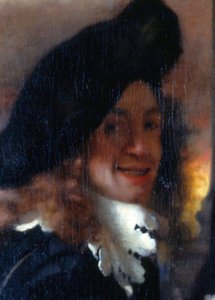
    Rijksmuseum, Amsterdam1652Oil on canvas171 × 144 cm

    It hung within the Royal Palace of Amsterdam from 1808 to 1817. By 1817, it found a long-term home in the Trippenhuis, where it remained until 1885. The year 1652 saw the creation of Hunting Company out of Rome.

    Its story

  10. A Lady Drinking and a Gentleman by Johannes Vermeer, 1660, Gemäldegalerie
    10

    Gemäldegalerie, Berlin1660Oil on canvas66 × 76 cm

    Painted in 1660, this artwork is a product of the Dutch Golden Age, a period of great cultural and economic prosperity in the Netherlands.

    The singular detailcittern musical instrumentstained glass window

    Its story

  11. A Frozen River near a Village by Aert van der Neer, 1648, National Gallery
    11

    National Gallery, London1648Oil on canvas39.5 × 53 cm

    A pale, frozen river dominates the center of the canvas, a wide ribbon of ice cutting through a Dutch village. Buildings line the banks, their dark, earthy tones providing a sturdy frame for the pale expanse of the waterway. Figures move across the ice, small and rhythmic against the vastness of the winter landscape. This work belongs to the Dutch Golden Age, a period when the landscape became a vessel for observing the subtle shifts of nature.

    Its story

  12. The Supper at Emmaus by Rembrandt, 1648, Musée du Louvre
    12

    Musée du Louvre, Paris1648Oil on panel68 × 65 cm

    Even the arrangement of chairs – a simple wooden bench in front of Jesus and another to his right – contributes to the painting’s sense of understated dignity and reverence.

    The singular detaillight & shadowchiaroscuro

    Its story

  13. Woman Reading a Letter by Pieter de Hooch, 1664, Szépművészeti Múzeum
    13

    Szépművészeti Múzeum, Budapest1664Oil on canvas55 × 55 cm

    The open window, a recurring motif in De Hooch’s work, can be interpreted as an opening to the outside world, both literally and metaphorically. For those seeking to enrich their living spaces with art that possesses both historical significance and emotional depth, “Woman Reading a Letter” is an exceptional choice.

    Its story

  14. The Concert by Johannes Vermeer, 1665, Isabella Stewart Gardner Museum
    14

    Johannes VermeerDutch Golden Age Painting

    The Concert

    Isabella Stewart Gardner Museum, Boston1665Oil on canvas64 × 72 cm

    Johannes Vermeer, a name synonymous with the quiet intimacy of 17th-century Dutch life, remains an enigma despite centuries of scholarly investigation. “The Concert” vanished from the Isabella Stewart Gardner Museum in Boston on March 18, 1990, during a daring heist that shocked the art world.

    Its story

  15. Archduke Leopold William in his Gallery at Brussels by David Teniers the Younger, 1652, Kunsthistorisches Museum
    15

    Kunsthistorisches Museum, Vienna1652Oil on canvas123 × 163 cm

    The arrangement of figures – Leopold Wilhelm himself amidst a group of visitors – contributes to the dynamism of the scene and underscores the importance of social interaction within this artistic milieu. Teniers’ technique is characterized by meticulous observation and painstaking brushwork—a hallmark of Flemish Baroque painting.

    Its story

  16. Saskia, the Artist's Wife by Rembrandt, 1643, Gemäldegalerie
    16

    Gemäldegalerie, Berlin1643Oil on panel75 × 60 cm

    Created in 1635, this beautiful portrait depicts Saskia van Uylenburgh, Rembrandt's wife, in an elegant pose. The painting measures 124 x 98 cm and is a prime example of Dutch Golden Age art. Saskia, The Artist's Wife is not only a beautiful portrait but also a significant work in Rembrandt's oeuvre.

    Its story

  17. Cardplayers in a Sunlit Room by Pieter de Hooch, 1658, Royal Collection
    17

    Royal Collection, London1658Oil on canvas76 × 66 cm

    One can almost hear the murmur of voices and feel the gentle warmth emanating from the sunbeams slicing through unseen windows. Unlike grand mythological scenes, De Hooch grounds his art in the relatable reality of everyday pleasures.

    Its story

  18. The Letter by Gerard ter Borch, 1660–1665, Royal Collection
    18

    Gerard ter BorchDutch Golden Age

    The Letter

    Royal Collection, London1660–1665Oil on canvas81.9 × 68.4 cm

    “The Letter” depicts a serene tableau within a richly appointed room. Painted circa 1660-1665, “The Letter” reflects the intellectual climate of its era, marked by a burgeoning interest in humanist ideals and a fascination with portraying human psychology.

    Its story

  19. The Apothecary (The Chemist) by Gabriel Metsu, 1661, The Louvre
    19

    The Louvre, Paris1661Oil on panel27 × 23 cm

    The painting immediately draws the eye to its subject: a distinguished gentleman, clad in a rich red coat, seated amidst a carefully arranged study. The scholar's attire – the red coat, a symbol of status and learning – suggests his position within Dutch society.

    Its story

  20. The Farm by Paulus Potter, 1649, Hermitage Museum
    20

    Paulus PotterDutch Golden Age Realism

    The Farm

    Hermitage Museum, Saint Petersburg1649Oil on panel81 × 116 cm

    Furthermore, the inclusion of several figures engaged in agricultural tasks—milking, tending to the livestock, preparing for market—underscores the central role of farming in the Dutch economy and culture.

    The singular detaildetailed animal textures

    Its story

  21. The Girl with Wineglass by Johannes Vermeer, 1659–1660, Herzog Anton Ulrich Museum
    21

    Herzog Anton Ulrich Museum, Brunswick1659–1660Oil on canvas78 × 67 cm

    At first glance, the scene appears deceptively simple: a young woman, elegantly dressed in a rich, dark gown and a delicate lace cap, sits at a table laden with a wine glass, a small cup, and an apple. The man's somber expression and formal attire hint at a sense of responsibility or perhaps even melancholy – themes frequently explored in Vermeer’s work.

    The singular detailsoft lightchiaroscuro

    Its story

  22. Christ and the Woman Taken in Adultery by Rembrandt, National Gallery
    22

    National Gallery, LondonOil on oak

    The scene depicts Jesus confronting the Jewish ruling council over their intention to stone a woman caught in adultery. Rembrandt Van Rijn's interpretation of this biblical story is unique in its focus on the emotional turmoil of the woman and the hypocrisy of the Jewish ruling council.

    Its story

  23. Allegory of Faith by Johannes Vermeer, 1670, Metropolitan Museum of Art
    23

    Metropolitan Museum of Art, New York1670Oil on canvas114.3 × 88.9 cm

    Rendered in the luminous and meticulous style characteristic of the Dutch Golden Age, this work exemplifies the mastery of light and shadow that Vermeer is celebrated for. The inclusion of symbolic objects, inspired by Cesare Ripa’s emblem book, aligns with the era’s interest in allegory and moral instruction.

    The singular detailchalicebook

    Its story

  24. Titus in a Monk’s Habit by Rembrandt, 1660, Rijksmuseum
    24

    Rijksmuseum, Amsterdam1660Oil on canvas80 × 68 cm

    This intimate scene depicts Rembrandt’s son Titus, a man grappling with his own mortality and searching for meaning within the confines of monastic life – a choice that simultaneously reflects both youthful rebellion and a yearning for spiritual solace.

    The singular detailemotionchiaroscuro

    Its story

  25. The Rat-catcher of Paris by Cornelis de Visscher
    25

    Painting

    The composition centers on three distinct figures positioned against an architectural backdrop. In the middle of the frame, a man wears a brown coat and a red hat decorated with feathers. The lighting and the rendering of the figures suggest a scene from the 17th century.

    Its story

  26. Henry, Duke of Gloucester by Adriaen Hanneman, 1653, National Gallery of Art
    26

    National Gallery of Art, Washington1653Oil on canvas129 × 111 cm

    The subject was the youngest son of Charles I, King of England, Scotland, and Ireland, and Henrietta Maria of France. Born in The Hague in 1603, he spent much of his career producing portraits of the nobility and the exiled British royal court.

    Its story

  27. Vanitas Still Life by Pieter Claesz Soutman, 1625, Frans Hals Museum
    27

    Frans Hals Museum, Haren1625Oil29.5 × 43.5 cm

    In the quiet, shadowed corners of the Dutch Golden Age, few genres command as much contemplative power as the Vanitas still life. Unlike his later, more monochromatic works that favored muted greys and greens, this 1625 panel vibrates with subtle, lifelike hues.

    Its story

  28. The Little Street by Johannes Vermeer, 1658, Rijksmuseum
    28

    Rijksmuseum, Amsterdam1658Oil on canvas44 × 54 cm

    The painting immediately draws the eye to a woman standing near a doorway, her back turned towards us. “The Little Street” offers a valuable window into 17th-century Delft, a thriving center of trade and craftsmanship. Six before finding its way to Sir Henry Deterding.

    The singular detaildetailed materials

    Its story

  29. The Prophet Jeremiah Mourning by Rembrandt, 1630, Rijksmuseum
    29

    Rijksmuseum, Amsterdam1630Oil on panel

    In this oil painting on panel, created about 1630, Rembrandt presents us with a deeply personal encounter with grief. As a central figure of the Dutch Golden Age, Rembrandt utilizes a sophisticated command of chiaroscuro to define this scene.

    The singular detailsymbolismchiaroscuro

    Its story

  30. Landscape with Shepherds and Peasants by Jacob van Ruisdael, 1660, Galleria degli Uffizi
    30

    Galleria degli Uffizi, Florence1660Oil52 × 60 cm

    A solitary tree dominates the foreground, its branches bare and skeletal against the sky, suggesting a season of dormancy or perhaps the quiet transition of late autumn. Scattered throughout the composition, figures move with a slow, unhurried purpose.

    Its story

  31. Diana and her Companions by Johannes Vermeer, 1655, Mauritshuis
    31

    Johannes VermeerDutch Golden Age Painting

    Diana and her Companions

    Mauritshuis, The Hague1655Oil on canvas98 × 105 cm

    Johannes Vermeer's Diana and Her Companions, painted around 1655, is an enigmatic work that departs from the grand narratives typically associated with classical mythology. Rather than depicting a dramatic moment of pursuit or divine intervention, Vermeer presents us with an intimate scene of quiet contemplation surrounding the goddess Diana – Artemis to the Greeks – and her attendant nymphs. The inclusion of a thistle in the foreground has been interpreted in various ways: as a symbol of earthly sorrow, referencing Christian iconography, or perhaps alluding to Actaeon's fate, foreshadowing his intrusion upon Diana and her nymphs.

    Its story

  32. Flowers by Justus van Huysum, Hermitage Museum
    32

    Justus van HuysumDutch Golden Age

    Flowers

    Hermitage Museum, Saint PetersburgOil on canvas84 × 70 cm

    From the softest blush of pastel petals to the deepest, most saturated hues of crimson and sapphire blue, every flower seems to possess its own unique narrative. The overall mood is one of serene contemplation—a quiet moment stolen from the bustle of modern life.

    Its story

  33. In the Tavern by Adriaen Brouwer, 1624, Hermitage Museum
    33

    Adriaen BrouwerDutch Golden Age Painting

    In the Tavern

    Hermitage Museum, Saint Petersburg1624Oil on panel25 × 34 cm

    Technically, In the Tavern is a triumph of Baroque sensibility. To understand Brouwer is to understand the revolution of genre painting.

    Its story

  34. A Fisherman's Wife by Gerrit Dou, 1653, Rijksmuseum
    34

    Gerrit DouDutch Golden Age Realism

    A Fisherman's Wife

    Rijksmuseum, Amsterdam1653Oil paint23 × 17 cm

    As the viewer approaches this small-scale marvel, they are immediately enveloped by a sense of stillness, as if stepping into a private sanctuary where time itself has slowed to the rhythm of a heartbeat. Through this arrangement, Dou transforms a simple genre scene into a poignant meditation on connection and solitude.

    Its story

  35. Edward Collier by Evert Collier, 1683
    35

    Evert CollierDutch Golden Age

    Edward Collier

    1683Oil on canvas44 × 53 cm

    The oil on canvas titled Edward Collier is a work by Evert Collier. This specific piece is dated 1683. The surface holds a quiet stillness, a captured moment of a man in a red robe. Evert Collier applied pigment to the cloth to create a scene of a workspace.

    Its story

  36. The Interior of a Dutch Church by Emanuel de Witte, 1680, Scottish National Gallery
    36

    Scottish National Gallery, Edinburgh1680Oil on canvas190 × 162 cm

    De Witte, who was born in Alkmaar, Netherlands, spent much of his career capturing the specific atmosphere and light within these sacred environments. The artist's technical approach focused on the interplay of light and shadow within large, vaulted structures.

    Its story

  37. Ars Longa, Vitta Brevis by Pieter Steenwijck
    37

    Oil

    The painting presents a collection of objects that seem to emerge from a deep, dark void, illuminated by a soft, directional light that catches the smooth curve of a skull. This work is a visual manifestation of the Latin phrase Ars Longa, Vitta Brevis —art is long, life is short.

    Its story

  38. Woman Writing a Letter by Johannes Vermeer, 1670, Mauritshuis
    38

    Johannes VermeerDutch Golden Age Painting

    Woman Writing a Letter

    Mauritshuis, The Hague1670Oil on canvas71 × 58 cm

    “Woman Writing a Letter with Her Maid” offers a rare glimpse into the lives of middle-class Dutch families during the Golden Age. The painting’s realism extends beyond mere depiction to capture the essence of daily life in Delft, offering a poignant reminder of the quiet beauty found in ordinary moments.

    The singular detaillight & detail

    Its story

  39. Winter Landscape near a Town with Kolf Players by Aert van der Neer, 1660, Rijksmuseum
    39

    Rijksmuseum, Amsterdam1660Oil on panel52 × 67 cm

    The artist, born in Gorinchem, Netherlands, in 1604, specialized in the atmospheric rendering of snowy landscapes and nocturnal scenes. His earlier approach to similar themes is evident in Winter Landscape near a Town with Kolf Players and Horse-Drawn Sleighs, dated about 1650 - 1655. These include the 1643 Winter Landscape and the 1644 Moonlight Scene.

    Its story

  40. Ships in Distress off a Rocky Coast by Ludolf Bakhuizen, 1667, National Gallery of Art
    40

    National Gallery of Art, Washington1667Oil on canvas114.3 × 167.3 cm

    Ludolf Bakhuizen, a German-born Dutch painter, executed this piece during the Dutch Golden Age. This work follows the same interest in heavy swells and the movement of water seen in his 1667 painting. Other compositions from his career include Ships in Distress in a Raging Storm, which dates to about 1690.

    Its story

  41. La Resurrection de Lazare by Rembrandt, 1631
    41

    1631Oil painting

    This oil painting, characteristic of the Dutch Golden Age style, tells the story of Jesus raising Lazarus from the dead. It’s a powerful depiction of faith, hope, and divine intervention, rendered with Rembrandt’s signature dramatic use of chiaroscuro – the interplay of strong contrasts between light and dark. Additionally, the Mauritshuis in The Hague offers a rich collection of Dutch Golden Age paintings, including works by Rembrandt and other notable artists. A renowned painter of the Dutch Golden Age. An art museum in The Hague housing a significant collection of Dutch Golden Age paintings.

    Its story

  42. Mother Lacing Her Bodice beside a Cradle by Pieter de Hooch, 1659, Staatliche Museen zu Berlin
    42

    Staatliche Museen zu Berlin1659Oil on canvas92 × 100 cm

    The painting captures a young woman seated with grace, her focus divided between the tactile task of fastening her bodice and the silent presence of her infant child nestled in a nearby cradle. Technically, de Hooch’s work is a triumph of meticulous observation.

    Its story

  43. The Lacemaker by Johannes Vermeer, 1669–1670, The Louvre
    43

    Johannes VermeerDutch Golden Age Painting

    The Lacemaker

    The Louvre, Paris1669–1670Oil on canvas24 × 21 cm

    Vermeer, born in Delft in 1632, navigated a world where artistry was inextricably linked to commerce. This early exposure shaped his artistic sensibility, fostering a meticulous approach to detail and a keen eye for capturing the nuances of light and shadow —qualities that are strikingly evident in The Lacemaker.

    The singular detailintimate scenelight

    Its story

  44. The Windmill at Wijk bij Duurstede by Jacob van Ruisdael, 1670, Rijksmuseum
    44

    Rijksmuseum, Amsterdam1670Oil on canvas83 × 101 cm

    The artist, born in Haarlem, captured a specific slice of the Dutch landscape through a lens of quiet intensity. Jacob van Ruisdael applied layers of oil to the canvas to build a scene of rural life. The canvas rests within the Rijksmuseum in Amsterdam, Netherlands.

    Its story

  45. Conspiracy of the Bataves by Rembrandt, 1661, Nationalmuseum
    45

    Nationalmuseum, Stockholm1661Oil on canvas196 × 309 cm

    The work draws from the accounts of the Roman historian Tacitus, detailing the revolt of the Germanic Batavian tribe against Roman rule under the leadership of Claudius Civilis. However, for Rembrandt’s 17th-century audience, the subject was deeply resonant with their own contemporary struggles.

    Its story

  46. Christ in the House of Martha and Mary by Johannes Vermeer, 1656, Scottish National Gallery
    46

    Scottish National Gallery, Edinburgh1656Oil on canvas158 × 141 cm

    Johannes Vermeer produced the oil painting on canvas titled Christ in the House of Martha and Mary. This work is dated 1654. Similarly, The Lacemaker captures a sense of intense, concentrated focus within a small scale, measuring 24.5 cm by 21 cm.

    Its story

  47. In the Bedroom by Pieter de Hooch, 1660, Staatliche Kunsthalle Karlsruhe
    47

    Staatliche Kunsthalle Karlsruhe, Carlsruhe1660Oil on canvas

    “In the Bedroom” offers a fascinating glimpse into the social and cultural values of 17th-century Holland. Furthermore, the painting’s focus on quiet observation reflects the Dutch penchant for gezelligheid – a concept encompassing warmth, conviviality, and a sense of shared comfort.

    The singular detailopen doorwaychiaroscuro

    Its story

  48. The Pilgrims at Emmaus by Rembrandt, 1661, Louvre
    48

    Louvre, Paris1661Oil on canvas50 × 64 cm

    The painting's placement within the Mauritshuis museum in The Hague, alongside other masterpieces of the Dutch Golden Age, underscores its significance as a pivotal example of this artistic movement. For more information on Rembrandt van Rijn and the Dutch Golden Age, visit AllPaintingsStore.com.

    The singular detailchiaroscurolight

    Its story

  49. Still Life with a Lobster by Willem Claesz Heda, 1654, National Gallery
    49

    National Gallery, London1654Oil on canvas114 × 103 cm

    Another work from this decade is the 1635 Still Life with Oysters, a Silver Tazza and Glassware, currently located in the Metropolitan Museum of Art in Manhattan, New York City, USA. Additionally, the 1656 Still Life with a Ham, Silver Decanter and a Roemer is held at the Szépművészeti Múzeum in Budapest.

    Its story

  50. Flowers in an Ornamental Vase by Maria van Oosterwijck, 1675, Mauritshuis
    50

    Mauritshuis, The Hague1675Oil on canvas62 × 47 cm

    The Cincinnati Art Museum houses Flower Still Life, which was created in 1669. Other examples of her output include Bouquet of Flowers in a Glass Vase, which dates to 1685 and is located at the Statens Museum For Kunst in Copenhagen.

    Its story

  51. Interior of the Oude Kerk in Delft by Gerard Houckgeest, 1650, Rijksmuseum
    51

    Rijksmuseum, Amsterdam1650Oil on canvas68 × 57 cm

    The scene focuses on the specific funerary monument known as the Tomb of Vice-Admiral Pieter Pietersz Heijn located within the church structure. The work documents the architectural details of the Oude Kerk, a site situated in Delft. His 1637 work, Imaginary Gothic Church, demonstrates an early interest in structured religious spaces. The artist's documentation of Delft's religious sites extends to the Nieuwe Kerk. In 1651, he painted The Tomb of William the Silent in the Nieuwe Kerk in Delft.

    Its story

  52. The van Moerkerken Family by Lucas Franchoys the Younger, 1653, Metropolitan Museum of Art
    52

    Metropolitan Museum of Art, New York1653Oil on panel41 × 36 cm

    The arrangement of the figures is asymmetrical and lopsided, creating a sense of movement that defies the rigid stillness of traditional portraiture. The portrait resides within the Metropolitan Museum of Art in New York. The object is cataloged under the number 1982.60.30.

    Its story

  53. River Landscape with Fishermen by Meindert Hobbema, 1660
    53

    1660Oil on panel47 × 67 cm

    Trees with dense, green leaves frame the scene, their branches reaching out to enclose this private corner of the world. This careful handling of light creates a feeling of peace, as if the viewer has stumbled upon a private, unhurried moment in the Dutch countryside.

    Its story

  54. Peasants Drinking and Making Music by Adriaen van Ostade, 1633, Agnes Etherington Art Center
    54

    Agnes Etherington Art Center, Kingston1633Oil on panel34 × 27 cm

    Peasants Drinking And Making Music In A Barn is an oil on panel work by Adriaen van Ostade. Created in 1647, the painting emerges from the Dutch Golden Age. It belongs to the tradition of Dutch Golden Age genre painting, a period defined by the meticulous observation of the everyday.

    Its story

  55. Vanitas Still-Life by Cornelis de Heem, 1661–1668, Rijksmuseum
    55

    Rijksmuseum, Amsterdam1661–1668Oil on canvas153 × 166 cm

    The painting is anchored by a prominent viola da gamba, its rich wood tones and intricate inlay drawing the eye immediately. Cornelis De Heem's work is part of a larger tradition of still-life painting that flourished in the Netherlands during the 17th century.

    The singular detailmusical instruments

    Its story

  56. Landscape with Wild Animals by Roelant Savery, Rockox House
    56

    Rockox House, AntwerpOil on canvas82 × 145 cm

    It captures a specific slice of the natural world through the precise eye of the artist. The scale of the canvas allows for a wide view of the terrain. The work is a product of the Dutch Golden Age.

    Its story

  57. The three graces by Jan Gerritsz van Bronckhorst
    57

    Oil

    Each figure is draped in fabric; one woman wears a blue garment, while the other two are dressed in red. Jan Gerritsz van Bronckhorst was active during the Dutch Golden Age, having been trained in Utrecht, Netherlands. After studying under Cornelis Poelenburg, his work began to reflect the dramatic, shadow-heavy language of the Baroque.

    Its story

  58. Courtisane by Jacob Adriaensz Backer, 1630, National Museum of Ancient Art
    58

    National Museum of Ancient Art, Lisbon1630Oil on canvas64.5 × 56.5 cm

    Jacob Adriaensz Backer produced Courtisane in 1640. This work is held in the National Museum of Ancient Art, Lisbon. Backer was a prominent figure of the Dutch Golden Age, known for his technical precision and his ability to complete portraits with remarkable speed.

    Its story

  59. Fleurs by Osias Beert
    59

    Osias BeertDutch Golden Age

    Fleurs

    Oil paints, canvas or panel

    A large plate of strawberries occupies the foreground, their red skins catching a soft, directional light that seems to emanate from a single source to the left. The scene is not one of chaotic clutter, but rather a balanced, almost geometric arrangement of forms.

    Its story

  60. A Zeeland States Yacht Firing a Salute off the Oude Hooftdpoort by Jacobus Storck
    60

    Oil

    The painting captures a specific moment of naval ceremony. It depicts a Zeeland States Yacht as it fires a salute near the Oude Hooftdpoort in Rotterdam. The composition centers on a bustling harbor scene, capturing a moment of maritime activity near the Oude Hooftdpoort in Rotterdam.

    Its story

  61. An Allegory by Willem van de Velde the Elder
    61

    Oil

    The painting presents a portrait of a woman with long hair, dressed in a white gown. The woman is depicted looking at the man's face, appearing to examine it closely. In the background, several other individuals are visible, some of whom are wearing masks.

    Its story

  62. Horsepond near a Boundary Stone by Philips Wouwerman, 1654, Rijksmuseum
    62

    Rijksmuseum, Amsterdam1654Oil on panel36 × 41 cm

    It holds a specific place in the history of the Rijksmuseum, as it was the first painting by Wouwerman that the museum acquired for its collection. The soldiers squad with sutlers and children, dated about 1650, captures a different kind of gathering.

    Its story

  63. Banquet Scene in a Renaissance Hall by Dirck Hals, 1628, Academy of Fine Arts Vienna
    63

    Academy of Fine Arts Vienna1628Oil on panel78 × 136 cm

    Created in 1628, this painting offers a glimpse into the social customs of the seventeenth century. Around 1627, he produced Merry Company at Table, a work that shares his characteristic interest in communal gatherings. This interest in the shared moment is further reflected in Festive Company in a Renaissance Room, created in 1628.

    Its story

  64. Girl with a Red Hat by Johannes Vermeer, 1669
    64

    1669Oil on canvas

    The artwork presents a young woman depicted from the chest up, her gaze directed slightly off-center as if responding to an unseen presence. However, high-quality reproductions allow art enthusiasts to experience the beauty and tranquility of Girl with a Red Hat in their own homes.

    Its story

  65. Landscape with a Bridge in the Italian Countryside by Jan Asselijn, 1652, Cannon Hall Museum
    65

    Cannon Hall Museum, Barnsley1652Oil on canvas42 × 48 cm

    A stone bridge with arched spans anchors this serene landscape, crossing a calm body of water that reflects the soft, overcast sky. A dog occupies the foreground, grounding the activity in a sense of everyday life.

    Its story

  66. Vanitas still life with a candlestick by Evert Collier
    66

    Oil on canvas29 × 25 cm

    He was born in 1642 in Breda, Netherlands, and died in 1708. Another composition, titled Vanitas still life with an upturned lute, a globe turned to the Pacific Ocean, an open copy of Rider Cardanus' The British Merlin, and an engraving of Caesar Octavianus Augustus, dates to about 1656.

    Its story

  67. Woman Holding a Balance by Johannes Vermeer, 1665, National Gallery of Art
    67

    National Gallery of Art, Washington1665Oil on canvas42.5 × 38 cm

    Unlike many artists of his time who pursued grand commissions or celebrated heroic narratives, Vermeer’s output was remarkably modest, consisting primarily of intimate portraits and genre scenes that offer glimpses into domestic life with unparalleled subtlety.

    Its story

  68. A Village by a River in Moonlight by Aert van der Neer, 1645, National Gallery
    68

    National Gallery, London1645Oil on wood19.7 × 28.3 cm

    A Village by a River in Moonlight is a nocturnal landscape by Aert van der Neer. This work belongs to the Dutch Golden Age (Early Modern). Aert van der Neer lived until 1677. It is a study of how light interacts with the dark, still elements of the Dutch landscape.

    Its story

  69. The Parable of the Laborers in the Vineyard by Rembrandt, 1637, The State Hermitage Museum
    69

    The State Hermitage Museum, St. Petersburg1637Oil on panel

    It questions whether salvation is earned through diligent work or granted as a gift from God. Rembrandt’s paintings can be found in prestigious institutions such as the Rijksmuseum in Amsterdam (the Netherlands), the Louvre Museum in Paris (France), and the National Gallery in London (England).

    Its story

  70. Grainfields by Jacob van Ruisdael, 1665, Metropolitan Museum of Art
    70

    Jacob van RuisdaelDutch Golden Age Landscape

    Grainfields

    Metropolitan Museum of Art, New York1665Oil on canvas47 × 57 cm

    Ruisdael’s genius lies in his ability to create a remarkably immersive experience within the confines of a canvas. The Dutch Golden Age witnessed an unprecedented economic boom fueled by trade and agriculture. His trip to Germany in 1650 exposed him to new artistic influences, particularly the dramatic lighting and atmospheric perspective of Northern European masters.

    Its story

  71. Les Pelerins D Emmaus, Louvre by Rembrandt, 1648, Musée du Louvre
    71

    Musée du Louvre, Paris1648Oil on canvas

    This oil on canvas painting is part of the Dutch Golden Age style and is currently housed in the Musée du Louvre, Paris. The painting depicts Jesus Christ surrounded by two men who appear to be disciples, seated around a dining table with food on it. Rembrandt Harmenszoon van Rijn (1606–1669) is one of the most famous, controversial, and expertly researched visual artists in history. Painted during the Dutch Golden Age, "Les Pelerins D Emmaus" reflects a period of great artistic innovation and prosperity in the Netherlands.

    Its story

  72. Woman Reading a Letter by Johannes Vermeer, 1663, Rijksmuseum
    72

    Rijksmuseum, Amsterdam1663Oil on canvas46.6 × 39.1 cm

    The artwork presents a serene and intimate portrait of a woman absorbed in reading a letter. The woman's focused expression suggests she is deeply engaged with the contents of the letter, evoking a sense of introspection.

    Its story

  73. A Woman Drinking with Two Men by Pieter de Hooch, 1658, National Gallery
    73

    National Gallery, London1658Oil on canvas73 × 64 cm

    De Hooch, a master of capturing fleeting moments of everyday existence, eschews grand narratives for a carefully observed tableau of human interaction – a hallmark of his distinctive style. “A Woman Drinking with Two Men” is deeply rooted in the social context of 17th-century Holland.

    The singular detaillightopen doorway

    Its story

  74. Two Watermills and an Open Sluice by Jacob van Ruisdael, 1650, National Gallery
    74

    National Gallery, London1650Oil on canvas87.3 × 111.5 cm

    In 1646, he captured the stillness of a Glade in a Wood and the distant horizon of a Landscape with a Village in the Distance. By 1650, his work moved toward more structured environments, seen in the depiction of The Cloister.

    Its story

  75. A Woman Peeling Apples by Pieter de Hooch, 1663, Wallace Collection
    75

    Wallace Collection, London1663Oil on canvas67 × 55 cm

    Unlike the dramatic, high-contrast lighting found in many Baroque works, De Hooch utilizes a gentle, filtered light, likely streaming from an unseen window above, to bathe the room in a soft glow.

    Its story

  76. Head of Christ by Rembrandt, 1648, Kulturforum
    76

    RembrandtDutch Golden Age

    Head of Christ

    Kulturforum, Berlin1648Oil on oak panel25 × 21 cm

    Created during the height of the Dutch Golden Age, the Head of Christ reflects the burgeoning interest in biblical iconography within 17th-century Dutch society. The painting was conceived as a devotional object intended for private contemplation, aligning perfectly with the humanist ideals prevalent at the time.

    Its story

  77. Lady at the Virginal with a Gentleman by Johannes Vermeer, 1665, Royal Collection
    77

    Royal Collection, London1665Oil on canvas74 × 64 cm

    Delft in the mid-17th century was a thriving center of commerce, craftsmanship, and intellectual curiosity—a microcosm of the broader European Enlightenment. Music, represented by the virginal, symbolizes not only musical skill but also deeper themes of companionship and emotional connection.

    Its story

  78. Young Man with a Skull by Frans Hals, 1626–1628, National Gallery
    78

    National Gallery, London1626–1628Oil on canvas92 × 80 cm

    Hals’ signature style is brilliantly displayed here – a remarkable departure from the meticulous detail favored by many of his contemporaries. The identity of the young man remains somewhat enigmatic – he is likely Vincent Laurensz van der Vinne, a Dutch Mennonite painter and diarist who served as a student to Frans Hals.

    The singular detailvanitas motif

    Its story

  79. Unconscious Patient (Allegory of Smell) by Rembrandt, 1624, The Leiden Collection
    79

    The Leiden Collection, New York City1624Oil on panel31 × 25 cm

    The scene unfolds within a dimly lit room, where three figures are caught in a heavy, contemplative atmosphere. Through these figures, Rembrandt engages with the humanist traditions of Northern Europe, blending scientific inquiry with philosophical depth.

    Its story

  80. Landscape with Two Oaks by Jan van Goyen, 1641, Rijksmuseum
    80

    Rijksmuseum, Amsterdam1641Oil on canvas89 × 111 cm

    The scene unfolds beneath a dramatic, brooding sky, hinting at an approaching storm while simultaneously illuminating the foreground with a soft, diffused light. “Landscape with Two Oaks” was created during a pivotal period in Dutch art history.

    The singular detailpyramidal comp

    Its story

  81. Room in a Dutch House by Pieter Janssens Elinga, 1668, Hermitage Museum
    81

    Hermitage Museum, Saint Petersburg1668Oil on canvas62 × 59 cm

    This meticulous attention to detail was characteristic of Dutch Golden Age painting, where artists strived to capture the world around them with unparalleled accuracy. The seemingly simple act of sweeping carries symbolic weight within the context of 17th-century Dutch society.

    The singular detailinterior scenewoman sweeping floor

    Its story

  82. A River Landscape with Fishermen by Salomon van Ruysdael, 1644, Stedelijk Museum
    82

    Stedelijk Museum, Alkmaar1644Oil on panel61.6 × 93.4 cm

    In the foreground, a dark, earthy riverbank is anchored by a large, detailed tree on the left. The mid-ground features a calm river where several small boats and figures are engaged in fishing or transport.

    Its story

  83. Still-Life with Grapes by Adriaen van Utrecht, 1640, Hermitage Museum
    83

    Hermitage Museum, Saint Petersburg1640Oil on canvas119 × 99 cm

    Adriaen van Utrecht’s rise to prominence coincided with the flourishing of the Dutch Golden Age, a period marked by unprecedented economic prosperity and artistic innovation. Van Utrecht's style reflects this influence, incorporating elements of Rubens’ dynamic compositions and dramatic use of color while developing his own distinctive approach to still life painting.

    The singular detailpronkstillevensabundance

    Its story

  84. A Still Life of Fruit and Nuts and Two Glasses on a Stone Ledge Before a Niche by Jacob van Walscapelle
    84

    Oil on panel

    A stone ledge occupies the lower portion of the frame, providing a solid, grey foundation for a collection of organic forms. Grapes spill over the edge of the ledge, their translucent skins catching the light. A pomegranate, split open, reveals dark, wet seeds that glisten against the pale rind.

    Its story

  85. Still-Life with Poppy by Otto Marseus van Schrieck, 1670, Metropolitan Museum of Art
    85

    Metropolitan Museum of Art, New York1670Oil on canvas68 × 53 cm

    Born in Nijmegen around 1613, Van Schrieck was deeply influenced by the burgeoning scientific curiosity of his era. WahooArt offers meticulously hand-painted reproductions of “Still-Life with Poppy, Insects, and Reptiles,” capturing the artist’s remarkable attention to detail and atmospheric depth.

    The singular detailreptilesinsects

    Its story

  86. A Woman Spinning by Nicolaes Maes, 1655, Rijksmuseum
    86

    Rijksmuseum, Amsterdam1655Oil on panel

    She’s not presented as an idealized beauty, but rather as a hardworking individual, radiating a quiet strength and resilience that speaks volumes about her role within her household and community. As a pupil of Rembrandt, he inherited and brilliantly expanded upon the artist's signature use of chiaroscuro – the dramatic interplay of light and dark.

    The singular detailintricate detailsfocused expression

    Its story

  87. Vase of Flowers with Pocket Watch by Willem van Aelst, 1656, Staatliche Museen
    87

    Staatliche Museen, Kassel1656Oil on canvas55 × 46.3 cm

    The subject matter centers on a floral arrangement that overflows from its vessel, accompanied by a pocket watch resting upon a surface. His career was shaped by the artistic traditions of the Dutch Republic, and he eventually settled in Amsterdam, where he died in 1683 or shortly thereafter.

    Its story

  88. ALLEGORIE de L'HIVER by Abraham Bloemaert, 1627, The Louvre
    88

    The Louvre, Paris1627Oil on canvas

    Bloemaert, born in Gorinchem in 1566 and tragically dying in Utrecht just forty-four years later, was a pivotal figure bridging the Mannerist and Baroque periods. Bloemaert’s Allegorie de l’Hiver exemplifies the artistic achievements of the Dutch Golden Age.

    Its story

  89. Portrait of Cornelia Craen van Haeften by Cornelius Janson van Ceulen the Younger, 1663–1678, Rijksmuseum
    89

    Rijksmuseum, Amsterdam1663–1678Oil on canvas122 × 103 cm

    This portrait features Cornelia Craen van Haeften, the Lady of Schorrestein and wife of Johan Servaes van Limburg. The subject is depicted in a knee-length pose, standing and holding a necklace in her left hand.

    Its story

  90. Women at the window by Jacob Vrel, 1654, Kunsthistorisches Museum
    90

    Kunsthistorisches Museum, Vienna1654Oil

    Born in 1630 in Friesland, Netherlands, he spent his life observing the nuances of light and shadow within the home. The brushwork of this Dutch, Flemish, or Westphalian painter breathes life into the quietude of the domestic sphere.

    Its story

  91. Young Woman at a Window by Jan Victors, 1640, The Louvre
    91

    The Louvre, Paris1640Oil on canvas93 × 78 cm

    Examining the painting’s technique reveals Victors's deep understanding of artistic principles.

    The singular detailclockchiaroscuro

    Its story

  92. Bouquet of flowers in a glass vase by Abraham van Beijeren, 1663–1665
    92

    1663–1665Oil

    It is a quiet study of botanical life, focusing on a bouquet of flowers held within a glass vase. The painting remains part of the collection at The Hague, the Royal Gallery.

    Its story

  93. Soldiers Beside a Fireplace_2 by Willem Cornelisz Duyster, 1633, Hermitage Museum
    93

    Hermitage Museum, Saint Petersburg1633Oil on panel43.5 × 45.5 cm

    Rather than the chaos of the battlefield, the focus rests on the social dynamics of the cortegaarddje —the guardroom. Men sit at a dining table or stand in conversation, their postures reflecting the weary ease of those accustomed to long periods of waiting.

    Its story

  94. Samson and Delilah by Jan Steen, 1668
    94

    Jan SteenDutch Golden Age

    Samson and Delilah

    1668Oil on canvas

    Following its creation, the painting was part of the Wijnand Coole sale in Rotterdam on 6 August 1782. It later moved through the Marquis de Chamgrand et al. sale in Paris on 20 March 1787. By the end of the nineteenth century, the painting had reached Berlin, appearing in the Oscar Huldschinsky sale in 1898.

    Its story

  95. The Interior of a Stable by Abraham van Calraet
    95

    Oil

    Rather than looking toward the grand or the mythological, the focus remains firmly on the tangible world of 17th-century Holland.

    Its story

  96. Boer interior by Benjamin Gerritsz Cuyp, 1650, Rijksmuseum
    96

    Rijksmuseum, Amsterdam1650Oil on panel51.5 × 67 cm

    Behind him, two men stand in the soft, filtered light, their presence adding a sense of communal connection to the space. The room is sparsely furnished with wooden chairs, their forms partially obscured by the gloom, creating a sense of lived-in reality.

    Its story

  97. The Alchemist by Thomas Wijck, 1650, Mauritshuis
    97

    Thomas WijckDutch Golden Age

    The Alchemist

    Mauritshuis, The Hague1650Oil on panel48.7 × 41 cm

    The color palette is dominated by earthy tones, such as ochres and browns, which are sharply interrupted by the vibrant, saturated red of the alchemist's robe. The scene employs a chiaroscuro technique, where bright light illuminates the central subject and specific objects, including books and glassware, while leaving much of the room in deep shadow.

    Its story

  98. Machteld bas by Abraham Lambertsz. van Den Tempel, 1669, Rijksmuseum
    98

    Rijksmuseum, Amsterdam1669Oil on canvas127 × 100 cm

    A woman sits in a black dress, the fabric absorbing the light. White lace trims her collar, a sharp, bright edge against the deep shadows of her attire. Behind her, the world is a soft arrangement of trees and a heavy curtain, a stage set for a private moment.

    Its story

  99. The Proposition by Judith Leyster, 1631, Mauritshuis
    99

    Mauritshuis, The Hague1631Oil on panel31 × 24 cm

    A woman sits at a table, her attention anchored to her sewing, a task representing the industriousness expected of her station. The woman’s focus on her needlework symbolizes moral integrity and responsibility, values held dear in the Dutch Golden Age.

    Its story

  100. Young Woman in the Morning by Frans van Mieris the Elder, 1659, Hermitage Museum
    100

    Hermitage Museum, Saint Petersburg1659Oil on panel52 × 40 cm

    The central figure is a young woman, poised near the left side of the frame. “Young Woman in the Morning” provides a valuable window into the domestic life of affluent families during the 17th century.

    The singular detailintricate detail

    Its story

Lineages

The famous Dutch Golden Age paintings by lineage

Where they live

The one place you can see each famous Dutch Golden Age painting

Amsterdam keeps 17 of these originals; the Rijksmuseum, 16.

The masters

The Dutch Golden Age masters our artists look to

Portrait of Pieter de Hooch

Pieter de Hooch

1629–1684 · Netherlands · 6

Dutch Golden Age painter of tranquil domestic interiors using the see-through-doorway technique to create depth through layered perspectives.

13. Woman Reading a Letter, 17. Cardplayers in a Sunlit Room, 42. Mother Lacing Her Bodice beside a Cradle, 47. In the Bedroom, 73. A Woman Drinking with Two Men, 75. A Woman Peeling Apples

Portrait of Aert van der Neer

Aert van der Neer

1604–1677 · Netherlands · 3

Dutch Golden Age painter of ethereal moonlight and tranquil winter scenes on frozen canals, capturing the silvered glow of a midnight sky.

11. A Frozen River near a Village, 39. Winter Landscape near a Town with Kolf Players, 68. A Village by a River in Moonlight

Portrait of Jan Asselijn

Jan Asselijn

1610–1652 · France · 2

Dutch Golden Age painter of Italianate landscapes and dramatic animal scenes, known for the symbolic and fierce threatened swan.

9. The Threatened Swan, 65. Landscape with a Bridge in the Italian Countryside

Portrait of Evert Collier

Evert Collier

1642–1708 · Netherlands · 2

Dutch Golden Age painter of trompe-l'oeil still lifes featuring journals, letters, and medals that create illusions of depth and mortality.

35. Edward Collier, 66. Vanitas still life with a candlestick

+51more masters our artists study Dutch Golden Age Masters Their stories

In confidence

About these Dutch Golden Age paintings

Hover gently over a question to read the answer.

What are the top 10 Dutch Golden Age paintings?

Where should I go to see Dutch Golden Age masterpieces?

Most of them are in Amsterdam (17), London (11) and Saint Petersburg (8). The museums with the most are the Rijksmuseum, the Hermitage Museum and the Mauritshuis.

Which museum has the most famous Dutch Golden Age paintings?

With 16 of the 100, the Rijksmuseum comes first, followed by the Hermitage Museum (8) and the Mauritshuis (7); Amsterdam has 17 in all.

How is this ranking made?

By recognition: Wikipedia articles in the most languages (Wikidata sitelinks), our manual ranking and page visits. Several records of one painting count once; details, copies and studies are excluded.

How the selection is made

We went through every Dutch Golden Age painting in our catalogue and placed the best-known first: those Wikipedia describes in the most languages, those our artists and curators rank highest and those most viewed on our pages. Each original appears once — no details or copies.

Other movements that inspire us

The periods that inspire us