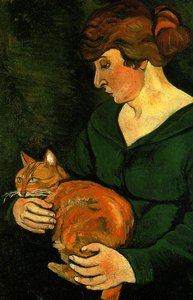
Portrait of Suzanne Valadon

Suzanne Valadon Paintings: The 79 Most Famous, Through a Gallery's Eye

Updated November 2026 · ranked by our popularity score (searches, visits and orders for each work) · 83 works by Suzanne Valadon in our catalogue

In short

To the gallery's eye, Suzanne Valadon's most famous painting is The Blue Room (1923), whose original hangs in the Centre Pompidou, Paris. My Son (1896) and Woman with a Double Bass (1908) complete the trio every eye recognises. Of the 83 works by Suzanne Valadon in our catalog, the gallery presents the 79 most famous below, each original with its year, its museum and what makes it unique.

1865 – 1938, Bessines-sur-Gartempe Post-impressionism Most works: Centre Pompidou

The gallery's top 10 Suzanne Valadon paintings

1
The Blue Room (1923) by Suzanne Valadon

The Blue Room

1923 · Oil On Canvas · Centre Pompidou, Paris

Suzanne Valadon’s 1923 masterpiece presents a strikingly modern vision of the female nude, departing from traditional academic portrayals and offering a glimpse into the evolving role of women in post-World War I society. This boldly colored interior scene isn't simply a depiction of a reclining figure; it’s a statement about independence, introspection, and the complexities of contemporary life.

2
My Son (1896) by Suzanne Valadon

My Son

1896 · Charcoal

In this intimate study, Suzanne Valadon presents My Son, a work that captures a quiet, private moment from about 1896. The subject is a nude figure, a young man who rests in a relaxed pose. There is a profound sense of familiarity in the way the figure is rendered, suggesting that the model is indeed the artist's own son. This personal connection breathes a sense of vulnerability into the scene,…

3
Woman with a Double Bass (1908) by Suzanne Valadon

Woman with a Double Bass

1908 · Oil On Canvas

The artwork titled Woman with a Double Bass was painted by the artist Suzanne Valadon. This oil on canvas work was created in 1908 in Paris, France. It is categorized as a genre painting, focusing on a scene from everyday life rather than a mythological or allegorical subject.

4
Bouquet and a Cat (1919) by Suzanne Valadon

Bouquet and a Cat

1919 · Oil

A cat sits with a heavy, human-like assurance upon the ground. It is a creature of stillness, its gaze fixed on something unseen just beyond the frame. Beside this silent observer, a vase holds a bouquet of flowers, their colors breathing life into the center of the composition. Two potted plants flank the scene, anchoring the edges of the frame and providing a sense of depth to this intimate corner…

5
Portraits of the Family (1912) by Suzanne Valadon

Portraits of the Family

1912 · Oil On Canvas · Musée d'Orsay, Paris

Four figures occupy a tight, overlapping space, their bodies pressed together as if seeking warmth or perhaps shielding one another from an unseen weight. The air within the frame feels heavy, thick with a psychological tension that pulls the viewer into their shared orbit. An elderly woman gazes out with eyes that seem to carry the weariness of many years, her weathered skin catching the diffuse light. Beside her, a…

7
Nude Reclining on a Sofa (1928) by Suzanne Valadon

Nude Reclining on a Sofa

1928 · Oil On Canvas

In this 1928 oil on canvas, a nude woman reclines upon a floral-patterned sofa. She is positioned with her body turned toward the viewer, her legs pulled up and crossed at the knees. This posture creates a natural fold in the abdomen, a physical detail rendered with directness. Her hands hold a hat, an object that introduces a sense of the everyday into the private setting. The light enters from…

8
View from My Window in Genets (Brittany) (1922) by Suzanne Valadon

View from My Window in Genets (Brittany)

1922 · Oil On Canvas

This 1922 oil on canvas, titled View from My Window in Genets (Brittany), presents a post-impressionist depiction of a village scene. The composition is balanced, utilizing houses and trees as focal points that guide the viewer's eye into the landscape. Within the scene, several people are scattered throughout the environment; some figures are positioned near the houses, while others are located further away in the distance.

9
My Utrillo at the Age of Nine (1892) by Suzanne Valadon

My Utrillo at the Age of Nine

1892 · Charcoal

My Utrillo at the Age of Nine is a charcoal drawing by the artist Suzanne Valadon. Created about 1892, this work presents a portrait of a young boy. The subject is likely Maurice Utrillo at the age of nine. The figure is depicted in a state of repose, captured in a moment of intimacy and vulnerability.

10
Self-Portrait (1898) by Suzanne Valadon

Self-Portrait

1898 · Oil On Canvas · Museum of Fine Arts, Houston

The gaze meets us directly in Self-Portrait, a work that captures the presence of the artist, Suzanne Valadon. Painted about 1898, this oil on canvas offers a glimpse into the inner life of a woman who navigated the bohemian circles of France. The subject stares back with an intensity that feels immediate, as if the moment of creation is still unfolding before our eyes.

Suzanne Valadon paintings, ranked 11 to 79

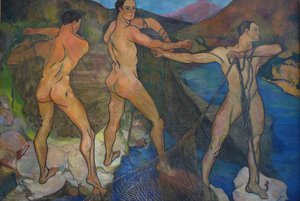
11Maurice Utrillo Playing with a Sling Shot (1895) by Suzanne ValadonMaurice Utrillo Playing with a Sling Shot1895 12Woman Preparing for a Bath (1895) by Suzanne ValadonWoman Preparing for a Bath1895 13Utrillo Nude Sitting on a Couch (1895) by Suzanne ValadonUtrillo Nude Sitting on a Couch1895 14Juliet sitting in a chair (1909) by Suzanne ValadonJuliet sitting in a chair1909 15Mother and Daughter After the Bath II (1908) by Suzanne ValadonMother and Daughter After the Bath II1908 16Nu assis sur un canapé (1916) by Suzanne ValadonNu assis sur un canapé1916 17Young Girl Bathing (1919) by Suzanne ValadonYoung Girl Bathing1919 18Nude on a Red Couch (1920) by Suzanne ValadonNude on a Red Couch1920 · Musee du Petit Palais 19Seated Nude with Shawl Carpet (1921) by Suzanne ValadonSeated Nude with Shawl Carpet1921 20Self-Portrait (1918) by Suzanne ValadonSelf-Portrait1918 21Louson and Raminou (1920) by Suzanne ValadonLouson and Raminou1920 22Portrait de Louis Moysés (1924) by Suzanne ValadonPortrait de Louis Moysés1924 23Young Girl in Front of a Window (1930) by Suzanne ValadonYoung Girl in Front of a Window1930 · Museum of Art 24Nude Sitting on the Edge of a Bed (1929) by Suzanne ValadonNude Sitting on the Edge of a Bed1929 25Portrait of a woman (1934) by Suzanne ValadonPortrait of a woman1934 · Musée Toulouse-Lautrec 26Vase of flowers (1922) by Suzanne ValadonVase of flowers1922 · Musée Toulouse-Lautrec 27Lilacs and Peonies (1929) by Suzanne ValadonLilacs and Peonies1929 · Metropolitan Museum of Art 28Bouquet of flowers by Suzanne ValadonBouquet of flowersCentre Pompidou 29The Circus (1889) by Suzanne ValadonThe Circus1889 · Cleveland Museum of Art 30Woman Seated by Suzanne ValadonWoman SeatedPhoenix Art Museum 31La Pedicure by Suzanne ValadonLa PedicureBoca Raton Museum of Art 32André Utter et ses chiens by Suzanne ValadonAndré Utter et ses chiens 33Nude at the Mirror (1909) by Suzanne ValadonNude at the Mirror1909 34After the bath (1908) by Suzanne ValadonAfter the bath1908 35The Bath (1908) by Suzanne ValadonThe Bath1908 36Raminou cat study (1917) by Suzanne ValadonRaminou cat study1917 · Musée Des Beaux 37Fruit bowl (1917) by Suzanne ValadonFruit bowl1917 38Route dans la forêt de Compiègne (1914) by Suzanne ValadonRoute dans la forêt de Compiègne1914 · Musée Fabre 39L'Acrobate, ou La Roue (1916) by Suzanne ValadonL'Acrobate, ou La Roue1916 40Portrait of a Woman (1917) by Suzanne ValadonPortrait of a Woman1917 41Roses in a Vase (1914) by Suzanne ValadonRoses in a Vase1914 42Femme a la Toilette (1913) by Suzanne ValadonFemme a la Toilette1913 43Study of a cat (1918) by Suzanne ValadonStudy of a cat1918 44Flower vase on a round table (1920) by Suzanne ValadonFlower vase on a round table1920 45Two cats (1918) by Suzanne ValadonTwo cats1918 46Raminou sitting on a cloth (1920) by Suzanne ValadonRaminou sitting on a cloth1920 47Portrait of Maurice Utrillo (1921) by Suzanne ValadonPortrait of Maurice Utrillo1921 48Woman Looking at Herself in the Mirror (1920) by Suzanne ValadonWoman Looking at Herself in the Mirror1920 49Louison and Raminou (1920) by Suzanne ValadonLouison and Raminou1920 50Nude on the sofa (1920) by Suzanne ValadonNude on the sofa1920 51Portrait of Monsieur Mori (1922) by Suzanne ValadonPortrait of Monsieur Mori1922 52Nudes (1919) by Suzanne ValadonNudes1919 · Museu de Arte de São Paulo Assis Chateaubriand 53Nude with a Striped Blanket (1922) by Suzanne ValadonNude with a Striped Blanket1922 54Miss Lily Walton (1922) by Suzanne ValadonMiss Lily Walton1922 55Gilbert, Nude Fixing Her Hair (1920) by Suzanne ValadonGilbert, Nude Fixing Her Hair1920 56Farm Montcorin (1918) by Suzanne ValadonFarm Montcorin1918 57Nude Woman with Drapery (1919) by Suzanne ValadonNude Woman with Drapery1919 58Spring Flowers (1928) by Suzanne ValadonSpring Flowers1928 · Statens Museum For Kunst 59Self-Portrait (1927) by Suzanne ValadonSelf-Portrait1927 60Reclining nude (1928) by Suzanne ValadonReclining nude1928 · Metropolitan Museum of Art 61Landscape at Saint-Bernard (Ain) (1932) by Suzanne ValadonLandscape at Saint-Bernard (Ain)1932 62Raminou and pitcher with carnations (1932) by Suzanne ValadonRaminou and pitcher with carnations1932 63Andre Utter and His Dogs (1932) by Suzanne ValadonAndre Utter and His Dogs1932 64Nude Seated on a Bed (1929) by Suzanne ValadonNude Seated on a Bed1929 65Still life with white rose (1936) by Suzanne ValadonStill life with white rose1936 66Self-Portrait (1938) by Suzanne ValadonSelf-Portrait1938 67Still life by Suzanne ValadonStill life 68Bouquet de fleurs dans un vase Empire by Suzanne ValadonBouquet de fleurs dans un vase Empire 69L'Etable en Beaujolais by Suzanne ValadonL'Etable en Beaujolais 70Nu à la draperie blanche Nu debout by Suzanne ValadonNu à la draperie blanche Nu debout 71Casting the Net (1914) by Suzanne ValadonCasting the Net1914 · Музей витончених мистецтв Нансі 72Adam and Eve (1909) by Suzanne ValadonAdam and Eve1909 · Centre Pompidou 73The Abandoned Doll by Suzanne ValadonThe Abandoned DollNational Museum of Women in the Arts 74Nu au châle bleu (1930) by Suzanne ValadonNu au châle bleu1930 · Musée d'Unterlinden 75Joy of Life (1911) by Suzanne ValadonJoy of Life1911 · Metropolitan Museum of Art 76Portrait of Erik Satie (1892) by Suzanne ValadonPortrait of Erik Satie1892 · Centre Pompidou 77La Couturière (1914) by Suzanne ValadonLa Couturière1914 · Centre Pompidou 78Le Canard by Suzanne ValadonLe CanardCentre Pompidou 79The Two Bathers (1923) by Suzanne ValadonThe Two Bathers1923 · Musée d'Arts de Nantes

Suzanne Valadon's famous paintings, period by period

The subjects that held Suzanne Valadon's eye

The four subjects that come back most often in these originals, each with its finest example.

The museums that keep Suzanne Valadon's originals

The 8 museums that hold the most of the paintings on this page.

Museum City Works by Suzanne Valadon Paintings from this list
Centre Pompidou, ParisCentre Pompidou Paris 6 The Blue Room, Bouquet of flowers, Adam and Eve
Metropolitan Museum of Art, New YorkMetropolitan Museum of Art New York 3 Lilacs and Peonies, Reclining nude, Joy of Life
Musée Toulouse-Lautrec, AlbiMusée Toulouse-Lautrec Albi 2 Portrait of a woman, Vase of flowers
Musée d'Orsay, ParisMusée d'Orsay Paris 1 Portraits of the Family
Museum of Fine Arts, HoustonMuseum of Fine Arts Houston 1 Self-Portrait
Musee du Petit Palais, GenevaMusee du Petit Palais Geneva 1 Nude on a Red Couch
Museum of Art, San DiegoMuseum of Art San Diego 1 Young Girl in Front of a Window
Cleveland Museum of Art, ClevelandCleveland Museum of Art Cleveland 1 The Circus

Suzanne Valadon, one signature painting per decade

Works per decade

Pick a decade to see the original that defines it.

Suzanne Valadon's paintings: the gallery answers

Which Suzanne Valadon painting is the most famous of all?Reveal the answer

The Blue Room (1923), Centre Pompidou, Paris. My Son (1896) and Woman with a Double Bass (1908) come next.

How old was Suzanne Valadon on completing The Blue Room?Reveal the answer

58 years old: The Blue Room dates from 1923, and Suzanne Valadon was born in 1865.

Which are Suzanne Valadon's top 10 paintings?Reveal the answer

The Blue Room, My Son, Woman with a Double Bass, Bouquet and a Cat, Portraits of the Family, Female Nude, washing herself, Nude Reclining on a Sofa, View from My Window in Genets (Brittany), My Utrillo at the Age of Nine and Self-Portrait. The ranking above gives each one's year and museum.

How many works did Suzanne Valadon create?Reveal the answer

Our catalog holds 83 works by Suzanne Valadon, dated from 1889 to 1938.

Where do Suzanne Valadon's most famous originals hang?Reveal the answer

Mostly in Centre Pompidou (Paris), Metropolitan Museum of Art (New York) and Musée Toulouse-Lautrec (Albi). The museum table above lists them all.

When did Suzanne Valadon create the most famous paintings?Reveal the answer

In 1920s: 25 of the 79 works on this page were made then, The Blue Room among them.

Which are Suzanne Valadon's earliest and latest famous works?Reveal the answer

On this page, the earliest is The Circus (1889) and the latest Self-Portrait (1938).

Which subjects did Suzanne Valadon return to most?Reveal the answer

Woman (17), Nudes (15) and Flowers (11), across the 79 works on this page.

Which medium did Suzanne Valadon work in most?Reveal the answer

Oil On Canvas, for 18 of the 79 works on this page.

Which movement is Suzanne Valadon associated with?Reveal the answer

Post-impressionism, judging by the originals on this page.

Which Suzanne Valadon originals does the Centre Pompidou hold?Reveal the answer

The Blue Room, Bouquet of flowers and Adam and Eve: the Centre Pompidou, Paris holds 6 of the works on this page.

Suzanne Valadon: the artist

A Life Forged in Montmartre: The Trailblazing Art of Suzanne Valadon

Suzanne Valadon, born Marie-Clémentine Valadon in 1865 amidst the rural landscapes of Bénesse-sur-Gartempe, France, carved a singular path through the late 19th and early 20th century art world. Her story is one of remarkable resilience, defying societal constraints and artistic conventions to emerge as a pioneering Post-Impressionist painter. Unlike many of her contemporaries who benefited from formal training and privileged backgrounds, Valadon’s education was born of observation, necessity, and an unwavering spirit. Growing up in poverty with her mother in Montmartre—a district then blossoming into the bohemian heart of Paris—she navigated a life of hardship, taking on various jobs to survive: waitress, factory worker, even a brief stint as a circus acrobat after a fall ended that career path. This early exposure to the vibrant, often gritty realities of Parisian life would profoundly shape her artistic vision. It was within this milieu that she first entered the art world, not as a creator, but as a muse.

From Model to Master: A Unique Artistic Development

For nearly a decade, Valadon worked as an artist’s model, posing for prominent figures like Pierre-Auguste Renoir, Henri de Toulouse-Lautrec, and Edgar Degas. These sessions weren't merely financial transactions; they were immersive lessons in technique, composition, and the artistic process itself. She absorbed knowledge by watching masters at work, studying their methods, and engaging in conversations about art. Toulouse-Lautrec, recognizing her innate talent, encouraged her to pursue drawing, and it was Degas who provided more formal guidance, solidifying her foundational skills. This period of modeling proved pivotal; Valadon wasn’t simply a passive subject but an active observer, dissecting the artistic gaze and internalizing its principles. She began to draw prolifically, initially focusing on scenes from her everyday life—her mother, her son Maurice Utrillo (whose paternity remains uncertain, though Miguel Utrillo later acknowledged him), and intimate domestic settings. Her style quickly developed a distinctive character: bold lines, expressive brushwork, and an unflinching honesty in portraying the human form. She rejected the delicate, idealized depictions of women prevalent at the time, instead offering raw, unvarnished portrayals that captured their strength, vulnerability, and lived experiences.

Challenging Conventions and Embracing Boldness

Valadon’s artistic style is immediately recognizable for its directness and emotional intensity. Her paintings are characterized by a masterful use of line and color, creating compositions that are both visually striking and psychologically compelling. She became particularly renowned for her female nudes, which were revolutionary in their time. Unlike the mythological or allegorical nudes favored by many male artists, Valadon’s figures were often depicted with a sense of realism and psychological depth rarely seen before. She presented women not as objects of desire but as complex individuals with their own thoughts, feelings, and desires. Works like Nu à la draperie blanche (Nude with White Drapery) and Nu debout (Standing Nude) exemplify this approach, showcasing the female body with a frankness that challenged prevailing societal norms. Her subject matter extended beyond nudes to include portraits, still lifes, and landscapes, all imbued with her unique perspective and technical skill. She wasn’t afraid to tackle difficult themes—aging, sexuality, loneliness—with an unflinching gaze.

Legacy and Lasting Impact

Suzanne Valadon's achievements extended beyond her artistic innovations. In 1894, she became the first woman painter admitted to the prestigious Société Nationale des Beaux-Arts, a significant milestone in breaking down barriers for female artists. Her work paved the way for future generations of women to pursue their creative ambitions and challenge the male-dominated art world. Art historians like Patricia Mathews have recognized Valadon’s crucial contribution to the Post-Impressionist movement, highlighting her unique perspective and stylistic originality. She is now considered a precursor to feminist art movements, with her honest and empowering depictions of women resonating deeply with contemporary audiences. Her legacy continues to inspire artists today, not only for her technical skill but also for her courage in defying convention and embracing her own artistic vision. Valadon’s story serves as a powerful reminder that true artistry transcends social boundaries and celebrates the diversity of human experience. She died in 1938, leaving behind a body of work that continues to captivate and challenge viewers, solidifying her place as a truly groundbreaking figure in art history.