Dutch Golden Age: original voices

100 Famous Dutch Golden Age Painters Who Shaped the Movement

Rembrandt (1606–1669) is the most famous Dutch Golden Age painter, whose singular vision gave us Isaac and Rebecca, known as and Night Watch. Next stand Johannes Vermeer, Frans Hals, Jacob van Ruisdael and Jan Steen. These 100 painters, from Cornelis van Haarlem (born 1562) to Jan Van Os (born 1744), came from 5 countries.

Our selection. Artists whose works our catalogue attaches to Dutch Golden Age, in the order of our fame ranking. Artists born after 1955 with no Wikidata identifier stay out until verified. The Wikipedia figure counts our 32 languages with an article on the artist.

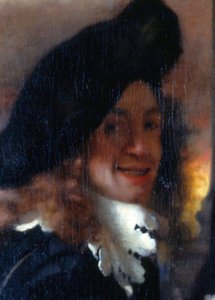
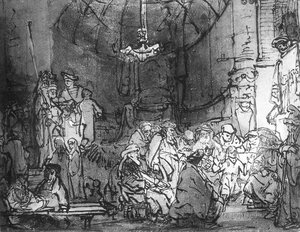
  1. Isaac and Rebecca, known as by Rembrandt1Rembrandt
  2. The Milkmaid by Johannes Vermeer2Johannes Vermeer
  3. gypsy girl by Frans Hals3Frans Hals

In brief

Dutch Golden Age in brief

  • 100Artists
  • 1562–1744Years of birth
  • 5Countries of birth
  • 2Women
  • 14,100Works in our catalogue
Cities with most births
Haarlem (20), Amsterdam (15), Leiden (10), Delft (8)
Museums holding the most key works
Rijksmuseum (42), Metropolitan Museum of Art (11), The Louvre (10), Mauritshuis (9)
The women of this list
Judith Leyster, Clara Peeters

One artist at a time

100 Dutch Golden Age Painters and their signature works

1of 100

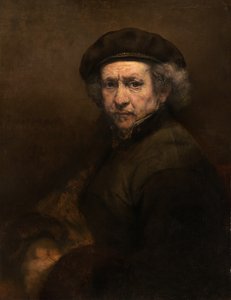
Rembrandt

Dutch Born in Leiden Dutch Golden Age Wikipedia in 32/32 languages
Rembrandt

Rembrandt had a way of making light feel like a physical presence in a room. He became a master of chiaroscuro, using the sharp contrast between deep shadows and bright highlights to create a sense of drama and weight.

Where to see His legacy is spread across many collections, with the National Gallery in London holding sixteen of his works.

Pupil of Pieter Lastman #46 · Teacher of Willem Drost #67, Philips Koninck #44, Gerrit Dou #16, Carel Fabritius #7, Samuel van Hoogstraten #39

Signature works · The 100 signature works

2of 100

Johannes Vermeer

Dutch Born in Delft Dutch Golden Age Wikipedia in 32/32 languages

Johannes Vermeer

Vermeer found his purpose in the quietude of domestic life. He did not simply paint a room; he captured how light moves through it, hitting a ceramic jug or a piece of bread with a clarity that feels almost scientific. When the light finally faded for Vermeer in Delft in December 1675, he was only forty-three.

Where to see In Amsterdam, the Rijksmuseum holds The Milkmaid, where the light settles on the earthenware and the bread.

Signature works · The 100 signature works

3of 100

Frans Hals

Born in Antwerp Wikipedia in 32/32 languages

Frans Hals

This technique imbued his paintings with a sense of immediacy and vitality, capturing the personality and character of his subjects in a way that was revolutionary for its time. His portraits weren’t simply likenesses; they were psychological studies. However, it's likely he was aware of the work of earlier Flemish painters like Pieter Bruegel the Elder.

Teacher of Gerrit Adriaenszoon Berckheyde #56, Adriaen van Ostade #36, Judith Leyster #14, Jan Miense Molenaer #75, Philips Wouwerman #40, Johannes Cornelisz Verspronck #96, Dirck Hals #52

Signature works · The 100 signature works

4of 100

Jacob van Ruisdael

Dutch Born in Haarlem Dutch Golden Age Wikipedia in 28/32 languages

Jacob van Ruisdael

Ruisdael’s approach to the canvas was defined by a restless versatility. This method allowed him to achieve subtle gradations of color and tone, building a sense of depth that felt lived-in rather than merely painted. His influence helped shape the English Romantics and the Barbizon school in France, and his impact crossed the Atlantic to inform the Hudson River school in the United States.

Where to see The physical presence of his canvases remains scattered across the major repositories of European and American art.

Pupil of Salomon van Ruysdael #23 · Teacher of Meindert Hobbema #11

Signature works · The 100 signature works

5of 100

Jan Steen

Dutch Born in Leiden Baroque, Genre painting Wikipedia in 27/32 languages

Jan Steen

His early compositions from the 1640s leaned into the grotesque, utilizing exaggerated and distorted figures to drive his narratives. This raw, almost jarring approach to characterization provided a foundation for the more nuanced social observations that would define his later output.

Pupil of Jan van Goyen #8, Adriaen van Ostade #36

Signature works · The 100 signature works

6of 100

Pieter de Hooch

Dutch Born in Rotterdam Delft School, Dutch Golden Age Wikipedia in 26/32 languages

Pieter de Hooch

He was the eldest of five children born to Hendrick Hendricksz de Hooch, a master bricklayer, and Annetge Pieters, a midwife. During these formative years, de Hooch was a pupil of Claes Berchem. His compositions often shared thematic ground and structural similarities with the works of Emanuel de Witte, particularly in their approach to interior spaces.

Pupil of Nicolaes Pieterszoon Berchem #34

Signature works · The 100 signature works

7of 100

Carel Fabritius

Dutch Born in Middenbeemster Baroque art Wikipedia in 23/32 languages

Carel Fabritius

Following his time with Rembrandt, Fabritius settled in Delft, becoming a member of the local painters’ guild in 1652. What sets Fabritius apart is his masterful manipulation of light. Beyond The Goldfinch, Fabritius’s oeuvre includes other compelling works that showcase his distinctive vision.

Pupil of Rembrandt #1

Signature works · The 100 signature works

8of 100

Jan van Goyen

Born in Leiden Wikipedia in 25/32 languages

Jan van Goyen

Van Goyen’s style is immediately recognizable for its simplicity, subtle tonal variations, and use of a limited palette – primarily grays, browns, and greens. He moved away from the more colorful and detailed landscapes popular at the time, pioneering a more realistic and atmospheric approach. He directly impacted artists such as Jan Steen, who was one of his pupils.

Teacher of Nicolaes Pieterszoon Berchem #34, Jan Steen #5

Signature works · The 100 signature works

9of 100

Gabriel Metsu

Dutch Born in Leiden Eclectic; genre, portrait, still life Wikipedia in 23/32 languages

Gabriel Metsu

By 1650, he had ceased to be a subscriber to the guild. His focus shifted as he moved toward Amsterdam around 1655. His work is credited with influencing several major figures of the era, including Johannes Vermeer, Jan Steen, Frans van Mieris, and Pieter de Hooch.

Where to see Tracing the presence of his paintings requires traveling through several major collections.

Pupil of Gerrit Dou #16

Signature works · The 100 signature works

10of 100

Willem Kalf

Dutch Born in Rotterdam Dutch Golden Age, Still Life Wikipedia in 17/32 languages

Willem Kalf

His semi-monochrome still lifes exerted a notable influence on French art, particularly within the circle of the Le Nain brothers, who admired his sophisticated use of light and shadow.

Signature works · The 100 signature works

11of 100

Meindert Hobbema

Dutch Born in Amsterdam Golden Age Dutch Landscape Art Wikipedia in 23/32 languages

Meindert Hobbema

The partnership with Ruysdael was far more than a mere educational period; it fostered an intellectual and stylistic exchange that propelled Hobbema’s artistic evolution. Unlike the more dramatic or stormy landscapes found in other Dutch traditions, Hobbema’s oeuvre often leans toward a peaceful, structured realism. His paintings do not merely document the topography of 17th-century Holland; they evoke a sense of stillness and permanence.

Pupil of Jacob van Ruisdael #4

Signature works · The 100 signature works

12of 100

Nicolaes Maes

Dutch Born in Dordrecht Baroque, Dutch Golden Age Wikipedia in 20/32 languages

Nicolaes Maes

Returning to Dordrecht in 1654, Maes began to forge his own artistic path, gradually distancing himself from direct imitation of his former master. The subsequent decade witnessed a shift towards smaller-scale domestic genre scenes, yet retaining the vibrant colorism he had absorbed during his time with Rembrandt. His paintings offer invaluable insights into the social customs, domestic interiors, and psychological complexities of the Dutch Golden Age.

Pupil of Rembrandt #1

Signature works · The 100 signature works

13of 100

Emanuel de Witte

Dutch Born in Alkmaar Baroque art Wikipedia in 17/32 languages

Emanuel de Witte

Emanuel de Witte stands as an important figure in the last phase of architectural painting in the Netherlands, bridging the gap between meticulous documentation and atmospheric interpretation.

Signature works · The 100 signature works

14of 100

Judith Leyster

Dutch Born in Haarlem Dutch Golden Age Wikipedia in 24/32 languages

Judith Leyster

leyster's first known signed works, serenade and jolly topper, date back to 1629 when she was just twenty years old. by 1633, she became a member of the haarlem guild of st. luke, making her one of the first female artists to be part of this prestigious organization.

Pupil of Frans Hals #3, Jan Miense Molenaer #75

Signature works · The 100 signature works

15of 100

Hendrick Avercamp

Dutch Born in Amsterdam Dutch Golden Age painting Wikipedia in 23/32 languages

Hendrick Avercamp

Avercamp stands out as one of the first dedicated landscape painters in 17th-century Holland, a period traditionally dominated by portraiture, history painting, and still life. His paintings aren’t merely depictions of cold weather; they are vibrant snapshots of Dutch life unfolding on the ice. His work also reflects the climatic conditions of the Little Ice Age, a period of unusually cold winters in Europe, which undoubtedly fueled his fascination with frozen landscapes.

Signature works · The 100 signature works

16of 100

Gerrit Dou

Dutch Born in Leiden Dutch Golden Age, Leiden fijnschilders Wikipedia in 22/32 languages

Gerrit Dou

Rather than working on large, sweeping canvases, he preferred small-scale works that invited close inspection. Some of his notable subjects include: The Dropsical Woman. His influence flowed directly into the work of his pupils, most notably Frans van Mieris the Elder and Gabriël Metsu.

Where to see Finding the traces of Gerrit Dou's hand requires a trip through some of Europe's most significant halls.

Pupil of Rembrandt #1 · Teacher of Gabriel Metsu #9

Signature works · The 100 signature works

17of 100

Paulus Potter

Dutch Born in Enkhuizen Romanticism Wikipedia in 23/32 languages

Paulus Potter

Paulus Potter carved a unique niche for himself within the vibrant landscape of Dutch Golden Age painting. He became celebrated for his captivating depictions of animals – particularly cattle – seamlessly integrated into expansive, meticulously rendered landscapes. He is now recognized as a precursor to the Romantic movement, anticipating its emphasis on the sublime power of nature and the emotional response it evokes.

Signature works · The 100 signature works

18of 100

Jan van Huysum

Dutch Born in Amsterdam Dutch Golden Age, Still life Wikipedia in 18/32 languages

Jan van Huysum

What truly sets Van Huysum apart is his unparalleled technique. He employed smooth, glossy brushstrokes, building up layers of paint to create an almost enamel -like surface that enhanced the richness and vibrancy of his colors. Born into an artistic family—his father, Justus van Huysum the Elder, was also a respected flower painter, and his brothers Jacob and Michiel followed suit—Jan’s path seemed predetermined.

Signature works · The 100 signature works

19of 100

Gerard ter Borch

Dutch Born in Zwolle Dutch Golden Age Wikipedia in 21/32 languages

Gerard ter Borch

December 1617 marks the beginning of Gerard ter Borch in Zwolle, within the province of Overijssel in the Dutch Republic. By 1632, Gerard ter Borch is in Amsterdam. He likely studies under Willem Cornelisz Duyster or Pieter Codde, absorbing the technical foundations required for a professional career.

Signature works · The 100 signature works

20of 100

Willem van de Velde the Elder

Dutch Born in Leiden Dutch Golden Age, Marine painting Wikipedia in 18/32 languages

Willem van de Velde the Elder

The artist possessed a hand of singular precision, a skill born from a life spent observing the intricate rigging and timber of the vessels that crowded the Leiden harbors. Every rope, sail, and plank was rendered with such exactness that his sketches functioned as vital visual archives of the maritime world. Alongside his son, Willem van de Velde the Younger, he is widely credited with founding the English school of marine painting.

Where to see In the Mauritshuis, his presence is felt through works that capture the essence of the Dutch Golden Age.

Teacher of Willem van de Velde the Younger #22

Signature works · The 100 signature works

21of 100

Cornelis van Haarlem

Dutch Born in Haarlem Northern Mannerism Wikipedia in 20/32 languages

Cornelis van Haarlem

His students included Salomon de Bray, Cornelis Jacobsz Delff, and Gerrit Pietersz Sweelink, continuing his influence into subsequent generations.

Signature works · The 100 signature works

22of 100

Willem van de Velde the Younger

Dutch Born in Leiden Dutch Golden Age marine painting Wikipedia in 19/32 languages

Willem van de Velde the Younger

The studio functioned through a precise division of labor. While his father, Willem van de Velde the Elder, produced highly detailed black and white ink studies, the younger Van de Velde translated these sketches into oil paintings. As a prominent figure of the Dutch Golden Age, his presence in the English court changed the trajectory of seascape art.

Where to see The physical presence of his maritime scenes spans from the Netherlands to England.

Pupil of Willem van de Velde the Elder #20

Signature works · The 100 signature works

23of 100

Salomon van Ruysdael

Dutch Born in Naarden Dutch Golden Age Landscape Painting Wikipedia in 19/32 languages

Salomon van Ruysdael

To study a Van Ruysdael is to undergo a lesson in patience and observation. His contribution to the Dutch Golden Age remains an essential chapter in the story of how humanity learned to see the world not just as it is, but as it feels.

Signature works · The 100 signature works

24of 100

Abraham van Beijeren

Dutch Born in The Hague Still Life Wikipedia in 18/32 languages

Abraham van Beijeren

The historical significance of Abraham Hendricksz. van Beyeren lies in his ability to elevate the still life genre from mere decorative craft to a high art form capable of expressing complex philosophical truths.

Signature works · The 100 signature works

26of 100

Aert van der Neer

Dutch Born in Gorinchem Dutch Golden Age Landscape Painting Wikipedia in 16/32 languages

Aert van der Neer

Information regarding van der Neer’s formative years remains shrouded in the mists of history, yet his artistic essence is deeply rooted in the Dutch soil. His artistic education likely stemmed from exposure to influential painters like Rafael and Jochem Govertsz Camphuysen, whose stylistic sensibilities undoubtedly impacted his own burgeoning talent. He remains a cornerstone of the Dutch Golden Age, remembered not just for his technical prowess, but for his ability to capture the very soul of the nocturnal world.

Signature works · The 100 signature works

27of 100

Clara Peeters

Flemish Born in Antwerp Dutch Golden Age Wikipedia in 18/32 languages

Clara Peeters

The precise circumstances surrounding Peeters’s artistic education remain shrouded in mystery, largely due to the limitations imposed upon women during this period. Unlike many male artists who benefited from formal guild apprenticeships—a cornerstone of Flemish artistic development—Peeters’s name does not appear in guild records, fueling speculation that she may have been educated privately or by a familial mentor. She represents a crucial milestone in recognizing women's artistic capabilities during the Dutch Golden Age —the earliest significant female painter of this era.

Signature works · The 100 signature works

28of 100

Willem Claesz Heda

Dutch Born in Haarlem Golden Age painting Wikipedia in 20/32 languages

Willem Claesz Heda

Artists like Pieter de Ring and Jan Davidsz. de Heem, though developing their own distinct styles, clearly demonstrate the impact of Heda’s tonal realism and compositional balance.

Signature works · The 100 signature works

31of 100

Jan van der Heyden

Dutch Born in Gorinchem Dutch Golden Age, Baroque Wikipedia in 17/32 languages

Jan van der Heyden

Van der Heyden's ingenuity extended far beyond the realm of art. His dedication culminated in the publication of Brandspuiten-boek, widely considered the first comprehensive firefighting manual, complete with his own detailed illustrations. Jan van der Heyden died in 1712 as a wealthy man, leaving behind a substantial estate that included over seventy of his own paintings – a testament to both his productivity and the value placed on his work during his lifetime.

Signature works · The 100 signature works

32of 100

Jan Asselijn

Dutch Born in Dieppe Italianate landscape Wikipedia in 16/32 languages

Jan Asselijn

His works are now held in prestigious collections such as the Rijksmuseum in Amsterdam, ensuring his legacy endures as a significant figure within the Dutch Golden Age.

Signature works · The 100 signature works

33of 100

Bartholomeus van der Helst

Dutch Born in Haarlem Dutch Golden Age, Baroque Wikipedia in 18/32 languages

Bartholomeus van der Helst

Van der Helst’s artistic signature lies in his ability to portray the elegance and affluence of Amsterdam's elite. But beyond technical mastery, Van der Helst understood how to capture the essence of his subjects—their personality, their ambitions, and their place in the world. By the mid-1640s, Van der Helst had surpassed even Rembrandt in popularity among Amsterdam's wealthy patrons—a testament to his ability to deliver portraits that resonated with their tastes and aspirations.

Signature works · The 100 signature works

34of 100

Nicolaes Pieterszoon Berchem

Dutch Born in Haarlem Dutch Italianate Wikipedia in 16/32 languages

Nicolaes Pieterszoon Berchem

His artistic vision resonated with subsequent generations, notably impacting French Rococo painter Jean-Baptiste Pillement and the Dutch ‘Cleves Romanticism ’ landscape painters like Barend Cornelis Koekkoek.

Pupil of Pieter Claesz #30, Jan van Goyen #8 · Teacher of Pieter de Hooch #6, Karel Dujardin #45

Signature works · The 100 signature works

35of 100

Balthasar van der Ast

Dutch Born in Middelburg Golden Age Painting Wikipedia in 18/32 languages

Balthasar van der Ast

The influence of Balthasar van der Ast extended far beyond his own studio in Utrecht. Balthasar van der Ast remains a titan of the Stilleven, an artist who taught the world to find the infinite within the infinitesimal, and who transformed the humble objects of the natural world into eternal icons of beauty. His ability to infuse inanimate objects with a sense of life—a quality seen in his depictions of lizards and insects crawling amidst fruit—set a new standard for the Dutch Golden Age.

Pupil of Ambrosius Bosschaert #37

Signature works · The 100 signature works

36of 100

Adriaen van Ostade

Born in Haarlem Wikipedia in 20/32 languages

Adriaen van Ostade

Comparison with David Teniers the Younger: Art historians often compare Van Ostade's work to that of David Teniers the Younger, another prominent genre painter.

Pupil of Frans Hals #3 · Teacher of Cornelis Pietersz Bega #90, Isaac van Ostade #82, Jan Steen #5

Signature works · The 100 signature works

37of 100

Ambrosius Bosschaert

Flemish, Dutch Born in Antwerp Dutch Golden Age, Floral Still Life Wikipedia in 19/32 languages

Ambrosius Bosschaert

His works often included symbolic elements – a deliberate choice that elevated the still life beyond mere representation. He established a tradition that would be continued by his sons and numerous pupils, solidifying Middelburg’s position as the leading center for this specialized art form within the Dutch Republic. His meticulous approach to floral representation influenced generations of artists, including Jan Fyt (Joannes Fijt) and Rachel Ruysch, who both specialized in still life painting and built upon his foundations.

Signature works · The 100 signature works

38of 100

Pieter Claesz Soutman

Dutch Dutch Golden Age

Pieter Claesz Soutman

Perhaps the most intriguing aspect of Soutman’s career revolves around a remarkable misattribution that occurred in the 1860s. The story highlights not only the challenges of attribution during that era but also underscores Soutman’s remarkable skill—his paintings were so convincing that they fooled even seasoned art experts. This incident sparked outrage within the Dutch press, with Conrad Busken Huet vehemently arguing that such a national treasure should remain in its homeland.

Signature works · The 100 signature works

39of 100

Samuel van Hoogstraten

Dutch Born in Dordrecht Dutch Golden Age, Baroque Wikipedia in 18/32 languages

Samuel van Hoogstraten

A portrait from 1645, now residing in the Liechtenstein collection in Vienna, serves as a clear testament to this apprenticeship. Upon returning to Dordrecht, he married in 1656 and assumed a civic role as provost of the mint, demonstrating a multifaceted talent that extended beyond the artistic sphere. He built upon the foundations laid by Karel van Mander in his earlier work, Het Schilder-Boeck, seeking to create a systematic framework for understanding and practicing the art of painting.

Pupil of Rembrandt #1

Signature works · The 100 signature works

40of 100

Philips Wouwerman

Dutch Born in Haarlem Dutch Golden Age Wikipedia in 21/32 languages

Philips Wouwerman

Early Influences: Initially emulating bamboccianti painters, Wouwerman’s early works featured depictions of daily life. Mastery of the Horse: Wouwerman is particularly celebrated for his exceptional skill in depicting horses of various breeds in dynamic motion. Influence on Later Artists: Wouwerman’s style influenced numerous artists, including Jan van Huchtenburgh (1647–1733), the brothers Jan Frans and Joseph van Bredael (1688–1739), and Carel van Falens (1683–1733).

Pupil of Frans Hals #3

Signature works · The 100 signature works

41of 100

Roelant Savery

Flemish Born in Kortrijk Dutch Golden Age Painting Wikipedia in 19/32 languages

Roelant Savery

Born in Kortrijk, Belgium, around 1576, Savery's early life was marked by the profound upheaval of the Spanish Inquisition. Around 1604, he traveled to Prague, where he entered the orbit of the Holy Roman Emperors Rudolf II and Matthias. Upon returning to Amsterdam in 1616, Savery established himself as a prominent figure in the Dutch art scene.

Signature works · The 100 signature works

42of 100

Frans van Mieris the Elder

Dutch Born in Leiden Fijnschilder, Genre painting Wikipedia in 15/32 languages

Frans van Mieris the Elder

Doctor's Visit (1657), considered one of his earliest dated and most important pieces, showcases his emerging independence from Dou’s influence.

Signature works · The 100 signature works

43of 100

Willem Van Aelst

Dutch Born in Delft Dutch Golden Age Wikipedia in 19/32 languages

Willem Van Aelst

Upon returning to the Netherlands, Van Aelst settled in Amsterdam, where he became one of the most prominent still-life painters of his generation. The historical significance of Willem van Aelst lies not only in his individual mastery but in his role as a bridge between the local traditions of Delft and the grander European courts. His works remain preserved in some of the world's most esteemed institutions, including the National Gallery of Art and the Staatliche Museen zu Berlin, ensuring that his meticulous observations of life, light, and shadow continue to captivate viewers centuries after his passing.

Signature works · The 100 signature works

44of 100

Philips Koninck

Dutch Born in Amsterdam Dutch Landscape Painting Wikipedia in 16/32 languages

Philips Koninck

Philips de Koninck (1619–1688) stands as a prominent figure within the Dutch Golden Age, celebrated primarily for his expansive landscapes that capture the grandeur and subtlety of the Dutch countryside. Notable Works: Among his most celebrated paintings are ‘ The Seamstress ’ (AQR47J) and ‘The Shepherdess,’ both depicting rural figures against dramatic backgrounds.

Pupil of Rembrandt #1

Signature works · The 100 signature works

45of 100

Karel Dujardin

Dutch Born in Amsterdam Dutch Golden Age painting Wikipedia in 17/32 languages

Karel Dujardin

He wasn't merely replicating the landscapes he encountered; instead, he synthesized them with the Dutch tradition of genre painting, creating a unique blend that captivated audiences on both sides of the Alps. His exposure to Italian culture is also evident in works like Rest at an Italian Inn, where he seamlessly blends Dutch genre painting traditions with evocative Italianate settings.

Pupil of Nicolaes Pieterszoon Berchem #34 · Teacher of Johannes Lingelbach #60

Signature works · The 100 signature works

46of 100

Pieter Lastman

Dutch Born in Amsterdam Dutch Golden Age painting Wikipedia in 21/32 languages

Pieter Lastman

Pieter Pietersz Lastman, born in Amsterdam in 1583, occupies a fascinating and pivotal position within the history of Dutch Golden Age painting.

Teacher of Rembrandt #1

Signature works · The 100 signature works

47of 100

Jan van de Cappelle

Dutch Born in Amsterdam Golden Age Wikipedia in 15/32 languages

Jan van de Cappelle

Born in Amsterdam in 1624, Jan van de Cappelle followed an unconventional path toward artistic mastery.

Signature works · The 100 signature works

48of 100

Pieter Jansz. Saenredam

Dutch Born in Assendelft Dutch Golden Age painting Wikipedia in 16/32 languages

Pieter Jansz. Saenredam

Saenredam, born in the quiet Dutch village of Assendelft in 1597, dedicated his artistic life to a singular and profoundly moving pursuit: capturing the serene grandeur of Dutch churches. His early artistic journey began around 1612 with an apprenticeship to Frans Pietersz de Grebber, a prominent Haarlem portraitist. Van Campen’s emphasis on classical principles and harmonious proportions informed Saenredam’s understanding of spatial composition and contributed to the sense of order and balance in his paintings.

Signature works · The 100 signature works

49of 100

Simon De Vlieger

Italian Born in Rotterdam Baroque Wikipedia in 16/32 languages

Simon De Vlieger

He moved beyond simply depicting ships at sea; he sought to capture the feeling of being on the water—the spray of the waves, the glint of sunlight on sails, the complex rigging of a vessel. His paintings are characterized by their highly detailed representations of ship construction, reflecting a deep understanding of naval architecture. One such painting—depicting fishermen dragging nets ashore—was sold by Van der Cappelle to Joanna Six, wife of Simon van der Stel, and shipped to the Cape of Good Hope, where it was displayed at Groot Constantia, the Van der Stel family estate.

Signature works · The 100 signature works

50of 100

Leonaert Bramer

Dutch Born in Delft Baroque Wikipedia in 16/32 languages

Leonaert Bramer

Passing through cities like Atrecht, Amiens, and Paris, he eventually arrived in Rome in 1616, a crucible for artistic ambition. His time in Italy wasn’t without its clashes; accounts detail a physical altercation with the renowned Claude Lorraine, demonstrating a passionate spirit unafraid of confrontation. Leonaert Bramer passed away in Delft before February 10, 1674, leaving behind a body of work that continues to captivate and intrigue.

Signature works · The 100 signature works

51of 100

Daniël Mijtens

Dutch Born in Delft Naturalism, Court Portraiture Wikipedia in 12/32 languages

Daniël Mijtens

His visits to the Netherlands in 1626 and 1630 were likely undertaken to study the latest developments in painting, particularly the works of Peter Paul Rubens and Anthony van Dyck – artists whose dynamic compositions and masterful use of light profoundly impacted Mijtens’s technique.

Signature works · The 100 signature works

52of 100

Dirck Hals

Dutch Born in Haarlem Dutch Golden Age Wikipedia in 14/32 languages

Dirck Hals

Though his career saw him working in various centers, including notable periods in Leiden during the 1640s, Hals remained intrinsically linked to the spirit of Haarlem. Technical Precision: His mastery of light and texture brought a tactile reality to the scenes of Dutch festivities. Yet, to view Dirck merely as a secondary figure is to miss the subtle brilliance of his contribution to the Dutch Golden Age.

Pupil of Frans Hals #3

Signature works · The 100 signature works

53of 100

Thomas de Keyser

Dutch Born in Amsterdam Dutch Golden Age Wikipedia in 17/32 languages

Thomas de Keyser

The achievements of Thomas de Keyser extend far beyond the canvas, representing a vital chapter in the history of Northern European art. Architectural Influence: A unique sense of composition and structural integrity derived from his familial connection to Dutch architecture. Growing up amidst the stone yards along the Amstel River, De Keyser was immersed in a world where art and architecture were inextricably linked, fostering a technical precision that would become his hallmark.

Signature works · The 100 signature works

54of 100

Govert Flinck

Dutch Born in Kleve Baroque Wikipedia in 19/32 languages

Govert Flinck

He left a lasting legacy as one of the most accomplished portraitists and genre painters of his time, influencing generations of artists who followed in his footsteps.

Pupil of Rembrandt #1

Signature works · The 100 signature works

55of 100

Allaert Van Everdingen

Dutch Born in Alkmaar Dutch Golden Age Landscape Painting Wikipedia in 18/32 languages

Allaert Van Everdingen

His influence can be traced through the works of later masters, most notably Jacob van Ruisdael, who adopted many of the rugged, atmospheric elements that Everdingen had pioneered.

Pupil of Roelant Savery #41 · Teacher of Ludolf Bakhuizen #25

Signature works · The 100 signature works

56of 100

Gerrit Adriaenszoon Berckheyde

Dutch Born in Haarlem Dutch Classicism Wikipedia in 14/32 languages

Gerrit Adriaenszoon Berckheyde

His paintings, such as A Hunting Party near the Hofvijver in The Hague, demonstrate how he could integrate human activity and landscape elements into his architectural compositions without losing the sense of monumental stillness.

Pupil of Frans Hals #3

Signature works · The 100 signature works

57of 100

Otto Marseus van Schrieck

Dutch Born in Nijmegen Dutch Golden Age painting Wikipedia in 14/32 languages

Otto Marseus van Schrieck

A pivotal period in Van Schrieck’s development was his sojourn to Italy between 1652 and 1657. Following his Italian experience, Van Schrieck briefly served at the court of the Grand Duke of Tuscany before venturing through England and France, eventually settling in Amsterdam in 1664, the same year he married Margarita Gysels, daughter of engraver Cornelius Gysels. Other artists who felt his influence include Willem van Aelst, Antonie van Borssom, Elias van den Broeck, Jacob Marrel, Abraham Mignon, Christiaen Striep, Isac Vromans, Matthias Withoos, and Pieter Withoos.

Signature works · The 100 signature works

58of 100

Adam Willaerts

Dutch Born in London Dutch Golden Age Wikipedia in 11/32 languages

Adam Willaerts

Born amidst the shifting tides of late sixteenth-century London, Adam Willaert carried within him the heritage of Flemish refugees fleeing religious upheaval. His journey through Leiden eventually led him to the heart of Utrecht around 1597, where he would establish a legacy that defined an era.

Signature works · The 100 signature works

59of 100

Jan Both

Dutch Born in Utrecht Italianate Landscape Painting

Jan Both

While Andries focused on genre scenes in the manner of Pieter van Laer, Jan dedicated himself primarily to landscape painting —a style heavily indebted to Claude Lorrain—capturing the ethereal beauty of the Mediterranean region with an unparalleled mastery of light and color. Jan Both's brother Andries tragically succumbed to illness in Venice during their return journey from Rome.

Signature works · The 100 signature works

60of 100

Johannes Lingelbach

Dutch Born in Frankfurt Bamboccianti Wikipedia in 12/32 languages

Johannes Lingelbach

Born in Frankfurt, Germany, his life unfolded across multiple European centers – initially marked by family relocation to Amsterdam and later punctuated by extended periods in France, Italy (Rome primarily), and ultimately returning to settle in the Netherlands. Lingelbach’s early years were shaped by his father, David Lingelbach, a German technician who established a labyrinthine entertainment complex in Amsterdam during the late 1630s.

Signature works · The 100 signature works

61of 100

Michiel Jansz. van Mierevelt

Dutch Born in Delft Golden Age Wikipedia in 12/32 languages

Michiel Jansz. van Mierevelt

The King of Sweden and the Count Palatine of Neuburg honored his mastery with golden chains, while the Archduke Albert VII of Austria provided him with a pension, ensuring his stability in Delft.

Teacher of Anthonie Palamedesz. #78

Signature works · The 100 signature works

62of 100

Egbert van der Poel

Dutch Born in Delft Dutch Golden Age Wikipedia in 13/32 languages

Egbert van der Poel

A year later, he married Aeltgen Willems van Linschooten in Maassluis, near Rotterdam, and together they would build a family—a son and three daughters—while navigating the complexities of life in a rapidly changing world. But it was an event that shattered the peace of Delft in 1654 that would indelibly mark Van der Poel’s artistic legacy. While not as widely celebrated during his lifetime as some of his peers, Van der Poel’s historical significance lies in his unique documentation of the Delft gunpowder explosion—paintings that serve as invaluable visual records of a pivotal moment in Dutch history.

Signature works · The 100 signature works

63of 100

Jacob Gerritsz. Cuyp

Dutch Born in Dordrecht Dutch Golden Age Wikipedia in 13/32 languages

Jacob Gerritsz. Cuyp

He descended from a lineage deeply embedded in the aesthetic fabric of the Netherlands; his father, Gerrit Gerritsz Cuyp, was a distinguished stained glass designer whose mastery of light and color would undoubtedly plant the seeds of meticulous observation in his son's mind.

Signature works · The 100 signature works

64of 100

Abraham Storck

Dutch Born in Amsterdam Maritime Painting Wikipedia in 12/32 languages

Abraham Storck

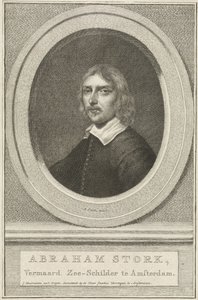
His canvases do not merely depict ships; they embody the very spirit of the Dutch Republic at its zenith, reflecting a period when the ocean was both a highway for wealth and a theater of intense geopolitical struggle. This apprenticeship introduced him to the sophisticated nuances of Mannerism and the dramatic, high-contrast lighting of Caravaggio’s chiaroscuro technique. Through works such as “ Un Prt de Mer ” (A Portion of Sea), completed in 1688, he demonstrated a breathtaking mastery of perspective and dramatic lighting that continues to captivate viewers centuries later.

Signature works · The 100 signature works

65of 100

Adriaen Coorte

Dutch Born in Middelburg Dutch Golden Age Still Life Wikipedia in 14/32 languages

Adriaen Coorte

Coorte’s artistic journey began around 1680 with an apprenticeship under Melchior d'Hondecoeter in Amsterdam. D'Hondecoeter was renowned for his depictions of birds, often repeating specific poses and compositions—a practice that would subtly shape Coorte’s early style. He returned to Middelburg around 1683 and established a modest workshop.

Signature works · The 100 signature works

66of 100

Aert De Gelder

Dutch Born in Dordrecht Rembrandt's late style

Aert De Gelder

De Gelder’s signature style is inseparable from the late period brilliance of his mentor. In works such as " Esther and Mordecai " or his depiction of " King David," one senses not just likeness, but soul. His adherence to the emotionalism and narrative weight of the Dutch Golden Age masters allowed him to maintain a powerful connection to that era's zenith, even as artistic tastes began to shift toward the 18th century.

Signature works · The 100 signature works

67of 100

Willem Drost

Dutch Born in Amsterdam Dutch Golden Age painting Wikipedia in 16/32 languages

Willem Drost

While he may never achieve the widespread recognition enjoyed by Rembrandt, Willem Drost is increasingly acknowledged as a gifted artist deserving greater attention for his evocative portraits, compelling historical scenes, and contributions to the rich tapestry of 17th-century Dutch art.

Pupil of Rembrandt #1

Signature works · The 100 signature works

68of 100

Lucas Van Uden

Flemish Born in Antwerp Flemish Baroque landscape Wikipedia in 13/32 languages

Lucas Van Uden

In pieces such as Winter Landscape with Hunters, one can almost feel the biting chill of the air and the crunch of frost beneathfoot. Though he never formally entered the studio of the legendary Peter Paul Rubens, the influence of the great master is undeniably woven into the fabric of van Uden's technique.

Signature works · The 100 signature works

69of 100

Bartholomeus Breenbergh

Dutch Born in Deventer Italianate landscape Wikipedia in 13/32 languages

Bartholomeus Breenbergh

In 1619, Breenbergh embarked on a transformative journey to Rome, a city that would indelibly shape his artistic vision. He became one of the founding members of the Bentvueghels, a society of Dutch and Flemish painters in Rome known for their boisterous camaraderie and often satirical nicknames – Breenbergh earned the moniker “het fret” (the ferret). He masterfully synthesized influences from Pieter Lastman, Nicolaes Moeyaert, Paul Bril, and Cornelis van Poelenburgh, forging a unique and recognizable artistic voice.

Signature works · The 100 signature works

70of 100

Cornelis Saftleven

Dutch Born in Gorinchem Dutch Golden Age Art Wikipedia in 13/32 languages

Cornelis Saftleven

To look upon a Saftleven canvas is to experience a humanist celebration of existence; he saw the divine in the mundane. Domestic Interiors: The carefully rendered farmstead interiors acted as stages for exploring themes of domestic stability and the sanctity of labor. Born in Gorinchem in 1607, Saftleven did not seek the lofty heights of mythological grandeur or the heavy weight of biblical epic.

Signature works · The 100 signature works

71of 100

Willem van Mieris

Dutch Born in Leiden Fijnschilders Wikipedia in 11/32 languages

Willem van Mieris

Willem van Mieris's artistic trajectory was inextricably linked to the broader intellectual currents of his time. Post championed the notion that genre painters should transcend mere representation—rather, they ought to elevate their subjects through classical ideals of beauty and proportion. His paintings offer invaluable insights into Dutch society during the Baroque period—depicting opulent interiors, refined costumes, and psychologically astute portrayals of human character.

Signature works · The 100 signature works

72of 100

Jan Baptist Weenix

Dutch Born in Amsterdam Dutch Golden Age, Italianate Wikipedia in 13/32 languages

Jan Baptist Weenix

Jan Baptist Weenix stands as a singular figure within the Dutch Golden Age, celebrated for his distinctive blend of meticulous observation and imaginative vision. Born in Amsterdam near the bustling harbor in 1621, Weenix descended from a family of architects, a lineage that likely shaped his formative years amidst the intellectual and structural ferment of the era. Though his life was relatively short, ending in 1661, the imprint left by Jan Baptist Weenix remains visible in the evolution of landscape painting.

Signature works · The 100 signature works

73of 100

Caesar van Everdingen

Dutch Born in Alkmaar Portrait & History Wikipedia in 14/32 languages

Caesar van Everdingen

His late works reflect a lifetime of accumulated wisdom, characterized by a recurring fascination with celestial and ethereal themes. The significance of Caesar van Everdingen lies not only in his individual masterpieces but in his role as a bridge between the rigorous traditions of the early 17th century and the more emotive, atmospheric styles that followed. Born around 1616 in the historic city of Alkmaar, Netherlands, his artistic journey was deeply intertwined with the prestigious lineage of his family.

Signature works · The 100 signature works

76of 100

Hendrick Dubbels

Dutch Born in Amsterdam Marine painting Wikipedia in 11/32 languages

Hendrick Dubbels

He possessed an exceptional ability to render light and shadow, creating atmospheric effects that heighten the drama of his scenes. The color palettes he employed were generally subdued, reflecting the often-grey and overcast conditions of the North Sea, but punctuated by flashes of vibrant color in flags, clothing, or the setting sun. While Dubbels developed a distinctive style, his work wasn’t created in isolation.

Signature works · The 100 signature works

77of 100

Jan De Bray

Dutch Born in Haarlem Netherlands-trained Wikipedia in 15/32 languages

Jan De Bray

Use of Color: He skillfully employed a muted palette —dominated by earthy tones —to create a sense of realism and atmospheric depth. Perspective Techniques: Siberechts’s mastery of perspective is particularly evident in his depictions of distant landscapes, where he used atmospheric haze to suggest depth and distance. Jan Siberechts's work holds a unique place in the history of British landscape painting.

Signature works · The 100 signature works

78of 100

Anthonie Palamedesz.

Dutch Born in Leith Dutch Golden Age Art Wikipedia in 12/32 languages

Anthonie Palamedesz.

As he matured within the Dutch artistic orbit, Palamedesz sought the highest level of instruction, receiving an exceptional education under the tutelage of masters such as Hans Jordaens and Michiel Jansz. van Mierevelt.

Pupil of Michiel Jansz. van Mierevelt #61

Signature works · The 100 signature works

79of 100

Adriaen van de Venne

Dutch Born in Delft Dutch Golden Age painting Wikipedia in 12/32 languages

Adriaen van de Venne

It was during this period that he created Fishing for Souls, a strikingly symbolic work commenting on the religious conflicts tearing through Europe during the Eighty Years’ War. However, these were not merely observational studies; they were often infused with moral lessons and proverbs, drawing heavily on the writings of Jacob Cats, a prominent Dutch poet and playwright. He was a master of allegory, genre scenes, portraits, grisailles, and satirical works—a true polymath of the Dutch Golden Age.

Signature works · The 100 signature works

80of 100

Cornelius van Poelenburgh

Dutch Born in Utrecht Dutch Landscape, Romanate Wikipedia in 14/32 languages

Cornelius van Poelenburgh

(view on AllPaintingsStore). council of the gods (c. 1630), a painting showcasing van poelenburch's idealized hilly landscape and roman-inspired goddesses, now housed in the mauritshuis (the hague, netherlands).

Signature works · The 100 signature works

81of 100

Frans Post

Dutch Born in Haarlem Dutch Golden Age painting Wikipedia in 14/32 languages

Frans Post

Upon his return to the Netherlands in 1644, Post integrated himself into the artistic community of Haarlem, joining the Guild of St. Luke and taking on leadership roles within it. Though later years were marked by personal struggles – including potential alcohol dependency – he remains a unique figure in art history: the pioneering European artist who brought the landscapes of the Americas to the attention of Europe, forever altering perceptions of the New World.

Signature works · The 100 signature works

82of 100

Isaac van Ostade

Dutch Born in Haarlem Baroque Wikipedia in 12/32 languages

Isaac van Ostade

In the golden era of the Dutch Republic, few artists possessed the ability to transform the mundane into the monumental quite like Isaac van Ostade.

Pupil of Adriaen van Ostade #36

Signature works · The 100 signature works

83of 100

Jan Both

Dutch Born in Utrecht Italianate landscape painting Wikipedia in 14/32 languages

Jan Both

Andries focused on genre scenes reminiscent of Pieter van Laer, while Jan turned his attention to the landscapes that would become his signature subject. He collaborated in 1639 with Herman van Swanevelt and Claude Lorrain on an ambitious project for the Buen Retiro Palace in Madrid, a testament to his growing reputation and skill. The untimely death of Jan’s brother, Andries, in Venice while returning to Utrecht marked a personal loss, but did not diminish Both's dedication to his art.

Signature works · The 100 signature works

84of 100

Bernard Pietersz Fabritius

Dutch Born in Muiden Dutch Baroque

Bernard Pietersz Fabritius

His achievements can be seen across a diverse spectrum of subject matter: Biblical Narratives: In masterpieces such as Abraham Dismissing Hagar and Ishmael, he utilized dramatic compositions to capture the weight of divine and human emotion. In the golden era of the Dutch Baroque, few names evoke as much quiet intrigue as Bernard Pietersz Fabritius.

Signature works · The 100 signature works

85of 100

Cornelis Gerritsz Decker

Dutch Born in Haarlem Jacob van Ruysdael-inspired landscape painting Wikipedia in 10/32 languages

Cornelis Gerritsz Decker

He also drew inspiration from the works of Jan Wynants and Philips Wouwerman, integrating their meticulous attention to detail and lively characterizations into his broader vistas.

Signature works · The 100 signature works

86of 100

Willem Cornelisz Duyster

Dutch Born in Amsterdam Dutch Golden Age Wikipedia in 11/32 languages

Willem Cornelisz Duyster

From Van Velsen, he drew an ability to orchestrate complex social dynamics within domestic settings, while from Ter Borch, he inherited a devotion to psychological realism and an almost obsessive attention to detail.

Signature works · The 100 signature works

87of 100

David Bailly

Born in Leiden Wikipedia in 11/32 languages

David Bailly

Diverse Subject Matter: Upon returning to the Netherlands in 1613, Bailly began painting a variety of subjects, including still lifes and portraits. Vanitas Paintings: A significant portion of his oeuvre consists of vanitas paintings – symbolic works that reflect on the transience of life, often featuring flowers, candles, and other ephemeral objects. Artistic Influences: Bailly was influenced by the Italian masters he encountered during his Grand Tour, as well as by Dutch predecessors in portraiture and still life painting.

Signature works · The 100 signature works

88of 100

Pieter Codde

Dutch Born in Amsterdam Dutch Golden Age Wikipedia in 11/32 languages

Pieter Codde

Ultimately, Pieter Jacobsz Codde remains a vital figure in the canon of Western art, remembered not just for his technical skill, but for his ability to capture the fleeting, luminous essence of human connection and the quiet dignity of everyday existence.

Signature works · The 100 signature works

89of 100

Hendrik Martenszoon Sorgh

Dutch Born in Rotterdam Dutch Golden Age Wikipedia in 11/32 languages

Hendrik Martenszoon Sorgh

Sorgh spent much of his time looking at the small, unadorned moments of daily existence. His brushwork handled various textures with care: The heavy folds of fabric in a woman's gown.

Signature works · The 100 signature works

90of 100

Cornelis Pietersz Bega

Dutch Born in Haarlem Dutch Golden Age painting Wikipedia in 12/32 languages

Cornelis Pietersz Bega

Bega’s formal training began under the tutelage of Adriaen van Ostade, a master renowned for his depictions of peasant life and everyday scenes. Beyond the direct influence of Van Ostade, Bega’s artistic development was undoubtedly shaped by the broader artistic climate of Haarlem, a city teeming with creative energy and home to numerous talented painters. Bega’s paintings offer valuable insights into 17th-century Dutch society, providing a window into the lives of those who rarely appeared in grand historical or religious canvases.

Pupil of Adriaen van Ostade #36

Signature works · The 100 signature works

91of 100

Jan Wijnants

Dutch Born in Haarlem Dutch Golden Age landscape Wikipedia in 10/32 languages

Jan Wijnants

Jan Jansz Wijnants, a name perhaps less immediately recognizable than some of his contemporaries, nevertheless occupies a significant place within the pantheon of 17th-century Dutch landscape painters. His work offers a window into a world steeped in pastoral charm, populated by figures engaged in everyday life amidst idyllic settings. Later artists such as Thomas Gainsborough and Wilhelm von Kobell would draw inspiration from Wijnants’s serene compositions.

Signature works · The 100 signature works

92of 100

Egbert Jaspersz Van Heemskerck

Dutch Born in Haarlem Dutch Golden Age

Egbert Jaspersz Van Heemskerck

Though history occasionally struggles to distinguish him from other artists of similar names, the singular impact of Egbert Jaspersz van Heemskerck remains undeniable.

Signature works · The 100 signature works

93of 100

Adam Pynacker

Dutch Born in Schiedam Italianate landscape Wikipedia in 10/32 languages

Adam Pynacker

In the grand tapestry of the Dutch Golden Age, where the dramatic shadows of Rembrandt and the luminous domesticity of Vermeer often command the spotlight, there exists a more tranquil thread woven by Adam Pynacker.

Signature works · The 100 signature works

94of 100

Joost Cornelisz Droochsloot

Dutch Born in Utrecht Flemish Landscape Painting Wikipedia in 8/32 languages

Joost Cornelisz Droochsloot

For instance, in his interpretations of biblical narratives like The Prodigal Son, the lively, often chaotic scenes of drinking and revelry serve as cautionary tales regarding excess and redemption. He was a pivotal figure in the transmission of artistic knowledge, serving as a teacher to notable painters including his own son, Cornelis Droochsloot, and the celebrated Jacob Duck.

Teacher of Jacob Duck #98

Signature works · The 100 signature works

95of 100

Barend Gael Or Gaal

Dutch Born in Haarlem Golden Age Landscape Painting

Barend Gael Or Gaal

In the heart of the Dutch Golden Age, a period defined by unparalleled artistic flourishing and a profound appreciation for the tangible world, Barend Gael emerged as a master of quiet observation. Born in Haarlem around 1630, Gael’s life was deeply intertwined with the vibrant cultural pulse of the Netherlands. Italianate Landscapes: A sophisticated blend of Northern detail with the warmer, more luminous light qualities inspired by Southern European landscapes.

Signature works · The 100 signature works

98of 100

Jacob Duck

Dutch Born in Utrecht Dutch Golden Age Wikipedia in 12/32 languages

Jacob Duck

The historical significance of Jacob Duck lies in his ability to elevate the common experience to the level of high art. He did not need grand legends to move his audience; he relied on the truth of the visible world.

Signature works · The 100 signature works

100of 100

Jan Van Os

Dutch Born in Middelharnis Still life, floral, and seascapes Wikipedia in 10/32 languages

Jan Van Os

Through this connection, Jan van Os became the patriarch of a family of painters, serving as a teacher to his children, including Maria Margaretha van Os and Pieter Gerardus van Os, ensuring that his technical precision and aesthetic sensibilities were passed down through generations.

Signature works · The 100 signature works

Signature works

Signature Dutch Golden Age works

  1. Isaac and Rebecca, known as by Rembrandt

    Isaac and Rebecca, known as

    Rembrandt

    1669 · Rijksmuseum, Amsterdam

  2. The Milkmaid by Johannes Vermeer

    The Milkmaid

    Johannes Vermeer

    1658 · Rijksmuseum, Amsterdam

  3. gypsy girl by Frans Hals

    gypsy girl

    Frans Hals

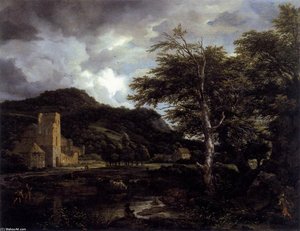
  4. Glade in a Wood by Jacob van Ruisdael

    Glade in a Wood

    Jacob van Ruisdael

    1646 · Academy of Fine Arts Vienna

  5. The Doctor's Visit by Jan Steen

    The Doctor's Visit

    Jan Steen

    1661 · Victoria and Albert Museum, London

  6. Woman Reading a Letter by Pieter de Hooch

    Woman Reading a Letter

    Pieter de Hooch

    1664 · Szépművészeti Múzeum, Budapest

  7. The Raising of Lazarus by Carel Fabritius

    The Raising of Lazarus

    Carel Fabritius

    1642 · Muzeum Narodowe, Warsaw

A timeline

Dutch Golden Age through its signature works

  1. 1590
  2. 1618
  3. 1635
  4. 1640
  5. 1646
  6. 1647
  7. 1650
  8. 1650
  9. 1656
  10. 1658
  11. 1659
  12. 1661
  13. 1664
  14. 1665

Figures

The figures

Every name

List of 100 famous Dutch Golden Age painters, every name

  1. 1RembrandtRembrandtDutch · 1606–1669
  2. 2Johannes VermeerJohannes VermeerDutch · 1632–1675
  3. 3Frans HalsFrans Hals1580–1666
  4. 4Jacob van RuisdaelJacob van RuisdaelDutch · 1628–1682
  5. 5Jan SteenJan SteenDutch · 1626–1679
  6. 6Pieter de HoochPieter de HoochDutch · 1629–1684
  7. 7Carel FabritiusCarel FabritiusDutch · 1622–1654
  8. 8Jan van GoyenJan van Goyen1596–1656
  9. 9Gabriel MetsuGabriel MetsuDutch · 1629–1667
  10. 10Willem KalfWillem KalfDutch · 1619–1693
  11. 11Meindert HobbemaMeindert HobbemaDutch · 1638–1709
  12. 12Nicolaes MaesNicolaes MaesDutch · 1634–1693
  13. 13Emanuel de WitteEmanuel de WitteDutch · 1617–1692
  14. 14Judith LeysterJudith LeysterDutch · 1609–1660
  15. 15Hendrick AvercampHendrick AvercampDutch · 1585–1634
  16. 16Gerrit DouGerrit DouDutch · 1613–1675
  17. 17Paulus PotterPaulus PotterDutch · 1625–1654
  18. 18Jan van HuysumJan van HuysumDutch · 1682–1749
  19. 19Gerard ter BorchGerard ter BorchDutch · 1617–1681
  20. 20Willem van de Velde the ElderWillem van de Velde the ElderDutch · 1611–1693
  21. 21Cornelis van HaarlemCornelis van HaarlemDutch · 1562–1638
  22. 22Willem van de Velde the YoungerWillem van de Velde the YoungerDutch · 1633–1707
  23. 23Salomon van RuysdaelSalomon van RuysdaelDutch · 1602–1670
  24. 24Abraham van BeijerenAbraham van BeijerenDutch · 1620–1690
  25. 25Ludolf BakhuizenLudolf BakhuizenDutch · 1630–1708
  26. 26Aert van der NeerAert van der NeerDutch · 1604–1677
  27. 27Clara PeetersClara PeetersFlemish · 1587–1657
  28. 28Willem Claesz HedaWillem Claesz HedaDutch · 1594–1680
  29. 29Aelbert CuypAelbert CuypDutch · 1620–1691
  30. 30Pieter ClaeszPieter ClaeszDutch · 1596–1660
  31. 31Jan van der HeydenJan van der HeydenDutch · 1637–1712
  32. 32Jan AsselijnJan AsselijnDutch · 1610–1652
  33. 33Bartholomeus van der HelstBartholomeus van der HelstDutch · 1613–1670
  34. 34Nicolaes Pieterszoon BerchemNicolaes Pieterszoon BerchemDutch · 1620–1683
  35. 35Balthasar van der AstBalthasar van der AstDutch · 1593–1657
  36. 36Adriaen van OstadeAdriaen van Ostade1610–1685
  37. 37Ambrosius BosschaertAmbrosius BosschaertFlemish, Dutch · 1573–1621
  38. 38Pieter Claesz SoutmanPieter Claesz SoutmanDutch · 1580–1657
  39. 39Samuel van HoogstratenSamuel van HoogstratenDutch · 1627–1678
  40. 40Philips WouwermanPhilips WouwermanDutch · 1619–1668
  41. 41Roelant SaveryRoelant SaveryFlemish · 1576–1639
  42. 42Frans van Mieris the ElderFrans van Mieris the ElderDutch · 1635–1681
  43. 43Willem Van AelstWillem Van AelstDutch · 1627–1683
  44. 44Philips KoninckPhilips KoninckDutch · 1619–1688
  45. 45Karel DujardinKarel DujardinDutch · 1626–1678
  46. 46Pieter LastmanPieter LastmanDutch · 1583–1633
  47. 47Jan van de CappelleJan van de CappelleDutch · 1624–1679
  48. 48Pieter Jansz. SaenredamPieter Jansz. SaenredamDutch · 1597–1665
  49. 49Simon De VliegerSimon De VliegerItalian · 1601–1653
  50. 50Leonaert BramerLeonaert BramerDutch · 1596–1674
  51. 51Daniël MijtensDaniël MijtensDutch · 1590–1640
  52. 52Dirck HalsDirck HalsDutch · 1591–1656
  53. 53Thomas de KeyserThomas de KeyserDutch · 1596–1667
  54. 54Govert FlinckGovert FlinckDutch · 1615–1660
  55. 55Allaert Van EverdingenAllaert Van EverdingenDutch · 1621–1675
  56. 56Gerrit Adriaenszoon BerckheydeGerrit Adriaenszoon BerckheydeDutch · 1638–1698
  57. 57Otto Marseus van SchrieckOtto Marseus van SchrieckDutch · 1619–1678
  58. 58Adam WillaertsAdam WillaertsDutch · 1577–1664
  59. 59Jan BothJan BothDutch · 1610–1652
  60. 60Johannes LingelbachJohannes LingelbachDutch · 1622–1674
  61. 61Michiel Jansz. van MiereveltMichiel Jansz. van MiereveltDutch · 1566–1641
  62. 62Egbert van der PoelEgbert van der PoelDutch · 1621–1664
  63. 63Jacob Gerritsz. CuypJacob Gerritsz. CuypDutch · 1594–1652
  64. 64Abraham StorckAbraham StorckDutch · 1644–1708
  65. 65Adriaen CoorteAdriaen CoorteDutch · 1665–1707
  66. 66Aert De GelderAert De GelderDutch · 1645–1645
  67. 67Willem DrostWillem DrostDutch · 1633–1659
  68. 68Lucas Van UdenLucas Van UdenFlemish · 1595–1672
  69. 69Bartholomeus BreenberghBartholomeus BreenberghDutch · 1598–1657
  70. 70Cornelis SaftlevenCornelis SaftlevenDutch · 1607–1681
  71. 71Willem van MierisWillem van MierisDutch · 1662–1747
  72. 72Jan Baptist WeenixJan Baptist WeenixDutch · 1621–1659
  73. 73Caesar van EverdingenCaesar van EverdingenDutch · 1616–1678
  74. 74Egbert Van Heemskerck IiEgbert Van Heemskerck IiDutch · 1635–1704
  75. 75Jan Miense MolenaerJan Miense MolenaerDutch · 1610–1668
  76. 76Hendrick DubbelsHendrick DubbelsDutch · 1621–1707
  77. 77Jan De BrayJan De BrayDutch · 1627–1697
  78. 78Anthonie Palamedesz.Anthonie Palamedesz.Dutch · 1602–1673
  79. 79Adriaen van de VenneAdriaen van de VenneDutch · 1589–1662
  80. 80Cornelius van PoelenburghCornelius van PoelenburghDutch · 1594–1667
  81. 81Frans PostFrans PostDutch · 1612–1680
  82. 82Isaac van OstadeIsaac van OstadeDutch · 1621–1649
  83. 83Jan BothJan BothDutch · 1618–1652
  84. 84Bernard Pietersz FabritiusBernard Pietersz FabritiusDutch · 1624–1673
  85. 85Cornelis Gerritsz DeckerCornelis Gerritsz DeckerDutch · 1618–1678
  86. 86Willem Cornelisz DuysterWillem Cornelisz DuysterDutch · 1599–1635
  87. 87David BaillyDavid Bailly1584–1657
  88. 88Pieter CoddePieter CoddeDutch · 1599–1678
  89. 89Hendrik Martenszoon SorghHendrik Martenszoon SorghDutch · 1610–1670
  90. 90Cornelis Pietersz BegaCornelis Pietersz BegaDutch · 1630–1664
  91. 91Jan WijnantsJan WijnantsDutch · 1632–1684
  92. 92Egbert Jaspersz Van HeemskerckEgbert Jaspersz Van HeemskerckDutch · 1635–1704
  93. 93Adam PynackerAdam PynackerDutch · 1620–1673
  94. 94Joost Cornelisz DroochslootJoost Cornelisz DroochslootDutch · 1586–1666
  95. 95Barend Gael Or GaalBarend Gael Or GaalDutch · 1630–1681
  96. 96Johannes Cornelisz VerspronckJohannes Cornelisz VerspronckDutch · 1606–1662
  97. 97Eglon van der NeerEglon van der NeerDutch · 1635–1703
  98. 98Jacob DuckJacob DuckDutch · 1600–1667
  99. 99Hendrick Cornelisz. van VlietHendrick Cornelisz. van VlietDutch · 1611–1675
  100. 100Jan Van OsJan Van OsDutch · 1744–1808

Questions

Your questions

Read

Stories on OriginalUniqueArt.com

Other movements

Famous artists of other movements

Other periods

Famous artists across the periods

Famous paintings

Masterpieces that inspire us, by movement

Discover more

More artists to discover