Inspiration · Neoclassicism

The 100 Famous Neoclassicism Paintings That Inspire Our Artists

1725 – 1873

Ask for the most famous Neoclassicism paintings and you will hear of Jean-Auguste-Dominique Ingres's The Grande Odalisque (1814, The Louvre), Jacques-Louis David's Napoleon at the St. Bernard Pass (1801, Austrian Gallery Belvedere) and Élisabeth Louise Vigée Le Brun's Self Portrait with Her Daughter, Julie (1789). The list runs to 100 paintings by 57 artists, from 1725 to 1873, each with the collection that holds it today.

The Grande Odalisque by Jean-Auguste-Dominique Ingres, 1814, The Louvre — famous Neoclassicism painting
No. 1 · Jean-Auguste-Dominique IngresThe Grande Odalisque1814 · The Louvre, Paris
100singular works
57masters · William Hogarth – Alexandre Cabanel
43homes in 25 cities
15kept at the The Louvre

Singular works

100 Neoclassicism paintings that exist only once

Every original here is unique and kept in one place. Its story, its home, and the detail that makes it unmistakable.

  1. The Grande Odalisque by Jean-Auguste-Dominique Ingres, 1814, The Louvre
    1

    The Louvre, Paris1814Oil on canvas91 × 162 cm

    This deliberate distortion, initially criticized, contributes to the painting’s dreamlike quality and emphasizes its aesthetic rather than purely realistic intent. The subject matter – an odalisque, or concubine within a Turkish harem – reflects the growing European interest in Eastern cultures during the 19th century. However, it quickly became an emblem of Ingres’ unique style and a pivotal work in the transition between Neoclassicism and Romanticism. Today, it remains one of the most recognizable and celebrated paintings in the collection of the Louvre Museum.

    The singular detailelongated proportionsreclining nude

    Painted for you from $200 A print, from $58

  2. Napoleon at the St. Bernard Pass by Jacques-Louis David, 1801, Austrian Gallery Belvedere
    2

    Austrian Gallery Belvedere, Vienna1801Oil on canvas246 × 231 cm

    Completed in 1801, this work immortalizes Napoleon’s daring crossing of the Great St. Bernard Pass in May 1800 during his Italian campaign – a pivotal moment that solidified his rise to prominence. It followed Napoleon's coup d'état in 1799, establishing him as First Consul, and his subsequent successful campaign against Austria.

    The singular detailhistorical context of Napoleon's crossing of the Alpsequestrian portrait

    Painted for you from $200 A print, from $58

  3. Self Portrait with Her Daughter, Julie by Élisabeth Louise Vigée Le Brun, 1789
    3

    1789Oil on canvas130 × 94 cm

    Vigée Le Brun's mastery of the Rococo and Neoclassical styles is evident in the refined technique and harmonious composition. "Self Portrait with Her Daughter, Julie" is an ideal addition to any art collection or home decor.

    The singular detailtender embracesoft lighting

    Painted for you from $225 A print, from $58

  4. The Oath of the Horatii by Jacques-Louis David, 1784, The Louvre
    4

    The Louvre, Paris1784Oil on canvas330 × 425 cm

    "The Oath of the Horatii" was painted during a period of significant social and political upheaval in France. King Louis XVI commissioned the work, initially intending it as an allegory for loyalty to the monarchy.

    Painted for you from $200 A print, from $58

  5. Watson and the Shark by John Singleton Copley, 1778, National Gallery of Art
    5

    National Gallery of Art, Washington1778Oil on canvas182 × 230 cm

    This large-scale oil painting, created in 1778, portrays the harrowing rescue of Brook Watson, a young cabin boy who lost his leg to a shark attack. The painting was exhibited at the Royal Academy in 1778 and later bequeathed to Christ's Hospital in London by Watson.

    The singular detaildramatic rescue scenedynamic composition with strong diagonal lines

    Painted for you from $350 A print, from $58

  6. Basket of Peaches by Jean-Baptiste-Siméon Chardin, 1768, The Louvre
    6

    The Louvre, Paris1768Oil on canvas39 × 32 cm

    Arranged alongside are a dark glass, likely holding wine or cordial, a simple knife, and two walnuts. Painted during the height of his career, Basket of Peaches exists within a fascinating artistic landscape.

    The singular detailbalanced asymmetryimpasto

    Painted for you from $200 A print, from $58

  7. The Lictors Returning to Brutus the Bodies of his Sons by Jacques-Louis David, 1789, The Louvre
    7

    The Louvre, Paris1789Oil on canvas323 × 422 cm

    Created in 1789, the painting exemplifies Jacques-Louis David’s mastery of Neoclassical style —characterized by its clarity, precision, and restrained elegance. The story of Brutus was a potent symbol of sacrifice for the greater good, aligning with the revolutionary ideals of liberty and republicanism.

    The singular detailuse of lightshadow

    Painted for you from $325 A print, from $58

  8. A Bay Hunter with Two Spaniels by George Stubbs, 1777
    8

    1777Oil on canvas68 × 59 cm

    Set against a serene landscape bathed in the soft hues of dawn or dusk, this artwork exudes a sense of tranquility and natural beauty. George Stubbs was born in Liverpool, United Kingdom, in 1724.

    The singular detailtwo playful spanielsserene landscape with a large tree

    Painted for you from $200 A print, from $58

  9. The Sabine Women by Jacques-Louis David, 1799, Louvre Museum
    9

    Louvre Museum, Paris (implied)1799Oil on canvas385 × 522 cm

    The painting portrays the dramatic aftermath of the abduction of Sabine women by Romulus's Romans. Created during a turbulent period in French history – following the Reign of Terror and under the Consulate of Napoleon – the work also subtly reflects a yearning for national unity and stability after years of revolution.

    The singular detaildramatic compositionchiaroscuro

    Painted for you from $200 A print, from $58

  10. The Death of General Wolfe by Benjamin West, 1770, Art Gallery of Ontario
    10

    Art Gallery of Ontario, Toronto1770Oil on canvas151 × 213 cm

    Benjamin West, an Anglo-American artist, is renowned for his historical paintings that blend Neoclassical ideals with contemporary accuracy. The scene is rich in symbolism: Wolfe's Christ-like pose suggests martyrdom, while the flag held high signifies victory and national pride.

    The singular detailtriangular composition with flag as apexindigenous warrior in thoughtful pose

    Painted for you from $400 A print, from $58

  11. Male Nude known as Patroclus by Jacques-Louis David, 1780
    11

    1780Oil on canvas

    David emerged as a leading figure during a period of significant artistic transition. David often infused his works with moral and political undertones; Patroclus, though a study, likely carries echoes of these concerns.

    Painted for you from $200 A print, from $58

  12. Napoleon I on His Imperial Throne-large by Jean-Auguste-Dominique Ingres, 1806, Musée de l'Armée
    12

    Musée de l'Armée, Paris1806Oil on canvas235 × 188 cm

    The composition is anchored by the imposing figure of Napoleon, seated upon a throne that seems to command the very space around it. The background, though subtly composed, provides a sense of depth and courtly presence, suggesting a larger world revolving around this singular, central sun of the French Empire.

    Painted for you from $200 A print, from $58

  13. Madame Vigee-Le Brun and her daughter by Élisabeth Louise Vigée Le Brun, 1789
    13

    1789Oil on panel130 × 94 cm

    The work captures the artist alongside her daughter, Jeanne Lucie Louise, in an intimate moment of maternal connection. The painting is part of the permanent collection at The Louvre, Paris. In 1789, she produced Self Portrait with Her Daughter, Julie, a work that emphasizes the protective bond between mother and child.

    Painted for you from $200 A print, from $58

  14. A Philosopher Giving that Lecture on the Orrery by Joseph Wright of Derby, 1766, Derby Museum and Art Gallery
    14

    Derby Museum and Art Gallery1766Oil on canvas147.2 × 203.2 cm

    This dramatic oil painting, dated 1766, depicts a group of men and children gathered around an orrery—a mechanical model of the solar system. The composition is organized with a clear foreground featuring the orrery and attentive children, moving towards a group of men engaged in discussion and observation.

    Painted for you from $200 A print, from $58

  15. James 'the Young Commodore' Watson by Charles Hancock, 1836
    15

    1836Oil on canvas143.5 × 237.5 cm

    The horse, a sturdy hunter, holds its position with a calm strength, its form defined by precise, linear brushstrokes. Around the animal's hooves, several hounds gather, their bodies rounded and heavy with the anticipation of the chase.

    Painted for you from $200 A print, from $58

  16. The Death of Julius Caesar by Vincenzo Camuccini, 1798, Museo di Capodimonte
    16

    Museo di Capodimonte, Naples1798Oil on canvas400 × 207 cm

    The Death of Julius Caesar is a significant work by Vincenzo Camuccini. This initial undertaking underwent a difficult period of development, eventually resulting in a version completed in 1799. Following that decision, a new version was brought to fruition in 1818.

    Painted for you from $200 A print, from $58

  17. Portrait of Louis XVI, King of France by Joseph Siffred Duplessis, 1776, Opera House
    17

    Opera House, Versailles1776Oil on canvas80 × 62 cm

    The subject, Louis XVI, who succeeded to the throne in 1774, meets the viewer's gaze from within the frame. The portrait focuses on the sovereign's presence, presenting a likeness that carries the quiet dignity of his position. Shortly after its creation, the work makes its public debut, appearing at the Salon of 1777 in Paris.

    Painted for you from $200 A print, from $58

  18. The Death of Socrates by Jacques-Louis David, 1787, Metropolitan Museum of Art
    18

    Metropolitan Museum of Art, New York1787Oil on canvas130 × 196 cm

    The scene captures the final, defiant moments of the philosopher Socrates in an ancient Athenian prison, just before he consumes the hemlock that will end his life. David utilizes a refined, realistic style that eschews the frivolous ornamentation of the preceding Rococo era in favor of an austere, classical clarity.

    Painted for you from $200 A print, from $58

  19. Diana and Her Nymphs Bathing by Angelica Kauffmann, 1778, Art Gallery of South Australia
    19

    Art Gallery of South Australia, Adelaide1778Oil on canvas6.6 × 6.65 cm

    The canvas presents the goddess Diana alongside her nymphs as they gather by a pool. This Neoclassical work focuses on the figures as they interact with the natural world, some seated in conversation and others dipping feet into the cool surface of the lake.

    Painted for you from $200 A print, from $58

  20. The Source by Jean-Auguste-Dominique Ingres, 1856, Musée d'Orsay
    20

    Musée d'Orsay, Paris1856Oil on canvas163 × 80 cm

    Created towards the end of Ingres ' long career (1780-1867), "The Source" reflects a return to classical themes prevalent in 19th-century art. Today, "The Source" remains one of Ingres’s most celebrated works, admired for its technical brilliance and evocative power, residing in the Musée d'Orsay in Paris.

    Painted for you from $200 A print, from $58

  21. MADAME VIGEE LE BRUN ET SA FILLE by Élisabeth Louise Vigée Le Brun, The Louvre
    21

    The Louvre, ParisOil on canvas

    The scene unfolds with a quiet grace, showcasing Madame Vigée Le Brun seated alongside her young daughter, their poses radiating a sense of tenderness that speaks across centuries. Louise Élisabeth Vigée Le Brun (1755-1842) was a pivotal figure in the world of French art. Born in Paris, she benefited from an artistic lineage – her father, Louis Vigée, was himself a respected pastel portraitist – and received rigorous training from prominent artists of the time.

    The singular detailpyramidal comp

    Painted for you from $225 A print, from $58

  22. A Nude Woman doing her Hair before a Mirror by Christoffer Wilhelm Eckersberg, 1841, Hirschsprung Collection
    22

    Hirschsprung Collection, Copenhagen1841Oil on canvas33.5 × 26 cm

    This meticulous attention to chiaroscuro is deeply rooted in the principles of Neoclassicism, an artistic movement that prized clarity, idealized form, and balanced composition. It suggests an era where art celebrated both high classical ideals and the quiet dignity found within private life.

    Painted for you from $200 A print, from $58

  23. Joséphine-Éléonore-Marie-Pauline de Galard by Jean-Auguste-Dominique Ingres, 1851, Metropolitan Museum of Art
    23

    Metropolitan Museum of Art, New York1851Oil on canvas121 × 91 cm

    It’s significant not only for its technical excellence but also as a window into the aristocratic society of the time. Pauline de Broglie, born into nobility and married to Albert de Broglie (later Prime Minister of France), led a life marked by both privilege and personal hardship.

    Painted for you from $200 A print, from $58

  24. Andromache Mourning Hector by Jacques-Louis David, 1783, The Louvre
    24

    The Louvre, Paris1783Oil on canvas275 × 203 cm

    In its place, David introduces a cerebral, austere brand of Neoclassicism that emphasizes moral seriousness and classical clarity. Technically, Andromache Mourning Hector is a triumph of oil on canvas, showcasing David’s unparalleled ability to manipulate light and texture.

    Painted for you from $250 A print, from $58

  25. Aurora and Cephalus by Pierre Narcisse Guérin, 1810, The Louvre
    25

    The Louvre, Paris1810Oil on canvas254 × 186 cm

    The artistic landscape of early 19th century France was undergoing a dramatic transformation—a slow but insistent shift away from the rigid formalism of Neoclassicism towards the expressive dynamism of Romanticism. The Salon of 1799 and Marcus Sextus: Guérin’s monumental canvas, Marcus Sextus, debuted at the Salon of 1799, immediately proclaiming his allegiance to Romantic principles.

    Painted for you from $200 A print, from $58

  26. The Loves of Paris and Helen by Jacques-Louis David, 1788, The Louvre
    26

    The Louvre, Paris1788Oil on canvas144 × 180 cm

    As Paris holds his lyre, David subtly references the prince's musical prowess and artistic sensitivity—qualities that act as the initial bridge to Helen’s heart. Commissioned by the Comte d'Artois, some scholars suggest that David used this mythological dalliance to comment on the perceived moral decadence of the French aristocracy.

    The singular detailarchitectural settinglyre

    Painted for you from $225 A print, from $58

  27. Mrs. Lowndes, (painting) by Charles Willson Peale, 1782, National Portrait Gallery
    27

    National Portrait Gallery, Washington, D.C.1782Oil on canvas67.6 × 57.2 cm

    Created in 1782, this work portrays William Moultrie, an American planter and politician who served as a general during the American Revolutionary War. As a colonel leading a state militia, he was instrumental in preventing British forces from taking Charleston in 1776.

    Painted for you from $200 A print, from $58

  28. Daphnis and Chloe by François Gérard, 1824, Detroit Institute of Arts
    28

    Detroit Institute of Arts1824Oil on canvas204 × 228 cm

    In 1894, the painting is bequeathed to the Comte's wife, Comtesse Foy, known as Mme. In 1986, the Detroit Institute of Arts acquires the work, bringing it into its permanent collection through the Founders Society Purchase, Ralph Harman Booth Bequest Fund 1986.40.

    Painted for you from $225 A print, from $58

  29. Lecture de la tragédie de l'orphelin de la Chine de Voltaire dans le salon de madame Geoffrin by Anicet Charles Gabriel Lemonnier, 1814
    29

    1814Oil paint on canvas

    The scene depicts a reading of a specific tragedy within the salon of Madame Geoffrin. Anicet Charles Gabriel Lemonnier has assembled a group of figures to represent the atmosphere of high-society discourse. For instance, the bust of Voltaire depicted in the room was not part of Madame Geoffrin’s actual collection.

    Painted for you from $1125 A print, from $58

  30. Surrender of Lord Cornwallis by John Trumbull, 1819
    30

    1819Oil on canvas365.76 × 548.64 cm

    The atmosphere feels thick, as if the very atmosphere is holding its breath during this formal military ceremony. British General Charles O'Hara, leading a line of officers as he prepares to hand over his sword. The Marquis de Lafayette and Colonel Jonathan Trumbull, positioned among the American officers.

    Painted for you from $550 A print, from $58

  31. The kitchen maid by Jean-Baptiste-Siméon Chardin, 1740
    31

    1740Oil on canvas37 × 46 cm

    A young woman sits centered in the frame, her presence anchored by a wooden ladderback chair. There is a certain weight to her posture, a slight hunch forward that suggests deep concentration on the task at hand. The floor and walls are rendered in muted peanut browns and slate blue washes, creating a space that feels enclosed and private.

    Painted for you from $200 A print, from $58

  32. George Washington by Gilbert Stuart, 1796, National Portrait Gallery
    32

    National Portrait Gallery, London1796Oil on canvas94 × 121 cm

    Stuart captured the first President of the United States at a pivotal moment—a man whose quiet dignity belied the immense weight of founding a nation. Commissioned after Stuart’s earlier success with Washington, this work solidified his reputation as the premier chronicler of American greatness.

    Painted for you from $200 A print, from $58

  33. The Apotheosis of Homer by Jean-Auguste-Dominique Ingres, 1827
    33

    1827Oil on canvas386 × 515 cm

    At the heart of the composition sits Homer, his presence anchored by the weight of history and the stillness of a seated sage. A winged figure, representing Victory or perhaps the Universe itself, leans forward to crown him with laurel wreaths, a gesture that transforms the poet into something divine.

    The singular detailgroup gathered around a statue of Homer

    Painted for you from $200 A print, from $58

  34. Goethe in the Roman Campagna by Johann Heinrich Wilhelm Tischbein, 1787, Städel Museum
    34

    Städel Museum, Frankfurt1787Oil on canvas206 × 164 cm

    Tischbein, often affectionately known as "Goethe Tischbein," utilizes the principles of Neoclassicism to anchor this scene in a sense of eternal order.

    Painted for you from $200 A print, from $58

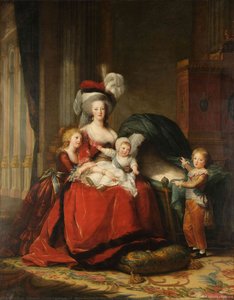
  35. Marie-Antoinette Lorraine Habsburg by Élisabeth Louise Vigée Le Brun, 1787, Opera House
    35

    Opera House, Versailles1787Oil on canvas271 × 210 cm

    Clad in a striking red dress that commands the viewer's attention, Marie Antoinette sits poised yet accessible, surrounded by the soft presence of her royal progeny. The artistry of Vigée Le Brun shines through her command of the Neoclassical style.

    Painted for you from $200 A print, from $58

  36. LE GENERAL BONAPARTE AU PONT D'ARCOLE.17 NOVEMBRE 1796 by Antoine-Jean Gros, 1796, Opera House
    36

    Opera House, Versailles1796Oil on canvas134 × 104 cm

    The scene captures Napoleon Bonaparte at the Pont d'Arcole, a setting defined by the chaos of the 1796 battlefield.

    Painted for you from $200 A print, from $58

  37. The Sleep of Endymion by Anne-Louis Girodet, 1793, The Louvre
    37

    Anne-Louis GirodetNeoclassicism, Romanticism

    The Sleep of Endymion

    The Louvre, Paris1793Oil on canvas198 × 261 cm

    Girodet meticulously studied works by artists like Phidias and Polyclitus, striving to capture the idealized beauty and anatomical precision that characterized Greek art. Notably, Girodet’s work anticipates the Romantic fascination with the sublime – that feeling of awe and terror inspired by nature’s grandeur.

    The singular detailmythological scene

    Painted for you from $200 A print, from $58

  38. The Death of Socrates by Jean François Pierre Peyron, 1787, National Gallery of Denmark
    38

    National Gallery of Denmark, Copenhagen1787Oil on canvas133 × 98 cm

    Peyron's compositional choices are rooted in the established principles of Neoclassicism, mirroring the style favored by David while subtly asserting his own artistic voice. “The Death of Socrates” was created during a period of significant social and political upheaval in France—the late 18th century, on the cusp of the French Revolution.

    The singular detailgriefdramatic scene

    Painted for you from $375 A print, from $58

  39. Heroic Landscape with Rainbow by Joseph Anton Koch, 1824, Metropolitan Museum of Art
    39

    Joseph Anton KochNeoclassicism and Romanticism

    Heroic Landscape with Rainbow

    Metropolitan Museum of Art, New York1824Oil on canvas109 × 96 cm

    Born in the Austrian Alps, Koch possessed an innate understanding of the rugged beauty of his homeland – a landscape he would later translate onto canvas with remarkable precision and emotional depth. Koch’s style is deeply rooted in the Neoclassical tradition inherited from artists like Claude Lorrain and Nicolas Poussin.

    The singular detailmountainsrainbow

    Painted for you from $200 A print, from $58

  40. FERDINAND IV, ROI DES DEUX SICILES (1751 1825) by Auguste Couder
    40

    Oil paints, canvas

    In this oil portrait by Auguste Couder, the King of the Two Sicilies appears at half length, his figure anchored within the frame. The fabric of his attire carries the dignity of his office, rendered with a precision that captures the essence of a ruler in his prime.

    Painted for you from $200 A print, from $58

  41. Achilles Lamenting the Death of Patroclus by Gavin Hamilton, 1760–1763, Scottish National Gallery
    41

    Scottish National Gallery, Edinburgh1760–1763Oil on canvas227.3 × 391.2 cm

    It captures a moment of intense human experience, focusing on the heavy themes of death and mourning that arise from the conflicts of the Trojan war. In this composition, Hamilton brings together a group of figures to express a collective sense of loss. The dimensions of the sheet are 6 7/8 × 9 inches (17.5 × 22.9 cm).

    Painted for you from $200 A print, from $58

  42. St Roch Asking the Virgin Mary to Heal Victims of the Plague by Jacques-Louis David, 1780, Musée des Beaux-Arts
    42

    Musée des Beaux-Arts, Marseille1780Oil on canvas

    St. Roch, depicted as a weary but resolute pilgrim, kneels before Mary, his hands outstretched in fervent supplication. David's artistic approach is deeply rooted in the Neoclassical style, which sought to revive the ideals and techniques of ancient Greece and Rome.

    The singular detailplaguereligious scene

    Painted for you from $200 A print, from $58

  43. Oedipus and the Sphinx by Jean-Auguste-Dominique Ingres, 1808
    43

    1808Oil on canvas189 × 144 cm

    In 1878, the Louvre acquired the work, ensuring its place within the museum's collection in Paris. The Grande Odalisque (1814) Roger Freeing Angelica (1819) The Turkish Bath (1862) Oedipus and the Sphinx (1864) The primary version of this work resides in the Musée du Louvre in Paris.

    Painted for you from $200 A print, from $58

  44. Madame Cabanis (Charlotte Félicité Grouchy) by Anne-Louis Girodet, 1804
    44

    1804Oil painting

    Anne-Louis Girodet de Roussy-Trioson captures Charlotte Félicité Grouchy in this 1804 oil painting. The subject is seated, her gaze directed toward the viewer from a dark, indeterminate background. A necklace provides a singular point of detail against her neck, anchoring the composition's focus on her facial features and posture.

    Painted for you from $200 A print, from $58

  45. La Circassienne au Bain by Merry-Joseph Blondel, 1814
    45

    1814Oil on canvas200 × 140 cm

    Executed in 1814, this Neoclassical work is also identified by the title Une Baigneuse. The painting was first exhibited at the Paris Salon in November 1814. Following the sinking of the RMS Titanic, a legal claim was filed in New York in January 1913 against the White Star Line.

    Painted for you from $200 A print, from $58

  46. The Banquet by William Hogarth, 1755, Sir John Soane's Museum
    46

    Sir John Soane's Museum, London1755Oil on canvas101 × 127 cm

    William Hogarth (1697-1764) was a pivotal figure in 18th-century British art, renowned for his satirical “modern moral subjects.” While The Banquet isn’t overtly didactic like his famous series (A Harlot's Progress, A Rake's Progress), it still operates within that tradition of social observation.

    Painted for you from $750 A print, from $58

  47. Johann Joachim Winckelmann by Anton Raphael Mengs, 1777, Metropolitan Museum of Art
    47

    Metropolitan Museum of Art, New York1777Oil on canvas64 × 49 cm

    Mengs, a pivotal figure in this transition, sought to bridge the gap between the Baroque and Neoclassical styles. The inclusion of Homer's Iliad, held delicately in Winckelmann’s hands, is a deliberate allusion to his scholarly pursuits and his deep engagement with classical literature – a tangible representation of the knowledge he sought to disseminate.

    The singular detailknowledgegreek Iliad

    Painted for you from $200 A print, from $58

  48. The Death of Jane McCrea by John Vanderlyn, 1804
    48

    1804Oil on canvas

    The Death of Jane McCrea is a history painting by John Vanderlyn. The scene focuses on the abduction and killing of Jane McCrea by two Native American warriors. It is a moment frozen in the shadow of the Saratoga campaign of 1777.

    Painted for you from $200 A print, from $58

  49. Mary Horneck (1752 –1840) by Joshua Reynolds, 1775, Національний траст
    49

    Національний траст, Maidenhead1775Oil on canvas127 × 101 cm

    The painting immediately establishes a sense of refined sophistication. The painting's title, “The Jessamy Bride,” alludes to the Jessamy family, a prominent Devonshire lineage.

    Painted for you from $200 A print, from $58

  50. View of the Bay of Naples from Posillipo by William Marlow, 1777
    50

    1777Oil on canvas65 × 100 cm

    The scene is anchored by the presence of the Vomero Hill, which rises above the coastal activity. While in Naples in 1765, he captured the coastline through a series of sketches. These initial drawings were later transformed into finished paintings upon his return to England in 1766.

    Painted for you from $200 A print, from $58

  51. Hannah More (1745–1833) by Frances Reynolds, 1780, Bristol Museum - Art Gallery
    51

    Bristol Museum - Art Gallery1780Oil on canvas74 × 61 cm

    Around her, the quiet clutter of a scholar's life is visible: books are scattered across the space, suggesting a life dedicated to study and research. Frances Reynolds, the sister of Sir Joshua Reynolds, brings a disciplined precision to this portrait. By placing the subject among books and in a moment of reflection, Reynolds emphasizes More's identity as a thinker.

    Painted for you from $200 A print, from $58

  52. The Judgment of Paris by Guillaume Guillon Lethiere, 1812
    52

    1812Oil

    Horses are scattered across the composition, while cows linger near the water's edge. The interaction between the subjects is defined by several key visual components: The presence of livestock, specifically horses and cows, grounding the mythological scene in a terrestrial reality. Executed in 1812, the work reflects the formal discipline of the Neoclassical tradition.

    Painted for you from $200 A print, from $58

  53. Franz Xaver Wolfgang Mozart by Karl Gottlieb Schweikart, 1825, The Mozart-Museums of the International Mozarteum Foundation Salzburg
    53

    The Mozart-Museums of the International Mozarteum Foundation Salzburg1825Oil on canvas

    Karl Gottlieb Schweikart brings a refined sensibility to this depiction, utilizing a technique that balances precision with a soft, atmospheric quality. Created during a time when the borders and identities of Central Europe were in constant flux, the portrait reflects the elegance and the social standing of its subject.

    Painted for you from $200 A print, from $58

  54. Portrait of Madame Moitessier Sitting by Jean-Auguste-Dominique Ingres, 1856, National Gallery
    54

    National Gallery, London1856Oil on canvas120 × 92 cm

    To behold an Ingres original is to witness the triumph of line over color. Whether placed in a formal gallery setting or used as a statement piece in a modern living area, the Portrait of Madame Moitessier Sitting brings with it an aura of timelessness.

    Painted for you from $200 A print, from $58

  55. King Lear by Benjamin West, 1788, Detroit Institute of Arts
    55

    Benjamin WestNeoclassicism

    King Lear

    Detroit Institute of Arts1788Oil on canvas

    The heavy weight of tragedy hangs over King Lear, a work by the artist Benjamin West. The scene unfolds during act 3, scene 4 of the tragedy, a moment where the very foundations of a kingdom begin to crumble alongside the mind of its ruler.

    Painted for you from $200 A print, from $58

  56. Hudibras by William Hogarth, 1725–1726, Royal Collection
    56

    William HogarthNeoclassicism

    Hudibras

    Royal Collection1725–1726Pen & ink, wash

    The inclusion of Britannia, gazing at her own reflection in a shield, subtly connects the poem’s critique to the nation as a whole, implying that England was equally afflicted by these moral shortcomings. The inclusion of figures like the drunken soldier and the debauched courtier underscores Hogarth’s belief that England was rotting from within.

    The singular detailsatirical allegory

    Painted for you from $300 A print, from $58

  57. Frances Payne (1738–1813), Mrs William Woodley by Joshua Reynolds, 1758, Kingston Lacy
    57

    Kingston Lacy, Wimborne Minster1758Oil on canvas75 × 62 cm

    The dignified posture that reflects the expectations of an English lady in 1758.

    Painted for you from $200 A print, from $58

  58. Helena Lawrence Holmes Penington by Gilbert Stuart, 1803
    58

    1803Oil

    This oil painting captures the woman's beauty and elegance through a focused study of her features and presence. The work belongs to the Neoclassical movement, a period defined by an emphasis on realism and the character of the subject.

    Painted for you from $200 A print, from $58

  59. Four Seasons 03, Autumn by Anne-Louis Girodet, 1814, Musee National du Chateau de Compiegne
    59

    Anne-Louis GirodetNeoclassicism and Romanticism

    Four Seasons 03, Autumn

    Musee National du Chateau de Compiegne1814Oil on canvas184 × 68 cm

    The work is currently held within the collection of the Chateau de Compiègne in Compiègne, France. Executed as an oil painting, this work occupies a unique space within the transition from Neoclassicism to Romanticism. Created about 1814, the painting reflects a period of significant stylistic evolution.

    Painted for you from $200 A print, from $58

  60. The Farewell of Telemachus and Eucharis by Jacques-Louis David, 1818, J. Paul Getty Museum
    60

    J. Paul Getty Museum, Los Angeles1818Oil87 × 103 cm

    Executed in oil on canvas, The Farewell exemplifies David’s mastery of Neoclassicism. Initially active during the French Revolution, he witnessed firsthand the overthrow of the monarchy and embraced republican ideals. The Farewell reflects this intellectual shift, representing a conscious effort to recapture the moral authority and aesthetic grandeur associated with the Enlightenment.

    Painted for you from $200 A print, from $58

  61. Napoleon I (1769–1821) by Anne-Louis Girodet, 1812
    61

    1812Oil on canvas251 × 179 cm

    The following details define the visual hierarchy of the work: The laurel wreath crown resting upon the head. Created in 1812, this portrait emerged during a period when French art was transitioning from the strictures of Neoclassicism toward the emotional weight of Romanticism. Anne-Louis Girodet, a student of Jacques-Louis David, utilized the formal clarity of the Neoclassical school to render the emperor's likeness, yet the work contains a psychological depth that moves beyond mere imitation.

    Painted for you from $200 A print, from $58

  62. Venus Anadyomene by Jean-Auguste-Dominique Ingres, 1808, Condé Museum
    62

    Condé Museum, Chantilly1808Oil on canvas163 × 92 cm

    In her hands, she holds a bowl in one hand and a shell in the other. The composition includes another person visible on the left side of the image, though their specific role or significance within the scene remains unclear.

    Painted for you from $200 A print, from $58

  63. The Anger of Achilles by Jacques-Louis David, 1819, Kimbell Art Museum
    63

    Kimbell Art Museum1819Oil on canvas105 × 145 cm

    The painting immediately commands attention – not through overt grandeur, but through an almost palpable sense of contained fury, a simmering tension that radiates from the central figure of Achilles himself. At its heart, “The Anger of Achilles” recounts a devastating episode from Euripides’ play Iphigenia in Aulis.

    The singular detailachilles' rageclytemnestra’s grief

    Painted for you from $200 A print, from $58

  64. Self-portrait in a Turban with Julie by Élisabeth Louise Vigée Le Brun, 1786
    64

    1786Oil on canvas

    In 1786, Élisabeth Louise Vigée Le Brun painted Self-portrait in a Turban with Julie. A woman, the artist herself, holds a child close to her chest. This is a portrait of a mother and her daughter, Julie. In her Self-portrait in a Straw Hat, she presents herself with a clear sense of self-awareness.

    Painted for you from $200 A print, from $58

  65. The Death of Seneca by Jacques-Louis David, 1773, Petit Palais
    65

    Petit Palais, Paris1773Oil on canvas43 × 53 cm

    At the center of this unfolding tragedy, the philosopher Seneca reclines, his body a map of physical suffering and mental resolve. To his side, the scene is a chaotic swirl of grief and movement.

    Painted for you from $525 A print, from $58

  66. The Death of Leonardi da Vinci by Jean-Auguste-Dominique Ingres, 1818, Petit Palais
    66

    Petit Palais, Paris1818Oil on canvas40 × 50.5 cm

    The work finds its inspiration in a 1781 painting by Francois-Guillaume Menageot, which previously explored this very same meeting. This focus on the elegance of the silhouette continues in 1819 with the completion of Roger Freeing Angelica. Earlier, around 1917, Henri IV Playing with His Children appears in the record of his legacy.

    Painted for you from $200 A print, from $58

  67. Portrait of a Young Woman by Élisabeth Louise Vigée Le Brun, 1797
    67

    1797Oil on canvas

    The Portrait of a Young Woman is an oil on canvas work by Élisabeth Louise Vigée Le Brun, dating from 1777. In this piece, the artist captures a subject characterized by an air of aristocratic poise. The work is currently held at the Musée Cognac-Jay in Paris.

    Painted for you from $200 A print, from $58

  68. Julie Nigris as Flora, Roman Goddess of Flowers by Élisabeth Louise Vigée Le Brun, 1799, Museum of Fine Arts, St. Petersburg, Florida, USA
    68

    Museum of Fine Arts, St. Petersburg, Florida, USA1799Oil on canvas129.5 × 97.8 cm

    Julie was the daughter of the artist Élisabeth Louise Vigée Le Brun. The artist’s extensive portraiture includes La Duchesse de Berry, painted in 1828. Her ability to capture the likeness of the nobility is further evidenced in the Portrait of AglaÉ AngÉlique Gabrielle de Gramont, dated between 1787 and 1842.

    Painted for you from $200 A print, from $58

  69. The Grosvenor Hunt by George Stubbs, 1762
    69

    1762Oil on canvas

    The scene exudes energy and purpose, reflecting the cultural significance of hunting as both a sport and a social ritual during this era. Painted in 1762 by the renowned English artist George Stubbs, this work reflects the period’s fascination with nature, anatomy, and rural life.

    The singular detailpack of hunting dogsvibrant autumn foliage

    Painted for you from $200 A print, from $58

  70. The soul breaking the bonds that attach to the land by Pierre-Paul Prud'hon, 1822
    70

    1822Oil on canvas292 × 203 cm

    This specific piece was produced between 1821 and 1823. In 1796, he produced Madame Georges Anthony and Her Two Sons. Madame Georges Anthony and Her Two Sons (1796) Crucifixion (1822) The oil on canvas is currently housed within the Musée du Louvre in Paris.

    Painted for you from $200 A print, from $58

  71. Antiochus and Stratonica by Jacques-Louis David, 1774, École Nationale Supérieure des Beaux-Arts
    71

    École Nationale Supérieure des Beaux-Arts, Paris1774Oil120 × 155 cm

    The painting's dimensions—120 x 155 cm—allow for a remarkable level of detail, drawing the viewer into the intimate scene unfolding before them. The artwork draws its narrative from Plutarch’s “Lives,” recounting a dramatic episode involving Antiochus I Soter, king of the Seleucid Empire, his stepmother Stratonice, and the astute physician Erasistratus. The story culminates in a poignant decision – Seleucus, Antiochus’s father, willingly relinquishes Stratonice to secure his son's life, demonstrating an extraordinary act of paternal devotion.

    Painted for you from $200 A print, from $58

  72. LE PONT DU GARD by Hubert Robert, 1786, The Louvre
    72

    Hubert RobertRomantic Neoclassicism

    LE PONT DU GARD

    The Louvre, Paris1786Oil on canvas242 × 242 cm

    As a painter who famously bridged the gap between the playful elegance of the Rococo and the structured gravity of Neoclassibility, Robert possessed a singular ability to transform stone and mortar into vessels of memory.

    Painted for you from $300 A print, from $58

  73. Queen Victoria by Thomas Sully, 1838, Metropolitan Museum of Art
    73

    Metropolitan Museum of Art, New York1838Oil on canvas239 × 147 cm

    Sully accepted the Saint George commission, which took him to London, but did not complete the portrait until his return to Philadelphia, in the fall of 1838. Many of these studies are also in The Met’s collection.

    Painted for you from $200 A print, from $58

  74. Grand Canal: Looking South-West by Canaletto, 1738, National Gallery
    74

    National Gallery, London1738Oil on canvas124 × 204 cm

    Executed in 1738 during Canaletto's prolific period, this oil on canvas measuring 124 x 204 cm resides proudly at the National Gallery in London, offering visitors a glimpse into a world meticulously rendered with unparalleled precision. Canaletto’s style aligns closely with Neoclassicism, albeit subtly infused with Baroque sensibilities.

    Painted for you from $200 A print, from $58

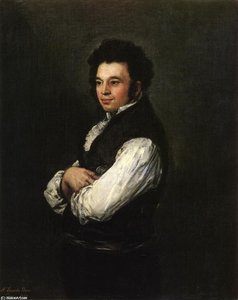
  75. Tubercio Pérez Cuervo by Francisco Goya, 1820, Metropolitan Museum of Art
    75

    Metropolitan Museum of Art, New York1820Oil on canvas102.2 × 81.3 cm

    This intimate portrait captures Tiburcio Pérez y Cuervo, an architect and lifelong friend to Goya, presenting him with remarkable immediacy and psychological depth —a stylistic departure from the grand formality prevalent in royal commissions during Goya’s time.

    Painted for you from $200 A print, from $58

  76. Achilles Deposing Hector by Joseph Benoit Suvée, 1769, The Louvre
    76

    The Louvre, Paris1769Oil on canvas111 × 144 cm

    This action itself speaks volumes, representing not only a violation of sacred wartime customs but also the unbearable weight of personal grief compounded by rage. The style employed here firmly roots the work within the Neoclassical tradition.

    Painted for you from $200 A print, from $58

  77. First Steps by Franz Ludwig Catel, 1820, Metropolitan Museum of Art
    77

    Metropolitan Museum of Art, New York1820Oil on canvas48 × 37 cm

    The architectural details—the simple yet sturdy walls of the courtyard, the arched doorway hinting at a larger space beyond—are rendered with meticulous precision, reflecting Catel’s training in the École des Beaux-Arts in Paris. Furthermore, Catel’s work aligns with François Gérard's “Ages of Man,” a monumental Salon painting from 1808 at the Louvre Museum.

    The singular detailfamilyitalian setting

    Painted for you from $200 A print, from $58

  78. Edward and William Tomkinson by Thomas Gainsborough, 1784, Taft Museum of Art
    78

    Taft Museum of Art, Cincinnati1784Oil on canvas211 × 152 cm

    Gainsborough's skill lies in his ability to convey these intangible aspects through meticulous detail and subtle tonal harmonies. The inclusion of a fob bearing letter seals symbolizes Edward Tomkinson’s status as heir to his father's estate—a tangible representation of wealth and lineage within the aristocratic hierarchy.

    Painted for you from $225 A print, from $58

  79. The Cathedral Square in the Moscow Kremlin by Fyodor Alekseyev, Tretyakov Gallery
    79

    Tretyakov Gallery, MoscowOil on canvas82 × 112 cm

    Alekseev, earning him the affectionate title of “The Russian Canaletto,” possessed a singular gift for capturing monumental settings with an almost photographic fidelity, yet imbuing them with the romanticism only true artistry can provide.

    Painted for you from $325 A print, from $58

  80. SCÈNE DU MASSACRE de LA SAINT BARTHELEMY by Alexandre Évariste Fragonard, 1836, The Louvre
    80

    The Louvre, Paris1836Oil paint on canvas

    The canvas holds a chilling tableau—a snapshot frozen in time, capturing the visceral horror of Saint Bartholomew's Day Massacre. The subdued color palette —dominated by earthy tones —reflects not only the grim reality of the event but also contributes to an overall atmosphere of melancholy and apprehension.

    Painted for you from $300 A print, from $58

  81. La Comtesse de Keller by Alexandre Cabanel, 1873, Musée d'Orsay
    81

    Musée d'Orsay, Paris1873Oil on canvas

    The subject, seated with an air of effortless composure, commands the canvas through a pyramidal composition that draws the eye upward toward her serene face. The painting emerged during a period when the art world was navigating the tension between the emotional fervor of Romanticism and the rational precision of Neoclassicism.

    Painted for you from $200 A print, from $58

  82. Portrait of a "Mamelouk" by Carle Vernet, 1810, Metropolitan Museum of Art
    82

    Metropolitan Museum of Art, New York1810Oil on canvas75 × 62 cm

    To fully appreciate “Portrait of a Mamelouk,” one must understand the historical context of the Mamluks themselves. Many were integrated into French society, adopting European customs while retaining elements of their traditional attire.

    The singular detaildetailed attireturban

    Painted for you from $200 A print, from $58

  83. Young man sitting by the sea by Hippolyte Flandrin
    83

    Oil on canvas

    It is sometimes referred to as Study (Young Male Nude Seated beside the Sea). The artist, Hippolyte Flandrin, was born in Lyon, France, in 1809. It is housed in Salle 940, located in the Aile Sully on Niveau 2.

    Painted for you from $200 A print, from $58

  84. The Death of Saint Cecilia by Andrea Pozzi, Accademia di San Luca
    84

    Accademia di San Luca, RomeOil on paper

    A woman lies upon a cold stone floor, her body surrendered to the weight of silence. The painting belongs to the collection of the Accademia di San Luca, a place where the precision of classical principles meets the dramatic requirements of religious history.

    Painted for you from $200 A print, from $58

  85. Lucretia Coffin Mott by Joseph Reid Kyle, National Portrait Gallery
    85

    National Portrait Gallery, LondonOil on canvas64 × 76 cm

    The painting adheres to Neoclassical principles prevalent during its creation, prioritizing realism and idealized beauty —a stylistic choice deliberately mirroring the artistic conventions of the era. This honor underscores the significance of Kyle's work within the broader canon of Canadian art history.

    Its story

  86. Carl Maria von Weber by Josephus Kendrick, 1826, Royal College of Music Museum
    86

    Royal College of Music Museum, London1826Marble sculpture

    The stone carries the likeness of the man who shaped the musical landscape of his era, frozen in a permanent, graceful stillness. Josephus Kendrick, a sculptor who moved between the grandiosity of historical reliefs and the intimacy of portraiture, brings a sense of character to this piece.

    Painted for you from $200 A print, from $58

  87. Johann Wolfgang von Goethe by Joseph Karl Stieler, 1828, Neue Pinakothek
    87

    Neue Pinakothek, Munich1828Oil paint on canvas

    In this 1828 portrait, Joseph Karl Stieler captures the presence of Johann Wolfgang von Goethe. The composition centers tightly upon the face and upper body of Johann Wolfgang von Goethe, drawing the eye immediately to his presence. The arrangement feels formal and deliberate, characteristic of 19th-century Neoclassical portraiture.

    Painted for you from $200 A print, from $58

  88. Christ by Bertel Thorvaldsen, 1821, Музей Торвальдсена
    88

    Bertel ThorvaldsenNeoclassicism

    Christ

    Музей Торвальдсена, Копенгаген1821Marble or plaster sculpture

    The sculpture Christ is a work by the Danish-Icelandic artist Bertel Thorvaldsen. It is a religious subject, rendered as a marble or plaster sculpture. While the statue is associated with Vor Frue Kirke in Copenhagen, it is also held at the Accademia di San Luca in Rome.

    Painted for you from $200 A print, from $58

  89. Portrait of William Young by James Peale, 1817
    89

    1817Oil paint on canvas

    William Young is positioned centrally, seated in a chair and angled slightly toward the viewer to establish a direct gaze. The background remains dark and indistinct, which serves to focus all attention on the figure.

    Painted for you from $200 A print, from $58

  90. The Earl of Aldborough Reviewing Volunteers at Belan House by Francis Wheatley, 1782
    90

    1782Oil on canvas

    It depicts the second Earl reviewing the Aldborough Volunteers at Belan, a scene that places the viewer directly into the historical landscape of the late 18th century. Francis Wheatley, born in London, United Kingdom, was a figure of considerable skill during this period.

    Painted for you from $200 A print, from $58

  91. The Nymphs of Parthenope Led toward the Banks of the Seine by Charles Meynier, 1827, The Louvre
    91

    The Louvre, Paris1827Oil on canvas

    Known in English as The Nymphs of Parthenope Led toward the Banks of the Seine, this piece functions as an allegory. The composition was presented for exhibition at the Salon of 1827. Charles Meynier, a figure associated with the neoclassical movement, produced this specific work during the early nineteenth century. The surface carries a signature and the date 1827 in the lower left corner. The piece is identified by the inventory number RF 1984 22 (INV. 6617). The acquisition of this painting occurred in 1984.

    Painted for you from $200 A print, from $58

  92. MRS ISAAC CUTHBERT by Thomas Lawrence, 1817, The Louvre
    92

    The Louvre, Paris1817Oil on canvas143 × 114 cm

    Sir Thomas Lawrence's "Mrs. The painting subtly reinforces the role of women as guardians of the home and patrons of learning, while simultaneously acknowledging their position within the broader social hierarchy. Furthermore, Lawrence’s meticulous attention to detail reveals a keen awareness of his subject's status.

    The singular detailbookelegant pose

    Painted for you from $200 A print, from $58

  93. Sir Brooke Boothby by Joseph Wright of Derby, 1781, Tate Gallery
    93

    Tate Gallery, London1781Oil on canvas207.6 × 148.6 cm

    The gentleman, seated amidst the suggestion of nature—the visible trees and expansive background hinting at a park or country estate—rests his hands thoughtfully upon his chin. It is a visual anchor, connecting the contemporary inhabitant with the sophisticated sensibilities of Georgian England.

    Painted for you from $200 A print, from $58

  94. Odysseus and Penelope by Johann Heinrich Wilhelm Tischbein
    94

    Oil painting

    Odysseus has returned to his home to find his wife, Penelope, after a long period of absence. This subject matter functions as a representation of ancient Greek culture and the narrative traditions of the era. The man is draped in a toga, a garment suggesting the status of a Greek or Roman leader.

    Painted for you from $200 A print, from $58

  95. Perseus and Andromeda by Anton Raphael Mengs, 1774, Hermitage Museum
    95

    Hermitage Museum, Saint Petersburg1774Oil on canvas227 × 154 cm

    The artwork portrays Perseus, the hero who slew Medusa and rescued Andromeda from Cetus, a monstrous sea serpent. The story recounts Andromeda’s abduction by Cetus, a terrifying sea monster, and Perseus' daring intervention—killing Medusa with her severed head—to save her life.

    Painted for you from $250 A print, from $58

  96. The Combat of Mars and Minerva by Joseph Benoit Suvée, 1771
    96

    1771Oil on canvas143 × 104 cm

    In the center of the action, a female figure holds a spear, positioned in direct opposition to another figure. The scene is populated by several individuals engaged in various stages of combat. The artist, Joseph-Benoît Suvée, utilized a Neoclassical approach to structure this mythological narrative.

    Painted for you from $200 A print, from $58

  97. The Death of Priam by Vincenzo Camuccini, 1795
    97

    1795Oil paint on canvas or panel

    The scene captures a violent intersection of fate and tragedy, drawn from the epic narratives of Virgil's Aeneid. At the center of the composition, the tension is palpable as Achilles confronts the aged King Priam. A pivotal moment of the Trojan War involving the death of Priam.

    Painted for you from $375 A print, from $58

  98. The Triumph of Aemilius Paulus by Carle Vernet, 1789, Metropolitan Museum of Art
    98

    Metropolitan Museum of Art, New York1789Oil on canvas130 × 438 cm

    The painting depicts the triumphal return of Roman general Aemilius Paulus after his decisive victory over King Perseus of Macedon in 168 BCE. Furthermore, the painting was created during a period of significant political and social upheaval in France – the years leading up to the French Revolution.

    The singular detailtempleroman procession

    Painted for you from $200 A print, from $58

  99. Death of Masaccio by Auguste Couder, 1817, Hermitage Museum
    99

    Hermitage Museum, Saint Petersburg1817Oil on canvas45 × 38 cm

    The painting's visual impact is immediately striking due to its tightly organized composition. Couder employs a pyramidal structure, anchoring the central figure—the prone body of Saint Denis—with supporting figures who convey unwavering devotion.

    Painted for you from $275 A print, from $58

  100. The Maison Carée by Hubert Robert, 1787, The Louvre
    100

    The Louvre, Paris1787Oil on canvas243 × 244 cm

    Painted in 1787, a pivotal year marked by political unrest and social change in France, “The Maison Carée” reflects the broader artistic currents of the era. The Roman temple itself is laden with symbolism – representing not only the power and sophistication of the Roman Empire but also its eventual decline and fall.

    The singular detailhazy skyroman ruins

    Painted for you from $300 A print, from $58

Lineages

The famous Neoclassicism paintings by lineage

Where they live

The one place you can see each famous Neoclassicism painting

Paris keeps 21 of these originals; the The Louvre, 15.

Paris (implied)1

Louvre Museum

The masters

The Neoclassicism masters our artists look to

Portrait of Anne-Louis Girodet

Anne-Louis Girodet

1767–1824 · France · 4

French painter bridging Neoclassicism and Romanticism through dramatic, emotive, and sensual scenes.

37. The Sleep of Endymion, 44. Madame Cabanis (Charlotte Félicité Grouchy), 59. Four Seasons 03, Autumn, 61. Napoleon I (1769–1821)

Portrait of Jean-Baptiste-Siméon Chardin

Jean-Baptiste-Siméon Chardin

1699–1779 · France · 2

French painter of quiet domestic scenes and still lifes rendered with tactile, granular impasto and a soft diffusion of light.

6. Basket of Peaches, 31. The kitchen maid

Portrait of George Stubbs

George Stubbs

1724–1806 · United Kingdom · 2

English Romanticist known for anatomical precision in equine portraits and visceral animal scenes.

8. A Bay Hunter with Two Spaniels, 69. The Grosvenor Hunt

Portrait of Benjamin West

Benjamin West

1738–1820 · United States · 2

American Neoclassical painter and Royal Academy president known for revolutionary history scenes.

10. The Death of General Wolfe, 55. King Lear

+50more masters our artists study Neoclassicism Masters Their stories

In confidence

About these Neoclassicism paintings

Hover gently over a question to read the answer.

Which 10 Neoclassicism paintings should everyone know?

Can I buy a reproduction of a Neoclassicism painting?

Yes: 99 of the 100 can be ordered as a hand-painted oil reproduction, from $200, and 99 as a canvas print, from $58.

How is this ranking made?

By recognition: Wikipedia articles in the most languages (Wikidata sitelinks), our manual ranking and page visits. Several records of one painting count once; details, copies and studies are excluded.

One of a kind

99 of the 100, painted for you alone

99 of these works can be painted by hand for a single owner, from $200.

The Grande Odalisque by Jean-Auguste-Dominique IngresNapoleon at the St. Bernard Pass by Jacques-Louis DavidSelf Portrait with Her Daughter, Julie by Élisabeth Louise Vigée Le BrunThe Oath of the Horatii by Jacques-Louis DavidWatson and the Shark by John Singleton Copley

Discover original art

How the selection is made

We went through every Neoclassicism painting in our catalogue and placed the best-known first: those Wikipedia describes in the most languages, those our artists and curators rank highest and those most viewed on our pages. Each original appears once — no details or copies.

Other movements that inspire us

The periods that inspire us