The most famous painting in the Tate Gallery is Georges Braque's Mandola (1910). The next four in this ranking are John Singer Sargent's Carnation, Lily, Lily, Rose (1885), Salvador Dalí's The Metamorphosis of Narcissus (1937) and J. M. W. Turner's Fishermen at Sea (1796).
The list below ranks the 11 best-known paintings of the Tate Gallery, dated 1796 to 1944, by 9 painters.
The originals
The 10 famous paintings of the Tate Gallery our artists study first
The painter, the date, the medium and the dimensions of each original, with a note from its page.
- Mandola by Georges Braque, 1910
- Carnation, Lily, Lily, Rose by John Singer Sargent, 1885
- The Metamorphosis of Narcissus by Salvador Dalí, 1937
- Fishermen at Sea by J. M. W. Turner, 1796
- Of This Men Shall Know Nothing by Max Ernst, 1923
- Autumn Cannibalism by Salvador Dalí, 1936
- The Lady of Shalott by John William Waterhouse, 1888
- The Sleeping Venus by Paul Delvaux, 1944
- The Uncertainty of the Poet by Giorgio de Chirico, 1913
- Self Portrait with Bandaged Ear and Pipe by Vincent van Gogh, 1889
-

Georges Braque (1882–1963)
1. Mandola by Georges Braque, 1910
Tate Gallery, London1910Oil on canvas (presumed)71 × 56 cm
Rather than presenting a straightforward representation, Braque deconstructs the mandola (a lute-like instrument), fracturing its shape into a complex interplay of geometric planes. The painting is characterized by an intensely fragmented composition dominated by interlocking facets of muted tones – grays, browns, ochres, and subtle greens. Created during a period of intense collaboration with Pablo Picasso, “Mandola” exemplifies the core tenets of early Cubism. This work reflects Braque’s fascination with Paul Cézanne's emphasis on underlying structure and his exploration of how painters represent light and perspective.
-

John Singer Sargent (1856–1925)
2. Carnation, Lily, Lily, Rose by John Singer Sargent, 1885
Tate Gallery, London1885Oil on canvas174 × 154 cm
John Singer Sargent’s Carnation, Lily, Lily, Rose (1885-86) is a landmark achievement in late Impressionism, subtly infused with Symbolist undertones. The painting portrays Dolly and Polly Barnard, daughters of illustrator Frederick Barnard and friends of Sargent, standing amidst a profusion of flowers at Farnham House in Broadway, Cotswolds, England. Acquired by Tate Britain in 1887 – the first Sargent work to enter a public museum collection – it remains one of his most beloved masterpieces and a cornerstone of late 19th-century art.
-

Salvador Dalí (1904–1989)
3. The Metamorphosis of Narcissus by Salvador Dalí, 1937
Tate Gallery, London1937Oil on canvas51 × 78 cm
The tale – of a beautiful youth consumed by his own reflection and transformed into the narcissus flower – becomes a vehicle for exploring themes of identity, desire, and the destructive power of self-love. Executed in oil on canvas (51 x 78 cm), the work showcases Dalí's exceptional technical skill. Created during Dalí’s “paranoiac-critical period,” The Metamorphosis of Narcissus reflects his deep engagement with the psychoanalytic theories of Sigmund Freud.
-

J. M. W. Turner (1775–1851)
4. Fishermen at Sea by J. M. W. Turner, 1796
Tate Gallery, London1796Oil on canvas91 × 122 cm
Fishermen at Sea, painted in 1796, is one of the earliest oil paintings exhibited by the renowned English artist Joseph Mallord William Turner. Turner was influenced by the tradition of nocturnal subjects popularized by artists such as Horace Vernet, Philip James de Loutherbourg, and Joseph Wright of Derby. Fishermen at Sea is not only an important work in Turner's oeuvre but also a significant piece in the history of British art.
-

Max Ernst (1891–1976)
5. Of This Men Shall Know Nothing by Max Ernst, 1923
Tate Gallery, London1923Oil on canvas81 × 64 cm
The artwork presents a surreal scene dominated by elongated humanoid figures suspended in mid-air, connected by strings to celestial bodies. Created in 1923, "Of This Men Shall Know Nothing" reflects the influence of Giorgio de Chirico and mail-order catalogues on Ernst's work. The painting shares features with Silberer's diagram, including a landscape setting and alchemical motifs. This period marked Ernst's transition from Dada to Surrealism, characterized by his use of symbolic imagery.
-

Salvador Dalí (1904–1989)
6. Autumn Cannibalism by Salvador Dalí, 1936
Tate Gallery, London1936Oil painting60 × 60 cm
The central focus is a large, distorted face or head that dominates the foreground, surrounded by smaller elements such as hands, rocks, and organic shapes. The subject matter of "Autumn Cannibalism" is abstract and open to interpretation.
-

John William Waterhouse (1849–1917)
7. The Lady of Shalott by John William Waterhouse, 1888
Tate Gallery, London1888Oil-on-canvas
This 1888 painting is a mesmerizing representation of Alfred, Lord Tennyson's poem of the same name, blending vivid colors and intricate details to create a scene of haunting beauty. The artwork depicts Elaine of Astolat, a young noblewoman from Arthurian legend, who is cursed to live in isolation in a tower near Camelot. Waterhouse's fascination with Tennyson's poetry and Arthurian themes is evident in this piece, which he painted as part of a series exploring the Lady of Shalott's story.
-

Paul Delvaux (1897–1994)
8. The Sleeping Venus by Paul Delvaux, 1944
Tate Gallery, London1944Oil on canvas173 × 199 cm
A reclining nude – evoking the traditional Venus motif – dominates the foreground, yet she is far from the idealized beauty of Renaissance predecessors. Executed with oil on canvas (173 x 199 cm), Delvaux employs a refined technique characterized by smooth blending and meticulous detail. Delvaux himself stated his intention to contrast the “calm of Venus” with the surrounding “drama and anguish.” The painting can be interpreted as an allegory for the fragility of beauty and life amidst widespread destruction and uncertainty.
-

Giorgio de Chirico (1888–1978)
9. The Uncertainty of the Poet by Giorgio de Chirico, 1913
Tate Gallery, London1913Oil paint106 × 94 cm
De Chirico's unique style blends elements of classical art with the avant-garde, creating a composition that is both visually striking and intellectually stimulating. The central figure of the painting is a classical-style statue with a blank, circular head placed on a green surface.
-

Vincent van Gogh (1853–1890)
10. Self Portrait with Bandaged Ear and Pipe by Vincent van Gogh, 1889
Tate Gallery, London1889Oil on canvas51 × 45 cm
The painting emerged from a turbulent period in Van Gogh’s life. Following his arrival in Arles, he envisioned establishing an artist's colony with Paul Gauguin. While initially productive, their relationship quickly deteriorated, culminating in a violent altercation that led to Van Gogh’s self-mutilation.
More originals
No. 11 to No. 11: more famous paintings in the Tate Gallery
-

11. Snow Storm, Hannibal and his Army Crossing the Alps
J. M. W. Turner · 1812
Oil on canvas · 145 × 236 cm
Painted in 1812, this monumental canvas transports us to the treacherous slopes of the Maritime Alps, where Hannibal Barca and his Carthaginian legions battled not only the elements but also the formidable local tribes defending their territory.
The collection in figures
The originals of the Tate Gallery in our catalogue
293 originals of the Tate Gallery — paintings and works on paper — century by century
The originals in figures
- 11 originals, ranked by fame, 9 painters of the originals, J. M. W. Turner to Paul Delvaux.
- Painters with the most originals here: Salvador Dalí (2), J. M. W. Turner (2), Georges Braque (1).
- J. M. W. Turner's Fishermen at Sea (1796) – Paul Delvaux's The Sleeping Venus (1944).
- Paul Delvaux's The Sleeping Venus (1944), 173 × 199 cm – Vincent van Gogh's Self Portrait with Bandaged Ear and Pipe (1889), 51 × 45 cm.
- 293 originals of the Tate Gallery in our catalogue: 293 paintings and works on paper by 85 artists, 1592–1944.
The countries the painters of the Tate Gallery came from
The painters with the most originals at the Tate Gallery
Two museums
The Tate Gallery and the National Gallery: two collections of originals
The Tate Gallery
- Originals in our catalogue
- 293
- Painted between
- 1592 – 1944, most from the 19th century
- Most famous originals
- Mandola, Carnation, Lily, Lily, Rose, The Metamorphosis of Narcissus
- Most originals by
- John Singer Sargent, J. M. W. Turner, Walter Sickert
The National Gallery
- Originals in our catalogue
- 2,459
- Painted between
- 1250 – 2002, most from the 17th century
- Most famous originals
- Portrait of Giovanni Arnolfini and his Wife, The Hay Wain, Double Portrait of Jean de Dinteville and Georges de Selve (also known as The Ambassadors)
- Most originals by
- Titian, Rembrandt, Jean-Baptiste-Camille Corot
Questions to the studio
Questions about the originals of the Tate Gallery
Open a question to read our answer.
Which painting in the Tate Gallery is the most famous?
No. 1 in the Tate Gallery is Georges Braque's Mandola (1910). Next come John Singer Sargent's Carnation, Lily, Lily, Rose (1885), Salvador Dalí's The Metamorphosis of Narcissus (1937) and J. M. W. Turner's Fishermen at Sea (1796).
What are the five best-known paintings in the Tate Gallery?
In order: Mandola by Georges Braque, Carnation, Lily, Lily, Rose by John Singer Sargent, The Metamorphosis of Narcissus by Salvador Dalí, Fishermen at Sea by J. M. W. Turner and Of This Men Shall Know Nothing by Max Ernst.
Are there any Salvador Dalí paintings in the Tate Gallery?
2 of the 11 paintings of this ranking are by Salvador Dalí: The Metamorphosis of Narcissus (No. 3) and Autumn Cannibalism (No. 6). Our catalogue lists 2 records of Dalí's works at the Tate Gallery.
How many J. M. W. Turner paintings are in the Tate Gallery?
2 of the 11 paintings of this ranking are by J. M. W. Turner: Fishermen at Sea (No. 4) and Snow Storm, Hannibal and his Army Crossing the Alps (No. 11). Our catalogue lists 24 records of Turner's works at the Tate Gallery.
How many Georges Braque paintings are in the Tate Gallery?
1 of the 11 paintings of this ranking are by Georges Braque: Mandola (No. 1). Our catalogue lists 1 records of Braque's works at the Tate Gallery.
What are 10 must-see paintings at the Tate Gallery?
The ten best-known paintings of the Tate Gallery are Mandola (Georges Braque), Carnation, Lily, Lily, Rose (John Singer Sargent), The Metamorphosis of Narcissus (Salvador Dalí), Fishermen at Sea (J. M. W. Turner), Of This Men Shall Know Nothing (Max Ernst), Autumn Cannibalism (Salvador Dalí), The Lady of Shalott (John William Waterhouse), The Sleeping Venus (Paul Delvaux), The Uncertainty of the Poet (Giorgio de Chirico) and Self Portrait with Bandaged Ear and Pipe (Vincent van Gogh).
Where can I see the paintings of the Tate Gallery?
The Tate Gallery is in London, United Kingdom. Our catalogue lists 293 of its works by 85 artists, dated 1592 to 1944; the 11 paintings of this ranking are all in its collection.
Should I visit the Tate Gallery or the National Gallery for paintings?
The Tate Gallery holds 293 paintings of our catalogue, dated 1592 to 1944 and mostly from the 19th century; the National Gallery holds 2,448, dated 1250 to 2002 — its best-known are Portrait of Giovanni Arnolfini and his Wife, The Hay Wain and Double Portrait of Jean de Dinteville and Georges de Selve (also known as The Ambassadors).
Which three works is the Tate Gallery most famous for?
the British Collection, the Works by J.M.W. Turner and the Pre-Raphaelite paintings are the three works everyone comes to the Tate Gallery for; the museum's record also names the David Hockney works, the Salvador Dalí works, the Georges Braque works and the Camille Pissarro works.
What is the oldest painting in the Tate Gallery on this list?
J. M. W. Turner's Fishermen at Sea (1796), dated 1796. The most recent is Paul Delvaux's The Sleeping Venus (1944), dated 1944.
Which of these paintings is the biggest?
Paul Delvaux's The Sleeping Venus (1944), 173 × 199 cm. The smallest is Vincent van Gogh's Self Portrait with Bandaged Ear and Pipe (1889), 51 × 45 cm.
How is this ranking made?
By recognition: Wikipedia articles in the most languages (Wikidata sitelinks), our manual ranking and page visits, over the paintings of the Tate Gallery in our catalogue. Several records of one painting count once; details, copies and studies are excluded.
The house of the originals
The Tate Gallery in London: history and collections of the originals
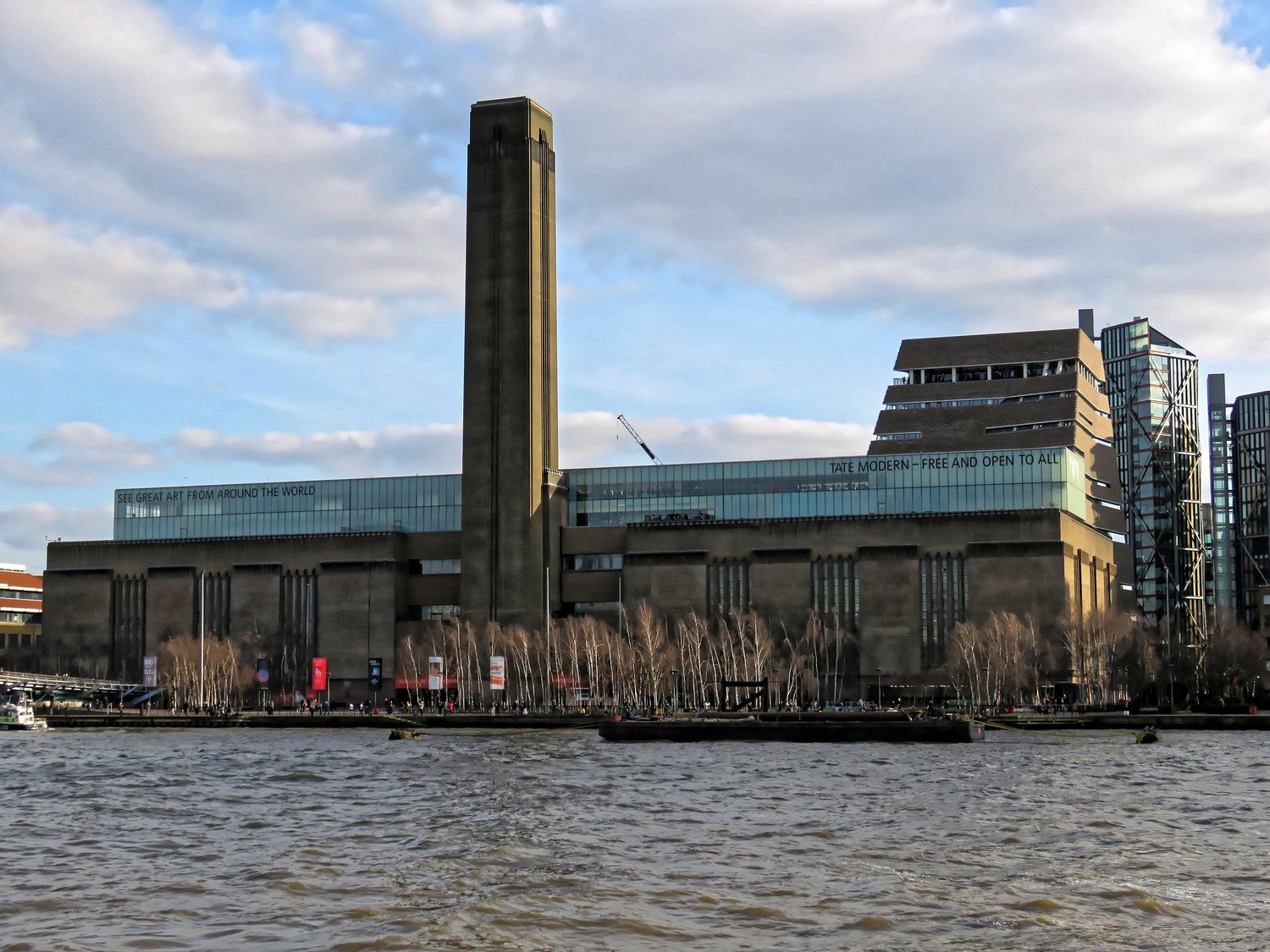
The Tate Gallery (Tate, National Gallery of British Art, Tate Museum) — museum — in London, United Kingdom. Its collection counts 293 approved works. Its highlights: British Collection, Works by J.M.W. Turner, Pre-Raphaelite paintings, David Hockney works, Salvador Dalí works, Georges Braque works, Camille Pissarro works. Our catalogue lists 293 of its paintings and works on paper, by 85 artists, dated 1592 to 1944.
The Origins and History of Tate Gallery
The Tate Gallery began its existence in 1897 in London, United Kingdom. Its foundation was made possible through the philanthropy of Henry Tate, whose personal collection provided the initial basis for the institution. During its first decades, the institution operated under the name National Gallery of British Art. This period of identity lasted until 1932, when the name was changed to the Tate Gallery in honor of its founder. The institution has evolved through significant shifts in its mandate. While it began with a focus on the national collection of British art, it eventually expanded to include international modern and contemporary art. This growth transformed the organization into a network of four galleries.
The Building and its Architecture
The architecture presents a layered narrative where neoclassical grandeur meets postmodern experimentation. Sidney R. J. Smith’s original design features imposing columns and expansive porticos that suggest an air of imperial ambition. This classical facade finds a sharp contrast in James Stirling’s Clore Gallery, which introduces unconventional materials and spatial arrangements into the landscape. The building itself reflects a tension between honoring tradition and embracing new intellectual curiosities. Walking through these halls, one moves from the heavy, historical weight of the original structures toward the daring interventions of later decades. The light shifts as one transitions between the soaring ceilings of the older wings and the more experimental spaces.
The British Collection
The collection spans over six centuries of British expression. It moves from the meticulous panel paintings of the Tudor period to the emotionally charged portraits of the twentieth century. This progression allows for a direct encounter with the shifting ways in which the human form and the landscape have been perceived across the ages. Significant works by J.M. W. Turner reside here, offering a study in light and movement. The presence of the Turner Prize exhibitions brings a focus to contemporary British achievement, connecting these historical holdings with the current artistic dialogue. Alongside these paintings, the halls contain various sculptures, prints, and decorative arts, including the intense, visceral works of Francis Bacon. Snow Storm – Steamers on Red Wharf, about 1839 - J.M. W. Turner Three Studies for Figures at the Base of a Crucifixion, 1944 - Francis Bacon
5 facts about the home of the originals
- Where is the Tate Gallery located?Millbank, London
- Which artist's works are featured in the Clore Gallery?J.M.W. Turner
- Who designed the original building of the Tate Gallery?Sidney R. J. Smith
- Which artist painted 'The Pork Butcher' in 1883?Camille Pissarro
- What is the name of the artist who painted 'Mandola' in 1910?Georges Braque
The Tate Gallery: every original we catalogueThe museums of London
To read
Three articles on the originals and their painters
 The painter of the first original
Masterpieces of Georges Braque: The Top 25 Essential Artworks
2 of the 11 originals are by Salvador Dalí.
 The other great museum in London
25 Must-See Masterpieces at the National Gallery, London
2,459 originals in our catalogue.
 The painter with the most originals here
Unlocking the Subconscious: The Top 25 Masterpieces by Salvador Dalí
2 of the 11 originals are by Salvador Dalí.
How the originals are ranked
The originals of the Tate Gallery in our catalogue are ranked by fame: the Wikipedia language editions that describe the painting, our studio's ranking and the visits to its page on OriginalUniqueArt.com. One entry per original, counted in our catalogue and not in the museum's inventory, without details, copies, studies, sculptures or works on paper; every date, dimension and medium is the catalogue's, and the notes are drawn from the painting's description.
Go on