Rococo, one artist at a time

100 Famous Rococo Painters Who Shaped the Movement

Jean-Antoine Watteau (1684–1721) is the most famous Rococo painter, whose singular vision gave us The Embarkation for Cythera and Pilgrimage to Cythera. Next stand Élisabeth Louise Vigée Le Brun, Canaletto, Giovanni Battista Tiepolo and François Boucher. These 100 painters, from François de Troy (born 1645) to Edouard Honoré Ave (born 1818), came from 13 countries.

Our selection. Artists whose works our catalogue attaches to Rococo, in the order of our fame ranking. Artists born after 1955 with no Wikidata identifier stay out until verified. The Wikipedia figure counts our 32 languages with an article on the artist.

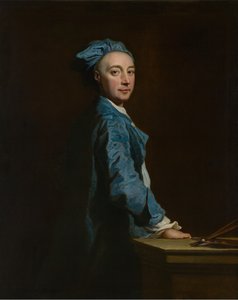
  1. The Embarkation for Cythera by Jean-Antoine Watteau1Jean-Antoine Watteau
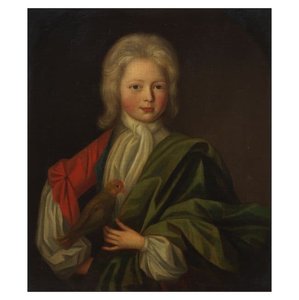
  2. Self Portrait with Her Daughter, Julie by Élisabeth Louise Vigée Le Brun2Élisabeth Louise Vigée Le Brun
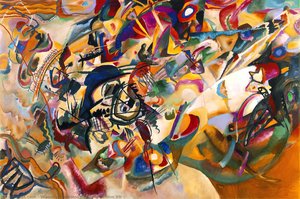
  3. The Stonemason's Yard by Canaletto3Canaletto

In brief

Rococo in brief

  • 100Artists
  • 1645–1818Years of birth
  • 13Countries of birth
  • 6Women
  • 1Living artists
  • 10,615Works in our catalogue
Cities with most births
Paris (19), Venice (13), Valenciennes (3), Montpellier (3)
Museums holding the most key works
Hermitage Museum (17), The Louvre (16), Metropolitan Museum of Art (10), Nationalmuseum (9)

One artist at a time

100 Rococo Painters and their signature works

1of 100

Jean-Antoine Watteau

French Born in Valenciennes Rococo Wikipedia in 31/32 languages

Jean-Antoine Watteau

By employing a delicate layering of colors, he achieved a shimmering effect, as if the very light of the scene were caught in a moment of transition. This method allowed him to build a world that felt both present and fleeting, a quality that defined his unique approach to the canvas. Even in his most quiet works, the legacy of his vision remains clear: The Country Dance.

Signature works · The 100 signature works

2of 100

Élisabeth Louise Vigée Le Brun

French Born in Paris Rococo and Neoclassical Wikipedia in 30/32 languages

Élisabeth Louise Vigée Le Brun

Louise Élisabeth Vigée Le Brun enters a city defined by the strict hierarchies of the Ancien Régime. She is born to Jeanne Maisin, a hairdresser from a peasant background, and Louis Vigée, a portraitist, pastellist, and member of the Académie de Saint-Luc. Portrait of Marie-Gabrielle de Gramont, Comtesse de Caderousse (1784).

Where to see Vigée Le Brun remains a pioneer for women in the arts, having navigated a professional landscape almost exclusively reserved for men.

Signature works · The 100 signature works

3of 100

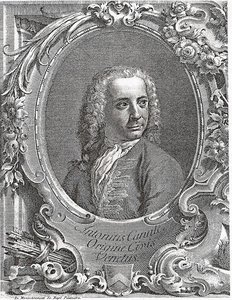
Canaletto

Italian Born in Venice Vedute, topographical style Wikipedia in 30/32 languages

Canaletto

After returning to Venice, Canaletto began to settle into a signature topographical style. He also recorded the movement of the water and the crowds during public events, such as the Regatta on the Grand Canal. Across the Atlantic, the National Gallery of Art in Washington holds his 1742 work, View of the Church and the Doge's Palace from the Procuratie Vecchie.

Where to see His presence remains felt in the collections of major institutions across Europe and beyond.

Teacher of Bernardo Bellotto #10

Signature works · The 100 signature works

4of 100

Giovanni Battista Tiepolo

Italian Born in Venice Rococo and Baroque Wikipedia in 30/32 languages

Giovanni Battista Tiepolo

He drew heavily from the traditions of Veronese, particularly in his use of elegant costumes and grand architectural settings. His color palettes often mirror the light found in the Venetian sky. He was a central figure in the 18th-century Venetian school, moving through the courts of Italy, Germany, and Spain.

Where to see To find his hand, one often looks to the very spaces he was commissioned to transform.

Signature works · The 100 signature works

5of 100

François Boucher

French Born in Paris Rococo Wikipedia in 30/32 languages

François Boucher

He arrived in Rome in 1728 to study at the French Academy, a period that would fundamentally shape his artistic sensibilities. The classical ideals he encountered in the Italian light and the works of the masters did not merely teach him technique; they instilled in him a new way of seeing. He was admitted to the Académie Royale de Peinture et de Sculpture in 1731, and by 1734, he had achieved the status of a historical painter within the Academy.

Where to see In Paris, the Louvre holds several of his canvases, preserving the spirit of the courtly life he so carefully rendered.

Pupil of François Lemoyne #27 · Teacher of Jean-Honoré Fragonard #6

Signature works · The 100 signature works

6of 100

Jean-Honoré Fragonard

French Born in Grasse Rococo Wikipedia in 28/32 languages

Jean-Honoré Fragonard

The brush moves with a speed that borders on the frantic. His late Rococo manner leans heavily into hedonism, using dappled light and soft, creamy tones to build worlds of intimacy and veiled desire.

Where to see The physical traces of Fragonard’s brushwork remain scattered across major global institutions.

Pupil of Jean-Baptiste-Siméon Chardin #7, François Boucher #5

Signature works · The 100 signature works

7of 100

Jean-Baptiste-Siméon Chardin

French Born in Paris Naturalism Wikipedia in 27/32 languages

Jean-Baptiste-Siméon Chardin

Chardin’s presence in Paris was marked by a steady, quiet ascent through the city's artistic circles. For much of his career, he resided on the Left Bank near Saint-Sulpice, a location that anchored his life within the familiar rhythms of the neighborhood. By focusing on the tangible reality of a copper pot or a piece of fruit, he paved the way for the Realist movement, influencing painters like Gustave Courbet who sought to depict life without embellishment.

Where to see His presence is felt strongly in Paris, where the Musée du Louvre holds a significant portion of his output.

Teacher of Jean-Honoré Fragonard #6

Signature works · The 100 signature works

8of 100

Thomas Gainsborough

British Born in Sudbury Rococo, Romanticism Wikipedia in 29/32 languages

Thomas Gainsborough

He favored a light palette, often marrying soft tones with deep, grounding browns to create a sense of naturalism. He would place his subjects within the wide, open air of the English countryside, allowing the atmosphere of the sky and the texture of the trees to inform the character of the person depicted.

Where to see To walk through the rooms of Gainsborough’s House in Sudbury is to step into the very environment that nurtured his early vision.

Signature works · The 100 signature works

10of 100

Bernardo Bellotto

Italian Born in Venice Veduta, urban landscape, printmaker Wikipedia in 27/32 languages

Bernardo Bellotto

He moved away from the bright, high-contrast palettes often found in Venetian scenes, choosing instead to work with a more restrained color scheme. Rio dei Mendicanti with the Scuola di San Marco (detail) (1738). This meticulous restoration effort was so successful that the historic centre of Warsaw was recognized as a UNESCO World Heritage Site in 1980.

Where to see In Dresden, the Gemäldegalerie holds a significant portion of his output, including views of the city that captured its architectural life before the ravages of war.

Pupil of Canaletto #3

Signature works · The 100 signature works

11of 100

Francesco Guardi

Italian Born in Venice Veduta, Venetian School Wikipedia in 27/32 languages

Francesco Guardi

However, while Canaletto prioritized topographical accuracy, Guardi gradually moved towards a more expressive and imaginative approach. The family legacy played a significant role; his sister Maria Cecilia’s marriage to Giovanni Battista Tiepolo further connected him to the leading artistic circles of the time, fostering a rich exchange of ideas and influences. He differed significantly from Canaletto, who often presented Venice in bright sunlight, Guardi frequently depicted the city shrouded in twilight or beneath clouded skies, emphasizing its melancholic charm.

Signature works · The 100 signature works

12of 100

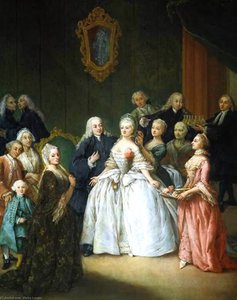
Pietro Longhi

Italian Born in Venice Venetian painting, Rococo Wikipedia in 18/32 languages

Pietro Longhi

He even served as Director of the Academy of Drawing and Carving from 1763, further solidifying his position within the Venetian art world. He remains a vital figure in the history of Venetian art, celebrated for his unique blend of observation, wit, and technical skill – a true chronicler of 18th-century life. While influenced by earlier Venetian masters like Giuseppe Maria Crespi, Longhi forged his own path, anticipating later developments in genre painting.

Signature works · The 100 signature works

13of 100

Giovanni Domenico Tiepolo

Italian Born in Venice Rococo Wikipedia in 18/32 languages

Giovanni Domenico Tiepolo

In the luminous heart of eighteenth-century Venice, a period defined by the decadent splendor of the Rococo, Giandomenico Tiepolo emerged as a master of both grand spectacle and intimate human drama.

Signature works · The 100 signature works

14of 100

Joseph Marie Vien

Spanish Born in Montpellier Still-life painting Wikipedia in 15/32 languages

Joseph Marie Vien

Itō Jakuchū (1716-1800) stands as a pivotal figure in Japanese art history, a master painter who pushed the boundaries of traditional ukiyo-e style with radical experimentation and a profound appreciation for nature. The impact of Itō Jakuchū’s work extended far beyond his own lifetime.

Pupil of Charles-Joseph Natoire #32

Signature works · The 100 signature works

15of 100

Giovanni Battista Piazzetta

Italian Born in Venice Rococo Wikipedia in 16/32 languages

Giovanni Battista Piazzetta

His father, Giacomo Piazzetta, was a sculptor, and young Giovanni’s initial training took place within this familial workshop, fostering an early appreciation for form and craftsmanship through wood carving. However, his path soon diverged towards painting, beginning studies with Antonio Molinari in 1697. The “Soothsayer,” now housed in the Gallerie dell’Accademia in Venice, exemplifies this perfectly.

Teacher of Johann Heinrich Tischbein #51

Signature works · The 100 signature works

16of 100

Nicolas Lancret

French Born in Paris Rococo Wikipedia in 16/32 languages

Nicolas Lancret

Lancret became renowned as a brilliant portrayer of everyday life within French society during the Regency of the Duke of Orleans and the early reign of King Louis XV. La Servante Justifiée (1735-1740): Showcases Lancret's ability to portray domestic scenes with wit and charm. His works reside in prestigious collections worldwide, including the National Gallery and the Musée d'Orsay, ensuring his legacy continues to inspire appreciation for French Rococo art.

Signature works · The 100 signature works

17of 100

Joseph Vernet

French Born in Avignon Landscape, Seascape Wikipedia in 26/32 languages

Joseph Vernet

Beyond maritime scenes, Vernet also explored landscapes and hunting subjects, always maintaining a keen eye for detail and an understanding of animal anatomy—a skill honed in his youth.

Signature works · The 100 signature works

18of 100

Rosalba Carriera

Italian Born in Venice Rococo Wikipedia in 23/32 languages

Rosalba Carriera

In Vienna, she found another devoted patron in Holy Roman Emperor Charles VI, who acquired over 150 of her pastels.

Teacher of Gustaf Lundberg #54

Signature works · The 100 signature works

19of 100

Jean-Marc Nattier

French Born in Paris Rococo Wikipedia in 22/32 languages

Jean-Marc Nattier

However, it was the opportunity to study the works of Peter Paul Rubens at the Luxembourg Palace that proved particularly transformative. This blend of influences culminated in a unique artistic voice that positioned Nattier as a key figure in the burgeoning Rococo movement – a style characterized by its elegance, grace, playful themes, and emphasis on ornamentation. Further guidance came from his uncle, Jean Jouvenet, a respected history painter who broadened his understanding of composition and narrative.

Teacher of Louis Tocqué #71

Signature works · The 100 signature works

20of 100

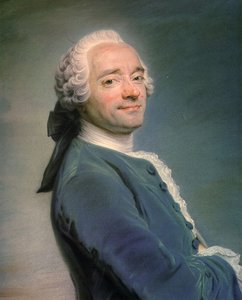
Maurice Quentin de La Tour

French Born in Saint-Quentin Rococo Wikipedia in 23/32 languages

Maurice Quentin de La Tour

Maurice Quentin de La Tour was born into a musical family; his father, François de La Tour, was a musician for the Duc du Maine. Early training included studies with Jacques Spoede and a brief period in Rheims. He elevated pastel portraiture to new heights, influencing subsequent generations of artists.

Signature works · The 100 signature works

21of 100

Alexander Roslin

Swedish Born in Malmö Sankt Petri församling Rococo Wikipedia in 21/32 languages

Alexander Roslin

Perhaps one of his most poignant works is the Double Portrait of Alexander Roslin and Marie-Suzanne Roslin (1767), a tender depiction of the artist with his wife, Marie-Suzanne Giroust – herself a talented pastellist.

Signature works · The 100 signature works

22of 100

Jean-Baptiste Oudry

Born in Paris Wikipedia in 17/32 languages

Jean-Baptiste Oudry

Oudry’s meticulous attention to detail and his ability to capture the textures and characteristics of animals became hallmarks of his work. He demonstrated mastery in both painting and design, seamlessly transitioning between canvas and tapestry creation. Influenced By: Nicolas de Largillière played a crucial role in Oudry’s early artistic development, providing foundational training in portraiture and technique.

Signature works · The 100 signature works

23of 100

Martin van Meytens

Swedish Born in Stockholm Baroque portraiture Wikipedia in 14/32 languages

Martin van Meytens

While his subjects were often symbols of state power, Meytens sought to imbende them with a psychological depth that transcended mere likeness. This technique allowed him to illuminate the intricate textures of silk, lace, and ermine, making the opulence of the Habsburg court feel tangible to the viewer. His rise was so complete that he eventually served as the Director of the Viennese Academy of Fine Arts, a testament to his influence and authority within the artistic community.

Signature works · The 100 signature works

24of 100

Jean-Étienne Liotard

Swiss Born in Geneva Wikipedia in 20/32 languages

Jean-Étienne Liotard

Liotard’s approach to art was rooted in a rigorous commitment to naturalism. He sought to capture the world with a precision that avoided the artificiality often found in the portraiture of his era.

Where to see The distribution of Liotard’s output across Europe and beyond allows for a varied study of his technical precision.

Signature works · The 100 signature works

25of 100

Louis Michel van Loo

French Born in Toulon Rococo Wikipedia in 17/32 languages

Louis Michel van Loo

He was a master of capturing the nuances of texture and light, creating portraits that possessed both realism and an air of aristocratic refinement. Van Loo’s work played a crucial role in shaping the visual image of European royalty during the 18th century. Even at this nascent stage, van Loo demonstrated exceptional talent, earning a prize from the prestigious Académie Royale de Peinture et de Sculpture in Paris in 1725 – a testament to his burgeoning skill and promise.

Pupil of Jean-Baptiste van Loo #57

Signature works · The 100 signature works

26of 100

Johann Zoffany

Born in Frankfurt Wikipedia in 15/32 languages

Johann Zoffany

Zoffany quickly attracted the attention of King George III and Queen Charlotte, becoming a favored portraitist of the royal family. He was also popular with Austrian imperial family and created a baron of the Holy Roman Empire in 1776 by Empress Maria Theresa.

Signature works · The 100 signature works

27of 100

François Lemoyne

French Born in Paris Rococo Wikipedia in 14/32 languages

François Lemoyne

Mythological Scenes: Works like Hercules and Omphale demonstrate his ability to depict classical narratives with both dramatic intensity and sensual grace. Religious Paintings: The Transfiguration exemplifies his skill in rendering religious subjects with emotional depth and technical precision. Born in Paris in 1688, Lemoyne dedicated his life to reviving the grandeur of large-scale allegorical painting—a tradition that had somewhat waned since the era of Charles Le Brun, whom Lemoyne deeply admired and sought to emulate.

Teacher of Charles-Joseph Natoire #32, François Boucher #5

Signature works · The 100 signature works

28of 100

François de Troy

French Born in Toulouse Rococo, Baroque Wikipedia in 12/32 languages

François de Troy

While adept at traditional portraiture, Jean-François de Troy is perhaps best remembered for his innovative tableaux de mode – “pictures of fashion.” These weren't simply portraits; they were vibrant snapshots of contemporary life, capturing the leisure activities, social customs, and opulent surroundings of the French upper class. He wasn’t simply painting people; he was painting a lifestyle. As Director of the French Academy in Rome from 1738, he played a role in shaping the next generation of artists, though his tenure was marked by some controversy due to his personal indulgences.

Signature works · The 100 signature works

29of 100

Jean-Baptiste Pater

French Born in Valenciennes Rococo Pastel Palette Wikipedia in 13/32 languages

Jean-Baptiste Pater

Jean-Baptiste Pater's contribution to French Rococo art is undeniable. He stands as a pivotal figure in capturing the spirit of his era, embodying Watteau’s stylistic innovations while forging his own distinctive artistic voice.

Pupil of Jean-Antoine Watteau #1

Signature works · The 100 signature works

30of 100

Charles-André van Loo

French Born in Nice Rococo painting Wikipedia in 16/32 languages

Charles-André van Loo

Significant Works: Venus and Amor (Kunsthalle Bremen) - Demonstrates mastery of the Rococo style. Portrait of Marie Leszczynska, Queen of France – A notable royal portrait. Rivalry: Competed with François Boucher, another prominent Rococo artist.

Pupil of Jean-Baptiste van Loo #57 · Teacher of Johann Heinrich Tischbein #51

Signature works · The 100 signature works

31of 100

Jacopo Amigoni

Italian Born in Naples Late Baroque & Rococo Wikipedia in 21/32 languages

Jacopo Amigoni

Amigoni’s style is characterized by its sumptuousness, technical brilliance, and a masterful command of color and light. While influenced by the Baroque traditions of artists like Giuseppe Nogari, Amigoni developed a distinctly Rococo sensibility, characterized by its elegance, grace, and emphasis on decorative detail.

Signature works · The 100 signature works

32of 100

Charles-Joseph Natoire

French Born in Nîmes Rococo Wikipedia in 15/32 languages

Charles-Joseph Natoire

Charles-Joseph Natoire (1700–1777) stands as a pivotal figure in the artistic landscape of late Baroque and early Rococo France, embodying the refined sensibilities of his era.

Pupil of François Lemoyne #27 · Teacher of Joseph Marie Vien #14, Jean Baptiste Perronneau #69

Signature works · The 100 signature works

33of 100

Jan Frans van Bloemen

Flemish Born in Antwerp Italianate landscape Wikipedia in 14/32 languages

Jan Frans van Bloemen

Van Bloemen’s paintings are characterized by their serene beauty and meticulous attention to detail, offering idealized visions of the Roman countryside. His most fruitful collaboration was arguably with Placido Costanzi, whom he considered the finest collaborator on paintings depicting scenes from “ The Flight to Egypt.” He often collaborated with figure painters like Carlo Maratti, Placido Costanzi, and Pompeo Batoni, particularly in later years when tackling more ambitious compositions, though he was adept at imitating their styles himself.

Signature works · The 100 signature works

34of 100

Adélaïde Labille-Guiard

French Born in Paris Rococo to Neoclassicism Wikipedia in 20/32 languages

Adélaïde Labille-Guiard

Adélaïde Labille-Guiard (1749–1803) stands as a remarkable figure in the history of French art, not merely for her exquisite portraits but also for her courageous challenge to the restrictive conventions that governed women’s roles within the artistic world. She defied societal expectations, navigated institutional barriers, and ultimately paved the way for future generations of female painters.

Pupil of Maurice Quentin de La Tour #20

Signature works · The 100 signature works

35of 100

Francesco Zuccarelli

Italian Born in Pitigliano Rococo, Baroque Wikipedia in 15/32 languages

Francesco Zuccarelli

Engravings & Frescoes: From 1728-1731, he dedicated himself largely to engraving the deteriorating frescoes of Giovanni da San Giovanni and Andrea del Sarto, demonstrating a keen eye for detail and classical influences.

Signature works · The 100 signature works

36of 100

Dmitry Levitzky

Ukrainian-Russian Born in Kyiv Classical Portraiture Wikipedia in 16/32 languages

Dmitry Levitzky

Petersburg around 1758 marked a pivotal moment, opening doors to formal artistic training under the esteemed Aleksey Antropov. Antropov’s influence proved significant; he imparted an objectivity that would become a hallmark of Levitsky’s mature style. Despite these challenges, Levitsky left behind an enduring legacy as one of Russia’s foremost portrait painters, alongside contemporaries like Fyodor Rokotov and Vladimir Borovikovsky.

Teacher of Vladimir Borovikovsky #46

Signature works · The 100 signature works

37of 100

Franz Anton Maulbertsch

German/Austrian Born in Langenargen Rococo, Baroque Wikipedia in 16/32 languages

Franz Anton Maulbertsch

However, Maulbertsch's artistic horizons expanded significantly through exposure to Venetian masters like Giovanni Battista Pittoni and Piazzetta. A particularly formative experience was his encounter with Giambattista Tiepolo around 1750 in Würzburg.

Signature works · The 100 signature works

38of 100

Jean-Baptiste Pigalle

French Born in Tournus Baroque & Neoclassical

Jean-Baptiste Pigalle

He honed his skills in Lyon before moving to Paris, immersing himself in the study of live models at the Royal Academy – though his early efforts weren’t universally acclaimed, hinting at the independent spirit that would define his trajectory.

Signature works · The 100 signature works

39of 100

Anne Vallayer-Coster

French Born in Paris Rococo, Still Life Wikipedia in 14/32 languages

Anne Vallayer-Coster

Anne Vallayer- Coster, born in Paris on December 21, 1744, emerged as a remarkable figure within the French art world of the late 18th century. This environment wasn't merely one of observation; it was immersive, with the family also involved in tapestry production, exposing young Anne to various artistic processes from a tender age. In 1781 she married Jean-Pierre Silvestre Coster, a wealthy lawyer and parlementaire; Marie Antoinette herself served as a witness at the wedding, highlighting her continued connection to the aristocracy even amidst political turmoil.

Signature works · The 100 signature works

40of 100

Louis Jean François Lagrenée

French Born in Paris Rococo, Neoclassical

Louis Jean François Lagrenée

Their collaborative spirit and mutual influence enriched the French art scene of the 18th century, solidifying their place as key figures in the transition from Rococo elegance to Neoclassical grandeur. Louis-Jean-François: Known for his archaeological explorations and refined mythological scenes. In later life, Lagrenée held important positions – drawing professor and general inspector at the Gobelins tapestry manufactory – demonstrating the esteem in which he was held within the artistic community.

Signature works · The 100 signature works

41of 100

Giambattista Pittoni

Born in Venice Late Baroque, Rococo Wikipedia in 19/32 languages

Giambattista Pittoni

Classical Mythology: His depictions of tales such as The Continence of Scipio and Bacchus and Ariadne highlight his skill in rendering the grandeur and drama of ancient legends with a distinctly Venetian flair.

Pupil of Antonio Balestra #73

Signature works · The 100 signature works

42of 100

Gaspar van Wittel

Dutch Born in Amersfoort Veduta painting Wikipedia in 14/32 languages

Gaspar van Wittel

He worked alongside Abraham Genoels, possibly as a pupil, and later with Hendrik Frans van Lint, who would become a leading vedutista himself. His early works show influence from Dutch masters like Jan van der Heyden, but he quickly developed a unique style tailored to the Roman landscape.

Signature works · The 100 signature works

43of 100

Charles Antoine Coypel

French Born in Paris Baroque Rococo Wikipedia in 11/32 languages

Charles Antoine Coypel

By blending the structural integrity and dramatic weight of the Baroque with the whimsical, airy grace of the Rococo, he provided a stylistic continuity that allowed French art to evolve without losing its sense of majesty. Tapestry and Decorative Design: Elevating large-scale textile works to the status of high narrative art through his Gobelins commissions. In the grand tapestry of French art history, few figures embody the delicate transition from the heavy grandeur of the Baroque to the lighthearted elegance of the Rococo as gracefully as Charles Antoine Coypel.

Signature works · The 100 signature works

44of 100

Fyodor Stepanovich Rokotov

Russian Born in Moscow Psychological Portrait

Fyodor Stepanovich Rokotov

In the grand, sweeping tapestry of eighteenth-century Russian art, where many painters sought to capture the sheer opulence of the Romanov era through gilded frames and theatrical grandeur, Fyodor Stepanovich Rokotov emerged as a singular, introspective voice.

Signature works · The 100 signature works

46of 100

Vladimir Borovikovsky

Born in Myrhorod Wikipedia in 14/32 languages

Vladimir Borovikovsky

Stylistic Characteristics: Borovikovsky’s portraits are known for their intimacy, sentimental quality, and delicate rendering of textures. Influences: He was influenced by Dmitry Levitzky and Johann Baptist Lampi, receiving private lessons from both.

Pupil of Dmitry Levitzky #36

Signature works · The 100 signature works

47of 100

Antoine Pesne

French Born in Paris Rococo Wikipedia in 13/32 languages

Antoine Pesne

Following Frederick I’s death in 1713, Pesne broadened his horizons, working in Dresden and Dessau before returning to Paris where he was elected as a full member of the Académie Royale in 1720. Among his most celebrated achievements is his portrait of Frederick William I, the “Soldier King” (1733), which captures the ruler’s stern demeanor and unwavering dedication to military discipline.

Signature works · The 100 signature works

48of 100

Allan Ramsay

Born in Edinburgh Wikipedia in 12/32 languages

Allan Ramsay

Ramsay’s artistic development took a significant turn with his travels to Rome and Naples, where he spent three years (1736-1738) working under the tutelage of Francesco Solimena and Imperiali (Francesco Fernandi). These Italian masters profoundly influenced his style, fostering a greater understanding of classical principles and enhancing his skills in capturing likeness and character. He absorbed the prevailing Rococo aesthetic while also developing an appreciation for Neoclassical ideals.

Signature works · The 100 signature works

49of 100

Elisabeth-Louise Vigée-Lebrun

Elisabeth-Louise Vigée-Lebrun

The French Revolution brought upheaval to Vigée Le Brun’s world. In 1792, fearing for her safety, she fled Paris with her daughter, embarking on an exile that would last over a decade. Vigée Le Brun returned to France after the fall of Napoleon in 1804.

Signature works · The 100 signature works

51of 100

Johann Heinrich Tischbein

German Born in Haina Rococo Wikipedia in 10/32 languages

Johann Heinrich Tischbein

The historical importance of Johann Heinrich Tischbein the Elder extends far beyond his individual achievements; he served as the cornerstone of a multi-generational artistic dynasty. His appointment as the court painter to William VIII, Landgrave of Hesse-Kassel, marked a pinnacle in his professional life.

Pupil of Charles-André van Loo #30, Giovanni Battista Piazzetta #15

Signature works · The 100 signature works

52of 100

Christian Wilhelm Ernst Dietrich

German Born in Weimar Imitation of Dutch & Italian masters Wikipedia in 11/32 languages

Christian Wilhelm Ernst Dietrich

He was an artist who found his voice through the voices of others, ensuring that the brilliance of the Dutch and Italian masters continued to shine brightly within the German courts.

Signature works · The 100 signature works

53of 100

Charles Amédée Philippe Van Loo

French Born in Rivoli Rococo, Portraiture Wikipedia in 13/32 languages

Charles Amédée Philippe Van Loo

Vanloo's artistic style was deeply rooted in the traditions of the Baroque and Roman art academies, but he also drew inspiration from the work of contemporary artists such as Nicolas Lancret and Jean-Honoré Fragonard. His compositions are often dynamic and asymmetrical, creating a sense of movement and energy.

Pupil of Jean-Baptiste van Loo #57

Signature works · The 100 signature works

54of 100

Gustaf Lundberg

Swedish Born in Stockholm City Rococo Pastelist Wikipedia in 14/32 languages

Gustaf Lundberg

Beyond the halls of Versailles, Lundberg maintained deep ties to his Swedish roots, acting as a cultural bridge between Paris and Stockholm. Cultural Synthesis: He successfully blended the technical rigor of French academic painting with the soft, expressive qualities of the Venetian school. Immersed in the rigorous traditions of French academies, he studied under luminaries such as Hyacinthe Rigaud and Nicolas de Largillière, absorbing the grandiosity of classical portraiture.

Pupil of Rosalba Carriera #18

Signature works · The 100 signature works

56of 100

Jacob de Wit

Dutch Born in Amsterdam Rococo Painting Wikipedia in 10/32 languages

Jacob de Wit

Through these disciples, the delicate balance of De Wit’s technique—the marriage of Baroque weight with Rococo grace—was preserved.

Signature works · The 100 signature works

57of 100

Jean-Baptiste van Loo

French Born in Aix-en-Provence Baroque, Rococo Wikipedia in 15/32 languages

Jean-Baptiste van Loo

His father, Louis-Abraham van Loo, himself the son of Jacob van Loo, instilled in him not only technical skill but also an appreciation for the power and prestige associated with portraiture.

Teacher of Charles-André van Loo #30

Signature works · The 100 signature works

58of 100

John Wollaston

English Rococo Painting

John Wollaston

His work bears an unmistakable resemblance to the portraits of Thomas Hudson and Allan Ramsay, capturing not just the likeness of his subjects but the very essence of their social standing. His journey across the Atlantic in 1749 marked a transformative chapter for both the artist and the colonies. While later giants like Benjamin West and Gilbert Stuart would command the spotlight of American portraiture, Wollaston’s true contribution lies in his role as a pioneer, introducing the delicate elegance and shimmering sophistication of the Rococo style to North America.

Signature works · The 100 signature works

59of 100

Carl Gustaf Pilo

Swedish Born in Runtuna Rococo Wikipedia in 12/32 languages

Carl Gustaf Pilo

In this composition, King Gustav III is depicted in white coronation robes that seem to radiate an ethereal light, surrounded by the intricate social hierarchy of the era—from the nobility and burghers to the priests and farmers.

Signature works · The 100 signature works

60of 100

Anna Dorothea Therbusch

German Born in Berlin Rococo Wikipedia in 13/32 languages

Anna Dorothea Therbusch

Anna Dorothea Therbusch (1721-1782) stands as a remarkable figure in the annals of Rococo art history —a woman artist who defied societal expectations and achieved considerable renown during the Enlightenment. Born into a family steeped in artistic tradition, her father, Georg Lisiewski, was himself a celebrated Berlin portrait painter, establishing a lineage dedicated to visual representation. Therbusch's artistic journey took an extraordinary turn when she relocated to Paris in 1765, seeking opportunities for advancement within the vibrant artistic landscape of the French capital.

Signature works · The 100 signature works

61of 100

Johann Georg Platzer

Austrian Born in Eppan an der Weinstraße Rococo Wikipedia in 8/32 languages

Johann Georg Platzer

Paintings such as Fountain Scene in front of a Palace and Dancing Scene with Palace Interior exemplify his ability to capture the opulence and grace of aristocratic life, while Allegory of the Four Seasons demonstrates his skill in allegorical representation.

Signature works · The 100 signature works

62of 100

Nathaniel Hone

Dutch Born in Dublin Rococo

Nathaniel Hone

These paintings weren't simply depictions of elegant social gatherings; they were carefully constructed illusions, designed to evoke a sense of enchantment and fleeting beauty. Crucially, Watteau avoided direct representation, instead relying on suggestion and implication to convey mood and emotion. The success of these works brought him recognition and patronage from influential figures, including the powerful Duke de Choiseul, who served as foreign secretary to Louis XV.

Signature works · The 100 signature works

63of 100

Michele Marieschi

Italian Born in Venice Vedute Venice Wikipedia in 9/32 languages

Michele Marieschi

In the golden age of the Venetian Rococo, few artists captured the ephemeral magic of the Serenissima with as much vitality as Michele Giovanni Marieschi. Scholars often point to the influence of masters such as Gaspare Diziani and the legendary Canaletto, whose works provided a blueprint for capturing the grandeur of urban environments.

Signature works · The 100 signature works

64of 100

Antonio Corradini

Italian Born in Este Rococo

Antonio Corradini

Corradini’s artistic significance lies not only in his technical virtuosity but also in his role as a transitional figure between the Baroque and Rococo movements. He built upon the dramatic energy of the former while embracing the lightness, elegance, and playful sensuality of the latter. After leaving Vienna, Corradini spent his final years in Rome and Naples, continuing to refine his art until his death in 1752.

Signature works · The 100 signature works

65of 100

Royal-Polish And Electoral-Saxon Porcelain Manufactory

German Born in Meissen Hard-paste porcelain

Royal-Polish And Electoral-Saxon Porcelain Manufactory

The Crossed Swords Mark: Introduced in 1720, the crossed swords logo served not only as a protective trademark but also as an emblem of pride—a symbol representing the factory’s commitment to quality and innovation.

Signature works · The 100 signature works

66of 100

Gerard van Spaendonck

Born in Tilburg Wikipedia in 12/32 languages

Gerard van Spaendonck

He contributed over fifty works to Les Vélins du Roi, a renowned collection of botanical watercolors commissioned by the French royal family. These pieces demonstrate his exceptional skill in capturing the nuances of floral forms. 1788: Appointed as an advisor to the Académie. 1795: Became a founding member of the Institut de France. 1804: Received the Légion d'honneur and was ennobled by Napoleon Bonaparte, acknowledging his contributions to French art and culture.

Signature works · The 100 signature works

68of 100

Jean Jacques Caffiéri

French Born in Paris Rococo

Jean Jacques Caffiéri

Caffiéri’s dedication to royal service extended beyond architectural embellishments; he undertook numerous commissions for Louis XV, producing portraits and sculptures that captured the spirit of the era. The Wallace Collection houses Caffiéri’s masterpiece—the Royal Commode delivered by Antoine-Robert Gaudreau in 1739 for Louis XV’s bedchamber at Versailles—a stunning example of Rococo design and craftsmanship. Notably, Caffiéri’s designs for Versailles, Fontainebleau, Marly, Compiegne, and Choisy exemplify the grandeur and elegance synonymous with Louis XV's court.

Signature works · The 100 signature works

69of 100

Jean Baptiste Perronneau

French Born in Paris Rococo Wikipedia in 12/32 languages

Jean Baptiste Perronneau

De La Tour was widely considered the master of French pastel portraiture, and his influence on Perronneau was profound. Perronneau daringly exhibited a pastel portrait of de la Tour himself, only to find that the master had simultaneously submitted a self-portrait – an act interpreted by many as a deliberate demonstration of his own superior skill.

Pupil of Charles-Joseph Natoire #32

Signature works · The 100 signature works

70of 100

Francis Hayman

English Born in Exeter Rococo, Portraiture Wikipedia in 10/32 languages

Francis Hayman

As he transitioned from a scenic painter to an independent artist in St Martin's Lane, Hayman brought with him a storyteller’s soul, capable of transforming a static canvas into a window onto a theatrical moment. Drawing inspiration from the opulent French masters such as François Boucher, Hayman embraced a palette of delicate pastels and fluid, rhythmic brushstrokes. His artistic repertoire was remarkably expansive, showcasing a talent that could pivot between genres with seamless ease: Theatrical and Literary Scenes: Hayman possessed a rare ability to breathe life into literature, creating evocative depictions of Shakespearean drama and lively scenes from Don Quixote, such as the spirited moment of the innkeeper knighting the knight.

Signature works · The 100 signature works

71of 100

Louis Tocqué

French Born in Paris Portrait painting Wikipedia in 11/32 languages

Louis Tocqué

Nattier’s atelier became Tocqué’s formative environment, where he honed his skills under the tutelage of masters like Hyacinthe Rigaud and Nicolas Bertin. Invited to Copenhagen, he accepted a position at the Royal Danish Academy of Fine Arts, where he not only taught but also produced stunning portraits of the Danish royal family.

Pupil of Jean-Marc Nattier #19

Signature works · The 100 signature works

72of 100

Donato Creti

Italian Born in Cremona Rococo, Neoclassicism Wikipedia in 8/32 languages

Donato Creti

This natural aptitude attracted patronage from Conte Alessandro Fava, a crucial benefactor who provided opportunities for study and creative exploration. Early influences were readily apparent: the dynamic frescoes of the Carracci brothers resonated deeply, while a potential sojourn to Venice exposed him to the vibrant colorism and theatricality of Venetian masters like Veronese. This blend of elegance and formality resonated with contemporaries and influenced subsequent generations of artists, including Aureliano Milani, Francesco Monti, and Ercole Graziani the Younger.

Signature works · The 100 signature works

73of 100

Antonio Balestra

Born in Verona Wikipedia in 11/32 languages

Antonio Balestra

By 1690, Balestra moved to Venice, where he further honed his skills under the guidance of Antonio Bellucci for three years. Venetian Influence: His time in Venice instilled a sense of color and dramatic composition. He then traveled to Bologna and subsequently Rome, working in the workshop of the renowned Carlo Maratta.

Teacher of Giambattista Pittoni #41

Signature works · The 100 signature works

74of 100

Gaspare Traversi

Italian Born in Naples Rococo Wikipedia in 11/32 languages

Gaspare Traversi

Gaspare Traversi (1722-1770) stands as a singular figure in the vibrant artistic landscape of Naples during the Rococo era, yet his stylistic affinities extend far beyond the confines of Campania. Notable Commissions & Collaborations: Traversi secured prestigious commissions throughout Italy, notably in Parma where he collaborated with Giovanni Lorenzo Berti on a monumental portrait depicting Saint Margaret of Cortona. Despite lacking pupils, Gaspare Traversi exerted a considerable influence on subsequent generations of Neapolitan artists, notably Lorenzo de Caro and Giuseppe Bonito.

Signature works · The 100 signature works

75of 100

Georg Desmarées

Swedish-German Born in Stockholm City Rococo, Portraiture Wikipedia in 9/32 languages

Georg Desmarées

His early works, heavily influenced by his uncle Meytens and the French masters, exhibited a meticulous attention to detail and a restrained elegance. However, the Venetian influence introduced a new dynamism – a play of light and shadow that imbued his portraits with greater emotional depth and visual intrigue. Other notable works include portraits of members of the Elector’s family, such as The Countess Holstein (Lenbachhaus, Munich) and The Princess Portia (Staatsgalerie, Stuttgart).

Signature works · The 100 signature works

76of 100

Jean-Baptiste Pillement

French Born in Lyon Rococo & Neoclassical Wikipedia in 8/32 languages

Jean-Baptiste Pillement

This approach allowed him to evoke the atmospheric depth of masters like Claude Lorrain, yet he infused these classical foundations with a uniquely whimsical energy. His compositions were never static; they pulsed with a rhythmic vitality, often characterized by: Intricate Botanical Detail: A profound focus on flora that felt both scientifically inspired and mythically heightened.

Signature works · The 100 signature works

77of 100

Cornelis Troost

Dutch Born in Amsterdam Rococo genre scenes Wikipedia in 8/32 languages

Cornelis Troost

The significance of Cornelis Troost lies in his ability to act as a visual historian for a period of transition.

Signature works · The 100 signature works

78of 100

Jacques De Lajoue

French Born in Paris Neoclassical Painting Wikipedia in 8/32 languages

Jacques De Lajoue

In pieces such as " Fantaisie architecturale," the viewer is invited to wander through spaces where neoclassical elegance meets the untamed beauty of nature. While his name may not resonate with the same immediate thunder as contemporaries like Boucher or Watteau, Lajoue occupied a unique niche in the French canon, serving as an artist who could bridge the gap between the rigid grandeur of classical structure and the delicate, emotive spirit of the Rococo.

Signature works · The 100 signature works

79of 100

Richard Cosway

British Born in Tiverton Regency portrait miniatures Wikipedia in 10/32 languages

Richard Cosway

His marriage in 1781 to Maria Hadfield, herself an accomplished artist, was marked by both collaboration and complexity.

Signature works · The 100 signature works

80of 100

Philippe Mercier

French Born in Berlin Rococo Wikipedia in 7/32 languages

Philippe Mercier

Mercier’s artistic style is quintessentially Rococo – characterized by its lightness, elegance, and playful use of color. The emphasis on domesticity, coupled with his masterful use of pastel shades and delicate brushwork, created an aesthetic that resonated deeply with the British public. While his popularity waned somewhat after the death of Frederick, Prince of Wales in 1751, Mercier’s legacy endures as a key figure in shaping the visual identity of 18th-century Britain.

Signature works · The 100 signature works

81of 100

Per Krafft the Elder

Swedish Born in Arboga Rococo Wikipedia in 7/32 languages

Per Krafft the Elder

Beyond his individual achievements, Per the Elder Krafft’s historical significance is cemented by the artistic legacy he left within his own family. Ultimately, the work of Per the Elder Krafft remains a vital touchstone for understanding the cultural heartbeat of eighteenth-century Sweden. His children, Per Krafft the Younger and the miniaturist Wilhelmina Krafft, both studied at the Royal Swedish Academy of Fine Arts, carrying forward the technical excellence and emotive depth instilled by their father.

Signature works · The 100 signature works

82of 100

Johann Georg Pinzel

Ukrainian, Czech Born in Buchach Baroque, Rococo

Johann Georg Pinzel

His close collaboration with architect Bernard Meretyn proved pivotal. This synergy is particularly evident in projects like the Buchach Town Hall (1750s) and the Trinitarian Church (1756-1757), where architecture and sculpture coalesce into a unified expression of Baroque grandeur. Despite his prolific output, Pinsel’s life ended relatively early, between September 16, 1761, and October 24, 1762, likely in Buchach.

Signature works · The 100 signature works

83of 100

Alessandro Longhi

Born in Venice Wikipedia in 10/32 languages

Alessandro Longhi

Unlike some contemporaries who focused on grand historical or mythological scenes, Longhi concentrated on portraying individuals within their social context. His portraits often feature elaborate robes and emblems of office, reflecting his subjects’ positions and power – a characteristic noted in comparison to artists like Sebastiano Bombelli. This is evident in the “tumultuous and unusual” quality of his etchings, as described by Olimpia Theodoli, showcasing a first-hand knowledge of Rembrandt's techniques.

Signature works · The 100 signature works

84of 100

Giuseppe Bonito

Italian Born in Castellammare di Stabia Rococo Wikipedia in 11/32 languages

Giuseppe Bonito

His journey was shaped by the prestigious studio of Francesco Solimena, the titan of Neapolitan painting, whose influence provided Bonito with a rigorous foundation in composition and light. While he possessed the technical mastery required for grand religious commissions—such as his ambitious altarpieces for the Caserta Royal Palace—he found his true voice in the genre scene. The historical significance of Giuseppe Bonito lies in his role as a chronicler of the Neapolitan spirit.

Signature works · The 100 signature works

85of 100

Christophe Huet

French Born in Pontoise Idyllic Scenes Wikipedia in 4/32 languages

Christophe Huet

He skillfully employed chinoiseries—the incorporation of Chinese motifs into Western art —and arabesques, adding layers of visual interest and sophistication to his decorative schemes. His paintings weren’t about grand statements or dramatic narratives; they were about creating a harmonious atmosphere—a sense of refined pleasure and understated elegance. Another relative, Jean-François-Marie Huet Villiers, further contributed to the family’s artistic renown with exquisite miniature portraits and mythological compositions.

Signature works · The 100 signature works

86of 100

Louis de Silvestre

French Born in Sceaux Baroque, Rococo Wikipedia in 7/32 languages

Louis de Silvestre

Amongst his most celebrated Dresden works are the frescos depicting scenes from Ovid’s Metamorphoses. The “ Arion playing the Lyre ” is a particularly striking example, capturing the drama and emotion of the myth in a visually stunning composition. He represents a crucial link between the Baroque traditions of France and the emerging Rococo style, embodying a synthesis of classical learning and aristocratic patronage.

Signature works · The 100 signature works

87of 100

Luis Paret Y Alcázar

Spanish Born in Madrid Rococo Wikipedia in 8/32 languages

Luis Paret Y Alcázar

In the vibrant, sun-drenched tapestry of 18th-century Spain, few artists captured the delicate interplay of light and social elegance as masterfully as Luis Paret y Alcázar. Under the tutelage of Antonio González Velázquez, he absorbed the rigorous techniques of the Spanish tradition, yet his spirit yearned for something more cosmopolitan. His influence traveled across oceans, notably shaping the trajectory of Puerto Rican art through his pupil, José Campeche.

Signature works · The 100 signature works

88of 100

Johann Salomon Wahl

German, Danish Born in Chemnitz Wikipedia in 5/32 languages

Johann Salomon Wahl

Johann Salomon Wahl was born in 1689 in Chemnitz, within the Electorate of Saxony. During these years, he worked under the guidance of David Hoyer in Leipzig.

Signature works · The 100 signature works

89of 100

Giuseppe Nogari

Italian Born in Venice Rococo Wikipedia in 8/32 languages

Giuseppe Nogari

His talent attracted the attention of powerful international patrons, most notably the German nobility residing in Venice, such as Sigismund Streit and Johann Matthias von der Schulenburg.

Signature works · The 100 signature works

90of 100

Jean Ranc

French Born in Montpellier Baroque/Neoclassical Wikipedia in 8/32 languages

Jean Ranc

Rigaud's influence extended beyond technique; he championed a new iconography for the Bourbon monarchy, emphasizing dignity and composure—principles Ranc skillfully adopted in his portraits. Notable Commissions: Ranc’s portraits of Verdier and Carlos III exemplify his dedication to capturing character and conveying emotion through nuanced observation. Jean Ranc's contribution to 18th-century portraiture lies in his embodiment of the Rigaudian style—a synthesis of Baroque grandeur and Rococo delicacy that solidified its position as a dominant aesthetic during Philip V’s reign.

Signature works · The 100 signature works

91of 100

Nathaniel Hone the Elder

Irish Born in Dublin Barbizon landscapes & Rococo portraiture Wikipedia in 4/32 languages

Nathaniel Hone the Elder

His depictions of figures like ‘The Honourable Mrs Curzon,’ exemplify Rococo elegance, utilizing pastel hues and delicate ornamentation to convey aristocratic status. “ Portrait of a Gentleman ” (circa 1770): Hone’s depiction of a gentleman exemplifies Neoclassical ideals through its restrained composition and idealized portrayal. Despite a relatively short career, Hone I left an indelible mark on British art history.

Signature works · The 100 signature works

92of 100

Jean Raoux

French Born in Montpellier Symbolist Art Wikipedia in 7/32 languages

Jean Raoux

While not achieving the widespread renown of contemporaries like Watteau or Boucher, Raoux carved a unique niche for himself with his subtly evocative portraits and scenes imbued with a delicate, almost melancholic charm. Raoux’s works were widely disseminated through engravings by prominent artists such as Poilly, Moyreau, and Dupuis, ensuring that his style reached a broader audience.

Signature works · The 100 signature works

93of 100

Edouard Honoré Ave

French Born in Paris Neoclassical/Romantic

Edouard Honoré Ave

His presence in the Salon —the era's most significant exhibition platform—provided him with the visibility necessary to establish his reputation among the elite. The historical significance of Édouard Honoré Ave lies in his ability to preserve and evolve the decorative traditions of France during a century of rapid change. Born in Paris, Ave was shaped by the intellectual and artistic fervor of his time, finding early inspiration in the prestigious traditions of French painting.

Signature works · The 100 signature works

94of 100

Francesco Zugno

Italian Born in Venice Rococo Wikipedia in 6/32 languages

Francesco Zugno

Within the luminous and often overwhelming splendor of eighteenth-century Venice, the name Francesco Zugno emerges as a vital, if somewhat enigmatic, thread in the tapestry of the Rococo era. His early years were shaped by the prestigious traditions of his ancestors, including the fifteenth-century painter Giambattista Zugno, and he received formal training at the Academy of Painting and Sculpture of Venice.

Signature works · The 100 signature works

95of 100

Joseph Boze

French Born in Martigues Portraiture Wikipedia in 7/32 languages

Joseph Boze

Notably, he survived the Reign of Terror thanks to his unwavering loyalty and diplomatic connections, demonstrating an astute awareness of political realities. The Palace of Versailles became his canvas for many years, where he created stunning depictions of royal families and dignitaries. Despite the upheavals of his time, Joseph Boze persevered, continuing to produce portraits until his death in Paris in 1826.

Pupil of Maurice Quentin de La Tour #20

Signature works · The 100 signature works

96of 100

Louis Joseph Watteau

French Born in Valenciennes Fêtes galantes Wikipedia in 6/32 languages

Louis Joseph Watteau

Watteau’s formative years were marked by a privileged upbringing within the aristocratic circles of Lille, Belgium. His father, Jean Watteau, was a silk merchant and instilled in François a keen appreciation for craftsmanship and visual aesthetics. Watteau’s aesthetic ideals—characterized by elegance, grace, and a preoccupation with sensual pleasure—became synonymous with the aristocratic culture of the Enlightenment.

Signature works · The 100 signature works

97of 100

Jacobus Buys

Dutch Born in Amsterdam Rococo Wikipedia in 5/32 languages

Jacobus Buys

His studies under Pronk and de Wit undoubtedly shaped his understanding of color theory and composition, while Troost likely instilled in him a deeper appreciation for portraiture techniques. Buys’s ability to seamlessly blend these influences—the Dutch tradition of realism with the French Rococo's emphasis on elegance and ornamentation—is what sets him apart. The influence of earlier Dutch masters is subtly present in Buys's work, particularly in his meticulous attention to detail and the use of light and shadow reminiscent of the Golden Age painters.

Signature works · The 100 signature works

98of 100

Jeremiah Theus

Swiss Born in Chur Rococo Wikipedia in 5/32 languages

Jeremiah Theus

Theus’ distinctive style is characterized by its adherence to Rococo principles—a movement originating in France that prioritized grace, ornamentation, and pastel hues. Teaching & Artistic Legacy: Recognizing the importance of fostering artistic talent, Theus opened an evening drawing school in 1744—a pioneering initiative that nurtured aspiring artists within Charleston’s intellectual circles. His work serves as a compelling visual record of Charleston’s social landscape—a testament to the dynamism and sophistication of colonial America.

Signature works · The 100 signature works

99of 100

Vigilius Eriksen

Danish Born in Copenhagen Rococo Wikipedia in 7/32 languages

Vigilius Eriksen

These small-scale works, which included depictions of Frederick V and Catherine the Great, showcased a different facet of his virtuosity, requiring an even more intense focus on minute detail and color gradation.

Signature works · The 100 signature works

100of 100

Georg David Matthieu

German Born in Berlin Rococo Wikipedia in 6/32 languages

Georg David Matthieu

Matthieu utilizes specific elements to communicate status: The inclusion of books and maps to suggest intellectual pursuit and territorial dominion. His friendship with Jakob Philipp Hackert likely brings broader European influences into his practice, particularly through shared study trips to Italy.

Signature works · The 100 signature works

Signature works

Signature Rococo works

  1. The Embarkation for Cythera by Jean-Antoine Watteau

    The Embarkation for Cythera

    Jean-Antoine Watteau

    1717 · The Louvre, Paris

  2. Self Portrait with Her Daughter, Julie by Élisabeth Louise Vigée Le Brun

    Self Portrait with Her Daughter, Julie

    Élisabeth Louise Vigée Le Brun

    1789

  3. The Stonemason's Yard by Canaletto

    The Stonemason's Yard

    Canaletto

    1726 · National Gallery, London

  4. Annunciation by Giovanni Battista Tiepolo

    Annunciation

    Giovanni Battista Tiepolo

    1724 · Hermitage Museum, Saint Petersburg

  5. The Triumph of Venus by François Boucher

    The Triumph of Venus

    François Boucher

  6. The Bolt by Jean-Honoré Fragonard

    The Bolt

    Jean-Honoré Fragonard

    1777 · The Louvre, Paris

  7. The Ray by Jean-Baptiste-Siméon Chardin

    The Ray

    Jean-Baptiste-Siméon Chardin

    1728

A timeline

Rococo through its signature works

  1. 1715
  2. 1720
  3. 1724
  4. 1726
  5. 1729
  6. 1737
  7. 1743
  8. 1745
  9. 1749
  10. 1754
  11. 1770
  12. 1773
  13. 1777
  14. 1789

Figures

The figures

Every name

List of 100 famous Rococo painters, every name

  1. 1Jean-Antoine WatteauJean-Antoine WatteauFrench · 1684–1721
  2. 2Élisabeth Louise Vigée Le BrunÉlisabeth Louise Vigée Le BrunFrench · 1755–1842
  3. 3CanalettoCanalettoItalian · 1697–1768
  4. 4Giovanni Battista TiepoloGiovanni Battista TiepoloItalian · 1696–1770
  5. 5François BoucherFrançois BoucherFrench · 1703–1770
  6. 6Jean-Honoré FragonardJean-Honoré FragonardFrench · 1732–1806
  7. 7Jean-Baptiste-Siméon ChardinJean-Baptiste-Siméon ChardinFrench · 1699–1779
  8. 8Thomas GainsboroughThomas GainsboroughBritish · 1727–1788
  9. 9Jean-Baptiste GreuzeJean-Baptiste GreuzeFrench · 1725–1805
  10. 10Bernardo BellottoBernardo BellottoItalian · 1722–1780
  11. 11Francesco GuardiFrancesco GuardiItalian · 1712–1793
  12. 12Pietro LonghiPietro LonghiItalian · 1701–1785
  13. 13Giovanni Domenico TiepoloGiovanni Domenico TiepoloItalian · 1727–1804
  14. 14Joseph Marie VienJoseph Marie VienSpanish · 1716–1809
  15. 15Giovanni Battista PiazzettaGiovanni Battista PiazzettaItalian · 1683–1754
  16. 16Nicolas LancretNicolas LancretFrench · 1689–1743
  17. 17Joseph VernetJoseph VernetFrench · 1714–1789
  18. 18Rosalba CarrieraRosalba CarrieraItalian · 1675–1757
  19. 19Jean-Marc NattierJean-Marc NattierFrench · 1685–1766
  20. 20Maurice Quentin de La TourMaurice Quentin de La TourFrench · 1704–1788
  21. 21Alexander RoslinAlexander RoslinSwedish · 1718–1793
  22. 22Jean-Baptiste OudryJean-Baptiste Oudry1686–1755
  23. 23Martin van MeytensMartin van MeytensSwedish · 1695–1770
  24. 24Jean-Étienne LiotardJean-Étienne LiotardSwiss · 1702–1789
  25. 25Louis Michel van LooLouis Michel van LooFrench · 1707–1771
  26. 26Johann ZoffanyJohann Zoffany1733–1810
  27. 27François LemoyneFrançois LemoyneFrench · 1688–1737
  28. 28François de TroyFrançois de TroyFrench · 1645–1730
  29. 29Jean-Baptiste PaterJean-Baptiste PaterFrench · 1695–1736
  30. 30Charles-André van LooCharles-André van LooFrench · 1705–1765
  31. 31Jacopo AmigoniJacopo AmigoniItalian · 1682–1752
  32. 32Charles-Joseph NatoireCharles-Joseph NatoireFrench · 1700–1777
  33. 33Jan Frans van BloemenJan Frans van BloemenFlemish · 1662–1749
  34. 34Adélaïde Labille-GuiardAdélaïde Labille-GuiardFrench · 1749–1803
  35. 35Francesco ZuccarelliFrancesco ZuccarelliItalian · 1702–1788
  36. 36Dmitry LevitzkyDmitry LevitzkyUkrainian-Russian · 1735–1822
  37. 37Franz Anton MaulbertschFranz Anton MaulbertschGerman/Austrian · 1724–1796
  38. 38Jean-Baptiste PigalleJean-Baptiste PigalleFrench · 1725–1805
  39. 39Anne Vallayer-CosterAnne Vallayer-CosterFrench · 1744–1818
  40. 40Louis Jean François LagrenéeLouis Jean François LagrenéeFrench · 1756–1827
  41. 41Giambattista PittoniGiambattista Pittoni1687–1767
  42. 42Gaspar van WittelGaspar van WittelDutch · 1653–1736
  43. 43Charles Antoine CoypelCharles Antoine CoypelFrench · 1694–1752
  44. 44Fyodor Stepanovich RokotovFyodor Stepanovich RokotovRussian · 1730–1808
  45. 45François Hubert DrouaisFrançois Hubert Drouais1727–1775
  46. 46Vladimir BorovikovskyVladimir Borovikovsky1757–1825
  47. 47Antoine PesneAntoine PesneFrench · 1683–1757
  48. 48Allan RamsayAllan Ramsay1713–1784
  49. 49Elisabeth-Louise Vigée-LebrunElisabeth-Louise Vigée-Lebrun
  50. 50Corrado GiaquintoCorrado GiaquintoItalian · 1703–1766
  51. 51Johann Heinrich TischbeinJohann Heinrich TischbeinGerman · 1722–1789
  52. 52Christian Wilhelm Ernst DietrichChristian Wilhelm Ernst DietrichGerman · 1712–1774
  53. 53Charles Amédée Philippe Van LooCharles Amédée Philippe Van LooFrench · 1719–1795
  54. 54Gustaf LundbergGustaf LundbergSwedish · 1695–1786
  55. 55Louis-Jean-François LagrenéeLouis-Jean-François LagrenéeEnglish · 1725–1805
  56. 56Jacob de WitJacob de WitDutch · 1695–1754
  57. 57Jean-Baptiste van LooJean-Baptiste van LooFrench · 1684–1745
  58. 58John WollastonJohn WollastonEnglish · 1742–1775
  59. 59Carl Gustaf PiloCarl Gustaf PiloSwedish · 1711–1793
  60. 60Anna Dorothea TherbuschAnna Dorothea TherbuschGerman · 1721–1782
  61. 61Johann Georg PlatzerJohann Georg PlatzerAustrian · 1704–1761
  62. 62Nathaniel HoneNathaniel HoneDutch · 1718–1784
  63. 63Michele MarieschiMichele MarieschiItalian · 1710–1743
  64. 64Antonio CorradiniAntonio CorradiniItalian · 1668–1752
  65. 65Royal-Polish And Electoral-Saxon Porcelain ManufactoryRoyal-Polish And Electoral-Saxon Porcelain ManufactoryGerman · born 1710
  66. 66Gerard van SpaendonckGerard van Spaendonck1746–1822
  67. 67Joseph HighmoreJoseph HighmoreBritish · 1692–1780
  68. 68Jean Jacques CaffiériJean Jacques CaffiériFrench · 1678–1755
  69. 69Jean Baptiste PerronneauJean Baptiste PerronneauFrench · 1715–1783
  70. 70Francis HaymanFrancis HaymanEnglish · 1708–1776
  71. 71Louis TocquéLouis TocquéFrench · 1696–1772
  72. 72Donato CretiDonato CretiItalian · 1671–1749
  73. 73Antonio BalestraAntonio Balestra1666–1740
  74. 74Gaspare TraversiGaspare TraversiItalian · 1722–1770
  75. 75Georg DesmaréesGeorg DesmaréesSwedish-German · 1697–1776
  76. 76Jean-Baptiste PillementJean-Baptiste PillementFrench · 1728–1808
  77. 77Cornelis TroostCornelis TroostDutch · 1696–1750
  78. 78Jacques De LajoueJacques De LajoueFrench · 1686–1761
  79. 79Richard CoswayRichard CoswayBritish · 1742–1821
  80. 80Philippe MercierPhilippe MercierFrench · 1689–1760
  81. 81Per Krafft the ElderPer Krafft the ElderSwedish · 1724–1793
  82. 82Johann Georg PinzelJohann Georg PinzelUkrainian, Czech · 1715–1761
  83. 83Alessandro LonghiAlessandro Longhi1733–1813
  84. 84Giuseppe BonitoGiuseppe BonitoItalian · 1707–1789
  85. 85Christophe HuetChristophe HuetFrench · 1700–1759
  86. 86Louis de SilvestreLouis de SilvestreFrench · 1675–1760
  87. 87Luis Paret Y AlcázarLuis Paret Y AlcázarSpanish · 1746–1799
  88. 88Johann Salomon WahlJohann Salomon WahlGerman, Danish · 1689–1765
  89. 89Giuseppe NogariGiuseppe NogariItalian · 1699–1766
  90. 90Jean RancJean RancFrench · 1674–1735
  91. 91Nathaniel Hone the ElderNathaniel Hone the ElderIrish · 1718–1784
  92. 92Jean RaouxJean RaouxFrench · 1677–1734
  93. 93Edouard Honoré AveEdouard Honoré AveFrench · 1818–1890
  94. 94Francesco ZugnoFrancesco ZugnoItalian · 1708–1787
  95. 95Joseph BozeJoseph BozeFrench · 1745–1826
  96. 96Louis Joseph WatteauLouis Joseph WatteauFrench · 1731–1798
  97. 97Jacobus BuysJacobus BuysDutch · 1724–1801
  98. 98Jeremiah TheusJeremiah TheusSwiss · 1716–1774
  99. 99Vigilius EriksenVigilius EriksenDanish · 1722–1782
  100. 100Georg David MatthieuGeorg David MatthieuGerman · 1737–1778

Questions

Your questions

Read

Stories on OriginalUniqueArt.com

Other movements

Famous artists of other movements

Other periods

Famous artists across the periods

Famous paintings

Masterpieces that inspire us, by movement

Discover more

More artists to discover