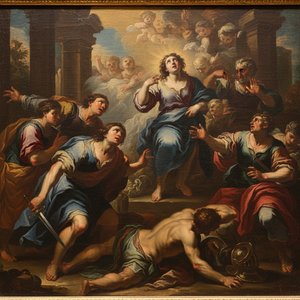
San Luigi dei Francesi: A Baroque Jewel Embracing French Heritage
San Luigi dei Francesi stands as a testament to the grandeur of Baroque art and architecture in Rome, offering visitors an unparalleled glimpse into Italy’s artistic zenith. Located in the vibrant Trastevere neighborhood, this church isn't merely a place of worship; it’s a repository of masterpieces that continue to inspire awe and scholarly fascination. Its significance extends beyond its aesthetic beauty, intertwining with the history of Franco-Italian relations and cementing its position as a cornerstone of Roman cultural heritage.- A Canvas for Caravaggio's Genius: The church’s fame rests primarily on its unparalleled collection of paintings by Michelangelo Merisi da Caravaggio – arguably the most influential artist of his era. Among these treasures is “The Calling of St. Matthew,” a monumental depiction capturing the moment Jesus summons Matthew, Simon Peter, Andrew and John to join him. Its masterful use of chiaroscuro—the dramatic interplay between light and dark—creates an emotionally charged scene that remains remarkably vivid centuries later.
- Beyond Caravaggio: While Caravaggio dominates the artistic narrative, San Luigi dei Francesi boasts other remarkable artworks. Domenichino’s “The Martyrdom of Saint Matthew” portrays a poignant depiction of St. Matthew's crucifixion, demonstrating Domenichino’s skill in conveying emotion and capturing the spiritual essence of biblical narratives. Guido Reni’s contributions further enrich the church’s artistic panorama with serene compositions reflecting humanist ideals.
Architecturally speaking, San Luigi dei Francesi exemplifies Baroque elegance. Constructed in 1607 by Cardinal Ludovico Velázquez Torcucci, it showcases a façade adorned with sculptures and intricate ornamentation—a deliberate statement of papal authority and devotion. The interior space is bathed in diffused light, creating an atmosphere conducive to contemplation and enhancing the impact of its artworks.
- Historical Context: Established during the Counter-Reformation, San Luigi dei Francesi served as a vital symbol of French influence in Rome. Commissioned by Louis XIV’s ambassador, Jean Camus, it represents France's commitment to Catholicism and artistic patronage—a legacy that continues to resonate today.
- Notable Exhibitions: Throughout its history, San Luigi dei Francesi has hosted numerous exhibitions showcasing Baroque art from across Europe. These events have drawn scholars and enthusiasts alike, furthering the church’s role as a center for artistic research and appreciation.
What distinguishes San Luigi dei Francesi is not simply its impressive collection but also its ability to transport visitors back in time—to experience the fervor of Baroque Italy. Standing within its walls allows one to contemplate the profound artistry and spiritual conviction that shaped an era, solidifying its place as a must-see destination for anyone interested in art history or Roman culture.
- Unique Appeal: Its connection to French royal patronage underscores its distinctive character. Furthermore, the church’s artworks—particularly Caravaggio's dramatic compositions—offer unparalleled insight into Baroque artistic techniques and humanist sensibilities.