The Historical Context: Counter-Reformation & the Birth of Baroque
 Wikipedia: Counter-Reformation
The Counter-Reformation (Latin: Contrareformatio), also sometimes called the Catholic Revival, was the period of Catholic resurgence that was initiated in response to, and as an alternative to or from similar insights as, the Protestant Reformations ...
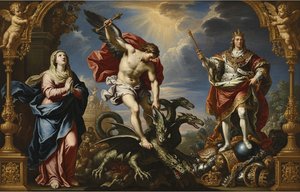
The early 17th century was a period of profound upheaval, particularly within Europe’s religious and political landscapes. The Protestant Reformation had fractured the unity of Christendom, prompting the Catholic Church to embark on a sweeping response known as the Counter-Reformation. This wasn't merely a defensive maneuver; it was a concerted effort to reaffirm Catholic doctrine, revitalize spiritual fervor, and reclaim lost ground. Art became an indispensable weapon in this ideological battle. Where Renaissance art often celebrated human reason and classical ideals, Baroque painting embraced drama, emotion, and grandeur – qualities designed to inspire awe and reinforce faith. The Church commissioned works that were explicitly didactic, intended to move the viewer emotionally and intellectually towards religious conviction. This demand for powerful imagery laid the foundation for a new artistic style, one characterized by dynamic compositions, intense colors, and a heightened sense of realism.
The rise of absolutist monarchies also played a crucial role. Rulers sought art that reflected their power and prestige, commissioning lavish paintings and sculptures to adorn palaces and public spaces. This patronage further fueled the Baroque aesthetic, encouraging artists to create works of immense scale and opulence. The exploration of new worlds brought exotic motifs and perspectives into European artistic consciousness, subtly influencing the style’s decorative elements and broadening its thematic scope.
A Symphony of Emotion: Defining Characteristics of Baroque Painting
 Wikipedia: Baroque
The Baroque (UK: bə-ROK, US: bə-ROHK, French: [baʁɔk]) is a Western style of architecture, music, dance, painting, sculpture, poetry, and other arts that flourished from the early 17th century until the 1750s. It followed Renaissance art and Manner...
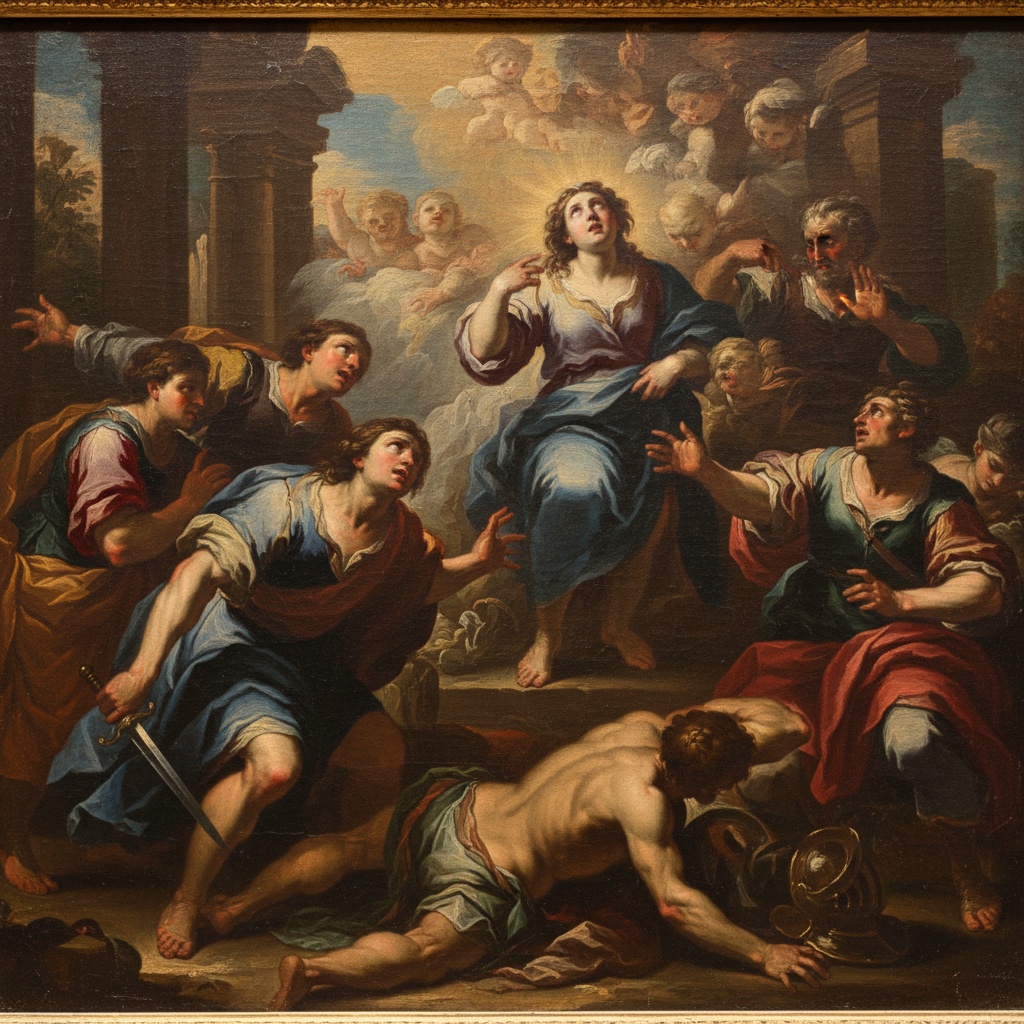
Baroque painting is immediately recognizable for its theatricality – a sense that one is witnessing not merely an image, but a dramatic event unfolding before their eyes. Artists masterfully employed chiaroscuro, the stark contrast between light and dark, to create depth, highlight key figures, and evoke emotional intensity. This technique wasn’t simply about representing shadows; it was about sculpting with light, guiding the viewer's eye and emphasizing the spiritual or narrative core of the composition. Movement is another defining characteristic. Figures are often depicted in dynamic poses, caught mid-action, creating a sense of energy and vitality. Compositions are rarely static; they swirl and surge, drawing the viewer into the scene.
Beyond technique, Baroque painting is distinguished by its emotional depth. Artists sought to portray not just physical likenesses but also the inner states of their subjects – joy, sorrow, ecstasy, despair. This emphasis on emotion was directly linked to the Counter-Reformation’s desire to connect with believers on a visceral level. Ornamentation and rich color palettes were also hallmarks of the style, reflecting the opulence of the era and the grandeur of both religious institutions and royal courts.
Masters of Light & Shadow: Key Artists and Their Iconic Works
Few artists embody the spirit of Baroque painting as powerfully as Caravaggio. His revolutionary use of tenebrism – an extreme form of chiaroscuro – created intensely dramatic scenes, often depicting religious subjects with a raw, unflinching realism. Works like “The Calling of Saint Matthew” and “David and Goliath” are not merely paintings; they are visceral experiences, forcing the viewer to confront the humanity—and brutality—of biblical narratives. Peter Paul Rubens, another towering figure, brought a different sensibility to the Baroque aesthetic. His paintings are characterized by their dynamic compositions, vibrant colors, and sensuous depictions of the human form. “Venus and Adonis” exemplifies his mastery of movement and emotional expression.
Francisco de Zurbarán, working in Spain, focused on religious themes with a profound sense of austerity and spiritual intensity. His paintings, such as “The Holy Family,” are characterized by their stark simplicity and powerful use of light and shadow. Artists like Jacob van Oost in Bruges blended Caravaggio’s influence with local traditions, creating altarpieces and portraits that captured the piety and bourgeois sensibilities of his time. And Andrea Pozzo, a master of illusionistic fresco painting, transformed ceilings into breathtaking vistas, blurring the boundaries between art and architecture.
Chiaroscuro & Dramatic Composition: Techniques That Defined a Movement
In art, chiaroscuro (English: kee-AR-ə-SKOOR-oh, -SKURE-, Italian: [ˌkjaroˈskuːro]; lit. 'light-dark') is the use of strong contrasts between light and dark, usually bold contrasts affecting a whole composition. It is also a technical term used by ...
The technique of chiaroscuro wasn’t merely a stylistic choice; it was a fundamental tool for conveying meaning. By manipulating light and shadow, artists could create a sense of depth, highlight key figures, and draw the viewer's eye to specific elements within the composition. This technique also served to heighten emotional intensity, creating a sense of drama and mystery. Dramatic composition played an equally important role. Artists abandoned the balanced, symmetrical arrangements of the Renaissance in favor of dynamic compositions that swirled and surged, drawing the viewer into the scene.
The use of foreshortening – depicting figures at oblique angles to create a sense of depth and perspective – was also common. This technique added to the dynamism of the composition and further engaged the viewer’s eye. Artists often employed diagonal lines and asymmetrical arrangements to create a sense of movement and instability, reflecting the turbulent emotions they sought to convey. The careful study of anatomy and drapery allowed artists to depict figures with remarkable realism, enhancing the emotional impact of their work.
Baroque Beyond Italy: Regional Variations and Lasting Influence
While Italy served as the birthplace of Baroque painting, the style quickly spread throughout Europe, adapting to local traditions and sensibilities. In Spain, Baroque art took on a particularly austere and religious character, reflecting the country’s devout Catholicism. Flemish Baroque, exemplified by Rubens, was characterized by its vibrant colors, dynamic compositions, and sensuous depictions of the human form. Dutch Golden Age painting, while not strictly Baroque, shared many of the same characteristics – a focus on realism, dramatic lighting, and emotional intensity.
The influence of Baroque painting extended far beyond the 17th century. Its emphasis on emotion, drama, and grandeur continued to inspire artists for generations. The techniques developed during the Baroque period – chiaroscuro, dynamic composition, foreshortening – remain fundamental tools in the painter’s arsenal. Even today, we see echoes of Baroque art in film, photography, and other visual media.
Experiencing the Baroque Today: Museums and Collections to Explore
Fortunately, experiencing the majesty of Baroque painting firsthand is readily accessible through numerous museums and collections worldwide. The Doria Pamphilj Gallery in Rome houses an extraordinary collection of works by Velázquez, Caravaggio, and other masters. The Chiesa del Gesù in Genoa offers a stunning example of Baroque architecture and fresco painting, including works by Rubens and Carlone brothers. The Chiesa di Santa Maria in Vallicella, also in Rome, showcases masterpieces by Rubens and Cortona.
For those seeking a broader overview of the movement, institutions like the Prado Museum in Madrid, the Louvre Museum in Paris, and the National Gallery in London offer extensive collections of Baroque paintings. At OriginalUniqueArt.com, you can explore high-quality reproductions of iconic Baroque works, bringing the drama and beauty of this remarkable period into your own home. Whether you’re a seasoned art collector or simply beginning to appreciate the wonders of painting, the world of Baroque art offers endless opportunities for discovery and inspiration.