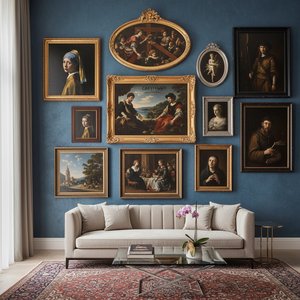
The Baroque Embrace of Emotion: A Shift from Renaissance Rationality
Baroque painting is the painting associated with the Baroque cultural movement. The movement is often identified with Absolutism, the Counter Reformation and Catholic Revival, but the existence of important Baroque art and architecture in non-absolut...
For centuries, the art world had been governed by a pursuit of idealized beauty—a harmony and balance rooted in classical antiquity. The Renaissance celebrated reason, proportion, and clarity. Then came the Baroque, not as a rejection of these principles entirely, but as an exuberant expansion upon them. Emerging around 1600, this new aesthetic wasn’t merely about *what* was depicted, but *how* it was felt. It was a deliberate turn towards emotion, drama, and spectacle—a visceral response to the religious and political upheavals of the era. The Protestant Reformation had shaken the foundations of Europe, prompting the Catholic Church to seek new ways to inspire devotion and reaffirm its authority. Art became a powerful tool in this endeavor, but not through subtle suggestion; it demanded attention, evoking awe, piety, and even a sense of divine terror.
This shift manifested itself in a rejection of the calm, symmetrical compositions favored by Renaissance masters like Raphael. Instead, Baroque artists embraced movement, dynamic diagonals, and theatrical lighting. The human figure was no longer simply an object of study but a vessel for intense feeling—joy, sorrow, ecstasy, pain. It’s as if the canvas itself became a stage, populated with actors caught in moments of profound psychological or spiritual crisis. This wasn't about intellectual contemplation; it was about immediate emotional impact.
Chiaroscuro & Tenebrism: The Language of Light and Shadow in Dramatic Painting
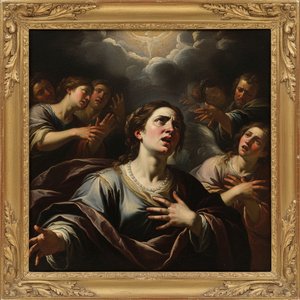
 Christ After the Flagellation Contemplated by the Christian Soul
Experience Velázquez's Baroque masterpiece: "Christ After the Flagellation." Dramatic chiaroscuro, intense emotion & masterful realism in this 1628 oil painting. Own a hand-painted reproduction today!
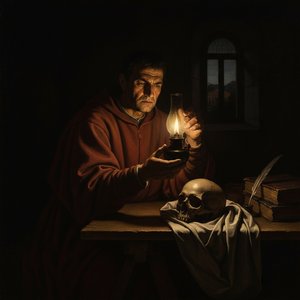
Central to this dramatic effect was the masterful manipulation of light and shadow, techniques collectively known as chiaroscuro. While employed by artists before, Baroque painters elevated it to an art form. The Italian artist Caravaggio is perhaps most synonymous with this approach, pushing it to its extreme in a style called tenebrism—a pronounced contrast between dark backgrounds and intensely illuminated figures. This wasn’t merely about realism; it was about psychological depth. The darkness didn't simply recede; it *pressed* upon the scene, creating a sense of claustrophobia and heightened tension.
Consider Caravaggio’s “The Calling of Saint Matthew.” The light doesn’t fall evenly across the tavern scene but rather bursts forth like a divine intervention, spotlighting Matthew and his companions. This dramatic illumination not only draws our eye to the central figures but also symbolizes the sudden intrusion of grace into everyday life. The shadows conceal as much as they reveal, hinting at the mystery and uncertainty that lie beneath the surface. This technique wasn’t limited to religious subjects; it was used to imbue even mundane scenes with a sense of gravitas and emotional weight.
Iconic Masters of Drama: Caravaggio, Velázquez, and Rembrandt's Emotional Landscapes
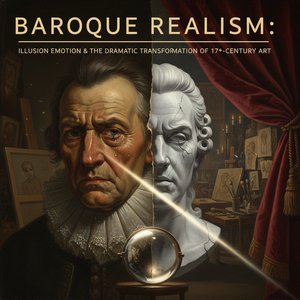 Baroque Realism: Illusion, Emotion & the Dramatic Transformation of 17th-Century Art
Explore the dramatic world of Baroque Realism! Discover iconic artists like Caravaggio & Rubens, their techniques, and the movement's lasting impact on art history. Expert insights for collectors & enthusiasts.
While Caravaggio laid the groundwork for Baroque drama, other masters further refined and expanded upon his innovations. Diego Velázquez, the court painter to Philip IV of Spain, brought a remarkable psychological realism to his portraits and historical scenes. His “Christ After the Flagellation Contemplated by the Christian Soul” is a testament to this skill. The painting doesn’t depict a triumphant Christ but rather a vulnerable figure consumed by suffering. The intense chiaroscuro and masterful brushwork create a sense of profound empathy, inviting viewers to contemplate the human cost of sacrifice.
Rembrandt van Rijn, working in 17th-century Holland, took a different approach, focusing on interiority and psychological nuance. His self-portraits are not simply representations of his physical appearance but rather explorations of aging, mortality, and the complexities of the human spirit. He used light not to create dramatic contrast but to reveal subtle emotions—a flicker of sadness in the eyes, a hint of weariness around the mouth. The Dutch master’s ability to convey such depth of feeling through seemingly simple means is what sets him apart.
Beyond Religious Scenes: Exploring Baroque Storytelling and Allegory
The Baroque wasn't solely confined to religious themes. Artists also excelled at historical painting, mythology, and genre scenes—all imbued with the same sense of drama and emotional intensity. Flemish painters like Livio Mehus (Mayhews Nor) demonstrated a flair for dynamic compositions and biblical narratives, particularly “The Flight to Egypt,” showcasing their mastery of movement and vivid storytelling. These works often served as allegories—complex symbolic representations that required viewers to possess a certain level of cultural literacy to decipher.
Allegorical paintings were not meant to be read literally but rather interpreted on multiple levels. They could convey moral lessons, political messages, or philosophical ideas. This added another layer of complexity to Baroque art, rewarding careful observation and intellectual engagement. The use of symbolism was often elaborate and nuanced, requiring a deep understanding of classical mythology, religious iconography, and contemporary events.
The Lasting Legacy of Baroque Intensity on Subsequent Art Movements
The influence of the Baroque extended far beyond the 17th century. Its emphasis on emotion, drama, and spectacle paved the way for Romanticism in the 19th century, which further embraced subjective experience and individual expression. The techniques developed by Baroque painters—chiaroscuro, tenebrism, dynamic composition—continue to be studied and admired today. Even modern artists have drawn inspiration from the Baroque’s bold use of color, light, and shadow.
The legacy of masters like Caravaggio, Velázquez, and Rembrandt lies not only in their technical brilliance but also in their ability to connect with viewers on a deeply emotional level. Their paintings are not simply objects to be admired; they are windows into the human soul—a testament to the enduring power of art to evoke empathy, inspire contemplation, and challenge our perceptions of the world.
Collecting the Drama: Bringing Baroque Emotion into Your Home with OriginalUniqueArt
The emotional resonance of Baroque painting isn’t confined to museums. At OriginalUniqueArt, we believe that everyone should have access to these masterpieces, regardless of their budget or location. We specialize in handmade oil paintings and museum-quality prints, allowing you to bring the drama and intensity of the Baroque into your own home. Our skilled artists meticulously recreate iconic works, capturing every brushstroke and nuance of color.
Whether you’re drawn to the dramatic chiaroscuro of Caravaggio, the psychological realism of Velázquez, or the introspective portraits of Rembrandt, we offer a wide selection of paintings to suit your taste. We also provide custom reproduction services, allowing you to transform your favorite photos into artworks in the style of a chosen master. Explore our collection today and discover the power of Baroque art to elevate your space and inspire your soul. Visit OriginalUniqueArt.com for free art consultation, appraisal, and to begin your journey into the world of dramatic painting.