The Dawn of Luminosity: Early Representations of Light
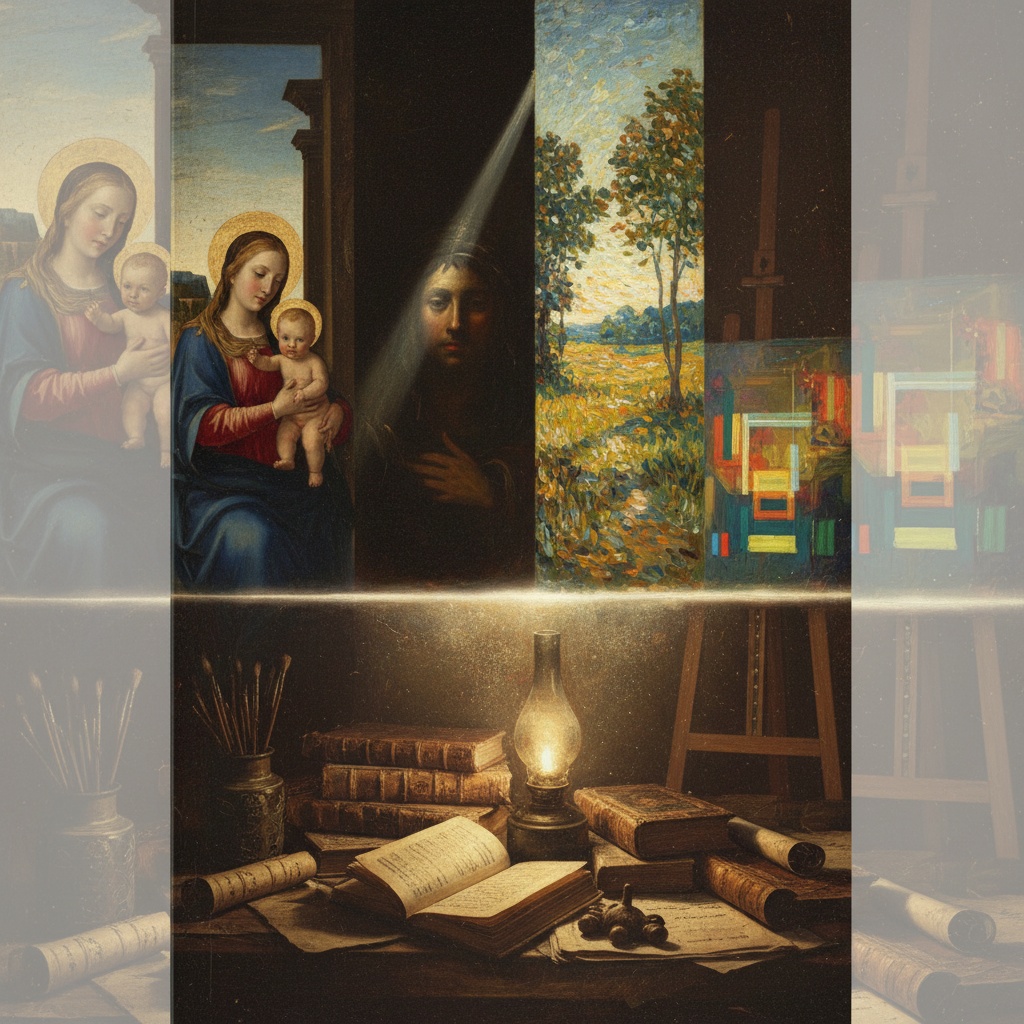
Long before the advent of artificial illumination, light held a profound significance for humankind – a source of life, knowledge, and spiritual awakening. It’s unsurprising, then, that its representation became central to artistic expression from the earliest days of painting. While not immediately codified as a distinct technique, early masters intuitively understood the power of depicting light to create form and atmosphere. Consider the subtle gradations in Byzantine mosaics, where gold tesserae weren't merely decorative but served to evoke divine radiance. In the frescoes of Giotto, we see nascent attempts at modeling figures through chiaroscuro – a gentle play of light and shadow that hinted at three-dimensionality. These were not isolated instances; they represented a growing desire to move beyond symbolic representation towards a more naturalistic portrayal of the world. The early Renaissance witnessed a burgeoning interest in scientific observation, particularly optics, which directly influenced artists’ understanding of how light interacts with surfaces. Leonardo da Vinci, perhaps more than any other artist of his time, meticulously studied light and its effects, employing techniques like sfumato to create an almost ethereal quality in works such as the *Adoration of the Magi*, where figures emerge from a soft, hazy glow.
Chiaroscuro: Modeling Form with Dramatic Contrast
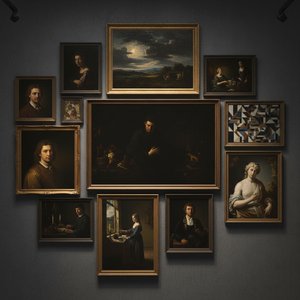
The term “chiaroscuro,” derived from the Italian words for ‘light’ and ‘dark,’ formally defines the use of strong contrasts between light and shadow to achieve a sense of volume in three-dimensional objects. However, it's more than just a technical skill; it’s a language – one that allows artists to sculpt with light itself. While present in earlier works, chiaroscuro truly blossomed during the High Renaissance and Baroque periods. Artists began to exploit the dramatic potential of contrasting illumination, using it not only to define form but also to create emotional intensity. The work of Correggio exemplifies this shift; his ceiling frescoes are imbued with a dynamic interplay of light and shadow that draws the viewer’s eye and creates a sense of movement. But it was Caravaggio who would revolutionize the technique, pushing chiaroscuro to its most extreme limits.
Tenebrism & Baroque Drama: A Spotlight on Shadow
Tenebrism, from Italian tenebroso ('dark, gloomy, mysterious'), also occasionally called dramatic illumination, is a style of painting using especially pronounced chiaroscuro, where there are violent contrasts of light and dark, and where darkness be...
Caravaggio didn't simply employ chiaroscuro; he invented tenebrism – from the Italian *tenebroso*, meaning ‘dark and gloomy.’ Unlike traditional chiaroscuro, which seeks a balanced interplay of light and shadow, tenebrism is characterized by violent contrasts, where darkness dominates the composition. Figures appear to emerge from deep shadows, illuminated by a harsh, singular light source—often unseen within the painting itself. This dramatic illumination wasn’t merely aesthetic; it was deeply symbolic. Caravaggio used tenebrism to heighten emotional tension and create a sense of psychological realism in works like *The Martyrdom of Saint Matthew*. The darkness became a metaphor for the unknown, the spiritual struggle, and the fragility of human existence. His influence spread rapidly throughout Europe, inspiring a generation of artists – including Artemisia Gentileschi, who masterfully adopted tenebrism to depict powerful female figures—to explore the expressive potential of shadow.
Luminism in America: Capturing the Ephemeral Glow
Luminism is a style of American landscape painting from the 1850s to 1870s, characterized by effects of light in a landscape, through the use of aerial perspective and the concealing of visible brushstrokes. Luminist landscapes emphasize tranquility,...
Across the Atlantic, a distinctly American style emerged in the mid-19th century known as Luminism. While sharing an appreciation for light with its European predecessors, Luminism differed significantly in its subject matter and aesthetic goals. Rather than dramatic religious or mythological scenes, Luminist painters focused on landscapes – particularly calm waters, expansive skies, and rural settings. Artists like Fitz Henry Lane, Martin Johnson Heade, and John F. Kensett sought to capture the ephemeral quality of light—the subtle nuances of atmosphere, the soft glow of twilight, and the tranquil beauty of nature. Their paintings are characterized by a remarkable stillness and clarity, achieved through meticulous brushwork that conceals visible strokes and emphasizes aerial perspective. Luminism wasn’t about grand narratives or emotional intensity; it was about evoking a sense of peace, contemplation, and reverence for the natural world. The works often depict scenes devoid of human presence, allowing viewers to immerse themselves in the beauty of the landscape itself.
Beyond Realism: The Symbolism of Light and Darkness
Throughout art history, light has consistently served as a powerful symbol—representing knowledge, truth, divinity, hope, and enlightenment. Conversely, darkness often embodies ignorance, evil, despair, and death. The interplay between these opposing forces is a recurring theme in countless masterpieces. Consider Rembrandt’s portraits, where subtle gradations of light reveal not only the physical likeness of his subjects but also their inner psychological states. The shadows that envelop their faces hint at hidden depths, anxieties, and vulnerabilities. Similarly, in Baroque paintings, light frequently illuminates moments of religious revelation or spiritual transformation. The use of gold leaf in medieval art symbolized divine radiance, while the darkness surrounding sacred figures emphasized their otherworldly nature. Even in Luminist landscapes, the soft glow of twilight can be interpreted as a metaphor for transcendence—a fleeting moment of beauty that connects us to something larger than ourselves.
Light’s Enduring Legacy: Influence on Modern Masters
The legacy of chiaroscuro, tenebrism, and luminism extends far beyond the historical periods in which they flourished. Modern artists continue to draw inspiration from these techniques, adapting them to their own unique visions. From the dramatic lighting of film noir—heavily influenced by Caravaggio’s use of shadow—to the atmospheric paintings of Edward Hopper, the principles of light and darkness remain central to visual storytelling. Artists like Greg Dykstra employ contemporary realism with a strong nod to the Dutch Masters, utilizing chiaroscuro to create hyperrealistic still lifes that evoke a sense of nostalgia and intimacy. The enduring appeal of these techniques lies in their ability to connect us to fundamental human emotions—our fascination with mystery, our search for meaning, and our appreciation for beauty. At OriginalUniqueArt, we celebrate this rich artistic heritage by offering meticulously hand-painted reproductions of masterpieces from across the ages, allowing you to bring the power of light into your own home. Explore our collection today and discover the transformative potential of art—or commission a custom painting based on your favorite style or photograph.