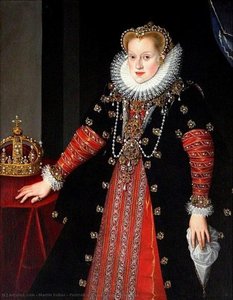


A Legacy of the Bavarian State Painting Collections
The Bavarian State Painting Collections, located in Munich, Germany, began its institutional history in 1799 as the Centralgemäldegaleriedirektion. This foundation established a framework for the preservation of European art that continues to define the city's cultural landscape. The collection's origins reach back to the 16th century, with significant holdings dating to the period of William IV (1508-1550).
The institution manages a vast repository of approximately 25,000 artworks. This inventory is not confined to physical galleries; a digital gateway provides access to an online collection of over 25,000 works spanning Bavaria and Europe. This breadth allows for a continuous study of artistic development across different eras and regions.
The scope of the holdings encompasses various movements and periods, from the Renaissance to contemporary expressions. By maintaining these diverse assets, the institution functions as a primary site for the study of European art history and the preservation of regional creative output.
Architectural Gems and Museum Structures
The architectural identity of the Bavarian State Painting Collections is defined by a progression from 19th-century classicism to contemporary design. The Alte Pinakothek, designed by Leo von Klenze in 1826 for King Ludwig I of Bavaria, remains a central pillar of the ensemble. This structure was built specifically to house the royal collections and opened to the public in 1836. While the building was damaged during the Second World War, it was rebuilt and reopened in the late 1950s.
The collection is distributed across several distinct environments. The Neue Pinakothek was relocated in 1981 to a postmodernist centre designed by the architect Alexander Freiherr von Branca. This site provides a different spatial logic for the 19th-century works it contains. In contrast, the Pinakothek der Moderne is a construction of glass and steel, reflecting a modern aesthetic for its contemporary holdings.
The Alte Pinakothek Collection
The Alte Pinakothek serves as the heartbeat of the Bavarian State Painting Collections. Its holdings reflect a deep historical continuity, spanning from the Proto and Early Italian Renaissance periods, roughly between 1400 and 1490, to the later developments of European art. The collection includes significant works by Stefan Lochner, Anthony van Dyck, and Jacob Jordaens. These pieces represent the shifting technical and stylistic priorities of their respective eras.
The physical presence of the collection has undergone significant change. Following damage sustained during the Second World War, the building was rebuilt and reopened in the late 1950s. This reconstruction ensured the preservation of the works within a structure designed to house them. The current arrangement allows for a direct study of the evolution of painting through these various historical stages.
The Neue Pinakothek and Sammlung Schack
The Neue Pinakothek has been under the ownership of the Bavarian state since 1915. The collection housed here includes approximately 400 paintings and 50 pieces by Friedrich Overbeck. The gallery focuses on the shifts in artistic expression that defined the 19th century, providing a space for works that reflect the era's rapid social and stylistic transformations.
The Sammlung Schack offers a specialized exploration of German Romantic painting. This collection was largely assembled by Adolf Friedrich Graf von Schack, who acquired around 200 paintings by contemporary artists and approximately 80 copies of Old Masters before his death in 1894. The selection was curated to emphasize a specific poetic spirit, acting as a counterpoint to the prevailing realism of the period.
The holdings within the Sammlung Schack feature significant works by several key figures of the movement, including:
- Moritz von Schwind
- Anselm Feuerbach
- Arnold Böcklin
Ethical Stewardship and Provenance Research
The Bavarian State Painting Collections maintains a rigorous commitment to provenance research. Given the complex history of the institution and its holdings, the museum actively investigates the origins of its various collections. This work is essential to the museum's responsibility as a custodian of cultural memory. Transparency remains a central priority in these efforts, particularly regarding the restitution of works and the investigation of historical ownership.
Since 2023, the museum has provided online access to provenance information for Classical Modern art created before 1945. This digital availability allows for greater scrutiny of acquisitions made from the art market or private collections from 1933 onwards. Such measures are part of a broader institutional effort to address the history of the collections, including the 211 works found in 1945 by the Allies in the Haus der Kunst and subsequently registered in the Central Collecting Point.
The museum continues to manage a diverse array of holdings, including approximately 1,000 deposits of heterogeneous origin. These include works that were secured in the depot of the Bayerischen Staatsgemäldesammlungen at Arcisstraße 10. Ongoing research ensures that the institution meets its moral obligations regarding the identification and return of art subject to historical injustice.
Masterpieces and Notable Artworks
The collection contains works that define specific eras of European art. In the Alte Pinakothek, the meticulous detail and unwavering faith of Albrecht Dürer are preserved. Nearby, the portraits of Rembrandt van Rijn utilize a dramatic interplay of light and shadow to command attention. These works represent the technical precision and emotional depth central to the institution's holdings.
The landscapes of Caspar David Friedrich evoke a sense of deep longing and introspection, reflecting the Romantic movement's focus on the natural world. This introspective quality contrasts with the Post-Impressionist works found within the galleries. Among these is Plain near Auvers, painted in 1890 by Vincent Willem Van Gogh, which remains a significant part of the Munich holdings.
- Miniature of Anna Maria Vasa and Władysław Vasa, about 1598 - Marcin Kober
- Miniature of Sigismund Vasa and Anna Habsburg, about 1598 - Marcin Kober


