Giovanni Segantini: A Life Dedicated to the Alps
- Born: January 15, 1858, Arco, Trentino (then Austria-Hungary)
- Died: August 10, 1899, Schiavi di Abbemaggiore, near Sondrio, Italy
Giovanni Segantini was an Italian painter renowned for his large-scale pastoral landscapes of the Alps. His life story is one marked by hardship and eventual artistic triumph, culminating in a unique style that blended Divisionism with Symbolist imagery.
Early Life and Struggles
- Difficult Beginnings: Segantini's early years were characterized by poverty. His father was a traveling tradesman, leaving his mother to raise him largely alone.
- Orphanhood and Reformatory: Following his mother’s death, he ran away from home and ended up in a Milanese reformatory. It was here that a chaplain recognized his artistic talent and encouraged its development.
- Self-Education: Despite limited formal education, Segantini taught himself to read and write later in life, demonstrating remarkable determination.
- Early Career: He initially worked as a photographer's assistant before pursuing painting seriously.
Artistic Development and Influences
- Training at the Brera Academy: Segantini attended classes at the prestigious Brera Academy in Milan, where he encountered influential figures of the Scapigliatura movement. This group championed a rejection of artistic conventions and an embrace of life's raw realities.
- Key Influences: His work was significantly influenced by Anton Mauve and Jean-François Millet, introduced to him through Vittorio Grubicy de Dragon, who became his advisor and dealer. These artists emphasized realism and depictions of rural life.
- Divisionism: Segantini adopted a Divisionist painting approach, which involved applying small dots or strokes of pure color side by side on the canvas. This technique aimed to create optical mixing in the viewer's eye, producing vibrant and luminous effects.
- Symbolism: Alongside Divisionism, Segantini incorporated Symbolist elements into his work, imbuing his landscapes with deeper meanings and allegorical representations of life, death, and spirituality.
Major Works and Themes
- Early Success: His painting "The Chancel of Sant'Antonio" gained recognition for its powerful quality and was acquired by Milan’s Società per le Belle Arti.
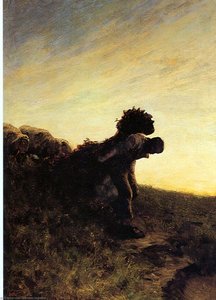
- Alpine Landscapes: Segantini is best known for his depictions of the Alps, capturing their grandeur and serenity. He sought to portray not just the physical beauty but also the spiritual essence of these landscapes.
- Notable Paintings: Some of his most celebrated works include:
- The Two Mothers (Le due Madri) - A poignant depiction of motherhood and rural life.
- Life (La Vita) – Captures the essence of Alpine beauty and human connection.
- Donna alla fonte (also known as Alpenlandschaft mit Frau am Brunnen) – A serene scene of a woman by a fountain in the Alps.
- Ragazza che fa la calza - A beautiful Symbolist painting featuring a woman and sheep.
- Il castigo delle lussuriose – A haunting depiction exploring themes of morality and nature.
- Later Years: He spent his final years in Switzerland, where he created some of his most significant works, including "Capriolo morto" (Dead Roe Deer), a deeply moving portrayal of mortality.
Legacy and Historical Significance
- Unique Artistic Style: Segantini’s fusion of Divisionism and Symbolism resulted in a distinctive style that set him apart from his contemporaries.
- Capturing the Spirit of the Alps: He is remembered as one of the most important painters of Alpine landscapes, successfully conveying their beauty and spiritual significance.
- Influence on Later Artists: His innovative use of color and light influenced subsequent generations of artists.
- Continued Appreciation: Today, Segantini’s works are exhibited in major museums worldwide, and his legacy as a master painter continues to inspire art lovers.