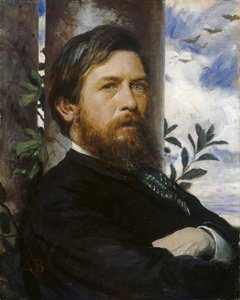
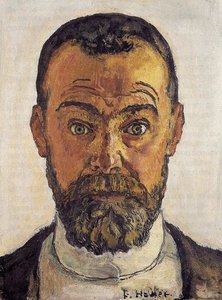
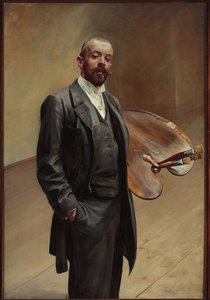
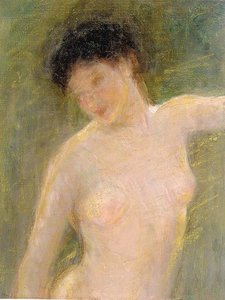
Symbolist: original voices

47 Famous Symbolist Painters Who Shaped the Movement

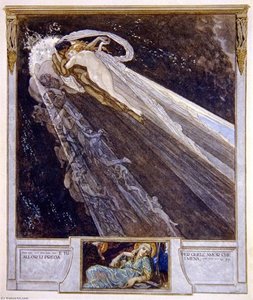
Gustave Moreau (1826–1898) is the most famous Symbolist painter, whose singular vision gave us Salome Dancing before Herod and Thracian Girl Carrying the Head of Orpheus. Next stand Odilon Redon, Arnold Böcklin, Balthus and Ferdinand Hodler. These 47 painters, from George Frederic Watts (born 1817) to Konstantin Alexeyevich Vasilyev (born 1942), came from 20 countries.

Our selection. Artists whose works our catalogue attaches to Symbolist, in the order of our fame ranking. Artists born after 1955 with no Wikidata identifier stay out until verified. The Wikipedia figure counts our 32 languages with an article on the artist.

  1. Salome Dancing before Herod by Gustave Moreau1Gustave Moreau
  2. The cyclops by Odilon Redon2Odilon Redon
  3. Nymph and Satyr by Arnold Böcklin3Arnold Böcklin

In brief

Symbolist in brief

  • 47Artists
  • 1817–1942Years of birth
  • 20Countries of birth
  • 2Women
  • 9,934Works in our catalogue
Cities with most births
Paris (2), Saint Petersburg (2), Hamina (2), Bordeaux (1)
Museums holding the most key works
Tretyakov Gallery (4), Musée d'Orsay (3), Kröller-Müller Museum (2), Philadelphia Museum of Art (2)

One artist at a time

47 Symbolist Painters and their signature works

1of 47

Gustave Moreau

French Born in Paris Symbolism Wikipedia in 28/32 languages

Gustave Moreau

He did not merely observe the works of the masters; he lived among them, spending his time making hundreds of copies and studies of Old Master paintings. His time in Italy allowed him to synthesize these diverse influences, blending the classical precision of the Renaissance with a more modern, expressive use of color. By the 1890s, Moreau had become a central figure in the Symbolist movement.

Where to see To experience his art in the most intimate way, one can visit the Musée Gustave Moreau in Paris, France.

Signature works · The 100 signature works

2of 47

Odilon Redon

Born in Bordeaux Wikipedia in 28/32 languages

Odilon Redon

To achieve greater precision, he often applied fabricated black chalk to outline specific compositional elements over broad, soft passages of charcoal. These works were often described as a synthesis of nightmares and dreams, where the boundaries between the physical and the imagined became blurred. The ripples of Redon’s vision reached far beyond the quiet rooms of the Symbolist circle, touching the very foundations of the coming century.

Where to see In Paris, the Musée d'Orsay holds several of his works, offering a glimpse into the evolution of his vision.

Signature works · The 100 signature works

4of 47

Balthus

French-Polish Born in Paris Classical, Figurative Wikipedia in 20/32 languages

Balthus

Born in Paris on February 29, 1908, into a family steeped in intellectual and artistic circles, his life was marked by an early immersion in culture and a deliberate rejection of prevailing artistic trends. His influence can be seen in the work of numerous contemporary artists, including Jan Saudek, Will Barnet, Duane Michals, and John Currin, who share his interest in figurative painting, psychological realism, and the exploration of complex emotional states.

Signature works · The 100 signature works

5of 47

Ferdinand Hodler

Swiss Born in Bern Symbolism, Parallelism, Realism Wikipedia in 26/32 languages

Ferdinand Hodler

Born in Bern, Switzerland, in 1853, Ferdinand Hodler’s early years were defined by a quiet, persistent grief. His move to Geneva in 1871 marked a departure from the commercial demands of his youth. In works such as The Night, completed in 1890, he explored themes of repose and mortality through recumbent figures, a subject that challenged the prevailing tastes of the time.

Signature works · The 100 signature works

6of 47

Pierre Puvis de Chavannes

French Born in Lyon Symbolism Wikipedia in 24/32 languages

Pierre Puvis de Chavannes

Pierre Cécile Puvis de Chavannes, a name often simply rendered as Puvis de Chavannes, occupies a unique and pivotal position in 19th-century French art. His influence on subsequent artists, particularly those aligned with Symbolism and Art Nouveau, is undeniable, and his collaborative spirit extended to working alongside medallists, offering designs and insightful suggestions. The monumental murals at the Panthéon in Paris, illustrating the life of St.

Signature works · The 100 signature works

8of 47

Nicholas Roerich

Russian Born in Saint Petersburg Symbolism, Modernism Wikipedia in 30/32 languages

Nicholas Roerich

His work often employs an illustrative quality, utilizing flat planes of color rather than traditional realistic modeling. This approach creates a graphic aesthetic where lines function primarily to define outlines. In 1935, he spearheaded the creation of the Roerich Pact, an international treaty designed to safeguard cultural objects.

Where to see In the United States, the Nicholas Roerich Museum in New York City remains a primary destination.

Signature works · The 100 signature works

9of 47

Franz von Stuck

German Born in Tettenweis Symbolism, Art Nouveau Wikipedia in 22/32 languages

Franz von Stuck

Mythology served as a constant source of inspiration, drawing from Greek, Roman, and biblical narratives which he reimagined with a distinctly personal flair.

Signature works · The 100 signature works

10of 47

Mikalojus Konstantinas Čiurlionis

Lithuanian Born in Varėna Symbolism Wikipedia in 25/32 languages

Mikalojus Konstantinas Čiurlionis

mikalojus konstantinas ciurlionis, a renowned lithuanian artist, was born in 1875. his life's work would later be characterized by an enchanting blend of mysticism, symbolism, and the beauty of nature. ciurlionis' early education took place in the town of vilno, where his fascination with art and music first began to take shape.

Signature works · The 100 signature works

12of 47

Vilhelm Hammershøi

Danish Born in Copenhagen Symbolism art Wikipedia in 22/32 languages

Vilhelm Hammershøi

Though he passed away relatively young in 1916, Vilhelm Hammershøi’s influence proved remarkably enduring.

Signature works · The 100 signature works

13of 47

George Frederic Watts

British Born in London Symbolist movement Wikipedia in 19/32 languages

George Frederic Watts

George Frederic Watts entered the world in Marylebone, London, on February 23, 1817. In 1835, he enrolled as a student at the Royal Academy Schools, seeking to refine the instincts that had been nurtured since his childhood. He was entrusted with a significant commission to create a fresco for the Houses of Parliament, a task that occupied his hands and mind between 1848 and 1853.

Where to see The influence of his vision lingered long after his passing, earning him the Order of Merit in 1902.

Signature works · The 100 signature works

14of 47

Hugo Simberg

Finnish Born in Hamina Symbolism Wikipedia in 20/32 languages

Hugo Simberg

hugo gerhard simberg, a renowned finnish symbolist painter and graphic artist, was born on june 24, 1873, in hamina, finland. his artistic journey began at the drawing school of the viipuri friends of art in 1891, where he honed his skills under the guidance of various instructors. simberg's work is characterized by its dreamlike quality, often incorporating elements of myths, fairy tales, and imagination. this unique approach has led to his recognition as one of the most important artists of finnish symbolism. his artistic language is a testament to the era's fascination with the unknown and the mystical.

Signature works · The 100 signature works

15of 47

Mikhail Nesterov

Russian Born in Ufa Symbolism, Religious art Wikipedia in 22/32 languages

Mikhail Nesterov

This purchase afforded him the opportunity to travel extensively throughout Europe—Austria, Germany, France, and Italy—broadening his horizons and exposing him to diverse artistic traditions. Mikhail Nesterov passed away in Moscow on October 18th, 1942, leaving behind a rich artistic legacy that continues to inspire awe and reflection.

Signature works · The 100 signature works

17of 47

Jan Toorop

Dutch Born in Purworejo Symbolism, Art Nouveau, Pointillism Wikipedia in 18/32 languages

Jan Toorop

Johannes Theodorus Toorop, known to the world as Jan Toorop, was an artist whose soul seemed to exist in the delicate space between continents. Born in 1858 in Purworejo, on the lush island of Java in the Dutch East Indies, his early years were steeped in the vibrant cultural textures of Indonesia. Stylistic Versatility: His mastery over diverse techniques, from the delicate dots of Pointillism to the bold strokes of Art Nouveau.

Signature works · The 100 signature works

18of 47

Félicien Rops

Belgian Born in Namur Symbolism, Decadence Wikipedia in 21/32 languages

Félicien Rops

Félicien Victor Joseph Rops, born in 1833 in the Belgian town of Namur, emerged as a pivotal figure bridging the gap between Realism, Symbolism, and the burgeoning world of modern graphic storytelling. His early work quickly gained recognition in student magazines like Le Crocodile and L'Uylenspiegel, establishing him as a gifted caricaturist with a keen eye for societal foibles. Despite deteriorating eyesight beginning in 1892, he continued working tirelessly, maintaining connections within the literary world until his death in 1898.

Signature works · The 100 signature works

19of 47

Giovanni Segantini

Italian Born in Arco Symbolism, Divisionism Wikipedia in 19/32 languages

Giovanni Segantini

Key Influences: His work was significantly influenced by Anton Mauve and Jean-François Millet, introduced to him through Vittorio Grubicy de Dragon, who became his advisor and dealer. Divisionism: Segantini adopted a Divisionist painting approach, which involved applying small dots or strokes of pure color side by side on the canvas.

Signature works · The 100 signature works

20of 47

Kuzma Petrov-Vodkin

Russian Born in Khvalynsk Post-Impressionism Wikipedia in 22/32 languages

Kuzma Petrov-Vodkin

Kuzma Sergeevich Petrov-Vodkin, a name resonating with the spirit of early 20th-century Russian art, was more than just a painter; he was a philosopher of form, a weaver of symbolism, and a chronicler of his nation’s turbulent soul. These early influences instilled in him a reverence for line, color, and narrative—qualities that would define his unique aesthetic throughout his career. Kuzma Petrov-Vodkin’s influence extends far beyond his own prolific output.

Signature works · The 100 signature works

21of 47

Julio Romero de Torres

Spanish Born in Córdoba Symbolism, Impressionism Wikipedia in 11/32 languages

Julio Romero de Torres

The intellectual climate of Córdoba also played a crucial role; he engaged with the vibrant discussions at the Royal Academy of Science, Arts and Literature, absorbing the philosophical currents that informed his work. Amor Místico y Amor Profano, perhaps his most iconic work, exemplifies this approach perfectly. He became a respected figure in the Spanish art world, eventually securing a professorship at the Real Academia de Bellas Artes de San Fernando in Madrid in 1916.

Signature works · The 100 signature works

22of 47

Fernand Khnopff

Belgian Born in Dendermonde Symbolism Wikipedia in 16/32 languages

Fernand Khnopff

Khnopff’s legacy lies in his ability to create art that is both intensely personal and universally resonant—a testament to the enduring power of Symbolism and the visionary genius of a Belgian master. His work remains a poignant reminder of the beauty and complexity of the human experience, rendered with an unparalleled blend of realism and ethereal dreaminess. His enigmatic style resonated deeply with artists in Vienna, notably Gustav Klimt, who exhibited several of Khnopff’s paintings at the Secession’s first exhibition in 1898.

Signature works · The 100 signature works

23of 47

Eugène Carrière

French Born in Gournay-sur-Marne French Symbolist Wikipedia in 18/32 languages

Eugène Carrière

Carrière moves away from the fleeting light of his contemporaries, opting instead for a subdued palette that prioritizes psychological depth over visual sensation. This approach seeks to strip away the external world, reaching for the spiritual resonances and internal states hidden beneath the surface of the subject. Specifically, traces of his singular style appear in the work of Pablo Picasso, particularly during the artist's Blue Period.

Signature works · The 100 signature works

24of 47

Stanisław Wyspiański

Polish Born in Kraków Polish Symbolism, Young Poland Wikipedia in 23/32 languages

Stanisław Wyspiański

Stanisław Wyspiański was not merely a painter; he was a polymath, a visionary whose creative spirit breathed life into the Young Poland movement. His work began to pulse with a new kind of energy, one that drew heavily from the vibrant folk motifs of the Polish countryside and the intricate, organic lines characteristic of the Secessionist style. Art Nouveau Innovation: His use of flowing, organic lines and expressive color palettes helped define the Polish iteration of the Art Nouveau movement.

Signature works · The 100 signature works

25of 47

Elihu Vedder

American Born in New York City Symbolism, Romanticism Wikipedia in 13/32 languages

Elihu Vedder

European Studies: He furthered his studies in Paris with François-Édouard Picot and later in Italy, where he was profoundly influenced by the Italian Renaissance and the Macchiaioli painters. Italian Influence: His time in Italy fostered a deep emotional connection with fellow painter Giovanni Costa, leading to travels before financial constraints forced his return to America. Pre-Raphaelites: His time in England exposed him to the Pre-Raphaelite Brotherhood, influencing his artistic style towards greater clarity and detail.

Signature works · The 100 signature works

26of 47

Magnus Enckell

Finnish Born in Hamina Symbolism Wikipedia in 13/32 languages

Magnus Enckell

Born in the coastal town of Hamina in 1870, Knut Magnus Enckell was destined to become a cornerstone of the Finnish Golden Age. He was more than just a painter; he was a cultural influencer who helped redefine the identity of Finnish art on an international stage.

Signature works · The 100 signature works

27of 47

Konstantin Somov

Born in Saint Petersburg Wikipedia in 17/32 languages

Konstantin Somov

This influence is readily apparent in his paintings, characterized by delicate brushwork, pastel colors, and a focus on aristocratic subjects. His association with the Mir iskusstva (World of Art) movement further solidified his position within the Russian art scene, fostering a spirit of innovation and aestheticism.

Signature works · The 100 signature works

30of 47

Franz von Bayros

Austrian Born in Zagreb Decadent art

Franz von Bayros

Born in Zagreb in 1866, a city then nestled within the Austro-Hungarian Empire, Franz von Bayros emerged as a pivotal figure in the fin-de-siècle art world. His untimely death in Vienna in 1924, from a cerebral hemorrhage, cut short a promising career, but his legacy as a visionary artist who dared to challenge conventions remains firmly intact.

Signature works · The 100 signature works

31of 47

Carlos Schwabe

Swiss Born in Altona Symbolism Wikipedia in 12/32 languages

Carlos Schwabe

Schwabe’s artistic development unfolded through diverse avenues, but it was his involvement in the Salon de la Rose + Croix in 1892 that truly marked a turning point. This participation revealed an engagement with Rosicrucian themes – esoteric philosophies emphasizing hidden knowledge and mystical experience – which would subtly permeate his later works. His engagement with Rosicrucianism, revealed through the Salon de la Rose + Croix, added another layer of complexity to his symbolism, hinting at hidden meanings and esoteric knowledge embedded within his imagery.

Signature works · The 100 signature works

32of 47

Annie Louise Swynnerton

British Born in Hulme Neoclassicism, Pre-Raphaelitism

Annie Louise Swynnerton

Swynnerton’s formal artistic education began at the Manchester School of Art in 1871, where she quickly distinguished herself, earning a gold prize and scholarship for her work in oil and watercolor. This Roman sojourn was followed by further training at the Académie Julian in Paris (1877-1880), where she encountered the burgeoning Impressionist movement and the evocative Symbolism of Jules Bastien-Lepage. Her portraits, too, were notable for their insightful characterizations, capturing not just physical likeness but also the inner lives of her sitters – including prominent figures like Henry James and Millicent Fawcett.

Signature works · The 100 signature works

33of 47

Arthur Bowen Davies

American Born in Utica Modernism, Symbolism Wikipedia in 11/32 languages

Arthur Bowen Davies

Davies’s mature style is characterized by its lyrical quality, delicate brushwork, and evocative use of color. Unicorns: Legend, Sea Calm, perhaps his most famous work, exemplifies this approach. Despite this personal turmoil, or perhaps because of it, Davies left an indelible mark on American art.

Signature works · The 100 signature works

34of 47

José María Eguren Rodríguez

Peruvian Born in Lima Symbolism, Modernist

José María Eguren Rodríguez

José María Eguren Rodríguez, born in Lima, Peru in 1874, was far more than simply a poet – he embodied a remarkable confluence of artistic talents. The family’s retreat to rural estates during the War of the Pacific fostered a deep connection with nature, providing fertile ground for the nostalgic themes that permeate his work. Despite facing financial hardship and limited recognition during his lifetime, José María Eguren Rodríguez left an indelible mark on Peruvian art and literature.

Signature works · The 100 signature works

35of 47

Konstantin Alexeyevich Vasilyev

Russian Born in Maykop Symbolism

Konstantin Alexeyevich Vasilyev

Details surrounding Vasilyev’s early life are scarce, contributing to the aura of mystery that surrounds him. He spent his formative years in Maykop, a town nestled within the Caucasus Mountains, an environment that undoubtedly shaped his connection to nature and folklore – elements which would become central themes in his art. He employed techniques reminiscent of Romanticism – dramatic lighting, intense emotion, and a focus on subjective experience—while simultaneously drawing upon the rich traditions of Russian folklore and Orthodox iconography.

Signature works · The 100 signature works

36of 47

Alphonse Osbert

French Born in former 4th arrondissement of Paris Symbolism Wikipedia in 11/32 languages

Alphonse Osbert

As Osbert embraced the tenets of Symbolism, his subject matter drifted away from the tangible world toward a realm of pure imagination and psychological depth. His signature style emerged as a hauntingly beautiful synthesis of color and atmosphere, characterized by mysterious landscapes bathed in the soft, spectral glow of a rising or setting sun or moon. During the 1890s, his involvement with the Kabbalistic Order of the Rose-Cross further cemented his status as a central figure in the esoteric and spiritual circles of the Symbolist movement.

Signature works · The 100 signature works

37of 47

Mstislav Dobuzhinsky

Russian-Lithuanian Born in Novgorod Expressionism, Cityscapes

Mstislav Dobuzhinsky

Born in Novgorod and carrying Lithuanian heritage, he carved out a unique artistic voice defined by a haunting exploration of urban decay, industrial landscapes, and the psychological toll of modernity. His work isn’t merely depictions of crumbling buildings; it's a visceral expression of isolation, anxiety, and the unsettling beauty found within the shadows of rapidly changing cities. Mstislav Dobuzhinsky’s work holds significant historical importance as a document of early 20th-century Russia.

Signature works · The 100 signature works

38of 47

Victor Borisov-Musatov

Born in Saratov Symbolism Wikipedia in 13/32 languages

Victor Borisov-Musatov

He wasn't interested in depicting reality as it was, but rather as it felt. His paintings are suffused with a hazy light, often evoking a sense of memory and nostalgia. He became a member of the Symbolist group "Scarlet Rose" in 1896, solidifying his commitment to exploring inner states and subjective experiences through art.

Signature works · The 100 signature works

39of 47

Léon Frédéric

Born in Brussels Wikipedia in 12/32 languages

Léon Frédéric

This period proved pivotal, exposing him to the works of Renaissance masters like Sandro Botticelli and Domenico Ghirlandaio. These artists profoundly influenced his developing linear technique and aesthetic sensibilities.

Signature works · The 100 signature works

40of 47

Amédée Masclef

French Symbolist Painter

Amédée Masclef

Born on August 9, 1858, in Béthune, Masclef did not merely observe nature; he sought to interpret its divine architecture. However, Mascle and his contemporaries were increasingly drawn toward the burgeoning Symbolist movement, which sought to capture subjective experience and emotional resonance. Published in 1891 and revised in 1893 in collaboration with Gaston Bonnier, this extraordinary work consists of four hundred meticulously rendered plates.

Signature works · The 100 signature works

43of 47

Konstantin Bogaevsky

Ukrainian/Russian Born in Feodosiia Symbolism Wikipedia in 7/32 languages

Konstantin Bogaevsky

A pivotal moment in Bogaevsky's artistic development came with travels to Italy and France in 1898. However, he didn't simply imitate; instead, he began to infuse his work with the burgeoning spirit of Symbolism. Interestingly, his later work, Port of an Imaginary City (1932), found a degree of acceptance within the framework of Socialist Realism, demonstrating a surprising adaptability in his style.

Signature works · The 100 signature works

44of 47

Giulio Aristide Sartorio

Italian Born in Rome Symbolism, Art Nouveau Wikipedia in 8/32 languages

Giulio Aristide Sartorio

Through his deep connections with figures such as Nino Costa and the celebrated Gabriele D’Annunzio, Sartorio became a central node in a network of painters and photographers who sought to capture the soul of the Roman countryside and the mysteries of the human condition. His life, though marked by the turbulence of World War I and extensive travels through the Middle East, Japan, and Latin America, remained anchored in a singular devotion to the expressive power of art.

Signature works · The 100 signature works

45of 47

Henri Emilien Rousseau

French Born in Cairo Naive Art Wikipedia in 4/32 languages

Henri Emilien Rousseau

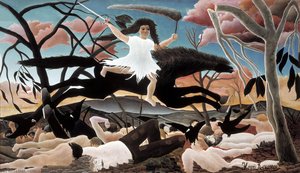
Henri Emile Rousseau, born in Lyon, France, in 1875, defied the conventions of Impressionism and Post-Impressionism to forge a singular artistic path—one characterized by an uncompromising embrace of Naïve Art.

Signature works · The 100 signature works

46of 47

Kazimierz Stabrowski

Polish Born in Krupliany Symbolism Wikipedia in 8/32 languages

Kazimierz Stabrowski

stabrowski's work is characterized by its dreamy, symbolic quality, often blending elements of symbolism and romanticism. one of his most celebrated pieces, the snow maiden (1891), exemplifies this unique style, which has captivated art enthusiasts for over a century. stabrowski passed away in 1929 in garwolin, poland, leaving behind a legacy that continues to inspire artists and art lovers alike. his influence can be seen in various aspects of polish art, from the academy of fine arts in warsaw to his numerous symbolic and romantic pieces.

Signature works · The 100 signature works

Signature works

Signature Symbolist works

  1. Salome Dancing before Herod by Gustave Moreau

    Salome Dancing before Herod

    Gustave Moreau

    Hammer Museum, Los Angeles

  2. The cyclops by Odilon Redon

    The cyclops

    Odilon Redon

    1914 · Kröller-Müller Museum, Otterlo

  3. Nymph and Satyr by Arnold Böcklin

    Nymph and Satyr

    Arnold Böcklin

    1871 · Philadelphia Museum of Art

  4. The street by Balthus

    The street

    Balthus

    1933

  5. The Day by Ferdinand Hodler

    The Day

    Ferdinand Hodler

    1906 · Kunsthaus Zürich, Zurich

  6. Massilia, Greek Colony by Pierre Puvis de Chavannes

    Massilia, Greek Colony

    Pierre Puvis de Chavannes

    1869 · The Phillips Collection, Washington, D.C.

  7. A legation by Max Klinger

    A legation

    Max Klinger

A timeline

Symbolist through its signature works

  1. 1858
  2. 1869
  3. 1882
  4. 1889
  5. 1892
  6. 1898
  7. 1900
  8. 1905
  9. 1906
  10. 1906
  11. 1910
  12. 1914
  13. 1921
  14. 1933

Figures

The figures

Every name

List of 47 famous Symbolist painters, every name

  1. 1Gustave MoreauGustave MoreauFrench · 1826–1898
  2. 2Odilon RedonOdilon Redon1840–1916
  3. 3Arnold BöcklinArnold BöcklinSwiss · 1827–1901
  4. 4BalthusBalthusFrench-Polish · 1908–2001
  5. 5Ferdinand HodlerFerdinand HodlerSwiss · 1853–1918
  6. 6Pierre Puvis de ChavannesPierre Puvis de ChavannesFrench · 1824–1898
  7. 7Max KlingerMax KlingerGerman · 1857–1920
  8. 8Nicholas RoerichNicholas RoerichRussian · 1874–1947
  9. 9Franz von StuckFranz von StuckGerman · 1863–1928
  10. 10Mikalojus Konstantinas ČiurlionisMikalojus Konstantinas ČiurlionisLithuanian · 1875–1911
  11. 11Mikhail VrubelMikhail VrubelRussian · 1856–1910
  12. 12Vilhelm HammershøiVilhelm HammershøiDanish · 1864–1916
  13. 13George Frederic WattsGeorge Frederic WattsBritish · 1817–1904
  14. 14Hugo SimbergHugo SimbergFinnish · 1873–1917
  15. 15Mikhail NesterovMikhail NesterovRussian · 1862–1942
  16. 16Jacek MalczewskiJacek MalczewskiPolish · 1854–1929
  17. 17Jan TooropJan TooropDutch · 1858–1928
  18. 18Félicien RopsFélicien RopsBelgian · 1833–1898
  19. 19Giovanni SegantiniGiovanni SegantiniItalian · 1858–1899
  20. 20Kuzma Petrov-VodkinKuzma Petrov-VodkinRussian · 1878–1939
  21. 21Julio Romero de TorresJulio Romero de TorresSpanish · 1874–1930
  22. 22Fernand KhnopffFernand KhnopffBelgian · 1858–1921
  23. 23Eugène CarrièreEugène CarrièreFrench · 1849–1906
  24. 24Stanisław WyspiańskiStanisław WyspiańskiPolish · 1869–1907
  25. 25Elihu VedderElihu VedderAmerican · 1836–1923
  26. 26Magnus EnckellMagnus EnckellFinnish · 1870–1925
  27. 27Konstantin SomovKonstantin Somov1869–1939
  28. 28Alice Pike BarneyAlice Pike BarneyAmerican · 1857–1931
  29. 29Viktor Elpidiforovich Borisov MusatovViktor Elpidiforovich Borisov Musatov1870–1905
  30. 30Franz von BayrosFranz von BayrosAustrian · 1866–1924
  31. 31Carlos SchwabeCarlos SchwabeSwiss · 1866–1926
  32. 32Annie Louise SwynnertonAnnie Louise SwynnertonBritish · 1880–1933
  33. 33Arthur Bowen DaviesArthur Bowen DaviesAmerican · 1862–1928
  34. 34José María Eguren RodríguezJosé María Eguren RodríguezPeruvian · 1874–1942
  35. 35Konstantin Alexeyevich VasilyevKonstantin Alexeyevich VasilyevRussian · 1942–1976
  36. 36Alphonse OsbertAlphonse OsbertFrench · 1857–1939
  37. 37Mstislav DobuzhinskyMstislav DobuzhinskyRussian-Lithuanian · 1875–1957
  38. 38Victor Borisov-MusatovVictor Borisov-Musatov1870–1905
  39. 39Léon FrédéricLéon Frédéric1856–1940
  40. 40Amédée MasclefAmédée MasclefFrench · 1858–1916
  41. 41Rupert BunnyRupert BunnyAustralian · 1864–1947
  42. 42Harald Slott-MøllerHarald Slott-MøllerFrench · 1864–1937
  43. 43Konstantin BogaevskyKonstantin BogaevskyUkrainian/Russian · 1872–1943
  44. 44Giulio Aristide SartorioGiulio Aristide SartorioItalian · 1860–1932
  45. 45Henri Emilien RousseauHenri Emilien RousseauFrench · 1875–1933
  46. 46Kazimierz StabrowskiKazimierz StabrowskiPolish · 1869–1929
  47. 47Charles RickettsCharles RickettsBritish · 1866–1931

Questions

Your questions

Read

Stories on OriginalUniqueArt.com

Other movements

Famous artists of other movements

Other periods

Famous artists across the periods

Famous paintings

Masterpieces that inspire us, by movement

Discover more

More artists to discover