Portrait of Duncan Grant

The 100 Most Famous Duncan Grant Paintings, a Gallery Selection

Updated October 2026 · ranked by our popularity score (searches, visits and orders for each work) · 413 works by Duncan Grant in our catalogue

In short

Of all the originals Duncan Grant left, the most famous is Still Life, Asheham House. Close behind it come Vanessa Bell in a Red Headscarf (1917) and Composition with Two Women, A Boy with Basket and Three Men (one an Old Jew) (1910). Our catalog holds 413 works by Duncan Grant; the gallery has kept the 100 the world admires most, each shown with its date, its museum and its story.

1885 – 1978, Aviemore Post-impressionism Most works: Monk's House

Duncan Grant's top 10 paintings: the gallery's choice

The Duncan Grant selection continues, 11 to 100

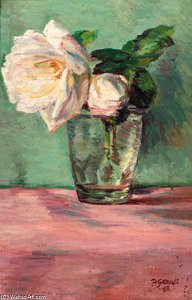
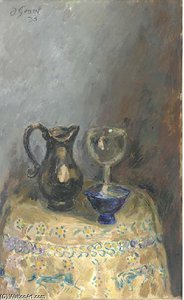
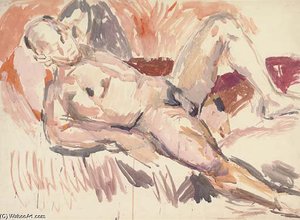
11Still Life With A Plate, Small Vase, Apples And A Glass by Duncan GrantStill Life With A Plate, Small Vase, Apples And A Glass 12White Roses by Duncan GrantWhite Roses 13Reclining Nude - by Duncan GrantReclining Nude - 14Haystacks by Duncan GrantHaystacks 15Lytton Strachey by Duncan GrantLytton Strachey 16Still Life With Red Dahlias by Duncan GrantStill Life With Red Dahlias 17Seated Male Nude - by Duncan GrantSeated Male Nude - 18Lydia Lopokova by Duncan GrantLydia Lopokova 19Seated Male Nude by Duncan GrantSeated Male Nude 20Standing Woman - by Duncan GrantStanding Woman - 21Angus davidson asleep by Duncan GrantAngus davidson asleep 22Standing Draped Nude by Duncan GrantStanding Draped Nude 23Dancing Figure by Duncan GrantDancing Figure 24Angelica Painting by Duncan GrantAngelica Painting 25Self Portrait - by Duncan GrantSelf Portrait - 26Helen Anrep by Duncan GrantHelen Anrep 27Twickenham by Duncan GrantTwickenham 28Lemon Gatherers by Duncan GrantLemon Gatherers 29Police Constable Harry Daley by Duncan GrantPolice Constable Harry Daley 30Two figures on a beach by Duncan GrantTwo figures on a beach 31Wrestlers by Duncan GrantWrestlers 32The Sofa by Duncan GrantThe Sofa 33Madonna And Child by Duncan GrantMadonna And Child 34Julian Bell Reading by Duncan GrantJulian Bell Reading 35Portrait Of Ellen Terry by Duncan GrantPortrait Of Ellen Terry 36Tony Haines by Duncan GrantTony Haines 37Bathing by Duncan GrantBathing 38Portrait Of A Lady by Duncan GrantPortrait Of A Lady 39Girl Reading In A Garden by Duncan GrantGirl Reading In A Garden 40Still Life With A Bust Of Vanessa Bell by Duncan GrantStill Life With A Bust Of Vanessa Bell 41The Queen Of Sheba by Duncan GrantThe Queen Of Sheba 42Commedia Dell'arte Scene by Duncan GrantCommedia Dell'arte Scene 43The Descent From The Cross by Duncan GrantThe Descent From The Cross 44Katherine Cox In Rupert Brooke's Garden, The Old Vicarage, Grantchester by Duncan GrantKatherine Cox In Rupert Brooke's Garden, The Old Vicarage, Grantchester 45Woman Sewing by Duncan GrantWoman Sewing 46Farmyard Buildings At Charleston, Sussex by Duncan GrantFarmyard Buildings At Charleston, Sussex 47Landscape (1913) by Duncan GrantLandscape1913 48Woman Sewing (possibly Mary 'Molly' McCarthy [1882-1953]) (1916) by Duncan GrantWoman Sewing (possibly Mary 'Molly' McCarthy [1882-1953])1916 · Fenton House 49The Coffee Pot (1916) by Duncan GrantThe Coffee Pot1916 · Metropolitan Museum of Art 50The Coffee Pot (1916) by Duncan GrantThe Coffee Pot1916 51Landscape with Bridge (1921) by Duncan GrantLandscape with Bridge1921 · The Phillips Collection 52View of the Backs, Cambridge (1924) by Duncan GrantView of the Backs, Cambridge1924 · National Gallery of Canada 53Market Day (1925) by Duncan GrantMarket Day1925 · National Gallery of Canada 54Monk's House Garden and St Peter's Church, Rodmell (1923) by Duncan GrantMonk's House Garden and St Peter's Church, Rodmell1923 · Monk's House 55Miss Mary Coss (1931) by Duncan GrantMiss Mary Coss1931 · Fitzwilliam Museum 56A Sussex Farm (1936) by Duncan GrantA Sussex Farm1936 · Toledo Museum of Art 57Mediterranean Scene with Olive Trees and Figures by the Sea (1941) by Duncan GrantMediterranean Scene with Olive Trees and Figures by the Sea1941 · Coleton Fishacre 58Artist's Study at Charleston (1967) by Duncan GrantArtist's Study at Charleston1967 59Design for Lilypond Table (1913) by Duncan GrantDesign for Lilypond Table1913 60Waterloo Bridge, London by Duncan GrantWaterloo Bridge, LondonMuseum of Fine Arts 61Nude Resting by Duncan GrantNude Resting 62View Of The Zattere, Venice by Duncan GrantView Of The Zattere, Venice 63Portrait Of Paul Roche by Duncan GrantPortrait Of Paul Roche 64Figure by Duncan GrantFigure 65Venice, Early Morning by Duncan GrantVenice, Early Morning 66Standing Male Nude - by Duncan GrantStanding Male Nude - 67Standing Woman by Duncan GrantStanding Woman 68Head And Torso Study by Duncan GrantHead And Torso Study 69Sleeping Angel by Duncan GrantSleeping Angel 70Lovers Entwined by Duncan GrantLovers Entwined 71Still Life With Embroided Table Cloth by Duncan GrantStill Life With Embroided Table Cloth 72Ethel Grant by Duncan GrantEthel Grant 73Actors Rehearsing by Duncan GrantActors Rehearsing 74Vanessa Bell's Monkey by Duncan GrantVanessa Bell's Monkey 75The Acrobats by Duncan GrantThe Acrobats 76Still Life With Bottles by Duncan GrantStill Life With Bottles 77The Guidecca, Venice by Duncan GrantThe Guidecca, Venice 78Seated Nude - by Duncan GrantSeated Nude - 79Bathers - by Duncan GrantBathers - 80Standing Male Nude by Duncan GrantStanding Male Nude 81Carpet Design by Duncan GrantCarpet Design 82St.Ives Huntingdon by Duncan GrantSt.Ives Huntingdon 83Sketch For 'the Queen Mary' by Duncan GrantSketch For 'the Queen Mary' 84Composition by Duncan GrantComposition 85Reclining Nude, Paul Roche by Duncan GrantReclining Nude, Paul Roche 86Firle Place Design by Duncan GrantFirle Place Design 87At The Ballet by Duncan GrantAt The Ballet 88Self Portrait - by Duncan GrantSelf Portrait - 89Adrian Stephen by Duncan GrantAdrian Stephen 90Rotherhithe, London by Duncan GrantRotherhithe, London 91Paul Roche From Behind On A Stool by Duncan GrantPaul Roche From Behind On A Stool 92The red pillow by Duncan GrantThe red pillow 93Rug Design, Composition by Duncan GrantRug Design, Composition 94The Washerwomen by Duncan GrantThe Washerwomen 95Lovers In A Hammock by Duncan GrantLovers In A Hammock 96Boy With Guitar by Duncan GrantBoy With Guitar 97Tulips - by Duncan GrantTulips - 98Arcadian Scene by Duncan GrantArcadian Scene 99Woodland by Duncan GrantWoodland 100Adam And Eve by Duncan GrantAdam And Eve

Duncan Grant's famous paintings, period by period

The subjects that held Duncan Grant's eye

The four subjects that come back most often in these originals, each with its finest example.

The museums that keep Duncan Grant's originals

The 8 museums that hold the most of the paintings on this page.

Museum City Works by Duncan Grant Paintings from this list
Monk's HouseMonk's House 3 Composition with Two Women, A Boy with Basket and Three Men (one an Old Jew), Monk's House, Lewes, East Sussex, Monk's House Garden and St Peter's Church, Rodmell
National Gallery of Canada, OttawaNational Gallery of Canada Ottawa 2 View of the Backs, Cambridge, Market Day
Fenton House, LondonFenton House London 1 Woman Sewing (possibly Mary 'Molly' McCarthy [1882-1953])
Metropolitan Museum of Art, New YorkMetropolitan Museum of Art New York 1 The Coffee Pot
The Phillips Collection, Washington, D.C.The Phillips Collection Washington, D.C. 1 Landscape with Bridge
Fitzwilliam MuseumFitzwilliam Museum 1 Miss Mary Coss
Toledo Museum of Art, ToledoToledo Museum of Art Toledo 1 A Sussex Farm
Coleton FishacreColeton Fishacre 1 Mediterranean Scene with Olive Trees and Figures by the Sea

Duncan Grant decade by decade: the original that defines each

Works per decade

Pick a decade to see the original that defines it.

Collectors' questions about Duncan Grant's paintings

Which work is Duncan Grant most famous for?Reveal the answer

Still Life, Asheham House. Vanessa Bell in a Red Headscarf (1917) and Composition with Two Women, A Boy with Basket and Three Men (one an Old Jew) (1910) come next.

What are the ten most famous Duncan Grant paintings?Reveal the answer

Still Life, Asheham House, Vanessa Bell in a Red Headscarf, Composition with Two Women, A Boy with Basket and Three Men (one an Old Jew), Monk's House, Lewes, East Sussex, Paul Roche Reclining, Still Life With Carrots, The French Window, Charleston, The Cat, Opussyquinusque, Boats, St Tropez and Bea Howe. The ranking above gives each one's year and museum.

How many paintings did Duncan Grant leave?Reveal the answer

Our catalog holds 413 works by Duncan Grant, dated from 1910 to 1967.

In which museums do Duncan Grant's masterpieces hang?Reveal the answer

Mostly in Monk's House, National Gallery of Canada (Ottawa) and Fenton House (London). The museum table above lists them all.

In which years did Duncan Grant paint the most famous works?Reveal the answer

In 1910s: 7 of the 100 works on this page were made then, Vanessa Bell in a Red Headscarf among them.

What are the first and the last famous originals of Duncan Grant?Reveal the answer

On this page, the earliest is Composition with Two Women, A Boy with Basket and Three Men (one an Old Jew) (1910) and the latest Artist's Study at Charleston (1967).

Which subjects did Duncan Grant choose most often?Reveal the answer

Portrait (8), Reflection (7) and Nudes (6), across the 100 works on this page.

To which art movement does Duncan Grant belong?Reveal the answer

Post-impressionism, judging by the originals on this page.

Which Duncan Grant works hang at the Monk's House?Reveal the answer

Composition with Two Women, A Boy with Basket and Three Men (one an Old Jew), Monk's House, Lewes, East Sussex and Monk's House Garden and St Peter's Church, Rodmell: the Monk's House holds 3 of the works on this page.

Duncan Grant: life and work

Early Life and the Seeds of Artistic Vision

Duncan James Corrowr Grant, born in 1885 amidst the rugged beauty of Rothiemurchus Forest District in Scotland, embarked on a life that would indelibly mark the landscape of British art. His early years were far from conventional, shaped by his father’s military service and extended periods spent in India and Burma. This exposure to diverse cultures, vibrant colors, and exotic landscapes subtly infused his artistic sensibilities, laying the groundwork for a style that would later embrace bold experimentation and decorative flair. Though destined for a military career by family expectation, Grant's innate talent for art quickly asserted itself. He received encouragement from those who recognized his potential, leading him to Westminster School of Art in 1902, where he began formal training under the guidance of Simon Bussy, a connection that would prove pivotal in introducing him to the burgeoning world of modern French painting. His education continued with studies in Italy and Paris, absorbing influences from masters like Masaccio and Matisse, experiences which ignited his passion for capturing light, color, and form.

Bloomsbury and the Forging of a Unique Style

The year 1905 proved transformative, marking Grant’s introduction to Vanessa Bell – an encounter that would blossom into a lifelong personal and artistic partnership, and immerse him within the heart of the Bloomsbury Group. This circle of intellectuals, writers, and artists—including figures like Virginia Woolf, Lytton Strachey, and John Maynard Keynes—rejected Victorian conventions in favor of open-mindedness, intellectual freedom, and aesthetic innovation. Grant became a central figure in this vibrant community, his art reflecting their shared values and challenging established norms. The influence of Post-Impressionism, particularly the work of Cézanne and Matisse, became increasingly apparent in his paintings, characterized by flattened perspectives, bold colors, and an emphasis on decorative patterns. This period also saw Grant’s involvement in Roger Fry's groundbreaking exhibitions, which introduced British audiences to the revolutionary art movements unfolding across Europe.

Omega Workshops and a Diversification of Artistic Expression

In 1913, alongside Vanessa Bell, Grant co-founded the Omega Workshops – an experimental venture that sought to break down the barriers between fine and applied arts. This collective aimed to create beautiful, functional objects for everyday life, encompassing furniture, textiles, pottery, and graphic design. The workshops provided a platform for artistic collaboration and experimentation, allowing Grant to explore his talents beyond painting. His designs were characterized by their vibrant colors, stylized forms, and rejection of traditional ornamentation. Though the Omega Workshops faced financial difficulties and ultimately closed in 1919, they left an enduring legacy, influencing British design and paving the way for a more integrated approach to art and craft. Simultaneously, Grant’s artistic practice continued to evolve, with landscapes around Charleston, Sussex – where he lived with Bell for many years – becoming frequent subjects of his work, imbued with a sense of intimacy and personal connection.

Legacy and Enduring Influence

Duncan Grant's contribution to 20th-century British art extends far beyond his individual paintings and designs. He remains a pivotal figure within the Bloomsbury Group, embodying their spirit of artistic freedom and intellectual curiosity. His work reflects a rejection of Victorian constraints and an embrace of modernism’s experimental energy. His influence can be seen in the vibrant colors, decorative patterns, and expressive brushwork that characterize much of British art and design from this period. Grant's versatility—his ability to seamlessly transition between painting, drawing, stage design, and textile design—demonstrates a remarkable artistic range. His paintings, such as *Lucca* and *Tents*, continue to captivate viewers with their vibrant colors and evocative atmosphere. His legacy is preserved in museums worldwide, including the Musée des Arts Décoratifs in Paris and numerous collections within the United Kingdom. He died in 1978, leaving behind a body of work that continues to inspire artists and art enthusiasts alike, solidifying his place as a significant figure in the history of modern art.

All 413 works by Duncan Grant →