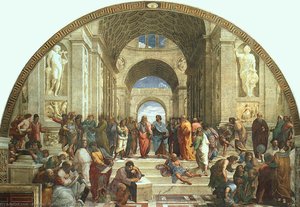
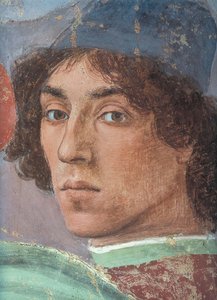
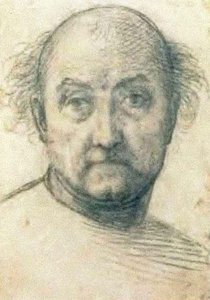
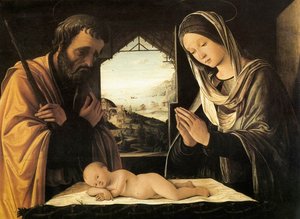
High Renaissance, one artist at a time

37 Famous High Renaissance Painters Who Shaped the Movement

Leonardo da Vinci (1452–1519) is the most famous High Renaissance painter, whose singular vision gave us The Last Supper and Vitruvian Man. Next stand Michelangelo, Raphael, Titian and Giorgione. These 37 painters, from Giuliano da Sangallo (born 1443) to Jacopo Bassano (born 1510), came from 2 countries.

Our selection. Artists whose works our catalogue attaches to High Renaissance, in the order of our fame ranking. Artists born after 1955 with no Wikidata identifier stay out until verified. The Wikipedia figure counts our 32 languages with an article on the artist.

  1. The Last Supper by Leonardo da Vinci1Leonardo da Vinci
  2. David by Michelangelo2Michelangelo
  3. The Sistine Madonna by Raphael3Raphael

In brief

High Renaissance in brief

  • 37Artists
  • 1443–1510Years of birth
  • 2Countries of birth
  • 0Women
  • 5,722Works in our catalogue
Cities with most births
Florence (7), Venice (3), Prato (2), Ferrara (2)
Museums holding the most key works
Kunsthistorisches Museum (6), The Louvre (4), National Gallery (4), Hermitage Museum (4)

One artist at a time

37 High Renaissance Painters and their signature works

1of 37

Leonardo da Vinci

Italian Born in Anchiano High Renaissance Wikipedia in 32/32 languages

Leonardo da Vinci

He spent much of his life serving Ludovico Sforza in Milan, a tenure that lasted from approximately 1482 to 1499. This intersection of disciplines ensured that his output was never limited to mere decoration. 1475: The Baptism of Christ. 1495: The Last Supper. His influence stems from a refusal to separate the act of painting from the act of investigation.

Where to see The Mona Lisa remains in the Musée du Louvre in Paris.

Teacher of Andrea Solari #25

Signature works · The 100 signature works

2of 37

Michelangelo

Italian Born in Caprese Michelangelo High Renaissance, Mannerism Wikipedia in 32/32 languages

Michelangelo

Born in 1475, Michelangelo di Lodovico Buonarroti Simoni spent his early years near Settignano, where his father owned a quarry. By the time he reached Rome in 1496, he was already carving figures that possessed a heavy, palpable presence. The Pietà, completed in 1499, shows this early ability to make marble appear as soft as flesh, even as it carries the weight of a dead man.

Signature works · The 100 signature works

3of 37

Raphael

Italian Born in Urbino High Renaissance Wikipedia in 32/32 languages

Raphael

Upon his arrival in Florence in 1504, the young painter entered a city defined by the presence of giants. His development was shaped by a careful study of their distinct approaches, alongside the influences of Fra Bartolommeo and Masaccio.

Where to see The physical remnants of his prolific career are scattered across the major centers of European art.

Pupil of Pietro Perugino #6

Signature works · The 100 signature works

4of 37

Titian

Italian Born in Pieve di Cadore Venetian Renaissance Wikipedia in 32/32 languages

Titian

As the years passed, the soft, ethereal qualities of his youth gave way to something much more muscular and dramatic. He moved away from the quietude of his early training to embrace a bolder approach to color. His paintings remain in the great collections of the world, from the Prado in Madrid to the National Gallery in London, serving as a permanent record of a man who mastered the art of seeing.

Signature works · The 100 signature works

5of 37

Giorgione

Italian Born in Castelfranco Veneto Venetian School Wikipedia in 31/32 languages

Giorgione

While the exact year of his birth remains a subject of debate, his presence in the Venetian art scene was established early. Records identify him as a colleague of the master Vincenzo Catena. Beyond Titian, his direct teaching shaped the hands of several notable figures, including Dosso Dossi, Giovanni da Udine, Andrea Schiavone, and Francesco Torbido.

Where to see His presence is felt most strongly in Vienna, where the Kunsthistorisches Museum houses several significant pieces, including the Portrait of Francesco Maria della Rovere.

Signature works · The 100 signature works

6of 37

Pietro Perugino

Italian Born in Città della Pieve Renaissance Wikipedia in 30/32 languages

Pietro Perugino

Pietro Vannucci, commonly known as Le Perugino—a name derived from his birthplace—was a pivotal figure in the Florentine Renaissance, cementing his reputation as one of Italy’s most celebrated painters. Arrival in Florence: Around 1470, Vannucci relocated to Florence under the patronage of Lorenzo de’ Medici, securing commissions that propelled him to international acclaim. "The Virgin and Child Surrounded by Two Angels": Considered one of Le Perugino’s finest achievements, this masterpiece exemplifies his mastery of color and composition, capturing the tenderness of Mary and Jesus with breathtaking sensitivity.

Teacher of Raphael #3, Lo Spagna #34

Signature works · The 100 signature works

7of 37

Antonio da Correggio

Italian Born in Correggio High Renaissance Wikipedia in 29/32 languages

Antonio da Correggio

This is spectacularly demonstrated in his frescoes for the dome of Parma Cathedral, where the swirling figures seem to ascend towards heaven, creating a breathtaking sense of spatial expansion. Antonio Allegri da Correggio, a name that resonates with the very essence of High Renaissance artistry, emerged from the small Italian city bearing his adopted moniker in 1489.

Signature works · The 100 signature works

8of 37

Andrea del Sarto

Italian Born in Florence High Renaissance and Mannerism Wikipedia in 28/32 languages

Andrea del Sarto

His hand moved with a specific kind of precision, whether working in fresco, oil, or chalk. Madonna and Child with St Elisabeth, the Infant St John, and Two Angels, 1515. While his name was often overshadowed by the massive presence of Leonardo da Vinci, Michelangelo, and Raphael, his influence remained deeply felt.

Where to see To see his hand in person, one often begins in Florence.

Signature works · The 100 signature works

9of 37

Filippino Lippi

Italian Born in Prato High Renaissance Wikipedia in 26/32 languages

Filippino Lippi

Early Period (1475-1480): Initial works, such as Madonnas, showed a less refined style. These were initially attributed to an anonymous artist known as "amico di Sandro.". Style Characteristics: Animated form and line, warm colorism, detailed landscapes, expressive figures, and a blend of perspective geometry with intimate interiors.

Signature works · The 100 signature works

10of 37

Lorenzo Lotto

Italian Born in Venice Renaissance, Mannerism Wikipedia in 29/32 languages

Lorenzo Lotto

However, a sojourn in Rome brought him into contact with the art of Raphael, imbuing his work with a newfound clarity of form and compositional balance. Susanna and the Elders, painted during his Bergamo period, exemplifies this maturity—a captivating narrative rendered with luminous colors and a keen psychological insight into the characters’ emotions. Later, during his extended stay in Bergamo, he absorbed elements of Lombard realism, adding a grounded physicality to his figures.

Signature works · The 100 signature works

11of 37

Sebastiano del Piombo

Italian Born in Venice High Renaissance, Mannerism Wikipedia in 23/32 languages

Sebastiano del Piombo

This move placed him directly into the orbit of Raphael, whose workshop was at its zenith, and soon after, into the complex world surrounding Michelangelo. The two masters recognized a kindred spirit in each other’s pursuit of grandeur and anatomical precision; Michelangelo actively championed Sebastiano's work, urging him to compete with Raphael for prestigious commissions. The latter part of Sebastiano's life took an unexpected turn in 1531 when he was appointed piombatore, Keeper of the Seals for the Papacy.

Signature works · The 100 signature works

12of 37

Palma Vecchio

Italian Born in Serina High Renaissance Wikipedia in 22/32 languages

Palma Vecchio

The initial stages of Palma’s career reveal a clear debt to Giovanni Bellini's refined technique and devotional style. Yet, Palma wasn't merely an imitator; he possessed a unique gift for rendering the human form with a sensual grace and a captivating realism that set him apart. He swiftly embraced Giorgione’s use of color, light, and composition, infusing his own paintings with a similar sense of lyrical beauty.

Signature works · The 100 signature works

13of 37

Fra Bartolomeo

Italian Born in Prato High Renaissance Wikipedia in 27/32 languages

Fra Bartolomeo

Born Baccio della Porta on March 28, 1472, in the Tuscan town of Savignano di Prato, Fra Bartolomeo’s early life was steeped in the vibrant artistic atmosphere of Renaissance Italy. Bernard” (1507), though now in fragile condition, exemplifies this new direction—its ethereal quality and harmonious balance reportedly captivated the young Raphael during his visit to Florence.

Teacher of Ridolfo del Ghirlandaio #21

Signature works · The 100 signature works

14of 37

Donato Bramante

Italian Born in Fermignano High Renaissance Wikipedia in 30/32 languages

Donato Bramante

This is perhaps most brilliantly realized in his work at Santa Maria presso San Satiro, where he employed architectural magic to dissolve the boundaries between reality and art, creating illusions that transcended physical limitations.

Signature works · The 100 signature works

15of 37

Jacopo Bassano

Venetian Born in Bassano del Grappa Venetian Renaissance Wikipedia in 24/32 languages

Jacopo Bassano

Bassano's artistic journey can be broadly divided into distinct periods, each characterized by subtle shifts in his style and subject matter. His early works, primarily religious scenes executed in the 1530s and 40s, demonstrate a clear debt to Titian’s influence. He skillfully absorbed elements from these diverse sources, synthesizing them into a uniquely personal style that is both innovative and deeply rooted in Venetian tradition.

Signature works · The 100 signature works

16of 37

Lorenzo Costa

Italian Renaissance Born in Ferrara Ferrara & Bologna Schools Wikipedia in 22/32 languages

Lorenzo Costa

His ability to harmonize the rugged, emotive traditions of the Ferrarese masters with the more lyrical, polished style of the Bolognese painters created a unique stylistic bridge.

Signature works · The 100 signature works

17of 37

Bernardino Luini

Italian Born in Dumenza Renaissance, Mannerism Wikipedia in 20/32 languages

Bernardino Luini

Early works like the Adoration of the Magi (c. 1505) in San Pietro, Luino, already hint at this emerging style, showcasing a delicate handling of light and shadow and a growing mastery of composition. The influence of Bernardino Zenale’s Cantù Polyptych is also visible in works like St. Bernardino Luini passed away in Milan in June 1532, leaving behind a legacy that extended beyond his own lifetime.

Signature works · The 100 signature works

18of 37

Baldassare Peruzzi

Italian Born in Siena High Renaissance and Mannerism Wikipedia in 23/32 languages

Baldassare Peruzzi

Following Raphael’s death, he was appointed as one of the architects responsible for overseeing the project, working closely with Antonio da Sangallo the Younger. Peruzzi contributed significantly to the basilica’s design, particularly in the development of its complex plan and the intricate detailing of its façade. Baldassare Peruzzi's legacy extends far beyond the specific buildings he designed.

Signature works · The 100 signature works

19of 37

Dosso Dossi

Italian Born in Mirandola Ferrara School Wikipedia in 24/32 languages

Dosso Dossi

While his roots were in the precision of the early Renaissance, he moved toward a style that anticipated Mannerism through his use of striking disharmonies in color and unusual figure poses.

Signature works · The 100 signature works

20of 37

Mariotto Albertinelli

Italian Born in Florence Florentine Renaissance Wikipedia in 22/32 languages

Mariotto Albertinelli

His early works, produced independently of Fra Bartolomeo, are stylistically distinct and reveal a sophisticated taste for detail. A period of independence followed Fra Bartolomeo’s entry into the Dominican order in 1500, allowing Albertinelli to develop his own voice while still maintaining a connection to his former mentor's style. Albertinelli’s style demonstrates the influence of several prominent artists including Perugino, Piero di Cosimo, Lorenzo di Credi, and Flemish painters.

Signature works · The 100 signature works

21of 37

Ridolfo del Ghirlandaio

Born in Florence High Renaissance/Mannerism Wikipedia in 16/32 languages

Ridolfo del Ghirlandaio

Michele di Ridolfo del Ghirlandaio's oeuvre is marked by a distinctive blend of Renaissance naturalism and early Mannerist elegance. The Adoration of the Magi (various versions): These paintings demonstrate his skill in creating complex compositions with dynamic figures and expressive faces. Following his father’s death in 1506, Michele assumed responsibility for completing Ridolfo's unfinished commissions, a testament to the trust placed in his abilities.

Pupil of Fra Bartolomeo #13

Signature works · The 100 signature works

22of 37

Giovanni Girolamo Savoldo

Italian Born in Brescia High Renaissance Wikipedia in 15/32 languages

Giovanni Girolamo Savoldo

The rediscovery of his genius in the 19th century brought a renewed appreciation for his unique contribution to the High Renaissance. His legacy remains etched in the soft shadows and radiant highlights of his canvases, reminding us that true mastery lies in the ability to make the intangible—light, spirit, and emotion—visible to the eye. In the golden age of the Italian Renaissance, few painters possessed the ability to capture the ephemeral dance of light as masterfully as Giovanni Girolamo Savoldo.

Signature works · The 100 signature works

23of 37

Benvenuto Tisi

Italian Born in Ferrara Late Renaissance & Mannerism Wikipedia in 16/32 languages

Benvenuto Tisi

Roman art provided him with a foundation in classical mythology and portraiture, while Venetian painting instilled within him an appreciation for atmospheric perspective and the subtle nuances of light and shadow. The years spent in Rome were particularly formative, exposing Garofalo to the innovations of Raphael and Giulio Romano. His later paintings demonstrate a growing interest in Mannerist conventions – elongated figures, distorted perspectives, and exaggerated gestures – reflecting a deliberate departure from the more balanced proportions of High Renaissance art.

Signature works · The 100 signature works

24of 37

Giovanni Antonio Boltraffio

German Born in Milan Northern Renaissance Wikipedia in 15/32 languages

Giovanni Antonio Boltraffio

He acted as a crucial bridge between the experimental fervor of the early High Renaissance and the more structured, classical developments that followed in Northern Italy.

Pupil of Leonardo da Vinci #1

Signature works · The 100 signature works

25of 37

Andrea Solari

Italian Renaissance Born in Milan Milanese School Wikipedia in 17/32 languages

Andrea Solari

His time in France resulted in several important commissions, including frescoes for the chapel of Gaillon Castle, where he skillfully blended Italian Renaissance principles with elements of Northern European painting.

Pupil of Leonardo da Vinci #1

Signature works · The 100 signature works

26of 37

Girolamo Romanino

Italian Born in Brescia High Renaissance Wikipedia in 13/32 languages

Girolamo Romanino

Throughout his life, Romanino's contributions to the Lombard and Venetian landscapes left an indelible mark on the Renaissance. Regional Impact: Serving as a pivotal figure in the Brescia school, enriching the cultural heritage of both Lombardy and the Veneto.

Signature works · The 100 signature works

27of 37

Sebastiano Serlio

Italian Born in Bologna Mannerism Wikipedia in 19/32 languages

Sebastiano Serlio

Sebastiano Serlio was an Italian Mannerist architect, painter, writer, designer, and civil engineer. Born in Bologna, he worked in the atelier of Baldassare Peruzzi in Rome and later lived in Venice. His career was significantly shaped by an invitation from François I to France, where he advised on the construction and decoration of the Château of Fontainebleau.

Signature works · The 100 signature works

28of 37

Giuliano da Sangallo

Italian Born in Florence Renaissance

Giuliano da Sangallo

His influence was not merely structural but also deeply personal; through his brother Antonio da Sangallo the elder and his sons, Antonio and Francesco, the architectural language he helped pioneer continued to evolve and dominate the European landscape for decades.

Signature works · The 100 signature works

29of 37

Franciabigio

Italian Born in Florence Renaissance Wikipedia in 13/32 languages

Franciabigio

The foundations of his artistry were laid under the guidance of Alberto Altramonte, but it was his transition into the studio of Andrea del Sarto around 1506 that would fundamentally reshape his creative trajectory.

Signature works · The 100 signature works

31of 37

Giuliano Bugiardini

Italian Born in Florence Italian Renaissance Wikipedia in 11/32 languages

Giuliano Bugiardini

Narrative Depth: The capacity to weave complex biblical or mythological stories into vibrant, social snapshots that reflect the spirit of Florentine society. Color and Light: A rich palette featuring deep reds, vibrant blues, and earthy tones, utilized through careful layering to create texture and luminosity. The historical significance of Giuliano Bugiardini lies in his role as a bridge between the traditions of the late 15th century and the burgeoning dynamism of the 16th century.

Signature works · The 100 signature works

32of 37

Giulio Clovio

Croatian-Italian Born in Grižane-Belgrad High Renaissance Wikipedia in 17/32 languages

Giulio Clovio

He masterfully blended the delicate precision of Northern European illumination with the dynamic compositions and vibrant color palettes characteristic of Italian Renaissance masters like Raphael, Michelangelo, and Titian. Paul’s Epistle to the Romans (now housed in the Sir John Soane's Museum), showcased his burgeoning talent and secured his reputation. He was a respected figure in artistic circles, befriending artists like Pieter Bruegel the Elder —who even contributed a miniature to one of Clovio’s works—and El Greco, who painted several portraits of the master illuminator, placing him alongside Michelangelo, Raphael and Titian as his influences.

Signature works · The 100 signature works

34of 37

Lo Spagna

Spanish Born in Perugia Wikipedia in 9/32 languages

Lo Spagna

The name Lo Spagna carries the weight of a traveler's identity, a nod to Spanish origins etched into his Italian life. Born Giovanni di Pietro, he moved through the landscapes of Umbria and the Marches, leaving traces of his brush in places like Perugia, Todi, Trevi, and Spoleto. His presence in Perugia is noted as early as 1470, though by 1492, he was a recognized member of Perugino's workshop.

Pupil of Pietro Perugino #6

Signature works · The 100 signature works

35of 37

Bernardino Licinio

Italian Born in Venice High Renaissance Wikipedia in 8/32 languages

Bernardino Licinio

Licinio’s art represents a fascinating synthesis of prevailing Venetian styles. This is particularly visible in his later altarpieces, which echo Titian’s dramatic use of light, rich color harmonies, and dynamic compositions—most notably in pieces like Madonna Enthroned with Saints (1535). It wasn't until the early 20th century, thanks to the meticulous research and clarifying intervention of Gustav Ludwig in 1903, that Licinio began to receive the recognition he deserved.

Signature works · The 100 signature works

36of 37

Michelangelo Morlaiter

Italian Rococo Art

Michelangelo Morlaiter

He was a founding member and professor at the Accademia di Scoltura, Pittura, ed Architettura Civile in Venice (established 1766), an institution dedicated to reviving classical artistic ideals and fostering excellence in sculpture, painting, and architecture. His frescoes—particularly “The Study of Adam”—are considered masterpieces of Venetian fresco painting, showcasing unparalleled color palettes and textural nuances.

Signature works · The 100 signature works

37of 37

Defendente Ferrari

Italian Born in Chivasso Renaissance Art; Late Gothic Style Wikipedia in 8/32 languages

Defendente Ferrari

His achievements can be summarized through several key pillars of his artistry: Stylistic Synthesis: The seamless blending of Northern European Flemish detail with Italian Renaissance humanism.

Signature works · The 100 signature works

Signature works

Signature High Renaissance works

  1. The Last Supper by Leonardo da Vinci

    The Last Supper

    Leonardo da Vinci

    1495 · Church Santa Maria delle Grazie, Milan

  2. David by Michelangelo

    David

    Michelangelo

    1504 · Galleria dell'Accademia di Firenze, Florence

  3. The Sistine Madonna by Raphael

    The Sistine Madonna

    Raphael

    1513 · Staatliche Kunstsammlungen Dresden

  4. Diana and Actaeon by Titian

    Diana and Actaeon

    Titian

  5. The Tempest by Giorgione

    The Tempest

    Giorgione

    Gallerie dell'Accademia di Venezia, Venice

  6. The Virgin and Child Surrounded by Two Angels, St. Rose, and St. Catherine by Pietro Perugino

    The Virgin and Child Surrounded by Two Angels, St. Rose, and St. Catherine

    Pietro Perugino

    The Louvre, Paris

  7. Jupiter and Io by Antonio da Correggio

    Jupiter and Io

    Antonio da Correggio

    1531 · Kunsthistorisches Museum, Vienna

  8. Holy Family (Borgherini) by Andrea del Sarto

    Holy Family (Borgherini)

    Andrea del Sarto

    1529 · Metropolitan Museum of Art, new york

A timeline

High Renaissance through its signature works

  1. 1480
  2. 1495
  3. 1502
  4. 1505
  5. 1510
  6. 1510
  7. 1512
  8. 1515
  9. 1516
  10. 1520
  11. 1520
  12. 1522
  13. 1530
  14. 1538

Figures

The figures

Country of birth
Italy35
Croatia1
Decade of birth
1440s3
1450s3
1460s3
1470s6
1480s16
1490s3
1500s1
1510s1
Museums holding their key works
Kunsthistorisches Museum6
The Louvre4
National Gallery4
Hermitage Museum4
Galleria degli Uffizi3
Metropolitan Museum of Art3
National Gallery of Art3
Szépművészeti Múzeum3

Every name

List of 37 famous High Renaissance painters, every name

  1. 1Leonardo da VinciLeonardo da VinciItalian · 1452–1519
  2. 2MichelangeloMichelangeloItalian · 1475–1564
  3. 3RaphaelRaphaelItalian · 1483–1520
  4. 4TitianTitianItalian · 1490–1576
  5. 5GiorgioneGiorgioneItalian · 1478–1510
  6. 6Pietro PeruginoPietro PeruginoItalian · 1448–1523
  7. 7Antonio da CorreggioAntonio da CorreggioItalian · 1489–1534
  8. 8Andrea del SartoAndrea del SartoItalian · 1486–1530
  9. 9Filippino LippiFilippino LippiItalian · 1457–1504
  10. 10Lorenzo LottoLorenzo LottoItalian · 1480–1556
  11. 11Sebastiano del PiomboSebastiano del PiomboItalian · 1485–1547
  12. 12Palma VecchioPalma VecchioItalian · 1480–1528
  13. 13Fra BartolomeoFra BartolomeoItalian · 1472–1517
  14. 14Donato BramanteDonato BramanteItalian · 1444–1514
  15. 15Jacopo BassanoJacopo BassanoVenetian · 1510–1592
  16. 16Lorenzo CostaLorenzo CostaItalian Renaissance · 1460–1535
  17. 17Bernardino LuiniBernardino LuiniItalian · 1480–1532
  18. 18Baldassare PeruzziBaldassare PeruzziItalian · 1481–1536
  19. 19Dosso DossiDosso DossiItalian · 1480–1542
  20. 20Mariotto AlbertinelliMariotto AlbertinelliItalian · 1474–1515
  21. 21Ridolfo del GhirlandaioRidolfo del Ghirlandaio1483–1561
  22. 22Giovanni Girolamo SavoldoGiovanni Girolamo SavoldoItalian · 1480–1548
  23. 23Benvenuto TisiBenvenuto TisiItalian · 1481–1559
  24. 24Giovanni Antonio BoltraffioGiovanni Antonio BoltraffioGerman · 1467–1516
  25. 25Andrea SolariAndrea SolariItalian Renaissance · 1460–1524
  26. 26Girolamo RomaninoGirolamo RomaninoItalian · 1485–1562
  27. 27Sebastiano SerlioSebastiano SerlioItalian · 1475–1554
  28. 28Giuliano da SangalloGiuliano da SangalloItalian · 1443–1516
  29. 29FranciabigioFranciabigioItalian · 1484–1525
  30. 30Bartolomeo VenetoBartolomeo VenetoItalian · 1502–1555
  31. 31Giuliano BugiardiniGiuliano BugiardiniItalian · 1475–1554
  32. 32Giulio ClovioGiulio ClovioCroatian-Italian · 1498–1578
  33. 33Antonio Da Sangallo The YoungerAntonio Da Sangallo The YoungerGerman · 1484–1546
  34. 34Lo SpagnaLo SpagnaSpanish · 1450–1528
  35. 35Bernardino LicinioBernardino LicinioItalian · 1489–1565
  36. 36Michelangelo MorlaiterMichelangelo MorlaiterItalian ·
  37. 37Defendente FerrariDefendente FerrariItalian · 1490–1540

Questions

Your questions

  • Which High Renaissance painter is the most famous?

    First place goes to Leonardo da Vinci (#1); Michelangelo (#2) and Raphael (#3) complete the podium.

  • Who are the 5 most famous High Renaissance painters?

    Leonardo da Vinci (#1), Michelangelo (#2), Raphael (#3), Titian (#4) and Giorgione (#5).

  • Where were most High Renaissance painters born?

    Italy: 35 of the 37 painters in this list were born there, then Croatia (1).

  • Who taught the famous High Renaissance painters?

    Pietro Perugino (#6) taught Raphael (#3) and Lo Spagna (#34); Leonardo da Vinci (#1) taught Andrea Solari (#25); Fra Bartolomeo (#13) taught Ridolfo del Ghirlandaio (#21).

  • In which period did High Renaissance art flourish?

    Most painters in this list were born in the 1480s (16 of 37), between 1443 and 1510 overall.

  • Which techniques define High Renaissance art?

    “The project required a departure from traditional fresco methods, as Leonardo utilized an oil-based paint mixed with mastic to allow for the slow layering and frequent revisions his process demanded.” — from our biography of Leonardo da Vinci (#1).

  • Who was the first High Renaissance painter?

    The earliest-born painter in this list is Giuliano da Sangallo (#28), born in 1443.

  • Where are the great works of High Renaissance art today?

    The museums holding the most key works of this list are Kunsthistorisches Museum (6), The Louvre (4) and National Gallery (4).

  • Who are the most famous High Renaissance painters from Italy?

    The highest-ranked painters born in Italy are Leonardo da Vinci (#1), Michelangelo (#2), Raphael (#3), Titian (#4) and Giorgione (#5).

  • Which city was home to the most High Renaissance painters?

    Florence: 7 of the painters in this list were born there.

  • Where can I see more works by these painters?

    Our catalogue holds 5,722 works by these painters.

Read

Stories on OriginalUniqueArt.com

Other movements

Famous artists of other movements

Other periods

Famous artists across the periods

Famous paintings

Masterpieces that inspire us, by movement

Discover more

More artists to discover