Portrait of Michelangelo

The 100 Most Famous Michelangelo Paintings, a Gallery Selection

Updated October 2026 · ranked by our popularity score (searches, visits and orders for each work) · 696 works by Michelangelo in our catalogue

In short

Of all the originals Michelangelo left, the most famous is The Creation of Adam (1512), in the collection of the Sistine Chapel, Vatican City. Close behind it come Last Judgment (1537) and Holy Family (Doni Tondo) (1506). Our catalog holds 696 works by Michelangelo; the gallery has kept the 100 the world admires most, each shown with its date, its museum and its story.

1475 – 1564, Caprese Michelangelo High renaissance Most works: Sistine Chapel

Michelangelo's top 10 paintings: the gallery's choice

1
The Creation of Adam (1512) by Michelangelo

The Creation of Adam

1512 · Fresco · Sistine Chapel, Vatican City

Executed between 1508 and 1512 on the ceiling of the Sistine Chapel in Vatican City, this fresco captures a singular moment of transition. The composition centers on the near-contact of two hands: one belonging to a reclining, muscular Adam and the other to an elderly, powerful God. Michelangelo utilized the fresco technique, applying pigment directly onto wet lime plaster. This method required rapid, decisive execution, as the color becomes a…

2
Last Judgment (1537) by Michelangelo

Last Judgment

1537 · Fresco · Sistine Chapel, Vatican City

Completed in 1537, this monumental fresco adorns the altar wall of the Sistine Chapel in Vatican City and represents one of the most ambitious and influential works in the history of Western art. More than just a depiction of biblical prophecy, it is a powerful statement on humanity’s fate, rendered with unparalleled anatomical precision and dramatic intensity.

3
Holy Family (Doni Tondo) (1506) by Michelangelo

Holy Family (Doni Tondo)

1506 · Oil On Canvas · Galleria degli Uffizi, Florence

A Renaissance Masterpiece: Unveiling Michelangelo’s Holy Family (Doni Tondo) This circular oil painting, a singular achievement in Michelangelo's oeuvre, presents a dynamic and profoundly symbolic depiction of the Holy Family. Completed in 1506 for Agnolo Doni upon his marriage to Maddalena Strozzi, the *Holy Family* – also known as the *Doni Tondo* – transcends a simple religious scene, embodying the artistic ideals and intellectual currents of the High Renaissance. Composition…

4
The Torment of Saint Anthony (1487) by Michelangelo

The Torment of Saint Anthony

1487 · Painting · Kimbell Art Museum, Fort Worth

In the quiet annals of art history, few moments are as breathtaking as the emergence of a prodigy. The Torment of Saint Anthony stands as a haunting testament to this phenomenon, representing the very first known painting by the Renaissance titan, Michelangelo Buonarroti. Created around 1487, when the artist was a mere twelve years old, this small yet profound work captures a young mind already grappling with the complexities of…

5
Entombment (1510) by Michelangelo

Entombment

1510 · Tempera On Panel · National Gallery, London

In this unfinished oil-on-panel work, Michelangelo depicts the somber burial of Jesus Christ. The scene captures the heavy, quiet moment of the entombment, focusing on the lifeless body of Christ as it is prepared for its final resting place. Michelangelo, who approached painting with the sensibilities of a sculptor, brings a profound sense of physical weight to the figures, treating the pigment as if it were being carved from stone.

6
Creation of the Sun, Moon, and Plants (1511) by Michelangelo

Creation of the Sun, Moon, and Plants

1511 · Fresco · Sistine Chapel, Vatican City

A Divine Genesis: Unveiling Michelangelo’s Creation of the Sun, Moon, and Plants Michelangelo’s *Creation of the Sun, Moon, and Plants* is a breathtaking segment from the monumental fresco cycle adorning the ceiling of the Sistine Chapel in Vatican City. Completed between 1508 and 1512, this artwork isn't merely a depiction of biblical creation; it’s a powerful statement about divine energy, human potential, and the very origins of life itself. Measuring…

7
The Doni Tondo (framed) (1506) by Michelangelo

The Doni Tondo (framed)

1506 · Tempera On Panel · Galleria degli Uffizi, Florence

A Renaissance Masterpiece: Unveiling Michelangelo’s Doni Tondo Michelangelo Buonarroti's *Doni Tondo*, completed between 1506 and 1507, stands as a singular achievement in the artist’s oeuvre – his only surviving finished panel painting. This circular tempera on wood masterpiece, measuring 120 cm in diameter and residing within the esteemed Galleria degli Uffizi in Florence, is far more than just a beautiful image; it's a window into the heart of Renaissance ideals,…

8
The Delphic Sibyl (1509) by Michelangelo

The Delphic Sibyl

1509 · Acrylic On Canvas · Sistine Chapel, Vatican City

A Vision of Prophecy: Michelangelo’s Delphic Sibyl Michelangelo Buonarroti's *The Delphic Sibyl*, painted in 1509 as part of the monumental fresco cycle adorning the ceiling of the Cappella Sistina (Sistine Chapel), is a cornerstone of High Renaissance art. Measuring an impressive 350 x 380 cm, this work isn’t merely a depiction; it's a powerful statement about faith, knowledge, and the human condition. Decoding the Composition & Symbolism The Sibyl is…

9
Pietà (1499) by Michelangelo

Pietà

1499 · Acrylic On Canvas · St. Peter's Basilica, Vatican City

A Masterpiece of Renaissance Emotion: Michelangelo’s Pietà Michelangelo’s *Pietà*, sculpted between 1498 and 1499, stands as a pinnacle of High Renaissance artistry. Housed within the solemn grandeur of St. Peter's Basilica in Vatican City, this Carrara marble sculpture transcends mere representation; it is a deeply moving meditation on grief, faith, and maternal love. The Scene: Sorrowful Piety The *Pietà* depicts the Virgin Mary cradling the lifeless body of Jesus Christ…

10
The Holy Family with the infant St. John the Baptist (the Doni tondo) (1506) by Michelangelo

The Holy Family with the infant St. John the Baptist (the Doni tondo)

1506 · Oil On Panel · Galleria degli Uffizi, Florence

A Renaissance Masterpiece: The Holy Family with the Infant St. John the Baptist Michelangelo’s *The Doni Tondo*, completed in 1506, stands as a singular achievement – his only surviving finished panel painting. This captivating work, housed within Florence's prestigious Galleria degli Uffizi, offers a powerful glimpse into the artist’s innovative spirit and mastery of form. Measuring 120 x 120 cm, the circular composition, known as a *tondo*, immediately distinguishes itself…

The Michelangelo selection continues, 11 to 100

11Ignudo (1509) by MichelangeloIgnudo1509 · Sistine Chapel 12Creation of Adam (detail) (1510) by MichelangeloCreation of Adam (detail)1510 · Sistine Chapel 13Leda and the Swan (1535) by MichelangeloLeda and the Swan1535 · National Gallery 14Risen Christ (detail) (1521) by MichelangeloRisen Christ (detail)1521 · Santa Maria sopra Minerva 15Palazzo Nuovo (1603) by MichelangeloPalazzo Nuovo1603 · Piazza Campidoglio 16Expulsion from Garden of Eden (1509) by MichelangeloExpulsion from Garden of Eden1509 · Sistine Chapel 17Jeremiah (1511) by MichelangeloJeremiah1511 · Sistine Chapel 18Creation of Adam (detail) (1510) by MichelangeloCreation of Adam (detail)1510 · Sistine Chapel 19Brutus (1540) by MichelangeloBrutus1540 · Museo Nazionale del Bargello 20The Libyan Sibyl (1511) by MichelangeloThe Libyan Sibyl1511 · Sistine Chapel 21Medallion (12) (1511) by MichelangeloMedallion (12)1511 · Sistine Chapel 22David and Goliath (detail) (1509) by MichelangeloDavid and Goliath (detail)1509 · Sistine Chapel 23Creation of Eve (with ignudi and medallions) (1509) by MichelangeloCreation of Eve (with ignudi and medallions)1509 · Sistine Chapel 24Daniel (1511) by MichelangeloDaniel1511 · Sistine Chapel 25Last Judgment (detail) (8) (1537) by MichelangeloLast Judgment (detail) (8)1537 · Sistine Chapel 26The Fall and Expulsion from Garden of Eden (1509) by MichelangeloThe Fall and Expulsion from Garden of Eden1509 · Sistine Chapel 27Study of a Mourning Woman (1505) by MichelangeloStudy of a Mourning Woman1505 28Ignudo (15) (1511) by MichelangeloIgnudo (15)1511 · Sistine Chapel 29Ideal Face (1512) by MichelangeloIdeal Face1512 · Galleria degli Uffizi 30The Libyan Sibyl (detail) (1511) by MichelangeloThe Libyan Sibyl (detail)1511 · Sistine Chapel 31Pietà (detail) (1499) by MichelangeloPietà (detail)1499 · St. Peter's Basilica 32Separation of Light from Darkness (1511) by MichelangeloSeparation of Light from Darkness1511 · Sistine Chapel 33Nude Man Turned to the Right (1510) by MichelangeloNude Man Turned to the Right1510 · The Louvre 34Head of a Satyr (1501) by MichelangeloHead of a Satyr1501 · British Museum 35The Libyan Sibyl by MichelangeloThe Libyan Sibyl 36Joel (1509) by MichelangeloJoel1509 · Sistine Chapel 37Medallion (16) (1511) by MichelangeloMedallion (16)1511 · Sistine Chapel 38Interior of the Sistine Chapel (1475) by MichelangeloInterior of the Sistine Chapel1475 · Sistine Chapel 39Creation of the Sun, Moon, and Plants (detail) (1511) by MichelangeloCreation of the Sun, Moon, and Plants (detail)1511 · Sistine Chapel 40Jonah (1511) by MichelangeloJonah1511 · Sistine Chapel 41Samson and Two Philistines (1500) by MichelangeloSamson and Two Philistines1500 · The Frick Collection 42Tomb of Lorenzo de' Medici (1524) by MichelangeloTomb of Lorenzo de' Medici1524 43Judith and Holofernes (detail) (1509) by MichelangeloJudith and Holofernes (detail)1509 · Sistine Chapel 44Rondanini Pietà (1564) by MichelangeloRondanini Pietà1564 · Sforza Castle 45Creation of Adam (detail) (1510) by MichelangeloCreation of Adam (detail)1510 · Sistine Chapel 46David (detail) (1501) by MichelangeloDavid (detail)1501 · Galleria dell'Accademia di Firenze 47Model for the dome of St. Peter's (1560) by MichelangeloModel for the dome of St. Peter's1560 · Vatican Museums 48Victory (side view) (1532) by MichelangeloVictory (side view)1532 · Palazzo Vecchio 49Sacrifice of Noah (detail) (1509) by MichelangeloSacrifice of Noah (detail)1509 · Sistine Chapel 50Dome of St Peter's (1564) by MichelangeloDome of St Peter's1564 · St. Peter's Basilica 51Madonna of the Stairs (1490) by MichelangeloMadonna of the Stairs1490 · Casa Buonarroti 52Pitti Tondo (detail) (1504) by MichelangeloPitti Tondo (detail)1504 · Museo Nazionale del Bargello 53Study of a Head Looking Upward (recto) (1504) by MichelangeloStudy of a Head Looking Upward (recto)1504 · Casa Buonarroti 54Crouching Boy (1530) by MichelangeloCrouching Boy1530 · Hermitage Museum 55Pietà (detail) (1550) by MichelangeloPietà (detail)1550 · Museo dell'Opera del Duomo 56David (rear view) (1504) by MichelangeloDavid (rear view)1504 · Galleria dell'Accademia di Firenze 57Exterior of the Sistine Chapel (1475) by MichelangeloExterior of the Sistine Chapel1475 · Sistine Chapel 58Ezekiel (detail) (1510) by MichelangeloEzekiel (detail)1510 · Sistine Chapel 59Slave (rebelling) (1513) by MichelangeloSlave (rebelling)1513 · The Louvre 60Pietà (detail) (1499) by MichelangeloPietà (detail)1499 · St. Peter's Basilica 61Last Judgment (detail) (10) (1537) by MichelangeloLast Judgment (detail) (10)1537 · Sistine Chapel 62Rachel and Leah (1545) by MichelangeloRachel and Leah1545 63The Erythraean Sibyl (detail) (1509) by MichelangeloThe Erythraean Sibyl (detail)1509 · Sistine Chapel 64David (1504) by MichelangeloDavid1504 · Galleria dell'Accademia di Firenze 65The Punishment of Tityus (recto) (1532) by MichelangeloThe Punishment of Tityus (recto)1532 · Royal Library 66St Matthew (detail) (1503) by MichelangeloSt Matthew (detail)1503 · Galleria dell'Accademia di Firenze 67Madonna and Child (detail) (1501) by MichelangeloMadonna and Child (detail)1501 · Onze-Lieve-Vrouwekerk 68St Matthew (1503) by MichelangeloSt Matthew1503 · Galleria dell'Accademia di Firenze 69Group of Three Male Nudes (recto) (1503) by MichelangeloGroup of Three Male Nudes (recto)1503 · The Louvre 70Medallion (15) (1511) by MichelangeloMedallion (15)1511 · Sistine Chapel 71Pietà (1550) by MichelangeloPietà1550 · Museo dell'Opera del Duomo 72Dome of St Peter's (1564) by MichelangeloDome of St Peter's1564 · St. Peter's Basilica 73Separation of Light from Darkness (detail) (1511) by MichelangeloSeparation of Light from Darkness (detail)1511 · Sistine Chapel 74Zechariah (detail) (1509) by MichelangeloZechariah (detail)1509 · Sistine Chapel 75The Fall and Expulsion from Garden of Eden (detail) (1509) by MichelangeloThe Fall and Expulsion from Garden of Eden (detail)1509 · Sistine Chapel 76Ancestors of Christ: figures (19) (1510) by MichelangeloAncestors of Christ: figures (19)1510 · Sistine Chapel 77Drunkenness of Noah (detail) (1509) by MichelangeloDrunkenness of Noah (detail)1509 · Sistine Chapel 78Nahshon (detail) (1511) by MichelangeloNahshon (detail)1511 · Sistine Chapel 79Punishment of Haman (detail) (1511) by MichelangeloPunishment of Haman (detail)1511 · Sistine Chapel 80Joel (detail) (1509) by MichelangeloJoel (detail)1509 · Sistine Chapel 81Interior of the Sistine Chapel (1475) by MichelangeloInterior of the Sistine Chapel1475 · Sistine Chapel 82Creation of Eve (1509) by MichelangeloCreation of Eve1509 · Sistine Chapel 83The ceiling (1508) by MichelangeloThe ceiling1508 · Sistine Chapel 84The Erythraean Sibyl (1509) by MichelangeloThe Erythraean Sibyl1509 · Sistine Chapel 85Last Judgment (detail) (12) (1537) by MichelangeloLast Judgment (detail) (12)1537 · Sistine Chapel 86The Persian Sibyl (1511) by MichelangeloThe Persian Sibyl1511 · Sistine Chapel 87The ceiling (1508) by MichelangeloThe ceiling1508 · Sistine Chapel 88Creation of Eve (detail) (1509) by MichelangeloCreation of Eve (detail)1509 · Sistine Chapel 89The Fall and Expulsion from Garden of Eden (detail) (1509) by MichelangeloThe Fall and Expulsion from Garden of Eden (detail)1509 · Sistine Chapel 90Creation of the Sun, Moon, and Plants (detail) (1511) by MichelangeloCreation of the Sun, Moon, and Plants (detail)1511 · Sistine Chapel 91Ancestors of Christ: figures (12) (1511) by MichelangeloAncestors of Christ: figures (12)1511 · Sistine Chapel 92The Fall and Expulsion from Garden of Eden (detail) (1509) by MichelangeloThe Fall and Expulsion from Garden of Eden (detail)1509 · Sistine Chapel 93Pietà (detail) (1499) by MichelangeloPietà (detail)1499 94the doni tondo (framed) by Michelangelothe doni tondo (framed) 95The Brazen Serpent (1511) by MichelangeloThe Brazen Serpent1511 · Sistine Chapel 96Hezekiah - Manasseh - Amon (1511) by MichelangeloHezekiah - Manasseh - Amon1511 · Sistine Chapel 97Lamentation (recto), c. 1530 (1530) by MichelangeloLamentation (recto), c. 15301530 · Albertina 98Bronze nudes (1511) by MichelangeloBronze nudes1511 · Sistine Chapel 99Resurrection of Christ (1530) by MichelangeloResurrection of Christ1530 · The Louvre 100Pietà (detail) (1499) by MichelangeloPietà (detail)1499 · St. Peter's Basilica

Michelangelo's famous paintings, period by period

The subjects that held Michelangelo's eye

The four subjects that come back most often in these originals, each with its finest example.

The museums that keep Michelangelo's originals

The 8 museums that hold the most of the paintings on this page.

Museum City Works by Michelangelo Paintings from this list
Sistine Chapel, Vatican CitySistine Chapel Vatican City 218 The Creation of Adam, Last Judgment, Creation of the Sun, Moon, and Plants
St. Peter's Basilica, Vatican CitySt. Peter's Basilica Vatican City 8 Pietà, Pietà (detail), Dome of St Peter's
Galleria dell'Accademia di Firenze, FlorenceGalleria dell'Accademia di Firenze Florence 15 David (detail), David (rear view), David
The Louvre, ParisThe Louvre Paris 19 Nude Man Turned to the Right, Slave (rebelling), Group of Three Male Nudes (recto)
Galleria degli Uffizi, FlorenceGalleria degli Uffizi Florence 10 Holy Family (Doni Tondo), The Doni Tondo (framed), The Holy Family with the infant St. John the Baptist (the Doni tondo)
Casa Buonarroti, FlorenceCasa Buonarroti Florence 17 Madonna of the Stairs, Study of a Head Looking Upward (recto)
Museo Nazionale del Bargello, FlorenceMuseo Nazionale del Bargello Florence 9 Brutus, Pitti Tondo (detail)
National Gallery, LondonNational Gallery London 3 Entombment, Leda and the Swan

Michelangelo decade by decade: the original that defines each

Works per decade

Pick a decade to see the original that defines it.

Collectors' questions about Michelangelo's paintings

Which work is Michelangelo most famous for?Reveal the answer

The Creation of Adam (1512), Sistine Chapel, Vatican City. Last Judgment (1537) and Holy Family (Doni Tondo) (1506) come next.

What age was Michelangelo when The Creation of Adam was made?Reveal the answer

37 years old: The Creation of Adam dates from 1512, and Michelangelo was born in 1475.

What are the ten most famous Michelangelo paintings?Reveal the answer

The Creation of Adam, Last Judgment, Holy Family (Doni Tondo), The Torment of Saint Anthony, Entombment, Creation of the Sun, Moon, and Plants, The Doni Tondo (framed), The Delphic Sibyl, Pietà and The Holy Family with the infant St. John the Baptist (the Doni tondo). The ranking above gives each one's year and museum.

How many paintings did Michelangelo leave?Reveal the answer

Our catalog holds 696 works by Michelangelo, dated from 1487 to 1564.

In which museums do Michelangelo's masterpieces hang?Reveal the answer

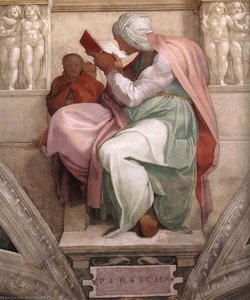
Mostly in Sistine Chapel (Vatican City), St. Peter's Basilica (Vatican City) and Galleria dell'Accademia di Firenze (Florence). The museum table above lists them all.

In which years did Michelangelo paint the most famous works?Reveal the answer

In 1500s: 36 of the 100 works on this page were made then, Holy Family (Doni Tondo) among them.

What are the first and the last famous originals of Michelangelo?Reveal the answer

On this page, the earliest is The Torment of Saint Anthony (1487) and the latest Rondanini Pietà (1564).

Which subjects did Michelangelo choose most often?Reveal the answer

Sculpture (19), Sistine chapel (14) and Religious art (13), across the 100 works on this page.

Which technique did Michelangelo use most?Reveal the answer

Fresco, for 39 of the 100 works on this page.

To which art movement does Michelangelo belong?Reveal the answer

High renaissance, judging by the originals on this page.

Which Michelangelo works hang at the Sistine Chapel?Reveal the answer

The Creation of Adam, Last Judgment and Creation of the Sun, Moon, and Plants: the Sistine Chapel, Vatican City holds 55 of the works on this page.

Michelangelo: life and work

The Weight of Stone and Dust

In the hills of Caprese, a boy learned the weight of stone and the grit of marble dust. Born in 1475, Michelangelo di Lodovico Buonarroti Simoni spent his early years near Settignano, where his father owned a quarry. The smell of damp earth and the sound of hammers against rock were part of his childhood. He did not start with brushes but with the chisel. His apprenticeship under Domenico Ghirlandaio in Florence brought him into contact with the city's growing interest in the human form, yet it was the Medici gardens that truly shaped his eyes. There, among the ancient Greek and Roman fragments, he studied how light falls across muscle and bone.

His work began to take shape through a deep study of anatomy. He looked at the way a limb carries weight and how skin stretches over a joint. This focus on the physical reality of the body became his primary language. By the time he reached Rome in 1496, he was already carving figures that possessed a heavy, palpable presence. The Pietà, completed in 1499, shows this early ability to make marble appear as soft as flesh, even as it carries the weight of a dead man.

The Tension of the Ceiling

The task of the Sistine Chapel ceiling was not something he sought. He saw himself as a sculptor, someone who pulls life out of stone rather than spreading pigment on plaster. Yet, for four years, he worked in the high reaches of the chapel, painting over 300 figures from the Book of Genesis. The physical toll was visible in his daily life. He spent hours in difficult positions, his body strained by the reach and the heavy application of fresco technique. In panels like The Creation of Adam, the tension is found in the small gap between two fingers, a moment of near-contact that holds the viewer's attention through pure composition.

As time passed, his style moved away from the balanced ideals of the High Renaissance toward something more restless. His later works, such as The Last Judgment on the altar wall, show a shift toward Mannerism. The figures became more elongated and the compositions more crowded and dramatic. This change reflected a shifting spiritual climate in Rome. He continued to work with an intensity that many found overwhelming, often leaving projects unfinished as his mind moved toward new architectural or sculptural problems.

Architecture and Final Years

In his later decades, Michelangelo turned much of his attention to the structure of buildings. At age 71, he took over the work on St. Peter's Basilica, altering the plans to create a more massive, imposing design. He also designed the Laurentian Library, where his use of architectural elements broke from tradition, creating a sense of movement within the stone itself. His work on the Piazza del Campidoglio in Rome showed how he could organize a public space using symmetry and classical motifs to guide the eye through the square.

He died in Rome in 1564, leaving behind a legacy written in marble, fresco, and stone. His life was defined by several key roles: