Preview
 Send
Send Share
Share
 Details
 Guide
Guide

 Download
 Similars
 X-Ray
X-Ray Diaporama
 Stats
StatsCrouching Boy


 Read More
Hand Made Oil Reproduction
Hand-painted oil on canvas in your size and frame, made to order by our artists. ( Switch to Print Switch to Digital Image)




P118B $10

P118H $10

P118W $10

P438Z $10

P508JH $12

P508YH $12

P805H $10

P805Z $10

P919BZ $10

P919G $10

P919XJ $10

P959ZH $10

P968JZ $12

W106C $8

W218G $10

W218JH $8

W218Y $10

W307PJ $10

W316G $10

W316PJ $8

W316Y $10

W398PJ $8

W4111J $10

W500HY $15

W500JH $15

W692G $12

W849H $8

W940BG $15

W953PJ $8




Pick from our preset sizes that match the artwork's original proportions.

Type the width and the height you need, to fit your frame or your wall. This is hand-painted, so for a size with a different shape the artist can paint a bit more around the picture, or cut a bit — you choose. We send you a digital mockup to approve before the painting starts. The picture shown on this page does not show the real result — only the mockup does.
After order, OriginalUniqueArt.com team will email client for instructions and provide a mockup preview
Worldwide Delivery () in 3/4 weeks instead of standard 5 weeks. (26 October). No compromise on quality.

Free Worldwide Express Shipping

High-Quality Linen Canvas

Full Shipping Insurance

Customs Tax Refund Guarantee

True Color Matching Guarantee

100-Day Return Policy (Defects Only)

100% Money-Back Guarantee

Bulk Discount Offer
 Glass option is only available in size under 110 CM

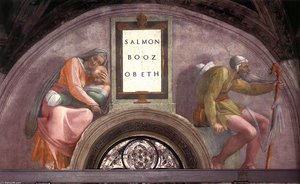
Crouching Boy
Reproduction Medium
Reproduction Size
-


Total Price
$ 300
Crouching Boy: A Testament to Michelangelo’s Renaissance Genius
The Crouching Boy, a marble sculpture created by the renowned artist Michelangelo Buonarroti in 1530, stands as an unparalleled achievement of Renaissance sculpture—a poignant meditation on contemplation and human vulnerability. Housed at The Hermitage in St. Petersburg, Russia, this iconic piece continues to captivate audiences worldwide and serves as a cornerstone of Western artistic heritage.Artistic Significance: Embodiment of Renaissance Ideals
Michelangelo’s “Crouching Boy” exemplifies the humanist spirit that defined the High Renaissance—a fervent belief in human potential and an admiration for classical antiquity. Unlike earlier depictions of figures, Michelangelo eschewed heroic grandeur, opting instead for a profoundly introspective pose. The boy's slumped posture, hands resting on his knees, and bowed head convey a palpable sense of melancholy and deep thought—characteristics that resonate powerfully with viewers today. This deliberate simplicity underscores Michelangelo’s mastery of form and technique; he skillfully captures the essence of human emotion through meticulously crafted marble surfaces.Technical Brilliance: Mastering Marble Sculpture
Michelangelo's technical prowess is evident in every aspect of “Crouching Boy.” The sculptor employed a revolutionary method known as *contrapposto*, where the figure’s weight shifts subtly between legs, creating an illusion of movement and dynamism despite its stillness. This technique—borrowed from Greek sculpture—allowed Michelangelo to achieve remarkable anatomical accuracy while conveying a sense of naturalism. Furthermore, he painstakingly polished the marble surface to reveal subtle textures and contours, enhancing the statue's visual impact and demonstrating his profound understanding of material properties. The sculptor’s attention to detail is breathtaking, capturing the delicate folds of clothing and the subtle musculature of the boy’s body with astonishing precision.Historical Context: Reflecting Florentine Republican Values
“Crouching Boy” was conceived during a period of significant political upheaval in Florence—the waning days of the Medici dynasty and the ascendancy of republican ideals. Michelangelo, deeply influenced by humanist philosophy, sought to express these values through his art—a celebration of human dignity and moral virtue. The sculpture served as a memorial to Lorenzo de’ Medici, who had died in 1527, marking the end of Florentine independence and ushering in an era of instability. Yet, despite its somber mood, “Crouching Boy” embodies Michelangelo's unwavering belief in the enduring power of human intellect and emotion—themes that continue to inspire artists and scholars centuries later.Conservation and Display: Preserving Artistic Legacy
The Hermitage Museum has undertaken meticulous conservation efforts to safeguard “Crouching Boy” for future generations. The statue is positioned on a pedestal, emphasizing its importance as an artistic masterpiece and allowing visitors to appreciate its sculptural qualities from multiple perspectives. Careful lighting enhances the marble’s luminosity, revealing subtle nuances of color and texture—a testament to the museum's commitment to preserving cultural heritage. Viewing this sculpture offers a profound connection to Michelangelo’s genius and the enduring beauty of Renaissance art.For those interested in exploring more works by Michelangelo Buonarroti or other renowned artists, Michelangelo Buonarroti: Crouching Boy and Paul De Vos: Bear Hunt are available on OriginalUniqueArt.com. These hand-made oil painting reproductions offer a unique opportunity to own a piece of art history.
Questions & Answers
When was "Crouching Boy" made?
"Crouching Boy" by Michelangelo Buonarroti was created in 1530.
Is Michelangelo Buonarroti, creator of "Crouching Boy", known under other names?
Michelangelo Buonarroti appears under the alternate names Michelangelo Di Lodovico Buonarroti Simoni, Michelagnolo Di Lodovico Buonarroti Simoni, Michelangelo Di Lodovico Di Lionardo Di Buonarroto, Michelangelo.
Is "Crouching Boy" by Michelangelo Buonarroti among the sought-after Renaissance artworks?
Within the Renaissance movement, "Crouching Boy" has an iconic popularity level.
Artist Biography
The Hands of Caprese
In the hills of Caprese, a boy learned the weight of stone and the grit of marble dust. Born in 1475, Michelangelo di Lodovico Buonarroti Simoni spent his early years near Settignano, where his father owned a quarry. The smell of damp earth and the sound of hammers against rock were part of his childhood. He did not start with brushes but with the chisel. His apprenticeship under Domenico Ghirlandaio in Florence brought him into contact with the city's growing interest in the human form, yet it was the Medici gardens that truly shaped his eyes. There, among the ancient Greek and Roman fragments, he studied how light falls across muscle and bone.
His work began to take shape through a deep study of anatomy. He looked at the way a limb carries weight and how skin stretches over a joint. This focus on the physical reality of the body became his primary language. By the time he reached Rome in 1496, he was already carving figures that possessed a heavy, palpable presence. The Pietà, completed in 1499, shows this early ability to make marble appear as soft as flesh, even as it carries the weight of a dead man.
The Weight of the Sistine Ceiling
The task of the Sistine Chapel ceiling was not something he sought. He saw himself as a sculptor, someone who pulls life out of stone rather than spreading pigment on plaster. Yet, for four years, he worked in the high reaches of the chapel, painting over 300 figures from the Book of Genesis. The physical toll was visible in his daily life. He spent hours in difficult positions, his body strained by the reach and the heavy application of fresco technique. In panels like The Creation of Adam, the tension is found in the small gap between two fingers, a moment of near-contact that holds the viewer's attention through pure composition.
As time passed, his style moved away from the balanced ideals of the High Renaissance toward something more restless. His later works, such as The Last Judgment on the altar wall, show a shift toward Mannerism. The figures became more elongated and the compositions more crowded and dramatic. This change reflected a shifting spiritual climate in Rome. He continued to work with an intensity that many found overwhelming, often leaving projects unfinished as his mind moved toward new architectural or sculptural problems.
Architecture and Final Years
In his later decades, Michelangelo turned much of his attention to the structure of buildings. At age 71, he took over the work on St. Peter's Basilica, altering the plans to create a more massive, imposing design. He also designed the Laurentian Library, where his use of architectural elements broke from tradition, creating a sense of movement within the stone itself. His work on the Piazza del Campidoglio in Rome showed how he could organize a public space using symmetry and classical motifs to guide the eye through the square.
He died in Rome in 1564, leaving behind a legacy written in marble, fresco, and stone. His life was defined by several key roles:
- Sculptor: Carving works like David from single blocks of Carrara marble.
- Painter: Executing the vast narrative cycles of the Sistine Chapel.
- Architect: Redesigning the foundations of St. Peter's Basilica and the Laurentian Library.
- Poet: Expressing his inner thoughts through verse.

Michelangelo Buonarroti
1475 - 1564 , Italy
Quick Facts
- Artistic Movement Or Style:
- High Renaissance
- Mannerism
- Artists Or Movements Influenced By This Artist: ['Mannerism']
- Artists Who Influenced This Artist:
- Domenico Ghirlandaio
- Donatello
- Masaccio
- Full Name: Michelangelo di Lodovico Buonarroti Simoni
- Nationality: Italian
- Notable Artworks:
- Pietà
- David
- The Creation of Adam
- The Last Judgment
- Moses
- Place Of Birth: Caprese Michelangelo, Italy
- Date Of Birth: 1475
- Date Of Death: 1564
Related Articles

Bronze Age to Modern Masters: 10 Sculptures That Redefined Art | OriginalUniqueArt
Journey through art history with 10 legendary bronze sculptures – from Michelangelo's David to Rodin’s Thinker. Explore the stories, techniques & timeless beauty of these masterpieces. Find museum-quality reproductions & elevate your home decor on OriginalUniqueArt.com.

The Enduring Form: Sculpture Across History, Technique & Emotional Resonance
Explore the rich history of sculpture with OriginalUniqueArt. Discover key techniques, influential artists & investment potential for discerning collectors. Expert insights into valuing and collecting timeless masterpieces.

Bronze Sculptures That Defined Art History | OriginalUniqueArt
Journey through art history with our Top 10 bronze sculptures! Explore masterpieces by Rodin, Michelangelo & more. Discover stories behind iconic statues and find museum-quality reproductions for your home decor at OriginalUniqueArt.com.
Michelangelo's Masterpieces: Explore 25 Iconic Artworks for Your Home | OriginalUniqueArt
Journey through Michelangelo's 25 greatest artworks – from David’s strength to the Sistine Chapel’s beauty. Explore Renaissance masterpieces, art history & find museum-quality reproductions for your home at OriginalUniqueArt.com.

The Enduring Allure of Marble in Art History: From Classical Sculpture to Modern Abstraction
Explore the captivating history of marble sculpture from ancient Greece to modern art. Discover renowned artists like Canova & Michelangelo, carving techniques, and investment insights at OriginalUniqueArt.