


A History Rooted in Antiquity: The Origins of Fresco Painting
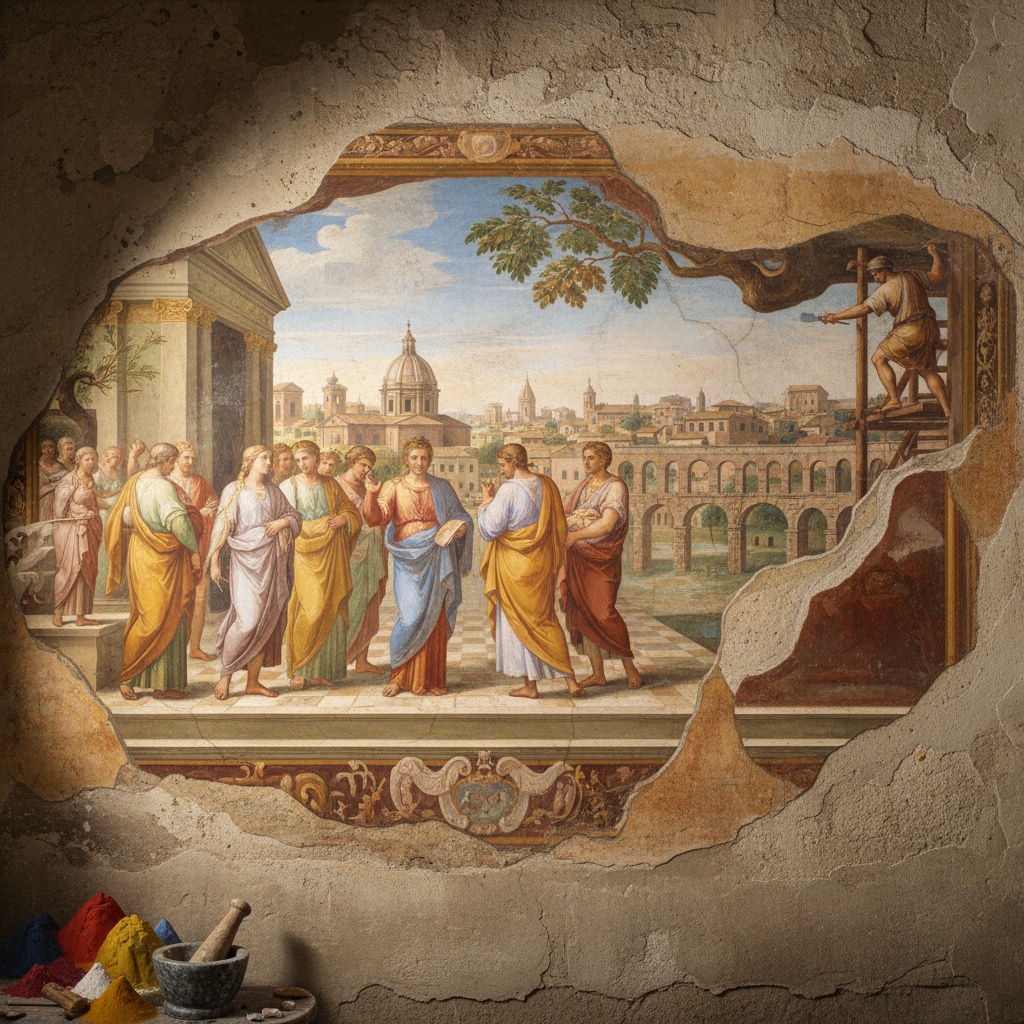
The story of fresco painting is not merely a chronicle of artistic development, but a testament to humanity’s enduring desire to capture narratives and beliefs upon the very surfaces that shelter us. Its roots stretch back millennia, far beyond the celebrated Renaissance masterpieces we often associate with the technique. While the precise origins remain shrouded in the mists of time, evidence suggests its early practitioners were driven by a fundamental need for permanence – a yearning to create images that would transcend generations. The Minoan civilization, flourishing on the island of Crete around 1500 BCE, left behind tantalizing glimpses of vibrant frescoes adorning the walls of palaces like Knossos, depicting scenes of bull-leaping and ritualistic life. These weren’t simply decorations; they were windows into a complex culture, imbued with religious significance and social meaning.
The Romans, ever pragmatic and ambitious, embraced fresco wholeheartedly, transforming their villas and public spaces into elaborate galleries of storytelling. The remarkably preserved frescoes discovered in Pompeii offer an unparalleled glimpse into Roman daily life, mythology, and the burgeoning artistic skill of the era. The “Villa of the Mysteries,” with its enigmatic depictions of Dionysian rites, stands as a powerful example of the technique’s capacity to convey complex symbolism and emotional depth. However, with the decline of the Roman Empire, much of this accumulated knowledge was lost or fragmented, entering a period of relative dormancy in Western Europe.
Buon Fresco vs. Secco: Understanding the Techniques & Materials
 Circumcision (on the decorative band)
Witness Giotto's revolutionary 'Circumcision' fresco from the Scrovegni Chapel! This masterpiece showcases early Renaissance artistry, emotional depth & biblical narrative.
To truly appreciate fresco painting is to understand the delicate dance between artist and material. The term “fresco” itself derives from the Italian word *affresco*, meaning “fresh,” immediately hinting at the core principle of the technique – working on wet plaster. But not all frescoes are created equal. The most revered method, buon fresco, or “true fresco,” involves applying pigment directly to freshly laid lime plaster (*intonaco*). This isn’t simply painting *on* a surface; it's an integration *with* the surface. The water in the pigment acts as a vehicle, allowing it to chemically bind with the calcium carbonate in the plaster as it dries – a process known as carbonation. The result is an image of exceptional durability and luminosity.
However, buon fresco demands speed and precision. Artists work in sections called *giornate* (“a day’s work”), knowing that each area must be completed before the plaster sets. This necessitates meticulous planning and a mastery of draftsmanship. Where greater detail or brighter colors were desired, artists often turned to fresco secco, or “dry fresco.” This technique involves applying pigment to dry plaster using a binding medium like egg yolk or glue. While offering more flexibility, it lacks the permanence and luminosity of buon fresco, as the paint sits *on* the surface rather than becoming an integral part of it. Often, artists would combine both techniques – employing buon fresco for broad areas and secco for finer details and highlights.
The Renaissance Masters: Giotto, Michelangelo, and Fra Angelico
 F.A.Q.: Wall Murals & Frescoes – Customization, Scale & Installation for Elite Collectors
provides bespoke wall murals & frescoes for elite collectors. Discover custom scale options, professional installation, and expert artistry. Commission a unique masterpiece today.
The Italian Renaissance witnessed a breathtaking revival of fresco painting, elevating the technique to unprecedented heights. Giotto di Bondone, often hailed as the father of Western art, revolutionized mural painting in the 14th century with his emotionally resonant depictions of biblical scenes in the Scrovegni Chapel in Padua. His frescoes weren’t merely decorative; they were imbued with a newfound sense of realism and human emotion, breaking away from the stylized conventions of Byzantine art. The “Bringing of the Rods to the Temple,” for example, captures a pivotal moment in Mary's life with remarkable tenderness and narrative power.
Centuries later, Michelangelo redefined the boundaries of artistic ambition with his monumental frescoes on the ceiling of the Sistine Chapel. Over four years, he painstakingly painted over 5,000 square feet of biblical scenes while lying on his back – a testament to his dedication and physical endurance. The sheer scale, anatomical accuracy, and dramatic intensity of his work continue to inspire awe today. Fra Angelico, a Dominican friar-painter, brought a unique spiritual devotion to his frescoes, characterized by delicate colors, graceful figures, and profound religious symbolism. His “Massacre of the Innocents” is a poignant example of his mastery, showcasing both technical skill and deep faith.
Composition & Narrative: Storytelling Through Wall Paintings
Fresco painting wasn’t simply about applying pigment to plaster; it was about constructing compelling narratives that unfolded across entire walls. Renaissance artists understood the power of composition – carefully arranging figures, scenes, and architectural elements to guide the viewer's eye and convey a specific message. The use of perspective, light, and shadow were crucial tools in creating depth and realism. Often, frescoes were organized into complex cycles, telling stories from the Bible or classical mythology.
Cartoons, full-scale preparatory drawings, played a vital role in this process. Artists would meticulously sketch out their compositions on paper, then transfer the outlines onto the wet plaster using techniques like *sinopia* (a reddish pigment used for underdrawing). This ensured accuracy and allowed for precise execution of complex scenes. The placement of figures within the architectural framework was also carefully considered – often integrating them seamlessly with existing columns, arches, and windows to create a sense of spatial harmony.
Preserving a Legacy: Conservation Challenges & Modern Revivals
 The Fresco as Family Legacy: Preserving Heritage Through Wall Art
Explore the rich history & enduring legacy of fresco painting. Discover how to preserve family heritage through stunning wall art. Expert insights & restoration guidance.
The very permanence that made fresco painting so appealing also presents unique conservation challenges. Over centuries, frescoes are vulnerable to environmental factors like humidity, pollution, and seismic activity. Salt efflorescence, caused by rising damp, can damage the plaster surface, while flaking paint requires delicate restoration techniques. Conservation efforts often involve painstaking cleaning, consolidation of loose areas, and careful retouching to restore lost colors.
Despite these challenges, there’s a growing appreciation for the art of fresco painting today. Modern artists are rediscovering the technique, pushing its boundaries and exploring new creative possibilities. The resurgence of interest in bespoke wall murals reflects a desire for unique, handcrafted artwork that transcends fleeting trends. The enduring legacy of fresco lies not only in the masterpieces of the past but also in its continued relevance as a powerful medium of artistic expression.
Fresco as a Timeless Art Form: Contemporary Applications & WahooArt's Offerings
The allure of fresco extends beyond historical preservation; it’s experiencing a vibrant revival as a luxury art form for contemporary spaces. Homeowners and businesses alike are seeking to elevate their environments with bespoke wall murals that possess a unique sense of depth, texture, and permanence. This desire stems from a longing for authenticity – a rejection of mass-produced décor in favor of handcrafted artistry.
At WahooArt.com, we celebrate this timeless tradition by offering exquisite reproductions of iconic frescoes, as well as custom mural services tailored to your individual needs. Our skilled artists meticulously recreate masterpieces using traditional techniques, ensuring authentic brushstrokes and vibrant colors. Whether you envision a Giotto-inspired scene adorning your living room or a personalized mural reflecting your family history, our team can bring your vision to life. We provide expert design guidance, seamless installation, and a commitment to quality that ensures your fresco will be cherished for generations. Explore the possibilities of transforming your space into a living work of art – a testament to the enduring power of fresco painting.