Hudson River School, one artist at a time

44 Famous Hudson River School Painters Who Shaped the Movement

Frederic Edwin Church (1826–1900) is the most famous Hudson River School painter, whose singular vision gave us The Oxbow and The Heart of the Andes. Next stand Thomas Cole, Albert Bierstadt, Asher Brown Durand and Thomas Moran. These 44 painters, from William Bradford (born 1590) to Louis Aston Knight (born 1873), came from 5 countries.

Our selection. Artists whose works our catalogue attaches to Hudson River School, in the order of our fame ranking. Artists born after 1955 with no Wikidata identifier stay out until verified. The Wikipedia figure counts our 32 languages with an article on the artist.

  1. The Oxbow by Frederic Edwin Church1Frederic Edwin Church
  2. The Oxbow by Thomas Cole2Thomas Cole
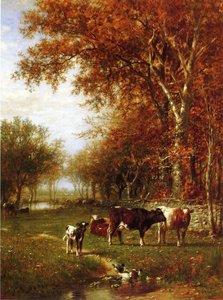
  3. Valley of the Yosemite by Albert Bierstadt3Albert Bierstadt

In brief

Hudson River School in brief

  • 44Artists
  • 1590–1873Years of birth
  • 5Countries of birth
  • 0Women
  • 6,194Works in our catalogue
Cities with most births
Philadelphia (4), New York City (4), Hartford (2), Bolton (2)

One artist at a time

44 Hudson River School Painters and their signature works

1of 44

Frederic Edwin Church

American Born in Hartford Hudson River School Wikipedia in 24/32 languages

Frederic Edwin Church

His paintings are characterized by an astonishing level of detail, capturing the textures of foliage, the play of light on water, and the imposing scale of mountains with breathtaking accuracy. However, this wasn’t simply photographic representation; Church infused his work with a dramatic flair, employing sweeping panoramic views, vibrant color palettes, and a masterful command of atmospheric perspective. This influence is evident in Church’s later expeditions to South America and his attempts to convey not just the visual beauty of these landscapes but also their underlying geological and botanical complexities.

Pupil of Thomas Cole #2 · Teacher of Jervis McEntee #29

Signature works · The 100 signature works

2of 44

Thomas Cole

Anglo-American Born in Bolton Hudson River School Wikipedia in 25/32 languages

Thomas Cole

His approach often involved placing small figures or solitary structures against moody, expansive natural landscapes. He possessed a keen ability to render the textures of the American wilderness, often using the interplay of light and shadow to create a sense of atmosphere and depth. As the founder of the Hudson River School, he provided the first significant vocabulary for a nation seeking to define itself through its own soil and sky.

Where to see The Museum of Fine Arts in Boston also maintains a collection of his paintings, offering further insight into his development.

Teacher of Frederic Edwin Church #1

Signature works · The 100 signature works

3of 44

Albert Bierstadt

German-American Born in Solingen Hudson River School, Luminism Wikipedia in 23/32 languages

Albert Bierstadt

Bierstadt’s approach to the canvas was shaped by his time in Düsseldorf, where he moved away from the simple crayon sketches of his youth toward a more disciplined, naturalistic style. His later works in the Bahamas showed a shift toward a more expressive use of color, moving away from the controlled Luminist style toward bolder, more brilliant tones. Bierstadt was an important interpreter of the western landscape, providing a way for people to see the scale of the American West.

Where to see His canvases can be found in several collections across different continents.

Signature works · The 100 signature works

4of 44

Asher Brown Durand

American Born in Maplewood Hudson River School Wikipedia in 15/32 languages

Asher Brown Durand

He also penned insightful “Letters on Landscape Painting ” published in The Crayon – a significant art periodical – articulating his artistic principles and advocating for direct observation from nature.

Signature works · The 100 signature works

5of 44

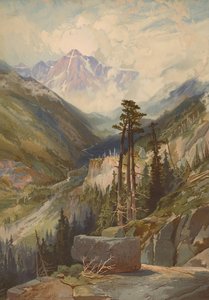
Thomas Moran

American Born in Bolton Hudson River School Wikipedia in 14/32 languages

Thomas Moran

Bolton, Lancashire, England, provides the setting for the birth of Thomas Moran on February 12, 1837. By 1856, the transition from graphic illustration to fine art is marked by his first oil painting, Among the Ruins There He Lingered. He stands before the canvases of Claude Lorrain and J.M.W.

Where to see His canvases reside in major institutions across several continents.

Signature works · The 100 signature works

6of 44

John Frederick Kensett

American Born in Cheshire Hudson River School, Luminism Wikipedia in 14/32 languages

John Frederick Kensett

He did not travel alone; Asher Durand and John William Casilear were with him during this period. Mount Washington from the Valley of Conway (1851). His commitment to his peers was evident through his leadership in the Artists' Fund Society, where he acted as president from 1865 to 1870.

Where to see His paintings are scattered across several major collections, often found in rooms dedicated to the development of American landscape painting.

Signature works · The 100 signature works

7of 44

William Bradford

American Born in Austerfield Romanticism

William Bradford

These paintings weren’t simply topographical records; they were imbued with a sense of realism that resonated deeply with the burgeoning commercial interests of New Bedford, a prominent whaling port. He meticulously documented these expeditions, publishing “The Arctic Regions,” a detailed account accompanied by photographs, further solidifying his role as an explorer-artist. His skill in depicting maritime activity within dramatic natural settings is showcased beautifully in "Whaler and Fishing Vessels near the Coast of Labrador " (c. 1880).

Signature works · The 100 signature works

8of 44

Jasper Francis Cropsey

American Born in Staten Island Hudson River School Wikipedia in 11/32 languages

Jasper Francis Cropsey

He established his own architectural practice in 1843, contributing significantly to New York City’s rapidly evolving infrastructure—including designs for stations on the elevated railways. Rediscovered in the 1960s after a period of relative obscurity, his paintings are now prominently featured in major American museums, including the National Gallery of Art, the Metropolitan Museum of Art, and Crystal Bridges Museum of American Art.

Signature works · The 100 signature works

9of 44

Sanford Robinson Gifford

American Born in Greenfield Luminism, Hudson River School Wikipedia in 12/32 languages

Sanford Robinson Gifford

gifford's work is characterized by its emphasis on light and soft atmospheric effects, earning him a reputation as a leading practitioner of luminism, an offshoot style of the hudson river school. his landscapes often featured serene and idyllic scenes, showcasing his unique ability to capture the beauty of nature.

Signature works · The 100 signature works

10of 44

William Trost Richards

American Born in Philadelphia Hudson River School Wikipedia in 9/32 languages

William Trost Richards

William Trost Richards, born in Philadelphia on November 14, 1833, occupies a unique position within the pantheon of American landscape painters. His first major public exhibition came in 1858 with a show organized by Albert Bierstadt in New Bedford, Massachusetts, aligning him, albeit loosely, with the Hudson River School tradition.

Signature works · The 100 signature works

11of 44

Worthington Whittredge

American Born in Springfield Hudson River School Wikipedia in 11/32 languages

Worthington Whittredge

May 22, 1820, marks the beginning of Thomas Worthington Whittredge's life in a log cabin. The setting is a farm near the Little Miami River, located less than 50 miles northeast of Springfield, Ohio. On the Cache la Poudre River, Colorado (1876).

Where to see His canvases reside in major institutions across the United States, preserved within collections that trace the development of American landscape painting.

Signature works · The 100 signature works

14of 44

John William Casilear

Born in New York

John William Casilear

Durand’s growing interest in landscape painting, inspired by his friendship with Thomas Cole, sparked a similar passion in Casilear. Gradually, Casilear dedicated himself more fully to painting, embracing the style that would become known as the Hudson River School. Death: Casilear passed away in Saratoga Springs, New York, in 1893, leaving behind a legacy of captivating landscape paintings.

Signature works · The 100 signature works

15of 44

Thomas Hill

British Born in Birmingham Tonalism Wikipedia in 12/32 languages

Thomas Hill

Hill’s formative years were spent honing his artistic skills in London under the tutelage of George Frederic Watts, a prominent Victorian sculptor and painter whose influence extended beyond sculptural form into tonalist principles. His unwavering commitment to portraying nature as an embodiment of spiritual truth established him as a precursor to Impressionism and profoundly influenced subsequent generations of landscape painters.

Signature works · The 100 signature works

16of 44

Samuel Coleman Junior

American Born in Portland Hudson River School

Samuel Coleman Junior

While his roots remained firmly planted in the American landscape tradition, Coleman’s artistic vision was profoundly expanded by his extensive travels throughout Europe and North Africa. Moving to New York as a youth, he found himself at the epicenter of a burgeoning American aesthetic, eventually deciding by 1850 to dedicate his life to the pursuit of the brush and the canvas.

Signature works · The 100 signature works

17of 44

Robert Seldon Duncanson

American Born in Fayette Hudson River School Wikipedia in 11/32 languages

Robert Seldon Duncanson

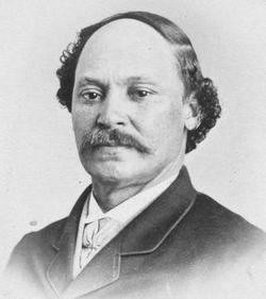
He broke down barriers for African American artists during a period marked by pervasive racial discrimination, serving as an inspiration for future generations.

Signature works · The 100 signature works

18of 44

William Hart

American Born in Newburgh, New York

William Hart

Whether he was depicting the rugged, crashing waves of a coastline or the serene, sun-drenched meadows where cattle graze, his technique remained rooted in a deep reverence for detail and mood. By focusing on the textures of the earth—the ruggedness of a cliffside or the stillness of a forest clearing—he helped establish a visual vocabulary for the American landscape that remains influential to this day.

Signature works · The 100 signature works

19of 44

James McDougal Hart

Scottish Born in Kilmarnock Hudson River School Wikipedia in 8/32 languages

James McDougal Hart

The expansive scale of these landscapes underscores the Hudson River School’s ambition to capture the immensity of the American wilderness and convey its spiritual significance. Furthermore, Hart's brother William, who eschewed academic European training, developed a more modest artistic style focused on smaller canvases.

Signature works · The 100 signature works

20of 44

Louis Remy Mignot

American Born in Charleston Hudson River School Wikipedia in 7/32 languages

Louis Remy Mignot

His ability to blend the meticulous detail of American realism with the atmospheric soul of French Romanticism ensures that his place in the tapestry of American art history is both secure and deeply moving.

Signature works · The 100 signature works

21of 44

Samuel Colman

American Born in Portland Hudson River School Wikipedia in 11/32 languages

Samuel Colman

Colman’s initial artistic endeavors firmly placed him within the tradition of the Hudson River School. His extensive travels throughout Europe in the 1860s and early 1870s – encompassing France, Spain, Italy, Morocco, Egypt, Holland, and Algeria – proved transformative. More remarkably, he dedicated himself to exploring the mathematical principles underlying artistic composition, culminating in the publication of two books: “Nature's Harmonic Unity” (1912) and “Proportional Form” (1920).

Signature works · The 100 signature works

22of 44

William Stanley Haseltine

American Born in Philadelphia Luminism, Hudson River School Wikipedia in 10/32 languages

William Stanley Haseltine

European Sojourn (1857-1864): Traveled to Europe in 1857, joining a colony of American painters studying in Düsseldorf, Germany. The Düsseldorf school emphasized meticulous draftsmanship and realistic depiction. Düsseldorf School Influence: Exposure to European artistic traditions profoundly influenced his style.

Signature works · The 100 signature works

23of 44

David Johnson

American Born in New York City Hudson River School, Luminism, Barbizon influence Wikipedia in 8/32 languages

David Johnson

This stylistic shift, while initially met with mixed reactions from his colleagues within the Hudson River School, reflected a broader trend among American artists seeking to engage with European artistic developments.

Pupil of Jasper Francis Cropsey #8

Signature works · The 100 signature works

24of 44

Paul Weber

German Born in Darmstadt Hudson River School Wikipedia in 7/32 languages

Paul Weber

Gottlieb Daniel Paul Weber (19 January 1823 – 12 October 1916) was born in Darmstadt, Germany—the son of Johann Daniel Weber, a composer who served as court musician to the Duke of Hesse. During his studies, Weber was mentored by Josephus Laurentius Dyckmans, whose teachings solidified his understanding of landscape painting and its expressive potential. He championed the Hudson River School's emphasis on plein air painting —working outdoors directly from observation.

Signature works · The 100 signature works

25of 44

Louis Aston Knight

French American Born in 7th arrondissement of Paris Romantic Landscape Impressionism Wikipedia in 7/32 languages

Louis Aston Knight

While his formal training at the Académie Julian under masters such as Jules Lefebvre and Tony Robert-Fleury provided him with a rigorous technical foundation, his true classroom was the countryside itself.

Signature works · The 100 signature works

26of 44

Daniel Huntington

American Born in New York City ['Hudson River School', 'Portrait painter'] Wikipedia in 7/32 languages

Daniel Huntington

Born in New York City, Daniel Huntington emerged as a pivotal figure in the American art landscape, weaving together the serene naturalism of the Hudson River School with the dignified precision of classical portraiture.

Signature works · The 100 signature works

27of 44

Alexander Helwig Wyant

American Born in Port Washington Tonalism, Hudson River School Wikipedia in 6/32 languages

Alexander Helwig Wyant

Hudson River School: Wyant initially followed this tradition, absorbing its emphasis on detailed observation and grand vistas, but ultimately diverged towards the more nuanced aesthetic of Tonalism. American Barbizon Movement: His later work aligned with the principles of this movement, emphasizing plein air painting, a focus on natural light, and a rejection of academic conventions. His later works, particularly those created in Arkville, New York, reveal a clear connection to the Barbizon painters – a group of French artists who emphasized plein air painting and a focus on capturing the fleeting effects of light and atmosphere.

Signature works · The 100 signature works

28of 44

Thomas Chambers

American Born in England Primitivist, Marine Landscape Wikipedia in 5/32 languages

Thomas Chambers

Born in Whitby, Yorkshire, England, in 1808, Chambers’s journey was one of transatlantic migration, quiet dedication, and ultimately, posthumous acclaim. His father, a merchant sailor, instilled a deep connection to the sea, while his mother worked as a laundress; this humble upbringing likely shaped his keen observation of everyday life and a pragmatic approach to artistic creation. He faced hardship in his later years, eventually returning to England penniless and disabled around 1866, where he died in a Whitby workhouse in 1869.

Signature works · The 100 signature works

29of 44

Jervis McEntee

American Born in Rondout Hudson River School Wikipedia in 7/32 languages

Jervis McEntee

Jervis McEntee, born in Rondout, New York, in 1828, occupies a unique and often understated position within the celebrated lineage of Hudson River School painters. His early commitment to art is underscored by his debut exhibition at the National Academy of Design in New York City as early as 1850, signaling a determined pursuit of his chosen path. November Day, 1863, for example, exemplifies this approach—a scene not of vibrant color but of muted tones and subtle gradations, conveying a feeling of peaceful resignation rather than exuberant joy.

Pupil of Frederic Edwin Church #1

Signature works · The 100 signature works

30of 44

William Louis Sonntag, Sr.

American Born in Pennsylvania Hudson River School, Romanticism Wikipedia in 4/32 languages

William Louis Sonntag, Sr.

His landscapes frequently incorporated elements of the Hudson River School’s emphasis on the sublime—the awe-inspiring power and beauty of nature. The influence of the Barbizon School —a French movement emphasizing plein air painting and capturing the fleeting effects of light—can also be discerned in his later works. Returning to America in 1857, Sonntag established himself in New York City, maintaining a studio while continuing to travel extensively.

Signature works · The 100 signature works

31of 44

Homer Dodge Martin

American Born in Albany Hudson River School & Impressionism Wikipedia in 7/32 languages

Homer Dodge Martin

This was not merely a sightseeing excursion, but an immersion into the heart of avant-garde art. Exposure to the Barbizon School —with its emphasis on direct observation and naturalistic depictions of rural life —and the nascent Impressionist movement profoundly altered his artistic sensibilities. Shortly after his death in 1897, Adirondack Scenery sold for an impressive $5500, signaling a belated recognition of his talent.

Pupil of William Hart #18

Signature works · The 100 signature works

32of 44

Robert Walter Weir

American Born in New Rochelle Hudson River School Wikipedia in 8/32 languages

Robert Walter Weir

He exhibited regularly at the National Academy of Design, achieving associate membership in 1829 and full academician status by 1831 – testaments to his growing skill and recognition.

Signature works · The 100 signature works

33of 44

George Loring Brown

American Born in Boston Hudson River School Wikipedia in 6/32 languages

George Loring Brown

Even royalty took notice of his prowess; notably, “The Bay of New York ” was acquired by King Edward VII during a visit to America, a remarkable testament to his international standing. He successfully navigated the transition from the meticulous detail of engraving and the dramatic weight of Romanticism to the ephemeral, light-drenched beauty that would eventually define Impressionism. His achievements were recognized by the most prestigious institutions of his day, with numerous works exhibited at the National Academy of Design, the Brooklyn Museum of Art, and the Boston Athenæum.

Signature works · The 100 signature works

34of 44

George Henry Durrie

American Born in Hartford Hudson River School Wikipedia in 3/32 languages

George Henry Durrie

Durrie’s early life was steeped in a strong sense of faith and community. He received formal training in portraiture from Nathaniel Jocelyn, a respected New Haven engraver and painter, beginning in 1839. Despite his relative obscurity during his lifetime, George Henry Durrie’s work has experienced a resurgence in popularity in recent decades.

Signature works · The 100 signature works

35of 44

Levi Wells Prentice

American Born in New York Regional American Art, Landscape painting Wikipedia in 5/32 languages

Levi Wells Prentice

His paintings are now exhibited in museums across the United States, including the New York State Museum, the Museum of Fine Arts, Boston, and the Montclair Art Museum.

Signature works · The 100 signature works

36of 44

Alvan Fisher

American Born in Needham Hudson River School Wikipedia in 4/32 languages

Alvan Fisher

Alvan Fisher (August 9, 1792 – February 13, 1863) stands as a pivotal figure in the burgeoning American art scene of the mid- nineteenth century. Born in Needham, Massachusetts, he emerged from humble beginnings to become one of the most respected landscape painters and genre artists of his time—a true embodiment of the Hudson River School aesthetic.

Signature works · The 100 signature works

38of 44

Christopher Pearse Cranch

American Born in Columbia Transcendentalism, Hudson River School Wikipedia in 3/32 languages

Christopher Pearse Cranch

In the rich tapestry of nineteenth-century American culture, few figures embody the era's intellectual and aesthetic synthesis as gracefully as Christopher Pearse Cranch. Born in 1813 in Columbia, Maryland, into a distinguished legal family, Cranch was destined for a life where the boundaries between the spiritual and the material would perpetually blur. His works, such as " Landscape with Waterfall " and his evocative depictions of Venice, reveal an artist capable of capturing both the rugged majesty of the New World and the luminous, atmospheric light of the Old.

Signature works · The 100 signature works

39of 44

Aaron Draper Shattuck

American Born in Francestown White Mountain School & Hudson River School Wikipedia in 4/32 languages

Aaron Draper Shattuck

His education was a deliberate pursuit of domestic mastery, beginning with the study of portraiture under Alexander Ransom in Boston in 1851, followed by rigorous training at the National Academy of Design in New York City.

Signature works · The 100 signature works

40of 44

Edmund Darch Lewis

American Born in Philadelphia Hudson River School, Luminism Wikipedia in 3/32 languages

Edmund Darch Lewis

The significance of Edmund Darch Lewis lies not only in his prolific output but in his ability to translate the sublime and picturesque aspects of nature into enduring visual narratives. Beyond the canvas, Lewis lived a life of cultured refinement. By nineteen, his talent was already garnering recognition through exhibitions at the Pennsylvania Academy of the Fine Arts, and by twenty-four, he had achieved the prestigious distinction of being elected an Associate of that very Academy.

Pupil of Paul Weber #24

Signature works · The 100 signature works

42of 44

Seth Eastman

American Born in Brunswick Hudson River School Wikipedia in 3/32 languages

Seth Eastman

During the Mexican-American War, Eastman did not merely navigate challenging terrains as a soldier; he observed them with the keen, analytical eye of a mapmaker. His journey through the Dakota Territory and his command positions within the expanding West allowed him to witness the dramatic shifts of a nation in motion. Artistically, Eastman was deeply rooted in the Hudson River School tradition, a movement characterized by its reverence for the sublime power of nature.

Signature works · The 100 signature works

43of 44

William Brown

American Born in New York City Hudson River School, Pre-Raphaelite

William Brown

Born in Troy, New York, William Mason Brown emerged as a distinctive voice within the American art landscape, carving out a legacy defined by an extraordinary devotion to detail. As a prominent member of the second generation of the Hudson River School, Brown’s early work reflected the romantic traditions established by masters such as Thomas Cole. Throughout his long career, Brown was a consistent and respected presence in the American art community, exhibiting annually at the National Academy of Design for over three decades.

Signature works · The 100 signature works

44of 44

Charles De Wolf Brownell

Born in Providence Wikipedia in 1/32 languages

Charles De Wolf Brownell

while concrete details about brownell's early life are scarce, it is inferred that he was influenced by the hudson river school, a group known for its romantic landscapes. this influence can be seen in his choice of subjects and the serene, idyllic nature of his paintings.

Signature works · The 100 signature works

Signature works

Signature Hudson River School works

  1. The Oxbow by Frederic Edwin Church

    The Oxbow

    Frederic Edwin Church

    1844

  2. The Oxbow by Thomas Cole

    The Oxbow

    Thomas Cole

  3. Valley of the Yosemite by Albert Bierstadt

    Valley of the Yosemite

    Albert Bierstadt

    1864 · Museum of Fine Arts, Boston

  4. Landscape, Composition, Forenoon by Asher Brown Durand

    Landscape, Composition, Forenoon

    Asher Brown Durand

    1847

  5. Rainbow over the Grand Canyon of the Yellowstone by Thomas Moran

    Rainbow over the Grand Canyon of the Yellowstone

    Thomas Moran

    1900 · Smithsonian American Art Museum, Washington, D.C.

  6. Sunset on the Sea by John Frederick Kensett

    Sunset on the Sea

    John Frederick Kensett

    1872

  7. New Bedford Harbor at Sunset by William Bradford

    New Bedford Harbor at Sunset

    William Bradford

    1858

A timeline

Hudson River School through its signature works

  1. 1822
  2. 1835
  3. 1844
  4. 1847
  5. 1850
  6. 1857
  7. 1859
  8. 1862
  9. 1863
  10. 1866
  11. 1872
  12. 1875
  13. 1876
  14. 1880

Figures

The figures

Every name

List of 44 famous Hudson River School painters, every name

  1. 1Frederic Edwin ChurchFrederic Edwin ChurchAmerican · 1826–1900
  2. 2Thomas ColeThomas ColeAnglo-American · 1801–1848
  3. 3Albert BierstadtAlbert BierstadtGerman-American · 1830–1902
  4. 4Asher Brown DurandAsher Brown DurandAmerican · 1796–1886
  5. 5Thomas MoranThomas MoranAmerican · 1837–1926
  6. 6John Frederick KensettJohn Frederick KensettAmerican · 1816–1872
  7. 7William BradfordWilliam BradfordAmerican · 1590–1657
  8. 8Jasper Francis CropseyJasper Francis CropseyAmerican · 1823–1900
  9. 9Sanford Robinson GiffordSanford Robinson GiffordAmerican · 1823–1880
  10. 10William Trost RichardsWilliam Trost RichardsAmerican · 1833–1905
  11. 11Worthington WhittredgeWorthington WhittredgeAmerican · 1820–1910
  12. 12Thomas DoughtyThomas Doughty1793–1856
  13. 13Alfred Thompson BricherAlfred Thompson BricherAmerican · 1837–1908
  14. 14John William CasilearJohn William Casilear1811–1883
  15. 15Thomas HillThomas HillBritish · 1829–1908
  16. 16Samuel Coleman JuniorSamuel Coleman JuniorAmerican · 1832–1920
  17. 17Robert Seldon DuncansonRobert Seldon DuncansonAmerican · 1821–1872
  18. 18William HartWilliam HartAmerican · 1864–1946
  19. 19James McDougal HartJames McDougal HartScottish · 1828–1901
  20. 20Louis Remy MignotLouis Remy MignotAmerican · 1831–1870
  21. 21Samuel ColmanSamuel ColmanAmerican · 1832–1920
  22. 22William Stanley HaseltineWilliam Stanley HaseltineAmerican · 1835–1900
  23. 23David JohnsonDavid JohnsonAmerican · 1827–1908
  24. 24Paul WeberPaul WeberGerman · 1823–1916
  25. 25Louis Aston KnightLouis Aston KnightFrench American · 1873–1948
  26. 26Daniel HuntingtonDaniel HuntingtonAmerican · 1816–1906
  27. 27Alexander Helwig WyantAlexander Helwig WyantAmerican · 1836–1892
  28. 28Thomas ChambersThomas ChambersAmerican · 1808–1869
  29. 29Jervis McEnteeJervis McEnteeAmerican · 1828–1891
  30. 30William Louis Sonntag, Sr.William Louis Sonntag, Sr.American · 1822–1900
  31. 31Homer Dodge MartinHomer Dodge MartinAmerican · 1836–1897
  32. 32Robert Walter WeirRobert Walter WeirAmerican · 1803–1889
  33. 33George Loring BrownGeorge Loring BrownAmerican · 1814–1889
  34. 34George Henry DurrieGeorge Henry DurrieAmerican · 1820–1863
  35. 35Levi Wells PrenticeLevi Wells PrenticeAmerican · 1851–1935
  36. 36Alvan FisherAlvan FisherAmerican · 1792–1863
  37. 37Charles Herbert MooreCharles Herbert MooreAmerican · 1840–1930
  38. 38Christopher Pearse CranchChristopher Pearse CranchAmerican · 1813–1892
  39. 39Aaron Draper ShattuckAaron Draper ShattuckAmerican · 1832–1928
  40. 40Edmund Darch LewisEdmund Darch LewisAmerican · 1835–1910
  41. 41Robert HavellRobert Havell1793–1878
  42. 42Seth EastmanSeth EastmanAmerican · 1808–1875
  43. 43William BrownWilliam BrownAmerican · 1823–1899
  44. 44Charles De Wolf BrownellCharles De Wolf Brownell1822–1909

Questions

Your questions

Read

Stories on OriginalUniqueArt.com

Other movements

Famous artists of other movements

Other periods

Famous artists across the periods

Famous paintings

Masterpieces that inspire us, by movement

Discover more

More artists to discover