Portrait of John William Casilear

The 31 Most Famous John William Casilear Paintings, a Gallery Selection

Updated November 2026 · ranked by our popularity score (searches, visits and orders for each work) · 32 works by John William Casilear in our catalogue

In short

Of all the originals John William Casilear left, the most famous is Lake George (1857). Close behind it come Mountain Lake Scene (1883) and Lake George (1851). Our catalog holds 32 works by John William Casilear; the gallery has kept the 31 the world admires most, each shown with its date, its museum and its story.

1811 – 1883, New York Hudson river school Most works: New York Historical Society

John William Casilear's top 10 paintings: the gallery's choice

1
Lake George (1857) by John William Casilear

Lake George

1857 · Oil On Canvas

In the 1857 oil on canvas painting titled Lake George, John William Casilear depicts a large body of water situated within a mountainous landscape. The scene focuses on the surface of the lake, which is surrounded by dense clusters of trees. In the distance, mountain ranges rise above the treeline to form the background of the composition. The water contains several boats, and a single person is positioned near the…

2
Mountain Lake Scene (1883) by John William Casilear

Mountain Lake Scene

1883 · Oil On Canvas · Metropolitan Museum of Art, New York

To gaze upon this depiction of a mountain lake scene is to step across the threshold into an era of profound American romanticism. It speaks directly to the soul's yearning for untouched grandeur, embodying the very spirit that fueled the celebrated Hudson River School. This painting does not merely record a vista; it elevates it, transforming natural geography into a sublime meditation on permanence and peace. The composition guides the…

3
Lake George (1851) by John William Casilear

Lake George

1851 · Oil On Canvas · National Gallery of Art, Washington

The composition centers on the expansive, tranquil surface of Lake George, framed by the dark, textured foliage of a sloping shoreline. In the distance, hazy mountain ranges rise against a luminous sky, their forms softened by atmospheric perspective. The horizontal orientation of the horizon line emphasizes the stillness of the water, creating a sense of immense breadth. Light appears to be diffused, suggesting the clarity of midday or the soft…

4
Landscape (1852) by John William Casilear

Landscape

1852 · Oil On Canvas · New York Historical Society, New York City

The eye meets a low vantage point, resting near the edge of a small stream. Water sits in the foreground, its surface catching the soft, diffused light of a pale sky. Above the water, the world rises in a series of organic curves. Mature deciduous trees form a dense, leafy canopy that frames the scene within an oval composition. These trunks and branches create a sense of enclosure, a private…

5
Lake George (1857) by John William Casilear

Lake George

1857 · Oil On Canvas · Brooklyn Museum, Brooklyn

In the 1857 oil on canvas painting titled Lake George, John William Casilear captures a quiet moment within the natural landscape of New York. The scene focuses on the expansive surface of the lake, which rests peacefully amidst dense clusters of trees. These thickets of foliage frame the water, creating a sense of seclusion within the wilderness. In the distance, mountain ranges rise steadily above the treeline, their silhouettes forming…

6
Alpine Lake (1860) by John William Casilear

Alpine Lake

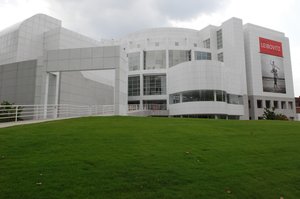
1860 · Oil On Canvas · High Museum of Art, Atlanta

In Alpine Lake, John William Casilear presents a scene of profound stillness. The viewer stands upon a rugged, rocky foreground, looking out across a calm body of water that rests at the base of massive, snow-capped mountains. This 1860 landscape captures a moment of quietude where the natural world exists in a state of perfect, undisturbed balance. The water reflects the soft blues and greys of the sky, mirroring the…

7
Above the Falls, Catskill (1862) by John William Casilear

Above the Falls, Catskill

1862 · Oil On Canvas

In "Above the Falls, Catskill" by John William Casilear, the viewer finds themselves immersed in a lush, dense forest rendered within an elegant oval format. The perspective begins from a low vantage point, crouching near a small stream that flows over a bed of rocks in the foreground. This positioning forces the eye to look upward, following the vertical orientation of the composition as it climbs from the rocky water…

8
Lake George (1857) by John William Casilear

Lake George

1857 · Oil On Canvas · Metropolitan Museum of Art, New York

Lake George is an oil on canvas painting by the artist John William Casilear, dated 1857. The work depicts a wide expanse of water situated within a mountainous landscape. The composition includes a large body of water, various mountain ranges, and a sky that meets the horizon in the distance. Trees and rocks are positioned along the shoreline and within the foreground, providing a sense of the local topography.

10
River Scene, Catskills (1861) by John William Casilear

River Scene, Catskills

1861 · Oil On Canvas · New York Historical Society, New York City

River Scene, Catskills is an oil painting by the American artist John William Casilear. Created about 1861, this landscape work depicts a naturalistic scene within the Catskill Mountains. The composition focuses on the specific interplay between water, forest, and sky, presenting a view of the American wilderness through a detailed lens.

The John William Casilear selection continues, 11 to 31

John William Casilear's famous paintings, period by period

The subjects that held John William Casilear's eye

The four subjects that come back most often in these originals, each with its finest example.

The museums that keep John William Casilear's originals

The 7 museums that hold the most of the paintings on this page.

Museum City Works by John William Casilear Paintings from this list
New York Historical Society, New York CityNew York Historical Society New York City 3 Landscape, River Scene, Catskills, Landscape with Cows
Metropolitan Museum of Art, New YorkMetropolitan Museum of Art New York 2 Mountain Lake Scene, Lake George
National Gallery of Art, WashingtonNational Gallery of Art Washington 2 Lake George, View on Lake George
High Museum of Art, AtlantaHigh Museum of Art Atlanta 2 Alpine Lake, River Landscape with Sheep
Brooklyn Museum, BrooklynBrooklyn Museum Brooklyn 1 Lake George
New Britain Museum of American Art, New BritainNew Britain Museum of American Art New Britain 1 In the White Mountains
Museum of Fine Arts, BostonMuseum of Fine Arts Boston 1 A Mountain Brook

John William Casilear decade by decade: the original that defines each

Works per decade

Pick a decade to see the original that defines it.

Collectors' questions about John William Casilear's paintings

Which work is John William Casilear most famous for?Reveal the answer

Lake George (1857). Mountain Lake Scene (1883) and Lake George (1851) come next.

What age was John William Casilear when Lake George was made?Reveal the answer

46 years old: Lake George dates from 1857, and John William Casilear was born in 1811.

What are the ten most famous John William Casilear paintings?Reveal the answer

Lake George, Mountain Lake Scene, Lake George, Landscape, Lake George, Alpine Lake, Above the Falls, Catskill, Lake George, In the White Mountains and River Scene, Catskills. The ranking above gives each one's year and museum.

How many paintings did John William Casilear leave?Reveal the answer

Our catalog holds 32 works by John William Casilear, dated from 1851 to 1883.

In which museums do John William Casilear's masterpieces hang?Reveal the answer

Mostly in New York Historical Society (New York City), Metropolitan Museum of Art (New York) and National Gallery of Art (Washington). The museum table above lists them all.

In which years did John William Casilear paint the most famous works?Reveal the answer

In 1860s: 11 of the 31 works on this page were made then, Alpine Lake among them.

What are the first and the last famous originals of John William Casilear?Reveal the answer

On this page, the earliest is Lake George (1851) and the latest Mountain Lake Scene (1883).

Which subjects did John William Casilear choose most often?Reveal the answer

Trees (17), Sky (17) and Water (15), across the 31 works on this page.

Which technique did John William Casilear use most?Reveal the answer

Oil On Canvas, for 21 of the 31 works on this page.

To which art movement does John William Casilear belong?Reveal the answer

Hudson river school, judging by the originals on this page.

Which John William Casilear works hang at the New York Historical Society?Reveal the answer

Landscape, River Scene, Catskills and Landscape with Cows: the New York Historical Society, New York City holds 3 of the works on this page.

John William Casilear: life and work

John William Casilear: A Life in Landscape

Early Life and Training

  • Born: New York City, 1811.
  • Casilear’s artistic journey began with an apprenticeship under Peter Maverick, a prominent engraver in New York during the 1820s.
  • He further honed his skills studying with Asher Durand, another accomplished engraver who would become a lifelong friend and mentor.
  • During the 1830s, Casilear and Durand collaborated as engravers in New York City, establishing themselves within the artistic community.

Transition to Landscape Painting

  • Durand’s growing interest in landscape painting, inspired by his friendship with Thomas Cole, sparked a similar passion in Casilear.
  • In 1840, Casilear accompanied Durand, John Frederick Kensett, and Thomas Prichard Rossiter on a pivotal trip to Europe.
  • This journey involved sketching scenes, visiting art museums, and immersing themselves in the European artistic tradition, profoundly influencing their development as landscape painters.
  • Gradually, Casilear dedicated himself more fully to painting, embracing the style that would become known as the Hudson River School.

Artistic Development and Style

  • Casilear’s work is characterized by detailed depictions of American scenes, often featuring serene landscapes and luminous light effects.
  • He meticulously rendered natural details, capturing the beauty and grandeur of the American wilderness.
  • By the mid-1850s, Casilear had completely transitioned to painting full-time, abandoning his engraving career.
  • His style evolved within the Hudson River School tradition, emphasizing realism, atmospheric perspective, and a romanticized view of nature.

Major Achievements and Recognition

  • In 1851, Casilear was elected as a full member of the National Academy of Design, having been an associate member since 1833.
  • He exhibited his works at the National Academy for over fifty years, gaining recognition and establishing himself as a respected artist.
  • His paintings were celebrated for their technical skill, aesthetic appeal, and evocative portrayal of the American landscape.

Historical Significance and Legacy