Inspiration · Hudson River School

The 100 Famous Hudson River School Paintings That Inspire Our Artists

1826 – 1900

Ask for the most famous Hudson River School paintings and you will hear of Albert Bierstadt's Among the Sierra Nevada Mountains, California (1868, Smithsonian American Art Museum), William Trost Richards's Cliffs of Dover (n.d.) and Sanford Robinson Gifford's Lake Maggiore (n.d.). The list runs to 100 paintings by 27 artists, from 1826 to 1900, each with the collection that holds it today.

Among the Sierra Nevada Mountains, California by Albert Bierstadt, 1868, Smithsonian American Art Museum — famous Hudson River School painting
No. 1 · Albert BierstadtAmong the Sierra Nevada Mountains, California1868 · Smithsonian American Art Museum, Washington, D.C.
100singular works
27masters · Thomas Cole – Thomas Moran
23homes in 12 cities
8kept at the Metropolitan Museum of Art

Singular works

100 Hudson River School paintings that exist only once

Every original here is unique and kept in one place. Its story, its home, and the detail that makes it unmistakable.

  1. Among the Sierra Nevada Mountains, California by Albert Bierstadt, 1868, Smithsonian American Art Museum
    1

    Smithsonian American Art Museum, Washington, D.C.1868Oil on canvas182 × 304 cm

    Painted during a time of westward expansion and exploration, "Among the Sierra Nevada Mountains, California" reflects the spirit of discovery and the allure of the untamed wilderness. The painting was created in Bierstadt's studio in Rome and exhibited throughout Europe, sparking interest in immigration to the United States.

    The singular detailgroup of elk and waterfowl on the lake's edgedramatic beam of sunlight breaking through clouds

    Its story

  2. Cliffs of Dover by William Trost Richards
    2

    Oil

    In Cliffs of Dover, William Trost Richards presents a quiet study of the ocean's movement. The painting focuses on a large body of water, where the surface is broken by several small waves that spread across the expanse. By including the mountain, William Trost Richards anchors the maritime elements within a larger geological context.

    Its story

  3. Lake Maggiore by Sanford Robinson Gifford
    3

    This painting presents a tranquil and picturesque scene centered on a large body of water. The composition is framed by majestic mountains that rise to create a dramatic backdrop for the landscape.

    Its story

  4. Seascape at Sunset by William Trost Richards, 1870
    4

    1870Oil on canvas

    Seascape at Sunset is an oil on canvas by William Trost Richards. He remained a dedicated observer of the natural world until his death in 1905. The work captures a specific moment of light and tide.

    Its story

  5. The Heart of the Andes by Frederic Edwin Church, 1859, Metropolitan Museum of Art
    5

    Metropolitan Museum of Art, New York1859Oil on canvas169 × 303 cm

    Painted in 1859, this monumental landscape transports viewers to the heart of the Andes Mountains, capturing an idealized vision of South American wilderness. Rooted in the Romantic tradition and emblematic of the Hudson River School, this artwork prioritizes emotional response to nature.

    The singular detailtropical valleyhuman figures

    Its story

  6. Staubbach Falls, Near Lauterbrunnen, Switzerland by Albert Bierstadt, 1856
    6

    1856Oil on canvas96 × 153 cm

    Bierstadt's work exemplifies the Luminism style, characterized by its emphasis on light and atmospheric effects. Bierstadt's meticulous attention to detail and his ability to convey the vastness of nature make this piece a standout example of 19th-century American landscape art.

    The singular detailmajestic waterfallserene Swiss landscape

    Its story

  7. The Oxbow by Thomas Cole, 1836, Metropolitan Museum of Art
    7

    Thomas ColeHudson River School

    The Oxbow

    Metropolitan Museum of Art, New York City1836Oil on canvas

    The painting depicts a panoramic view of the Connecticut River Valley just after a thunderstorm, offering a dramatic contrast between the untamed wilderness on the left and the cultivated farmland on the right. "The Oxbow" was painted during a period when America was rapidly expanding westward.

    The singular detailpanoramic view of the Connecticut River Valleycontrast between wilderness and civilization

    Its story

  8. Rocky Mountains by Albert Bierstadt, 1863
    8

    Albert BierstadtHudson River School

    Rocky Mountains

    1863Oil on canvas187 × 307 cm

    Towering peaks pierce a dramatic sky ablaze with sunset hues—blends of pink, orange, purple, and gold. A tranquil lake mirrors this celestial display, creating a sense of infinite depth and spaciousness.

    The singular detailatmospheric perspectiveidealized depiction of the American West

    Its story

  9. The Giant by N.C. Wyeth
    9

    N.C. WyethHudson River School

    The Giant

    Oil paint

    A giant emerges from the vapor, a phantom shape born from the meeting of sea mist and childhood wonder.

    Its story

  10. Twilight on the Passaic by Louis Remy Mignot, 1861
    10

    1861Oil

    In " Twilight on the Passaic" by Louis Remy Mignot, the composition centers on a sunset occurring over a body of water. Later, in 1866, he completed Niagara. This piece shares a temporal focus with his 1867 work titled Twilight.

    Its story

  11. Heart of the Green Mountains by Charles Louis Heyde
    11

    Oil on canvas

    The painting titled Heart of the Green Mountains was created by the artist Charles Louis Heyde. This work is a landscape piece executed by an artist who was born in France, circa 1822. Heyde established himself as a prominent New England landscape painter, focusing his efforts on the natural scenery of the region. The artist's life and practice were closely tied to the geography of the American Northeast. This particular piece, Heart of the Green Mountains, represents his engagement with the specific environmental details of the Vermont landscape.

    Its story

  12. Forest Sunrise by Albert Bierstadt
    12

    Albert BierstadtHudson River School

    Forest Sunrise

    Digital82 × 122 cm

    The composition is structured around a central clearing, drawing the viewer's eye into the heart of the forest. The ground is covered with fallen leaves and foliage, adding texture and depth to the scene. Albert Bierstadt, a key figure in this movement, was renowned for his expansive landscapes of the American West.

    The singular detailtall trees framing the sceneplay of light and shadow

    Its story

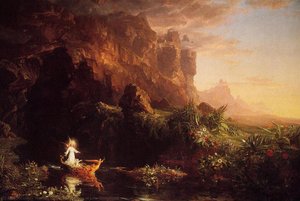
  13. The Voyage of Life: Childhood by Thomas Cole, 1842, National Gallery of Art
    13

    National Gallery of Art, Washington1842Oil on canvas134.3 × 195.3 cm

    As the viewer’s eye meets the canvas, they are transported to a realm where the boundaries between the physical world and the metaphysical spirit are beautifully blurred. The river itself acts as the central metaphor—the River of Life —flowing gently from a dark, mysterious cave into the light.

    Its story

  14. View of Florence from San Miniato by Thomas Cole, 1837, Cleveland Museum of Art
    14

    Cleveland Museum of Art1837Oil on canvas99 × 160 cm

    Painted during Cole's time in Italy, "View of Florence from San Miniato" reflects his fascination with European landscapes and architecture. As a founder of the Hudson River School, Cole was known for his romantic portrayal of the American wilderness.

    The singular detaildistinctive architectural landmarkspanoramic view of Florence

    Its story

  15. East Moriches by Thomas Moran, 1900
    15

    Thomas MoranHudson River School

    East Moriches

    1900Oil painting on canvas

    East Moriches is a landscape painting created by the artist Thomas Moran. Between 1893 and 1901, he worked on The Grand Canyon of the Yellowstone. He completed Long Island Landscape about 1902 and The Old Bridge over Hook Pond, East Hampton, Long Island, New York in 1907.

    Its story

  16. Cotopaxi by Frederic Edwin Church, 1855, Smithsonian American Art Museum
    16

    Frederic Edwin ChurchHudson River School

    Cotopaxi

    Smithsonian American Art Museum, Washington, D.C.1855Oil on canvas71.12 × 107 cm

    The scene unfolds through Cotopaxi, an oil on canvas work by Frederic Edwin Church. The focus remains fixed on the imposing presence of Mount Cotopaxi, a volcano that dominates the landscape with its snow-capped peak reaching toward the sky. The history of its presence in this collection traces back to 1965.

    Its story

  17. A Rustic Mill by Albert Bierstadt, 1855
    17

    Albert BierstadtHudson River School

    A Rustic Mill

    1855Oil on canvas279 × 376 cm

    The artwork exemplifies the Hudson River School style, characterized by its meticulous attention to detail and romantic portrayal of nature. Bierstadt's work often depicted scenes from the American West, but this piece showcases his ability to find beauty in more modest rural settings.

    The singular detaildetailed natural elementsbalanced composition

    Its story

  18. The Voyage of Life: Youth by Thomas Cole, 1842, National Gallery of Art
    18

    National Gallery of Art, Washington1842Oil on canvas134.3 × 194.9 cm

    Cole meticulously crafted a scene that captures the essence of infancy – a babe nestled within a boat guided by an angel. Artists such as Cole and Frederic Edwin Church believed that nature possessed a spiritual dimension capable of inspiring contemplation and fostering moral virtue.

    Its story

  19. Deer in a Clearing by Albert Bierstadt
    19

    Oil on canvas50 × 67 cm

    The painting depicts a peaceful forest clearing bathed in the warm glow of either sunrise or sunset, evoking a sense of calm and serenity. Tall trees frame both sides of the scene, creating a natural corridor that enhances depth and perspective.

    The singular detailwarm earth tones and golden huesinterplay of light and shadow

    Its story

  20. The Old Homestead by James McDougal Hart, 1862, High Museum of Art
    20

    High Museum of Art, Atlanta1862Oil on canvas

    The Old Homestead is a painting by James McDougal Hart. Created in 1862, this work presents a farm scene composed of various animals and trees. The composition centers on a large tree situated in the middle of a field.

    Its story

  21. The Morning Stage by Worthington Whittredge, 1875
    21

    1875Oil on canvas

    A pond occupies the foreground of this 1875 landscape, its surface reflecting the light of the morning. Created in 1875, this work reflects a period when the artist was moving away from the rigid technical rigor of the Düsseldorf Academy toward a more atmospheric style. This approach aligns with the second generation of the Hudson River School, where the focus shifted toward the quietude of the natural world and the specificities of the American pastoral ideal.

    Its story

  22. In Natures Wonderland by Thomas Doughty, 1835, Detroit Institute of Arts
    22

    Detroit Institute of Arts1835Oil on canvas

    Doughty, who lived from 1793 to 1856, was a painter who dedicated his practice to the landscape, helping to define a specific American visual language during the early nineteenth century. By 1935, the work had moved through the Vose Galleries in Boston, Massachusetts, USA.

    Its story

  23. The Subsiding of the Waters by Thomas Cole, 1829, Smithsonian American Art Museum
    23

    Smithsonian American Art Museum, Washington, D.C.1829Oil on canvas90 × 121 cm

    As Cole himself envisioned it, the Great Flood represented a sweeping societal upheaval—a symbolic cleansing akin to the biblical narrative, purging away the vestiges of British tyranny and paving the way for a new era of freedom and self-determination.

    The singular detailflood aftermath

    Its story

  24. Our Banner in the Sky by Frederic Edwin Church, 1861, Fine Arts Museums of San Francisco
    24

    Fine Arts Museums of San Francisco1861Oil19.05 × 28.57 cm

    It stands against a sky caught in a moment of violent transition. Through a tear in this dark, turbulent layer, a blue firmament peeks through, revealing the stars of a fading darkness. The interplay of light and shadow representing the struggle between North and South.

    Its story

  25. The Voyage of Life, Manhood by Thomas Cole, 1842, National Gallery of Art
    25

    National Gallery of Art, Washington1842

    The Voyage of Life series, painted by Thomas Cole in 1840, is a series of paintings that represent an allegory of the four stages of human life: childhood, youth, manhood, and old age. The paintings follow a voyager who travels in a boat on a river through the mid- 19th century American wilderness.

    Its story

  26. Moonlight - Piazza Vecchia by Thomas Cole
    26

    Oil on canvas

    Moonlight - Piazza Vecchia is an oil painting by Thomas Cole. He eventually settled in Catskill, New York, where he remained until his death on February 11, 1848. Other notable works include River in the Catskills, painted in 1843.

    Its story

  27. Sunday Morning, (painting) by Asher Brown Durand, 1860, New Britain Museum of American Art
    27

    New Britain Museum of American Art1860Oil on canvas

    Created about 1860, this work emerges from the deep-seated passion for the American wilderness that defined the artist's life. Born on August 21, 1796, in Maplewood, New Jersey, Durand brings a meticulous eye to the canvas, a skill rooted in his early training as an engraver.

    Its story

  28. Chippewa Indians at Lake Huron by Cornelius Krieghoff, 1864
    28

    1864

    The work presents a group of people gathered around a fire, with several individuals positioned near the water's edge while others remain further back in the landscape. Two boats are visible on the lake, one near the center and another toward the right side of the composition.

    Its story

  29. Italianate Landscape by Robert Seldon Duncanson, 1855
    29

    1855Oil on canvas

    These individuals are scattered throughout the scene, some positioned near the viewer and others appearing as small silhouettes in the distance. Created in 1855, this painting belongs to a period when American landscape painting was heavily influenced by the Romantic movement.

    Its story

  30. The Garden of Eden by Thomas Cole, 1828, Amon Carter Museum of American Art
    30

    Thomas ColeHudson River School

    The Garden of Eden

    Amon Carter Museum of American Art, Fort Worth1828Oil on canvas97.8 × 134 cm

    Cole’s The Garden of Eden is a quintessential example of Romanticism, a style that prioritized emotion and imagination over strict realism. Unlike earlier European landscape traditions which often focused on historical or mythological narratives, Cole sought to capture the sublime beauty of the American wilderness – a wilderness perceived as untamed, powerful, and spiritually significant.

    The singular detailelephantshorses

    Its story

  31. The Teton Range by Thomas Moran, 1897, Metropolitan Museum of Art
    31

    Thomas MoranHudson River School

    The Teton Range

    Metropolitan Museum of Art, New York1897Oil on canvas76.2 × 114.3 cm

    In the late nineteenth century, as the American frontier began to yield to the encroaching shadows of industrialization, Thomas Moran captured a world that felt both eternal and untouched. While Moran’s work often presented the West as a pristine paradise, modern viewers can appreciate the painting as a poignant meditation on the relationship between humanity and the wild.

    Its story

  32. Huntsman by Thomas Doughty
    32

    Thomas DoughtyHudson River School

    Huntsman

    Its story

  33. Landscape - Scene from `Thanatopsis` by Asher Brown Durand, 1850, Metropolitan Museum of Art
    33

    Metropolitan Museum of Art, New York1850Oil on canvas100.3 × 154.9 cm

    “Thanatopsis,” a poignant poem by William Cullen Bryant published just a year prior to Durand's painting, provided the thematic inspiration for this evocative landscape. This influential movement, which flourished throughout the mid- 19th century, sought to capture the beauty and spirit of the American wilderness —a vast and largely unexplored territory at the time.

    The singular detailruinsfuneral scene

    Its story

  34. Twilight in the Wilderness by Frederic Edwin Church, 1860, Cleveland Museum of Art
    34

    Cleveland Museum of Art1860Oil on canvas102 × 163 cm

    Frederic Edwin Church (1826-1900), a central figure in the Hudson River School, was renowned for his meticulous landscapes that captured the grandeur and spiritual essence of nature. Painted during a time of increasing American interest in unspoiled nature, this artwork reflects the cultural sense of American exceptionalism.

    The singular detailpanoramic view of a valley with a winding riverdetailed foliage and rolling hills

    Its story

  35. Evening in Arcadia by Thomas Cole, 1843, Wadsworth Athenaeum
    35

    Thomas ColeHudson River School

    Evening in Arcadia

    Wadsworth Athenaeum1843Oil on canvas

    Cole's work represents a pivotal shift in American art, moving away from European academic traditions towards a distinctly national style that celebrated the grandeur and spiritual significance of the American wilderness. “Evening in Arcadia” is a quintessential example of the Romantic movement’s influence on American art.

    The singular detailbridgeboats

    Its story

  36. Boating on the Lake, Peekskill, NY by Thomas Doughty
    36

    Its story

  37. Shady Grove by William Trost Richards, 1870
    37

    William Trost RichardsHudson River School

    Shady Grove

    1870Oil on canvas

    Shady Grove is an oil on canvas painting by the American artist William Trost Richards. This landscape piece measures 10 x 20 in. It was subsequently handled by the Spanierman Gallery in New York before entering a private collection.

    Its story

  38. Merced River, Yosemite by Albert Bierstadt, 1866, Metropolitan Museum of Art
    38

    Metropolitan Museum of Art, New York1866Oil on canvas91 × 127 cm

    The foreground is populated with trees – primarily pines and firs – adding a sense of scale and grounding the immense mountainscape. The scale of the work itself – a hallmark of the Hudson River School – reinforces this sense of awe and grandeur. Bierstadt’s technical skill is immediately apparent in Merced River, Yosemite Valley.

    The singular detailboatssnowy mountains

    Its story

  39. View on the Catskill, Early Autunm by Thomas Cole, 1837, Metropolitan Museum of Art
    39

    Metropolitan Museum of Art, New York1837Oil on canvas30 × 63 cm

    Cole, a pioneer who shifted away from European artistic traditions, sought to capture not just what he saw, but also the feeling evoked by the vastness and serenity of the Catskill Mountains. This technique not only enhances the illusion of depth but also contributes to the painting’s overall mood of tranquility and remoteness.

    The singular detaillightscale

    Its story

  40. Landscape with Factory by Thomas Doughty, 1853
    40

    1853Oil on canvas

    A large tree anchors the center of the composition, its presence providing a sense of permanence against the shifting waters in the foreground. Two figures stand near the water's edge, their proximity suggesting a shared moment of contemplation or perhaps a quiet conversation amidst the landscape.

    Its story

  41. On the Wissahickon by William Trost Richards, 1870
    41

    1870

    The woods hold their breath as sunlight filters through a dense canopy, casting a soft glow upon the forest floor. Two massive trees rise from the ground, their trunks standing side by side like silent sentinels guarding the secrets of the grove. There is a sense of being an observer in a private, untouched space.

    Its story

  42. In the Mountains by Albert Bierstadt, 1850, Wadsworth Atheneum
    42

    Albert BierstadtHudson River School

    In the Mountains

    Wadsworth Atheneum, Hartford1850Oil on canvas

    Bierstadt was a pivotal figure in the Hudson River School, a movement that sought to capture not just the physical appearance of America’s landscapes but also their spiritual significance. Bierstadt’s paintings served as visual arguments for preserving these wild spaces, celebrating their grandeur and inspiring a deep appreciation for the American wilderness.

    The singular detailwaterfallmountain landscape

    Its story

  43. Fern Walk by Frederic Edwin Church, 1865
    43

    Frederic Edwin ChurchHudson River School

    Fern Walk

    1865Oil on canvas

    Owning a piece echoing Church’s vision means acquiring not just decoration, but a tangible connection to the Romantic ideals of American landscape painting.

    Its story

  44. July Sunset, Berkshire County, Massachusetts by Frederic Edwin Church, 1847
    44

    1847Oil on canvas

    The oil on canvas titled July Sunset, Berkshire County, Massachusetts, captures a specific moment of light within the United States. The work exists as a formal record of the American wilderness, rendered through the medium of oil. Frederic Edwin Church applied pigment to the surface to fix the scene in time.

    Its story

  45. Prometheus Bound by Thomas Cole, 1847, Fine Arts Museums of San Francisco
    45

    Thomas ColeHudson River School

    Prometheus Bound

    Fine Arts Museums of San Francisco1847Oil on canvas243 × 162 cm

    The color palette —primarily cool blues, grays, and whites—reinforces this sense of bleakness, punctuated by the fiery red underpaint used to render the snow-covered mountains – a deliberate choice that subtly hints at Prometheus’s stolen fire. The painting draws directly from Aeschylus's Greek tragedy, “Prometheus Bound,” a story of rebellion against the gods.

    The singular detailallegorical scene

    Its story

  46. Niagara Falls by Thomas Cole, 1830, Centennial One Object Exhibit
    46

    Thomas ColeHudson River School

    Niagara Falls

    Centennial One Object Exhibit, Unknown1830Oil on canvas

    In this composition, the colossal energy of the cascading water dominates the left side of the canvas, its mist rising like a palpable breath against a brooding, atmospheric sky. Cole often used his landscapes to frame the New World as a natural Eden, providing an escapist contrast to the smog-filled, industrializing cityscapes of Europe.

    Its story

  47. Summer Pastures by William Brown, 1856
    47

    William BrownHudson River School

    Summer Pastures

    1856Oil on canvas

    The scene unfolds within the quiet expanse of Summer Pastures, a work that captures a specific moment of pastoral peace. One might see his skill reflected in other notable works like River Landscape in Summer, where the atmosphere of the outdoors takes center stage.

    Its story

  48. Mount Washington from Lake Sebago by Jasper Francis Cropsey, 1867
    48

    1867Oil on canvas

    Jasper Francis Cropsey painted this composition in 1867. The work is a product of a meticulous process, as the painter relies on one of his 1849 studies of Lake Sebago to guide the composition of this canvas. It occupies a place in the museum's holdings under the accession number 1975.20.5.

    Its story

  49. Autumn in the Catskills by Jervis McEntee, 1873, Cleveland Museum of Art
    49

    Cleveland Museum of Art1873Oil on canvas61 × 51.4 cm

    Its story

  50. Coastal View 1 by Alfred Thompson Bricher
    50

    Its story

  51. Diamond Cove on Hog Island, Casco Bay by Charles Codman, 1842
    51

    1842Oil

    Charles Codman’s Diamond Cove on Hog Island, Casco Bay captures a specific maritime setting within the Casco Bay region of Maine, United States. The scene focuses on a coastal area where a body of water occupies the foreground, establishing the immediate relationship between the land and the sea. The work was created about 1842. Born in Portland, Maine, Charles Codman developed his technical foundation through an apprenticeship to the ornamental painter John Ritto Penniman.

    Its story

  52. Mohonk 2 by Daniel Huntington
    52

    Daniel HuntingtonHudson River School

    Mohonk 2

    Its story

  53. View of the Normanskill by James Turpin Hart, 1850, Albany Institute of History - Art
    53

    Albany Institute of History - Art1850Oil

    Figures are scattered along the water's edge, their presence grounding the scene in a moment of quiet, everyday existence. The artist employs specific visual strategies to establish depth and atmosphere within this mid-nineteenth-century landscape: Atmospheric Perspective: Subtle gradations of color pull the eye toward the receding vistas of the New York countryside.

    Its story

  54. In the Catskills by Paul Weber, 1859
    54

    Paul WeberHudson River School

    In the Catskills

    1859Oil on canvas

    Dense forests of trees line both banks of the water, creating a corridor of greenery that directs the eye toward the center of the scene. Large, grey rocks are positioned along the riverbanks and within the shallow areas of the water.

    Its story

  55. Falls of the Ohio and Louisville by Alexander Helwig Wyant, 1863
    55

    1863Oil

    Near the water's edge, two figures stand upon the rocks, their forms anchored against the current. In the distance, a single boat drifts upon the surface, a small mark of human movement in a landscape defined by the slow pulse of the river.

    Its story

  56. The Harp of Erin by Thomas Buchanan Read, 1867, Cincinnati Art Museum
    56

    Cincinnati Art Museum1867Oil on canvas106 × 87 cm

    The artist, Thomas Buchanan Read, brings a poet's sensibility to the canvas, blending the precision of a portraitist with the sweeping emotionality of a landscape painter. The influence of the Hudson River School is felt in the dramatic treatment of the landscape, yet there is a specific, lyrical quality here that feels deeply personal.

    Its story

  57. Sunset over Lake George by John Frederick Kensett, 1867
    57

    1867Oil on canvas

    In this work, titled Sunset over Lake George, the artist John Frederick Kensett captures a quiet moment of transition. The composition centers on the interplay between the sky and the water during this particular hour of the day.

    Its story

  58. Mountain Landscape, New York State by William Louis Sonntag, Sr., 1869
    58

    1869Oil on canvas

    A river carves a path through a valley, winding between two prominent hills. The composition utilizes depth to draw the eye from the immediate foliage toward the distant, serene peaks. The work reflects the aesthetic of the Hudson River School, emphasizing the scale and atmosphere of the American landscape.

    Its story

  59. The Falls of St. Anthony by Albert Bierstadt, 1887, Thyssen-Bornemisza Museum
    59

    Thyssen-Bornemisza Museum, Madrid1887Oil on canvas96 × 153 cm

    Bierstadt, a pivotal figure within the Hudson River School movement, eschewed the stark realism favored by some contemporaries, instead embracing a romanticized vision that prioritized emotional resonance over strict topographical accuracy. Albert Bierstadt's "The Falls of St. Anthony" remains one of his most celebrated works, exemplifying the grandeur and romanticism of the Hudson River School.

    The singular detaildramatic landscape

    Its story

  60. American Lake Scene by Thomas Cole, Detroit Institute of Arts
    60

    Thomas ColeHudson River School

    American Lake Scene

    Detroit Institute of ArtsOil on canvas

    Thomas Cole, born in Bolton le Moors, Lancashire, England, in 1801, represents a cornerstone of American art history – the genesis of what would become known as the Hudson River School. Cole’s intention was to inspire awe and reverence for God's creation, prompting viewers to consider their place within the vastness of the universe.

    Its story

  61. The Trout Pool by Worthington Whittredge, 1870, Metropolitan Museum of Art
    61

    Metropolitan Museum of Art, New York1870Oil on canvas91 × 69 cm

    As a pivotal figure within the Hudson River School, Whittred enough to capture not just the topography of the Hudson Valley, but its very spirit. During an era of rapid industrialization, artists of the Hudson River School sought to preserve a sense of spiritual connection to the untouched wild.

    Its story

  62. Autumn Landscape - Saugerties, New York by Jasper Francis Cropsey
    62

    Its story

  63. Seascape: Sunset by Alfred Thompson Bricher, 1883, High Museum of Art
    63

    High Museum of Art, Atlanta1883Oil on canvas

    Small boats rest upon the surface, some drifting near the shore while others appear as tiny silhouettes against the vastness of the deep. The work reflects a deep connection to the natural world, specifically the maritime themes that defined much of the late 19th-century interest in the New England coast.

    Its story

  64. Cows before a Watering Hole by James McDougal Hart, 1886
    64

    1886Oil on canvas

    Cows before a Watering Hole is a work by James McDougal Hart, a painter born in Kilmarnock, United Kingdom. The artist's background includes formative training in the Düsseldorf school of painting.

    Its story

  65. A Pastoral Landscape by Louis Remy Mignot, 1853
    65

    1853Oil

    As an American painter of French Catholic descent, Mignot brought a specific sensibility to his depictions of the natural world, blending his heritage with the traditions of his time. This was followed by a period of intense atmospheric study in 1867.

    Its story

  66. Sacramento River Valley by Albert Bierstadt, 1872, Thyssen-Bornemisza Museum
    66

    Thyssen-Bornemisza Museum, Madrid1872Oil81 × 122 cm

    To understand “Sacramento River Valley,” it’s crucial to grasp the context of the Hudson River School. The painting was created during a period of intense westward expansion in the United States, as settlers pushed further into Native American territories.

    The singular detailfiguresdramatic sunset

    Its story

  67. View of the Arno by Thomas Cole, 1838, Thyssen-Bornemisza Museum
    67

    Thomas ColeHudson River School

    View of the Arno

    Thyssen-Bornemisza Museum, Madrid1838Oil on canvas81 × 130 cm

    The scene depicts a tranquil stretch of the Arno River, complete with figures in a small boat and distant mountains providing a dramatic backdrop. Cole was a leading figure within the Hudson River School, yet View of the Arno demonstrates a clear departure from purely American subject matter.

    The singular detailarno riverboat

    Its story

  68. View near Rutland, Vermont by Asher Brown Durand, 1837, High Museum of Art
    68

    High Museum of Art, Atlanta1837Oil on canvas74.3 × 92.08 cm

    This practice, meticulously documented in his influential Letters on Landscape Painting, championed painting outdoors – en plein air – from humble natural objects as the very foundation of artistic learning. Painted during a period of significant social and political change in America—the early 19th century —View near Rutland, Vermont carries subtle symbolic weight.

    The singular detaildetailed landscape

    Its story

  69. Ideal Landscape: Homage to Thomas Cole by Jasper Francis Cropsey, 1850, Thyssen-Bornemisza Museum
    69

    Thyssen-Bornemisza Museum, Madrid1850Oil on canvas

    The trees represent resilience and permanence amidst the ephemeral passage of time—a recurring motif in Cole’s oeuvre and a reflection of the Romantic preoccupation with mortality and spiritual contemplation.

    Its story

  70. Landscape near Minden by Worthington Whittredge, 1855
    70

    1855Oil

    The river moves through the trees with a slow, steady pulse. Sunlight filters through the canopy, catching the surface of the water where a small boat rests. Along the banks, the landscape breathes with the presence of life.

    Its story

  71. Cotopaxi by Louis Remy Mignot, 1859
    71

    Louis Remy MignotHudson River School

    Cotopaxi

    1859Oil on canvas

    This landscape work depicts a mountain characterized by smoke rising from its peak. The composition includes two mountains positioned in the background, with one mountain appearing larger than the other. A river runs through the terrain, and several trees are scattered across the landscape, providing texture and depth to the scene. Louis Remy Mignot rendered this scene using oil on canvas.

    Its story

  72. Cascading Falls at Sunset by Albert Bierstadt, 1879
    72

    1879Oil on canvas60 × 45 cm

    Executed in oil on canvas, this work is deeply rooted in the traditions of the Hudson River School. In 1863, he completed The Rocky Mountains, Lander's Peak, a work that captures the ruggedness of the frontier. By 1876, his attention turned to the immense scale of The Great Trees, Mariposa Grove, California.

    Its story

  73. John Adams (1735–1826) by Asher Brown Durand, 1855, Brooklyn Museum
    73

    Brooklyn Museum, New York City1855Oil on canvas80.3 × 122 cm

    Durand, a leading figure in the Hudson River School, sought to capture the sublime beauty and spiritual significance of the American landscape. The boulder inscribed with “Graham” – a reference to the prominent philanthropist and benefactor of the Brooklyn Institute, Lewis Graham – subtly acknowledges the role of patronage in shaping artistic expression.

    The singular detaillight & shadowboulder

    Its story

  74. The Harvest Moon by Louis Remy Mignot, 1860, New York Historical Society
    74

    Louis Remy MignotHudson River School

    The Harvest Moon

    New York Historical Society, New York City1860Oil on canvas

    The painting dates to about 1860, a period when Mignot was establishing his presence within the artistic circles of New York. In 1859, Washington and Lafayette at Mount Vernon uses a certain precision to honor American history, grounding legendary figures in a tangible reality.

    Its story

  75. Morning in the Woods by Worthington Whittredge
    75

    Its story

  76. Fisherman in Autumn Landscape by Jasper Francis Cropsey, 1879
    76

    1879Oil

    Fisherman in Autumn Landscape is a painting by Jasper Francis Cropsey. The work is dated 1879. This piece belongs to the period of the artist's career following his extensive travels through Europe, which included stays in England, France, Switzerland, and Italy.

    Its story

  77. The dream of the architect by Thomas Cole, 1840, Toledo Museum of Art
    77

    Toledo Museum of Art1840Oil on canvas136 × 214 cm

    Created in 1840, this large-scale composition was commissioned by Ithiel Town in 1839. The piece was acquired by the Toledo Museum of Art in 1949. One interpretation suggests the man represents Ithiel Town, the architect who commissioned the work in 1839.

    Its story

  78. Rock Mountains Lander's Peak by Albert Bierstadt, 1863, Fogg Museum
    78

    Fogg Museum, Cambridge1863Oil on canvas110.8 × 90.2 cm

    The scene unfolds with a deliberate sense of scale, dominated by the imposing presence of Lander's Peak, its jagged silhouette piercing a turbulent sky brimming with cumulus clouds. 1863 – a pivotal year for American westward expansion and artistic exploration.

    The singular detaillight & shadow

    Its story

  79. Charles River June 22, 1886 by William Trost Richards
    79

    Its story

  80. Caledonia, Stern and Wild by Thomas Moran
    80

    Its story

  81. Jonathan Sturges by Asher Brown Durand, 1840, Metropolitan Museum of Art
    81

    Metropolitan Museum of Art, New York1840Oil on canvas78 × 64 cm

    Asher Brown Durand painted this portrait of Jonathan Sturges about 1840. In 1849, Durand produced Kindred Spirits, a work created as a tribute to Thomas Cole. This painting belongs to the period when the artist was establishing his presence within the Hudson River School. His focus on the natural world is further evidenced by the 1853 painting Progress, which depicts a transition from a state of nature toward a landscape containing roads, telegraph wires, a canal, warehouses, railroads, and steamboats. In 1835, he produced an engraving on chine collé titled Stephen Decatur.

    Its story

  82. Sunset on the Guayaquil by Louis Remy Mignot, 1869
    82

    1869Oil

    As the sun dips low, the light spills across the surface of the water, turning the ripples into liquid gold. Along the banks, the dark outlines of trees frame the scene, grounding the ethereal light of the sky with the solid presence of the earth.

    Its story

  83. Farm by the Shore by Worthington Whittredge, 1881
    83

    1881Oil on canvas

    The painting titled Farm by the Shore was executed by the artist Worthington Whittredge. This work is dated 1881. The artist, born in 1820, lived until 1910. These practical beginnings preceded his focus on landscape painting, which became his primary pursuit after 1843.

    Its story

  84. Yosemite Valley, California by Albert Bierstadt, 1863, Lowe Gallery
    84

    Lowe Gallery, Coral Gables1863Oil on canvas

    The scene depicts a river flowing through a valley in California, framed by massive mountains on all sides. The water moves through the center of the valley, reflecting the surrounding terrain. Created around 1863, this work emerged during a period of significant westward expansion in the United States.

    Its story

  85. Sunset on Long Island 1 by Thomas Moran
    85

    Its story

  86. Dover Plain, Dutchess County, New York by Asher Brown Durand, 1848, Smithsonian American Art Museum
    86

    Smithsonian American Art Museum, Washington, D.C.1848Oil on canvas107.95 × 153.67 cm

    The composition captures a serene moment of rural life, where the natural world and human presence exist in a quiet harmony. The scene is populated by various animals that add to the vitality of the landscape.

    Its story

  87. On the Shore by William Trost Richards, 1871
    87

    1871Oil

    In the water, several boats sit upon the surface, their forms resting amidst the gentle movement of the sea. This commitment to truth led him to join the Association for the Advancement of Truth in Art, aligning his practice with the American Pre-Raphaelite movement.

    Its story

  88. A Western Landscape by Albert Bierstadt, 1870
    88

    1870Oil on canvas20 × 26 cm

    Bierstadt’s paintings, like many within the Hudson River School, played a crucial role in shaping public perception of the West. These artists weren't simply documenting landscapes; they were actively constructing an idealized image of America’s future – one filled with vast resources and opportunities for settlement.

    The singular detailmountain vistalake

    Its story

  89. Christian on the Borders of the "Valley of the Shadow of Death" by Frederic Edwin Church, 1847
    89

    1847Oil on canvas

    The composition is defined by a stark, monochromatic palette of gray, black, and pale white. The "Valley of the Shadow of Death" functions as a representation of the difficulties faced during a period of transition or testing.

    Its story

  90. God by Asher Brown Durand, 1852, Chrysler Museum of Art
    90

    Asher Brown DurandHudson River School

    God

    Chrysler Museum of Art, Norfolk1852Oil on canvas154 × 128 cm

    Unlike the fleeting, broken brushstrokes of the later Impressionists, Durand employed a meticulous, almost invisible application of paint to capture the subtle gradations of natural light.

    Its story

  91. Bouquet Valley, Adirondack Mountains by William Trost Richards, 1877, Metropolitan Museum of Art
    91

    Metropolitan Museum of Art, New York1877Oil on canvas58 × 94 cm

    The scene unfolds as a serene tableau of the Adirondack landscape, bathed in the soft, diffused light characteristic of the Luminism movement. In Bouquet Valley, this manifests as an astonishingly detailed rendering of the natural world.

    Its story

  92. Autumn by Frederic Edwin Church, 1875, Thyssen-Bornemisza Museum
    92

    Frederic Edwin ChurchHudson River School

    Autumn

    Thyssen-Bornemisza Museum, Madrid1875Oil on canvas39 × 61 cm

    Church meticulously rendered a panoramic vista overlooking Seneca Lake in New York State. Dominating the scene is a majestic river winding its way through a densely populated forest, reflecting the fiery hues of a setting sun. Church's approach aligns perfectly with Luminism, an artistic movement characterized by its emphasis on diffused light and atmospheric perspective.

    Its story

  93. View of the Shandaken Mountains by Asher Brown Durand, 1853
    93

    1853Oil on canvas

    In this oil on canvas, Asher Brown Durand presents View of the Shandaken Mountains, New York. Created in 1853, the work captures a specific moment in the American landscape. The scene focuses on the Shandaken Mountains located in New York, United States.

    Its story

  94. Idyllic Landscape by William Trost Richards, 1874
    94

    1874Oil on canvas

    Scattered throughout this verdant expanse, people move through the landscape, some lingering in the foreground while others appear as small, distant figures lost in the depth of the greenery. In this 1874 work, the artist moves away from the romanticized, sweeping vistas common to his contemporaries.

    Its story

  95. Cross at Sunset by Thomas Cole, 1848, Thyssen-Bornemisza Museum
    95

    Thomas ColeHudson River School

    Cross at Sunset

    Thyssen-Bornemisza Museum, Madrid1848Oil on canvas32 × 48 cm

    Initially working as a portrait painter, he found his true calling in capturing the untamed spirit of the nascent United States, rejecting the rigid conventions of European art and forging a distinctly American style rooted in observation and spiritual resonance.

    The singular detailsunsetlarge cross

    Its story

  96. The Autumnal Woods (aka Under the Trees) by Thomas Moran, 1865
    96

    1865

    Its story

  97. Niagara Falls by Frederic Edwin Church, 1857, Corcoran Gallery of Art
    97

    Corcoran Gallery of Art, Washington, D.C.1857Oil on canvas108 × 230 cm

    Produced in 1857, the work offers a panoramic view of the water as it cascades over the precipice. Following its initial presentation, the work was sold in 1857 to Williams, Stevens & Williams. A few years later, in 1876, the painting was purchased by William Wilson Corcoran for $12,500.

    Its story

  98. Kaaterskill Falls by Thomas Cole, 1826, Wadsworth Atheneum
    98

    Thomas ColeHudson River School

    Kaaterskill Falls

    Wadsworth Atheneum, Hartford1826Oil on canvas64 × 91 cm

    Alongside "Kaaterskill Falls," other notable works by Cole such as “An Evening in Arcadia” and “Evening in Arcadia” further solidified his position as a pioneer of American landscape painting.

    The singular detailwaterfalltrees

    Its story

  99. The Angry Sea by Thomas Moran
    99

    Thomas MoranHudson River School

    The Angry Sea

    Its story

  100. View of Catskill Creek by Thomas Cole, 1833, Albany Institute of History - Art
    100

    Thomas ColeHudson River School

    View of Catskill Creek

    Albany Institute of History - Art1833Oil

    Cole meticulously captured the twilight hues of Catskill Creek, nestled amongst towering mountains rendered in soft blues and purples, creating an atmosphere steeped in tranquility and awe.

    Its story

Where they live

The one place you can see each famous Hudson River School painting

New York keeps 8 of these originals; the Metropolitan Museum of Art, 8.

The masters

The Hudson River School masters our artists look to

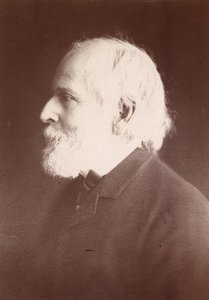
Portrait of Frederic Edwin Church

Frederic Edwin Church

1826–1900 · United States · 9

American Hudson River School painter of luminous, detailed landscapes and dramatic panoramas, from the Andes to the Arctic icebergs.

5. The Heart of the Andes, 16. Cotopaxi, 24. Our Banner in the Sky, 34. Twilight in the Wilderness, 43. Fern Walk, 44. July Sunset, Berkshire County, Massachusetts, 89. Christian on the Borders of the "Valley of the Shadow of Death", 92. Autumn, 97. Niagara Falls

Portrait of William Trost Richards

William Trost Richards

1833–1905 · United States · 8

American landscape artist of the Hudson River School, known for photographic realism in White Mountain views and detailed coastal seascapes.

2. Cliffs of Dover, 4. Seascape at Sunset, 37. Shady Grove, 41. On the Wissahickon, 79. Charles River June 22, 1886, 87. On the Shore, 91. Bouquet Valley, Adirondack Mountains, 94. Idyllic Landscape

Portrait of Asher Brown Durand

Asher Brown Durand

1796–1886 · United States · 8

American Hudson River School founder known for detailed landscapes of the Catskills and Adirondacks, capturing the sublime beauty of nature.

27. Sunday Morning, (painting), 33. Landscape - Scene from `Thanatopsis`, 68. View near Rutland, Vermont, 73. John Adams (1735–1826), 81. Jonathan Sturges, 86. Dover Plain, Dutchess County, New York, 90. God, 93. View of the Shandaken Mountains

Portrait of Thomas Moran

Thomas Moran

1837–1926 · United Kingdom · 6

American Hudson River School painter of vast Western vistas, capturing the geothermal wonders of Yellowstone and the Grand Canyon.

15. East Moriches, 31. The Teton Range, 80. Caledonia, Stern and Wild, 85. Sunset on Long Island 1, 96. The Autumnal Woods (aka Under the Trees), 99. The Angry Sea

Portrait of Louis Remy Mignot

Louis Remy Mignot

1831–1870 · United States · 5

American Hudson River School painter of atmospheric landscapes, tropical scenes from Ecuador, and luminous, moisture-filled vistas.

10. Twilight on the Passaic, 65. A Pastoral Landscape, 71. Cotopaxi, 74. The Harvest Moon, 82. Sunset on the Guayaquil

+20more masters our artists study Hudson River School Masters Their stories

In confidence

About these Hudson River School paintings

Hover gently over a question to read the answer.

Which 10 Hudson River School paintings should everyone know?

How was this list of Hudson River School paintings ranked?

By recognition: Wikipedia articles in the most languages (Wikidata sitelinks), our manual ranking and page visits. Several records of one painting count once; details, copies and studies are excluded.

How the selection is made

We went through every Hudson River School painting in our catalogue and placed the best-known first: those Wikipedia describes in the most languages, those our artists and curators rank highest and those most viewed on our pages. Each original appears once — no details or copies.

Other movements that inspire us

The periods that inspire us