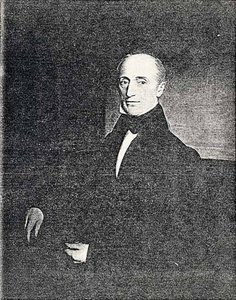
Portrait of Asher Brown Durand

The 100 Most Famous Asher Brown Durand Paintings, a Gallery Selection

Updated November 2026 · ranked by our popularity score (searches, visits and orders for each work) · 402 works by Asher Brown Durand in our catalogue

In short

Of all the originals Asher Brown Durand left, the most famous is Study for Summer Afternoon (also known as Summer Afternoon) (1865), in the collection of the Virginia Museum of Fine Arts, Richmond. Close behind it come A Sycamore Tree, Plaaterkill Clove (also known as The Sycamore, Kaaterskill Clove) (1858) and Landscape - Scene from `Thanatopsis` (1850). Our catalog holds 402 works by Asher Brown Durand; the gallery has kept the 100 the world admires most, each shown with its date, its museum and its story.

1796 – 1886, Maplewood Hudson river school Most works: New York Historical Society

Asher Brown Durand's top 10 paintings: the gallery's choice

1
Study for Summer Afternoon (also known as Summer Afternoon) (1865) by Asher Brown Durand

Study for Summer Afternoon (also known as Summer Afternoon)

1865 · Oil On Canvas · Virginia Museum of Fine Arts, Richmond

A Moment of Tranquility: Asher Brown Durand’s “Summer Afternoon” Asher Brown Durand's "Summer Afternoon," painted in 1865, isn’t merely a depiction of a pastoral scene; it’s an invitation to stillness, a carefully constructed tableau designed to evoke the profound peace found within nature. Housed within the hallowed halls of the Metropolitan Museum of Art in New York City, this oil painting transcends its physical form, transporting the viewer to a…

2
A Sycamore Tree, Plaaterkill Clove (also known as The Sycamore, Kaaterskill Clove) (1858) by Asher Brown Durand

A Sycamore Tree, Plaaterkill Clove (also known as The Sycamore, Kaaterskill Clove)

1858 · Oil On Canvas · Yale University Art Gallery, Hartford

To gaze upon Asher Brown Durand's A Sycamore Tree, Plaaterkill Clove is to be transported across time and space, standing at the threshold of a sublime moment in the American wilderness. This painting, executed in 1858, transcends mere depiction; it is an eloquent meditation on nature’s enduring power and the human spirit's yearning for its embrace. Durand, whose early life was steeped in the meticulous craft of engraving, channeled that…

3
Landscape - Scene from `Thanatopsis` (1850) by Asher Brown Durand

Landscape - Scene from `Thanatopsis`

1850 · Acrylic On Canvas · Metropolitan Museum of Art, New York

Asher Brown Durand's "Landscape – Scene from ‘Thanatopsis,’" painted in 1850, isn’t merely a depiction of a picturesque vista; it’s a profound meditation on mortality and the sublime beauty of the natural world. Born into a family of artisans—his father a watchmaker and silversmith—Durand's early life instilled within him a meticulous eye for detail, an appreciation for craftsmanship that would profoundly shape his artistic approach. This foundation found its expression…

4
View near Rutland, Vermont by Asher Brown Durand

View near Rutland, Vermont

Acrylic On Canvas · High Museum of Art, Atlanta

The painting *View near Rutland, Vermont*, by Asher Brown Durand, stands as a pivotal work in the trajectory of American landscape art. Executed with the meticulous precision born from his earlier training as an engraver and silversmith, this piece embodies the core tenets of the Hudson River School’s naturalism – a movement that sought to elevate nature to a subject worthy of profound artistic contemplation. Durand, a key figure in…

5
Genesee Oaks by Asher Brown Durand

Genesee Oaks

Oil On Canvas

Asher Brown Durand brings the quiet energy of the American wilderness into focus through Genesee Oaks. The artist, born in Maplewood, United States, approaches the canvas with a precision that hints at his early training as an engraver. This meticulous eye for detail allows him to capture the specific textures of the natural world. In this work, the landscape breathes with a life of its own, inviting a sense of…

6
Trees by the Brookside, Kingston, New York (1846) by Asher Brown Durand

Trees by the Brookside, Kingston, New York

1846 · Oil On Canvas · New York Historical Society, New York City

The painting Trees by the Brookside, Kingston, New York by Asher Brown Durand is a stunning example of American landscape art. Created in 1846, this oil on canvas piece is a testament to the artist's skill in capturing the beauty of nature. The painting is currently housed at the New York Historical Society (United States), one of the oldest cultural institutions in the United States. The Artist and His Work…

7
Sunday Morning (1860) by Asher Brown Durand

Sunday Morning

1860 · Oil · New Britain Museum of American Art, New Britain

Asher Brown Durand captures a quiet moment in time within Sunday Morning. Created about 1860, this work emerges from the deep-seated passion for the American wilderness that defined the artist's life. Born on August 21, 1796, in Maplewood, New Jersey, Durand brings a meticulous eye to the canvas, a skill rooted in his early training as an engraver. He does not merely paint a scene; he observes the light as…

8
Woodland Landscape (1854) by Asher Brown Durand

Woodland Landscape

1854 · Oil On Canvas

In this oil on canvas, we find ourselves standing at the edge of a serene woodland, where the air feels heavy with the scent of damp earth and ancient bark. The scene is composed around a gentle stream that winds its way through a dense thicket of trees, its surface reflecting the soft, diffused light filtering through the canopy. There is a stillness here, a moment of repose captured in…

9
Luman Reed (1835) by Asher Brown Durand

Luman Reed

1835 · Oil On Canvas · National Portrait Gallery, Washington, D.C.

The man sits in a quiet, heavy stillness. He is captured from the waist up, his body angled slightly away from the viewer, yet his gaze remains direct and steady. A sharp, bright white collar cuts through the darkness of his attire, a singular point of clarity against the deep, somber tones of his clothing. The palette is a collection of earth and shadow: blacks, browns, and ochre. Light falls…

10
Dover Plain, Dutchess County, New York (1848) by Asher Brown Durand

Dover Plain, Dutchess County, New York

1848 · Oil · Smithsonian American Art Museum, Washington, D.C.

The painting Dover Plain, Dutchess County, New York, created in 1848, presents a sweeping landscape of a mountainous region overlooking a vast valley. The composition captures a serene moment of rural life, where the natural world and human presence exist in a quiet harmony. Within this picturesque setting, a group of people stands upon the side of a hill, pausing to take in the expansive view.

The Asher Brown Durand selection continues, 11 to 100

11View of the Shandaken Mountains (1853) by Asher Brown DurandView of the Shandaken Mountains1853 12Genesee Oaks, (painting) (1860) by Asher Brown DurandGenesee Oaks, (painting)1860 13God (1852) by Asher Brown DurandGod1852 · Chrysler Museum of Art 14Dance on the Battery in the Presence of Peter Stuyvesant (1838) by Asher Brown DurandDance on the Battery in the Presence of Peter Stuyvesant1838 15John Quincy Adams (1767-1848) (1835) by Asher Brown DurandJohn Quincy Adams (1767-1848)1835 · Harvard Art Museums 16Jonathan Sturges (1840) by Asher Brown DurandJonathan Sturges1840 · Metropolitan Museum of Art 17Pastoral Landscape (1866) by Asher Brown DurandPastoral Landscape1866 18Mrs. John Durand (Rachel Meyer Post, 1758–1832) (1822) by Asher Brown DurandMrs. John Durand (Rachel Meyer Post, 1758–1832)1822 · New York Historical Society 19Lucy M. Durand (1829-1910) (1831) by Asher Brown DurandLucy M. Durand (1829-1910)1831 · New York Historical Society 20Caroline Durand (1829) by Asher Brown DurandCaroline Durand1829 · New York Historical Society 21Mrs. Asher B. Durand (Lucy Baldwin, d. 1830) (1825) by Asher Brown DurandMrs. Asher B. Durand (Lucy Baldwin, d. 1830)1825 · New York Historical Society 22John Durand III (ca. 1824-ca. 1910) (1825) by Asher Brown DurandJohn Durand III (ca. 1824-ca. 1910)1825 · New York Historical Society 23Self-Portrait (1830) by Asher Brown DurandSelf-Portrait1830 24Portrait of Cyrus Durand, (painting) (1830) by Asher Brown DurandPortrait of Cyrus Durand, (painting)1830 25Portrait of Phoebe Ward Durand, (painting) (1830) by Asher Brown DurandPortrait of Phoebe Ward Durand, (painting)1830 · Museum of Fine Arts 26Self-Portrait (1835) by Asher Brown DurandSelf-Portrait1835 · National Academy of Design 27Mrs. Samson Benson Jr. (1745-1835) (1837) by Asher Brown DurandMrs. Samson Benson Jr. (1745-1835)1837 · New York Historical Society 28Boys Playing Marbles (1836) by Asher Brown DurandBoys Playing Marbles1836 · New York Historical Society 29Woman Milking a Cow (1836) by Asher Brown DurandWoman Milking a Cow1836 · New York Historical Society 30Blind Man's Bluff (1836) by Asher Brown DurandBlind Man's Bluff1836 · New York Historical Society 31Boy Chasing a Pig (1836) by Asher Brown DurandBoy Chasing a Pig1836 · New York Historical Society 32Barn Builders (1836) by Asher Brown DurandBarn Builders1836 · New York Historical Society 33Haying Scene (1836) by Asher Brown DurandHaying Scene1836 · New York Historical Society 34George Washington (1732–1799) (1835) by Asher Brown DurandGeorge Washington (1732–1799)1835 · New York Historical Society 35Mrs. George Washington (Martha Dandridge Custis, 1731–1802) (1835) by Asher Brown DurandMrs. George Washington (Martha Dandridge Custis, 1731–1802)1835 · New York Historical Society 36Mrs. Nicholas William Stuyvesant (1775-1862) (1835) by Asher Brown DurandMrs. Nicholas William Stuyvesant (1775-1862)1835 · New York Historical Society 37John Adams (1735–1826) (1835) by Asher Brown DurandJohn Adams (1735–1826)1835 · New York Historical Society 38Mrs. Asher B. Durand (Mary Frank, b. 1813) (1835) by Asher Brown DurandMrs. Asher B. Durand (Mary Frank, b. 1813)1835 · New York Historical Society 39John Quincy Adams (1767–1848) (1835) by Asher Brown DurandJohn Quincy Adams (1767–1848)1835 · New York Historical Society 40Andrew Jackson (1767–1845) (1835) by Asher Brown DurandAndrew Jackson (1767–1845)1835 · New York Historical Society 41James Monroe (1758–1831) (1835) by Asher Brown DurandJames Monroe (1758–1831)1835 · New York Historical Society 42Thomas Jefferson (1743–1826) (1835) by Asher Brown DurandThomas Jefferson (1743–1826)1835 · New York Historical Society 43Aaron Ogden (1756–1839) (1833) by Asher Brown DurandAaron Ogden (1756–1839)1833 · New York Historical Society 44Bezaleel Howe IV (1815-1858) (1838) by Asher Brown DurandBezaleel Howe IV (1815-1858)1838 · New York Historical Society 45Elizabeth B. Durand (1802–1882) (1839) by Asher Brown DurandElizabeth B. Durand (1802–1882)1839 · New York Historical Society 46Man Reading at a Table (1836) by Asher Brown DurandMan Reading at a Table1836 · New York Historical Society 47Boy Chasing a Pig, (painting) (1836) by Asher Brown DurandBoy Chasing a Pig, (painting)1836 48Boys Playing Marbles, (painting) (1836) by Asher Brown DurandBoys Playing Marbles, (painting)1836 49School Let Out, (painting) (1836) by Asher Brown DurandSchool Let Out, (painting)1836 50The Pedlar Displaying his Wares, (painting) (1836) by Asher Brown DurandThe Pedlar Displaying his Wares, (painting)1836 51Farmyard Evening, (painting) (1835) by Asher Brown DurandFarmyard Evening, (painting)1835 52John Adams (1735 1826), (painting) (1835) by Asher Brown DurandJohn Adams (1735 1826), (painting)1835 53Luman Reed (1787 1836), (painting) (1835) by Asher Brown DurandLuman Reed (1787 1836), (painting)1835 54Dance on the Battery in the Presence of Peter Stuyvesant, (painting) (1838) by Asher Brown DurandDance on the Battery in the Presence of Peter Stuyvesant, (painting)1838 55James Madison (1751 1836), (painting) (1835) by Asher Brown DurandJames Madison (1751 1836), (painting)1835 · New York Historical Society 56John Quincy Adams (1767 1848), (painting) (1835) by Asher Brown DurandJohn Quincy Adams (1767 1848), (painting)1835 57Portrait of the Artist's Wife and Her Sister, (painting) (1834) by Asher Brown DurandPortrait of the Artist's Wife and Her Sister, (painting)1834 58Peter Augustus Jay, (painting) (1833) by Asher Brown DurandPeter Augustus Jay, (painting)1833 59Ariadne, (painting) (1835) by Asher Brown DurandAriadne, (painting)1835 60George Washington (1732 99), (painting) (1835) by Asher Brown DurandGeorge Washington (1732 99), (painting)1835 61Capture of Major Andre, (painting) (1833) by Asher Brown DurandCapture of Major Andre, (painting)1833 62James Monroe (1758 1831), (painting) (1835) by Asher Brown DurandJames Monroe (1758 1831), (painting)1835 63Self-Portrait (1835) by Asher Brown DurandSelf-Portrait1835 · New York Historical Society 64The Capture of Major André (1845) by Asher Brown DurandThe Capture of Major André1845 · Birmingham Museum of Art 65Luman Reed (1785–1836) (1844) by Asher Brown DurandLuman Reed (1785–1836)1844 · New York Historical Society 66Aaron Belknap (1789-1847) (1842) by Asher Brown DurandAaron Belknap (1789-1847)1842 · New York Historical Society 67Head of a Roman (1841) by Asher Brown DurandHead of a Roman1841 · New York Historical Society 68The Monk (1841) by Asher Brown DurandThe Monk1841 · New York Historical Society 69Head of a Roman (1841) by Asher Brown DurandHead of a Roman1841 · New York Historical Society 70Unidentified man (1840) by Asher Brown DurandUnidentified man1840 · New York Historical Society 71Manhood (1840) by Asher Brown DurandManhood1840 · New York Historical Society 72Caroline Durand (1841) by Asher Brown DurandCaroline Durand1841 · New York Historical Society 73Il Pappagallo (1841) by Asher Brown DurandIl Pappagallo1841 · New York Historical Society 74Lucy M. Durand (1829–1910) (1841) by Asher Brown DurandLucy M. Durand (1829–1910)1841 · New York Historical Society 75John W. Casilear (1811–1893) (1840) by Asher Brown DurandJohn W. Casilear (1811–1893)1840 · New York Historical Society 76Head of a Roman, (painting) (1840) by Asher Brown DurandHead of a Roman, (painting)1840 77Escape of General Israel Putnam from the Indians, (painting) (1844) by Asher Brown DurandEscape of General Israel Putnam from the Indians, (painting)1844 78Indian Rescue, (painting) (1846) by Asher Brown DurandIndian Rescue, (painting)1846 79The Court Martial, (painting) (1848) by Asher Brown DurandThe Court Martial, (painting)1848 80Landscape with Natural Bridge, (painting) (1844) by Asher Brown DurandLandscape with Natural Bridge, (painting)1844 81Eugene H. Durand (1853) by Asher Brown DurandEugene H. Durand1853 · New York Historical Society 82Clearing Up, (painting) (1854) by Asher Brown DurandClearing Up, (painting)1854 83View Towards the Hudson Valley, (painting) (1851) by Asher Brown DurandView Towards the Hudson Valley, (painting)1851 84Gouverneur Kemble, (painting) (1853) by Asher Brown DurandGouverneur Kemble, (painting)1853 85Hudson River View, (painting) (1850) by Asher Brown DurandHudson River View, (painting)1850 86Strawberrying, (painting) (1854) by Asher Brown DurandStrawberrying, (painting)1854 87Kaaterskill Clove, (painting) (1850) by Asher Brown DurandKaaterskill Clove, (painting)1850 88High Point Shandaken Mountains, (painting) (1853) by Asher Brown DurandHigh Point Shandaken Mountains, (painting)1853 89William Pitt Fessenden, (painting) (1850) by Asher Brown DurandWilliam Pitt Fessenden, (painting)1850 90Sunday Morning, (painting) (1860) by Asher Brown DurandSunday Morning, (painting)1860 91Daniel Huntington, (painting) (1857) by Asher Brown DurandDaniel Huntington, (painting)1857 92The Trysting Tree, (painting) (1868) by Asher Brown DurandThe Trysting Tree, (painting)1868 93High Point. Shandaken Mountains by Asher Brown DurandHigh Point. Shandaken MountainsMetropolitan Museum of Art 94Landscape with Birches (1855) by Asher Brown DurandLandscape with Birches1855 · Museum of Fine Arts 95Peter Stuyvesand and the Trumpeter (also known as Wrath of Peter Stuyvesant on Learning of the Capture, by Treachery, of Fort Casimir) (1836) by Asher Brown DurandPeter Stuyvesand and the Trumpeter (also known as Wrath of Peter Stuyvesant on Learning of the Capture, by Treachery, of Fort Casimir)1836 96Mary Louisa Adams (1835) by Asher Brown DurandMary Louisa Adams1835 · Smithsonian American Art Museum 97Landscape, Composition, Forenoon (1847) by Asher Brown DurandLandscape, Composition, Forenoon1847 98Landscape - Composition: In the Catskills (1848) by Asher Brown DurandLandscape - Composition: In the Catskills1848 99Landscape with Beach Trees (1845) by Asher Brown DurandLandscape with Beach Trees1845 · New York Historical Society 100Woodland Landscape (1850) by Asher Brown DurandWoodland Landscape1850 · Saint Louis Art Museum

Asher Brown Durand's famous paintings, period by period

The subjects that held Asher Brown Durand's eye

The four subjects that come back most often in these originals, each with its finest example.

The museums that keep Asher Brown Durand's originals

The 8 museums that hold the most of the paintings on this page.

Museum City Works by Asher Brown Durand Paintings from this list
New York Historical Society, New York CityNew York Historical Society New York City 100 Trees by the Brookside, Kingston, New York, Mrs. John Durand (Rachel Meyer Post, 1758–1832), Lucy M. Durand (1829-1910)
Metropolitan Museum of Art, New YorkMetropolitan Museum of Art New York 10 Landscape - Scene from `Thanatopsis`, Jonathan Sturges, High Point. Shandaken Mountains
Museum of Fine Arts, BostonMuseum of Fine Arts Boston 7 Portrait of Phoebe Ward Durand, (painting), Landscape with Birches
Smithsonian American Art Museum, Washington, D.C.Smithsonian American Art Museum Washington, D.C. 4 Dover Plain, Dutchess County, New York, Mary Louisa Adams
Virginia Museum of Fine Arts, RichmondVirginia Museum of Fine Arts Richmond 2 Study for Summer Afternoon (also known as Summer Afternoon)
Yale University Art Gallery, HartfordYale University Art Gallery Hartford 2 A Sycamore Tree, Plaaterkill Clove (also known as The Sycamore, Kaaterskill Clove)
New Britain Museum of American Art, New BritainNew Britain Museum of American Art New Britain 2 Sunday Morning
National Academy of Design, New York CityNational Academy of Design New York City 2 Self-Portrait

Asher Brown Durand decade by decade: the original that defines each

Works per decade

Pick a decade to see the original that defines it.

Collectors' questions about Asher Brown Durand's paintings

Which work is Asher Brown Durand most famous for?Reveal the answer

Study for Summer Afternoon (also known as Summer Afternoon) (1865), Virginia Museum of Fine Arts, Richmond. A Sycamore Tree, Plaaterkill Clove (also known as The Sycamore, Kaaterskill Clove) (1858) and Landscape - Scene from `Thanatopsis` (1850) come next.

What age was Asher Brown Durand when Study for Summer Afternoon (also known as Summer Afternoon) was made?Reveal the answer

69 years old: Study for Summer Afternoon (also known as Summer Afternoon) dates from 1865, and Asher Brown Durand was born in 1796.

What are the ten most famous Asher Brown Durand paintings?Reveal the answer

Study for Summer Afternoon (also known as Summer Afternoon), A Sycamore Tree, Plaaterkill Clove (also known as The Sycamore, Kaaterskill Clove), Landscape - Scene from `Thanatopsis`, View near Rutland, Vermont, Genesee Oaks, Trees by the Brookside, Kingston, New York, Sunday Morning, Woodland Landscape, Luman Reed and Dover Plain, Dutchess County, New York. The ranking above gives each one's year and museum.

How many paintings did Asher Brown Durand leave?Reveal the answer

Our catalog holds 402 works by Asher Brown Durand, dated from 1822 to 1868.

In which museums do Asher Brown Durand's masterpieces hang?Reveal the answer

Mostly in New York Historical Society (New York City), Metropolitan Museum of Art (New York) and Museum of Fine Arts (Boston). The museum table above lists them all.

In which years did Asher Brown Durand paint the most famous works?Reveal the answer

In 1830s: 47 of the 100 works on this page were made then, Luman Reed among them.

What are the first and the last famous originals of Asher Brown Durand?Reveal the answer

On this page, the earliest is Mrs. John Durand (Rachel Meyer Post, 1758–1832) (1822) and the latest The Trysting Tree, (painting) (1868).

Which subjects did Asher Brown Durand choose most often?Reveal the answer

Man (36), Trees (28) and Landscape (24), across the 100 works on this page.

Which technique did Asher Brown Durand use most?Reveal the answer

Oil On Canvas, for 74 of the 100 works on this page.

To which art movement does Asher Brown Durand belong?Reveal the answer

Hudson river school, judging by the originals on this page.

Which Asher Brown Durand works hang at the New York Historical Society?Reveal the answer

Trees by the Brookside, Kingston, New York, Mrs. John Durand (Rachel Meyer Post, 1758–1832) and Lucy M. Durand (1829-1910): the New York Historical Society, New York City holds 41 of the works on this page.

Asher Brown Durand: life and work

A Life Rooted in the American Landscape

Asher Brown Durand, born August 21, 1796, in Maplewood, New Jersey, wasn’t initially destined for a life steeped in paint and canvas. His early years were shaped by the practical world of his father, a watchmaker and silversmith, instilling in him a meticulous attention to detail that would later profoundly influence his artistic approach. This foundation in craftsmanship led to an apprenticeship with engraver Peter Maverick in 1812, a path that initially seemed to define his career. Durand quickly proved himself exceptionally skilled, becoming a partner in the firm and establishing its New York City branch. His reputation as an engraver soared after completing the intricate reproduction of John Trumbull’s *The Declaration of Independence* in 1823 – a feat that cemented his standing within the artistic community. However, beneath the precision of engraving lay a burgeoning passion for capturing the raw beauty of the natural world, a calling that would ultimately lead him to become a pivotal figure in American art.

From Engraving to Embracing Nature’s Palette

The transition from meticulous engraver to celebrated landscape painter wasn't immediate. Durand continued his engraving work while simultaneously exploring painting, initially focusing on portraiture and genre scenes. A crucial turning point arrived with the patronage of Luman Reed in the 1830s, who encouraged him to fully embrace his artistic inclinations. Reed’s support allowed Durand to dedicate himself more completely to painting, a pursuit further ignited by a transformative sketching expedition with his close friend, Thomas Cole, in the Adirondacks in 1837. This journey into the untamed wilderness proved pivotal; it was here that Durand truly discovered his calling – to capture the sublime grandeur of the American landscape. He began to spend summers immersed in nature, meticulously documenting the Catskills, Adirondacks, and White Mountains through countless drawings and oil sketches. These studies weren’t merely preparatory exercises but became integral to his artistic process, informing the compositions and details of his finished paintings.

A Founding Voice of the Hudson River School

Durand's dedication to landscape painting aligned him with a growing circle of artists who shared a similar vision – a group that would become known as the Hudson River School. He was among its founding members, alongside Cole, and played a vital role in establishing the school’s distinctive aesthetic. The Hudson River School wasn’t simply about depicting scenery; it was about imbuing landscapes with emotional resonance and spiritual significance. Durand's work embodies this philosophy, characterized by a meticulous realism combined with a romantic sensibility. He believed in observing nature with unwavering accuracy but also recognized its power to evoke feelings of awe, reverence, and the sublime. His paintings weren’t just representations of places; they were expressions of his deep connection to the American wilderness and a celebration of God's creation.

Legacy and Enduring Influence

Durand’s influence extended beyond his own artistic output. He served as president of the National Academy of Design from 1845 to 1861, using his position to champion American art and nurture emerging talent. He also penned insightful “Letters on Landscape Painting” published in *The Crayon* – a significant art periodical – articulating his artistic principles and advocating for direct observation from nature. His commitment to realism and detailed representation set a high standard for subsequent generations of landscape painters. Works like *Kindred Spirits*, painted in 1849 as a tribute to Thomas Cole, became iconic representations of the Hudson River School aesthetic and continue to resonate with viewers today. The painting’s depiction of Cole and poet William Cullen Bryant amidst a serene woodland scene encapsulates the school's reverence for nature and its belief in the power of art to connect humanity with the divine. Durand’s paintings offer more than just picturesque views; they provide a window into 19th-century America, reflecting its evolving relationship with the natural world and its burgeoning sense of national identity. His legacy endures not only through his captivating canvases but also through his enduring influence on American landscape painting and his unwavering commitment to capturing the beauty and spiritual significance of the land.