

1


Updated October 2026 · ranked by our popularity score (searches, visits and orders for each work) · 106 works by David Johnson in our catalogue
In short
To the gallery's eye, David Johnson's most famous painting is Hudson River Scene (1863). Edwin Forrest (1871) and Near Noroton, Connecticut (1875) complete the trio every eye recognises. Of the 106 works by David Johnson in our catalog, the gallery presents the 100 most famous below, each original with its year, its museum and what makes it unique.


 Mount Chocorua, New Hampshire1851
12
 Indian Falls1853
13
 Sunset on the Unadilla River1856
14
 Natural Bridge, Virginia1860 · Reynolda House Museum of American Art
15
 On the Unadilla at New Berlin, Chenango County, New York1856 · New York Historical Society
16
 Near Squam Lake, New Hampshire1856 · Metropolitan Museum of Art
17
 Three Pears and an Apple1857 · National Gallery of Art
18
 Esopus River Landscape, Hurley, New York1858
19
 On the Escopus at Hurley, New York1858
20
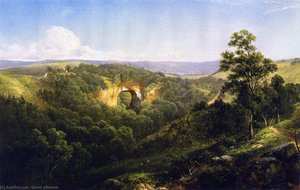 Natural Bridge, Virginia1860
21
 Landscape (also known as White Mansion in the Distance)1863
22
 On the Esopus Creek, Ulster County, New York1859
23
 Natural Bridge1860
24
 Untitled (Pastoral Scene)1867
25
 Near Shelburne, Vermont1865
26
 Bowling Green, New York City1868 · New York Historical Society
27
 Cornwall on the Hudson1868 · Museum of Fine Arts
28
 Eagle Cliff, Franconia Notch, New Hampshire1864 · Amon Carter Museum of American Art
29
 A Lush Summer Landscape1864
30
 View of Mt. Lafayette, New Hampshire1867
31
 Star King Mountain, Lancaster, New Hampshire1869
32
 Placid Lake, Aditondacks1866
33
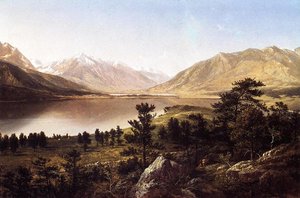 Upper Twin Lakes in the Colorado Rockies1865
34
 View of Palisades, Hudson River1871
35
 Lake George1870
36
 View on the Androscoggin River, Maine1869 · Thyssen-Bornemisza Museum
37
 The Children's Playground1873
38
 Connecticut River at South Lancaster, New Hampshire1875 · Fine Arts Museums of San Francisco
39
 Bear Mountain and Iona Island on the Hudson River1872 · Minneapolis Institute of Art
40
 Ocean Beach, NJ1877
41
 Roadside, Shark River, New Jersey1877
42
 Warwick, Orange County, New York1874
43
 Pear Blossoms1874
44
 Ramapo Hills1876
45
 Catnip Island, Near Greenwih, CT1878
46
 Study of Wawayanda Lake, Orange Co.1873
47
 View of Dresden, Lake George1874
48
 Croquet on the Lawn1873
49
 Study for Shark River1877
50
 Study at Ramapo, New York1874
51
 West Cornwall, Connecticut1875
52
 Morning at the Harbor Islands, Lake George1879 · New Britain Museum of American Art
53
 Chestnut Grove, Dashville, New York1880
54
 Safely Anchored1880
55
 Joyceville, Connecticut1881
56
 Phlox1886
57
 Trees and Dog
58
 Scene At Hurley, New York
59
 A Pasturage
60
 Old Kate's Bridge, Rifton Glen, Ulster County, New York
61
 Boating on Lake George
62
 Landscape with Man Fishing, Conway, New Hampshire
63
 On The Housatonic River, Connecticut
64
 Near Squam Lake, New Hampshire
65
 Self Portrait in Colonial Dress
66
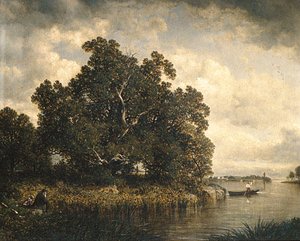 Bayside, New Rochelle, New YorkMetropolitan Museum of Art
67
 Natural Bridge 1
68
 At Larchmont Manor, Long Island Sound, New York
69
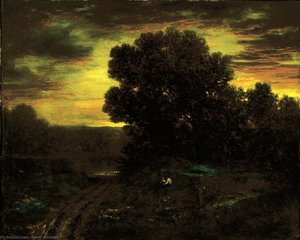 River Landscape at SunsetSmithsonian American Art Museum
70
 Landscape with House1864
71
 White Mountains from North Conway, New HampshireMuseum of Fine Arts
72
 Lake GeorgeVanderbilt Museum of Art
73
 Landscape
74
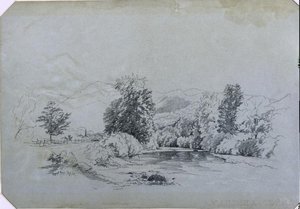 Bouquet River
75
 Chestnut and Pine
76
 Landscape and Lagoon, New Rochelle
77
 Trees
78
 On the Unadilla, New YorkMetropolitan Museum of Art
79
 Deer in the White Mountains
80
 A Scene In The Bronx, N.Y.
81
 Catskills
82
 Passing Storm Clouds
83
 View of Narragansett Bay near Warwick, Rhode Island
84
 Wooded Creek with Bridge
85
 Pine Tree, Conway, New Hampshire
86
 The Hudson River from Fort Montgomery
87
 Buck Mountain, Lake George
88
 Franconia Notch, New Hampshire
89
 Sketchbook. Conway, New Hampshire
90
 New Hampshire Landscape
91
 Androscoggin River
92
 Waterfall at Norwich, Connecticut
93
 Wallkill Scenery
94
 Scene At Cold Spring, Hudson River
95
 On The Wallkill At Walden
96
 Afternoon along the Banks of a River
97
 Young Elms (also known as Mrs. David Johnson Sitting under a Tree)
98
 View From Garrison, West Point, New YorkDallas Museum of Art
99
 View Of Hudson River From Ruins At Fort Putnam
100
 Young Elms 1
The four subjects that come back most often in these originals, each with its finest example.
The 8 museums that hold the most of the paintings on this page.
| Museum | City | Works by David Johnson | Paintings from this list |
|---|---|---|---|
 Metropolitan Museum of Art |
New York | 3 | Near Squam Lake, New Hampshire, Bayside, New Rochelle, New York, On the Unadilla, New York |
 National Gallery of Art |
Washington | 2 | Edwin Forrest, Three Pears and an Apple |
 New York Historical Society |
New York City | 2 | On the Unadilla at New Berlin, Chenango County, New York, Bowling Green, New York City |
 Museum of Fine Arts |
Boston | 2 | Cornwall on the Hudson, White Mountains from North Conway, New Hampshire |
 Amon Carter Museum of American Art |
Fort Worth | 2 | Eagle Cliff, Franconia Notch, New Hampshire |
 Brooklyn Museum |
Brooklyn | 1 | Old Mill, West Milford, New Jersey |
 Reynolda House Museum of American Art |
Winston-Salem | 1 | Natural Bridge, Virginia |
 Thyssen-Bornemisza Museum |
Madrid | 1 | View on the Androscoggin River, Maine |
Pick a decade to see the original that defines it.
Hudson River Scene (1863). Edwin Forrest (1871) and Near Noroton, Connecticut (1875) come next.
36 years old: Hudson River Scene dates from 1863, and David Johnson was born in 1827.
Hudson River Scene, Edwin Forrest, Near Noroton, Connecticut, On the Waywayanda, Orange County, New York, A View on Lake George, Looking West, from Dollar Island, Lake George, The Pathway Home, Old Mill, West Milford, New Jersey, Landscape with Mountains and House in the Adirondacks. The ranking above gives each one's year and museum.
Our catalog holds 106 works by David Johnson, dated from 1850 to 1886.
Mostly in Metropolitan Museum of Art (New York), National Gallery of Art (Washington) and New York Historical Society (New York City). The museum table above lists them all.
In 1870s: 23 of the 100 works on this page were made then, Edwin Forrest among them.
On this page, the earliest is Old Mill, West Milford, New Jersey (1850) and the latest Phlox (1886).
Landscape (16), Forests (16) and Rivers (11), across the 100 works on this page.
Hudson river school, judging by the originals on this page.
Near Squam Lake, New Hampshire, Bayside, New Rochelle, New York and On the Unadilla, New York: the Metropolitan Museum of Art, New York holds 3 of the works on this page.
David Johnson, born in New York City in 1827, wasn’t a name etched into the public consciousness during his lifetime, yet his contributions to American landscape painting are profoundly significant. He belonged to the second generation of the Hudson River School, a movement that sought to capture the sublime beauty and spirit of America's natural world – a legacy he inherited and subtly reshaped over a remarkably productive career spanning nearly five decades. Unlike some of his more flamboyant contemporaries, Johnson’s approach was characterized by quiet observation, meticulous detail, and an almost meditative quality, earning him recognition as a master of Luminism, a style emphasizing subtle tonal variations and atmospheric effects to evoke mood and atmosphere rather than dramatic spectacle.
Johnson's early artistic journey began with limited formal training. He registered at the National Academy of Design in 1845 and 1846, initially studying antique art before gravitating towards landscape painting. Crucially, he apprenticed briefly under Jasper Francis Cropsey, a pivotal figure in the Hudson River School known for his dramatic depictions of wilderness scenes. However, Johnson’s artistic philosophy leaned toward a more restrained approach, influenced by his own direct engagement with nature. His first significant work, “Hanes Fall, Kauterskill Clove” (1849), painted alongside Cropsey and John William Casilear, marked the beginning of his professional career and demonstrated his nascent talent for capturing the nuances of light and shadow in the Adirondack mountains. This early collaboration underscored a shared commitment to observing and translating nature’s complexities onto canvas – a foundation upon which Johnson would build his distinctive style.
Johnson's artistic development during the 1850s saw him refine his technique, moving away from the overtly romanticized landscapes of earlier Hudson River painters. He began to prioritize accuracy and subtlety, meticulously rendering details like tree bark, rock formations, and reflections in water. This period witnessed a shift towards Luminism – a style characterized by soft, diffused light, atmospheric perspective, and an emphasis on capturing the fleeting effects of sunlight. His paintings during this time often featured solitary figures dwarfed by the vastness of nature, evoking feelings of tranquility, contemplation, and a deep connection to the natural world. The influence of artists like Casilear and Kensett was evident, but Johnson developed his own unique voice within the Luminist framework – one marked by an almost photographic realism combined with a profound sense of atmosphere.
Notable works from this era include depictions of Lake George, where he captured the shimmering surface of the water and the surrounding forests with remarkable precision. These scenes weren’t merely representations of scenery; they were imbued with a palpable sense of mood – the cool stillness of dawn, the hazy warmth of afternoon light, the dramatic shadows cast by towering pines. Johnson's ability to translate these subtle shifts in light and atmosphere onto canvas is what truly sets his work apart.
As the 1870s unfolded, Johnson’s artistic style underwent a noticeable transformation. He began to incorporate elements of the French Barbizon School, known for its emphasis on plein air painting and the depiction of rural landscapes bathed in soft, diffused light. This stylistic shift, while initially met with mixed reactions from his colleagues within the Hudson River School, reflected a broader trend among American artists seeking to engage with European artistic developments. Johnson’s paintings during this period often featured pastoral scenes of central New York State – rolling hills, farms, and small villages – rendered in a muted palette and characterized by a sense of quiet intimacy.
Despite the Barbizon influence, Johnson never entirely abandoned his Luminist roots. His later works retained a sensitivity to light and atmosphere, but with a greater emphasis on tonal values and subtle color variations. He continued to paint iconic landscapes like “Schooley’s Mountain, New Jersey” (1874), showcasing his mastery of capturing the essence of Northeastern scenery – a testament to his lifelong dedication to observing and translating nature's beauty onto canvas.
David Johnson’s career spanned nearly half a century, during which he exhibited extensively in major American art centers, including Chicago, Boston, and Philadelphia. While he never achieved the widespread fame of some of his contemporaries, his work gained renewed appreciation in the late 20th century, largely due to the efforts of scholars who recognized his unique contribution to the Hudson River School and Luminism. Today, Johnson’s paintings are valued for their technical skill, atmospheric quality, and evocative depictions of Northeastern scenery – a quiet but enduring legacy that continues to resonate with art lovers.
His work is now housed in prestigious collections such as the Herbert F. Johnson Museum of Art at Cornell University and the Piasecka-Johnson Collection in Princeton, ensuring that his contributions to American landscape painting will be enjoyed by generations to come.
