

The Renaissance Pursuit of Verisimilitude: A Foundation for Detail
Renaissance art (1350 – 1620) is the painting, sculpture, and decorative arts of the period of European history known as the Renaissance, which emerged as a distinct style in Italy in about AD 1400, in parallel with developments which occurred in phi...
The human impulse to replicate the world around us is as old as art itself, yet the Renaissance marked a pivotal shift in this pursuit—a move beyond symbolic representation towards an almost obsessive fidelity. This wasn’t merely about technical skill; it was interwoven with a burgeoning humanist philosophy that placed man and his experience at the center of the universe. Artists began to study anatomy with unprecedented rigor, employing dissection to understand the musculature beneath skin, light and shadow to capture volume and depth, and perspective to create illusions of three-dimensional space. This dedication wasn’t simply about mimicking nature; it was a quest to understand God's creation through its meticulous observation. The rediscovery of classical texts fueled this ambition, prompting artists to emulate the perceived perfection of ancient sculpture and architecture, but not as slavish copies. Instead, they sought to surpass it, incorporating new scientific knowledge and artistic sensibilities.
Jan van Eyck and Hans Memling: Masters of Early Netherlandish Precision
 The Ghent Altarpiece: Donor and St John the Baptist
Explore Jan van Eyck’s masterpiece, The Ghent Altarpiece! Witness stunning realism & symbolism in this Early Netherlandish gem. Discover its history & artistic significance.
Nowhere is this early dedication to detail more powerfully evident than in the works of Jan van Eyck and Hans Memling. Van Eyck’s revolutionary use of oil paint allowed for an unprecedented level of realism, layering translucent glazes to create luminous surfaces and capture subtle variations in texture. Consider Untitled (6401), a portrait that transcends mere likeness; it is a study in character, rendered with such painstaking accuracy that one can almost feel the fabric of the sitter’s clothing or discern the individual strands of hair. This wasn't simply about showing what something looked like, but also *how* light interacted with its surface, revealing depth and form. The Ghent Altarpiece, a monumental work teeming with symbolism, further exemplifies his mastery. Each panel is a microcosm of detail—from the intricate folds of drapery to the individual jewels adorning the figures. Memling, while perhaps less overtly innovative than Van Eyck, continued this tradition with equal skill. Two Panels from a Triptych showcase his ability to depict religious narratives with serene beauty and remarkable precision. The delicate rendering of faces, the rich colors, and the meticulous attention to detail in everyday objects all contribute to a sense of profound realism.
Beyond Technique: Symbolism and Narrative in Detailed Art
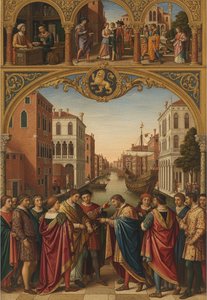 Vittore Carpaccio: Venetian Renaissance Narrative & the Poetics of Detail
Explore the captivating world of Vittore Carpaccio, a master storyteller of the Venetian Renaissance. Discover his intricate details, narrative cycles like 'The Legend of St. Ursula,' and unique artistic style.
However, to view these works as purely technical exercises would be a grave misjudgment. Detail wasn’t merely an end in itself; it was often employed to convey complex symbolism and reinforce narrative meaning. In the Early Netherlandish tradition, even seemingly mundane objects held layers of hidden significance. A single flower could represent purity, a dog fidelity, or a fruit bowl abundance. Van Eyck's works are particularly rich in such symbolic allusions, requiring careful interpretation to fully appreciate their depth. The artists weren’t simply recording reality; they were constructing it—imbuing every element with meaning and purpose. This attention to detail also served to enhance the narrative power of religious scenes, making them more relatable and emotionally resonant for viewers.
Realism's Evolution: From 19th-Century Representation to Hyperrealism
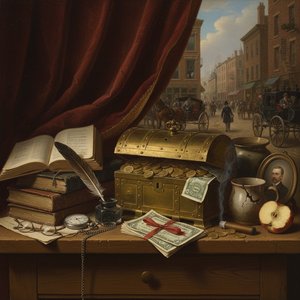 William Michael Harnett: Still Life, Realism & the American Pursuit of Materiality
Explore the captivating still lifes of William Michael Harnett, a master of American realism and trompe l'oeil painting. Discover his technique, legacy & the cultural context behind his iconic works.
The pursuit of realism continued to evolve through subsequent centuries, reaching new heights in the 19th century with artists like William Michael Harnett. Harnett’s still lifes are masterful examples of trompe l'oeil, deceiving the eye into believing they are viewing actual objects rather than paintings. This dedication to replicating reality was often intertwined with a fascination with materiality—a desire to capture the textures, surfaces, and qualities of everyday life. The rise of photography in the 19th century also played a crucial role, challenging artists to move beyond mere imitation and explore new forms of representation. This ultimately led to the emergence of hyperrealism in the late 20th century—a movement that pushed the boundaries of realism even further.
Contemporary Hyperrealism: Antonio López García & Claudio Bravo – A New Level of Detail
 Antonio López García
Discover Antonio López García (b.1936), the master of Spanish realism & hyperrealism. Explore his meticulous paintings of Madrid life, everyday objects & profound observations.
Artists like Antonio López García and Claudio Bravo represent the pinnacle of this evolution. López García’s meticulous paintings of Madrid life, everyday objects, and profound observations are characterized by an almost obsessive attention to detail—each brushstroke painstakingly rendered to create a sense of hyperreality. His work isn't about speed or spontaneity; it is a slow, deliberate process of observation and refinement. Bravo, on the other hand, blended Renaissance influences with Surrealist sensibilities, creating stunning portraits and still lifes celebrated for their evocative beauty and technical virtuosity. Both artists demonstrate a mastery of technique that surpasses even the most skilled Renaissance painters—yet their work isn’t simply about replicating reality; it is about transforming it, imbuing it with emotional depth and psychological resonance.
Collecting Detailed Art: Considerations for Connoisseurs
For the discerning collector, acquiring artworks defined by meticulous detail requires careful consideration. Beyond aesthetic appeal, factors such as provenance, condition, and historical significance are paramount. Understanding the artist’s technique—the layering of paint, the use of symbolism, and the materials employed—is crucial for assessing authenticity and value. Works from established masters like Van Eyck or Memling command significant prices, but equally compelling pieces can be found among contemporary hyperrealists. OriginalUniqueArt offers a curated selection of handmade oil paintings and museum-quality reproductions, providing access to both iconic masterpieces and emerging talent. Our team of art experts provides personalized consultations, assisting collectors in navigating the complexities of the art market and ensuring that each acquisition is a sound investment. We also offer custom reproduction services, allowing you to transform cherished photographs into stunning artworks in the style of your favorite artist—a testament to the enduring allure of precision and detail.




