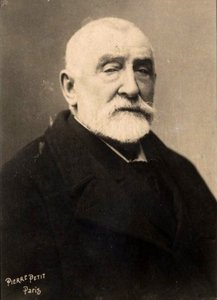
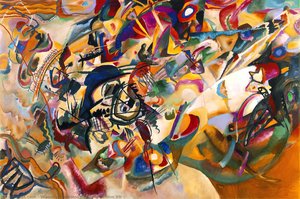
Barbizon School: original voices

17 Famous Barbizon School Painters Who Shaped the Movement

Théodore Rousseau (1812–1867) is the most famous Barbizon School painter, whose singular vision gave us A River Landscape and Twilight Landscape. Next stand Charles-François Daubigny, Felix Ziem, Constant Troyon and Jules Dupré. These 17 painters, from Jules Coignet (born 1798) to William Edward Stott (born 1918), came from 3 countries.

Our selection. Artists whose works our catalogue attaches to Barbizon School, in the order of our fame ranking. Artists born after 1955 with no Wikidata identifier stay out until verified. The Wikipedia figure counts our 32 languages with an article on the artist.

  1. A River Landscape by Théodore Rousseau1Théodore Rousseau
  2. Harvest by Charles-François Daubigny2Charles-François Daubigny
  3. Sailing Ships Leaving the Grand Canal in Venice by Felix Ziem3Felix Ziem

In brief

Barbizon School in brief

  • 17Artists
  • 1798–1918Years of birth
  • 3Countries of birth
  • 0Women
  • 1Living artists
  • 2,423Works in our catalogue
Cities with most births
Paris (3), Beaune (1), Sèvres (1), Nantes (1)
Museums holding the most key works
The Louvre (3), Metropolitan Museum of Art (2), Musée d'Orsay (2), National Gallery of Art (2)

One artist at a time

17 Barbizon School Painters and their signature works

1of 17

Théodore Rousseau

French Born in Paris Barbizon School, Realism Wikipedia in 29/32 languages
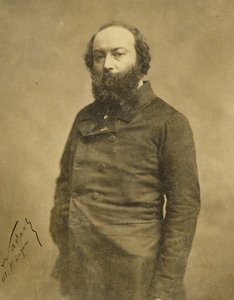
Théodore Rousseau

Rejecting the idealized and polished representations favored by Romanticism, Rousseau embraced the Barbizon School aesthetic, characterized by muted colors, sketchy brushwork, and a profound focus on atmospheric perspective. His work often featured: Complex textures that mirrored the organic irregularities of the forest floor and tree bark. His dedication to portraying the natural world with uncompromising accuracy helped pave the way for future movements, most notably Impressionism.

Signature works · The 100 signature works

2of 17

Charles-François Daubigny

French Born in Paris Barbizon School, Impressionism precursor Wikipedia in 28/32 languages

Charles-François Daubigny

He studied under Jean-Victor Bertin, Jacques Raymond Brascassat, and Paul Delaroche. In 1835, a small scholarship allowed him to leave Paris for Italy. This commitment to observing the world as it appeared, rather than how it was traditionally taught, helped establish the Barbizon School.

Where to see Walking through the Musée d'Orsay in Paris, one finds much of his output.

Signature works · The 100 signature works

3of 17

Felix Ziem

French Born in Beaune Barbizon School & Orientalist art Wikipedia in 18/32 languages

Felix Ziem

He stood at the crossroads of several movements, absorbing the naturalism of the Barbizon painters while anticipating the light-centric revolutions of Impressionism. His ability to transport the viewer to a different time and place—whether it be a misty morning on a Dutch river or a sun-soaked afternoon in the Mediterranean—remains undiminished. Félix Ziem stands as a captivating figure in the tapestry of 19th-century French art, an artist whose brush possessed the unique ability to bridge the soulful, grounded traditions of the Barbizon School with the exotic, sun-drenched allure of Orientalism.

Signature works · The 100 signature works

4of 17

Constant Troyon

French Born in Sèvres Barbizon School, Naturalism Wikipedia in 20/32 languages

Constant Troyon

This experience marked a significant shift in his style, moving away from purely landscapes towards depictions of animals within their natural settings. The Dutch masters ' emphasis on realism and capturing the essence of animals deeply resonated with Troyon, shaping his artistic vision. Inspired by Paulus Potter’s "Young Bull" and masterpieces by Cuyp and Rembrandt, he transitioned to animal painting, discovering his true calling.

Signature works · The 100 signature works

5of 17

Jules Dupré

French Born in Nantes Barbizon School Wikipedia in 19/32 languages

Jules Dupré

He found particular inspiration in the coastal districts around Southampton and Plymouth. By embracing the Barbizon aesthetic, Dupré prioritized expressive color palettes and bold brushstrokes over idealized or polished representations, allowing the texture of the paint itself to mirror the ruggedness of the earth. Through works such as La Petite Charrette, Cows Crossing a Ford, and his evocative depictions of river landscapes, he taught generations of artists that nature is not just a subject to be painted, but a powerful force to be experienced.

Signature works · The 100 signature works

6of 17

Narcisse Virgilio Díaz

Born in Bordeaux Wikipedia in 19/32 languages

Narcisse Virgilio Díaz

Díaz began his artistic training at the studios in Sèvres, initially focusing on porcelain decoration. However, it was his time spent at Barbizon, near the Fontainebleau forest, that truly shaped his artistic identity.

Signature works · The 100 signature works

7of 17

Charles Jacque

French Born in former 10th arrondissement of Paris Barbizon School Wikipedia in 13/32 languages

Charles Jacque

The mid- 19th century saw Jacque drawn towards Barbizon, a small village that would become the epicenter of a revolutionary artistic movement. Fleeing cholera epidemics plaguing Paris, he joined Jean-François Millet and other like-minded artists in seeking inspiration directly from nature. A Pioneer of Etching Revival: Jacque’s revival of 17th-century etching techniques significantly impacted printmaking.

Signature works · The 100 signature works

8of 17

William Morris Hunt

American Born in Brattleboro Barbizon School Wikipedia in 13/32 languages

William Morris Hunt

William Morris Hunt, born in Brattleboro, Vermont, in 1824, stands as a pivotal figure in the development of American art during the 19th century. He wasn’t merely a painter; he was an advocate, an educator, and a catalyst who championed the principles of the Barbizon School on American soil. In 1878, he published Talks About Art, a collection of essays that articulated his artistic philosophy and received widespread acclaim.

Signature works · The 100 signature works

9of 17

Henri Harpignies

Born in Valenciennes Wikipedia in 13/32 languages

Henri Harpignies

Harpignies’ style is characterized by its serene and idyllic depictions of the French countryside. His technique involved careful observation combined with a refined understanding of composition. After two years under Achard's tutelage, Harpignies embarked on a pivotal journey to Italy in 1848.

Signature works · The 100 signature works

10of 17

Alfred East

English Born in Kettering Barbizon school, Romantic landscape Wikipedia in 12/32 languages

Alfred East

Sir Alfred Edward East emerged from the vibrant artistic milieu of Victorian Britain, a period defined by a profound fascination with both meticulous realism and burgeoning romantic ideals. Born in Kettering, Northamptonshire, his creative journey began with foundational training at the Glasgow School of Art. A pivotal moment in East's career arrived in 1888 when he was commissioned by Marcus Huish, the managing director of the Fine Art Society, to travel to Japan for six months.

Signature works · The 100 signature works

11of 17

William Edward Stott

British Naturalism, Barbizon, Impressionist

William Edward Stott

His formal training took him to the heart of the art world in Paris, where he studied under the esteemed academic painter Carolus Duran. The whispers of Impressionism and the soulful, earth-bound realism of the Barbizon School began to permeate his consciousness. In the tapestry of late Victorian art, few threads possess the quiet, evocative strength of William Edward Stott.

Signature works · The 100 signature works

12of 17

Jules Coignet

French Born in Paris Barbizon School, Plein Air Wikipedia in 7/32 languages

Jules Coignet

Prior to the advent of portable paint tubes in the 1840s, artists were largely confined to working within the studio, relying on prepared pigments and meticulous layering techniques. His pioneering spirit—his willingness to challenge established conventions and embrace new techniques—earned him recognition at the Paris Salon and secured his place as a key player in the development of modern landscape art.

Signature works · The 100 signature works

13of 17

Paul Guigou

French Born in Villars Barbizon School Wikipedia in 6/32 languages

Paul Guigou

The Parisian art world of the mid- nineteenth century could be notoriously indifferent to emerging talents, and Guigou often faced the sting of rejection from juries and public exhibitions. It was not until the Centennial Exposition of French Art in 1900 that the art world began to rediscover the profound emotional depth and technical brilliance of his oeuvre. Born in 1834 to a prosperous family of farmers and notaries in Villars-sur-Vaucluse, Guigou possessed an innate, ancestral connection to the rugged beauty of the French countryside.

Signature works · The 100 signature works

14of 17

Hippolyte Camille Delpy

French Born in Joigny Barbizon-Impressionism Wikipedia in 6/32 languages

Hippolyte Camille Delpy

In 1876, he took a bold step, organizing his own sale of paintings at the Hôtel Drouot, an unprecedented event for a relatively unknown artist. He actively sought opportunities to exhibit his work in various galleries, including the Galerie Georges Petit, a prestigious venue in Paris. Hippolyte Camille Delpy died in Paris in 1910, leaving behind a significant body of work that continues to be admired for its evocative depictions of rural France.

Signature works · The 100 signature works

15of 17

Constant Dutilleux

French Born in Douai Barbizon School Wikipedia in 6/32 languages

Constant Dutilleux

Constant Dutilleux (1807–1865) belongs to that profound second category—a painter whose work serves as a quiet, evocative bridge between the dramatic Romanticism of Delacroix and the serene, atmospheric naturalism of the Barbizon School.

Signature works · The 100 signature works

16of 17

Pierre-Emmanuel Damoye

French Born in Montmartre Barbizon School Wikipedia in 4/32 languages

Pierre-Emmanuel Damoye

His early works from the late 1860s breathe with the quiet, tonal harmonies of Jean-Baptiste-Camille Corot, reflecting a reverence for the subtle, silvery light that defined the Barbizon era. His canvases are celebrated for their: Sweeping Skies: Vast, atmospheric heavens that dominate his compositions and dictate the mood of the landscape. Pierre-Emmanuel Damoye, born in Paris on February 20, 1847, was not merely a chronicler of nature but a poet of the earth.

Signature works · The 100 signature works

17of 17

Edward William Stott

British Born in Rochdale Naturalism & Barbizon School Wikipedia in 3/32 languages

Edward William Stott

Despite achieving significant critical and commercial success during his lifetime—marked by his election as an Associate of the Royal Academy in 1906 and his role as a founding member of the New English Art Club—Stott’s reputation suffered a decline following the Great War.

Signature works · The 100 signature works

Signature works

Signature Barbizon School works

  1. A River Landscape by Théodore Rousseau

    A River Landscape

    Théodore Rousseau

    1845 · Metropolitan Museum of Art, new york

  2. Harvest by Charles-François Daubigny

    Harvest

    Charles-François Daubigny

    1851 · Musée d'Orsay, Paris

  3. Sailing Ships Leaving the Grand Canal in Venice by Felix Ziem

    Sailing Ships Leaving the Grand Canal in Venice

    Felix Ziem

    1875 · Musee Felix Ziem, Martigues

  4. Watering Cattle by Constant Troyon

    Watering Cattle

    Constant Troyon

    1852 · Wallace Collection, London

  5. L'Automne by Jules Dupré

    L'Automne

    Jules Dupré

  6. The Frog Pond by Narcisse Virgilio Díaz

    The Frog Pond

    Narcisse Virgilio Díaz

    1876

  7. The Sheepfold by Charles Jacque

    The Sheepfold

    Charles Jacque

    1857 · Metropolitan Museum of Art, new york

  8. The Belated Kid by William Morris Hunt

    The Belated Kid

    William Morris Hunt

    Museum of Fine Arts, Boston

A timeline

Barbizon School through its signature works

  1. 1843
  2. 1845
  3. 1851
  4. 1852
  5. 1857
  6. 1875
  7. 1876
  8. 1889

Figures

The figures

Country of birth
France13
United Kingdom2
United States1
Decade of birth
1790s1
1800s2
1810s6
1820s2
1830s1
1840s3
1850s1
1910s1
Museums holding their key works
The Louvre3
Metropolitan Museum of Art2
Musée d'Orsay2
National Gallery of Art2
National Gallery1
Musee Felix Ziem1
Wallace Collection1
Art Institute of Chicago1

Every name

List of 17 famous Barbizon School painters, every name

  1. 1Théodore RousseauThéodore RousseauFrench · 1812–1867
  2. 2Charles-François DaubignyCharles-François DaubignyFrench · 1817–1878
  3. 3Felix ZiemFelix ZiemFrench · 1821–1911
  4. 4Constant TroyonConstant TroyonFrench · 1810–1865
  5. 5Jules DupréJules DupréFrench · 1811–1889
  6. 6Narcisse Virgilio DíazNarcisse Virgilio Díaz1807–1876
  7. 7Charles JacqueCharles JacqueFrench · 1813–1894
  8. 8William Morris HuntWilliam Morris HuntAmerican · 1824–1879
  9. 9Henri HarpigniesHenri Harpignies1819–1916
  10. 10Alfred EastAlfred EastEnglish · 1844–1913
  11. 11William Edward StottWilliam Edward StottBritish · born 1918
  12. 12Jules CoignetJules CoignetFrench · 1798–1860
  13. 13Paul GuigouPaul GuigouFrench · 1834–1871
  14. 14Hippolyte Camille DelpyHippolyte Camille DelpyFrench · 1842–1910
  15. 15Constant DutilleuxConstant DutilleuxFrench · 1807–1865
  16. 16Pierre-Emmanuel DamoyePierre-Emmanuel DamoyeFrench · 1847–1916
  17. 17Edward William StottEdward William StottBritish · 1859–1918

Questions

Your questions

  • Which Barbizon School painter is the most famous?

    First place goes to Théodore Rousseau (#1); Charles-François Daubigny (#2) and Felix Ziem (#3) complete the podium.

  • Who are the 5 most famous Barbizon School painters?

  • In which period did Barbizon School art flourish?

    Most painters in this list were born in the 1810s (6 of 17), between 1798 and 1918 overall.

  • Who are famous Barbizon School painters today?

    The highest-ranked living painters in this list are William Edward Stott (#11).

  • Where are the great works of Barbizon School art today?

    The museums holding the most key works of this list are The Louvre (3), Metropolitan Museum of Art (2) and Musée d'Orsay (2).

  • Which techniques define Barbizon School art?

    “Rejecting the idealized and polished representations favored by Romanticism, Rousseau embraced the Barbizon School aesthetic, characterized by muted colors, sketchy brushwork, and a profound focus on atmospheric perspective.” — from our biography of Théodore Rousseau (#1).

  • Who was the first Barbizon School painter?

    The earliest-born painter in this list is Jules Coignet (#12), born in 1798.

  • Who are the most famous Barbizon School painters from France?

    The highest-ranked painters born in France are Théodore Rousseau (#1), Charles-François Daubigny (#2), Felix Ziem (#3), Constant Troyon (#4) and Jules Dupré (#5).

  • Where were most Barbizon School painters born?

    France: 13 of the 17 painters in this list were born there, then United Kingdom (2) and United States (1).

  • Which city was home to the most Barbizon School painters?

    Paris: 3 of the painters in this list were born there.

  • Where can I see more works by these painters?

    Our catalogue holds 2,423 works by these painters.

Read

Stories on OriginalUniqueArt.com

Other movements

Famous artists of other movements

Other periods

Famous artists across the periods

Famous paintings

Masterpieces that inspire us, by movement

Discover more

More artists to discover