Early Netherlandish, one artist at a time

16 Famous Early Netherlandish Painters Who Shaped the Movement

Rogier van der Weyden (1400–1464) is the most famous Early Netherlandish painter, whose singular vision gave us The Annunciation and Deposition. Next stand Hans Memling, Robert Campin, Hubert van Eyck and Gerard David. These 16 painters, from Hubert van Eyck (born 1366) to Cornelis Engebrechtsz (born 1468), came from 4 countries.

Our selection. Artists whose works our catalogue attaches to Early Netherlandish, in the order of our fame ranking. Artists born after 1955 with no Wikidata identifier stay out until verified. The Wikipedia figure counts our 32 languages with an article on the artist.

  1. The Annunciation by Rogier van der Weyden1Rogier van der Weyden
  2. The adoration of the magi, brügge by Hans Memling2Hans Memling
  3. Mérode Altarpiece by Robert Campin3Robert Campin

In brief

Early Netherlandish in brief

  • 16Artists
  • 1366–1468Years of birth
  • 4Countries of birth
  • 0Women
  • 1,457Works in our catalogue
Cities with most births
Leiden (2), Ghent (2), Leuven (2), Tournai (1)
Museums holding the most key works
Metropolitan Museum of Art (4), National Gallery (3), The Louvre (3), National Gallery of Art (2)

One artist at a time

16 Early Netherlandish Painters and their signature works

1of 16

Rogier van der Weyden

Belgian Born in Tournai Early Netherlandish art Wikipedia in 31/32 languages
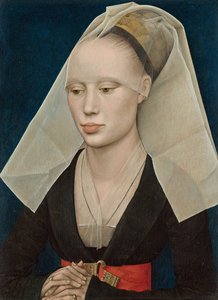
Rogier van der Weyden

Working from life models, Rogier van der Weyden captures the physical world with a meticulous, detailed realism. He does not merely replicate a face; he sculpts it. He is recognized alongside Jan van Eyck and Robert Campin as one of the three great Early Flemish masters.

Where to see His presence in modern collections spans the major cultural centers of Europe and the Americas.

Pupil of Robert Campin #3 · Teacher of Hans Memling #2

Signature works · The 100 signature works

2of 16

Hans Memling

German-Flemish Born in Seligenstadt Early Netherlandish painting Wikipedia in 31/32 languages

Hans Memling

This technical mastery allowed him to render the heavy folds of drapery and the subtle textures of skin with a clarity that felt almost startling to those who viewed them. In his portraiture, he developed a particular way of arranging the world to achieve a sense of quiet balance. Through his many assistants, his particular way of seeing the world was carried across Europe, spreading a style that many would come to recognize as the very essence of the Early Netherlandish painting movement.

Pupil of Rogier van der Weyden #1

Signature works · The 100 signature works

3of 16

Robert Campin

Born in Valenciennes Early Netherlandish painting Wikipedia in 26/32 languages

Robert Campin

At the heart of this revolution stood Robert Campin, an artist whose name is now inextricably linked with the Master of Flémalle.

Teacher of Rogier van der Weyden #1

Signature works · The 100 signature works

4of 16

Hubert van Eyck

Dutch Born in Maaseik Early Netherlandish Wikipedia in 20/32 languages

Hubert van Eyck

Beyond the grand scale of the Ghent Altarpiece, other works attributed to his hand, such as The Three Marys at the Tomb, offer glimpses into his ability to command dramatic lighting and emotional gravity.

Signature works · The 100 signature works

5of 16

Gerard David

Netherlandish Born in Oudewater Early Netherlandish painting Wikipedia in 22/32 languages

Gerard David

It is believed he spent time in Haarlem absorbing these lessons before relocating to Bruges, a vibrant hub of artistic exchange attracting talent from across Europe. Here, David encountered the masterpieces of Jan van Eyck, Rogier van der Weyden, and Hans Memling, absorbing their techniques while forging his own distinct path. Early works reveal a clear debt to painters like Jacob Janszoon, Dieric Bouts, and Geertgen tot Sint Jans – masters who instilled in him a meticulous attention to detail and a sensitivity to religious narrative.

Signature works · The 100 signature works

6of 16

Geertgen tot Sint Jans

Dutch Born in Leiden Early Netherlandish painting Wikipedia in 20/32 languages

Geertgen tot Sint Jans

Unlike many of his contemporaries who used landscapes merely as backdrops, Geertgen’s settings are imbued with symbolic meaning and contribute significantly to the overall emotional impact of the work. This technique is particularly evident in The Nativity at Night, where darkness envelops the scene, punctuated by the radiant glow emanating from the infant Christ. These panels— The Legend of Saint John the Baptist and The Lamentation of Christ —now reside in Vienna’s Kunsthistorisches Museum, their separation from the original structure a poignant reminder of art's vulnerability to historical forces.

Signature works · The 100 signature works

7of 16

Dierec Bouts

Flemish Early Netherlandish

Dierec Bouts

In the vibrant, bustling landscape of the fifteenth-century Netherlands, where the works of Jan van Eyck and Rogier van der Weyden dazzled with their dramatic flair and technical virtuosity, there existed a different kind of mastery. While he inherited the Northern Renaissance's obsession with realism, he departed from the overt emotionalism of his peers. Though he may lack the flamboyant reputation of Van Eyck, Bouts remains an indispensable figure in the study of Northern Renaissance art.

Signature works · The 100 signature works

8of 16

Juan de Flandes

Dutch Born in Ghent Early Netherlandish Wikipedia in 16/32 languages

Juan de Flandes

Spanish Grandeur: A sense of monumental stillness and a dignified, somber atmosphere that reflects the religious fervor of the Spanish court.

Signature works · The 100 signature works

9of 16

Jean Hey

Early Netherlandish Wikipedia in 14/32 languages

Jean Hey

In works such as The Annunciation and Meeting at the Golden Gate, one observes a dramatic use of lighting that predates many later Renaissance developments, lending a sense of theatricality to sacred moments.

Signature works · The 100 signature works

10of 16

Cornelis Engebrechtsz

Italian Renaissance Born in Leiden Early Renaissance Wikipedia in 16/32 languages

Cornelis Engebrechtsz

Born in Florence in 1462, Piero di Lorenzo, later known as Piero di Cosimo, stands as a singular figure within the Italian Renaissance. This immersion within the Vatican's artistic heart exposed Piero to the groundbreaking works of Sandro Botticelli and Domenico Ghirlandaio, whose vibrant colors and dynamic compositions would profoundly influence his own evolving style. The Liberation of Andromeda, for example, showcases a masterful command of sfumato—the subtle blending of light and shadow pioneered by Leonardo da Vinci —creating an atmospheric depth previously unseen in Italian painting.

Signature works · The 100 signature works

11of 16

Justus van Gent

Netherlandish Born in Ghent Early Netherlandish Wikipedia in 18/32 languages

Justus van Gent

The portraits he created for Federico da Montefeltro, in particular, served as a model for later portraitists, influencing the development of Renaissance portraiture throughout Europe.

Signature works · The 100 signature works

12of 16

Aelbrecht Bouts

Flemish Born in Leuven Early Netherlandish Wikipedia in 13/32 languages

Aelbrecht Bouts

While initially influenced by his father's style – particularly in the meticulous rendering of drapery and the use of rich, earthy colors – Aelbrecht Bouts gradually developed a more personal and expressive approach. Unlike some of his contemporaries who favored bold, flamboyant compositions, Bouts often opted for a more restrained aesthetic, prioritizing psychological depth over overt spectacle. While his work was often overshadowed by the towering achievements of Jan van Eyck and Rogier van der Weyden, Bouts’ unique style – characterized by its emotional depth, subtle detail, and profound sense of human experience – has earned him considerable recognition in recent decades.

Signature works · The 100 signature works

13of 16

Dieric Bouts the Younger

Flemish Born in Leuven Early Netherlandish painting

Dieric Bouts the Younger

He employed a single vanishing point, a technique borrowed from Italian Renaissance artists, to create a sense of depth and realism previously unseen in Northern painting. Beyond The Last Supper, Bouts's artistic output encompassed a diverse range of subjects—from devotional panels depicting the Virgin and Child to imposing justice panels commissioned for Leuven’s town hall. While not possessing the effortless grace of Van der Weyden or the meticulous realism of Jan van Eyck, Bouts compensated with an exceptional eye for detail and a masterful command of color.

Signature works · The 100 signature works

14of 16

Simon Marmion

French/Burgundian Born in Amiens Early Netherlandish Wikipedia in 15/32 languages

Simon Marmion

Simon Marmion, a master whose brush breathed life into the parchment of history, earned the reverent title of "the prince of illuminators." Born in Amiens around 1425, Marmion was a product of a rich artistic lineage, raised in an environment where the craft of painting was woven into the very fabric of family life.

Signature works · The 100 signature works

15of 16

Master of the Saint Bartholomew Altarpiece

Born in Nijmegen Wikipedia in 7/32 languages

Master of the Saint Bartholomew Altarpiece

The Master’s early style is evident in miniatures painted for the book of hours of Sophia van Bylant, dated to 1475. Throughout his career, he absorbed influences from prominent Netherlandish masters such as Dirck Bouts and Rogier van der Weyden.

Signature works · The 100 signature works

16of 16

Vrancke Van Der Stockt

Dutch Born in Brussels Early Netherlandish Painting Wikipedia in 7/32 languages

Vrancke Van Der Stockt

Official Recognition: Following the death of Rogier van der Weyden in 1464, Van der Stockt ascended to the position of the official painter of Leuven, a role that solidified his reputation as a premier artist of the region.

Signature works · The 100 signature works

Signature works

Signature Early Netherlandish works

  1. The Annunciation by Rogier van der Weyden

    The Annunciation

    Rogier van der Weyden

    Alte Pinakothek, Munich

  2. The adoration of the magi, brügge by Hans Memling

    The adoration of the magi, brügge

    Hans Memling

  3. Mérode Altarpiece by Robert Campin

    Mérode Altarpiece

    Robert Campin

    1427 · Metropolitan Museum of Art, new york

  4. Angel Annunciate by Hubert van Eyck

    Angel Annunciate

    Hubert van Eyck

  5. View in a Forest, outer right wing of a triptych, Gerard David, c. 1505 - c. 1515 by Gerard David

    View in a Forest, outer right wing of a triptych, Gerard David, c. 1505 - c. 1515

    Gerard David

    1515 · Rijksmuseum, Amsterdam

  6. John the Baptist in the Wilderness by Geertgen tot Sint Jans

    John the Baptist in the Wilderness

    Geertgen tot Sint Jans

    1490 · Staatliche Museen zu Berlin

  7. The Entombment by Dierec Bouts

    The Entombment

    Dierec Bouts

    1450

  8. The Nativity by Juan de Flandes

    The Nativity

    Juan de Flandes

    1519 · National Gallery of Art, Washington

A timeline

Early Netherlandish through its signature works

  1. 1427
  2. 1450
  3. 1467
  4. 1474
  5. 1480
  6. 1490
  7. 1498
  8. 1500
  9. 1501
  10. 1515
  11. 1519

Figures

The figures

Country of birth
Belgium7
Netherlands4
France3
Germany1
Decade of birth
1360s1
1370s1
1400s1
1410s2
1420s2
1430s2
1450s4
1460s3
Museums holding their key works
Metropolitan Museum of Art4
National Gallery3
The Louvre3
National Gallery of Art2
Museo del Prado2
Alte Pinakothek2
Gemäldegalerie2
National Museum1

Every name

List of 16 famous Early Netherlandish painters, every name

  1. 1Rogier van der WeydenRogier van der WeydenBelgian · 1400–1464
  2. 2Hans MemlingHans MemlingGerman-Flemish · 1435–1494
  3. 3Robert CampinRobert Campin1375–1444
  4. 4Hubert van EyckHubert van EyckDutch · 1366–1426
  5. 5Gerard DavidGerard DavidNetherlandish · 1460–1523
  6. 6Geertgen tot Sint JansGeertgen tot Sint JansDutch · 1460–1490
  7. 7Dierec BoutsDierec BoutsFlemish · 1410–1475
  8. 8Juan de FlandesJuan de FlandesDutch · 1450–1519
  9. 9Jean HeyJean Hey1455–1505
  10. 10Cornelis EngebrechtszCornelis EngebrechtszItalian Renaissance · 1468–1533
  11. 11Justus van GentJustus van GentNetherlandish · 1430–1480
  12. 12Aelbrecht BoutsAelbrecht BoutsFlemish · 1450–1549
  13. 13Dieric Bouts the YoungerDieric Bouts the YoungerFlemish · 1415–1475
  14. 14Simon MarmionSimon MarmionFrench/Burgundian · 1425–1489
  15. 15Master of the Saint Bartholomew AltarpieceMaster of the Saint Bartholomew Altarpiece1450–1510
  16. 16Vrancke Van Der StocktVrancke Van Der StocktDutch · 1424–1495

Questions

Your questions

  • Which Early Netherlandish painter is the most famous?

    First place goes to Rogier van der Weyden (#1); Hans Memling (#2) and Robert Campin (#3) complete the podium.

  • Who are the 5 most famous Early Netherlandish painters?

  • Where were most Early Netherlandish painters born?

    Belgium: 7 of the 16 painters in this list were born there, then Netherlands (4) and France (3).

  • Who are the most famous Early Netherlandish painters from Belgium?

    The highest-ranked painters born in Belgium are Rogier van der Weyden (#1), Hubert van Eyck (#4), Juan de Flandes (#8), Justus van Gent (#11) and Aelbrecht Bouts (#12).

  • Which techniques define Early Netherlandish art?

    “This early immersion in the manipulation of precious metals instilled a discipline for minute detail and a refined sense of texture that would later define his approach to oil painting.” — from our biography of Rogier van der Weyden (#1).

  • In which period did Early Netherlandish art flourish?

    Most painters in this list were born in the 1450s (4 of 16), between 1366 and 1468 overall.

  • Where are the great works of Early Netherlandish art today?

    The museums holding the most key works of this list are Metropolitan Museum of Art (4), National Gallery (3) and The Louvre (3).

  • Which city was home to the most Early Netherlandish painters?

    Leiden: 2 of the painters in this list were born there.

  • Who taught the famous Early Netherlandish painters?

  • Who was the first Early Netherlandish painter?

    The earliest-born painter in this list is Hubert van Eyck (#4), born in 1366.

  • Where can I see more works by these painters?

    Our catalogue holds 1,457 works by these painters.

Read

Stories on OriginalUniqueArt.com

Other movements

Famous artists of other movements

Other periods

Famous artists across the periods

Famous paintings

Masterpieces that inspire us, by movement

Discover more

More artists to discover