Portrait of Hans Memling

The 100 Most Famous Hans Memling Paintings, a Gallery Selection

Updated November 2026 · ranked by our popularity score (searches, visits and orders for each work) · 445 works by Hans Memling in our catalogue

In short

Of all the originals Hans Memling left, the most famous is The last judgement triptych (1471), in the collection of the National Museum, Gdansk. Close behind it come Scenes from the Passion of Christ (left side) (1470) and Scenes from the life of Mary (1480). Our catalog holds 445 works by Hans Memling; the gallery has kept the 100 the world admires most, each shown with its date, its museum and its story.

1435 – 1494, Seligenstadt Early netherlandish Most works: Muzeum Narodowe

Hans Memling's top 10 paintings: the gallery's choice

1
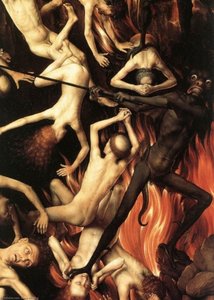
The last judgement triptych (1471) by Hans Memling

The last judgement triptych

1471 · Acrylic On Canvas · National Museum, Gdansk

Captivating Subject and Iconography This exquisite triptych vividly depicts the profound and powerful theme of the Last Judgment, a central motif in Christian theology. The central panel commands attention with a majestic portrayal of Christ in Majesty, radiating divine authority and compassion. Surrounding Him are angels, saints, and celestial symbols that evoke the divine realm. The side panels contrast the fates of humanity—one illustrating the righteous being guided into heaven,…

2
Scenes from the Passion of Christ (left side) (1470) by Hans Memling

Scenes from the Passion of Christ (left side)

1470 · Oil On Canvas · Galleria Sabauda, Turin

A Masterpiece of Devotion: Scenes from the Passion of Christ (left side) Subject and Historical Context Immerse yourself in the profound narrative of faith and devotion captured in Hans Memling's "Scenes from the Passion of Christ (left side)." Created in 1470, this exquisite artwork is a testament to the religious fervor and artistic brilliance of the Northern Renaissance. Memling, a leading Early Netherlandish painter, masterfully depicts pivotal moments from the…

3
Scenes from the life of Mary (1480) by Hans Memling

Scenes from the life of Mary

1480 · Oil On Panel · Alte Pinakothek, Munich

Captivating Biblical Narrative in Renaissance Mastery Experience a richly detailed tableau that vividly depicts the life of Mary through the masterful brushwork of Hans Memling. This expansive scene immerses viewers in a sacred story, capturing key moments from the revered biblical figure’s life with emotional depth and spiritual resonance. The composition’s intricate arrangement invites viewers to explore each figure, gesture, and setting, making it a compelling centerpiece for both art…

4
Passion (Greverade) Altarpiece (central panel) (1491) by Hans Memling

Passion (Greverade) Altarpiece (central panel)

1491 · Oil On Panel · Museum für Kunst und Kulturgedichte, Lubeck

To stand before this depiction of the Passion (Greverade) Altarpiece is to be enveloped in an atmosphere thick with solemnity and profound human drama. This monumental work, dating from 1491, transports the viewer directly into one of Christianity's most pivotal moments: the crucifixion of Jesus Christ. The composition itself is a masterclass in narrative intensity, utilizing a vertical format that draws the eye upward toward the ultimate sacrifice. It speaks…

5
Last Judgment Triptych (open) (1467) by Hans Memling

Last Judgment Triptych (open)

1467 · Oil On Panel · Muzeum Narodowe, Гданьск

The Last Judgment Triptych (open) is an oil on wood painting created between 1467 and 1471. The central panel features Jesus surrounded by angels and demons, serving as the focal point of this monumental scene. In the left panel, figures are depicted being judged, while the right panel contains additional people facing judgment.

6
Virgin and Child (1485) by Hans Memling

Virgin and Child

1485 · Oil · Art Institute of Chicago, Chicago

In the quietude of a Northern Renaissance interior, a profound stillness takes hold. The Virgin Mary cradles the Christ Child, her form draped in a mantle of saturated red that anchors the composition with a heavy, tactile presence. Beneath this, the deep blue of her tunic provides a cool, steady contrast to the warmth of her outer robe. Their faces, rendered with a luminous softness, lean toward one another in…

7
Scenes from the Passion of Christ (1470) by Hans Memling

Scenes from the Passion of Christ

1470 · Oil On Panel

A Detailed Depiction of a Crucial Event in History The painting "Scenes from the Passion of Christ" by Hans Memling is a remarkable work of art that captures the essence of one of the most significant events in Christian history. Created in 1470, this oil on panel masterpiece measures 57 x 92 cm and is currently housed at the The Museum Senate of Belgium (Belgium). Composition and Details The painting…

8
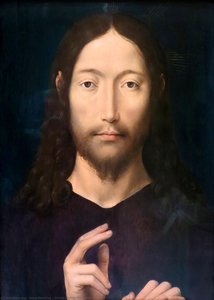
Christ Giving His Blessing (1478) by Hans Memling

Christ Giving His Blessing

1478 · Oil On Canvas

Few paintings possess the quiet power of Hans Memling's "Christ Giving His Blessing," completed in 1478. This work, a cornerstone of Early Netherlandish art, transcends mere representation to embody a profound sense of spiritual grace and serenity. Created during a period of intense religious fervor within Europe, it reflects Memling’s mastery of composition, his meticulous attention to detail, and his ability to translate complex theological concepts into a visually arresting…

9
Scenes from the Passion of Christ (detail) (8) (1470) by Hans Memling

Scenes from the Passion of Christ (detail) (8)

1470 · Acrylic On Canvas · Galleria Sabauda, Turin

Hans Memling's “Scenes from the Passion of Christ,” painted around 1470, is not merely a depiction of biblical events; it’s an immersive narrative unfolding across a meticulously rendered landscape. This monumental work, originally conceived as a devotional piece, draws the viewer into the very heart of Christ’s suffering and ultimate sacrifice. Unlike traditional single-scene depictions, Memling masterfully compresses the entirety of the Passion—from the triumphant entry into Jerusalem to the…

10
The Annunciation (1480) by Hans Memling

The Annunciation

1480 · Oil On Canvas · Metropolitan Museum of Art, New York

In the quiet, hallowed stillness of Hans Memling’s The Annunciation, completed in 1480, time seems to suspend itself. This masterpiece, a jewel of the Early Netherlandish tradition, invites the viewer into a private, sacred moment where the earthly and the divine intersect with breathtaking intimacy. As one gazes upon this work, currently held within the prestigious Metropolitan Museum of Art, there is an immediate sense of being a silent witness…

The Hans Memling selection continues, 11 to 100

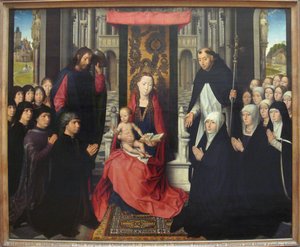
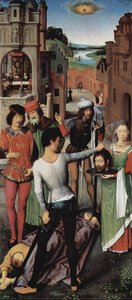
11Last Judgment Triptych (left wing) (1467) by Hans MemlingLast Judgment Triptych (left wing)1467 · Muzeum Narodowe 12The Virgin and Child with Saints and Donors (The Donne Triptych) (1478) by Hans MemlingThe Virgin and Child with Saints and Donors (The Donne Triptych)1478 · National Gallery 13Last Judgment Triptych (detail) (12) (1467) by Hans MemlingLast Judgment Triptych (detail) (12)1467 · Muzeum Narodowe 14Last Judgment Triptych (central) (1467) by Hans MemlingLast Judgment Triptych (central)1467 · Muzeum Narodowe 15Adoration of the Magi: Whole Triptych (1470) by Hans MemlingAdoration of the Magi: Whole Triptych1470 · Museo del Prado 16Last Judgment Triptych (detail) (11) (1467) by Hans MemlingLast Judgment Triptych (detail) (11)1467 · Muzeum Narodowe 17The Virgin and Child with St. James and St. Dominic Presenting the Donors and their Family, known as the Virgin of Jacques Floreins (1490) by Hans MemlingThe Virgin and Child with St. James and St. Dominic Presenting the Donors and their Family, known as the Virgin of Jacques Floreins1490 · The Louvre 18Angel Musicians (1480) by Hans MemlingAngel Musicians1480 · Koninklijk Museum voor Schone Kunsten 19Madonna and Child with Angels (1480) by Hans MemlingMadonna and Child with Angels1480 · National Gallery of Art 20The Donne Triptych (1475) by Hans MemlingThe Donne Triptych1475 · National Gallery 21St Ursula Shrine: Virgin and Child (1489) by Hans MemlingSt Ursula Shrine: Virgin and Child1489 · Memling Museum - Sint Jans Hospital 22Portrait of a Young Man with a Rosary (1485) by Hans MemlingPortrait of a Young Man with a Rosary1485 · Statens Museum For Kunst 23Portrait of a Man (1490) by Hans MemlingPortrait of a Man1490 · Galleria degli Uffizi 24Ecce Homo in the arms of the virgin (1479) by Hans MemlingEcce Homo in the arms of the virgin1479 25Triptych of the Family Moreel (left wing) (1484) by Hans MemlingTriptych of the Family Moreel (left wing)1484 · Groeninge Museum 26Diptych Of Martin Van Nieuwenhove (1487) by Hans MemlingDiptych Of Martin Van Nieuwenhove1487 27Adam (1485) by Hans MemlingAdam1485 · Kunsthistorisches Museum 28Two Wings of a Triptych with Portraits of the Donors (1467) by Hans MemlingTwo Wings of a Triptych with Portraits of the Donors1467 · The Morgan Library & Museum 29Triptych of the Mystical Marriage of St. Catherine of Alexandria, central panel: Marriage of St. Catherine (1479) by Hans MemlingTriptych of the Mystical Marriage of St. Catherine of Alexandria, central panel: Marriage of St. Catherine1479 · Musée Memling 30Portrait of a Man with an Arrow (1480) by Hans MemlingPortrait of a Man with an Arrow1480 31Portrait of Willem Moreel, husband of Barbara van Vlaendenbergh (1480) by Hans MemlingPortrait of Willem Moreel, husband of Barbara van Vlaendenbergh1480 · Royal Museums of Fine Arts of Belgium 32Madonna and Child with St. Anne. (1480) by Hans MemlingMadonna and Child with St. Anne.1480 · Bavarian State Painting Collections 33Last Judgment Triptych (detail) (10) (1467) by Hans MemlingLast Judgment Triptych (detail) (10)1467 · National Museum 34St John Altarpiece (detail) (23) (1474) by Hans MemlingSt John Altarpiece (detail) (23)1474 · Memling Museum - Sint Jans Hospital 35View of The Last Judgement with its panels closed, depicting the donors, Angelo di Jacopo Tani and his wife, Caterina de Tanagli, below the Madonna and Child and St. Michael (1473) by Hans MemlingView of The Last Judgement with its panels closed, depicting the donors, Angelo di Jacopo Tani and his wife, Caterina de Tanagli, below the Madonna and Child and St. Michael1473 · The National Museum in Gdańsk 36St John and Veronica Diptych (reverse of the left wing) (1483) by Hans MemlingSt John and Veronica Diptych (reverse of the left wing)1483 · Alte Pinakothek 37Portrait of a man (1490) by Hans MemlingPortrait of a man1490 · Montreal Museum of Fine Arts 38St John Altarpiece (closed) (1474) by Hans MemlingSt John Altarpiece (closed)1474 · Memling Museum - Sint Jans Hospital 39Saint veronica, c. ngw (1475) by Hans MemlingSaint veronica, c. ngw1475 40Lamenting Women from a Lamentation of Christ (1487) by Hans MemlingLamenting Women from a Lamentation of Christ1487 · Bavarian State Painting Collections 41Scenes from the Passion of Christ (detail) (1470) by Hans MemlingScenes from the Passion of Christ (detail)1470 · Galleria Sabauda 42Inner Wing of the St. John Altarpiece: John the Evangelist (1485) by Hans MemlingInner Wing of the St. John Altarpiece: John the Evangelist1485 · Kunsthistorisches Museum 43Passion (Greverade) Altarpiece (closed) (1491) by Hans MemlingPassion (Greverade) Altarpiece (closed)1491 · Museum für Kunst und Kulturgedichte 44Triptych of the Family Moreel (central panel) (1484) by Hans MemlingTriptych of the Family Moreel (central panel)1484 · Groeninge Museum 45King David and a boy (1485) by Hans MemlingKing David and a boy1485 · Staatsgalerie Stuttgart 46Portrait of a young woman (1472) by Hans MemlingPortrait of a young woman1472 · Metropolitan Museum of Art 47St. Ursula and her companions, from the Reliquary of St. Ursula (1489) by Hans MemlingSt. Ursula and her companions, from the Reliquary of St. Ursula1489 · Musée Memling 48Last Judgment Triptych (open) (1467) by Hans MemlingLast Judgment Triptych (open)1467 · Muzeum Narodowe 49Eve (1485) by Hans MemlingEve1485 · Kunsthistorisches Museum 50Portrait of a Man (1480) by Hans MemlingPortrait of a Man1480 · Kunsthaus Zürich 51Inner Wing of the St. John Altarpiece: John the Baptist (1485) by Hans MemlingInner Wing of the St. John Altarpiece: John the Baptist1485 · Kunsthistorisches Museum 52The Annunciation (1465) by Hans MemlingThe Annunciation1465 · Metropolitan Museum of Art 53Triptych of the Mystical Marriage of St. Catherine of Alexandria, left wing: The Beheading of John the Baptist (1479) by Hans MemlingTriptych of the Mystical Marriage of St. Catherine of Alexandria, left wing: The Beheading of John the Baptist1479 · Musée Memling 54Virgin and Child (1477) by Hans MemlingVirgin and Child1477 · Metropolitan Museum of Art 55Passion (Greverade) Altarpiece (detail) (1491) by Hans MemlingPassion (Greverade) Altarpiece (detail)1491 · Museum für Kunst und Kulturgedichte 56Advent and Triumph of Christ (detail 1) - (1480) by Hans MemlingAdvent and Triumph of Christ (detail 1) -1480 57Chicago diptych (1485) by Hans MemlingChicago diptych1485 · Art Institute of Chicago 58Last Judgment Triptych (detail) (13) (1467) by Hans MemlingLast Judgment Triptych (detail) (13)1467 · Muzeum Narodowe 59Triptych of the Resurrection: The Martyrdom of Saint Sebastian (1450) by Hans MemlingTriptych of the Resurrection: The Martyrdom of Saint Sebastian1450 60Triptych of the Resurrection: The Ascension of Christ (1450) by Hans MemlingTriptych of the Resurrection: The Ascension of Christ1450 61Saint John the Evangelist (1478) by Hans MemlingSaint John the Evangelist1478 62Portrait of a Man (1472) by Hans MemlingPortrait of a Man1472 · Royal Museums of Fine Arts of Belgium 63Majestic Madonna with Child (1475) by Hans MemlingMajestic Madonna with Child1475 · Museo de la Capilla Real 64Virgin and Child (1480) by Hans MemlingVirgin and Child1480 65The Virgin and Child Enthroned (1480) by Hans MemlingThe Virgin and Child Enthroned1480 · Gemäldegalerie 66Portrait of a Man with a Pink (1475) by Hans MemlingPortrait of a Man with a Pink1475 · The Morgan Library & Museum 67Saint James and Saint Christopher (1470) by Hans MemlingSaint James and Saint Christopher1470 · Gallerie dell'Accademia di Venezia 68Portrait of a Man in a Black Cap (1470) by Hans MemlingPortrait of a Man in a Black Cap1470 69The Virgin and Child with an Angel (1480) by Hans MemlingThe Virgin and Child with an Angel1480 · National Gallery 70Saint Mary Magdelene (1470) by Hans MemlingSaint Mary Magdelene1470 71Saint John the Baptist (1470) by Hans MemlingSaint John the Baptist1470 72Juan de Castilla portrait (1490) by Hans MemlingJuan de Castilla portrait1490 73The Virgin (1490) by Hans MemlingThe Virgin1490 · Philadelphia Museum of Art 74Triptych of the Mystical Marriage of St. Catherine of Alexandria, right wing: Scene of St. John the Evangelist in Patmos (1479) by Hans MemlingTriptych of the Mystical Marriage of St. Catherine of Alexandria, right wing: Scene of St. John the Evangelist in Patmos1479 · Musée Memling 75Virgin and Child Enthroned (1480) by Hans MemlingVirgin and Child Enthroned1480 · Staatliche Museen zu Berlin 76St. George with Donor. (1480) by Hans MemlingSt. George with Donor.1480 · Bavarian State Painting Collections 77Triptych center panel:Lamentation (1480) by Hans MemlingTriptych center panel:Lamentation1480 · Museum Boijmans Van Beuningen 78St John Altarpiece (detail) (22) (1474) by Hans MemlingSt John Altarpiece (detail) (22)1474 · Memling Museum - Sint Jans Hospital 79Diptych of Maarten Nieuwenhove (detail) (1487) by Hans MemlingDiptych of Maarten Nieuwenhove (detail)1487 · Memling Museum - Sint Jans Hospital 80Last Judgment Triptych (detail) (22) (1467) by Hans MemlingLast Judgment Triptych (detail) (22)1467 · Muzeum Narodowe 81Last Judgment (1467) by Hans MemlingLast Judgment1467 · Muzeum Narodowe 82Saint lawrence by Hans MemlingSaint lawrenceNational Gallery 83Mary nursing Child (1467) by Hans MemlingMary nursing Child1467 · Royal Museums of Fine Arts of Belgium 84Madonna of the Rose Bower (1480) by Hans MemlingMadonna of the Rose Bower1480 · Bavarian State Painting Collections 85Altar of Saints John the Baptist and John the Evangelist by Hans MemlingAltar of Saints John the Baptist and John the Evangelist 86Saint Anthony of Padua (1485) by Hans MemlingSaint Anthony of Padua1485 · Art Institute of Chicago 87Last Judgment Triptych (detail) (15) (1467) by Hans MemlingLast Judgment Triptych (detail) (15)1467 · Muzeum Narodowe 88Triptych of the Resurrection (1490) by Hans MemlingTriptych of the Resurrection1490 · The Louvre 89st john altarpiece (detail 11) - (closed) by Hans Memlingst john altarpiece (detail 11) - (closed) 90Last Judgment Triptych (detail) (17) (1467) by Hans MemlingLast Judgment Triptych (detail) (17)1467 · Muzeum Narodowe 91Deposition (left wing of a diptych) (1490) by Hans MemlingDeposition (left wing of a diptych)1490 · Groeninge Museum 92St John Altarpiece (detail) (19) (1474) by Hans MemlingSt John Altarpiece (detail) (19)1474 · Memling Museum - Sint Jans Hospital 93Two Panels from a Triptych by Hans MemlingTwo Panels from a TriptychNational Gallery 94Portrait of Maria Maddalena Portinari by Hans MemlingPortrait of Maria Maddalena PortinariMetropolitan Museum of Art 95TRIPTYQUE DE LA RESURRECTION by Hans MemlingTRIPTYQUE DE LA RESURRECTIONThe Louvre 96Crucifixion by Hans MemlingCrucifixionSzépművészeti Múzeum 97Bathsheba (1485) by Hans MemlingBathsheba1485 · Staatsgalerie 98middle - St John Altarpiece (central panel) by Hans Memlingmiddle - St John Altarpiece (central panel) 99untitled (6791) by Hans Memlinguntitled (6791) 100Portinari Triptych (right wing) (1487) by Hans MemlingPortinari Triptych (right wing)1487 · Galleria degli Uffizi

Hans Memling's famous paintings, period by period

The subjects that held Hans Memling's eye

The four subjects that come back most often in these originals, each with its finest example.

The museums that keep Hans Memling's originals

The 8 museums that hold the most of the paintings on this page.

Museum City Works by Hans Memling Paintings from this list
Muzeum Narodowe, ГданьскMuzeum Narodowe Гданьск 14 Last Judgment Triptych (open), Last Judgment Triptych (left wing), Last Judgment Triptych (detail) (12)
Memling Museum - Sint Jans Hospital, BruggeMemling Museum - Sint Jans Hospital Brugge 25 St Ursula Shrine: Virgin and Child, St John Altarpiece (detail) (23), St John Altarpiece (closed)
Metropolitan Museum of Art, New YorkMetropolitan Museum of Art New York 17 The Annunciation, Portrait of a young woman, The Annunciation
National Gallery, LondonNational Gallery London 14 The Virgin and Child with Saints and Donors (The Donne Triptych), The Donne Triptych, The Virgin and Child with an Angel
Musée Memling, BrugesMusée Memling Bruges 8 Triptych of the Mystical Marriage of St. Catherine of Alexandria, central panel: Marriage of St. Catherine, St. Ursula and her companions, from the Reliquary of St. Ursula, Triptych of the Mystical Marriage of St. Catherine of Alexandria, left wing: The Beheading of John the Baptist
Kunsthistorisches Museum, ViennaKunsthistorisches Museum Vienna 6 Adam, Inner Wing of the St. John Altarpiece: John the Evangelist, Eve
Bavarian State Painting Collections, MunichBavarian State Painting Collections Munich 4 Madonna and Child with St. Anne., Lamenting Women from a Lamentation of Christ, St. George with Donor.
The Louvre, ParisThe Louvre Paris 17 The Virgin and Child with St. James and St. Dominic Presenting the Donors and their Family, known as the Virgin of Jacques Floreins, Triptych of the Resurrection, TRIPTYQUE DE LA RESURRECTION

Hans Memling decade by decade: the original that defines each

Works per decade

Pick a decade to see the original that defines it.

Collectors' questions about Hans Memling's paintings

Which work is Hans Memling most famous for?Reveal the answer

The last judgement triptych (1471), National Museum, Gdansk. Scenes from the Passion of Christ (left side) (1470) and Scenes from the life of Mary (1480) come next.

What age was Hans Memling when The last judgement triptych was made?Reveal the answer

36 years old: The last judgement triptych dates from 1471, and Hans Memling was born in 1435.

What are the ten most famous Hans Memling paintings?Reveal the answer

The last judgement triptych, Scenes from the Passion of Christ (left side), Scenes from the life of Mary, Passion (Greverade) Altarpiece (central panel), Last Judgment Triptych (open), Virgin and Child, Scenes from the Passion of Christ, Christ Giving His Blessing, Scenes from the Passion of Christ (detail) (8) and The Annunciation. The ranking above gives each one's year and museum.

How many paintings did Hans Memling leave?Reveal the answer

Our catalog holds 445 works by Hans Memling, dated from 1450 to 1491.

In which museums do Hans Memling's masterpieces hang?Reveal the answer

Mostly in Muzeum Narodowe (Гданьск), Memling Museum - Sint Jans Hospital (Brugge) and Metropolitan Museum of Art (New York). The museum table above lists them all.

In which years did Hans Memling paint the most famous works?Reveal the answer

In 1480s: 35 of the 100 works on this page were made then, Scenes from the life of Mary among them.

What are the first and the last famous originals of Hans Memling?Reveal the answer

On this page, the earliest is Triptych of the Resurrection: The Martyrdom of Saint Sebastian (1450) and the latest Passion (Greverade) Altarpiece (central panel) (1491).

Which subjects did Hans Memling choose most often?Reveal the answer

Landscape (25), Religious art (20) and Man (20), across the 100 works on this page.

Which technique did Hans Memling use most?Reveal the answer

Oil On Panel, for 61 of the 100 works on this page.

To which art movement does Hans Memling belong?Reveal the answer

Early netherlandish, judging by the originals on this page.

Which Hans Memling works hang at the Muzeum Narodowe?Reveal the answer

Last Judgment Triptych (open), Last Judgment Triptych (left wing) and Last Judgment Triptych (detail) (12): the Muzeum Narodowe, Гданьск holds 11 of the works on this page.

Hans Memling: life and work

Early Life, Family and Training

The story of Memling, Hans begins in the Middle Main region, where he was born around 1430. His earliest years were spent in Seligenstadt, near Frankfurt, a place that would eventually be far from the Flemish lands he would come to call home. Before he could make his mark in the great cities of the north, he had to learn the secrets of his craft. He sought his initial training in the workshops of Mainz or Cologne, where the foundations of his technical skill were first laid through years of patient labor and observation.

As his ambition grew, so did the scope of his education. Between about 1455 and 1460, he moved into the bustling atmosphere of the Brussels workshop. There, he worked under the guidance of Rogier van der Weyden, a man whose mastery of oil paint and sculptural modeling would leave a lasting imprint on the way Memling, Hans approached the human form. This period of apprenticeship was crucial, providing him with the tools to eventually establish his own name in the commercial heart of Bruges.

His personal life was as settled as his professional one became. Sometime between 1470 and 1480, he took Anna de Valkenaere as his wife. Together, they built a life in the city, and their union brought three children into the world. This domestic stability provided a quiet backdrop to a career that would eventually see him listed among the wealthiest citizens of his community.

Life and Activity in Bruges

Upon arriving in the bustling commercial hub of Bruges, Memling found a city that offered both opportunity and a stage for his growing talent. By 1465, he had secured his place within the community as a recognized citizen. He did not merely exist within the city; he became a central figure in its artistic life, establishing a presence that drew the attention of the local elite. His success was not limited to the studio, for his prosperity was reflected in the city's own records. By 1480, he was listed among the wealthiest citizens of Bruges, a testament to the success of his professional endeavors and the high regard in which he was held.

His life in Bruges was marked by a steady rise in social and economic standing. He married Anna de Valkenaere sometime between 1470 and 1480, and together they raised three children within the city's walls. This period of stability allowed him to build a large workshop, which became a significant part of the local economy. He lived and worked in this Flemish center until his death on August 11, 1494. Even in his final years, his influence remained deeply rooted in the streets and institutions of the city he had helped to define through his labor.

Patrons, Workshop and Commissions

In the bustling streets of Bruges, Memling established himself as a man of significant means and influence. By 1480, the city's tax records already listed him among its wealthiest citizens, a status earned through the success of his large workshop. This studio was a hive of activity, where he directed many assistants to meet the growing demands of a prosperous society. He did not work in isolation; instead, he managed a prolific enterprise that ensured his specific manner of painting could be spread far beyond the walls of his own home.

The wealth of Bruges provided him with a steady stream of patrons who sought to secure their spiritual standing through art. He found favor among the powerful, including clergymen, aristocrats, and the rising class of burghers. These patrons—bankers, merchants, and politicians—often appeared within the very scenes he painted. He had a particular talent for incorporating donor portraits into his religious compositions, allowing these men and women to be seen in perpetual devotion alongside the saints. Such commissions were not merely acts of piety but also reflections of the social standing of those who paid for them.

His obligations to the city's religious institutions were frequent and substantial. In 1477, for instance, he was under contract to create an altarpiece for the gild-chapel of the booksellers of Bruges. Such works required a careful balance of sacred narrative and the personal presence of the community's most influential members. Through these contracts, Memling wove the faces of the living into the fabric of the divine, securing both his livelihood and his place in the history of the city.

Technique and Artistic Style

The hand of Memling moved with a devotion to the tangible world that defined the Early Netherlandish tradition. He did not merely paint figures; he sought to capture the very essence of nature through a meticulous observation of its smallest details. By employing oil paint with a profound understanding of light, he achieved a sculptural modeling that gave his subjects a physical presence, as if they might step from their wooden panels into the room. This technical mastery allowed him to render the heavy folds of drapery and the subtle textures of skin with a clarity that felt almost startling to those who viewed them.

In his portraiture, he developed a particular way of arranging the world to achieve a sense of quiet balance. He often placed his subjects against a landscape, creating a careful counterpoint between the foreground and the background. This method ensured that the head of the sitter was offset by the neutral expanse of the sky, while the shoulders were enlivened by the intricate details of the scenery beyond. Such compositions provided a sense of depth and stability, grounding the individual within a wider, natural setting.

Legacy and Rediscovery

The influence of Memling’s hand traveled far beyond the walls of his Bruges workshop. Through his many assistants, his particular way of seeing the world was carried across Europe, spreading a style that many would come to recognize as the very essence of the Early Netherlandish painting movement. He did not merely paint; he established a standard of visual language that echoed through the decades, shaping how later artists approached the canvas.

For a long time, the true depth of his achievement remained obscured by the passing of centuries. It was not until the 19th century that scholars turned their eyes back toward his works, pulling his name from the shadows of history. This rediscovery brought his paintings into the light of modern appreciation, and he quickly gained a wide popularity among those who sought the quiet, detailed truths of the Northern Renaissance. His ability to capture the subtle textures of life ensured that his name would not be forgotten by those who study the evolution of art.