Inspiration · Early Netherlandish Painting

The 100 Famous Early Netherlandish Painting Paintings That Inspire Our Artists

1420 – 1550

Ask for the most famous Early Netherlandish Painting paintings and you will hear of Jan van Eyck's Portrait of Giovanni Arnolfini (1434, National Gallery), Jan van Eyck's The Ghent Altarpiece (1432, Cathedral of St Bavo) and Hans Memling's The Last Judgment Triptych (1471, National Museum). The list runs to 100 paintings by 13 artists, from 1420 to 1550, each with the collection that holds it today.

Portrait of Giovanni Arnolfini by Jan van Eyck, 1434, National Gallery — famous Early Netherlandish Painting painting
No. 1 · Jan van EyckPortrait of Giovanni Arnolfini1434 · National Gallery, London
100singular works
13masters · Jan van Eyck – Hieronymus Bosch
46homes in 28 cities
8kept at the Metropolitan Museum of Art

Singular works

100 Early Netherlandish Painting paintings that exist only once

Every original here is unique and kept in one place. Its story, its home, and the detail that makes it unmistakable.

  1. Portrait of Giovanni Arnolfini by Jan van Eyck, 1434, National Gallery
    1

    Jan van EyckEarly Netherlandish Painting

    Portrait of Giovanni Arnolfini

    National Gallery, London1434Oil on oak panel82 × 60 cm

    Perhaps most striking is the convex mirror reflecting not only the couple but also two additional figures—potentially witnesses—and scenes from the Passion of Christ. Van Eyck’s position as court painter to Philip the Good, Duke of Burgundy, afforded him access to wealthy patrons and allowed for artistic experimentation. The painting reflects the growing importance of individual portraiture and the desire for realistic representation that characterized the Early Renaissance in Northern Europe.

    The singular detaildetailed texturesconvex mirror

    Its story

  2. The Ghent Altarpiece by Jan van Eyck, 1432, Cathedral of St Bavo
    2

    Jan van EyckEarly Netherlandish Painting

    The Ghent Altarpiece

    Cathedral of St Bavo, Gent1432Oil on oak panel461 × 350 cm

    The Altarpiece unfolds as a complex theological narrative across twelve panels (when fully open), central to Christian belief. The lower register presents the Adoration of the Mystic Lamb, a powerful symbol of Christ’s sacrifice. The Altarpiece exemplifies the Early Netherlandish style, characterized by meticulous naturalism, hyper-realistic textures, and symbolic use of objects.

    The singular detailadoration of the Mystic Lambpolyptych format

    Its story

  3. The Last Judgment Triptych by Hans Memling, 1471, National Museum
    3

    Hans MemlingEarly Netherlandish Painting

    The Last Judgment Triptych

    National Museum, Gdansk1471Oil on panel242 × 360 cm

    The central panel commands attention with a majestic portrayal of Christ in Majesty, radiating divine authority and compassion. Created in 1471 by the renowned Early Netherlandish painter Hans Memling, this work exemplifies the meticulous craftsmanship characteristic of the Northern Renaissance.

    The singular detailheavenChrist in Majesty

    Its story

  4. Death and the Miser (Part) by Hieronymus Bosch, 1490, National Gallery of Art
    4

    Hieronymus BoschEarly Netherlandish Painting

    Death and the Miser (Part)

    National Gallery of Art, Washington1490Oil on panel31 × 93 cm

    The painting measures 31 x 93 cm and was executed using oil on panel. Kress Foundation in 1951. Death and the Miser is a significant work that showcases Bosch's unique style and his ability to convey complex moral messages through art.

    Its story

  5. The Virgin to Chancellor Rolin by Jan van Eyck, 1435, The Louvre
    5

    Jan van EyckEarly Netherlandish Painting

    The Virgin to Chancellor Rolin

    The Louvre, Paris1435Oil on panel66 × 62 cm

    This oil on panel composition was commissioned by Nicolas Rolin, who held the position of Chancellor of the Duchy of Burgundy. It remained in this location for several centuries, housed within the religious structure until the church was destroyed in 1793. Following this destruction, the work was moved to the Musée du Louvre in 1805.

    Its story

  6. Deposition by Rogier van der Weyden, 1435, Museo del Prado
    6

    Rogier van der WeydenEarly Netherlandish Painting

    Deposition

    Museo del Prado, Madrid1435Oil on panel220 × 262 cm

    Jesus’s lifeless body, cradled by his grieving mother Mary and Nicodemus, occupies the visual center, immediately commanding attention. However, Van der Weyden pushed beyond mere imitation, imbuing his figures with an unprecedented level of emotional intensity.

    The singular detailgrieving figuresskulls

    Its story

  7. Ecce Homo by Hieronymus Bosch, 1500, Städel Museum
    7

    Hieronymus BoschEarly Netherlandish Painting

    Ecce Homo

    Städel Museum, Frankfurt1500Oil on oak panel60 × 71 cm

    Executed in oil paints on wood panel, this Ecce Homo exemplifies the meticulous detail characteristic of the Early Netherlandish painting tradition. The Ecce Homo motif was a common subject in Christian art, serving as a powerful reminder of Christ’s sacrifice.

    The singular detailgrief of onlookersdramatic lighting

    Its story

  8. The Ghent Altarpiece Adoration of the Lamb by Jan van Eyck, 1425, Cathedral of St Bavo
    8

    Cathedral of St Bavo, Gent1425Oil on panel137 × 242 cm

    This central figure is encircled by a vast, diverse congregation representing all facets of Christian belief and salvation. The work incorporates elements of both Gothic tradition—in its hierarchical composition—and humanist ideals —in its naturalistic portrayal of humanity. Every element within Adoration of the Lamb is imbued with symbolic significance.

    The singular detailsymbolismdetailed realism

    Its story

  9. Madonna and Child with Canon Joris van der Paele by Jan van Eyck, 1436, Musee Communal
    9

    Musee Communal, Brugge1436Oil on panel122 × 157 cm

    At the heart of the composition, the Madonna tenderly cradles the Christ Child, radiating serenity, majesty, and divine grace. The painting was originally commissioned as a devotional piece and a memorial for Canon Joris van der Paele, blending personal piety with artistic excellence.

    The singular detailregal grandeurintricate detail

    Its story

  10. The Last Judgment by Rogier van der Weyden, 1443
    10

    Rogier van der WeydenEarly Netherlandish Painting

    The Last Judgment

    1443Oil on panel220 × 546 cm

    Van der Weyden, already recognized as a master of psychological realism in his portraits, here unleashes an intensity rarely seen in Northern European painting of the period, employing techniques that anticipate the dramatic fervor of the Renaissance. Interestingly, this painting is part of a larger polyptych, suggesting it was intended for a private chapel setting.

    Its story

  11. Last Judgement Triptych by Hieronymus Bosch, 1504, Academy of Fine Arts Vienna
    11

    Hieronymus BoschEarly Netherlandish Painting

    Last Judgement Triptych

    Academy of Fine Arts Vienna1504Oil163 × 128 cm

    Painted on oak panels in oil tempera and gold leaf, the triptych assaults the senses with its sheer scale and disturbing imagery. The left wing recounts the biblical narrative of Adam and Eve’s fall from grace. Moving to the right wing, Bosch presents a vision of Heaven—a serene tableau dominated by angelic figures and saints. “Last Judgement” cemented Bosch's reputation as a visionary artist who dared to confront the darkest aspects of human experience.

    Its story

  12. The Mérode Altarpiece by Robert Campin, 1428, Metropolitan Museum of Art
    12

    Robert CampinEarly Netherlandish Painting

    The Mérode Altarpiece

    Metropolitan Museum of Art, New York1428Oil on oak panel120 × 149 cm

    Campin’s mastery lies not just in his subject matter, but in the extraordinary detail he achieved through a revolutionary technique—the painstaking layering of thin glazes of oil paint. The painting's creation coincided with a period of significant economic and social change in Northern Europe.

    The singular detaildetailed realism

    Its story

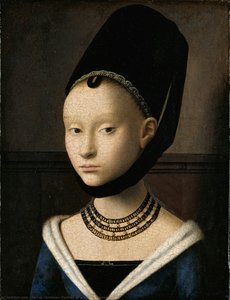
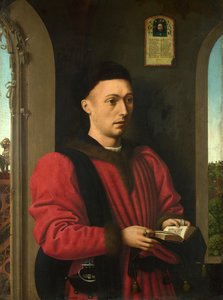
  13. Portrait of a Young Woman by Petrus Christus, 1470, Gemäldegalerie
    13

    Petrus ChristusEarly Netherlandish Painting

    Portrait of a Young Woman

    Gemäldegalerie, Berlin1470Oil on oak panel22 × 29 cm

    This work exemplifies the transition from the heavy symbolism of the Middle Ages to a more humanistic, observational style, where the texture of fabric and the soft glow of skin are rendered with an almost miraculous clarity. To behold this portrait is to appreciate the revolutionary use of oil paint that defined the Flemish Primitives.

    Its story

  14. Triptych of Last Judgement (left wing) by Hieronymus Bosch
    14

    Oil painting60 × 167 cm

    Within this meticulously rendered landscape, Bosch captures the pivotal moment of humanity's origin and its subsequent fall. The composition is alive with a sense of movement and intricate detail that characterizes the Early Netherlandish Painting style.

    Its story

  15. Madonna in the Church by Jan van Eyck, 1439, Gemäldegalerie
    15

    Jan van EyckEarly Netherlandish Painting

    Madonna in the Church

    Gemäldegalerie, Berlin1439Oil on oak panel31 × 14 cm

    A crowned Mary cradles infant Jesus within a Gothic cathedral, bathed in radiant light that illuminates the intricate textures of her red dress.

    Its story

  16. The Ghent Altarpiece - Exterior of the Left and Right Shutters by Hubert van Eyck, 1432, St Bavo's Cathedral
    16

    St Bavo's Cathedral, Ghent1432Oil on panel

    Crafted during the early 15th century, it exemplifies the devotion and craftsmanship of the Northern Renaissance. Commissioned in 1432 for the Saint Bavo Cathedral in Ghent, this altarpiece is a cornerstone of European art history. The central scene, often interpreted as the Adoration of the Lamb, symbolizes salvation and divine grace, inspiring awe and reverence.

    The singular detailpaintingintricate religious scenes

    Its story

  17. Pietà by Rogier van der Weyden, 1441, Royal Museums of Fine Arts of Belgium
    17

    Rogier van der WeydenEarly Netherlandish Painting

    Pietà

    Royal Museums of Fine Arts of Belgium, Brussels1441Oil on oak panel32.5 × 47.2 cm

    The composition is a masterclass in emotional gravity, drawing the viewer into a sacred space where the weight of mortality meets the hope of redemption. The emotional architecture of the piece is further enriched by the inclusion of secondary figures, such as John the Evangelist, whose presence provides a human connection to the divine tragedy.

    Its story

  18. The Seven Deadly Sins and the Four Last Things by Hieronymus Bosch, 1500
    18

    1500Oil on wood

    The central figure of Christ, appearing as the “Man of Sorrows,” offers a glimmer of hope amidst the darkness, his wounds symbolizing sacrifice and redemption. Even today, centuries after its creation, The Seven Deadly Sins and the Four Last Things retains a powerful emotional impact.

    Its story

  19. Madonna with the Child Reading by Jan van Eyck, 1433, National Gallery of Victoria
    19

    Jan van EyckEarly Netherlandish Painting

    Madonna with the Child Reading

    National Gallery of Victoria, Melbourne1433Oil on wood26 × 19 cm

    This oil painting, measuring 26 x 19 cm, is housed at the National Gallery of Victoria in Melbourne, Australia. This meticulous attention to detail—the subtle folds of fabric, the luminous glow emanating from the window—is characteristic of Early Netherlandish painting and exemplifies Van Eyck’s groundbreaking approach to capturing naturalism.

    Its story

  20. Paradise, Terrestrial Paradise by Hieronymus Bosch, 1500, Doge's Palace
    20

    Hieronymus BoschEarly Netherlandish Painting

    Paradise, Terrestrial Paradise

    Doge's Palace, Venice1500Oil on panel86.5 × 39.5 cm

    Bosch’s work is notoriously rich in symbolism, and “Paradise, Terrestrial Paradise” offers an abundance of visual clues. And don’t miss the opportunity to experience the Palazzo Ducale in Venice – a historic landmark brimming with artistic and cultural significance.

    The singular detailfountain of Life

    Its story

  21. The Adoration of the Kings (Monforte Altar) by Hugo van der Goes, 1470, Gemäldegalerie
    21

    Gemäldegalerie, Berlin1470Oil on oak panel147 × 242 cm

    Produced during the height of the Northern Renaissance, this altarpiece reflects the era’s devotion to realism, symbolism, and spiritual storytelling. Likely by Hugo van der Goes, a pioneering Flemish painter, the work showcases innovations in composition and emotional expression that influenced subsequent generations of artists.

    The singular detaillayered compositionsymbolic landscape

    Its story

  22. The Annunciation by Jan van Eyck, 1435, National Gallery of Art
    22

    Jan van EyckEarly Netherlandish Painting

    The Annunciation

    National Gallery of Art, Washington1435Oil on panel (transferred to canvas)90.2 × 34.1 cm

    The lilies surrounding Mary represent her purity and virginity, while the dove descending from heaven symbolizes the Holy Spirit. Mary’s seated position and open book suggest contemplation and acceptance of God's will. As court painter to Philip the Good, Duke of Burgundy, van Eyck enjoyed considerable patronage and influence.

    The singular detaillinear perspectivesymbolic intent (lilies

    Its story

  23. The Judgment of Cambyses by Gerard David, 1498, Groeninge Museum
    23

    Gerard DavidEarly Netherlandish Painting

    The Judgment of Cambyses

    Groeninge Museum, Brugge1498Oil on oak panel202 × 349 cm

    This double-sided altarpiece, now residing within the Groeninge Museum in Bruges, Belgium, plunges the viewer into a world steeped in dramatic tension and unsettling beauty. David’s choice to depict a scene from Herodotus' Histories – a story far removed from the familiar narratives of Christian art – speaks volumes about his artistic vision.

    The singular detailsisamnesflaying scene

    Its story

  24. Paradise and Hell by Hieronymus Bosch, 1513, Museo del Prado
    24

    Hieronymus BoschEarly Netherlandish Painting

    Paradise and Hell

    Museo del Prado, Madrid1513Oil on panel135 × 45 cm

    This double-sided altarpiece presents two opposing realms through a vertical division of space. This contrast between the serene landscape and the infernal panorama reflects the theological anxieties of the early 16th century, specifically the tension between divine grace and the inevitability of judgment.

    Its story

  25. Head of Christ Crowned with Thorns by Lucas Cranach the Elder, 1510
    25

    1510Oil on panel28 × 21 cm

    The Head of Christ Crowned with Thorns is a painting by the artist Lucas Cranach the Elder. Created in 1510, this oil on panel work belongs to the Early Netherlandish painting movement. The small scale of the piece measures 28 x 21 cm.

    Its story

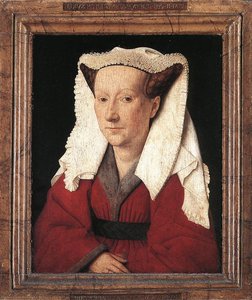
  26. Portrait of Margaret van Eyck by Jan van Eyck, 1439, Groeningemuseum
    26

    Jan van EyckEarly Netherlandish Painting

    Portrait of Margaret van Eyck

    Groeningemuseum, Brugge1439Oil on oak panel32 × 25 cm

    The Portrait of Margaret van Eyck is a significant work by the Flemish painter Jan van Eyck, completed in 1439. This oil on wood panel depicts Margaret, the wife of the artist, captured in a moment of quiet presence.

    The singular detailhat with veilred dress

    Its story

  27. Braque Family Triptych by Rogier van der Weyden, 1450, The Louvre
    27

    Rogier van der WeydenEarly Netherlandish Painting

    Braque Family Triptych

    The Louvre, Paris1450Oil on panel41 × 137 cm

    Van der Weyden’s genius lies in his ability to capture not just physical likeness but also psychological depth.

    Its story

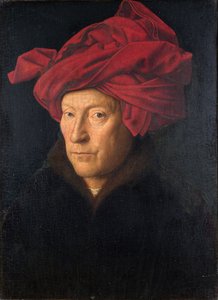
  28. Portrait of a Man by Jan van Eyck, 1433, National Gallery
    28

    Jan van EyckEarly Netherlandish Painting

    Portrait of a Man

    National Gallery, London1433Oil on oak panel33 × 26 cm

    Completed in 1433 in Bruges, the work presents a man wearing a vermilion red chaperon. The history of this panel includes its acquisition by Thomas Howard, the 14th Earl of Arundel, during his period of exile in Antwerp between 1642 and 1644.

    Its story

  29. The Arrest of Christ by Hieronymus Bosch, 1530–1550, Rijksmuseum
    29

    Hieronymus BoschEarly Netherlandish Painting

    The Arrest of Christ

    Rijksmuseum, Amsterdam1530–1550Oil on oak wood51 × 81 cm

    Dendrochronological dating indicates that the central panel was created around 1530-1550, aligning with the period when Bosch was actively working in Antwerp. The influence of earlier works, such as “Christ Crowned with Thorns,” is also evident, demonstrating Bosch's willingness to adapt and reinterpret existing motifs.

    The singular detailtorchlightdagger fight

    Its story

  30. Scenes from the Passion of Christ by Hans Memling, 1470, Galleria Sabauda
    30

    Hans MemlingEarly Netherlandish Painting

    Scenes from the Passion of Christ

    Galleria Sabauda, Turin1470Oil on panel57 × 92 cm

    Memling's distinctive style blends meticulous detail with a harmonious composition, characteristic of the Flemish Primitives. The artwork is rendered in oil on panel, a medium that allows for intricate brushwork and vibrant color application.

    The singular detaildetailed figures in dynamic posesintricate cityscape

    Its story

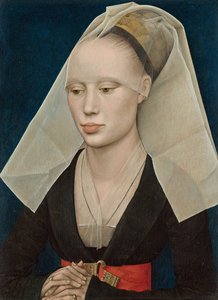
  31. Lady Wearing a Gauze Headdress by Rogier van der Weyden, 1445, Staatliche Museen zu Berlin
    31

    Staatliche Museen zu Berlin1445Oil on panel47 × 32 cm

    The subject, a woman of noble bearing, is captured in a moment of deep, introspective stillness. To behold this work is to witness the technical zenith of the Northern Renaissance. Van der Weyden, who brought the precision of a goldsmith to the canvas, employed the revolutionary medium of oil on wood panel to achieve a level of luminosity previously unseen in European art. While many of his contemporaries focused on rigid, formal depictions, Van der Weyden pushed the boundaries of intimacy.

    Its story

  32. Self-Portrait in a Fur-Collared Robe by Albrecht Dürer, 1500, Alte Pinakothek
    32

    Alte Pinakothek, Munich1500Oil paint on wood panel67 × 48 cm

    In this work, titled Self-Portrait in a Fur-Collared Robe, the artist Albrecht Dürer presents a direct and unflinching encounter with the viewer. In 1484, he produced a silverpoint self-portrait, a work that captures his talent even in his youth.

    Its story

  33. Dresden Triptych by Jan van Eyck, 1437, Gemäldegalerie Alte Meister
    33

    Jan van EyckEarly Netherlandish Painting

    Dresden Triptych

    Gemäldegalerie Alte Meister, Dresden1437Oil on oak panel28 × 38 cm

    Surrounding this sacred core, the wings of the triptych introduce celestial figures—the armored St. Michael and the serene St. and Catherine—creating a layered narrative of protection, faith, and intercession. To understand the Dresden Triptych is to witness the transformative power of Jan van Eyck’s revolutionary technique.

    Its story

  34. The Virgin and Child with Saints and Donors by Hans Memling, 1478, National Gallery
    34

    National Gallery, London1478Oil paint on panel68 × 73 cm

    Surrounding them are the saints and the pious donors, including the English soldier and diplomat Sir John Donne, whose kneeling figure bridges the gap between the viewer’s world and the sacred realm. To understand this triptych, one must look to the vibrant, prosperous streets of 15th-century Bruges.

    Its story

  35. Triptych of Temptation of St Anthony by Hieronymus Bosch, 1505, Museu Nacional de Arte Antiga
    35

    Museu Nacional de Arte Antiga, Lisbon1505Oil131 × 119 cm

    At its heart lies the story of Saint Anthony the Great—a figure revered for his ascetic devotion and unwavering faith—who endured a harrowing ordeal orchestrated by demonic forces. The ruined castle symbolizes decay and corruption, reflecting the spiritual wasteland inhabited by St. Anthony’s adversaries.

    Its story

  36. St Columba Altarpiece by Rogier van der Weyden, 1455, Alte Pinakothek
    36

    Rogier van der WeydenEarly Netherlandish Painting

    St Columba Altarpiece

    Alte Pinakothek, Munich1455Oil on panel138 × 153 cm

    At its heart, the work captures the intersection of the earthly and the divine, presenting scenes from the life of Christ—including the Annunciation, the Adoration of the Magi, and the Presentation in the Temple—with a clarity that feels almost startlingly modern.

    Its story

  37. Triptych of the Martyrdom of St Liberata by Hieronymus Bosch, 1500, Doge's Palace
    37

    Doge's Palace, Venice1500Oil on panel104 × 119 cm

    The Triptych of the Martyrdom of St Liberata reflects the anxieties and spiritual preoccupations of its time—a period marked by fervent religious fervor and a heightened awareness of mortality. It resides in the Palazzo Ducale, Venice, preserving its artistic significance.

    Its story

  38. Scenes from the life of Mary by Hans Memling, 1480, Alte Pinakothek
    38

    Hans MemlingEarly Netherlandish Painting

    Scenes from the life of Mary

    Alte Pinakothek, Munich1480Oil on panel81 × 189 cm

    This expansive scene immerses viewers in a sacred story, capturing key moments from the revered biblical figure’s life with emotional depth and spiritual resonance. Hans Memling, a prominent figure in early Netherlandish art, was renowned for his ability to combine narrative clarity with spiritual symbolism.

    The singular detailbiblical themessymbolic elements

    Its story

  39. Virgin and Child in a Domestic Interior by Petrus Christus, 1467, Nelson-Atkins Museum of Art
    39

    Nelson-Atkins Museum of Art, Kansas City1467Oil on panel69.52 × 50.95 cm

    Petrus Christus, a successor to the monumental legacy of Jan van Eyck, employed a technique of layering thin, translucent glazes of oil paint to achieve a luminous depth that seems to glow from within.

    Its story

  40. Madonna with the Child by a Fireplace by Robert Campin, 1433, Hermitage Museum
    40

    Hermitage Museum, Saint Petersburg1433Oil on panel34 × 24 cm

    Born in Valenciennes around 1375 and working primarily in Tournai, Campin – often referred to as the Master of Flémalle – was a pivotal figure bridging the gap between the opulent International Gothic style and the burgeoning naturalism of his contemporaries like Jan van Eyck.

    Its story

  41. Seven Sacraments Altarpiece by Rogier van der Weyden, 1445, Koninklijk Museum voor Schone Kunsten
    41

    Koninklijk Museum voor Schone Kunsten, Antwerp1445Oil on panel200 × 97 cm

    The altarpiece is ingeniously structured as a triptych, unfolding across three panels to visually articulate the core sacraments of the Catholic Church. Flanking this powerful center are the left and right wings, each meticulously illustrating three further sacraments: Baptism, Confirmation, and Confession on the left; Ordination, Marriage, and Anointing of the Sick (Last Rites) on the right. Created during a period of intense religious fervor, the Seven Sacraments Altarpiece reflects the growing importance of personal piety and sacramental practice in medieval life.

    The singular detailintricate architectural detailsseven Sacraments depicted

    Its story

  42. The Just Judges by Jan van Eyck, 1430–1432, Cathedral of St Bavo
    42

    Jan van EyckEarly Netherlandish Painting

    The Just Judges

    Cathedral of St Bavo, Gent1430–1432Oil on panel157.1 × 63.5 cm

    It is attributed to Jan van Eyck or his brother Hubert van Eyck. On 10 April 1934, the panel was removed from its frame and stolen. A replacement copy, created by Jef Van der Veken in 1945, occupies the space in the altarpiece.

    Its story

  43. Virgin and Child by Rogier van der Weyden, 1433, Thyssen-Bornemisza Museum
    43

    Rogier van der WeydenEarly Netherlandish Painting

    Virgin and Child

    Thyssen-Bornemisza Museum, Madrid1433Oil on panel14 × 10 cm

    Before he was a renowned painter, Rogier van der Weyden de la Pasture understood the precise luster of precious metals and the intricate details of fine craftsmanship.

    Its story

  44. Last Judgment Triptych by Hans Memling, 1467–1471, Muzeum Narodowe
    44

    Hans MemlingEarly Netherlandish Painting

    Last Judgment Triptych

    Muzeum Narodowe, Гданьск1467–1471Oil paint221 × 161 cm

    In the left panel, figures are depicted being judged, while the right panel contains additional people facing judgment. The composition is populated by numerous figures, including both angels and demons.

    Its story

  45. The Ghent Altarpiece by Jan van Eyck, 1426, Cathedral of St Bavo
    45

    Jan van EyckEarly Netherlandish Painting

    The Ghent Altarpiece

    Cathedral of St Bavo, Gent1426Oil on oak panel164 × 72 cm

    The meticulous rendering of textures—the velvet robes, the polished wood of the pipe organ, the intricate patterns on the clothing—demonstrates Van Eyck’s unparalleled skill as a draftsman and colorist. The Ghent Altarpiece has undergone extensive conservation efforts, with recent support from the Getty Foundation ensuring its preservation for future generations.

    The singular detailangels playing music

    Its story

  46. Miraflores Altarpiece by Rogier van der Weyden, 1440, Staatliche Museen zu Berlin
    46

    Rogier van der WeydenEarly Netherlandish Painting

    Miraflores Altarpiece

    Staatliche Museen zu Berlin1440Oil on oak71 × 43 cm

    The central panel depicts a poignant scene of grief – the Lamentation over Christ’s Corpse. The altarpiece reflects the burgeoning humanist spirit of the Burgundian Netherlands during Van der Weyden’s lifetime. While rooted in Christian iconography, it demonstrates a sophisticated understanding of human anatomy and emotion—traits that distinguished Northern Renaissance art from its Italian counterpart.

    Its story

  47. Tommaso Portinari and his Wife by Hans Memling, 1470, Metropolitan Museum of Art
    47

    Hans MemlingEarly Netherlandish Painting

    Tommaso Portinari and his Wife

    Metropolitan Museum of Art, New York1470Oil on panel44 × 34 cm

    The composition centers on Maria herself, positioned gracefully within a window frame bathed in diffused light, symbolizing purity and divine illumination. The Renaissance fascination with classical antiquity fueled an interest in portraying human subjects with dignity and grace—a pursuit exemplified by Memling’s meticulous depiction of Maria's posture and gaze.

    Its story

  48. Portrait of Margareta van Eyck by Jan van Eyck, 1439, Groeninge Museum
    48

    Jan van EyckEarly Netherlandish Painting

    Portrait of Margareta van Eyck

    Groeninge Museum, Brugge1439Oil on oak panel32 × 25 cm

    There is a specific, human vulnerability in her expression; her left eye carries a slight squint, a detail that anchors her in reality rather than idealization. It is a rare glimpse into a private life, marking a specific moment in time for a woman of noble standing.

    Its story

  49. Mater dolorosa by Hans Memling, 1480
    49

    Hans MemlingEarly Netherlandish Painting

    Mater dolorosa

    1480Oil on panel55 × 33 cm

    Its story

  50. Portrait of a Man with Carnation by Jan van Eyck, 1435, Staatliche Museen zu Berlin
    50

    Jan van EyckEarly Netherlandish Painting

    Portrait of a Man with Carnation

    Staatliche Museen zu Berlin1435Oil on wood panel40 × 31 cm

    The Portrait of a Man with Carnation is an oil painting on oak panel attributed to the Early Netherlandish master, Jan van Eyck or his workshop. Based on dendrochronological examination of the wood, it is thought to have been completed relatively late in van Eyck's career, perhaps around 1436.

    Its story

  51. The Ship of Fools by Hieronymus Bosch, 1490–1500, Louvre Museum
    51

    Hieronymus BoschEarly Netherlandish Painting

    The Ship of Fools

    Louvre Museum1490–1500Oil on panel

    As one contemplates this vessel, it becomes clear that Bosch was not simply painting a group of revelers, but rather crafting a chilling allegory of the human soul adrift in a sea of sin. Bosch utilizes a densely packed arrangement that echoes the terrifying depth of Dante’s Inferno, forcing the viewer's eye to navigate a labyrinthine space filled with unsettling juxtapositions.

    Its story

  52. Angel Musicians by Hans Memling, 1480, Koninklijk Museum voor Schone Kunsten
    52

    Hans MemlingEarly Netherlandish Painting

    Angel Musicians

    Koninklijk Museum voor Schone Kunsten, Antwerp1480Oil on panel165 × 230 cm

    The painting’s style is deeply rooted in the traditions of Northern European art, particularly the work of Rogier van der Weyden, Memling's mentor, showcasing a refined approach to detail and perspective. The Koninklijk Museum voor Schone Kunsten has undertaken extensive conservation efforts over the past sixteen years to ensure the longevity of this exceptional artwork.

    The singular detaildetailmusical angels

    Its story

  53. The Lucca Madonna by Jan van Eyck, 1436, Städel Museum
    53

    Jan van EyckEarly Netherlandish Painting

    The Lucca Madonna

    Städel Museum, Frankfurt1436Oil painting

    It is one of six extant Madonna paintings by the artist that date from the period between the completion of the Ghent Altarpiece and his death in June 1441. Before this period, the painting was held within the collection of Charles de Bourbon, Duke of Lucca, prior to 1840.

    Its story

  54. Sforza Triptych (exterior) by Rogier van der Weyden, 1460, Musées Royaux des Beaux-Arts
    54

    Musées Royaux des Beaux-Arts, Brussels1460Oil on wood53 × 44 cm

    The presence of saints such as St. Bavo, St. Francis, St. Catherine, and St. Barbara on the wings provides a celestial court that flanks the central mystery, creating a sense of a continuous, eternal liturgy.

    Its story

  55. Potrait of a Carthusian by Petrus Christus, 1446, Metropolitan Museum of Art
    55

    Petrus ChristusEarly Netherlandish Painting

    Potrait of a Carthusian

    Metropolitan Museum of Art, New York1446Oil on panel29.2 × 18.7 cm

    Its story

  56. The Annunciation by Hans Memling, 1480, Metropolitan Museum of Art
    56

    Hans MemlingEarly Netherlandish Painting

    The Annunciation

    Metropolitan Museum of Art, New York1480Oil on panel77 × 55 cm

    The scene captures the pivotal moment when the Archangel Gabriel delivers his celestial message to the Virgin Mary. This attention to detail serves a higher purpose, as Memling weaves a complex web of symbolism throughout the domestic setting.

    Its story

  57. The Lamentation of Christ by Hugo van der Goes, 1467, Kunsthistorisches Museum
    57

    Hugo van der GoesEarly Netherlandish Painting

    The Lamentation of Christ

    Kunsthistorisches Museum, Vienna1467Oil on wood panel33 × 23 cm

    The painting portrays the immediate aftermath of Christ's crucifixion – Mary mourning over his body, joined by other mourners reflecting on his sacrifice. Van der Goes's mastery is evident in his meticulous technique. The lighting is dramatic, with strong highlights illuminating Christ’s body and several figures, while deep shadows accentuate their sorrowful expressions.

    Its story

  58. Diptych by Jan van Eyck, 1420, Metropolitan Museum of Art
    58

    Jan van EyckEarly Netherlandish Painting

    Diptych

    Metropolitan Museum of Art, New York1420Oil on panel (transferred to canvas)56 × 19 cm

    Born around 1390 in Maastricht, Jan van Eyck emerged from a family steeped in artistic tradition; his elder brother Hubert also practiced the painter’s craft, though details surrounding his work remain elusive. For more information on Jan van Eyck and his works, visit Jan Van Eyck: Diptych at AllPaintingsStore.

    Its story

  59. Christ on the Cross with Mary and St. John by Rogier van der Weyden, 1460, The Royal Seat of San Lorenzo of El Escorial
    59

    The Royal Seat of San Lorenzo of El Escorial1460Oil on oak panel325 × 192 cm

    The composition is strikingly direct: Christ on the Cross dominates the scene, flanked by the Virgin Mary and St. John the Evangelist. This painting exemplifies van der Weyden's ambition to establish an international reputation, and it succeeded – his works were highly sought after by patrons across Europe, including those in Italy and Spain.

    The singular detailcrucifixion scene with Maryst. John

    Its story

  60. Portrait of a Man in a Chaperon by Jan van Eyck, Metropolitan Museum of Art
    60

    Jan van EyckEarly Netherlandish Painting

    Portrait of a Man in a Chaperon

    Metropolitan Museum of Art, New YorkOil on panel28 × 20 cm

    The brilliance of Van Eyck lies in his revolutionary command of the oil medium, a technique that allowed him to achieve textures and light effects previously unimaginable.

    Its story

  61. Saint George and the Dragon by Rogier van der Weyden, 1435, National Gallery of Art
    61

    National Gallery of Art, Washington1435Oil on panel24 × 20 cm

    Van der Weyden's mastery is immediately evident in his painstaking attention to detail. The diagonal thrust of the lance, dominating the composition, not only directs the viewer’s eye but also symbolizes the decisive action required to overcome evil. “Saint George and the Dragon” is rich in symbolic meaning, deeply rooted in medieval Christian iconography. Saint George's slaying of the dragon was a potent symbol of Christ’s victory over sin and death – a narrative frequently depicted throughout the Middle Ages. Painted in 1435, this work reflects the burgeoning artistic sophistication of Early Netherlandish painting.

    The singular detailshieldlance

    Its story

  62. St. Liberata Triptych by Hieronymus Bosch, 1503
    62

    Hieronymus BoschEarly Netherlandish Painting

    St. Liberata Triptych

    1503Oil on wood panel

    This remarkable triptych by Hieronymus Bosch, created in 1503, offers a compelling glimpse into the religious and artistic sensibilities of the Early Netherlandish period. The St. Liberata Triptych unfolds as a narrative across its three panels. The artwork is currently housed in the National Museum of Ancient Art in Lisbon, Portugal.

    Its story

  63. Stigmatization of St Francis by Jan van Eyck, 1428, Philadelphia Museum of Art
    63

    Jan van EyckEarly Netherlandish Painting

    Stigmatization of St Francis

    Philadelphia Museum of Art1428Oil on panel12 × 14 cm

    Created around 1428, this work exemplifies the meticulous realism characteristic of early Netherlandish painting. It is attributed to Jan van Eyck, a pioneering figure whose innovative use of oil paint and hyperrealistic detail set new standards in Northern European art.

    The singular detailSt Franciscrucifix

    Its story

  64. Diptych by Rogier van der Weyden, 1440, Kunsthistorisches Museum
    64

    Rogier van der WeydenEarly Netherlandish Painting

    Diptych

    Kunsthistorisches Museum, Vienna1440Oil paint on wood18 × 12 cm

    To understand the breadth of this artist's hand, one might look toward his 1445 Seven Sacraments Altarpiece, held in the Koninklijk Museum voor Schone Kunsten in Antwerp. Later in his career, around 1460, he produced the Portrait of a Lady, which highlights his capacity for capturing the subtle psychological depth of a sitter.

    Its story

  65. An Old Woman ( by Quinten Metsys, 1513, National Gallery
    65

    Quinten MetsysEarly Netherlandish Painting

    An Old Woman (

    National Gallery, London1513Oil62 × 45 cm

    "An Old Woman" was painted during a period of significant artistic innovation in Antwerp. The city’s thriving merchant class fueled a demand for portraiture, and artists like Matsijs were tasked with capturing the status and individuality of their patrons.

    The singular detailsatirical portrait

    Its story

  66. Lamentation for Christ by Albrecht Dürer, 1500, Alte Pinakothek
    66

    Albrecht DürerEarly Netherlandish Painting

    Lamentation for Christ

    Alte Pinakothek, Munich1500Oil151 × 121 cm

    The heavy silence of the scene finds its origin in Albrecht Dürer's Lamentation for Christ. The figures gathered around the deceased Messiah reflect a communal weight, yet the work remains anchored in the specific memory of a woman lost in the year 1500.

    Its story

  67. The Annuciation Diptych by Jan van Eyck, 1435, Thyssen-Bornemisza Museum
    67

    Jan van EyckEarly Netherlandish Painting

    The Annuciation Diptych

    Thyssen-Bornemisza Museum, Madrid1435Oil on panel39 × 24 cm

    The Annunciation Diptych by Jan van Eyck represents a cornerstone of Early Netherlandish painting. Completed around 1435, the work functions as a study in the meticulous detail characteristic of the Northern tradition. The diptych is held within the Thyssen-Bornemisza Museum in Madrid, Spain.

    Its story

  68. Adoration of the Shepherds by Robert Campin, 1430, Musée des Beaux-Arts de Dijon
    68

    Robert CampinEarly Netherlandish Painting

    Adoration of the Shepherds

    Musée des Beaux-Arts de Dijon, Digione1430Oil on panel86 × 72 cm

    Its story

  69. Isabella Borluut by Jan van Eyck, 1432, St Bavo's Cathedral
    69

    Jan van EyckEarly Netherlandish Painting

    Isabella Borluut

    St Bavo's Cathedral1432Oil on panel149 × 54 cm

    This intimate panel, measuring just 149 x 54 cm, immediately draws the viewer into the quiet contemplation of its subject – Isabella Borluut herself. Completed around 1432, this ambitious work represents a pivotal moment in art history – a transition from the stylized conventions of the Middle Ages to the burgeoning realism of the Renaissance.

    The singular detaildetailprayer pose

    Its story

  70. St John and Veronica Diptych (left wing) by Hans Memling, 1483, Alte Pinakothek
    70

    Alte Pinakothek, Munich1483Oil on panel31 × 24 cm

    This specific panel is dated 1483. It is a component of a larger diptych and represents the reverse side of the left wing of the composition. This work belongs to the Early Netherlandish Painting movement. It is held within the Alte Pinakothek in Munich. The physical dimensions of the panel measure 31 x 24 cm.

    Its story

  71. The Ghent Altarpiece by Jan van Eyck, 1432, Cathedral of St Bavo
    71

    Jan van EyckEarly Netherlandish Painting

    The Ghent Altarpiece

    Cathedral of St Bavo, Gent1432Oil on wood164 × 73 cm

    The lamb, central to the “Mystic Lamb” title, represents Christ as the sacrificial savior. Lilies, held by Gabriel, symbolize Mary’s purity and virginity. The scrolls carried by the prophets are filled with prophecies foretelling the coming of Christ. The Ghent Altarpiece has endured centuries of challenges, including a harrowing period during World War II when it was secreted away to a salt mine in Belgium to protect it from Nazi looting.

    The singular detaildetailed realism

    Its story

  72. Triptych of the Mystical Marriage of St. Catherine by Hans Memling, 1479, Musée Memling
    72

    Musée Memling, Bruges1479Oil on oak

    The scene features the Virgin Mary seated on a throne, holding the Child Jesus on her lap. St. Catherine of Alexandria kneels to the left of the throne, wearing a crown, a white tabard, red velvet sleeves, and a richly patterned brocade skirt. The Christ Child is shown placing a ring on St. Catherine's finger.

    Its story

  73. Portrait of a Woman by Jan van Eyck, 1550, Gemäldegalerie
    73

    Jan van EyckEarly Netherlandish Painting

    Portrait of a Woman

    Gemäldegalerie, Berlin1550Oil paint on wooden panel74 × 58 cm

    The composition, centered and commanding, establishes a formal yet deeply personal connection that remains as potent today as it was in 1434. The true magic of this work lies in Van Eyck’s revolutionary mastery of the oil medium.

    Its story

  74. Portinari Triptych (right wing) by Hans Memling, 1487, Gemäldegalerie
    74

    Hans MemlingEarly Netherlandish Painting

    Portinari Triptych (right wing)

    Gemäldegalerie, Berlin1487Oil on panel41.5 × 31.5 cm

    Executed around 1487, this monumental oil painting depicts Mary cradling Jesus within an idyllic landscape setting, commissioned by Benedetto Portinari, a Florentine banker deeply connected to the Medici family’s patronage. It exemplifies the artistic fervor fostered by wealthy patrons like Benedetto Portinari and underscores the importance of religious art in shaping cultural values.

    Its story

  75. St John Altarpiece by Rogier van der Weyden, 1455, Staatliche Museen zu Berlin
    75

    Rogier van der WeydenEarly Netherlandish Painting

    St John Altarpiece

    Staatliche Museen zu Berlin1455Oil on oak panel77 × 48 cm

    The way light catches the ripples of the Jordan River or the metallic sheen of a ceremonial object is nothing short of miraculous. By rendering the world with such extreme clarity, Van der Weyden makes the miracles of the Gospel feel present and undeniable.

    Its story

  76. Head of a Halberdier by Hieronymus Bosch, 1490, Museo del Prado
    76

    Hieronymus BoschEarly Netherlandish Painting

    Head of a Halberdier

    Museo del Prado, Madrid1490Oil on panel28 × 21 cm

    Often overlooked in favor of his more flamboyant and narrative-rich creations like “The Garden of Earthly Delights,” this oil on panel painting offers a concentrated distillation of Bosch’s unique artistic vision: a haunting meditation on mortality, authority, and the unsettling beauty of the human condition.

    The singular detailhalberdbirds

    Its story

  77. Christ Giving His Blessing by Hans Memling, 1478, Memling Museum
    77

    Hans MemlingEarly Netherlandish Painting

    Christ Giving His Blessing

    Memling Museum, Bruges1478Oil on panel

    Few paintings possess the quiet power of Hans Memling's "Christ Giving His Blessing," completed in 1478. Created during a period of intense religious fervor within Europe, it reflects Memling’s mastery of composition, his meticulous attention to detail, and his ability to translate complex theological concepts into a visually arresting experience.

    The singular detaildetailed symbolism

    Its story

  78. Ascent of the Blessed by Hieronymus Bosch, 1504, Gallerie dell'Accademia
    78

    Hieronymus BoschEarly Netherlandish Painting

    Ascent of the Blessed

    Gallerie dell'Accademia1504Oil on panel

    To fully appreciate “Ascent of the Blessed,” it’s crucial to understand its place within the broader context of Northern Renaissance art. Unlike the idealized figures prevalent in Italian Renaissance painting, Bosch's subjects are frequently grotesque, flawed, and deeply human.

    The singular detailbirdangels

    Its story

  79. Portrait of Benedetto di Tommaso Portinari by Hans Memling, 1487
    79

    1487Oil on canvas45 × 34 cm

    Measuring 45 x 34 cm, the work depicts Benedetto di Tommaso Portinari, a Florentine merchant working for the Medici bank in Bruges, presented not as a powerful businessman but as a humble scholar immersed in contemplation. Unlike the Italian Renaissance's emphasis on idealized forms, Memling prioritized accurate observation and detailed rendering.

    Its story

  80. Portrait of Antoine by Rogier van der Weyden, 1460, Royal Museums of Fine Arts of Belgium
    80

    Rogier van der WeydenEarly Netherlandish Painting

    Portrait of Antoine

    Royal Museums of Fine Arts of Belgium, Brussels1460Oil on oak panel39 × 28 cm

    The painting immediately draws the eye to Antoine himself – a young man presented with an almost unnerving composure. This ability to convey emotion through carefully rendered features was a hallmark of Van der Weyden's style, distinguishing him from his contemporaries and establishing him as a pioneer of the Northern Renaissance portraiture.

    The singular detailfeatherbow

    Its story

  81. Visitation of Mary by Rogier van der Weyden, 1445, Museum der bildenden Künste
    81

    Rogier van der WeydenEarly Netherlandish Painting

    Visitation of Mary

    Museum der bildenden Künste, Leipzig1445Oil on panel57 × 36 cm

    The painting brings to life the pivotal moment when Mary, pregnant with Jesus, visits her elderly cousin Elizabeth, who is carrying John the Baptist. These secondary figures, though subtle, add layers of communal witness to the private miracle occurring at the center.

    Its story

  82. Adoration of the Kings by Geertgen tot Sint Jans, 1480, Rijksmuseum
    82

    Geertgen tot Sint JansEarly Netherlandish Painting

    Adoration of the Kings

    Rijksmuseum, Amsterdam1480Oil on panel90 × 70 cm

    A radiant glow emanates from the infant Jesus, casting a soft, celestial brilliance upon the faces of Mary and the kneeling kings. This luminosity sculpts the heavy folds of the drapery and highlights the delicate textures of the skin, creating a three-dimensional realism that was revolutionary for the late 15th century.

    Its story

  83. Kardinal Niccolò Albergati ? by Jan van Eyck, 1437, Kunsthistorisches Museum
    83

    Jan van EyckEarly Netherlandish Painting

    Kardinal Niccolò Albergati ?

    Kunsthistorisches Museum, Vienna1437Oil on panel295 × 340 cm

    Little is known about Van Eyck’s formative years, but his brother Hubert’s artistic endeavors suggest a family steeped in visual tradition. Commissioned by Duke Philip the Good, it served as a visual representation of power and piety within the context of the Burgundian Renaissance.

    Its story

  84. Diptych of Maarten Nieuwenhove by Hans Memling, 1487, Memling Museum - Sint Jans Hospital
    84

    Hans MemlingEarly Netherlandish Painting

    Diptych of Maarten Nieuwenhove

    Memling Museum - Sint Jans Hospital, Brugge1487Oil paint52 × 41 cm

    The diptych depicts Maarten Nieuwenhove and his wife, presenting them in a serene tableau within their home. Memling’s patronage by such influential figures underscores the importance of artistic commissions in shaping cultural tastes and disseminating humanist ideas throughout Europe.

    The singular detailclocksbaby

    Its story

  85. Saint John the Evangelist on Patmos by Hieronymus Bosch, 1485, Gemäldegalerie
    85

    Gemäldegalerie, Berlin1485Oil on oak panel63 × 43.3 cm

    As he sits with his head bowed, perhaps wrestling with the weight of divine revelation, the viewer is drawn into a landscape that is simultaneously serene and unsettling. While the setting suggests a tranquil hillside with glimpses of water and distant trees, there is an underlying tension characteristic of Bosch’s unique vision.

    Its story

  86. The Magdalene Reading by Rogier van der Weyden, 1445, National Gallery
    86

    Rogier van der WeydenEarly Netherlandish Painting

    The Magdalene Reading

    National Gallery, London1445Oil on panel62 × 55 cm

    These figures serve as anchors for the composition, grounding Mary Magdalene's contemplative posture within a broader framework of Christian tradition. The Magdalene Reading is one of three surviving fragments from a monumental altarpiece conceived by Van der Weyden —a project that reflects the artistic ambitions and spiritual fervor of its time.

    Its story

  87. Virgin and Child with Four Angels by Gerard David, 1505, Metropolitan Museum of Art
    87

    Gerard DavidEarly Netherlandish Painting

    Virgin and Child with Four Angels

    Metropolitan Museum of Art, New York1505Oil on panel63 × 39 cm

    The painting immediately draws the eye into its serene depths, dominated by the central figures of Mary and Christ, framed against a subtly atmospheric backdrop that hints at both earthly reality and celestial grace. The four angels surrounding Mary and Christ represent the Evangelists—Matthew, Mark, Luke, and John—who chronicled the life of Jesus.

    The singular detailcityscapefour angels

    Its story

  88. St. Francis Receiving the Stigmata by Jan van Eyck, 1427–1432, Philadelphia Museum of Art
    88

    Jan van EyckEarly Netherlandish Painting

    St. Francis Receiving the Stigmata

    Philadelphia Museum of Art1427–1432Oil on wood panel

    What truly distinguishes “St. Francis Receiving the Stigmata” is Van Eyck’s pioneering use of oil paint. It was first documented in the will of Anselm Adornes of Bruges in 1470, suggesting it may have been part of a pair – a theory supported by stylistic similarities and technical analysis.

    Its story

  89. St John Altarpiece (closed) by Hans Memling, 1474, Memling Museum - Sint Jans Hospital
    89

    Hans MemlingEarly Netherlandish Painting

    St John Altarpiece (closed)

    Memling Museum - Sint Jans Hospital, Brugge1474Oil on oak panel176 × 78 cm

    The panel served as the heart of an altarpiece commissioned for the St. John’s Hospital, intended to inspire contemplation and reverence amongst patients and patrons alike. The central panel depicts the Adoration of the Magi – a cornerstone narrative in Christian art.

    The singular detailhorse in backgroundcomplex composition

    Its story

  90. Dream of Pope Sergius by Rogier van der Weyden, 1437, J. Paul Getty Museum
    90

    Rogier van der WeydenEarly Netherlandish Painting

    Dream of Pope Sergius

    J. Paul Getty Museum, Los Angeles1437Oil on panel89 × 80 cm

    The artist manipulates illumination to create a palpable sense of three-dimensional space, drawing the eye through the winding staircases and into the far distance toward the steps of Saint Peter's Cathedral. For those seeking to adorn a space with art that inspires contemplation, this painting offers a unique combination of grandeur and intimacy.

    Its story

  91. The Ghent Altarpiece by Jan van Eyck, 1425, Cathedral of St Bavo
    91

    Jan van EyckEarly Netherlandish Painting

    The Ghent Altarpiece

    Cathedral of St Bavo, Gent1425Oil on wood

    Created in 1425 and housed within the magnificent Cathedral of St Bavo in Ghent, Belgium, this polyptych offers an unparalleled glimpse into the artistic and spiritual landscape of Early Netherlandish art – a world where meticulous detail met deeply symbolic meaning. Furthermore, the altarpiece was commissioned by Joos Vijd and his wife Elisabeth Borluut for their private chapel in St Bavo’s Cathedral, reflecting a burgeoning civic pride and patronage within Ghent at the time.

    The singular detaildetailed realism

    Its story

  92. Portrait of Maria Maddalena Portinari by Hans Memling, 1470, Metropolitan Museum of Art
    92

    Metropolitan Museum of Art, New York1470Oil on panel44 × 34 cm

    Hans Memling, the celebrated Bruges Master, was renowned throughout his time for his almost microscopic attention to detail. While outwardly appearing as a secular gathering, the solemnity pervading the scene hints at deeper spiritual currents common in 15th-century Flemish art.

    Its story

  93. Portrait of a Man by Rogier van der Weyden, 1440, Courtauld Gallery
    93

    Rogier van der WeydenEarly Netherlandish Painting

    Portrait of a Man

    Courtauld Gallery, London1440Oil on panel33 × 23 cm

    The background is deliberately muted, a dark, almost impenetrable void that serves to heighten the subject's presence and directs the viewer’s eye directly to Fillastre himself. The Courtauld Gallery’s collection, renowned for its representation of this era, provides the perfect setting to appreciate Van der Weyden’s contribution to the evolution of portraiture.

    The singular detailcontemplative pose

    Its story

  94. The Ghent Altarpiece by Jan van Eyck, 1432, Cathedral of St Bavo
    94

    Jan van EyckEarly Netherlandish Painting

    The Ghent Altarpiece

    Cathedral of St Bavo, Gent1432Oil on wood

    Mary, the Virgin Mother, is presented as a figure of quiet contemplation, her hands gracefully clasped in prayer.

    The singular detaildetailchiaroscuro

    Its story

  95. St Joseph by Rogier van der Weyden, 1445, Calouste Gulbenkian Foundation
    95

    Rogier van der WeydenEarly Netherlandish Painting

    St Joseph

    Calouste Gulbenkian Foundation, Lisbon1445Oil on panel21 × 18 cm

    Clad in a striking red hat and a deep blue robe with a soft hood, St Joseph looks out through a window, his gaze suggesting a mind lost in prayer or perhaps observing the subtle movements of the world outside.

    Its story

  96. Portrait of Isabella of Portugal by Jan van Eyck
    96

    Jan van EyckEarly Netherlandish Painting

    Portrait of Isabella of Portugal

    Oil paint on panel35 × 27 cm

    The woman sits with a quiet, steady gaze that seems to pierce through the centuries, meeting the viewer with a composure born of immense influence. A delicate white veil rests upon her head, framing a face that carries the serene dignity of the Burgundian aristocracy.

    Its story

  97. Exhumation of St Hubert by Rogier van der Weyden, 1437, National Gallery
    97

    Rogier van der WeydenEarly Netherlandish Painting

    Exhumation of St Hubert

    National Gallery, London1437Oil on canvas88 × 81 cm

    The painting depicts the solemn exhumation – the uncovering and ceremonial rediscovery – of the relics of Saint Hubert, the patron saint of hunters. Created in 1437, ‘Exhumation of St Hubert’ reflects a period of growing religious devotion and artistic patronage in Northern Europe.

    The singular detailclergy robesdramatic lighting

    Its story

  98. Crucifixion with a Donor by Hieronymus Bosch, 1480, Musées Royaux des Beaux-Arts
    98

    Hieronymus BoschEarly Netherlandish Painting

    Crucifixion with a Donor

    Musées Royaux des Beaux-Arts, Brussels1480Oil on oak panel74 × 61 cm

    Measuring 74 x 61 cm, it’s a piece that rewards close contemplation, revealing layers of symbolism and artistic mastery. The painting centers on the harrowing scene of Christ's crucifixion. The donor figure may represent the patron who commissioned the work, but also symbolizes humanity's role in Christ’s sacrifice.

    The singular detailsymbolic imagerydonor portrait

    Its story

  99. Portrait of Philip the Good by Rogier van der Weyden, 1520, Staatliche Museen zu Berlin
    99

    Staatliche Museen zu Berlin1520Oil painting31 × 23 cm

    As Duke of Burgundy, his territories spanned much of modern-day Belgium, France, and the Netherlands, making him one of the most influential rulers of his time. Van der Weyden’s glazing technique—layering thin, translucent paints—creates an almost jewel-like quality in the colors.

    The singular detailshadowblack hat with gold trim

    Its story

  100. The Middelburg Altar by Rogier van der Weyden, 1450, Gemäldegalerie
    100

    Rogier van der WeydenEarly Netherlandish Painting

    The Middelburg Altar

    Gemäldegalerie, Berlin1450Oil on oak panel91 × 89 cm

    The Middelburg Altar is a work by the artist Rogier van der Weyden. The composition is a triptych that was originally commissioned for the church of Saints Peter and Paul in Middelburg, Flanders. Originally commissioned for the church of Saints Peter and Paul in Middelburg, Flanders, the work was later removed from its initial setting.

    Its story

Where they live

The one place you can see each famous Early Netherlandish Painting painting

New York keeps 8 of these originals; the Metropolitan Museum of Art, 8.

The masters

The Early Netherlandish Painting masters our artists look to

Portrait of Petrus Christus

Petrus Christus

1410–1475 · Belgium · 3

Early Netherlandish painter from Bruges who used linear perspective and luminous oil glazes to create deep, realistic architectural spaces.

13. Portrait of a Young Woman, 39. Virgin and Child in a Domestic Interior, 55. Potrait of a Carthusian

Portrait of Hugo van der Goes

Hugo van der Goes

1440–1482 · Belgium · 2

Flemish Renaissance painter of the Portinari Altarpiece, known for dramatic realism and intense psychological depth in religious scenes.

21. The Adoration of the Kings (Monforte Altar), 57. The Lamentation of Christ

+6more masters our artists study Early Netherlandish Painting Masters Their stories

In confidence

About these Early Netherlandish Painting paintings

Hover gently over a question to read the answer.

Which 10 Early Netherlandish Painting paintings should everyone know?

How was this list of Early Netherlandish Painting paintings ranked?

Each painting is ranked by how widely it is known: the number of Wikipedia language editions with an article on it (Wikidata sitelinks), its place in our catalogue's manual ranking and the visits its page receives. The same painting catalogued several times counts once, and details, copies and studies are left out.

How the selection is made

We went through every Early Netherlandish Painting painting in our catalogue and placed the best-known first: those Wikipedia describes in the most languages, those our artists and curators rank highest and those most viewed on our pages. Each original appears once — no details or copies.

Other movements that inspire us

The periods that inspire us