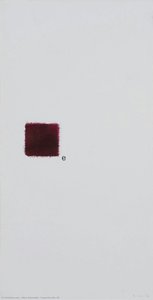
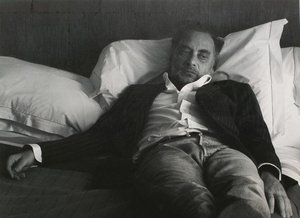
Minimalist: original voices

19 Famous Minimalist Painters Who Shaped the Movement

Frank Stella (1936–2024) is the most famous Minimalist painter, whose singular vision gave us Die Fahne Hoch! and Wolfeboro IV. Next stand Pierre Soulages, Sol LeWitt, Donald Judd and Agnes Martin. These 19 painters, from Lucio Fontana (born 1899) to Rudolf Stingel (born 1956), came from 12 countries.

Our selection. Artists whose works our catalogue attaches to Minimalist, in the order of our fame ranking. Artists born after 1955 with no Wikidata identifier stay out until verified. The Wikipedia figure counts our 32 languages with an article on the artist.

  1. Die Fahne Hoch! by Frank Stella1Frank Stella
  2. Peinture 222 x 314 cm, 24 février 2008 by Pierre Soulages2Pierre Soulages
  3. Kaldor Public Art Project 11: Sol LeWitt 1998 by Sol LeWitt3Sol LeWitt

In brief

Minimalist in brief

  • 19Artists
  • 1899–1956Years of birth
  • 12Countries of birth
  • 4Women
  • 7Living artists
  • 481Works in our catalogue
Cities with most births
Malden (1), Rodez (1), Hartford (1), Excelsior Springs (1)
The women of this list
Agnes Martin, Eva Hesse, Mira Schendel, Zarina

One artist at a time

19 Minimalist Painters and their signature works

1of 19

Frank Stella

American Born in Malden ['Minimalism', 'Post-Painterly Abstraction'] Wikipedia in 22/32 languages

Frank Stella

Frank Stella, who passed away on May 4, 2024, at the age of 87, was a towering figure in American art, a relentless innovator whose career spanned seven decades and challenged conventional notions of painting, sculpture, and architectural design. His commission for the BMW Art Car Project in 1976 showcased his ability to adapt his distinctive drawing style to an unconventional canvas: a 3.0 CSL racing car.

Signature works · The 100 signature works

2of 19

Pierre Soulages

Born in Rodez Wikipedia in 20/32 languages

Pierre Soulages

Soulages' artistic development was marked by a relentless pursuit of expressing light through the medium of black. He wasn’t interested in black for its somber connotations, but rather for its capacity to reflect and absorb light, creating an interplay of shadow and illumination. Soulages’ fascination with black stemmed from an early interest in prehistoric art and a desire for purity and primal expression.

Signature works · The 100 signature works

3of 19

Sol LeWitt

American Born in Hartford Minimalism & Conceptual Art Wikipedia in 20/32 languages

Sol LeWitt

His early years were shaped by a rigorous analytical curiosity, a trait nurtured by his studies at Syracuse University between 1945 and 1949.

Signature works · The 100 signature works

4of 19

Donald Judd

American Born in Excelsior Springs Minimalism Wikipedia in 19/32 languages

Donald Judd

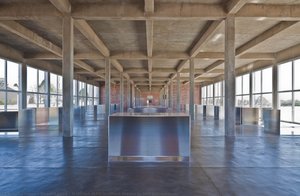
Donald Judd, born in Excelsior Springs, Missouri, in 1928, embarked on a path that would fundamentally reshape the landscape of modern sculpture. His childhood was marked by frequent relocation due to his father’s work with Western Union Telegraph Company, an experience that perhaps fostered a sense of detachment and observation – qualities that would later permeate his artistic vision. The “Specific Objects” essay continues to be studied and debated by scholars, shaping discussions about materiality, space, and the nature of artistic experience.

Signature works · The 100 signature works

5of 19

Agnes Martin

American Born in Macklin Minimalism, Abstract Expressionism Wikipedia in 15/32 languages

Agnes Martin

A crucial turning point was her exploration of Zen Buddhism, not as a religious practice, but as a philosophical framework for living—a practical guide emphasizing simplicity, mindfulness, and inner peace. In 1967, at the height of her artistic career, Agnes Martin made a startling decision: she abruptly left New York City, severing ties with the art world for nearly two decades.

Signature works · The 100 signature works

6of 19

Lucio Fontana

Argentine-born Italian Born in Rosario Spatialism Wikipedia in 18/32 languages

Lucio Fontana

After being sent to Italy in 1905, he remained there until 1922, a period that anchored his development within the European tradition before his later radical departures. The transition from craftsmanship to formal academic study occurred at the Accademia di Brera in Milan. This focus on the essential nature of matter also anticipated the core tenets of Arte Povera, specifically in how he utilized unconventional materials and emphasized the physical presence of the work within a space.

Where to see Fontana’s physical presence in the global museum circuit remains significant.

Signature works · The 100 signature works

7of 19

Eva Hesse

German-American Born in Hamburg Postminimalism, Eccentric Abstraction Wikipedia in 20/32 languages

Eva Hesse

She yearned for a more direct engagement with materiality—a way to imbue her work with the raw immediacy of feeling and experience. By the mid-1960s, Hesse decisively turned towards sculpture, embracing unconventional materials like latex, fiberglass, resin, and rope—materials often associated with industrial production or everyday life. Tomorrow's Apples (5 in White): Demonstrates Hesse's use of repetition and organic forms.

Signature works · The 100 signature works

8of 19

Robert Mangold

American Born in North Tonawanda Minimalism

Robert Mangold

The austere geometries of Kazimir Malevich, the carefully calibrated compositions of Piet Mondrian, and the expansive color fields of Barnett Newman all resonated deeply, providing a foundation for his own unique vision. This period marked a deliberate rejection of the gestural intensity that characterized Abstract Expressionism.

Signature works · The 100 signature works

10of 19

David Annesley

British Born in London Geometric Sculpture

David Annesley

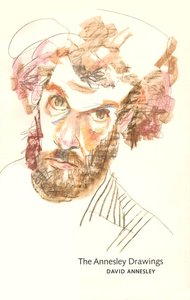
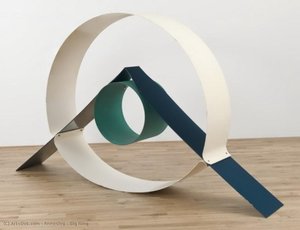
Born in London in 1936, Annesley’s artistic identity was forged through a global odyssey that saw him traverse the landscapes of Zimbabwe and Australia before returning to the heart of the English art scene. His contributions to the art world are marked by several key achievements: Mastery of Materiality: The seamless integration of welded metal with high-intensity color palettes.

Signature works · The 100 signature works

11of 19

Yun Hyong–Keun

South Korean Born in Cheongju Dansaekhwa Wikipedia in 5/32 languages

Yun Hyong–Keun

However, it was the tumultuous events of the 1970s – unjust accusations and imprisonment under anti-communist laws – that served as a catalyst for a radical shift in his artistic approach. Yun Hyong-keun’s artistic legacy extends far beyond the confines of Korean art history.

Signature works · The 100 signature works

12of 19

Mira Schendel

Brazilian-Swiss Born in Zurich Abstract Expressionism Wikipedia in 6/32 languages

Mira Schendel

While Schendel's style remained intensely personal, it was informed by a diverse range of intellectual and artistic currents. The principles of Zen Buddhism—with its emphasis on simplicity, intuition, and the search for enlightenment—resonated deeply with her aesthetic sensibilities. She also drew inspiration from European Modernism, particularly Abstract Expressionism’s focus on subjective experience and spontaneous gesture.

Signature works · The 100 signature works

14of 19

Zarina

British Born in Aligarh Pop Art, British Pop Wikipedia in 7/32 languages

Zarina

zarina hashmi's passing on april 25, 2020, marked the loss of a significant cultural figure. her life story, as reflected in her art, continues to evoke a spiritual reaction from viewers, ensuring her legacy endures. view zarina hashmi's artworks on AllPaintingsStore.com read more about zarina hashmi on wikipedia

Signature works · The 100 signature works

15of 19

Alan Charlton

British Born in Sheffield Conceptual Art Wikipedia in 4/32 languages

Alan Charlton

Critics such as Alan Clutton-Brock have praised his insightful analyses of landscape painting and atmospheric realism —underscoring the breadth of his artistic engagement.

Signature works · The 100 signature works

16of 19

Rudolf Stingel

Born in Merano Wikipedia in 5/32 languages

Rudolf Stingel

Rudolf Stingel emerged as a significant figure in the late 1980s art scene. Initially recognized for his monochromatic paintings, these works, primarily from 1987 to 1994, featured silvery surfaces with subtle undertones of red, yellow, or blue. While Stingel's work resists easy categorization, several influences can be identified: Minimalism: The emphasis on simple forms and industrial materials reflects a connection to minimalist aesthetics.

Signature works · The 100 signature works

18of 19

Paul André

American Born in Montreal Minimalism

Paul André

"Cut" Sculptures: While sharing a studio with Stella, Andre developed a series of wooden "cut" sculptures like Radial Arm Saw Cut Sculpture (1959) and Maple Spindle Exercise (1959). Poetry and Writing: A period between 1960 and 1965 saw Andre focus primarily on writing, culminating in 12 Dialogues (published 1980), a collaborative book of poetry and essays with Hollis Frampton. Critical Reception: The evolution of critical understanding of Carl Andre's work is documented in About Carl Andre: Critical Texts Since 1965, which compiles essays and reviews by influential art historians and critics like Clement Greenberg, Donald Kuspit, Lucy R.

Signature works · The 100 signature works

Signature works

Signature Minimalist works

  1. Die Fahne Hoch! by Frank Stella

    Die Fahne Hoch!

    Frank Stella

    1959 · Whitney Museum of American Art, New York

  2. Peinture 222 x 314 cm, 24 février 2008 by Pierre Soulages

    Peinture 222 x 314 cm, 24 février 2008

    Pierre Soulages

    2008

  3. Kaldor Public Art Project 11: Sol LeWitt 1998 by Sol LeWitt

    Kaldor Public Art Project 11: Sol LeWitt 1998

    Sol LeWitt

    1998 · Kaldor Public Art Projects, Sydney

  4. Untitled (100 Untitled Works in Mill Aluminium) by Donald Judd

    Untitled (100 Untitled Works in Mill Aluminium)

    Donald Judd

    1986

  5. The Tree by Agnes Martin

    The Tree

    Agnes Martin

    1964 · MOMA - Museum of Modern Art, New York City

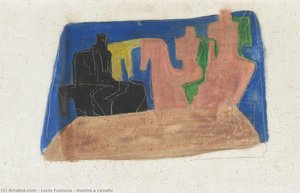
  6. Uomini a cavallo by Lucio Fontana

    Uomini a cavallo

    Lucio Fontana

    1932 · Museo del Novecento, Milan

  7. Hang Up by Eva Hesse

    Hang Up

    Eva Hesse

    1966 · Art Institute of Chicago

  8. Untitled from Seven Aquatints by Robert Mangold

    Untitled from Seven Aquatints

    Robert Mangold

    1973 · MOMA - Museum of Modern Art, New York City

A timeline

Minimalist through its signature works

  1. 1932
  2. 1959
  3. 1964
  4. 1964
  5. 1964
  6. 1966
  7. 1966
  8. 1968
  9. 1972
  10. 1973
  11. 1973
  12. 1975
  13. 1983
  14. 1986

Figures

The figures

Every name

List of 19 famous Minimalist painters, every name

  1. 1Frank StellaFrank StellaAmerican · 1936–2024
  2. 2Pierre SoulagesPierre Soulages1919–2022
  3. 3Sol LeWittSol LeWittAmerican · 1928–2007
  4. 4Donald JuddDonald JuddAmerican · 1928–1994
  5. 5Agnes MartinAgnes MartinAmerican · 1912–2004
  6. 6Lucio FontanaLucio FontanaArgentine-born Italian · 1899–1968
  7. 7Eva HesseEva HesseGerman-American · 1936–1970
  8. 8Robert MangoldRobert MangoldAmerican · born 1937
  9. 9El AnatsuiEl Anatsuiborn 1944
  10. 10David AnnesleyDavid AnnesleyBritish · born 1936
  11. 11Yun Hyong–KeunYun Hyong–KeunSouth Korean · 1928–2007
  12. 12Mira SchendelMira SchendelBrazilian-Swiss · 1919–1988
  13. 13Wolfgang LaibWolfgang LaibGerman · born 1950
  14. 14ZarinaZarinaBritish · 1937–2020
  15. 15Alan CharltonAlan CharltonBritish · born 1948
  16. 16Rudolf StingelRudolf Stingelborn 1956
  17. 17Ha ChonghyunHa ChonghyunSouth Korean · born 1935
  18. 18Paul AndréPaul AndréAmerican · 1933–1983
  19. 19Christopher WilmarthChristopher WilmarthUnited States · 1943–1987

Questions

Your questions

  • Which Minimalist painter is the most famous?

    First place goes to Frank Stella (#1); Pierre Soulages (#2) and Sol LeWitt (#3) complete the podium.

  • Who are the 5 most famous Minimalist painters?

  • In which period did Minimalist art flourish?

    Most painters in this list were born in the 1930s (7 of 19), between 1899 and 1956 overall.

  • Who was the first Minimalist painter?

    The earliest-born painter in this list is Lucio Fontana (#6), born in 1899.

  • Which techniques define Minimalist art?

    “Simultaneously, Stella embraced printmaking with enthusiasm, mastering techniques like lithography, screenprinting, and etching to create abstract prints that echoed his painting’s geometric vocabulary.” — from our biography of Frank Stella (#1).

  • Who are the most famous female Minimalist painters?

    This list includes 4 women: Agnes Martin (#5), Eva Hesse (#7), Mira Schendel (#12) and Zarina (#14).

  • Where are the great works of Minimalist art today?

    The museums holding the most key works of this list are MOMA - Museum of Modern Art (4), Whitney Museum of American Art (2) and Tate Modern (2).

  • Where were most Minimalist painters born?

    United States: 4 of the 19 painters in this list were born there, then Canada (2) and Germany (2).

  • Who are famous Minimalist painters today?

    The highest-ranked living painters in this list are Robert Mangold (#8), El Anatsui (#9), David Annesley (#10), Wolfgang Laib (#13), Alan Charlton (#15) and Rudolf Stingel (#16).

  • Where can I see more works by these painters?

    Our catalogue holds 481 works by these painters.

Read

Stories on OriginalUniqueArt.com

Other movements

Famous artists of other movements

Other periods

Famous artists across the periods

Famous paintings

Masterpieces that inspire us, by movement

Discover more

More artists to discover