


1


Updated November 2026 · ranked by our popularity score (searches, visits and orders for each work) · 33 works by Rudolf Stingel in our catalogue
In short
To the gallery's eye, Rudolf Stingel's most famous painting is Untitled (2009), whose original hangs in the Palazzo Grassi, Venice. Untitled (2009) and Untitled (2009) complete the trio every eye recognises. Of the 33 works by Rudolf Stingel in our catalog, the gallery presents the 32 most famous below, each original with its year, its museum and what makes it unique.


Created in 2009, this work explores the tension between physical substance and visual illusion. The artist begins with a canvas primed in grey, a neutral base designed to strip away preconceived notions of color harmony. Upon this foundation, thick layers of paint are applied with a spatula, creating undulating textures that mimic geological formations or weathered landscapes. These heavy, sculptural strokes do not aim to depict a specific scene but…


We are looking at Untitled (St. Elizabeth), a work from 2009 by the artist Rudolf Stingel. This piece is a relatively intimate object, measuring 33 x 40 cm. It belongs to a period where Stingel’s practice moved toward a profound investigation of how light interacts with physical matter.

This work is titled Untitled and was created by the artist Rudolf Stingel. The piece dates to 2012. Stingel, who was born in 1956 in Merano, Italy, is a contemporary artist whose practice involves a variety of mediums and styles, ranging from hyperrealism to abstraction.

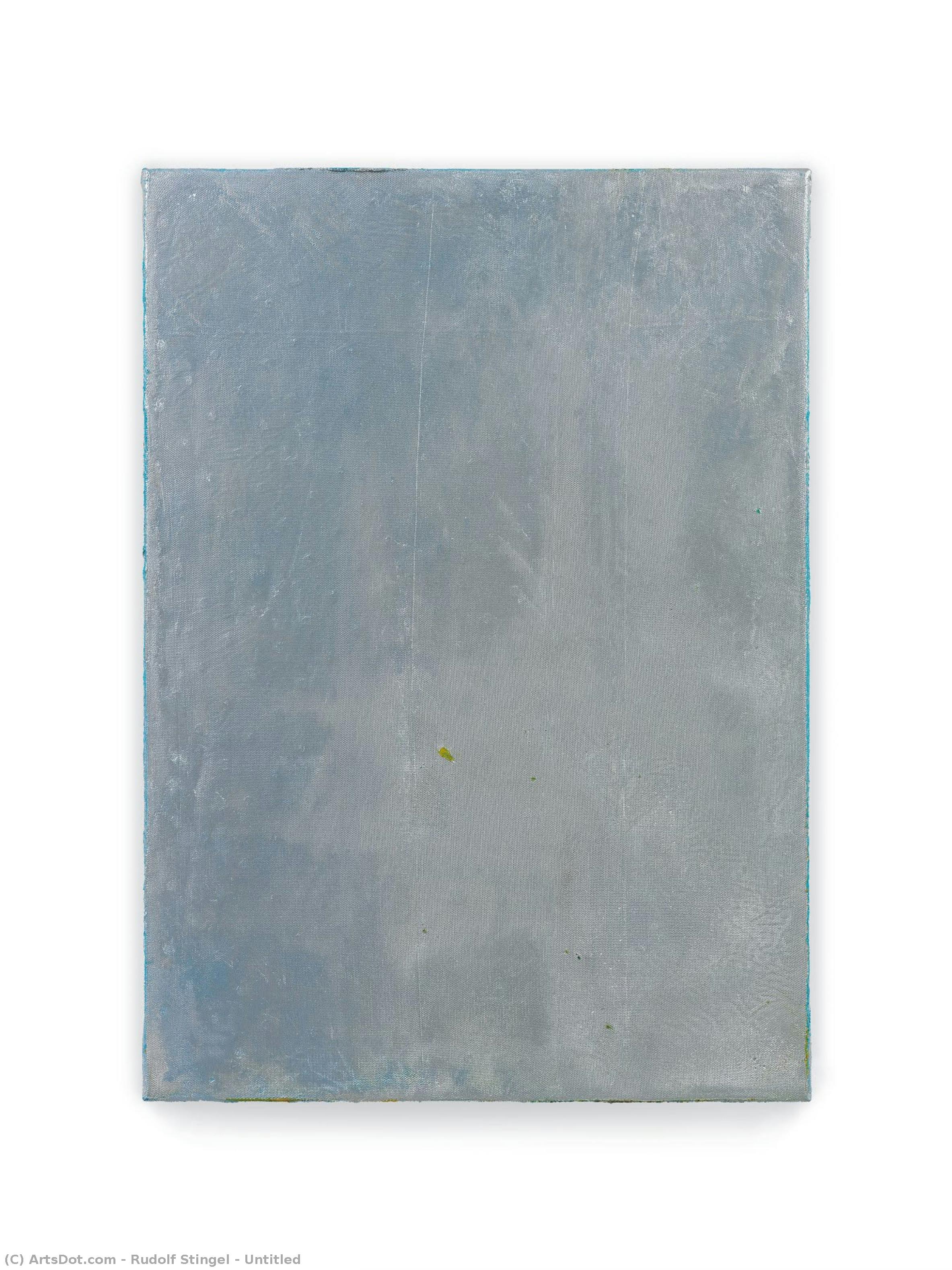

 Untitled2008 · Palazzo Grassi
12
 Untitled (St. John the Baptist)2009 · Palazzo Grassi
13
 Untitled2009 · Palazzo Grassi
14
 Untitled (Madonna)2009 · Palazzo Grassi
15
 Untitled2010 · Palazzo Grassi
16
 Untitled2011 · Palazzo Grassi
17
 Untitled2010 · Palazzo Grassi
18
 Untitled2010 · Palazzo Grassi
19
 Untitled2010 · Palazzo Grassi
20
 Untitled2010 · Palazzo Grassi
21
 Untitled (Franz West)2011 · Palazzo Grassi
22
 Untitled2012 · Palazzo Grassi
23
 Untitled2012 · Palazzo Grassi
24
 Untitled2012 · Palazzo Grassi
25
 Untitled2012 · Palazzo Grassi
26
 Untitled2012 · Palazzo Grassi
27
 Untitled2012 · Palazzo Grassi
28
 Untitled2012 · Palazzo Grassi
29
 Untitled2012 · Palazzo Grassi
30
 Untitled2013 · Palazzo Grassi
31
 Untitled (St. Florian)2009 · Palazzo Grassi
32
 Untitled2010 · Palazzo Grassi
The four subjects that come back most often in these originals, each with its finest example.
The museum that holds the most of the paintings on this page.
| Museum | City | Works by Rudolf Stingel | Paintings from this list |
|---|---|---|---|
 Palazzo Grassi |
Venice | 32 | Untitled, Untitled, Untitled |
Pick a decade to see the original that defines it.
Untitled (2009), Palazzo Grassi, Venice. Untitled (2009) and Untitled (2009) come next.
53 years old: Untitled dates from 2009, and Rudolf Stingel was born in 1956.
Untitled, Untitled, Untitled, Untitled (St. John), Untitled, Untitled (St. Elizabeth), Untitled, Untitled, Untitled and Untitled. The ranking above gives each one's year and museum.
Our catalog holds 33 works by Rudolf Stingel, dated from 1990 to 2013.
Mostly in Palazzo Grassi (Venice). The museum table above lists them all.
In 2010s: 19 of the 32 works on this page were made then, Untitled among them.
On this page, the earliest is Untitled (1990) and the latest Untitled (2013).
Monochrome (5), Sculpture (4) and Portraiture (2), across the 32 works on this page.
Oil On Canvas, for 3 of the 32 works on this page.
Contemporary minimalism and Contemporary realism, judging by the originals on this page.
Untitled, Untitled and Untitled: the Palazzo Grassi, Venice holds 32 of the works on this page.
Rudolf Stingel emerged as a significant figure in the late 1980s art scene. Initially recognized for his monochromatic paintings, these works, primarily from 1987 to 1994, featured silvery surfaces with subtle undertones of red, yellow, or blue. This early period established Stingel's interest in exploring surface and perception. His artistic development took a pivotal turn in the 1990s as he began experimenting with more vibrant colors and textures. These abstract paintings involved applying thick layers of paint to canvas, followed by the placement of gauze and subsequent spraying with silver paint. The removal of the gauze resulted in richly textured surfaces that challenged traditional notions of painting.
Stingel's work is fundamentally conceptual, utilizing readily available materials to explore ideas about art, space, and perception. His artistic practice expanded beyond painting to encompass installations and sculptures. Key elements of his approach include:
While Stingel's work resists easy categorization, several influences can be identified:
Stingel's historical significance lies in his ability to challenge conventional definitions of painting and sculpture. By incorporating unconventional materials like carpet and transforming architectural spaces into artworks, he expands the boundaries of artistic expression. His work has contributed significantly to contemporary art discourse by questioning the relationship between art, space, and the viewer.
Explore more of Rudolf Stingel's work at OriginalUniqueArt.com.


