Academic Realist, one artist at a time

Famous Academic Realist Painters: 68 Original Voices

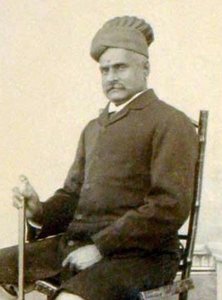
Raja Ravi Varma (1848–1906) is the most famous Academic Realist painter, whose singular vision gave us Hansa Damayanthi. and Shakuntala writing a love letter on a lotus leaf. Next stand Jean-Jacques Henner, Hippolyte Flandrin, Édouard Detaille and Alfred Émile Léopold Stevens. These 68 painters, from Andrew Geddes (born 1783) to Hugh Goldwin Riviere (born 1882), came from 19 countries.

Our selection. Artists whose works our catalogue attaches to Academic Realist, in the order of our fame ranking. Artists born after 1955 with no Wikidata identifier stay out until verified. The Wikipedia figure counts our 32 languages with an article on the artist.

  1. Hansa Damayanthi. by Raja Ravi Varma1Raja Ravi Varma
  2. Chaste susanna by Jean-Jacques Henner2Jean-Jacques Henner
  3. Young man sitting by the sea by Hippolyte Flandrin3Hippolyte Flandrin

In brief

Academic Realist in brief

  • 68Artists
  • 1783–1882Years of birth
  • 19Countries of birth
  • 1Women
  • 3,616Works in our catalogue
Cities with most births
Edinburgh (3), Lyon (2), Amsterdam (2), Manchester (2)
Museums holding the most key works
Hermitage Museum (9), Museo del Prado (7), National Portrait Gallery (4), Rijksmuseum (3)
The women of this list
Thérèse Schwartze

One artist at a time

68 Academic Realist Painters and their signature works

1of 68

Raja Ravi Varma

Indian Born in Kilimanoor Academic & Indian fusion Wikipedia in 22/32 languages

Raja Ravi Varma

He wasn’t merely a painter; he was a cultural bridge, skillfully blending European academic techniques with the rich tapestry of Indian mythology and aesthetics. From an early age, Ravi Varma displayed a remarkable aptitude for art, nurtured by his uncle Raja Raja Varma, who initiated him into the world of drawing and painting, primarily within the Tanjore School tradition. Museums like The Raja Ravi Varma Heritage Foundation in Bangalore and The Ganesh Shivaswamy Foundation continue to preserve and celebrate his art, ensuring that his vision endures for future generations.

Signature works · The 100 signature works

2of 68

Jean-Jacques Henner

French Born in Bernwiller Academic realism Wikipedia in 16/32 languages

Jean-Jacques Henner

The sfumato technique—borrowed from Leonardo da Vinci —allowed him to soften edges and blend colors seamlessly, creating a sense of atmospheric depth. Works like “ Chaste Susanna ” (1865), now housed in the Musée d'Orsay, exemplify this approach—the figure of Susanna bathed in a soft, diffused light that emphasizes her vulnerability and innocence. His influence extended to numerous pupils including Mathilde Mueden Leisenring, Dimitrie Serafim, Dorothy Tennant, and Suzanne Valadon.

Signature works · The 100 signature works

3of 68

Hippolyte Flandrin

French Born in Lyon Neoclassical Wikipedia in 16/32 languages

Hippolyte Flandrin

Jean-Hippolyte Flandrin (1809–1864) remains a luminous figure in the pantheon of French Neoclassicism, an artist whose brush captured the profound intersection of spiritual devotion and classical grace. Born in Lyon, France, Flandrin’s journey was initially marked by a tension between familial duty and artistic destiny. Classical Form and Emotional Depth: While his figures possess the idealized perfection of antiquity, they are imbued with a palpable, human vulnerability.

Signature works · The 100 signature works

4of 68

Édouard Detaille

French Born in Paris ['Post-Impressionism', 'Symbolism', 'Synthetism'] Wikipedia in 15/32 languages

Édouard Detaille

The influence of Symbolism is evident in works like L’Assomoir (1877), a painting depicting a group of men gathered on a dockside. Caillebotte’s exploration of psychological themes anticipates many of the concerns that would later define Symbolist art. Caillebotte's influence can be seen in the works of later artists such as Edgar Degas and George Seurat, who both admired his technical skill and his ability to capture the essence of modern Parisian society.

Signature works · The 100 signature works

5of 68

Alfred Émile Léopold Stevens

Alfred Émile Léopold Stevens

His initial success came with paintings exhibiting this influence, such as “The Pardon or Absolution” (1849). Stevens was an early enthusiast of Japonisme, incorporating Japanese objects and aesthetics into his compositions, as seen in “La Dame en Rose” (1866).

Signature works · The 100 signature works

6of 68

Francis Davis Millet

American Born in Mattapoisett Academic classical painting Wikipedia in 17/32 languages

Francis Davis Millet

Millet’s formal artistic training began in 1876 when he returned to Boston to contribute murals at Trinity Church alongside John La Farge, a pivotal figure in the American art scene. He served as a war correspondent during the Russo-Turkish War of 1877–78, reporting for prominent publications like the New York Herald and the London Daily News. Furthermore, Millet was instrumental in establishing the School of the Museum of Fine Arts, Boston, and securing Emil Otto Grundmann as its first head, demonstrating his commitment to nurturing future generations of artists.

Signature works · The 100 signature works

8of 68

Thérèse Schwartze

Dutch Born in Amsterdam Portraiture Wikipedia in 14/32 languages

Thérèse Schwartze

The final, transformative chapter of her education took place in Paris in 1879, where she studied under Jean-Jacques Henner at the École Supérieure des Beaux-Arts, exposing her to the avant-garde spirit of the French capital.

Signature works · The 100 signature works

10of 68

Federico De Madrazo Y Kuntz

Spanish Born in Spain Romanticism and French academicism Wikipedia in 13/32 languages

Federico De Madrazo Y Kuntz

As the son of the influential neoclassical painter José de Madrazo y Agudo and Isabel Kuntz Valentini, his early life was steeped in the atmosphere of European high culture.

Signature works · The 100 signature works

11of 68

François Flameng

Born in former 12th arrondissement of Paris Wikipedia in 11/32 languages

François Flameng

He exhibited at the Salon for the first time in 1875 with “The Lectern,” marking a significant step in his career. His work evolved over time to encompass broader themes, including depictions of military life and scenes from contemporary society. He was a friend of John Singer Sargent, who painted his portrait, and traveled with Jean-Léon Gérôme and Victor Clairin in Italy.

Signature works · The 100 signature works

12of 68

Auguste Toulmouche

French Born in Nantes Academic Realism Wikipedia in 12/32 languages

Auguste Toulmouche

He did not merely document the lives of Parisian women; he crafted an idealized, almost dreamlike vision of domestic refinement. Through his eyes, we witness a world of lavish furnishings and gilded interiors that epitomize the luxury of 19th-century France. Cultural Documentation: Providing a detailed visual record of the social hierarchies and aesthetic values of the Belle Époque.

Signature works · The 100 signature works

13of 68

George Peter Alexander Healy

American Born in Boston Realism Wikipedia in 8/32 languages

George Peter Alexander Healy

In 1834, Healy embarked on an extended sojourn to Europe, a journey spanning sixteen years that would prove pivotal in his artistic development. His dedication and skill were recognized with a third-class medal at the Paris Salon in 1840, a significant achievement that signaled his rising prominence within the artistic community. Upon his return to the United States, Healy quickly established himself as a leading portraitist.

Signature works · The 100 signature works

14of 68

Vittorio Reggianini

Italian Born in Modena Academic Realism Wikipedia in 4/32 languages

Vittorio Reggianini

The academic tradition of Italian painting —particularly the works of artists like Raphael and Titian—provided him with a solid grounding in composition, technique, and classical ideals. However, he also drew inspiration from the burgeoning Realist movement, embracing its commitment to depicting everyday life with honesty and immediacy.

Signature works · The 100 signature works

15of 68

Alexander Bell Middleton

British Portraiture, Genre scenes

Alexander Bell Middleton

The prevailing academic tradition of portraiture, championed by artists like Thomas Lawrence, undoubtedly informed his early training. His depiction of “The Evening Guide” Sir, for example, can be interpreted as a critique of poverty and social inequality.

Signature works · The 100 signature works

16of 68

John Phillip

Scottish Born in Aberdeen Victorian Genre Painting; Pre-Raphaelite Influence Wikipedia in 7/32 languages

John Phillip

As his travels deepened his connection to the Spanish spirit, his brushwork grew more confident and expressive, mirroring the late-career developments of contemporaries like John Everett Millais. His early years were marked by a burgeoning talent that caught the eye of influential patrons, most notably Lord Panmure, whose generosity provided the essential bridge for Phillip to reach London’s Royal Academy of Arts in 1836.

Signature works · The 100 signature works

17of 68

James Sant

British Born in London Victorian Romanticism Wikipedia in 8/32 languages

James Sant

Institutional Recognition: A prolific exhibition record at the Royal Academy, cementing his status within the British art establishment. James Sant passed away in 1916, leaving behind a legacy that continues to enchant art lovers. Born in Croydon, Surrey, England, on April 23rd, 1820, Sant’s artistic journey began under the tutelage of luminaries like John Varley and Augustus Wall Callcott.

Signature works · The 100 signature works

18of 68

Władysław Czachórski

Polish Born in Lublin Academic Art Style Wikipedia in 10/32 languages

Władysław Czachórski

However, it was his time at the Munich Academy of Fine Arts—studying under luminaries such as Hermann Anschütz, Alexander Wagner, and Karl von Piloty —that truly crystallized his devotion to the Munich School, a movement that would define his meticulous approach to realism.

Signature works · The 100 signature works

20of 68

Théobald Chartran

French Born in Besançon Academic painting Wikipedia in 10/32 languages

Théobald Chartran

Cultural giants like Charles Gounod, Giuseppe Verdi, and Victor Hugo, immortalizing the era's intellectual heartbeat. Whether he was depicting the inventor of the stethoscope, René Laennec, or the operatic intensity of Emma Calvé as Carmen, Chartran’s brushwork remained consistent in its pursuit of character. Though some of his most famous encounters with power ended in colorful historical footnotes—such as his widely discussed, yet famously rejected, portrait of Theodore Roosevelt —his contribution to the art of portraiture remains indelible.

Signature works · The 100 signature works

21of 68

Emile Eisman Semenovsky

French Orientalism

Emile Eisman Semenovsky

Émile Eisman-Semenowsky remains a captivating figure in the late nineteenth-century Parisian art scene, an artist whose work serves as a bridge between the rigorous discipline of academic realism and the fleeting, luminous qualities of Impressionism. Born in Poland around 1857, his early life is shrouded in much of the mystery that often surrounds artists of great talent but sparse documentation. Though his life ended in 1911, the impact of Eisman-Semenowsky’s vision continues to resonate within the history of nineteenth-century art.

Signature works · The 100 signature works

22of 68

Louis Beroud

French Born in Lyon Academic Realism Wikipedia in 10/32 languages

Louis Beroud

Born in Lyon, France, Beroud’s artistic journey unfolded against the backdrop of Impressionism's waning influence, establishing him firmly within the Academic tradition while simultaneously embracing a nuanced understanding of modern life.

Signature works · The 100 signature works

23of 68

Arthur Stockdale Cope

British Born in Hyde Park Gate Portraiture, Academic Realism Wikipedia in 5/32 languages

Arthur Stockdale Cope

He eschewed the overly polished surfaces favored by some of his contemporaries, opting instead for a more textured approach that emphasized the three-dimensionality of his subjects. This technique was particularly evident in portraits of figures like King Edward VII and George V, where the light seemed to emanate from within, conveying a sense of regal authority and dignity. His ability to capture both the outward appearance and inner character of his subjects ensures that Sir Arthur Stockdale Cope remains a compelling figure in the history of British art.

Signature works · The 100 signature works

25of 68

Nicolaas Pieneman

Dutch Born in Amersfoort History painting, Portraiture Wikipedia in 9/32 languages

Nicolaas Pieneman

Nicolaas Pieneman, born in Amersfoort on January 1st, 1809, entered a world already steeped in artistic tradition. His father, Jan Willem Pieneman, was a prominent figure in Dutch painting —a painter of considerable renown and the first director of the Royal Academy of Fine Arts in Amsterdam. Nicolaas Pieneman died on December 30th, 1860, in Amsterdam, leaving behind a body of work that reflects the political and cultural climate of his time.

Signature works · The 100 signature works

26of 68

Henryk Rodakowski

Born in Lviv Wikipedia in 9/32 languages

Henryk Rodakowski

He continued his studies with the renowned Léon Cogniet. Influence of Parisian Salon: This immersion in the Parisian art scene exposed him to contemporary trends and techniques, shaping his academic style. Family Connection: His great-grandson, Jacek Woźniakowski, became a notable art historian and writer, continuing the family’s legacy in the arts.

Signature works · The 100 signature works

27of 68

Thomas Benjamin Kennington

British Born in Grimsby Genre realism & Victorian art Wikipedia in 6/32 languages

Thomas Benjamin Kennington

He excelled in both oil painting and watercolor, favoring a technique characterized by subtle tonal gradations and expressive brushwork —influences from Murillo are evident in his depictions of street children. Genre Painting & Social Commentary: Kennington’s genre paintings—scenes of everyday life —were infused with a humanist spirit, reflecting his belief in the importance of portraying individuals grappling with adversity. Kennington achieved considerable acclaim during his lifetime, securing a bronze medal at the Exposition Universelle of 1889 and earning recognition for his contributions to artistic discourse.

Signature works · The 100 signature works

28of 68

George De Forest Brush

American Born in Tennessee Hudson River School & Realism Wikipedia in 7/32 languages

George De Forest Brush

Throughout his long and distinguished career, Brush remained a figure of immense cultural importance, earning election to the National Academy of Design and leaving an indelible mark on American art history. Technical Versatility: Transitioning from the meticulous realism of the Hudson River School influence to a more luminous and atmospheric Impressionistic approach. George de Forest Brush (1855–1941) was an artist who possessed the rare ability to bridge two seemingly disparate worlds: the disciplined, classical elegance of the Italian Renaissance and the raw, spiritual vitality of Native American life.

Signature works · The 100 signature works

29of 68

Józef Simmler

Polish Born in Warsaw French costume painting Wikipedia in 8/32 languages

Józef Simmler

simmler's legacy extends beyond his art; his family connections are also noteworthy. his daughter's brother-in-law was eduard strasburger, a famous polish-german botanist, while one of simmler's grandsons, henryk leon strasburger, served as a polish delegate to the league of nations.

Signature works · The 100 signature works

30of 68

Sergey Zaryanko

Russian Born in Liady Realism, Portraiture Wikipedia in 5/32 languages

Sergey Zaryanko

Born in 1818 in Mogilev, Belarus, his origins were deeply rooted in the societal constraints of the time – he was born into serfdom on the estate of the Lubomirski family. His portraits of General Pyotr Karlovich Lomnovsky and opera singer Osip Petrov, completed in 1849, were instrumental in establishing his reputation.

Signature works · The 100 signature works

32of 68

Gustave Léonard de Jonghe

Belgian Born in Kortrijk Realism; Belle Époque Wikipedia in 5/32 languages

Gustave Léonard de Jonghe

Gustave Léonard de Jonghe (1829-1893) stands as a prominent figure in Belgian art history, celebrated for his masterful depictions of aristocratic society and intimate genre scenes that encapsulate the spirit of the Belle Époque. Early training at the Académie Royale des Beaux-Arts in Brussels, alongside luminaries like François - Joseph Navez and Louis Gallait, cemented his foundational artistic education and fostered connections with influential mentors who shaped his artistic vision.

Signature works · The 100 signature works

33of 68

Daniel Macnee

Scottish Born in Fintry Romanticism Wikipedia in 4/32 languages

Daniel Macnee

Early Life & Education: Macnee received an excellent education at Eton College and subsequently pursued studies at Christ's Hospital, honing his artistic skills before embarking on a distinguished naval career. The Highland Influence: Macnee’s artistic sensibilities were profoundly shaped by the landscapes of Scotland, particularly the Cairngorms National Park where he resided for extended periods. Macnee’s legacy resides not only in his artistic achievements but also in his enduring influence on subsequent generations of Scottish artists.

Signature works · The 100 signature works

34of 68

Alexei Harlamov

Russian Born in Dyachevka Realism Wikipedia in 6/32 languages

Alexei Harlamov

Born into the humble circumstances of a family of serfs in the village of Dyachevka, near the banks of the Volga River, Alexei Alexeievich Harlamoff would eventually ascend to the heights of the international art world. After his parents won their freedom in 1850, the young Alexei began a rigorous ascent through the Imperial Academy of Arts in Saint Petersburg.

Signature works · The 100 signature works

36of 68

Władysław Bakałowicz

Polish-French Born in Chrzanów Genre painting, Portraiture Wikipedia in 7/32 languages

Władysław Bakałowicz

He drew inspiration from earlier masters, including Dutch portraitists known for their meticulous detail and ability to capture the essence of their subjects. His work also reflects a fascination with the works of Ernest Meissonier, whose historical genre scenes served as a model for Bakalowicz’s own approach.

Signature works · The 100 signature works

37of 68

Emilio Sala

Spanish Born in Alcoy Portraiture, Genre Wikipedia in 6/32 languages

Emilio Sala

However, Sala’s style remained firmly rooted in Spanish Realism, characterized by meticulous observation, detailed rendering, and a focus on capturing the nuances of human expression. He immersed himself in the city's thriving art world, encountering artists like Camille Pissarro and Edgar Degas, who influenced his approach to composition and color. He was particularly drawn to the works of Gustave Courbet and Jean-François Millet, whose emphasis on depicting everyday life and social realities resonated with his own artistic sensibilities.

Signature works · The 100 signature works

38of 68

Henry Inman

American Born in Utica Hudson River School Wikipedia in 5/32 languages

Henry Inman

Legal Luminaries: Including Chief Justices Marshall and Nelson. His role in the founding of the National Academy of Design underscores his commitment to establishing a formal structure for artistic excellence in the United States. Born in 1801 in Utica, New York, to English immigrant parents, Inman was a product of both old-world tradition and new-world ambition.

Signature works · The 100 signature works

39of 68

John Pettie

British, Scottish Born in Edinburgh Victorian Art Wikipedia in 6/32 languages

John Pettie

In 1862, seeking broader horizons, Pettie moved to London, where he became a central figure within a vibrant community of expatriate Scottish painters. This period of academic distinction saw him rise to become a full member of the Royal Academy, cementing his status among the elite of British art. His most celebrated contributions include: An Arrest for Witchcraft in the Olden Time.

Signature works · The 100 signature works

40of 68

John Partridge

British Born in Glasgow Romanticism Wikipedia in 3/32 languages

John Partridge

By 1815, when he debuted ‘Miss Foote in the Character of Lucilla’ at the Royal Academy, Partridge had already begun to signal the arrival of a master who could blend the meticulous precision of academic realism with a profound, soulful depth.

Signature works · The 100 signature works

42of 68

William Page

American Born in Albany Wikipedia in 5/32 languages

William Page

His early training began in the office of Frederick de Peyster, followed by studies in the studio of James Herring. After a brief period studying theology at the Andover Theological Seminar and Amherst College, he returned to the world of art. Throughout his career, Page executed a wide array of subjects, from religious scenes like "Moses and Aaron on Mount Horeb" and "The Holy Family " to portraits of prominent individuals.

Signature works · The 100 signature works

43of 68

Heywood Hardy

British Born in Chichester Animal painting, equestrian art Wikipedia in 4/32 languages

Heywood Hardy

Early Focus: Initially focused on landscapes before transitioning to animal painting, particularly horses and equestrian scenes. His studies with Professor Alfred Henry Garrod on horse gait further enhanced this skill. Return to Sussex: Returned to live in East Preston, Sussex in 1909, spending his final years painting religious works for local churches.

Signature works · The 100 signature works

44of 68

Stephen Pearce

British Born in Charing Cross Victorian portraiture Wikipedia in 2/32 languages

Stephen Pearce

Formal training commenced at Sass’s Academy in Charlotte Street, a respected institution for aspiring artists, followed by rigorous study at the prestigious Royal Academy Schools beginning in 1840. A pivotal moment arrived in 1841 when he became a pupil of Sir Martin Archer Shee, a prominent portraitist whose influence shaped Pearce's approach to capturing likeness and character. His training under Sir Martin Archer Shee firmly placed him within the tradition of formal, academic portraiture that dominated the era.

Signature works · The 100 signature works

45of 68

Joaquín Espalter y Rull

Spanish Born in Sitges Portrait & Historical scenes Wikipedia in 4/32 languages

Joaquín Espalter y Rull

It was amidst the ancient ruins and Renaissance masterpieces of Italy that he encountered the Nazarene movement—a group of German Romantic artists who sought to revive the purity of early Christian art. However, Espalter didn’t merely imitate; he synthesized these influences into a style uniquely his own. Works like “ Portrait of a Man ” exemplify this talent, showcasing refined elegance and historical detail.

Signature works · The 100 signature works

47of 68

Jacob Spoel

Dutch Born in Rotterdam Wikipedia in 3/32 languages

Jacob Spoel

Jacob Spoel was a Dutch artist born in the Netherlands in 1820. His life and work are documented within the history of famous artists from this period. He lived during the nineteenth century, passing away in 1868.

Signature works · The 100 signature works

50of 68

Georg Koberwein

Austrian Born in Vienna Neoclassical Wikipedia in 1/32 languages

Georg Koberwein

George Koberwein (1820–1876) stands as a prominent figure in 19th-century Austrian art, celebrated primarily for his meticulously crafted portraits of European royalty and nobility. Born in Vienna, Austria, Koberwein’s artistic journey began amidst the burgeoning Romantic movement, though he swiftly embraced Neoclassical principles, establishing himself as a steadfast champion of classical ideals within his era.

Signature works · The 100 signature works

51of 68

Georg von Bothmann

Russian Born in Lübeck Portraiture Wikipedia in 3/32 languages

Georg von Bothmann

While details surrounding his initial training remain somewhat scarce, it is known that Botman established himself within the city’s artistic circles by the mid- 19th century. He quickly gained recognition for his talent in portraiture, a genre particularly favored by the aristocracy and essential for documenting the prominent figures of the era. He admired the works of artists like Franz Xaver Winterhalter, known for his elegant depictions of European royalty, and incorporated elements of their refined technique into his own practice.

Signature works · The 100 signature works

52of 68

José Martí y Monsó

Spanish Wikipedia in 3/32 languages

José Martí y Monsó

His technical skill was further acknowledged in 1866, when he was awarded a third-class medal for his work The Grape Harvest. He became a recognized authority on Castilian art, possessing a specialized knowledge of the history of Holy Week in Valladolid. In 1874, he produced the Catálogo provisional del Museo de Pintura y Escultura de Valladolid, a work that provided essential structure to the collections of the time.

Signature works · The 100 signature works

53of 68

George Frederick Harris

American Born in Birmingham California Modernism Wikipedia in 1/32 languages

George Frederick Harris

Artistic Lineage: His influence extended through his family, notably inspiring the illustrative career of his daughter, Pixie O'Harris.

Signature works · The 100 signature works

56of 68

Robert Schwede

Baltic German Born in Mõisaküla Wikipedia in 2/32 languages

Robert Schwede

While many of his over thirty known works are held by the descendants of his family in Russia and Germany, his connection to Latvia remains a central part of his story.

Signature works · The 100 signature works

57of 68

John Bagnold Burgess

English Born in Chelsea Academic realism Wikipedia in 1/32 languages
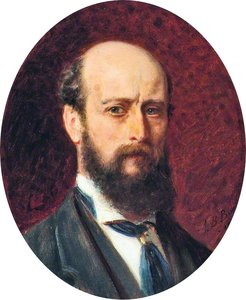
John Bagnold Burgess

The significance of John Bagnold Burgess extends far beyond the borders of Spain. His ability to marry the technical rigors of British academic training with the exotic, emotive subject matter of Spain made him a favorite among collectors and critics alike. His formal education at Brompton Grammar School and subsequent studies at James Mathews Leigh's Art School in Soho prepared him for the rigors of academic realism.

Signature works · The 100 signature works

58of 68

George Henry Story

English Born in New Haven Pre-Raphaelites Wikipedia in 1/32 languages

George Henry Story

Though his early years were touched by the aesthetic fervor of the Pre-Raphaelite movement, Storey eventually moved toward a more restrained and psychologically nuanced approach, influenced significantly by the works of Charles Robert Leslie. In his oil paintings, such as the poignant A Duet or the dignified My Mother, one can observe a masterful command of light and shadow.

Signature works · The 100 signature works

59of 68

Alexander Fedorovich Pershakov

Russian Born in Moscow Wikipedia in 1/32 languages

Alexander Fedorovich Pershakov

Alexander Fedorovich Pershakov operated within the rigorous demands of Russian portraiture during the late nineteenth and early twentieth centuries. The historical weight of Pershakov’s oeuvre is anchored by his depictions of significant military and administrative figures. Notable examples of his technical execution include: Portrait of Admiral E.

Signature works · The 100 signature works

60of 68

Ivan Tyurin

Russian Born in Ardatovsky Uyezd Wikipedia in 1/32 languages

Ivan Tyurin

Ivan Tyurin was a Russian painter who lived during the nineteenth and early twentieth centuries.

Signature works · The 100 signature works

61of 68

Joaquín María Herrer y Rodríguez

Spanish Academic Realism Wikipedia in 1/32 languages

Joaquín María Herrer y Rodríguez

By the end of his life in 1917, Herrer y Rodríguez had established a body of work that remains held in significant collections, including the Museo del Prado in Madrid. He avoided the dramatic flourishes of more emotive movements, choosing instead to master the subtle tensions found in a single shadow or the way light falls upon a religious habit. His ability to render the physical world with such clarity ensured that his depictions of Spanish life remained grounded and authentic.

Signature works · The 100 signature works

62of 68

William Eyre Walker

British Born in Manchester Portrait painting, Academic realism

William Eyre Walker

His influence extended through generations, notably seen in the work of his daughter, Catherine Ouless, who carried forward the tradition of meticulous realism established by her father. After receiving his education at Victoria College, Ouless journeyed to London in 1864, seeking to refine his burgeoning talents within the prestigious Royal Academy schools.

Signature works · The 100 signature works

63of 68

Juan García Martínez

Spanish Academic Realism Wikipedia in 1/32 languages

Juan García Martínez

Born in Calatayud, Juan García Martínez entered the Spanish art scene during a period of profound transition. His training began at the Escuela de Bellas Artes de San Fernando in Madrid, where he refined his technical foundations under the guidance of Antonio Maffei and Federico de Madrazo.

Signature works · The 100 signature works

64of 68

Sydney Hodges

British Born in Worthing Academic Realism

Sydney Hodges

His early education at Marlborough College allowed him to master the delicate nuances of drawing and watercolor, yet it was his subsequent journey to the Slade School of Fine Art in London that truly forged his professional identity.

Signature works · The 100 signature works

66of 68

George Sheridan Knowles

British Born in Manchester Academic painting, Impressionism

George Sheridan Knowles

However, he wasn’t simply documenting reality; his paintings are imbued with a romantic sensibility, often portraying nostalgic scenes from earlier centuries. “ A Love Song ”, for example, beautifully exemplifies this approach. He then continued his studies at the prestigious Royal Academy Schools in London, immersing himself in the classical ideals and academic standards that dominated the British art world during the late 19th century.

Signature works · The 100 signature works

67of 68

George Hall Neale

British Portrait painting

George Hall Neale

“ Portrait of a Woman ” (1890), a stunning example of academic realism, showcases his ability to capture opulent details and elegant composition – a testament to the Victorian era's appreciation for luxurious aesthetics. George Hall Neale’s contribution to British portraiture lies not in revolutionary innovation but rather in his consistent execution of a refined and dignified style.

Signature works · The 100 signature works

68of 68

Robert Hope

Scottish Born in Edinburgh Romanticism

Robert Hope

Robert Hope Moncrieff, born February 26, 1846, in Liverpool, England, was a Scottish artist whose prolific output cemented his place as one of Scotland’s most celebrated landscape painters. Despite this early loss, Robert’s life flourished, marked by marriage to Margaret Sutherland-Todd in 1873 and the birth of several children. He was elected Fellow of the Royal Society of Edinburgh in 1908—a testament to his scholarly pursuits and artistic achievements—and served as President of the RSA from 1926 to 1930.

Signature works · The 100 signature works

Signature works

Signature Academic Realist works

  1. Hansa Damayanthi. by Raja Ravi Varma

    Hansa Damayanthi.

    Raja Ravi Varma

  2. Chaste susanna by Jean-Jacques Henner

    Chaste susanna

    Jean-Jacques Henner

  3. Young man sitting by the sea by Hippolyte Flandrin

    Young man sitting by the sea

    Hippolyte Flandrin

  4. Le general d hautpoul a cheval by Édouard Detaille

    Le general d hautpoul a cheval

    Édouard Detaille

  5. Eva Gonzales at the Piano by Alfred Émile Léopold Stevens

    Eva Gonzales at the Piano

    Alfred Émile Léopold Stevens

    1879

  6. Lacing Up by Francis Davis Millet

    Lacing Up

    Francis Davis Millet

  7. Oedipus And Antigone by Charles François Jalabert

    Oedipus And Antigone

    Charles François Jalabert

  8. Lizzy Ansingh (kunstschilder, Utrecht 1875-1959 Amsterdam) by Thérèse Schwartze

    Lizzy Ansingh (kunstschilder, Utrecht 1875-1959 Amsterdam)

    Thérèse Schwartze

    1895

A timeline

Academic Realist through its signature works

  1. 1818
  2. 1832
  3. 1846
  4. 1852
  5. 1856
  6. 1859
  7. 1859
  8. 1861
  9. 1864
  10. 1868
  11. 1879
  12. 1890
  13. 1890
  14. 1890

Figures

The figures

Country of birth
United Kingdom18
France9
United States6
Netherlands4
Spain3
Poland3
Belgium2
Russia2
Decade of birth
1780s2
1800s7
1810s9
1820s15
1830s6
1840s11
1850s13
1860s4
1880s1
Museums holding their key works
Hermitage Museum9
Museo del Prado7
National Portrait Gallery4
Rijksmuseum3
Royal Collection3
Cleveland Museum of Art2
Metropolitan Museum of Art2
The Louvre2

Every name

List of 68 famous Academic Realist painters, every name

  1. 1Raja Ravi VarmaRaja Ravi VarmaIndian · 1848–1906
  2. 2Jean-Jacques HennerJean-Jacques HennerFrench · 1829–1905
  3. 3Hippolyte FlandrinHippolyte FlandrinFrench · 1809–1864
  4. 4Édouard DetailleÉdouard DetailleFrench · 1848–1912
  5. 5Alfred Émile Léopold StevensAlfred Émile Léopold Stevens1823–1906
  6. 6Francis Davis MilletFrancis Davis MilletAmerican · 1848–1912
  7. 7Charles François JalabertCharles François JalabertFrench · 1819–1901
  8. 8Thérèse SchwartzeThérèse SchwartzeDutch · 1851–1918
  9. 9Heinrich von AngeliHeinrich von AngeliAustrian · 1840–1925
  10. 10Federico De Madrazo Y KuntzFederico De Madrazo Y KuntzSpanish · 1815–1894
  11. 11François FlamengFrançois Flameng1856–1923
  12. 12Auguste ToulmoucheAuguste ToulmoucheFrench · 1829–1890
  13. 13George Peter Alexander HealyGeorge Peter Alexander HealyAmerican · 1813–1894
  14. 14Vittorio ReggianiniVittorio ReggianiniItalian · 1858–1938
  15. 15Alexander Bell MiddletonAlexander Bell MiddletonBritish · 1829–1892
  16. 16John PhillipJohn PhillipScottish · 1817–1867
  17. 17James SantJames SantBritish · 1820–1916
  18. 18Władysław CzachórskiWładysław CzachórskiPolish · 1850–1911
  19. 19Jan van BeersJan van BeersBelgian · 1852–1927
  20. 20Théobald ChartranThéobald ChartranFrench · 1849–1907
  21. 21Emile Eisman SemenovskyEmile Eisman SemenovskyFrench · 1859–1911
  22. 22Louis BeroudLouis BeroudFrench · 1852–1930
  23. 23Arthur Stockdale CopeArthur Stockdale CopeBritish · 1857–1940
  24. 24Francis GrantFrancis GrantScottish · 1803–1878
  25. 25Nicolaas PienemanNicolaas PienemanDutch · 1809–1860
  26. 26Henryk RodakowskiHenryk Rodakowski1823–1894
  27. 27Thomas Benjamin KenningtonThomas Benjamin KenningtonBritish · 1856–1916
  28. 28George De Forest BrushGeorge De Forest BrushAmerican · 1855–1941
  29. 29Józef SimmlerJózef SimmlerPolish · 1823–1868
  30. 30Sergey ZaryankoSergey ZaryankoRussian · 1818–1870
  31. 31Hugh Goldwin RiviereHugh Goldwin RiviereBritish · 1882–1958
  32. 32Gustave Léonard de JongheGustave Léonard de JongheBelgian · 1829–1893
  33. 33Daniel MacneeDaniel MacneeScottish · 1806–1882
  34. 34Alexei HarlamovAlexei HarlamovRussian · 1840–1925
  35. 35Gottfried LindauerGottfried LindauerCzech · 1839–1926
  36. 36Władysław BakałowiczWładysław BakałowiczPolish-French · 1831–1904
  37. 37Emilio SalaEmilio SalaSpanish · 1850–1910
  38. 38Henry InmanHenry InmanAmerican · 1801–1846
  39. 39John PettieJohn PettieBritish, Scottish · 1839–1893
  40. 40John PartridgeJohn PartridgeBritish · 1789–1872
  41. 41Andrew GeddesAndrew GeddesScottish · 1783–1844
  42. 42William PageWilliam PageAmerican · 1811–1885
  43. 43Heywood HardyHeywood HardyBritish · 1842–1933
  44. 44Stephen PearceStephen PearceBritish · 1819–1904
  45. 45Joaquín Espalter y RullJoaquín Espalter y RullSpanish · 1809–1880
  46. 46John LongstaffJohn LongstaffAustralian · 1861–1941
  47. 47Jacob SpoelJacob SpoelDutch · 1820–1868
  48. 48Pimen OrlovPimen Orlov1812–1865
  49. 49Jan PortieljeJan PortieljeDutch/Belgian · 1829–1908
  50. 50Georg KoberweinGeorg KoberweinAustrian · 1820–1876
  51. 51Georg von BothmannGeorg von BothmannRussian · 1810–1891
  52. 52José Martí y MonsóJosé Martí y MonsóSpanish · 1840–1912
  53. 53George Frederick HarrisGeorge Frederick HarrisAmerican · 1856–1924
  54. 54Francisco Díaz CarreñoFrancisco Díaz CarreñoSpanish · 1836–1903
  55. 55Gabriel Maureta AracilGabriel Maureta AracilSpanish · 1832–1912
  56. 56Robert SchwedeRobert SchwedeBaltic German · 1806–1870
  57. 57John Bagnold BurgessJohn Bagnold BurgessEnglish · 1829–1897
  58. 58George Henry StoryGeorge Henry StoryEnglish · 1835–1923
  59. 59Alexander Fedorovich PershakovAlexander Fedorovich PershakovRussian · 1843–1905
  60. 60Ivan TyurinIvan TyurinRussian · 1824–1904
  61. 61Joaquín María Herrer y RodríguezJoaquín María Herrer y RodríguezSpanish · 1840–1917
  62. 62William Eyre WalkerWilliam Eyre WalkerBritish · 1847–1930
  63. 63Juan García MartínezJuan García MartínezSpanish · 1828–1895
  64. 64Sydney HodgesSydney HodgesBritish · 1829–1900
  65. 65Antoine PiotAntoine PiotFrench · 1850–1910
  66. 66George Sheridan KnowlesGeorge Sheridan KnowlesBritish · 1863–1931
  67. 67George Hall NealeGeorge Hall NealeBritish · 1863–1940
  68. 68Robert HopeRobert HopeScottish · 1869–1936

Questions

Your questions

Other movements

Famous artists of other movements

Other periods

Famous artists across the periods

Famous paintings

Masterpieces that inspire us, by movement

Discover more

More artists to discover