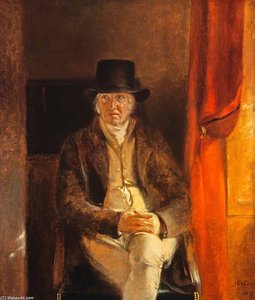
Portrait of Andrew Geddes

Andrew Geddes Paintings: The 67 Most Famous, Through a Gallery's Eye

Updated November 2026 · ranked by our popularity score (searches, visits and orders for each work) · 68 works by Andrew Geddes in our catalogue

In short

To the gallery's eye, Andrew Geddes's most famous painting is Jeremiah Greatorex. Andrew Geddes, 1783 - 1844. Artist (Self-portrait) (1812) and Francis Jeffrey, Lord Jeffrey (1820) complete the trio every eye recognises. Of the 68 works by Andrew Geddes in our catalog, the gallery presents the 67 most famous below, each original with its year, its museum and what makes it unique.

1783 – 1844, Edinburgh Academic realism Most works: Scottish National Gallery

The gallery's top 10 Andrew Geddes paintings

1
Jeremiah Greatorex by Andrew Geddes

Jeremiah Greatorex

Oil On Canvas

The man sits before us, a figure of settled composure and gentle warmth. He wears a dark suit and a crisp tie, the attire of a gentleman from a bygone era, yet his expression feels immediate, as if he has just turned his gaze toward a friend. A mustache and a well-groomed beard frame a smile that reaches his eyes, softening the formal nature of the portrait. He is seated,…

2
Andrew Geddes, 1783 - 1844. Artist (Self-portrait) (1812) by Andrew Geddes

Andrew Geddes, 1783 - 1844. Artist (Self-portrait)

1812 · Oil · Scottish National Portrait Gallery, Edinburgh

The light catches the edge of a lace collar, a sudden flash of white against a sea of deep, earthy shadows. In this 1812 self-portrait, a young man stares directly out from the darkness, his eyes meeting the viewer with an unsettling, quiet intensity. The composition pulls the subject forward, pushing him into the immediate space of the observer through a shallow, indistinct background. There is a heavy, somber quality…

3
Francis Jeffrey, Lord Jeffrey (1820) by Andrew Geddes

Francis Jeffrey, Lord Jeffrey

1820 · Oil On Canvas · National Portrait Gallery, London

In this 1820 oil on canvas, Andrew Geddes captures the likeness of Francis Jeffrey, Lord Jeffrey. The sitter, a Scottish judge and literary critic, gazes upward with a steady, scholarly focus. He is a man defined by the weight of his intellect and his influential role as the editor of the 'Edinburgh Review'. The portrait presents a figure of quiet authority, a mind shaped by law and the sharp scrutiny…

4
David Maclagan by Andrew Geddes

David Maclagan

Oil

The portrait captures a man of the early 19th century, a period where the likeness was a vessel for the soul's composure. The dark background acts as a void, stripping away the noise of the world to leave only the man and his quiet contemplation. There is a sense of gravity in his posture, a stillness that suggests the weight of the paper in his hands is matched by the…

5
H.R.H. Frederick Augustus, Duke of York, (1826) by Andrew Geddes

H.R.H. Frederick Augustus, Duke of York,

1826 · Oil

The gaze of H.R.H. Frederick Augustus, Duke of York, meets the viewer through this striking portrait by the Scottish artist Andrew Geddes. Painted about 1826, the work captures a man of significant standing during a transformative era in British history. Andrew Geddes, a skilled portrait painter and etcher, brings a precise hand to this depiction of a royal figure. His ability to translate character into oil allows the subject to…

Andrew Geddes paintings, ranked 11 to 67

11Portrait Of A Gentleman, Probably Nathaniel Plimer by Andrew GeddesPortrait Of A Gentleman, Probably Nathaniel Plimer 12Portrait Of A Man by Andrew GeddesPortrait Of A ManScottish National Gallery 13Alexina Nesbit Sandford by Andrew GeddesAlexina Nesbit SandfordNational Portrait Gallery 14Hagar by Andrew GeddesHagarScottish National Gallery 15Dark Beauty by Andrew GeddesDark Beauty 16Portrait Of A Gentleman, Seated Full-length, Before A Fireplace, Reading A Newspaper by Andrew GeddesPortrait Of A Gentleman, Seated Full-length, Before A Fireplace, Reading A Newspaper 17Landscape in the Manner of Rembrandt by Andrew GeddesLandscape in the Manner of RembrandtScottish National Gallery 18James Wardrop by Andrew GeddesJames Wardrop 19Sacred And Profane Love by Andrew GeddesSacred And Profane Love 20Professor James Home by Andrew GeddesProfessor James Home 21A Party-country by Andrew GeddesA Party-country 22John Gibson by Andrew GeddesJohn Gibson 23Boy With A Hurdy-gurdy by Andrew GeddesBoy With A Hurdy-gurdy 24The approaching storm by Andrew GeddesThe approaching storm 25The Education Of Pan by Andrew GeddesThe Education Of Pan 26The Artist's Mother, Agnes Boyd by Andrew GeddesThe Artist's Mother, Agnes BoydScottish National Gallery 27Sir John James Steuart Of Allanbank by Andrew GeddesSir John James Steuart Of AllanbankScottish National Portrait Gallery 28Portrait Of A Lady by Andrew GeddesPortrait Of A Lady 29The Artist's Sister, Anne Geddes by Andrew GeddesThe Artist's Sister, Anne GeddesScottish National Gallery 30Landscape In The Manner Of Rembrandt by Andrew GeddesLandscape In The Manner Of Rembrandt 31Portrait Of Lady Milner by Andrew GeddesPortrait Of Lady Milner 32John Thomson - by Andrew GeddesJohn Thomson - 33Charles Tennant by Andrew GeddesCharles Tennant 34Artist, Self Portrait by Andrew GeddesArtist, Self PortraitScottish National Portrait Gallery 35Cardinal Thomas Weld by Andrew GeddesCardinal Thomas Weld 36George Husband Baird by Andrew GeddesGeorge Husband Baird 37Alexander Oswald Of Changue by Andrew GeddesAlexander Oswald Of Changue 38Alexander Nasmyth by Andrew GeddesAlexander Nasmyth 39James Morier Junior by Andrew GeddesJames Morier Junior 40Archibald Constable, Publisher by Andrew GeddesArchibald Constable, PublisherScottish National Portrait Gallery 41Portrait Of Hannah Fry by Andrew GeddesPortrait Of Hannah FryScottish National Gallery 42Archibald Skirving by Andrew GeddesArchibald SkirvingScottish National Gallery 43Sir William Mordaunt Sturt Milner by Andrew GeddesSir William Mordaunt Sturt Milner 44James Wardrop Senior by Andrew GeddesJames Wardrop Senior 45Portrait Of Two Women by Andrew GeddesPortrait Of Two WomenScottish National Gallery 46Sir Walter Scott by Andrew GeddesSir Walter ScottScottish National Portrait Gallery 47Portrait Of Flora Bellasis, Three-quarter-length, In Indian Parsi Dress by Andrew GeddesPortrait Of Flora Bellasis, Three-quarter-length, In Indian Parsi Dress 48'daft Jamie', James Wilson One Of The Victims Of Burke And Hare by Andrew Geddes'daft Jamie', James Wilson One Of The Victims Of Burke And Hare 49Euphemia Helen Smeton, Mrs Douglas Dickson by Andrew GeddesEuphemia Helen Smeton, Mrs Douglas DicksonScottish National Gallery 50Sir David Wilkie by Andrew GeddesSir David Wilkie 51Child With A Spaniel by Andrew GeddesChild With A Spaniel 52Charles Lenox Cumming-bruce In Turkish Dress by Andrew GeddesCharles Lenox Cumming-bruce In Turkish DressYale Center for British Art 53John Clerk - Lord Eldin, Judge by Andrew GeddesJohn Clerk - Lord Eldin, JudgeScottish National Portrait Gallery 54The Regalia Of Scotland by Andrew GeddesThe Regalia Of Scotland 55Portrait Of A Lady, Small Half-length, Seated, In A Black Dress With Shawl And White Mob Cap by Andrew GeddesPortrait Of A Lady, Small Half-length, Seated, In A Black Dress With Shawl And White Mob Cap 56Portrait Of A Gentleman by Andrew GeddesPortrait Of A Gentleman 57A Man Smoking by Andrew GeddesA Man Smoking 58Plimer by Andrew GeddesPlimerScottish National Gallery 59Portrait Of A Lady, Half-length, In A Red Dress And Ringlets In Her Hair by Andrew GeddesPortrait Of A Lady, Half-length, In A Red Dress And Ringlets In Her Hair 60Anthony Stewart, Miniature Painter by Andrew GeddesAnthony Stewart, Miniature PainterScottish National Portrait Gallery 61George Sanders by Andrew GeddesGeorge SandersScottish National Gallery 62Portrait Of An Old Scottish Lady by Andrew GeddesPortrait Of An Old Scottish Lady 63Artist, Self Portrait - by Andrew GeddesArtist, Self Portrait -Scottish National Portrait Gallery 64Captain Robert Skirving Of Croy, Of The East India Company, Brother Of Archibald Skirving by Andrew GeddesCaptain Robert Skirving Of Croy, Of The East India Company, Brother Of Archibald SkirvingScottish National Portrait Gallery 65George Chalmers, Author Of Caledonia by Andrew GeddesGeorge Chalmers, Author Of CaledoniaScottish National Portrait Gallery 66Summer by Andrew GeddesSummerScottish National Gallery 67Triple Portrait by Andrew GeddesTriple Portrait

Andrew Geddes's famous paintings, period by period

The subjects that held Andrew Geddes's eye

The four subjects that come back most often in these originals, each with its finest example.

The museums that keep Andrew Geddes's originals

The 4 museums that hold the most of the paintings on this page.

Museum City Works by Andrew Geddes Paintings from this list
Scottish National Gallery, EdinburghScottish National Gallery Edinburgh 12 Portrait Of A Man, Hagar, Landscape in the Manner of Rembrandt
Scottish National Portrait Gallery, EdinburghScottish National Portrait Gallery Edinburgh 10 Andrew Geddes, 1783 - 1844. Artist (Self-portrait), Sir John James Steuart Of Allanbank, Artist, Self Portrait
National Portrait Gallery, LondonNational Portrait Gallery London 2 Francis Jeffrey, Lord Jeffrey, Alexina Nesbit Sandford
Yale Center for British Art, New HavenYale Center for British Art New Haven 1 Charles Lenox Cumming-bruce In Turkish Dress

Andrew Geddes, the signature paintings of each year

Andrew Geddes's career on this page runs 15 years, 1812 to 1826: each year appears here with its most famous originals.

Works per year

Pick a year to see its originals.

Andrew Geddes's paintings: the gallery answers

Which Andrew Geddes painting is the most famous of all?Reveal the answer

Jeremiah Greatorex. Andrew Geddes, 1783 - 1844. Artist (Self-portrait) (1812) and Francis Jeffrey, Lord Jeffrey (1820) come next.

Which are Andrew Geddes's top 10 paintings?Reveal the answer

Jeremiah Greatorex, Andrew Geddes, 1783 - 1844. Artist (Self-portrait), Francis Jeffrey, Lord Jeffrey, David Maclagan, H.R.H. Frederick Augustus, Duke of York,, Ann Duncan, Dull Reading, Self portrait, Jeremy Bentham and John Bunyan, In Prison. The ranking above gives each one's year and museum.

How many works did Andrew Geddes create?Reveal the answer

Our catalog holds 68 works by Andrew Geddes, dated from 1812 to 1826.

Where do Andrew Geddes's most famous originals hang?Reveal the answer

Mostly in Scottish National Gallery (Edinburgh), Scottish National Portrait Gallery (Edinburgh) and National Portrait Gallery (London). The museum table above lists them all.

Which are Andrew Geddes's earliest and latest famous works?Reveal the answer

On this page, the earliest is Andrew Geddes, 1783 - 1844. Artist (Self-portrait) (1812) and the latest H.R.H. Frederick Augustus, Duke of York, (1826).

Which subjects did Andrew Geddes return to most?Reveal the answer

Portrait (12), Portraits (10) and Women (6), across the 67 works on this page.

Which medium did Andrew Geddes work in most?Reveal the answer

Oil, for 3 of the 67 works on this page.

Which movement is Andrew Geddes associated with?Reveal the answer

Academic realism, judging by the originals on this page.

Which Andrew Geddes originals does the Scottish National Gallery hold?Reveal the answer

Portrait Of A Man, Hagar and Landscape in the Manner of Rembrandt: the Scottish National Gallery, Edinburgh holds 12 of the works on this page.

Andrew Geddes: the artist

A Life Defined by Portraiture and Precision

Born in Edinburgh, United Kingdom, Andrew Geddes followed a path that was initially diverted from his true passion by familial duty. The son of a Deputy-Auditor of Excise, Geddes received a classical education at the Royal High School and later at the University of Edinburgh. For five years, he served as a clerk in the excise office, following the professional footsteps of his father. However, the death of his father in 1803—a man who had previously opposed his son's artistic ambitions—liberated Geddes to pursue the vocation he truly desired. This pivotal moment led him to London, where he entered the prestigious Royal Academy schools to refine his craft.

His emergence into the professional art world was marked by a steady presence in major exhibitions. In 1806, he presented St John in the Winderness at Somerset House, marking his first contribution to the Royal Academy exhibitions. From that year onward, Geddes became a constant and reliable exhibitor of figure subjects and portraits, demonstrating a growing mastery over the human form and the nuances of character.

The Mastery of the Portrait and Etching

Geddes achieved his greatest renown as a portrait painter, a role in which he could capture the essence and dignity of his subjects. His work often oscillated between the vibrant art scenes of London and Edinburgh, with occasional excursions across the Continent to broaden his artistic horizons. He was not merely a painter of faces but a skilled etcher, capable of translating fine detail into the medium of print. His ability to navigate both oil on canvas and the delicate lines of etching allowed him to leave a lasting mark on the 19th-century art landscape.

His professional circle was composed of some of the most significant figures of his era. He maintained a close friendship and professional intimacy with the celebrated painter David Wilkie, whose work resonated with Geddes' own approach to realism. Beyond his peers, Geddes became a sought-after portraitist for notable intellectuals and public figures, including:

Legacy and Historical Significance

Throughout his career, Geddes' work contributed to the rich tapestry of Scottish and British art history. While he was primarily celebrated for his portraits, his occasional forays into landscapes and copies of old masters showcased a versatile talent. His artistic legacy is preserved in several esteemed institutions, ensuring that his meticulous observations of 19th-century life continue to be studied by scholars and admirers alike. Notable holdings of his work can be found in:

After settling in London in 1831, Geddes reached a significant professional milestone when he was elected an associate of the Royal Academy in 1832. His life came to an end in London due to tuberculosis, but the precision and soulfulness of his portraits remain as a testament to a man who successfully transitioned from the ledger books of an excise office to the hallowed halls of the Royal Academy.