Portrait of William Eyre Walker

William Eyre Walker Paintings: The 85 Most Famous, Through a Gallery's Eye

Updated November 2026 · ranked by our popularity score (searches, visits and orders for each work) · 86 works by William Eyre Walker in our catalogue

In short

To the gallery's eye, William Eyre Walker's most famous painting is Charles Robert Darwin (1809–1882), Fellow Commoner, Writer of 'The Origin of Species' (1859) and 'The Descent of Man' (1871) (1883), whose original hangs in the Christ's College, Cambridge. John Henry, Cardinal Newman and Sir Alexander Matheson (1805–1886) (1879) complete the trio every eye recognises. Of the 86 works by William Eyre Walker in our catalog, the gallery presents the 85 most famous below, each original with its year, its museum and what makes it unique.

1847 – 1930, Manchester Academic realism Most works: National Portrait Gallery

The gallery's top 10 William Eyre Walker paintings

1
Charles Robert Darwin (1809–1882), Fellow Commoner, Writer of 'The Origin of Species' (1859) and 'The Descent of Man' (1871) (1883) by William Eyre Walker

Charles Robert Darwin (1809–1882), Fellow Commoner, Writer of 'The Origin of Species' (1859) and 'The Descent of Man' (1871)

1883 · Oil On Canvas · Christ's College, Cambridge

In the quiet, shadowed corridors of scientific history, few faces command as much reverence as that of Charles Robert Darwin. In Walter William Ouless’s 1883 masterpiece, we are not merely presented with a likeness of the man who authored The Origin of Species; we are invited into the very crucible of his thought. This oil on canvas portrait serves as a profound psychological study, capturing the weight of discovery and…

2
John Henry, Cardinal Newman by William Eyre Walker

John Henry, Cardinal Newman

Oil · Oriel College, Oxford

The gaze of John Henry, Cardinal Newman, meets the viewer with an intensity that feels immediate, as if he has just turned his attention from a private prayer to acknowledge a guest. He sits enveloped in the heavy, deep red of his cardinal's robes, a color that carries the weight of his ecclesiastical station. The hood of his garment rests upon his shoulders, framing a face marked by a quiet,…

3
Sir Alexander Matheson (1805–1886) (1879) by William Eyre Walker

Sir Alexander Matheson (1805–1886)

1879 · Oil On Canvas · Inverness Town House, Inverness

Introduction to the Artist and his Work Walter William Ouless was a renowned British painter, born in 1848 in Jersey. He studied at the Royal Academy Schools and later in Paris, where he was influenced by the works of French artists such as Jean-Baptiste-Camille Corot and Gustave Courbet. Ouless's work is characterized by his mastery of portraiture, with a particular focus on capturing the individuality and character of his subjects.…

4
John William Dupre (1790–1866), HM Attorney General (1869) by William Eyre Walker

John William Dupre (1790–1866), HM Attorney General

1869 · Oil On Canvas

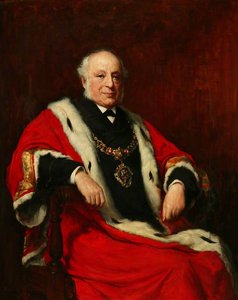
This painting depicts John William Dupre, who served as the HM Attorney General in 1869. The subject is portrayed with a white beard, dressed in a formal red robe that signifies his professional standing. A tie is visible hanging from his neck, adding to his formal attire. He is positioned in a setting that suggests a museum atmosphere, characterized by a green curtain positioned behind him.

5
Portrait of Lord Wantage, Vice-Chancellor, KCB (1877) by William Eyre Walker

Portrait of Lord Wantage, Vice-Chancellor, KCB

1877 · Oil On Canvas

The Portrait of Lord Wantage, Vice-Chancellor, KCB is a formal oil on canvas painted by William Eyre Walker in 1877. This work captures the likeness of the subject, Robert James Loyd-Lindsay, Baron Wantage of Lockinge, in a manner that reflects his significant social and military standing. The portrait presents the subject in a three-quarter length view, a composition that allows for a detailed study of both his character and his…

6
Henry Stacy Marks (1829–1898) (1877) by William Eyre Walker

Henry Stacy Marks (1829–1898)

1877 · Oil On Canvas

This oil-painted portrait, created in 1877, presents a man in profile, captured with a focus on his likeness and the depth of his expression. The composition is centered on the figure, set against a dark and indistinct background that serves to emphasize the subject. The lighting is dramatic and directional, originating from the upper left to cast strong shadows across the right side of the face, providing a sense of…

7
Portrait of William Fane De Salis (1880) by William Eyre Walker

Portrait of William Fane De Salis

1880 · Oil On Canvas

The Portrait of William Fane De Salis is a formal and dignified 19th-century oil portrait of an elderly man. Executed in 1880, the composition presents a close-up profile view, focusing on the subject's head and upper shoulders against a dark, indistinct background. The perspective is a standard portrait view at eye level, providing an intimate yet respectful distance from the subject. The single male figure is depicted with a sense…

8
John Evan Hodgson (1831–1895) (1884) by William Eyre Walker

John Evan Hodgson (1831–1895)

1884 · Oil On Canvas

The oil on canvas depicts an older man, John Evan Hodgson, seated in a three-quarter pose. He faces slightly toward the viewer, his body positioned within a dark, textured environment that suggests a studio setting. His hands are a central focus, one holding a paintbrush and the other a palette. The subject's facial features and beard are rendered with visible brushstrokes, creating a tactile surface. His expression is steady and…

9
Sir Henry Alfred Pitman (1808–1908) (1885) by William Eyre Walker

Sir Henry Alfred Pitman (1808–1908)

1885 · Oil On Canvas

A single light source strikes the subject from the upper left, carving the deep lines of an aged face from a dark, indistinct void. This is the portrait of Sir Henry Alfred Pitman, a man whose presence fills the frame with the gravity of a long-lived intellect. The skin is rendered with thick, palpable brushstrokes that suggest the texture of parchment. Every wrinkle tells of decades spent in the quiet…

10
John Bright (1879) by William Eyre Walker

John Bright

1879 · Oil On Canvas

William Eyre Walker rendered this portrait of John Bright in 1879. The subject was a prominent British Radical and Liberal statesman who occupied a seat in the House of Commons from 1843 to 1889. Known for his advocacy of free trade policies, Bright was a central figure in the political landscape of the nineteenth century.

William Eyre Walker paintings, ranked 11 to 85

11Thomas Sidney Cooper, RA (1891) by William Eyre WalkerThomas Sidney Cooper, RA1891 12Sir Frederick Thorpe Mappin (1821–1910), Bt (1892) by William Eyre WalkerSir Frederick Thorpe Mappin (1821–1910), Bt1892 13John Scott of London and Wetheral (1887) by William Eyre WalkerJohn Scott of London and Wetheral1887 14Alderman Philip Goldschmidt (1887) by William Eyre WalkerAlderman Philip Goldschmidt1887 15Alderman Edward Wood (1839–1917), JP, Mayor of Leicester (1888, 1895, 1901 1906) (1898) by William Eyre WalkerAlderman Edward Wood (1839–1917), JP, Mayor of Leicester (1888, 1895, 1901 1906)1898 · Leicester Town Hall 16Portrait of Alderman Charles Gabriel Beale (1901) by William Eyre WalkerPortrait of Alderman Charles Gabriel Beale1901 · Birmingham Museum and Art Gallery 17Sir George Franklin (d.1916) (1909) by William Eyre WalkerSir George Franklin (d.1916)1909 18Alfred Pope (1842–1934) (1909) by William Eyre WalkerAlfred Pope (1842–1934)1909 19Sir Monier Monier Williams (1819–1899) (1882) by William Eyre WalkerSir Monier Monier Williams (1819–1899)1882 · Bodleian Libraries 20Philip Westlake (1873) by William Eyre WalkerPhilip Westlake1873 21Alderman Charles Williams David, Five Times Mayor of Cardiff (1873) by William Eyre WalkerAlderman Charles Williams David, Five Times Mayor of Cardiff1873 22Henry Stacey Marks (1829–1898) (1875) by William Eyre WalkerHenry Stacey Marks (1829–1898)1875 · Walker Art Gallery 23Andrew George Kurtz (1824–1890) (1877) by William Eyre WalkerAndrew George Kurtz (1824–1890)1877 · Walker Art Gallery 24Robert Needham Philips (1815–1890) (1875) by William Eyre WalkerRobert Needham Philips (1815–1890)1875 25Charles Robert Darwin (1809–1882) (1875) by William Eyre WalkerCharles Robert Darwin (1809–1882)1875 · Darwin College 26Thomas Oldham Barlow (1824–1889), RA (1882) by William Eyre WalkerThomas Oldham Barlow (1824–1889), RA1882 27Evan Evans (1813–1891) (1883) by William Eyre WalkerEvan Evans (1813–1891)1883 · Pembroke College 28Benjamin Hall Kennedy (1804–1889), DD, Regius Professor of Greek, Headmaster of Shrewsbury School (1883) by William Eyre WalkerBenjamin Hall Kennedy (1804–1889), DD, Regius Professor of Greek, Headmaster of Shrewsbury School1883 · st John's College 29Alderman Thomas Southam (1880) by William Eyre WalkerAlderman Thomas Southam1880 30Admiral Sir Alexander Milne (1808–1896) (1879) by William Eyre WalkerAdmiral Sir Alexander Milne (1808–1896)1879 · National Maritime Museum 31William Wegg (1815–1893) (1883) by William Eyre WalkerWilliam Wegg (1815–1893)1883 32Sir George Scharf (1885) by William Eyre WalkerSir George Scharf1885 · National Portrait Gallery 33Albert Brassey, Esq. (1844–1914), MA, JP, MFH, MP of Heythrop Park (1890) by William Eyre WalkerAlbert Brassey, Esq. (1844–1914), MA, JP, MFH, MP of Heythrop Park1890 34Mark Morris (1818–1895) (1889) by William Eyre WalkerMark Morris (1818–1895)1889 · st Bartholomew’s Hospital Museum And Archive 35John Lloyd Wharton (1837–1912), of Dryburn, Durham (1891) by William Eyre WalkerJohn Lloyd Wharton (1837–1912), of Dryburn, Durham1891 36Thomas Sidney Cooper (1803–1902), RA (1889) by William Eyre WalkerThomas Sidney Cooper (1803–1902), RA1889 37Ewan Christian (1814–1895), PRIBA (1888) by William Eyre WalkerEwan Christian (1814–1895), PRIBA1888 · Royal Institute of British Architects 38Sir John Robert Mowbray (1815–1899) (1886) by William Eyre WalkerSir John Robert Mowbray (1815–1899)1886 · Reading Museum - Town Hall 39Sir Horace Jones (1819–1887), Architect (1886) by William Eyre WalkerSir Horace Jones (1819–1887), Architect1886 · Guildhall Art Gallery 40Thomas Charles Reginald Agar Robartes (1844–1930), 2nd Lord Robartes and 6th Viscount Clifden (1887) by William Eyre WalkerThomas Charles Reginald Agar Robartes (1844–1930), 2nd Lord Robartes and 6th Viscount Clifden1887 · National Trust 41William Aldis Wright (1831–1914), Fellow, Literary and Biblical Scholar (1887) by William Eyre WalkerWilliam Aldis Wright (1831–1914), Fellow, Literary and Biblical Scholar1887 42Professor Sir George Murray Humphrey (1886) by William Eyre WalkerProfessor Sir George Murray Humphrey1886 · Fitzwilliam College 43John Loughborough Pearson (1889) by William Eyre WalkerJohn Loughborough Pearson1889 · National Portrait Gallery 44George Henry Pope, Treasurer (1876–1901), Master (1904) (1889) by William Eyre WalkerGeorge Henry Pope, Treasurer (1876–1901), Master (1904)1889 · Merchants Hall 45Charles Edward Searle (1828–1902) (1892) by William Eyre WalkerCharles Edward Searle (1828–1902)1892 · Pembroke College 46Sir John Scott Burdon Sanderson, Bt (1886) by William Eyre WalkerSir John Scott Burdon Sanderson, Bt1886 47Edward Armitage (1817–1896), RA (1886) by William Eyre WalkerEdward Armitage (1817–1896), RA1886 48John Morley, 1st Viscount Morley of Blackburn (1891) by William Eyre WalkerJohn Morley, 1st Viscount Morley of Blackburn1891 · National Portrait Gallery 49John James Robert Manners, 7th Duke of Rutland (1886) by William Eyre WalkerJohn James Robert Manners, 7th Duke of Rutland1886 · National Portrait Gallery 50William Scovell Savory (1826–1895), Surgeon at St Bartholomew's Hospital (1893) by William Eyre WalkerWilliam Scovell Savory (1826–1895), Surgeon at St Bartholomew's Hospital1893 · st Bartholomew’s Hospital Museum And Archive 51Colonel Sir Charles Seely (1833–1915), 1st Bt (1897) by William Eyre WalkerColonel Sir Charles Seely (1833–1915), 1st Bt1897 52Sir Horatio Lloyd, Recorder of Chester (1866–1921) (1896) by William Eyre WalkerSir Horatio Lloyd, Recorder of Chester (1866–1921)1896 · Chester Castle 53Charles John Vaughan (1816–1897), Fellow and Classical Scholar, Headmaster and Dean of Llandaff (1895) by William Eyre WalkerCharles John Vaughan (1816–1897), Fellow and Classical Scholar, Headmaster and Dean of Llandaff1895 54William Henry (1856–1905), Lord Leigh, Lord Lieutenant (1898) by William Eyre WalkerWilliam Henry (1856–1905), Lord Leigh, Lord Lieutenant1898 · Warwick Shire Hall 55John Dent Dent, Chairman, North Eastern Railway (copy of an earlier work) (1896) by William Eyre WalkerJohn Dent Dent, Chairman, North Eastern Railway (copy of an earlier work)1896 56The Right Hon. William McEwan MP (1827-1913) (1901) by William Eyre WalkerThe Right Hon. William McEwan MP (1827-1913)1901 · Polesden Lacey 57James Bell Pettigrew (1832–1908) (1902) by William Eyre WalkerJames Bell Pettigrew (1832–1908)1902 58Alderman Charles Gabriel Beale (1901) by William Eyre WalkerAlderman Charles Gabriel Beale1901 59The Right Honourable William McEwan (1827–1913), MP (1901) by William Eyre WalkerThe Right Honourable William McEwan (1827–1913), MP1901 60David with Goliath's Head by William Eyre WalkerDavid with Goliath's Head 61Cecil E. Bewes, Esq. (1818–1903) by William Eyre WalkerCecil E. Bewes, Esq. (1818–1903) 62Sir William Ogilvy Dalgleish of Errol Park (1832–1913) (1911) by William Eyre WalkerSir William Ogilvy Dalgleish of Errol Park (1832–1913)1911 63Alderman George Franklin (d.1916), JP, Lord Mayor of Sheffield (1897–1898) (1909) by William Eyre WalkerAlderman George Franklin (d.1916), JP, Lord Mayor of Sheffield (1897–1898)1909 64Donald Currie (1825–1909) (1907) by William Eyre WalkerDonald Currie (1825–1909)1907 65Edward Liveing (1832–1919) (1910) by William Eyre WalkerEdward Liveing (1832–1919)1910 66Henry Morris (1844–1926) (1910) by William Eyre WalkerHenry Morris (1844–1926)1910 67Edward Atkinson (1819–1915), Master (1856–1915) (1906) by William Eyre WalkerEdward Atkinson (1819–1915), Master (1856–1915)1906 · Clare College 68Sir Donald Currie (1825–1909), Shipping Magnate and Educational Benefactor (1908) by William Eyre WalkerSir Donald Currie (1825–1909), Shipping Magnate and Educational Benefactor1908 · Scottish National Portrait Gallery 69Sir Cyril Jackson (1863–1924), Educationist (1916) by William Eyre WalkerSir Cyril Jackson (1863–1924), Educationist1916 · Guildhall Art Gallery 70Self Portrait (1918) by William Eyre WalkerSelf Portrait1918 71Thomas Hardy (1922) by William Eyre WalkerThomas Hardy1922 · National Portrait Gallery 72Sir Arthur Keith (1866–1955) (1928) by William Eyre WalkerSir Arthur Keith (1866–1955)1928 73Thomas Fletcher Twemlow of Betley (1816–1894) (1925) by William Eyre WalkerThomas Fletcher Twemlow of Betley (1816–1894)1925 · Staffordshire County Buildings 74Landscape - Galloway by William Eyre WalkerLandscape - GallowayThe Suter Te Aratoi o Whakatū 75The Very Reverend William Henderson (1819–1905), First Headmaster of Victoria College (1852–1862) by William Eyre WalkerThe Very Reverend William Henderson (1819–1905), First Headmaster of Victoria College (1852–1862) 76Scene from the French Revolution by William Eyre WalkerScene from the French Revolution 77Sir Donald Currie (1825–1909) by William Eyre WalkerSir Donald Currie (1825–1909) 78The Blind Beggar by William Eyre WalkerThe Blind Beggar 79Sir Mark Wilks Collet (1816–1905), Governor of the Bank of England (1887–1889) by William Eyre WalkerSir Mark Wilks Collet (1816–1905), Governor of the Bank of England (1887–1889) 80Frederick Harrison (1831–1923), Scholar (1848), Fellow (1854), Honorary Fellow (1899), DCL by William Eyre WalkerFrederick Harrison (1831–1923), Scholar (1848), Fellow (1854), Honorary Fellow (1899), DCLWadham College 81Thomas Elliott Harrison, Civil Engineer, North Eastern Railway by William Eyre WalkerThomas Elliott Harrison, Civil Engineer, North Eastern Railway 82Christopher James Thomas, Mayor (1874–1875) by William Eyre WalkerChristopher James Thomas, Mayor (1874–1875)The Mansion House 83Robert W. Darwin (1766–1848), Charles Darwin's Father by William Eyre WalkerRobert W. Darwin (1766–1848), Charles Darwin's Father 84James Porter, DD, Master (1876–1900) (1896) by William Eyre WalkerJames Porter, DD, Master (1876–1900)1896 · Peterhouse 85Roundell Palmer (1812–1895), Earl of Selborne, Fellow (1834–1848), Lord Chancellor (1872) by William Eyre WalkerRoundell Palmer (1812–1895), Earl of Selborne, Fellow (1834–1848), Lord Chancellor (1872)Magdalen College

The subjects that held William Eyre Walker's eye

The four subjects that come back most often in these originals, each with its finest example.

The museums that keep William Eyre Walker's originals

The 8 museums that hold the most of the paintings on this page.

Museum City Works by William Eyre Walker Paintings from this list
National Portrait Gallery, LondonNational Portrait Gallery London 5 Sir George Scharf, John Loughborough Pearson, John Morley, 1st Viscount Morley of Blackburn
Walker Art Gallery, LiverpoolWalker Art Gallery Liverpool 2 Henry Stacey Marks (1829–1898), Andrew George Kurtz (1824–1890)
st Bartholomew’s Hospital Museum And Archive, Лондонst Bartholomew’s Hospital Museum And Archive Лондон 2 Mark Morris (1818–1895), William Scovell Savory (1826–1895), Surgeon at St Bartholomew's Hospital
Guildhall Art Gallery, LondonGuildhall Art Gallery London 2 Sir Horace Jones (1819–1887), Architect, Sir Cyril Jackson (1863–1924), Educationist
Christ's College, CambridgeChrist's College Cambridge 1 Charles Robert Darwin (1809–1882), Fellow Commoner, Writer of 'The Origin of Species' (1859) and 'The Descent of Man' (1871)
Oriel College, OxfordOriel College Oxford 1 John Henry, Cardinal Newman
Inverness Town House, InvernessInverness Town House Inverness 1 Sir Alexander Matheson (1805–1886)
Leicester Town Hall, LeicesterLeicester Town Hall Leicester 1 Alderman Edward Wood (1839–1917), JP, Mayor of Leicester (1888, 1895, 1901 1906)

William Eyre Walker, one signature painting per decade

Works per decade

Pick a decade to see the original that defines it.

William Eyre Walker's paintings: the gallery answers

Which William Eyre Walker painting is the most famous of all?Reveal the answer

Charles Robert Darwin (1809–1882), Fellow Commoner, Writer of 'The Origin of Species' (1859) and 'The Descent of Man' (1871) (1883), Christ's College, Cambridge. John Henry, Cardinal Newman and Sir Alexander Matheson (1805–1886) (1879) come next.

How old was William Eyre Walker on completing Charles Robert Darwin (1809–1882), Fellow Commoner, Writer of 'The Origin of Species' (1859) and 'The Descent of Man' (1871)?Reveal the answer

36 years old: Charles Robert Darwin (1809–1882), Fellow Commoner, Writer of 'The Origin of Species' (1859) and 'The Descent of Man' (1871) dates from 1883, and William Eyre Walker was born in 1847.

Which are William Eyre Walker's top 10 paintings?Reveal the answer

Charles Robert Darwin (1809–1882), Fellow Commoner, Writer of 'The Origin of Species' (1859) and 'The Descent of Man' (1871), John Henry, Cardinal Newman, Sir Alexander Matheson (1805–1886), John William Dupre (1790–1866), HM Attorney General, Portrait of Lord Wantage, Vice-Chancellor, KCB, Henry Stacy Marks (1829–1898), Portrait of William Fane De Salis, John Evan Hodgson (1831–1895), Sir Henry Alfred Pitman (1808–1908) and John Bright. The ranking above gives each one's year and museum.

How many works did William Eyre Walker create?Reveal the answer

Our catalog holds 86 works by William Eyre Walker, dated from 1869 to 1928.

Where do William Eyre Walker's most famous originals hang?Reveal the answer

Mostly in National Portrait Gallery (London), Walker Art Gallery (Liverpool) and st Bartholomew’s Hospital Museum And Archive (Лондон). The museum table above lists them all.

When did William Eyre Walker create the most famous paintings?Reveal the answer

In 1880s: 26 of the 85 works on this page were made then, Charles Robert Darwin (1809–1882), Fellow Commoner, Writer of 'The Origin of Species' (1859) and 'The Descent of Man' (1871) among them.

Which are William Eyre Walker's earliest and latest famous works?Reveal the answer

On this page, the earliest is John William Dupre (1790–1866), HM Attorney General (1869) and the latest Sir Arthur Keith (1866–1955) (1928).

Which subjects did William Eyre Walker return to most?Reveal the answer

Men (13), Man (11) and Victorian era (9), across the 85 works on this page.

Which medium did William Eyre Walker work in most?Reveal the answer

Oil On Canvas, for 15 of the 85 works on this page.

Which movement is William Eyre Walker associated with?Reveal the answer

Academic realism and Contemporary realism, judging by the originals on this page.

Which William Eyre Walker originals does the National Portrait Gallery hold?Reveal the answer

Sir George Scharf, John Loughborough Pearson and John Morley, 1st Viscount Morley of Blackburn: the National Portrait Gallery, London holds 5 of the works on this page.

William Eyre Walker: the artist

A Legacy of Likeness: The Life of Walter William Ouless

Born in the coastal charm of Saint Helier, Jersey, Walter William Ouless emerged from a lineage deeply rooted in the visual arts. As the son of the marine artist Philip John Ouless, his early years were steeped in the atmosphere of a working studio, a foundation that would eventually propel him toward the heart of the British art establishment. After receiving his education at Victoria College, Ouless journeyed to London in 1864, seeking to refine his burgeoning talents within the prestigious Royal Academy schools. While his initial creative impulses led him toward the narrative charm of genre painting, a pivotal moment of mentorship redirected his trajectory; it was the renowned artist Millais who advised him to focus his gaze upon the human countenance, setting him on the path to becoming one of the most distinguished portrait painters of his era.

Mastery of the Portrait and Academic Eminence

The career of Ouless is a testament to the power of psychological depth and technical precision. His ascent within the Royal Academy was marked by significant milestones, earning him the title of Associate of the Royal Academy in 1877 and achieving full membership as a Royal Academician in 1881. This recognition solidified his status among the elite practitioners of British academic realism. Ouless possessed a rare ability to transcend mere physical resemblance, capturing instead the very essence and intellectual gravity of his subjects. Whether depicting the scientific brilliance of Charles Robert Darwin or the scholarly devotion of Sir Monier Monier Williams, his brushwork breathed life into the figures, often utilizing dramatic chiaroscuro and meticulous detail to evoke a sense of character and social standing.

His technique was characterized by a sophisticated balance between rigid academic discipline and an exquisite sensitivity to light. In many of his most celebrated works, one can observe a subtle interplay of textures and tones that suggests an awareness of the burgeoning Impressionist movement, even as he remained anchored in the traditions of portraiture. His portraits served as windows into the Victorian soul, documenting the dignity, ambition, and contemplative nature of the era's most prominent figures.

Artistic Influence and Family Heritage

The artistic world of Ouless was not a solitary one, but rather a tapestry woven with familial connections and professional respect. His influence extended through generations, notably seen in the work of his daughter, Catherine Ouless, who carried forward the tradition of meticulous realism established by her father. Through his dedication to the craft, Ouless helped define a period of British art where the portrait functioned as both a historical record and a profound psychological study. His ability to render the weight of discovery in a scientist's eyes or the quiet prestige of a statesman's presence ensures that his contribution to the history of British portraiture remains an enduring legacy of light, shadow, and human character.