Orientalist: original voices

39 Famous Orientalist Painters Who Shaped the Movement

Jean-Léon Gérôme (1824–1904) is the most famous Orientalist painter, whose singular vision gave us Duel after a Masked Ball and The Cock Fight. Next stand Osman Hamdi Bey, Jean-Joseph Benjamin-Constant, David Roberts and Eugène Fromentin. These 39 painters, from Thomas Daniell (born 1749) to Léon Cauvy (born 1874), came from 10 countries.

Our selection. Artists whose works our catalogue attaches to Orientalist, in the order of our fame ranking. Artists born after 1955 with no Wikidata identifier stay out until verified. The Wikipedia figure counts our 32 languages with an article on the artist.

  1. Duel after a Masked Ball by Jean-Léon Gérôme1Jean-Léon Gérôme
  2. Portrait of Naile Hanım by Osman Hamdi Bey2Osman Hamdi Bey
  3. Caucasian Boy by Jean-Joseph Benjamin-Constant3Jean-Joseph Benjamin-Constant

In brief

Orientalist in brief

  • 39Artists
  • 1749–1874Years of birth
  • 10Countries of birth
  • 0Women
  • 3,180Works in our catalogue
Cities with most births
Paris (2), Versailles (2), Vienna (2), Kingston upon Thames (2)

One artist at a time

39 Orientalist Painters and their signature works

1of 39

Jean-Léon Gérôme

French Born in Vesoul Academicism, Orientalism, Neo-Grec Wikipedia in 29/32 languages

Jean-Léon Gérôme

The story of Jean-Léon Gérôme begins in Vesoul, Haute-Saône, where he was born on 11 May 1824. Upon returning to Paris, he sought further refinement within the atelier of Charles Gleyre in 1844 and eventually entered the École des Beaux-Arts. Among those who passed through his doors were Thomas Eakins, John Singer Sargent, and Mary Cassatt.

Where to see In Paris, the Musée d'Orsay preserves his paintings, offering a direct connection to the academic rigor he once championed.

Signature works · The 100 signature works

3of 39

Jean-Joseph Benjamin-Constant

French Born in Batignolles-Monceau ['Orientalism', 'Academic Art'] Wikipedia in 15/32 languages

Jean-Joseph Benjamin-Constant

National Gallery of Art in Washington D.C., ensuring that his artistic vision continues to inspire and captivate audiences for generations to come.

Signature works · The 100 signature works

4of 39

David Roberts

Born in Stockbridge Wikipedia in 17/32 languages

David Roberts

While initially focused on theatrical scenery, he gradually shifted towards more independent artistic pursuits. His travels to Spain in 1832 were formative, sparking an interest in architectural detail and exotic locales. However, it was his extensive tours of Egypt and the Near East (1838-1840) that truly defined his career.

Signature works · The 100 signature works

5of 39

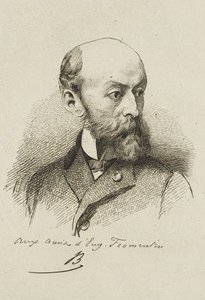
Eugène Fromentin

French Born in La Rochelle Orientalism Wikipedia in 17/32 languages

Eugène Fromentin

Born in La Rochelle, France, in 1820, he embarked on an artistic journey marked by early exposure to landscape painting under the guidance of Louis Cabat. Fromentin’s artistic breakthrough arrived in 1847 with “Les gorges de la Chiffa,” a monumental canvas that immediately garnered acclaim at the Paris Salon and established him as one of the foremost interpreters of Algeria's dramatic topography.

Signature works · The 100 signature works

6of 39

Francis Frith

English Orientalism

Francis Frith

Francis Frith, born in Chesterfield, Derbyshire, in 1822, was far more than a mere businessman or a pioneer of photography; he was a visual storyteller whose expeditions brought the ancient wonders of the Orient into the parlors of Europe.

Signature works · The 100 signature works

7of 39

Alexandre Gabriel Decamps

French Born in Paris Orientalism, Romanticism Wikipedia in 14/32 languages

Alexandre Gabriel Decamps

Alexandre Gabriel Decamps, a name resonating with the vibrant hues of exotic landscapes and the dramatic flair of Romanticism, emerged as a pivotal figure in 19th-century French painting. Even satirical works like The Monkey Connoisseurs, a playful jab at the conservative jury of the Académie des Beaux-Arts, demonstrate his willingness to challenge established norms and embrace a more independent artistic vision.

Signature works · The 100 signature works

8of 39

Georges Antoine Rochegrosse

French Born in Versailles Orientalism, Art Nouveau

Georges Antoine Rochegrosse

Throughout his career, Rochegrosse received numerous honors, including a third-class medal at the Salon in 1882, election as an Officer of the Legion of Honour in 1892, and the Médaille d’Honneur in 1906.

Signature works · The 100 signature works

9of 39

Frederick Arthur Bridgman

American Born in Tuskegee Orientalism, Academic art Wikipedia in 15/32 languages

Frederick Arthur Bridgman

The influence of Jean-Léon Gérôme remains visible in the foundation of Bridgman's method. This transition allows him to capture the heat and texture of North African and Near Eastern settings with a sense of immediacy.

Where to see His canvases reside in several major institutions across the United States.

Pupil of Jean-Léon Gérôme #1

Signature works · The 100 signature works

11of 39

Edwin Lord Weeks

American Born in Boston Orientalist Wikipedia in 12/32 languages

Edwin Lord Weeks

edwin lord weeks, an american artist, left an indelible mark on the art world with his captivating works. born in 1849 in boston, massachusetts, weeks' life was a testament to his family's affluence, which enabled him to pursue his passion for painting and traveling.

Pupil of Jean-Léon Gérôme #1

Signature works · The 100 signature works

12of 39

Georges Clairin

French Born in former 10th arrondissement of Paris Orientalism Wikipedia in 9/32 languages

Georges Clairin

Painted numerous ceilings, including those at the Opéra Garnier (1874) and the Le Trident theatre in Cherbourg. Notable works include " Les Saltimbanques " and " Massacre des Abencérages à Grenade.". Traveled to Spain with Henri Regnault and to Italy with François Flameng and Jean-Léon Gérôme.

Signature works · The 100 signature works

15of 39

Otto Pilny

Czech/Swiss Born in Zurich Orientalism

Otto Pilny

Between 1889 and 1892, Pilny returned to Egypt, finding himself deeply embedded in the vibrant, bustling atmospheres of Alexandria and Cairo. It was during this era that his talent garnered significant recognition; his ability to render the nuances of Eastern life so authentically earned him the prestigious appointment as a Court Painter under the Ottoman authorities. Even as he settled in Zürich in 1895 and eventually embraced Swiss citizenship, the echoes of his North African travels remained the primary pulse of his creativity.

Signature works · The 100 signature works

16of 39

Émile Prisse D'Avennes

French Born in Avesnes-sur-Helpe Romanticism

Émile Prisse D'Avennes

While his early education under the watchful guidance of his grandfather pointed toward the structured realms of law and the analytical precision of the École Polytechnique, his heart was drawn to a much more ancient and sun-drenched horizon. His scholarly publications, such as L'art arabe d'après les monuments du Kaire, provided much-needed documentation of Islamic architecture from the 7th to the 18th century, bridging the gap between archaeological discovery and public appreciation.

Signature works · The 100 signature works

17of 39

Léon Cauvy

Art Nouveau, Orientalism

Léon Cauvy

Léon Cauvy began his formal training at the École Nationale des Beaux-Arts de Montpellier, but the pull of the larger art world led him to Paris in 1895. Between 1896 and 1906, his work for furniture and interiors earned him twelve prizes featured in Paul Arnavielhe's Art et Décoration magazine.

Signature works · The 100 signature works

18of 39

Adrien Henri Tanoux

French Orientalist, Nude Painting

Adrien Henri Tanoux

Tanoux’s technique was characterized by a masterful command of light and shadow, often employing impasto—thickly applied paint—to create a tactile surface that seemed to shimmer with life. The use of diffused light, reminiscent of Impressionism but grounded in a more classical approach, further enhanced the evocative quality of his work. His works are now held in prestigious collections across France, including the Musée des Beaux-Arts de Nice, Musée de Grenoble, and Musée Cantini, testament to the enduring appeal of this often-overlooked master of French painting.

Signature works · The 100 signature works

19of 39

Giulio Rosati

Italian Born in Rome Orientalist Art Wikipedia in 10/32 languages

Giulio Rosati

Born in Rome in 1861 into a family defined by the rigid structures of banking and military tradition, Rosati’s path was one of deliberate departure. Unlike many of his contemporaries who sought inspiration through arduous expeditions across North Africa and the Middle East, Rosati achieved his renown through diligent research and a keen eye for detail. The historical significance of Giulio Rosati lies in his ability to sustain the prestige of the Orientalist genre during a period of rapid global change.

Signature works · The 100 signature works

20of 39

Alberto Pasini

Italian Born in Busseto Orientalist painting Wikipedia in 8/32 languages

Alberto Pasini

Expanding Horizons: Following his Persian expedition, Pasini continued to travel extensively throughout the Middle East, including Egypt, Arabia, Istanbul, and various regions of Persia. Artistic Style: His paintings during this period showcased meticulous attention to architectural details and a vibrant use of color and light, characteristic of Orientalist painting.

Signature works · The 100 signature works

21of 39

Prosper Marilhat

French Born in Vertaizon Orientalist Painter Wikipedia in 8/32 languages

Prosper Marilhat

Born in Vertaizon, a small village in the Puy-de-Dôme region of France, Marilhat’s artistic journey began not with grand ambitions but with humble roots. However, the Baron de Barante, a prominent figure who recognized Marilhat's innate talent and passion, intervened, advocating for his artistic pursuits. Ruines de la mosquée El-Hakem au Caire (1840), for example, became renowned for its ability to capture both the monumental scale of the ruined structure and the evocative atmosphere of decay—a testament to the passage of time and the grandeur of a lost civilization.

Signature works · The 100 signature works

23of 39

William Daniell

British Born in Kingston upon Thames Landscape and marine painting Wikipedia in 5/32 languages

William Daniell

Technique: They were masters of aquatint, a printmaking technique that allowed for subtle gradations of tone and texture, perfectly suited to depicting landscapes. Influence: The Daniells influenced subsequent generations of British landscape artists and contributed to the popularization of Orientalist themes in art. Style: The Daniells' style blended elements of Romanticism and Neoclassicism, characterized by detailed observation, atmospheric perspective, and a focus on capturing the essence of a place.

Signature works · The 100 signature works

24of 39

Carl Werner

German Born in Weimar Orientalism Wikipedia in 8/32 languages

Carl Werner

His early years were shaped by the rigorous artistic traditions of Germany, where he studied under the esteemed Julius Schnorr von Carolsfeld in Leipzig. While the Romantic movement often leaned toward the dramatic and the exaggerated, Werner maintained a commitment to a certain truthfulness, even when depicting the exotic.

Signature works · The 100 signature works

25of 39

Alfred Dehodencq

French Born in former 2nd arrondissement of Paris Orientalism, Romantic Wikipedia in 9/32 languages

Alfred Dehodencq

Born in Paris amidst the turbulence of the Revolution, Dehodencq’s life was inextricably linked with travel, observation, and an unwavering fascination with the ‘Other,’ forging a distinctive style that bridges the gap between Romanticism and the nascent Orientalist movement. However, his trajectory shifted dramatically following the 1848 Revolution when he was wounded and sent to convalesce in Spain. Despite facing challenges during his lifetime – including the destruction of his studio and paintings following an act of violence – Dehodencq’s work has gained increasing recognition in recent decades.

Signature works · The 100 signature works

26of 39

John Frederick Lewis

Born in London Wikipedia in 9/32 languages

John Frederick Lewis

However, his direct observation of Middle Eastern cultures allowed him to develop a unique aesthetic characterized by: Meticulous Detail: A commitment to accurately representing textures, patterns, and architectural elements.

Signature works · The 100 signature works

27of 39

Pierre-Victor Trémaux

French Born in Charrecey Orientalism, Architecture

Pierre-Victor Trémaux

Trémaux’s approach to photography in this period was revolutionary. This is particularly evident in his extensive work on Sudan, meticulously documenting ancient Nubian artifacts – a rare glimpse into the region’s rich history through photographic means. His legacy can be seen in the works of other notable figures, including Edgar Degas, whose pastel drawings and oil paintings share a similar focus on capturing the essence of human experience.

Signature works · The 100 signature works

28of 39

Thomas Daniell

British Born in Kingston upon Thames Orientalist landscape Wikipedia in 6/32 languages

Thomas Daniell

Daniell's work also played a role in the development of Orientalism —the Western fascination with Eastern cultures—although his depictions were generally more objective and less romanticized than those of some of his contemporaries. He became a Royal Academician in 1804, solidifying his position as a leading artist of his time.

Signature works · The 100 signature works

29of 39

Hermann David Salomon Corrodi

Italian Born in Frascati Orientalism Wikipedia in 6/32 languages

Hermann David Salomon Corrodi

Common themes within his oeuvre include vibrant depictions of Egyptian and Syrian life, serene portrayals of Middle Eastern landscapes, historical and religious subjects imbued with narrative depth, and intimate glimpses into the daily routines of people he encountered on his travels. In 1893, he was honored as an Academic of Merit by the Academy of St Luke—a testament to his standing within the Italian art world—and subsequently served as a professor at the institution.

Signature works · The 100 signature works

30of 39

Rudolf Ernst

Austrian-French Born in Vienna Orientalist Painting Wikipedia in 9/32 languages

Rudolf Ernst

His journey began within the prestigious halls of the Akademie der Bildenden Künste Wien, where he studied under masters such as Anton Hansekampf and Wilhelm Leibl. The true metamorphosis of his style occurred when Ernst relocated to Paris in 1880. His work remains a cornerstone of Orientalist studies, celebrated for its technical brilliance and its role in shaping the Western perception of Eastern beauty.

Signature works · The 100 signature works

31of 39

Carl Haag

German-British Born in Erlangen Orientalism, Watercolor Wikipedia in 7/32 languages

Carl Haag

However, it was his relocation to England in 1847 that proved pivotal, setting him on a course toward watercolor mastery and ultimately, a celebrated career as an Orientalist painter. He offered Victorian England a window into the Middle East, fostering a greater understanding—albeit often filtered through a Western lens—of its landscapes, people, and traditions.

Signature works · The 100 signature works

32of 39

Miner Kilbourne Kellogg

American Born in Manlius Orientalist, Tonalism Wikipedia in 3/32 languages

Miner Kilbourne Kellogg

It was here, amidst the burgeoning art scene of the Midwest, that he sought formal training at the Academy of Fine Arts under Frederick Eckstein. His time in Florence, where he forged a friendship with the renowned sculptor Hiram Powers, provided him with an intimate connection to the classical traditions of Italy. Academic Recognition: His standing in the artistic community was solidified in 1851 when he was elected as an Honorary Academician of the National Academy of Design.

Signature works · The 100 signature works

33of 39

Victor Huguet

French Born in Le Lude Orientalist Painting Wikipedia in 4/32 languages

Victor Huguet

The following year, he accompanied Jean-Baptiste Henri Durand-Brager on an expedition to Crimea, offering him valuable experience in depicting military scenes and capturing the atmosphere of conflict. Unlike many Western artists who approached these regions with a sense of detached observation, Huguet sought to engage respectfully with local communities, learning their customs and documenting their daily lives. His paintings are now housed in museums across France, including Nîmes, Montpellier, and Marseille, testament to their enduring appeal.

Pupil of Eugène Fromentin #5

Signature works · The 100 signature works

34of 39

Adrien Dauzats

French Born in Bordeaux Orientalism Wikipedia in 5/32 languages

Adrien Dauzats

Adrien Dauzats, born in Bordeaux, France in 1804, was a painter whose life unfolded as a compelling narrative of artistic exploration and meticulous observation. His father’s profession as a scenery painter at a local theatre sparked an early fascination with visual representation within young Adrien, laying the foundation for a career deeply rooted in capturing the world around him. He completed the initial sketch for Sinbad the Sailor, but his untimely death intervened before he could finish the project.

Signature works · The 100 signature works

35of 39

Gyula Tornai

Born in Spišský Hrhov Wikipedia in 3/32 languages

Gyula Tornai

Shift to Orientalism: Travel played a crucial role in his artistic evolution. Journeys to Spain, Algeria, and particularly Morocco sparked a profound shift towards Orientalist themes.

Signature works · The 100 signature works

36of 39

Maurice Bompard

French Born in Rodez Orientalism, Impressionism Wikipedia in 4/32 languages

Maurice Bompard

He helped establish the Société des Peintres Orientalistes Français, a collective that sought to define and promote the genre.

Where to see The influence of Maurice Bompard extended far beyond the canvas, reaching into the very organization of his peers.

Signature works · The 100 signature works

37of 39

Frederick R. Spencer

American Born in Lenox Wikipedia in 3/32 languages

Frederick R. Spencer

Spencer was born on 7 June 1806 in Lenox, New York. He grew up in a household led by his father, General Ichabod Smith Spencer, who worked as a lawyer and served as the first postmaster of Canastota.

Where to see His paintings can be found in several major collections across the United States.

Signature works · The 100 signature works

38of 39

André Sureda

French Born in Versailles Orientalist Painter Wikipedia in 2/32 languages

André Sureda

Born in Paris to parents of Catalan descent, Suréda’s heritage provided him with a unique cultural lens, blending a noble Spanish lineage with the sophisticated artistic traditions of France. This period saw him traveling extensively through North Africa, particularly Algeria, Morocco, and Tunisia. Though his life ended in 1930, his presence remains felt in museums such as the Musée Lambinet and the Ahmed Zabana National Museum.

Signature works · The 100 signature works

39of 39

Amedeo Simonetti

Italian Born in Genoa Academic Realism Wikipedia in 2/32 languages

Amedeo Simonetti

Beyond the exoticism of the East, Simonetti’s repertoire was remarkably diverse. Whether painting the dusty streets of Marrakech or the opulent halls of a bygone European era, his work remained anchored by an unwavering commitment to idealized beauty and psychological depth. Though his life was tragically short, ending in Rome in 1922, Amedeo Momo Simonetti left behind a body of work that remains a vital bridge between the disciplined traditions of Italian Academicism and the romantic, imaginative allure of the Orientalist movement.

Signature works · The 100 signature works

Signature works

Signature Orientalist works

  1. Duel after a Masked Ball by Jean-Léon Gérôme

    Duel after a Masked Ball

    Jean-Léon Gérôme

    1857 · Hermitage Museum, Saint Petersburg

  2. Portrait of Naile Hanım by Osman Hamdi Bey

    Portrait of Naile Hanım

    Osman Hamdi Bey

    Sakıp Sabancı Museum, Istanbul

  3. Caucasian Boy by Jean-Joseph Benjamin-Constant

    Caucasian Boy

    Jean-Joseph Benjamin-Constant

    1902 · Art Palace of Georgia - Museum of Cultural History, Tbilisi

  4. The Chancel of the Church of the Nativity (or St. Helena), Bethlehem by David Roberts

    The Chancel of the Church of the Nativity (or St. Helena), Bethlehem

    David Roberts

    1842 · National Museums Liverpool

  5. The Land of Thirst by Eugène Fromentin

    The Land of Thirst

    Eugène Fromentin

  6. The Valley of Jehoshaphat, Jerusalem (Plate 14) by Francis Frith

    The Valley of Jehoshaphat, Jerusalem (Plate 14)

    Francis Frith

    1858

  7. Joseph Sold by his Brethren by Alexandre Gabriel Decamps

    Joseph Sold by his Brethren

    Alexandre Gabriel Decamps

    1838 · Wallace Collection, London

  8. The Flirt Of Yesteryear by Georges Antoine Rochegrosse

    The Flirt Of Yesteryear

    Georges Antoine Rochegrosse

    1919

A timeline

Orientalist through its signature works

  1. 1830
  2. 1835
  3. 1838
  4. 1838
  5. 1842
  6. 1847
  7. 1852
  8. 1853
  9. 1853
  10. 1854
  11. 1857
  12. 1858
  13. 1868
  14. 1884

Figures

The figures

Every name

List of 39 famous Orientalist painters, every name

  1. 1Jean-Léon GérômeJean-Léon GérômeFrench · 1824–1904
  2. 2Osman Hamdi BeyOsman Hamdi BeyTurkish · 1842–1910
  3. 3Jean-Joseph Benjamin-ConstantJean-Joseph Benjamin-ConstantFrench · 1845–1902
  4. 4David RobertsDavid Roberts1796–1864
  5. 5Eugène FromentinEugène FromentinFrench · 1820–1876
  6. 6Francis FrithFrancis FrithEnglish · 1822–1898
  7. 7Alexandre Gabriel DecampsAlexandre Gabriel DecampsFrench · 1803–1860
  8. 8Georges Antoine RochegrosseGeorges Antoine RochegrosseFrench · 1859–1938
  9. 9Frederick Arthur BridgmanFrederick Arthur BridgmanAmerican · 1847–1928
  10. 10Nasreddine DinetNasreddine DinetFrench · 1861–1929
  11. 11Edwin Lord WeeksEdwin Lord WeeksAmerican · 1849–1903
  12. 12Georges ClairinGeorges ClairinFrench · 1843–1919
  13. 13Théodore FrèreThéodore Frère1814–1888
  14. 14Jean François PortaelsJean François PortaelsBelgian · 1818–1895
  15. 15Otto PilnyOtto PilnyCzech/Swiss · 1866–1936
  16. 16Émile Prisse D'AvennesÉmile Prisse D'AvennesFrench · 1807–1879
  17. 17Léon CauvyLéon Cauvy1874–1933
  18. 18Adrien Henri TanouxAdrien Henri TanouxFrench · 1865–1923
  19. 19Giulio RosatiGiulio RosatiItalian · 1858–1917
  20. 20Alberto PasiniAlberto PasiniItalian · 1826–1899
  21. 21Prosper MarilhatProsper MarilhatFrench · 1811–1847
  22. 22Ludwig DeutschLudwig DeutschAustrian/French · 1855–1935
  23. 23William DaniellWilliam DaniellBritish · 1769–1837
  24. 24Carl WernerCarl WernerGerman · 1808–1894
  25. 25Alfred DehodencqAlfred DehodencqFrench · 1822–1882
  26. 26John Frederick LewisJohn Frederick Lewis1805–1876
  27. 27Pierre-Victor TrémauxPierre-Victor TrémauxFrench · 1818–1895
  28. 28Thomas DaniellThomas DaniellBritish · 1749–1840
  29. 29Hermann David Salomon CorrodiHermann David Salomon CorrodiItalian · 1844–1905
  30. 30Rudolf ErnstRudolf ErnstAustrian-French · 1854–1932
  31. 31Carl HaagCarl HaagGerman-British · 1820–1915
  32. 32Miner Kilbourne KelloggMiner Kilbourne KelloggAmerican · 1814–1889
  33. 33Victor HuguetVictor HuguetFrench · 1835–1902
  34. 34Adrien DauzatsAdrien DauzatsFrench · 1804–1868
  35. 35Gyula TornaiGyula Tornai1861–1928
  36. 36Maurice BompardMaurice BompardFrench · 1857–1935
  37. 37Frederick R. SpencerFrederick R. SpencerAmerican · 1806–1875
  38. 38André SuredaAndré SuredaFrench · 1872–1930
  39. 39Amedeo SimonettiAmedeo SimonettiItalian · 1874–1922

Questions

Your questions

Read

Stories on OriginalUniqueArt.com

Other movements

Famous artists of other movements

Other periods

Famous artists across the periods

Famous paintings

Masterpieces that inspire us, by movement

Discover more

More artists to discover