The Visionary of the Studio: The Life and Art of Giulio Rosati
Giulio Rosati stands as a luminous figure in the pantheon of Italian Orientalist painting, a master who possessed the rare ability to conjure entire worlds from the confines of a Roman studio. Born in Rome in 1861 into a family defined by the rigid structures of banking and military tradition, Rosati’s path was one of deliberate departure. Eschewing the predictable security of his lineage, he turned his gaze toward the evocative mysteries of the East. His formal education at the Accademia di San Luca, under the guidance of masters such as Dario Querci and Francesco Podesti, provided him with a formidable academic foundation. However, it was his encounter with the stylistic principles of Luis Álvarez y Catalá—the esteemed director of the Prado Museum—that truly refined his ability to marry meticulous academic precision with a profound, atmospheric sensitivity.
What makes Rosati’s contribution to the Orientalist movement particularly remarkable is the way he bridged the gap between reality and imagination. Unlike many of his contemporaries who sought inspiration through arduous expeditions across North Africa and the Middle East, Rosati achieved his renown through diligent research and a keen eye for detail. He never personally journeyed to the Maghreg, yet his canvases breathe with the heat of the desert and the vibrant energy of distant marketplaces. Through a combination of shrewd collaborations with art dealers and an unwavering dedication to his subject matter, he became one of the most prolific painters of his era, creating a visual lexicon for a Western audience eager to glimpse the exotic allure of the Orient.
A Tapestry of Light and Texture
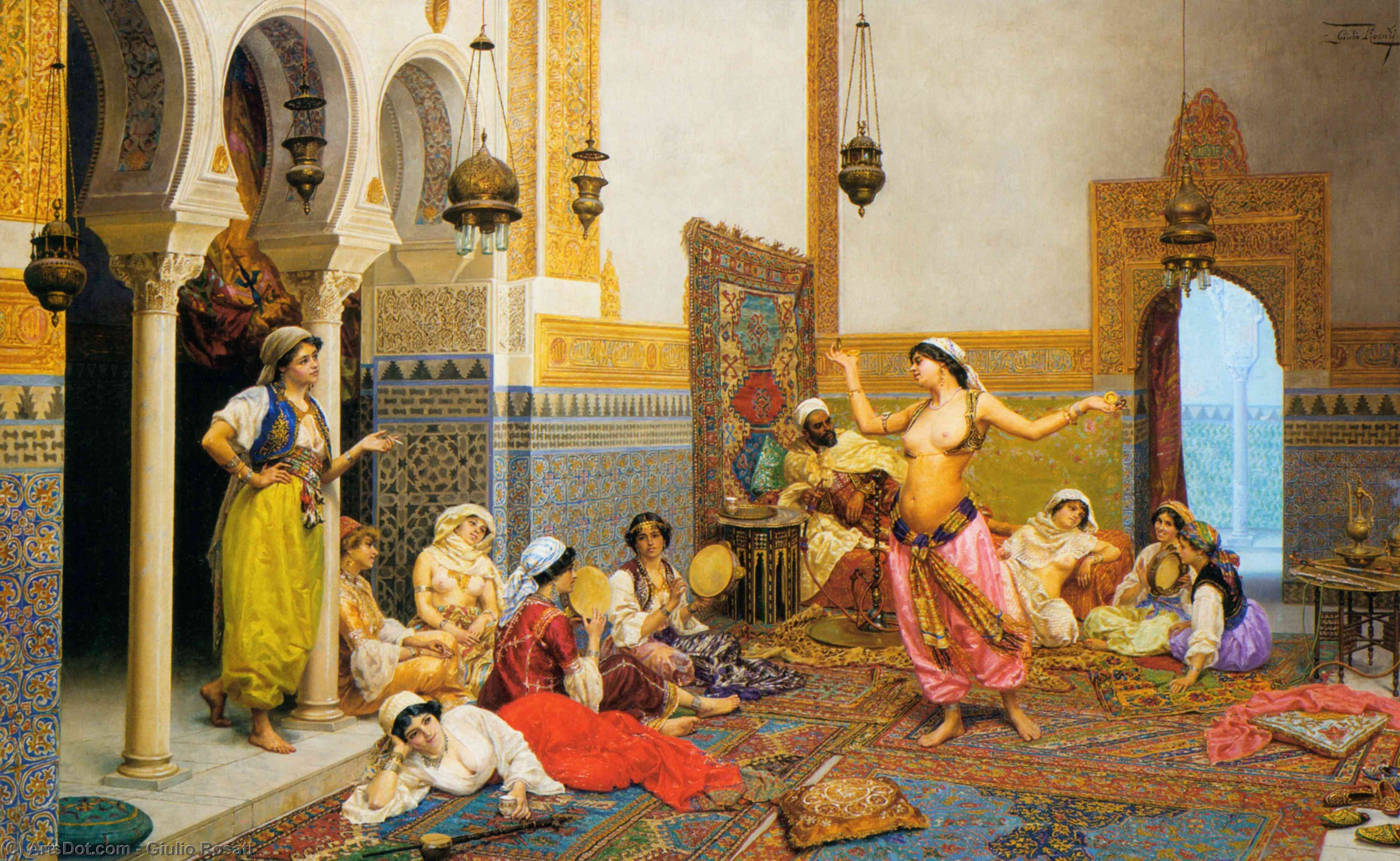
Rosati’s technical mastery was most profoundly expressed through his use of watercolor, though he frequently ventured into the richer, more substantial medium of oil. His work is characterized by an extraordinary attention to texture—the heavy drape of an embroidered silk, the coarse grain of a desert traveler's cloak, or the intricate patterns of a woven carpet. He did not merely paint scenes; he constructed atmospheres. His palette was inherently warm, pulsating with the sun-drenched hues of North African landscapes, designed to evoke the shimmering heat of the dunes and the golden light of a Mediterranean afternoon.
In his compositions, one finds a sophisticated balance between narrative and stillness. Whether depicting the bustling social interactions in The Chess Players or the quiet luxury found in In The Harem, Rosati maintained a sense of dignity and nobility. His artistic vision was notably distinct from the more sensationalist tropes of the time; rather than focusing on the exotic as something purely "other," he championed the sophistication and cultural depth inherent within Muslim society. This nuanced perspective allowed his work to transcend mere illustration, elevating it to a form of respectful, atmospheric realism that captured the soul of a culture through the lens of academic excellence.
Legacy and Historical Significance
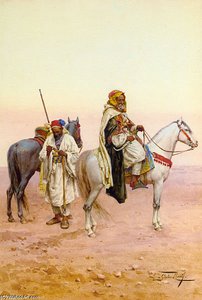
The historical significance of Giulio Rosati lies in his ability to sustain the prestige of the Orientalist genre during a period of rapid global change. As the 19th century drew to a close, his works served as vital windows into a perceived world of timeless tradition. His paintings were not merely decorative; they were cultural artifacts that reflected the late-century fascination with the Maghreb and the broader Middle East. By focusing on the dignity of his subjects—from the nomadic Nomades Du Desert to the aristocratic figures within his interior scenes—he contributed to a more nuanced, albeit idealized, European understanding of Eastern life.
Today, Rosati’s legacy is preserved through his prolific body of work, which continues to captivate collectors and art historians alike. His ability to synthesize academic rigor with an emotive, color-driven storytelling technique ensures that his paintings remain vibrant and relevant. He remains a testament to the power of the artist's imagination—a painter who proved that one does not need to traverse the globe to capture its most enchanting truths, provided one possesses the vision to see them within the heart.