Portrait of John Frederick Lewis

The 100 Most Famous John Frederick Lewis Paintings, a Gallery Selection

Updated November 2026 · ranked by our popularity score (searches, visits and orders for each work) · 263 works by John Frederick Lewis in our catalogue

In short

Of all the originals John Frederick Lewis left, the most famous is Interior of the Residence of the Pasha, New Orsova (1838). Close behind it come Lilium Auratum (1871) and John Clark with the Animals at Sandpit Gate (1825). Our catalog holds 263 works by John Frederick Lewis; the gallery has kept the 100 the world admires most, each shown with its date, its museum and its story.

1805 – 1876, London Orientalism Most works: Yale Center for British Art

John Frederick Lewis's top 10 paintings: the gallery's choice

1
Interior of the Residence of the Pasha, New Orsova (1838) by John Frederick Lewis

Interior of the Residence of the Pasha, New Orsova

1838 · Lithograph

Interior of the Residence of the Pasha, New Orsova is a work by John Frederick Lewis, executed in 1838. This piece belongs to the Orientalism style, reflecting the artist's engagement with the domestic and architectural realities of the Ottoman-influenced regions he encountered during his travels.

2
Lilium Auratum (1871) by John Frederick Lewis

Lilium Auratum

1871 · Oil On Canvas · Birmingham Museums And Art Gallery, Birmingham

John Frederick Lewis's "Lilium Auratum," painted in 1871, is more than just a depiction of two women amidst a profusion of flowers; it’s a meticulously crafted window into the opulent sensibilities and burgeoning Orientalist movement of Victorian England. This captivating work, housed within the broader context of Lewis’s extensive travels through the Mediterranean and North Africa, offers a rare glimpse into a world of leisure, beauty, and carefully constructed narratives.…

3
John Clark with the Animals at Sandpit Gate (1825) by John Frederick Lewis

John Clark with the Animals at Sandpit Gate

1825 · Oil On Canvas · Royal Collection, London

In the lush, verdant expanse of Windsor Great Park, specifically at the historic Sandpit Gate, John Frederick Lewis captures a moment that transcends mere landscape painting to become a profound tableau of 19-century British life. Completed around 1825, John Clark with the Animals at Sandpit Gate is much more than a portrait of a man; it is an exquisite celebration of the harmonious, albeit curated, relationship between humanity and the…

4
A Gondolier, Venice (1835) by John Frederick Lewis

A Gondolier, Venice

1835 · Oil On Canvas

In A Gondolier, Venice by John Frederick Lewis, the viewer is placed at eye level, standing upon a quay as if sharing a quiet moment of repose. The composition is vertically oriented, drawing the eye upward from the immediate foreground toward the historic architecture of the city. A man stands prominently in the foreground, positioned slightly off-center to the right, his presence grounding the scene. At his feet, a resting…

5
Return of the Sultan Mahmoud from the Mosque (1838) by John Frederick Lewis

Return of the Sultan Mahmoud from the Mosque

1838 · Engraving

The engraving titled Return of the Sultan Mahmoud from the Mosque was created by the artist John Frederick Lewis. This work is a monochromatic print produced through the technique of incising lines into a metal plate, such as copper or steel, to create the final image on paper. The piece dates to about 1838.

6
Sketches of a trip to Spain: Capilla de Villaviciosa (1836) by John Frederick Lewis

Sketches of a trip to Spain: Capilla de Villaviciosa

1836 · Engraving

This monochromatic engraving, titled Sketches of a trip to Spain: Capilla de Villaviciosa, offers a quiet glimpse into the architectural history of Spain. Created by the English artist John Frederick Lewis, the work dates to 1836. It emerged from a period when Lewis was deeply engaged with the Mediterranean, specifically during his travels through Spain and Morocco between 1832 and 1834.

7
Bulgarian Village (1838) by John Frederick Lewis

Bulgarian Village

1838 · Graphite

The scene unfolds within the quietude of a Bulgarian village, a moment captured by the artist John Frederick Lewis in 1838. This work presents a detailed view of a rural settlement, where the architecture of the period takes center stage. A traditional building with a distinctive overhanging roof dominates the view, anchoring the composition amidst a landscape of rolling hills. The atmosphere feels still, as if the viewer has stumbled…

8
the Port of Constantinople (1838) by John Frederick Lewis

the Port of Constantinople

1838 · Ink On Paper

The Port of Constantinople is a work by the English Orientalist painter John Frederick Lewis, dating to about 1838. Born in London, United Kingdom, Lewis developed a specialized focus on Mediterranean and Oriental scenes, often capturing the architectural and maritime life of the Ottoman Empire. This particular piece reflects his interest in the topographical details of the region during his travels.

9
Sweet Waters (in Asia) (1838) by John Frederick Lewis

Sweet Waters (in Asia)

1838 · Charcoal

In Sweet Waters (in Asia), John Frederick Lewis organizes a quiet, observational landscape that draws the eye through a series of layered planes. The central focus is an ornate pavilion, positioned slightly off-center to create a natural, unforced balance. To the left, a body of water occupies a significant portion of the frame, its surface broken only by the presence of a small boat. This aquatic element provides a sense…

10
Turkish Female (1838) by John Frederick Lewis

Turkish Female

1838 · Charcoal

is a work by the English artist John Frederick Lewis. Created about 1838, this piece reflects the artist's engagement with the Mediterranean and Ottoman worlds during a period of significant travel and stylistic development.

The John Frederick Lewis selection continues, 11 to 100

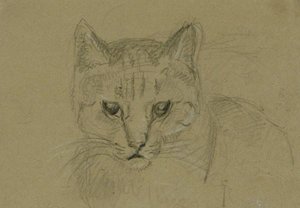
11A Café on the Bosphorus (1838) by John Frederick LewisA Café on the Bosphorus1838 12New Orsova; Exterior of the Pasha'a Residence (1838) by John Frederick LewisNew Orsova; Exterior of the Pasha'a Residence1838 13Yeni Jami, (or Mosque of the New Tomb) (1838) by John Frederick LewisYeni Jami, (or Mosque of the New Tomb)1838 14Tophana (1838) by John Frederick LewisTophana1838 15Asking for Alms (1833) by John Frederick LewisAsking for Alms1833 16Portrait of John Ponsonby, 1st Viscount Ponsonby (1841) by John Frederick LewisPortrait of John Ponsonby, 1st Viscount Ponsonby1841 17Easter Day at Rome (1840) by John Frederick LewisEaster Day at Rome1840 18Sheik Hussein of Gebel Tor and His Son (1843) by John Frederick LewisSheik Hussein of Gebel Tor and His Son1843 · Yale Center for British Art 19The Pipe Bearer (1856) by John Frederick LewisThe Pipe Bearer1856 · Birmingham Museum and Art Gallery 20A Syrian Sheik, Egypt (1856) by John Frederick LewisA Syrian Sheik, Egypt1856 · Fitzwilliam Museum 21The Doubtful Coin (1869) by John Frederick LewisThe Doubtful Coin1869 · Birmingham Museum and Art Gallery 22The Harem (1876) by John Frederick LewisThe Harem1876 · Birmingham Museum and Art Gallery 23On the Banks of the Nile, Upper Egypt (1876) by John Frederick LewisOn the Banks of the Nile, Upper Egypt1876 · Yale Center for British Art 24Arabian Nights (1876) by John Frederick LewisArabian Nights1876 25Seated Turk (1841) by John Frederick LewisSeated Turk1841 · Yale Center for British Art 26Arab School (1851) by John Frederick LewisArab School1851 · Metropolitan Museum of Art 27Study of a Lion and Study of a Lioness' Head (1820) by John Frederick LewisStudy of a Lion and Study of a Lioness' Head1820 · Yale Center for British Art 28The Courtyard of the Coptic Patriarch's House in Cairo (1864) by John Frederick LewisThe Courtyard of the Coptic Patriarch's House in Cairo1864 · Tate Britain 29Girl with Two Caged Doves by John Frederick LewisGirl with Two Caged Doves 30Highland Hospitality by John Frederick LewisHighland Hospitality 31A Head Keeper, Windsor Castle (1826) by John Frederick LewisA Head Keeper, Windsor Castle1826 · Yale Center for British Art 32The Bazaar of the Ghûriyah from the Steps of the Mosque of El-Ghûri, Cairo by John Frederick LewisThe Bazaar of the Ghûriyah from the Steps of the Mosque of El-Ghûri, Cairo 33A Street Scene in Granada on the Day of the Bullfight (1833) by John Frederick LewisA Street Scene in Granada on the Day of the Bullfight1833 · Yale Center for British Art 34A View Of The Street And Morque Of Ghorreyah, Cairo by John Frederick LewisA View Of The Street And Morque Of Ghorreyah, Cairo 35The Siesta by John Frederick LewisThe Siesta 36Head of a cow by John Frederick LewisHead of a cow 37The Ramesseum at Thebes (1851) by John Frederick LewisThe Ramesseum at Thebes1851 · Yale Center for British Art 38?A Sketch for `Foresters Stalking Deer' (1824) by John Frederick Lewis?A Sketch for `Foresters Stalking Deer'1824 · Yale Center for British Art 39The Head of a Tigress (felis Tigris). Etching with Engraving (1825) by John Frederick LewisThe Head of a Tigress (felis Tigris). Etching with Engraving1825 40Saint Sophia and Distant View of Sultan Achmet (mosques) (1838) by John Frederick LewisSaint Sophia and Distant View of Sultan Achmet (mosques)1838 41A Turkish Araba Drawn by Two White Oxen (1841) by John Frederick LewisA Turkish Araba Drawn by Two White Oxen1841 · Yale Center for British Art 42Seraglio Point (1838) by John Frederick LewisSeraglio Point1838 43Artillery Barracks, Tophana (1838) by John Frederick LewisArtillery Barracks, Tophana1838 44An Interior (1834) by John Frederick LewisAn Interior1834 45Four Women in ann Interior, Brussa, Turkey (1841) by John Frederick LewisFour Women in ann Interior, Brussa, Turkey1841 46The Harem Introduction of an Abyssinian slave (1860) by John Frederick LewisThe Harem Introduction of an Abyssinian slave1860 47An Intercepted Correspondence (1869) by John Frederick LewisAn Intercepted Correspondence1869 48Interior of An Eastern House (1851) by John Frederick LewisInterior of An Eastern House1851 · Yale Center for British Art 49Study for the Proclamation of Don Carlos (1838) by John Frederick LewisStudy for the Proclamation of Don Carlos1838 · Yale Center for British Art 50A hunting scene by John Frederick LewisA hunting scene 51Self-portrait sketch 1 by John Frederick LewisSelf-portrait sketch 1 52Portrait sketch of Mrs Birch by John Frederick LewisPortrait sketch of Mrs Birch 53Face of a lion by John Frederick LewisFace of a lion 54Self-portrait of the artist as a boy by John Frederick LewisSelf-portrait of the artist as a boy 55Head of a lioness 1 by John Frederick LewisHead of a lioness 1 56Sleeping Lion 1 by John Frederick LewisSleeping Lion 1 57Head of a man in profile by John Frederick LewisHead of a man in profile 58A hunting scene in winter by John Frederick LewisA hunting scene in winter 59Portrait sketch of Edwin Landseer by John Frederick LewisPortrait sketch of Edwin Landseer 60Portrait drawing of the artist's grandmother by John Frederick LewisPortrait drawing of the artist's grandmother 61J.F. Lewis by himself on the Rhine by John Frederick LewisJ.F. Lewis by himself on the Rhine 62Earl Grey and his daughter Lady Elizabeth Bulteel by John Frederick LewisEarl Grey and his daughter Lady Elizabeth Bulteel 63A group of three figures, one kneeling, possibly before a shrine by John Frederick LewisA group of three figures, one kneeling, possibly before a shrine 64A sleeping child by John Frederick LewisA sleeping child 65A huntsman with dead deer by John Frederick LewisA huntsman with dead deer 66Head and shoulders of a young woman by John Frederick LewisHead and shoulders of a young woman 67Sheet of rough sketches including a caricature of a monk's head by John Frederick LewisSheet of rough sketches including a caricature of a monk's head 68A woman seated in a rustic interior by John Frederick LewisA woman seated in a rustic interior 69A farm horse by John Frederick LewisA farm horse 70Puma and pug at Exeter Change by John Frederick LewisPuma and pug at Exeter Change 71Scutari by John Frederick LewisScutari 72Portrait sketch of Charles George Lewis by John Frederick LewisPortrait sketch of Charles George Lewis 73A sleeping lion by John Frederick LewisA sleeping lion 74A lion at the 'Old Exeter Change' by John Frederick LewisA lion at the 'Old Exeter Change' 75Sleeping Lion by John Frederick LewisSleeping Lion 76A lioness at the Old Exeter Change by John Frederick LewisA lioness at the Old Exeter Change 77Great Mosque at Brusa by John Frederick LewisGreat Mosque at Brusa 78A man and a boy in rustic dress by John Frederick LewisA man and a boy in rustic dress 79A lioness by John Frederick LewisA lioness 80Sleeping Lion and Lioness by John Frederick LewisSleeping Lion and Lioness 81A man sawing timber by John Frederick LewisA man sawing timber 82The Leaning Tower of Saragoza by John Frederick LewisThe Leaning Tower of Saragoza 83J. F. Lewis by himself by John Frederick LewisJ. F. Lewis by himself 84A young girl by John Frederick LewisA young girl 85Contrabandistas (1836) by John Frederick LewisContrabandistas1836 · British Museum 86At Uncle Charles the Binder by John Frederick LewisAt Uncle Charles the Binder 87Windsor Castle by John Frederick LewisWindsor Castle 88Fountain from the Gate of the Seraglio by John Frederick LewisFountain from the Gate of the Seraglio 89Mule and Muleteer by John Frederick LewisMule and Muleteer 90Head of a lion 1 by John Frederick LewisHead of a lion 1 91Cannon Foundry, Tophane by John Frederick LewisCannon Foundry, Tophane 92Head of a cat by John Frederick LewisHead of a cat 93The Coffee Bearer by John Frederick LewisThe Coffee BearerManchester Art Gallery 94Farm workers resting by John Frederick LewisFarm workers resting 95The entrance to the Great Mosque at Bursa, Turkey by John Frederick LewisThe entrance to the Great Mosque at Bursa, Turkey 96Portrait by John Frederick LewisPortrait 97Brusa by John Frederick LewisBrusa 98Study of three Turks at Bursa by John Frederick LewisStudy of three Turks at Bursa 99Arab School by John Frederick LewisArab School 100A Halt in the Desert by John Frederick LewisA Halt in the Desert

John Frederick Lewis's famous paintings, period by period

The subjects that held John Frederick Lewis's eye

The four subjects that come back most often in these originals, each with its finest example.

The museums that keep John Frederick Lewis's originals

The 8 museums that hold the most of the paintings on this page.

Museum City Works by John Frederick Lewis Paintings from this list
Yale Center for British Art, New HavenYale Center for British Art New Haven 28 Sheik Hussein of Gebel Tor and His Son, On the Banks of the Nile, Upper Egypt, Seated Turk
Birmingham Museum and Art Gallery, BirminghamBirmingham Museum and Art Gallery Birmingham 4 The Pipe Bearer, The Doubtful Coin, The Harem
Metropolitan Museum of Art, New YorkMetropolitan Museum of Art New York 3 Arab School
Tate Britain, LondonTate Britain London 2 The Courtyard of the Coptic Patriarch's House in Cairo
British Museum, LondonBritish Museum London 2 Contrabandistas
Birmingham Museums And Art Gallery, BirminghamBirmingham Museums And Art Gallery Birmingham 1 Lilium Auratum
Royal Collection, LondonRoyal Collection London 1 John Clark with the Animals at Sandpit Gate
Fitzwilliam MuseumFitzwilliam Museum 1 A Syrian Sheik, Egypt

John Frederick Lewis decade by decade: the original that defines each

Works per decade

Pick a decade to see the original that defines it.

Collectors' questions about John Frederick Lewis's paintings

Which work is John Frederick Lewis most famous for?Reveal the answer

Interior of the Residence of the Pasha, New Orsova (1838). Lilium Auratum (1871) and John Clark with the Animals at Sandpit Gate (1825) come next.

What age was John Frederick Lewis when Interior of the Residence of the Pasha, New Orsova was made?Reveal the answer

33 years old: Interior of the Residence of the Pasha, New Orsova dates from 1838, and John Frederick Lewis was born in 1805.

What are the ten most famous John Frederick Lewis paintings?Reveal the answer

Interior of the Residence of the Pasha, New Orsova, Lilium Auratum, John Clark with the Animals at Sandpit Gate, A Gondolier, Venice, Return of the Sultan Mahmoud from the Mosque, Sketches of a trip to Spain: Capilla de Villaviciosa, Bulgarian Village, the Port of Constantinople, Sweet Waters (in Asia) and Turkish Female. The ranking above gives each one's year and museum.

How many paintings did John Frederick Lewis leave?Reveal the answer

Our catalog holds 263 works by John Frederick Lewis, dated from 1820 to 1876.

In which museums do John Frederick Lewis's masterpieces hang?Reveal the answer

Mostly in Yale Center for British Art (New Haven), Birmingham Museum and Art Gallery (Birmingham) and Metropolitan Museum of Art (New York). The museum table above lists them all.

In which years did John Frederick Lewis paint the most famous works?Reveal the answer

In 1830s: 20 of the 100 works on this page were made then, Interior of the Residence of the Pasha, New Orsova among them.

What are the first and the last famous originals of John Frederick Lewis?Reveal the answer

On this page, the earliest is Study of a Lion and Study of a Lioness' Head (1820) and the latest The Harem (1876).

Which subjects did John Frederick Lewis choose most often?Reveal the answer

Animals (11), Figures (8) and Buildings (8), across the 100 works on this page.

Which technique did John Frederick Lewis use most?Reveal the answer

Watercolor, for 10 of the 100 works on this page.

To which art movement does John Frederick Lewis belong?Reveal the answer

Orientalism, judging by the originals on this page.

Which John Frederick Lewis works hang at the Yale Center for British Art?Reveal the answer

Sheik Hussein of Gebel Tor and His Son, On the Banks of the Nile, Upper Egypt and Seated Turk: the Yale Center for British Art, New Haven holds 11 of the works on this page.

John Frederick Lewis: life and work

John Frederick Lewis: A Life in Orientalist Painting

Early Life and Training

John Frederick Lewis, a prominent English Orientalist painter, was born on July 14, 1804, in London. He was the son of Frederick Christian Lewis, an engraver and landscape painter. This familial artistic background undoubtedly influenced his early development. His formal training began under the tutelage of Sir Thomas Lawrence, where he honed his skills alongside fellow artists like Edwin Landseer. This foundational period instilled in him a strong understanding of technique and composition.

Artistic Career & Development

Lewis’s artistic career unfolded through several distinct phases, each marked by evolving styles and thematic focuses:

  • Orientalist Period: Lewis embarked on extensive travels throughout the Mediterranean region, meticulously capturing its essence in detailed watercolor and oil paintings. He frequently revisited compositions, rendering them across multiple mediums.
  • Spanish & Moroccan Influences (1832-1834): A tour of Spain and Morocco proved pivotal. He produced numerous lithographs later published as “Sketches and Drawings of the Alhambra” (1835) and “Lewis’s Sketches of Spain and Spanish Character” (1836).
  • Egyptian Period (1841-1851): His sojourn in Cairo was arguably his most productive. Here, he perfected his Orientalist style, creating highly detailed works showcasing both realistic genre scenes and idealized depictions of upper-class Egyptian interiors.

Notable Works

Lewis created a substantial body of work celebrated for its meticulous detail and evocative atmosphere. Some of his most recognized pieces include:

Influences and Artistic Style

Lewis’s style was shaped by several influences, most notably Sir Thomas Lawrence's emphasis on portraiture and composition. However, his direct observation of Middle Eastern cultures allowed him to develop a unique aesthetic characterized by:

  • Meticulous Detail: A commitment to accurately representing textures, patterns, and architectural elements.
  • Rich Color Palette: Employing vibrant hues inspired by the landscapes and costumes he encountered.
  • Genre Scenes & Interior Views: Focusing on everyday life and intimate domestic settings.

Legacy and Historical Significance

Lewis’s contribution to the art world lies in his significant role in developing Orientalist painting. His meticulous representations of Islamic architecture, furnishings, and costumes set new standards for realism within the genre. He helped popularize a romanticized yet detailed vision of the Middle East among Western audiences. After returning to England in 1851, he continued to paint until his death on August 15, 1876, in Walton-on-Thames.

His work continues to be studied and admired for its artistic merit and historical insight into 19th-century perceptions of the Orient.