Portrait of Francis Frith

The 51 Most Famous Francis Frith Paintings, Each One of a Kind

Updated November 2026 · ranked by our popularity score (searches, visits and orders for each work) · 51 works by Francis Frith in our catalogue

In short

The Great Pyramid and the Sphinx (1858) is the Francis Frith painting that draws the most eyes; the original belongs to the J. Paul Getty Museum, Los Angeles. After it, the eye goes to The Pyramids of Giza from the Southwest (1858) and Warwick Castle (1860). Among the 51 works of Francis Frith in our catalog, these 51 are the most famous, each a unique original presented with its year, its museum and the reason it endures.

1822 – 1898 Orientalism Most works: J. Paul Getty Museum

Top 10 paintings by Francis Frith, through the gallery's eye

1
The Great Pyramid and the Sphinx (1858) by Francis Frith

The Great Pyramid and the Sphinx

1858 · Black and White Photography · J. Paul Getty Museum, Los Angeles

In this breathtaking monochrome masterpiece from 1858, Francis Frith invites us to step back into a world where the sands of time seemed to hold their breath. The Great Pyramid and the Sphinx is more than a mere photographic record; it is a profound encounter with the eternal. At the heart of the composition stands the Great Pyramid, a colossal testament to human ambition, towering over a landscape that feels…

2
The Pyramids of Giza from the Southwest (1858) by Francis Frith

The Pyramids of Giza from the Southwest

1858 · Black and White Photography · J. Paul Getty Museum, Los Angeles

The Pyramids of Giza from the Southwest is a photographic work by Francis Frith. Executed in 1858, the image captures the pyramids in Giza, Egypt. The scene presents these massive structures against the backdrop of an arid desert landscape. Light and shadow define the edges of the stone.

3
Warwick Castle (1860) by Francis Frith

Warwick Castle

1860 · Black and White Photography

This black and white photograph, titled Warwick Castle, was captured by Francis Frith in 1860. The image provides a quiet glimpse into the mid-nineteenth century, documenting the structure and its immediate surroundings. It is a study of stone and water, presented through the early photographic lens of a man who spent much of his career documenting the landscapes of Great Britain and the Middle East.

4
Entrance of the Church of the Holy Sepulchre, Jerusalem (Plate 17) (1858) by Francis Frith

Entrance of the Church of the Holy Sepulchre, Jerusalem (Plate 17)

1858 · Black and White Photography

We are looking at Entrance of the Church of the Holy Sepulchre, Jerusalem (Plate 17), a significant photographic work produced in 1858. This piece was captured by Francis Frith, an English photographer who became a central figure in documenting the landscapes and architecture of the Orient during the mid-nineteenth century. His presence in the region during this period allowed him to record sites that were often difficult for Western observers…

5
Mount Hermon (1855) by Francis Frith

Mount Hermon

1855 · Black and White Photography

This black and white photograph captures a landscape painting of Mount Hermon, created by Francis Frith in 1855. The subject matter focuses on the natural features of the mountainous region, emphasizing the scale and physical presence of the terrain. The scene presents a panoramic view where snow-capped peaks dominate the background, rising above a rugged foreground of rocky terrain. This arrangement establishes a sense of depth between the immediate stony…

6
El Khusne, The Rock Temple, Petra ( 547) (1860) by Francis Frith

El Khusne, The Rock Temple, Petra ( 547)

1860 · Black and White Photography

In this work, titled El Khusne, The Rock Temple, Petra ( 547), the artist Francis Frith presents a detailed view of one of the most significant structures within the ancient Nabatean city of Petra, Jordan. The subject is a rock-cut tomb, meticulously carved directly into a sandstone rock face. Known also as Al-Khazneh or the Treasury, this architectural marvel was constructed as a mausoleum and crypt during the beginning of…

7
The Second Pyramid from the Southeast (1858) by Francis Frith

The Second Pyramid from the Southeast

1858 · Photography · J. Paul Getty Museum, Los Angeles

The Second Pyramid from the Southeast is a photographic work by Francis Frith. The image captures the Great Pyramid of Giza in Egypt. This structure rises from a vast desert landscape in Giza, Giza Governorate, Egypt. The scene is fixed in a moment of stillness, where the stone meets the sand.

Francis Frith's famous paintings, numbers 11 to 51

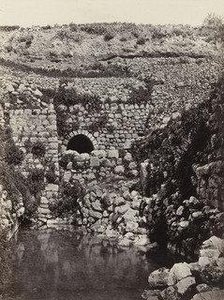
11Rephidim, Wilderness of Paran (Wadyfeiran) (1860) by Francis FrithRephidim, Wilderness of Paran (Wadyfeiran)1860 12Melrose Abbey (1860) by Francis FrithMelrose Abbey1860 13Jerusalem from The Mount of Olives (Plate 16) (1858) by Francis FrithJerusalem from The Mount of Olives (Plate 16)1858 14Rydal Water from Loughrigg Terrace (1860) by Francis FrithRydal Water from Loughrigg Terrace1860 15Shechem (Nablous), Between Ebel and Gerizim ( 590) (1860) by Francis FrithShechem (Nablous), Between Ebel and Gerizim ( 590)1860 16Grasmere (1860) by Francis FrithGrasmere1860 17Dryburgh Abbey (1860) by Francis FrithDryburgh Abbey1860 18The Parthenon, Athens, from the East ( 623) (1860) by Francis FrithThe Parthenon, Athens, from the East ( 623)1860 19Nazareth, from the East, with the Well of the Virgin ( 595) (1860) by Francis FrithNazareth, from the East, with the Well of the Virgin ( 595)1860 · Staatsgalerie Stuttgart 20Fountains Abbey (1860) by Francis FrithFountains Abbey1860 21Furness Abbey Hotel (1860) by Francis FrithFurness Abbey Hotel1860 22Site of Petra, The Rock City of Edom ( 549) (1860) by Francis FrithSite of Petra, The Rock City of Edom ( 549)1860 23Alum Bay, Isle of Wight (1860) by Francis FrithAlum Bay, Isle of Wight1860 24Idburg Abbey, Interior (1860) by Francis FrithIdburg Abbey, Interior1860 25The Broken Obelisk, Karnac from the album Egypt and Palestine (1857) by Francis FrithThe Broken Obelisk, Karnac from the album Egypt and Palestine1857 26The Pool of Siloam, Jerusalem ( 578) (1860) by Francis FrithThe Pool of Siloam, Jerusalem ( 578)1860 27Gloucester Cathedral (1860) by Francis FrithGloucester Cathedral1860 28The Temple of the Winds, Athens ( 631) (1860) by Francis FrithThe Temple of the Winds, Athens ( 631)1860 29Windermere, from Low Wood Inn (1860) by Francis FrithWindermere, from Low Wood Inn1860 30Waterfall on the Abana, Near Damascus ( 609) (1860) by Francis FrithWaterfall on the Abana, Near Damascus ( 609)1860 31The Valley of Jehoshaphat, Jerusalem (Plate 14) (1858) by Francis FrithThe Valley of Jehoshaphat, Jerusalem (Plate 14)1858 32Shanklinshire, Isle of Wight (1860) by Francis FrithShanklinshire, Isle of Wight1860 · National Museum of Fine Arts 33Kelso Abbey (1860) by Francis FrithKelso Abbey1860 34Tintern Abbey (1860) by Francis FrithTintern Abbey1860 35Encampment in the Wilderness of Paran ( 529) (1860) by Francis FrithEncampment in the Wilderness of Paran ( 529)1860 36Canterbury Cathedral (1860) by Francis FrithCanterbury Cathedral1860 37York Minster, Westfront (1860) by Francis FrithYork Minster, Westfront1860 38Lincoln Cathedral (1860) by Francis FrithLincoln Cathedral1860 39Dryburgh Abbey, Sir Walter Scott's Tomb (1860) by Francis FrithDryburgh Abbey, Sir Walter Scott's Tomb1860 40Windsor Castle, The Approach (1860) by Francis FrithWindsor Castle, The Approach1860 41View at Fountains Abbey (1860) by Francis FrithView at Fountains Abbey1860 42The Golden Gate, Jerusalem ( 587) (1860) by Francis FrithThe Golden Gate, Jerusalem ( 587)1860 43Melrose Abbey, Interior (1860) by Francis FrithMelrose Abbey, Interior1860 44Cedars of Lebanon ( 615) (1860) by Francis FrithCedars of Lebanon ( 615)1860 45The Sphinx and Great Pyramid, Gezah (1858) by Francis FrithThe Sphinx and Great Pyramid, Gezah1858 46Hebron and the Plain of Mamre, with Mosque Covering the Cave of Machpelah ( 559) (1860) by Francis FrithHebron and the Plain of Mamre, with Mosque Covering the Cave of Machpelah ( 559)1860 47Shakespeare's House, Stratford On Avon (1860) by Francis FrithShakespeare's House, Stratford On Avon1860 · Bavarian State Painting Collections 48No. 1 Locomotive and Tender, Darlington Railway Station (1860) by Francis FrithNo. 1 Locomotive and Tender, Darlington Railway Station1860 49Carved horses in the Sheshagirirayar Mandapa at the Ranganatha temple of Srirangam (1874) by Francis FrithCarved horses in the Sheshagirirayar Mandapa at the Ranganatha temple of Srirangam1874 · Museum of Art - Photography 50Untitled (1892) by Francis FrithUntitled1892 51Photo by Francis Frith of the Temple of Khonsu at Karnak (1859) by Francis FrithPhoto by Francis Frith of the Temple of Khonsu at Karnak1859 · Institute for the Study of Ancient Cultures Museum

The subjects that held Francis Frith's eye

The four subjects that come back most often in these originals, each with its finest example.

The museums that keep Francis Frith's originals

The 6 museums that hold the most of the paintings on this page.

Museum City Works by Francis Frith Paintings from this list
J. Paul Getty Museum, Los AngelesJ. Paul Getty Museum Los Angeles 3 The Great Pyramid and the Sphinx, The Pyramids of Giza from the Southwest, The Second Pyramid from the Southeast
Staatsgalerie Stuttgart, StuttgartStaatsgalerie Stuttgart Stuttgart 1 Nazareth, from the East, with the Well of the Virgin ( 595)
National Museum of Fine Arts, Buenos AiresNational Museum of Fine Arts Buenos Aires 1 Shanklinshire, Isle of Wight
Bavarian State Painting Collections, MunichBavarian State Painting Collections Munich 1 Shakespeare's House, Stratford On Avon
Museum of Art - Photography, BengaluruMuseum of Art - Photography Bengaluru 1 Carved horses in the Sheshagirirayar Mandapa at the Ranganatha temple of Srirangam
Institute for the Study of Ancient Cultures Museum, ChicagoInstitute for the Study of Ancient Cultures Museum Chicago 1 Photo by Francis Frith of the Temple of Khonsu at Karnak

Francis Frith across the decades: one unique original for each

Works per decade

Pick a decade to see the original that defines it.

Francis Frith's paintings: questions for the gallery

What is the single most famous work of Francis Frith?Reveal the answer

The Great Pyramid and the Sphinx (1858), J. Paul Getty Museum, Los Angeles. The Pyramids of Giza from the Southwest (1858) and Warwick Castle (1860) come next.

At what age did Francis Frith create The Great Pyramid and the Sphinx?Reveal the answer

36 years old: The Great Pyramid and the Sphinx dates from 1858, and Francis Frith was born in 1822.

Which ten paintings by Francis Frith are the most famous?Reveal the answer

The Great Pyramid and the Sphinx, The Pyramids of Giza from the Southwest, Warwick Castle, Entrance of the Church of the Holy Sepulchre, Jerusalem (Plate 17), Mount Hermon, El Khusne, The Rock Temple, Petra ( 547), The Second Pyramid from the Southeast, The Acropolis, Distant View of Mont Serbal and Bonchurch, Isle of Wight. The ranking above gives each one's year and museum.

How many works by Francis Frith are known?Reveal the answer

Our catalog holds 51 works by Francis Frith, dated from 1839 to 1892.

Where can the most famous Francis Frith originals be seen?Reveal the answer

Mostly in J. Paul Getty Museum (Los Angeles), Staatsgalerie Stuttgart (Stuttgart) and National Museum of Fine Arts (Buenos Aires). The museum table above lists them all.

During which period did Francis Frith create the best-known paintings?Reveal the answer

In 1860s: 37 of the 51 works on this page were made then, Warwick Castle among them.

Which famous Francis Frith painting is the earliest, and which the latest?Reveal the answer

On this page, the earliest is The Acropolis (1839) and the latest Untitled (1892).

What subjects did Francis Frith favour?Reveal the answer

Architecture (4), Ancient egypt (3) and Photography (3), across the 51 works on this page.

What materials did Francis Frith paint with most?Reveal the answer

Black and White Photography, for 6 of the 51 works on this page.

Which movement does the work of Francis Frith belong to?Reveal the answer

Orientalism, judging by the originals on this page.

What Francis Frith originals can I see at the J. Paul Getty Museum?Reveal the answer

The Great Pyramid and the Sphinx, The Pyramids of Giza from the Southwest and The Second Pyramid from the Southeast: the J. Paul Getty Museum, Los Angeles holds 3 of the works on this page.

Francis Frith: a portrait of the artist

The Visionary of the Nile: The Life and Legacy of Francis Frith

In the mid-nineteenth century, as the Victorian era began to expand its horizons through exploration and industrial prowess, a new kind of artist emerged—one who used the lens rather than the brush to capture the sublime. Francis Frith, born in Chesterfield, Derbyshire, in 1822, was far more than a mere businessman or a pioneer of photography; he was a visual storyteller whose expeditions brought the ancient wonders of the Orient into the parlors of Europe. Though his early life was rooted in the practicalities of the Quaker tradition and even involved apprenticeships in the cutlery trade and success as a wholesale grocer, Frith possessed an innate curiosity that would eventually lead him to the sun-drenched landscapes of Egypt, Palestine, and Syria.

The transition from commerce to the arts was not merely a change in profession but a profound evolution of perspective. After establishing himself in the photographic studio scene in Liverpool during the early 1850s, Frith felt the pull of the distant unknown. His journeys between 1856 and 1860 were Herculean feats of both physical endurance and technical mastery. Carrying heavy glass plate cameras through blistering heat and swirling desert sands, he utilized the challenging collodion process to document monuments that had remained largely unseen by Western eyes. These were not simple snapshots; they were meticulously composed architectural studies that demanded immense patience, as each exposure required a portable wicker darkroom to prepare the wet plates in situ.

A Master of Light and Scale

What distinguishes Frith’s work from the mere documentation of his contemporaries is his profound sense of composition and scale. He did not simply photograph ruins; he orchestrated scenes that evoked the grandeur of classical painting. Influenced by the sweeping landscapes of masters like Turner and Constable, Frith understood how to use light and shadow to imbue stone and sand with a sense of eternal mystery. His large-format negatives, some measuring as much as 16 by 20 inches, allowed for an incredible level of detail that could transport a viewer from the grey streets of London directly to the towering pylons of Karnak or the silent majesty of Abu Simbel.

His technical achievements were matched by his entrepreneurial brilliance. Recognizing the immense public appetite for these exotic vistas, he established Francis Frith & Co. in 1860. This venture was revolutionary, aiming to document the very fabric of the British landscape alongside his Middle Eastern discoveries. The company grew into one of the largest photographic publishers in the world, amassing a staggering collection of negatives that covered thousands of population centers across Great Britain and Ireland. Through his publications, such as Egypt and Palestine Photographed and Described, Frith democratized the experience of travel, allowing the burgeoning middle class to participate in the era's fascination with Orientalism.

Historical Significance and Enduring Impact

The historical weight of Francis Frith’s contribution cannot be overstated. He was a foundational figure in the development of landscape photography as an art form, bridging the gap between scientific documentation and aesthetic expression. His work provided a vital visual record of archaeological sites that have since been altered by time, conflict, and environmental change, making his archive an invaluable resource for modern historians and archaeologists alike.

As we reflect on his life, several key elements of his legacy remain prominent:

  • Pioneering Exploration: His ability to navigate extreme climatic conditions to capture the first high-quality photographic records of ancient Near Eastern civilizations.
  • Technological Innovation: The masterful application of the wet-plate collodion process in environments previously thought impossible for such delicate work.
  • The Birth of Photographic Publishing: Creating a commercial model that turned photography from a niche hobby into a global industry of visual information and art.
  • Cultural Influence: Shaping the Victorian imagination and the Western perception of the Middle East through a lens of grandeur and romanticism.

Francis Frith passed away in 1898, leaving behind a world that had been forever changed by his vision. He remains a titan of the photographic medium, an artist who mastered the light of distant lands to illuminate the history of humanity.