


1of 18
Joseph Beuys 1921–1986
German Born in Krefeld Fluxus, Performance Art Wikipedia in 28/32 languages

He radically challenged conventional notions of creativity and authorship, emphasizing participation and social engagement.
Conceptual Art: original voices
Joseph Beuys (1921–1986) is the most famous Conceptual Art artist, whose singular vision gave us Lightning with Stag in Its Glare and Bathtub. Next stand Jeff Koons, Joseph Kosuth, Roman Opałka and Yoko Ono. These 18 artists, from León Ferrari (born 1920) to Michael Landy (born 1963), came from 11 countries.
Our selection. Artists whose works our catalogue attaches to Conceptual Art, in the order of our fame ranking. Artists born after 1955 with no Wikidata identifier stay out until verified. The Wikipedia figure counts our 32 languages with an article on the artist.
In brief
One artist at a time
1of 18
German Born in Krefeld Fluxus, Performance Art Wikipedia in 28/32 languages
He radically challenged conventional notions of creativity and authorship, emphasizing participation and social engagement.
2of 18
American Born in York Pop Art, Contemporary Sculpture Wikipedia in 26/32 languages

Conceptual Underpinnings: His emphasis on ideas and concepts aligns him with Conceptual art, challenging traditional notions of skill and craftsmanship.
3of 18
American-Hungarian Born in Toledo Conceptual art Wikipedia in 22/32 languages

He has also held professorships at esteemed institutions such as the Hochschule für Bildende Künste in Hamburg, Staatliche Akademie der Bildenden Künste Stuttgart, Kunstakademie Munich, and Istituto Universitario di Architettura di Venezia, nurturing generations of artists with his conceptual approach.
4of 18
Polish-French Born in Hocquinghen Conceptual Art Wikipedia in 16/32 languages

His life, marked by displacement and a profound engagement with philosophical inquiry, ultimately led him to create one of the most conceptually rigorous and emotionally resonant bodies of work in contemporary art. These early experiments were crucial stepping stones toward the conceptual clarity and sustained commitment that characterized OPALKA 1965/1 – ∞.
5of 18
Japanese Born in Tokyo Conceptual art, Fluxus Wikipedia in 31/32 languages

Her “instructional pieces,” most notably compiled in Grapefruit (1964), are perhaps her most iconic contribution to conceptual art. Installations like “ Liverpool Skyladders ” demonstrate her commitment to public art, creating monumental structures that interact with urban spaces and invite contemplation. She continues to create art and advocate for causes close to her heart: peace, environmental sustainability, and human rights.
6of 18
German-Italian Born in Celle Concrete Poetry, Text-based art

However, beginning in the 2010s, her contributions began to receive renewed attention, culminating in major retrospectives that toured institutions across Europe, including Culturgest in Lisbon, MAMCO in Geneva, and ICA Milan.
7of 18
American Born in Boston Contemporary sculpture

His focus on the Mediterranean region—a crossroads of civilizations and a site of ongoing conflict—provides a distinctive perspective within the broader context of contemporary art.
8of 18
Canadian Born in Tofino Street art, Conceptual art

Crucially, he established Pumps Centre for Alternative Art in Vancouver, a space that served as both a gallery and performance venue – a testament to his early commitment to challenging conventional artistic boundaries. This environment fostered experimentation and provided a platform for emerging artists, mirroring the ethos he would later embody through his public interventions. His work laid the groundwork for interventions by artists like Banksy and Shepard Fairey, demonstrating the potential of art to disrupt urban landscapes and engage with social commentary.
9of 18
Belgian Born in Saint-Gilles Conceptual Art Wikipedia in 10/32 languages

He didn’t offer easy answers or definitive statements; instead, he presented a complex and nuanced critique of the world around him, inviting viewers to engage in their own acts of interpretation. His exploration of language, institutions, and the very nature of artistic creation continues to inspire generations of artists seeking to dismantle conventions and redefine the boundaries of art. His early association with the Belgian Surrealists, particularly René Magritte, instilled in him a fascination with language, illusion, and the subversion of everyday reality.
10of 18
Japanese Born in Mikasa Installation art

Tadashi Kawamata, born in 1953 in the quiet mining town of Mikasa, Japan, is an artist whose work doesn’t simply occupy space—it interrogates it. His journey began with a formal education in painting at Tokyo University of the Arts, but quickly diverged as he found himself drawn to the possibilities inherent in installation art.
11of 18
American Born in Electric City Conceptual & Land Art

Key Movements: Conceptual Art, Land Art, Performance Art.
12of 18
American Born in Panama Canal Zone Conceptual & Pop Art Wikipedia in 10/32 languages

His work continues to be exhibited in major museums around the world, and his influence can be seen in countless contemporary artworks.
13of 18
Peruvian Born in Iquitos Conceptual Art, Media Art

Burga's early life in Iquitos likely influenced her later exploration of identity and social structures within Peruvian society. She began experimenting with various media, moving beyond traditional artistic boundaries to incorporate technology and conceptual frameworks into her practice. Her exploration of identity, feminism, and social structures within Peruvian society positions her as a significant contributor to Latin American feminist art.
14of 18
Canadian Recto/Verso Art

Born in Denver, Colorado, in 1931, Heinecken’s journey was one of profound movement and transformation, stretching from his early years in Iowa to his formative education at UCLA. In his Various Lunches series, he used light-sensitive materials to create direct impressions of food, turning organic matter into ghostly, sculptural forms.
15of 18
Italian Contemporary sculpture, installation art

Sinnwerke® project remains a compelling example of art’s potential to critique and subvert the systems that govern its own creation and reception.
16of 18
German Born in Berlin Conceptual art, public authorship

The Dada movement, with its embrace of irony, chance operations, and a critical stance towards established norms, served as an important precedent, informing Gerz’s own willingness to challenge conventional artistic practices. The influence of Max Ernst is also evident in Gerz's use of collage and assemblage techniques, creating layered compositions that invite multiple interpretations. Early in his career, he was drawn to the work of figures like Ezra Pound and Richard Aldington, exploring the possibilities of language as both a tool for expression and a site of disruption.
Signature works · The 100 signature works
17of 18
Argentine Born in Buenos Aires Conceptual Art Wikipedia in 6/32 languages
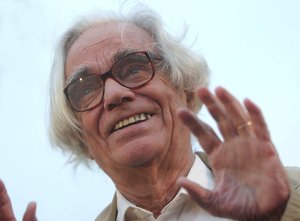
león david ferrari, an argentine contemporary conceptual artist, left an indelible mark on the art world with his provocative works that challenged the status quo. born in buenos aires, argentina on september 3, 1920, ferrari's life was a testament to the power of artistic expression as a form of dissent.
18of 18
Born in London Wikipedia in 3/32 languages

Landy’s work is deeply rooted in a critical examination of consumer culture, value systems, and societal norms. His practice often involves a meticulous deconstruction or destruction of objects to reveal underlying meanings and contradictions. Key influences include artists like Marcel Duchamp and his readymades, which challenged traditional notions of art creation.
Signature works · The 100 signature works
Signature works
A timeline
Figures
| Germany | 3 |
|---|---|
| United States | 2 |
| Japan | 2 |
| United States of America | 2 |
| France | 1 |
| Canada | 1 |
| Belgium | 1 |
| Panama | 1 |
| 1920s | 3 |
|---|---|
| 1930s | 6 |
| 1940s | 4 |
| 1950s | 3 |
| 1960s | 1 |
Every name
Joseph BeuysGerman · 1921–1986Jeff KoonsAmerican · born 1955Joseph KosuthAmerican-Hungarian · born 1945Roman OpałkaPolish-French · 1931–2011Yoko OnoJapanese · born 1933Irma BlankGerman-Italian · 1934–2023Douglas AbdellAmerican · born 1947Richard Art HambletonCanadian · 1952–2017Marcel BroodthaersBelgian · 1924–1976Tadashi KawamataJapanese · born 1953Dennis OppenheimAmerican · 1938–2011Richard PrinceAmerican · born 1949María Teresa Burga RuizPeruvian · 1935–2021Robert HeineckenCanadian · 1931–2006Alfio GiuffridaItalian · Jochen Christian GerzGerman · born 1940León FerrariArgentine · 1920–2013Michael Landyborn 1963Questions
First place goes to Joseph Beuys (#1); Jeff Koons (#2) and Joseph Kosuth (#3) complete the podium.
Joseph Beuys (#1), Jeff Koons (#2), Joseph Kosuth (#3), Roman Opałka (#4) and Yoko Ono (#5).
This list includes 3 women: Yoko Ono (#5), Irma Blank (#6) and María Teresa Burga Ruiz (#13).
The highest-ranked living artists in this list are Jeff Koons (#2), Joseph Kosuth (#3), Yoko Ono (#5), Douglas Abdell (#7), Tadashi Kawamata (#10) and Richard Prince (#12).
The museums holding the most key works of this list are Guggenheim Museum Bilbao (2), MOMA - Museum of Modern Art (2) and National Gallery of Armenia (1).
The earliest-born artist in this list is León Ferrari (#17), born in 1920.
Most artists in this list were born in the 1930s (6 of 18), between 1920 and 1963 overall.
Germany: 3 of the 18 artists in this list were born there, then United States (2) and Japan (2).
Our catalogue holds 525 works by these artists.
Read
Other movements
 Famous Baroque artistsNight Watch · Rembrandt
 Famous Contemporary Realist artistsThe Gleaners · Jean-François Millet
 Famous Impressionist artistsStarry Night (New York, MoMA) · Vincent van Gogh
 Famous Romanticist artistsSaturn Devouring His Son · Francisco Goya
 Famous Neoclassicist artistsThe Death of Marat · Jacques-Louis David
 Famous Realist artistsThe origin of the world · Gustave Courbet
 Famous Dutch Golden Age artistsThe Girl with a Pearl Earring · Johannes Vermeer
 Famous Renaissance artistsMona Lisa (La Gioconda) · Leonardo da Vinci
 Famous Expressionist artistsComposition VII · Wassily Kandinsky
 Famous Rococo artistsThe Embarkation for Cythera · Jean-Antoine Watteau
Other periods
 Famous Early Medieval artistsSnowy River · Wang Wei
 Famous High Medieval artistsMadonna in Maest (Ognissanti Madonna) · Giotto
 Famous Late Medieval artistsThe Annunciation and Two Saints · Simone Martini
 Famous Renaissance artistsThe Creation of Adam · Michelangelo
 Famous Early Modern artistsThe Calling of Saint Matthew · Caravaggio
 Famous 19th Century artistsWater Lilies (or Nympheas) · Claude Monet
 Famous Modern artistsGuernica · Pablo Picasso
 Famous Contemporary artistsWind Sculpture III (one in a series of nine) · Yinka Shonibare
Famous paintings
 Famous Baroque paintingsLas Meninas · Diego VelázquezFamous Impressionism paintingsWater Lilies · Claude Monet
 Famous Romanticism paintingsLiberty Leading the People · Eugène Delacroix
 Famous Realism paintingsNighthawks · Edward HopperFamous Post-Impressionism paintingsStarry Night · Vincent van Gogh
 Famous Expressionism paintingsThe Scream · Edvard Munch
 Famous Neoclassicism paintingsNapoleon at the St. Bernard Pass · Jacques-Louis David
 Famous Surrealism paintingsThe Persistence of Memory · Salvador DalíFamous Dutch Golden Age paintingsThe Girl with a Pearl Earring · Johannes Vermeer
 Famous Rococo paintingsThe Swing · Jean-Honoré FragonardFamous Renaissance paintingsMona Lisa · Leonardo da Vinci
 Famous Symbolism paintingsThe Wounded Angel · Hugo Simberg
Discover more


