Academic Art, one artist at a time

Famous Academic Art Painters: 40 Original Voices

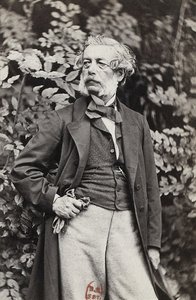
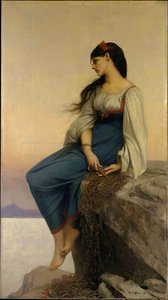
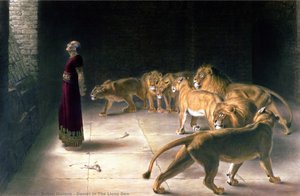
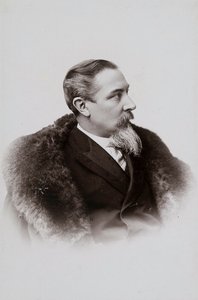
William-Adolphe Bouguereau (1825–1905) is the most famous Academic Art painter, whose singular vision gave us The Birth of Venus and Child at Bath. Next stand Jean-Léon Gérôme, Frederic Leighton, Paul Delaroche and Lawrence Alma-Tadema. These 40 painters, from John Frederick Herring, Sr. (born 1795) to Emile Vernon (born 1872), came from 11 countries.

Our selection. Artists whose works our catalogue attaches to Academic Art, in the order of our fame ranking. Artists born after 1955 with no Wikidata identifier stay out until verified. The Wikipedia figure counts our 32 languages with an article on the artist.

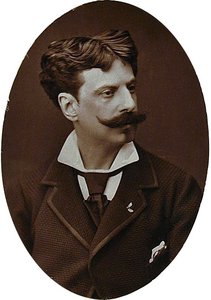
  1. The Birth of Venus by William-Adolphe Bouguereau1William-Adolphe Bouguereau
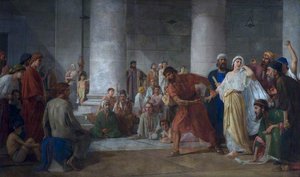
  2. Duel after a Masked Ball by Jean-Léon Gérôme2Jean-Léon Gérôme
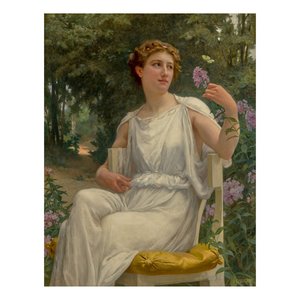
  3. Clytie 1 by Frederic Leighton3Frederic Leighton

In brief

Academic Art in brief

  • 40Artists
  • 1795–1872Years of birth
  • 11Countries of birth
  • 0Women
  • 5,894Works in our catalogue
Cities with most births
London (3), Paris (2), La Rochelle (1), Vesoul (1)
Museums holding the most key works
Wallace Collection (4), Metropolitan Museum of Art (4), Musée d'Orsay (3), Hermitage Museum (3)

One artist at a time

40 Academic Art Painters and their signature works

1of 40

William-Adolphe Bouguereau

French Born in La Rochelle Academic realism Wikipedia in 29/32 languages

William-Adolphe Bouguereau

Working primarily in oil, Bouguereau constructs scenes through academic realism, focusing heavily on the female human body. This structural choice, reminiscent of Renaissance artists, provides a sense of depth and order to his mythological themes and realistic genre paintings. The height of the nineteenth century finds him as the quintessential salon painter, a figure of immense popularity in France and the United States.

Where to see The physical presence of his canvases remains scattered across major international institutions.

Teacher of Léon Bazille Perrault #37

Signature works · The 100 signature works

2of 40

Jean-Léon Gérôme

French Born in Vesoul Academicism, Orientalism, Neo-Grec Wikipedia in 29/32 languages

Jean-Léon Gérôme

The story of Jean-Léon Gérôme begins in Vesoul, Haute-Saône, where he was born on 11 May 1824. Upon returning to Paris, he sought further refinement within the atelier of Charles Gleyre in 1844 and eventually entered the École des Beaux-Arts. Among those who passed through his doors were Thomas Eakins, John Singer Sargent, and Mary Cassatt.

Where to see In Paris, the Musée d'Orsay preserves his paintings, offering a direct connection to the academic rigor he once championed.

Pupil of Paul Delaroche #4, Charles Gleyre #15

Signature works · The 100 signature works

3of 40

Frederic Leighton

British Born in Scarborough Academic, Pre-Raphaelite Wikipedia in 26/32 languages

Frederic Leighton

He was a gifted sculptor, and his Athlete Wrestling with a Python, created between 1888 and 1891, marked a pivotal moment in British sculpture—often credited with initiating a renaissance in contemporary sculptural practice known as the “New Sculpture.” This work, carved from pristine white marble, embodies both physical power and dramatic tension. He was knighted in 1878, made a baronet in 1886, and remarkably, granted a peerage just one day before his passing—a testament to the immense respect he commanded within the art world and beyond.

Signature works · The 100 signature works

4of 40

Paul Delaroche

French Born in Paris Romanticism & Neoclassicism Wikipedia in 26/32 languages

Paul Delaroche

Born in Paris in 1797 into a family where art was woven into the very fabric of daily life, Delaroche was destined for greatness.

Teacher of Jean-Léon Gérôme #2

Signature works · The 100 signature works

5of 40

Lawrence Alma-Tadema

Dutch Born in Dronryp Victorian realism, Classical representation Wikipedia in 26/32 languages

Lawrence Alma-Tadema

When Lourens was four years old, his father passed away, leaving his mother, Hinke Dirks Brouwer, to raise five children. In 1852, he entered The Royal Academy of Antwerp. Even writers found his imagery useful, incorporating his specific visual details into their descriptions of ancient Rome to ground their stories in a sense of physical reality.

Where to see Finding the traces of his brushwork requires a bit of travel across Europe, as his paintings are held in several significant collections.

Signature works · The 100 signature works

6of 40

Thomas Couture

French Born in Senlis Romanticism & Realism Wikipedia in 23/32 languages

Thomas Couture

This painting wasn't merely a historical depiction; it was a scathing social commentary, inspired by the satirical writings of Juvenal, portraying the moral decay and opulent excess within Roman society. Born in 1815 in Senlis, France, Thomas Couture emerged as a pivotal figure bridging Romanticism and Realism —a painter who dared to challenge academic convention while simultaneously mastering its techniques.

Pupil of Paul Delaroche #4

Signature works · The 100 signature works

7of 40

Alexandre Cabanel

French Born in Montpellier Academic realism Wikipedia in 26/32 languages

Alexandre Cabanel

Alexandre Cabanel was born on September 28, 1823, in Montpellier, France. In 1839, a scholarship allowed him to move to Paris to continue his education.

Where to see To find the heart of Cabanel’s legacy, one often begins in Montpellier, France.

Signature works · The 100 signature works

8of 40

Franz Xaver Winterhalter

German Born in Menzenschwand Romanticism and Neoclassicism Wikipedia in 23/32 languages

Franz Xaver Winterhalter

Winterhalter’s early technical approach centers on a smooth, enamel -like surface. This shift introduces a certain Romantic charm to his later works.

Where to see The physical remnants of Winterhalter’s presence in the royal courts are scattered across the major cultural hubs of Europe and beyond.

Signature works · The 100 signature works

9of 40

Jean-Louis Ernest Meissonier

French Born in Lyon Academic art Wikipedia in 23/32 languages

Jean-Louis Ernest Meissonier

His technique was legendary for its painstaking detail. This dedication extended to the natural world as well – he famously studied horses extensively, analyzing their anatomy and movement to depict them convincingly in his battle scenes. By the latter half of the 19th century, Jean-Louis Ernest Meissonier had become one of France’s most celebrated artists.

Signature works · The 100 signature works

10of 40

Hans Makart

Austrian Born in Salzburg Academic history painting Wikipedia in 18/32 languages

Hans Makart

Early Recognition: His early works like Lavoisier in Prison demonstrated his emerging sense of color, while The Knight and the Water Nymphs showcased his decorative talents. Rise to Fame: Paintings such as Modern Amoretti and The Plague in Florence solidified his reputation as a leading artist.

Signature works · The 100 signature works

11of 40

Edwin Austin Abbey

American Born in Philadelphia Golden Age Illustration Wikipedia in 24/32 languages

Edwin Austin Abbey

A pivotal moment arrived in 1878 when he was dispatched to England by his employers to gather inspiration for illustrations of Herrick’s poems. It was here that he truly cemented his reputation as a leading illustrator, culminating in one of his most ambitious projects: a four-volume set of The Comedies of Shakespeare published by Harper & Brothers in 1896. Edwin Austin Abbey’s style is immediately recognizable for its masterful use of chiaro-oscuro, dramatic lighting that emphasizes form and creates a sense of depth.

Signature works · The 100 signature works

13of 40

Léon Bonnat

Born in Bayonne Wikipedia in 23/32 languages

Léon Bonnat

While assisting in the shop, he diligently copied engravings of works by Old Masters, fostering a deep passion for drawing and laying the foundation for his future career. He received formal training under Madrazo in Madrid before returning to Paris.

Signature works · The 100 signature works

14of 40

Friedrich von Amerling

Austrian Born in Vienna Academicism Wikipedia in 20/32 languages

Friedrich von Amerling

Friedrich Ritter von Amerling’s influence extended beyond his own oeuvre, shaping the artistic sensibilities of subsequent generations and solidifying the academic tradition's position within Viennese art.

Signature works · The 100 signature works

15of 40

Charles Gleyre

Swiss-French Born in Chevilly Academic, Orientalism Wikipedia in 21/32 languages

Charles Gleyre

In 1843, Gleyre assumed the studio of Paul Delaroche, a highly respected figure in French academic painting. Among his students were names that resonate with artistic revolution: Claude Monet, Pierre-Auguste Renoir, James Abbott McNeill Whistler, Alfred Sisley, and Jean-Léon Gérôme.

Teacher of Jean-Léon Gérôme #2

Signature works · The 100 signature works

17of 40

Henryk Siemiradzki

Polish Born in Pechenihy Academic Art Wikipedia in 21/32 languages

Henryk Siemiradzki

Born in 1843 in Belgorod, within the Russian Empire, Siemiradzki was a man of dual heritage—a Polish artist whose creative soul flourished amidst the vibrant cultural landscapes of Saint Petersburg, Munich, and ultimately, Rome. Besperchy, Siemiradzki entered the prestigious Imperial Academy of Arts in Saint Petersburg.

Signature works · The 100 signature works

18of 40

Eugene de Blaas

Italian Born in Albano Laziale Academic Classicism Wikipedia in 19/32 languages

Eugene de Blaas

Among Blaas’s most iconic paintings are “ Mother’s Little Helper ” (1884), which offers a charming glimpse into a rustic Venetian kitchen scene, and “On the Balcony” (1877), a vibrant depiction of a fashionable gathering on a balcony overlooking the canals. His commitment to Academic Classicism provided him with the technical skills and formal training necessary to excel as a painter, while his deep affection for Venice infused his art with a unique sense of place and atmosphere.

Signature works · The 100 signature works

19of 40

Franz von Lenbach

German Born in Schrobenhausen Portraiture Wikipedia in 20/32 languages

Franz von Lenbach

His portraits became characterized by a rich Venetian aesthetic, meticulous attention to detail, and an uncanny ability to convey the personality of his subjects. In 1895, a scandal erupted when it was discovered that assistants had been passing off unfinished works as his own, damaging his reputation. His ability to capture not just a likeness but also the character and social standing of prominent figures secured his place among the leading artists of his time.

Signature works · The 100 signature works

21of 40

Carolus-Duran

Born in Lille Wikipedia in 16/32 languages

Carolus-Duran

Diego Velázquez became a crucial influence during his time in Spain. He moved away from the stark realism of Courbet towards a more refined and elegant style, characterized by sophisticated brushwork and attention to detail.

Signature works · The 100 signature works

23of 40

William Salter

British Portrait painting

William Salter

Born in 1804 in the quiet town of Honiton, Devon, Salter’s early life was rooted in the traditional English landscape, yet his artistic spirit was destined for much larger stages. The zenith of Salter’s career arrived in 1836 with the unveiling of his most ambitious and celebrated undertaking: The Waterloo Banquet.

Signature works · The 100 signature works

24of 40

Philip de László

Born in Pest Wikipedia in 18/32 languages

Philip de László

De László’s early work demonstrated a keen eye for detail and a developing mastery of realism. His influences included the academic traditions he learned at the Academy, as well as the prevailing trends in portraiture during the late 19th and early 20th centuries.

Signature works · The 100 signature works

25of 40

Alphonse de Neuville

French Born in Saint-Omer Academic art Wikipedia in 14/32 languages

Alphonse de Neuville

De Neuville's artistic strength lay in his ability to transform historical events into emotionally resonant narratives. “The Charge of the Light Brigade” (1860), a poignant depiction of the disastrous Crimean War cavalry charge, exemplifies this approach. Early successes included depictions of battles from the Crimean War and scenes illustrating episodes from Garibaldi’s campaigns in Italy.

Signature works · The 100 signature works

26of 40

Paul-Jacques-Aimé Baudry

French Born in La Roche-sur-Yon Academic painting Wikipedia in 14/32 languages

Paul-Jacques-Aimé Baudry

Rome became Baudry’s crucible, a place where he absorbed the grandeur of Renaissance and Baroque art. Early works like The Pearl and the Wave (1862) showcased his developing style—a blend of academic precision and romantic imagination. Commissions poured in for prestigious locations throughout Paris—the Court of Cassation, the Château de Chantilly, private residences like the Hôtel Fould and Hôtel Paiva.

Signature works · The 100 signature works

27of 40

Edwin Long

British Born in Bath Orientalism, Victorian Wikipedia in 12/32 languages

Edwin Long

Edwin Longsden Long, born in the elegant spa town of Bath, Somerset, in 1829, emerged as a significant figure within the Victorian art world. His father, James Long, was a hairdresser, and young Edwin received his initial education at Dr. Works like “ Las Hilanderas ” (1857) and " De camino en Granada " immediately showcased this shift, exhibiting a dramatic flair and technical prowess that resonated with audiences.

Signature works · The 100 signature works

28of 40

Hugues Merle

French Born in La Sône Academic painting Wikipedia in 7/32 languages

Hugues Merle

A crucial turning point in Merle's career arrived through his connection with Paul Durand-Ruel, one of the most influential art dealers of the 19th century. Beginning around 1862, Durand-Ruel began acquiring paintings by Merle, recognizing the artist’s talent and potential. Furthermore, the artistic legacy continued through his son, Georges Merle, who also became a painter, ensuring that the family’s creative spirit endured beyond Hugues's death in 1881.

Signature works · The 100 signature works

29of 40

Jehan Georges Vibert

French Born in rue de Lancry Academic art, Realism Wikipedia in 11/32 languages

Jehan Georges Vibert

The vibrant red hue he frequently employed – known as “Vibert’s Red” – became synonymous with his style, particularly in depictions of cardinals and other high-ranking church officials. He developed innovative techniques for varnishes and brushes, wrote satirical plays inspired by Molière, and even authored treatises on art technology. John Vianney College in Miami, though with a somewhat complex history of exhibition, preserve significant bodies of his work.

Signature works · The 100 signature works

32of 40

Franz Krüger

German (Prussian) Born in Großbadegast Historical realism, Romanticism Wikipedia in 10/32 languages

Franz Krüger

The significance of Franz Krüger lies in his ability to synthesize the lively energy of Romanticism with a meticulous, almost photographic realism.

Signature works · The 100 signature works

34of 40

Edouard Louis Dubufe

French Born in former 8th arrondissement of Paris Academic Painting Wikipedia in 11/32 languages

Edouard Louis Dubufe

Dubufe’s professional career ascended dramatically with the commencement of commissions from Emperor Napoleon III and Empress Eugénie in 1853. Furthermore, he served as a consultant on the decoration of Eugénie’s “Salon Bleu” at the Tuileries Palace—a testament to his influence within Parisian cultural life. Dubufe's contribution to French art history extends beyond individual masterpieces; he represented a cornerstone of academic painting’s dominance during its golden age.

Signature works · The 100 signature works

35of 40

Friedrich August von Kaulbach

German Born in Munich Painter Princes Wikipedia in 10/32 languages

Friedrich August von Kaulbach

Kaulbach's formal artistic education commenced at the Kunstgewerbeschule Nürnberg (Nuremberg School of Arts and Crafts), a precursor institution to the Academy of Fine Arts, Nuremberg—a breeding ground for talent and innovation during its time. Recognizing Holbein’s masterful command of chiaroscuro and anatomical accuracy, Kaulbach deliberately sought to emulate his style, striving to achieve similar levels of realism and expressive power.

Signature works · The 100 signature works

36of 40

Edward Armitage

English Born in London Victorian Painting Wikipedia in 8/32 languages

Edward Armitage

He was selected as one of four assistants tasked with the monumental fresco Hémicycle within the Palais des Beaux-Arts, even reputedly serving as a model for the head of Masaccio—a testament to his developing physical presence and artistic aptitude. Edward Armitage’s career unfolded within a Victorian art landscape increasingly fascinated by historical spectacle and moral allegory.

Pupil of Paul Delaroche #4

Signature works · The 100 signature works

37of 40

Léon Bazille Perrault

French Born in Poitiers Academic Painter Wikipedia in 7/32 languages

Léon Bazille Perrault

The historical significance of Léon Jean Bazille Perrault lies in his role as a bridge between the strictures of Academicism and the burgeoning desire for emotional sentimentality in 19th-century art.

Pupil of William-Adolphe Bouguereau #1

Signature works · The 100 signature works

38of 40

Emile Vernon

French Born in Blois Impressionism Wikipedia in 7/32 languages

Emile Vernon

Early Life & Education: Vernon’s formative years were spent honing his skills at the École des Beaux-Arts in Tours, where he secured the prestigious first drawing prize in 1888. Salon Years & Artistic Development: Vernon’s involvement with the Salon des Artistes Français from 1898 until 1913 proved instrumental in shaping his artistic vision.

Pupil of William-Adolphe Bouguereau #1

Signature works · The 100 signature works

39of 40

Émile Munier

French Born in Paris Academic art Wikipedia in 6/32 languages

Émile Munier

Academic Realism: Munier’s work is firmly rooted in the academic tradition, characterized by meticulous attention to detail, anatomical accuracy, and a refined technique. Emotional Resonance: Despite adhering to academic conventions, Munier imbued his paintings with a genuine emotional warmth and tenderness that resonated with audiences. Bouguereau affectionately nicknamed Munier “la sagesse” or “le sage Munier,” recognizing in him a thoughtful, discerning artist with a quiet dedication to his craft.

Signature works · The 100 signature works

40of 40

John Frederick Herring, Sr.

British Born in London Victorian art Wikipedia in 2/32 languages

John Frederick Herring, Sr.

Royal Patronage: Served as animal painter to HRH the Duchess of Kent and Queen Victoria. Prolific Output: Exhibited extensively at the Royal Academy (1818–1865), British Institution (1830–1865), and Society of British Artists (1836-1852).

Signature works · The 100 signature works

Signature works

Signature Academic Art works

  1. The Birth of Venus by William-Adolphe Bouguereau

    The Birth of Venus

    William-Adolphe Bouguereau

    Musée d'Orsay, Paris

  2. Duel after a Masked Ball by Jean-Léon Gérôme

    Duel after a Masked Ball

    Jean-Léon Gérôme

    1857 · Hermitage Museum, Saint Petersburg

  3. Clytie 1 by Frederic Leighton

    Clytie 1

    Frederic Leighton

  4. The Execution of Lady Jane Grey by Paul Delaroche

    The Execution of Lady Jane Grey

    Paul Delaroche

    1833 · National Gallery, London

  5. Mary Magdalene by Lawrence Alma-Tadema

    Mary Magdalene

    Lawrence Alma-Tadema

    1854 · Rijksmuseum, Amsterdam

  6. The Romans of the Decadence by Thomas Couture

    The Romans of the Decadence

    Thomas Couture

    Musée d'Orsay, Paris

  7. Ophelia by Alexandre Cabanel

    Ophelia

    Alexandre Cabanel

    1883

A timeline

Academic Art through its signature works

  1. 1829
  2. 1833
  3. 1836
  4. 1840
  5. 1840
  6. 1845
  7. 1853
  8. 1854
  9. 1857
  10. 1857
  11. 1861
  12. 1863
  13. 1865
  14. 1870

Figures

The figures

Every name

List of 40 famous Academic Art painters, every name

  1. 1William-Adolphe BouguereauWilliam-Adolphe BouguereauFrench · 1825–1905
  2. 2Jean-Léon GérômeJean-Léon GérômeFrench · 1824–1904
  3. 3Frederic LeightonFrederic LeightonBritish · 1830–1896
  4. 4Paul DelarochePaul DelarocheFrench · 1797–1856
  5. 5Lawrence Alma-TademaLawrence Alma-TademaDutch · 1836–1912
  6. 6Thomas CoutureThomas CoutureFrench · 1815–1879
  7. 7Alexandre CabanelAlexandre CabanelFrench · 1823–1889
  8. 8Franz Xaver WinterhalterFranz Xaver WinterhalterGerman · 1805–1873
  9. 9Jean-Louis Ernest MeissonierJean-Louis Ernest MeissonierFrench · 1815–1891
  10. 10Hans MakartHans MakartAustrian · 1840–1884
  11. 11Edwin Austin AbbeyEdwin Austin AbbeyAmerican · 1852–1911
  12. 12Jules LefebvreJules LefebvreFrench · 1836–1911
  13. 13Léon BonnatLéon Bonnat1833–1922
  14. 14Friedrich von AmerlingFriedrich von AmerlingAustrian · 1803–1887
  15. 15Charles GleyreCharles GleyreSwiss-French · 1806–1874
  16. 16Briton RivièreBriton RivièreBritish · 1840–1920
  17. 17Henryk SiemiradzkiHenryk SiemiradzkiPolish · 1843–1902
  18. 18Eugene de BlaasEugene de BlaasItalian · 1843–1931
  19. 19Franz von LenbachFranz von LenbachGerman · 1836–1904
  20. 20Jean-Paul LaurensJean-Paul LaurensFrench · 1838–1921
  21. 21Carolus-DuranCarolus-Duran1837–1917
  22. 22Mariano Fortuny MarsalMariano Fortuny MarsalSpanish · 1838–1874
  23. 23William SalterWilliam SalterBritish · 1804–1875
  24. 24Philip de LászlóPhilip de László1869–1937
  25. 25Alphonse de NeuvilleAlphonse de NeuvilleFrench · 1835–1885
  26. 26Paul-Jacques-Aimé BaudryPaul-Jacques-Aimé BaudryFrench · 1828–1886
  27. 27Edwin LongEdwin LongBritish · 1829–1891
  28. 28Hugues MerleHugues MerleFrench · 1822–1881
  29. 29Jehan Georges VibertJehan Georges VibertFrench · 1840–1902
  30. 30Carol SzathmariCarol SzathmariRomanian (Hungarian) · 1812–1887
  31. 31Guillaume SeignacGuillaume SeignacFrench · 1870–1924
  32. 32Franz KrügerFranz KrügerGerman (Prussian) · 1797–1857
  33. 33Charles West CopeCharles West CopeBritish · 1811–1890
  34. 34Edouard Louis DubufeEdouard Louis DubufeFrench · 1819–1883
  35. 35Friedrich August von KaulbachFriedrich August von KaulbachGerman · 1850–1920
  36. 36Edward ArmitageEdward ArmitageEnglish · 1817–1896
  37. 37Léon Bazille PerraultLéon Bazille PerraultFrench · 1832–1908
  38. 38Emile VernonEmile VernonFrench · 1872–1920
  39. 39Émile MunierÉmile MunierFrench · 1840–1895
  40. 40John Frederick Herring, Sr.John Frederick Herring, Sr.British · 1795–1865

Questions

Your questions

Read

Stories on OriginalUniqueArt.com

Other movements

Famous artists of other movements

Other periods

Famous artists across the periods

Famous paintings

Masterpieces that inspire us, by movement

Discover more

More artists to discover