
Inspiration · Fauvism

The 100 Famous Fauvism Paintings That Inspire Our Artists

1898 – 1930

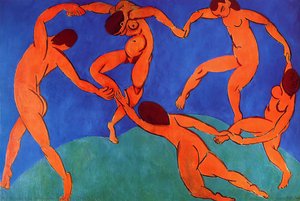
The most famous Fauvism paintings are Henri Matisse's Le bonheur de vivre (The Joy of Life) (1906), Henri Matisse's Woman with a Hat (1905) and Henri Matisse's The Dance (1909–1910, Hermitage Museum). This ranking lists the 100 best-known Fauvism paintings, painted between 1898 and 1930 by 16 artists, with the museum where each one hangs today.

Le bonheur de vivre (The Joy of Life) by Henri Matisse, 1906 — famous Fauvism painting
No. 1 · Henri MatisseLe bonheur de vivre (The Joy of Life)1906
100singular works
16masters · Henri Matisse – Raoul Dufy
24homes in 12 cities
4kept at the Pushkin State Museum

Singular works

100 Fauvism paintings that exist only once

Every original here is unique and kept in one place. Its story, its home, and the detail that makes it unmistakable.

  1. Le bonheur de vivre (The Joy of Life) by Henri Matisse, 1906
    1

    1906Oil on canvas

    Emerging from the artistic ferment of post-Impressionism, Le bonheur de vivre boldly rejects traditional perspective and naturalistic color. Matisse, alongside artists like André Derain, employed intensely vivid, non-local colors – a hallmark of Fauvism (“wild beasts”). The painting caused a sensation (and some scandal) at the 1906 Salon des Indépendants, challenging conventional artistic norms and paving the way for further abstraction in 20th-century art.

    The singular detailfragmented formsunconventional composition

    Painted for you from $350 A print, from $58

  2. Woman with a Hat by Henri Matisse, 1905
    2

    1905Oil on canvas

    "Woman with a Hat" is a striking portrait of Henri Matisse's wife, Amélie. Painted in 1905 and exhibited at the Salon d'Automne, "Woman with a Hat" was at the center of a controversy that marked a stylistic shift in Matisse's work.

    The singular detailbold colorsdynamic brushstrokes

    Painted for you from $200 A print, from $58

  3. The Dance by Henri Matisse, 1909–1910, Hermitage Museum
    3

    Hermitage Museum, Saint Petersburg1909–1910Oil on canvas260 × 391 cm

    Emerging as a pivotal piece within the Fauvist (“wild beast”) aesthetic, this painting boldly rejects traditional naturalistic color in favor of expressive, non-representational hues. It reflects the burgeoning interest in Primitivism and non- Western art that influenced many early Modern artists.

    The singular detailsimplified formscircular composition

    Painted for you from $200 A print, from $58

  4. Landscape Viewed from a Window by Henri Matisse, 1913, Pushkin State Museum
    4

    Pushkin State Museum, Moscow1913Oil on canvas115 × 80 cm

    The composition is skillfully centered around a deep blue window frame, acting as a stage for two contrasting floral arrangements. Interestingly, Matisse’s son, Pierre, later became a prominent art dealer in New York, further cementing the family’s legacy within the art world.

    The singular detaillandscapewindow

    Painted for you from $200 A print, from $58

  5. L'Atelier rouge Huile sur Toile - (181x219) by Henri Matisse, 1911, MOMA - Museum of Modern Art
    5

    MOMA - Museum of Modern Art, New York City1911Oil on canvas181 × 219.1 cm

    This artwork celebrates the vibrant inner world of an artist, emphasizing the joy and spontaneity of the creative process. Created in 1911, this artwork belongs to a pivotal period in modern art history when artists like Henri Matisse challenged traditional representations and embraced bold color and simplified forms.

    The singular detailbold colorssimplified forms

    Painted for you from $200 A print, from $58

  6. Houses at Chatou by Maurice de Vlaminck, 1905, Art Institute of Chicago
    6

    Art Institute of Chicago1905Oil on canvas

    Several buildings occupy the middle ground, including one larger structure that dominates the central area. These houses are surrounded by dense clusters of trees. Created around 1905 or 1906, this work emerged during a period of significant change in French art.

    Its story

  7. Basket with Oranges by Henri Matisse, 1913, The Louvre
    7

    The Louvre, Paris1913Oil on canvas94 × 83 cm

    The central focus of this painting is a bowl filled with oranges and lemons, placed on a table adorned with a floral-patterned cloth. Created in 1913, "Basket with Oranges" reflects Matisse's ongoing exploration of color and form during a pivotal period in modern art.

    The singular detaildynamic compositionvibrant color palette

    Painted for you from $200 A print, from $58

  8. Landscape at Collioure by André Derain, 1905, National Gallery of Art
    8

    National Gallery of Art, Washington1905Oil on canvas81.3 × 100.3 cm

    André Derain (1880-1954) was a French artist who co-founded the Fauvist movement with Henri Matisse. The term 'Fauves' means 'wild beasts,' which refers to the bold use of color and expressive brushwork that characterized this style. Painted in 1905, this work exemplifies the style's emphasis on painterly qualities and strong color over representational values.

    The singular detailloose brushworkbold colors

    Painted for you from $200 A print, from $58

  9. Dance (II), Eremitaget by Henri Matisse, 1910, Hermitage Museum
    9

    Hermitage Museum, Saint Petersburg1910Oil on canvas260 × 391 cm

    Matisse's use of bold, primary colors —particularly the striking orange figures against a deep blue background —creates a sense of vitality and energy. Painted during the height of the Fauvism movement, " Dance (II), Eremitaget" reflects Matisse's revolutionary approach to color and form.

    The singular detailsense of movementharmony

    Painted for you from $200 A print, from $58

  10. Portrait of Mme. Matisse by Henri Matisse, 1905
    10

    1905Oil on canvas (presumed)41 × 33 cm

    This artwork stands at the cusp of Fauvism, an artistic movement characterized by intensely vivid colors and simplified forms. This portrait predates the infamous Salon d’Automne exhibition where their radical use of color earned them the label “Les Fauves” (the wild beasts).

    The singular detailbold use of complementary colors (blue/orange)mask-like face

    Painted for you from $200 A print, from $58

  11. Portrait of Matisse by André Derain, 1905, Tate Liverpool
    11

    Tate Liverpool1905Oil on canvas46 × 34.9 cm

    Painted for you from $200 A print, from $58

  12. The Open Window by Henri Matisse, 1905, National Gallery of Art
    12

    National Gallery of Art, Washington1905Oil on canvas55 × 46 cm

    Instead, Fauvists sought to liberate color from its descriptive role, employing it as a powerful expressive force. While firmly rooted in Fauvism, “The Open Window” also reveals Matisse’s earlier influences. A French artist (1869-1954) renowned for his mastery of color and fluid draughtsmanship.

    The singular detailvasescat

    Painted for you from $200 A print, from $58

  13. Nude by Albert Marquet, 1919, Centre Pompidou
    13

    Centre Pompidou, Paris1919Oil on canvas98.5 × 98.5 cm

    Painted for you from $200 A print, from $58

  14. Place Aux Herbes in Saint-tropez by Charles Camoin
    14

    Its story

  15. Ermita de Sant Joan d'Horta by Joan Miró
    15

    Oil on canvas/board

    The painting centers on the Ermita de Sant Joan d'Horta, a small hermitage nestled into the landscape, rendered not as a precise architectural study but as a powerful symbolic presence. The Ermita de Sant Joan d’Horta held a special significance for him as a place of personal reflection and artistic inspiration.

    The singular detailflattened perspectivebold color

    Its story

  16. Posters at Trouville by Raoul Dufy, 1906
    16

    1906Oil on canvas

    A crowd moves along the promenade of Trouville, their forms reduced to quick, gestural strokes that suggest the pulse of a summer afternoon. The posters, including a pennant for "Le Journal," act as anchors of intense pigment against the more subdued tones of the architecture.

    Painted for you from $200 A print, from $58

  17. Charing Cross Bridge by André Derain, 1906, Musée d'Orsay
    17

    Musée d'Orsay, Paris1906Oil on canvas81 × 100 cm

    Derain, a key figure in the movement alongside Matisse, sought to liberate color from its descriptive role, using it instead as a vehicle for pure emotion. The result is a painting that vibrates with life, demanding attention and refusing easy interpretation.

    The singular detailboatsvibrant colors

    Painted for you from $200 A print, from $58

  18. The Red Mill by Piet Mondrian, 1910, Kunstmuseum Den Haag
    18

    Kunstmuseum Den Haag, The Hague1910Oil on canvas150 × 86 cm

    Thick, irregular lines define the structural beams of the sails, while the texture of the oil paint creates a physical depth across the canvas. It is a moment of transition, where the soft light of the Hague School begins to give way to a more radical, compressed way of seeing.

    Painted for you from $200 A print, from $58

  19. Matador Manuel Gartha by Pyotr Konchalovsky, 1910
    19

    1910Oil on canvas125 × 97 cm

    The matador is rendered with a striking intensity that commands the viewer's immediate attention. These elements are handled with meticulous detail, providing a grounded realism that anchors the composition. The painting sits at the intersection of several movements, blending the structural concerns of Cezannism with the uninhibited palette of the Fauves.

    Painted for you from $200 A print, from $58

  20. Landscape at La Ciotat 1 by Georges Braque, 1907, La Ciotat
    20

    La Ciotat, France1907Oil on canvas (presumed)

    The painting depicts a hillside scene near the coastal town of La Ciotat in Southern France. A modest building, perhaps a rural dwelling, is nestled amongst lush foliage.

    The singular detailflattened perspectivedynamic composition

    Its story

  21. Portrait of Hiberto Casany. (The Chauffeur) by Joan Miró, 1918, Musée National d'Art Moderne
    21

    Musée National d'Art Moderne1918Oil on canvas70 × 62 cm

    Miró, heavily influenced by the radical color experiments of Matisse and Derain, abandons the constraints of naturalism in favor of emotional truth. During this period, Miró was navigating the complex intersections of Cubism and the burgeoning Surrealist movement.

    Its story

  22. La Desserte rouge Huile sur Toile St Petersbourg by Henri Matisse, 1908
    22

    1908Oil on canvas180 × 220 cm

    Henri Matisse, a renowned French artist, is celebrated for his contributions to the development of modern art. One of his most notable works, La Desserte rouge Huile sur Toile St Petersbourg, museum of the Hermitage, exemplifies the essence of Fauvism, a style characterized by vivid colors and energetic brushstrokes.

    Painted for you from $200 A print, from $58

  23. Entrance to the Casbah by Henri Matisse, 1912, Pushkin State Museum
    23

    Pushkin State Museum, Moscow1912Oil on canvas116 × 80 cm

    The painting doesn’t aim for photographic realism but rather seeks to capture the atmosphere, light, and emotional resonance of the Casbah. Entrance to the Casbah, alongside works like Landscape viewed from a Window and paintings by fellow Fauvist André Derain, such as Drying the Sails, cemented Matisse's place as a revolutionary figure in modern art.

    The singular detailbluered color scheme

    Painted for you from $200 A print, from $58

  24. The Family of the Artist by Henri Matisse, 1911, Hermitage Museum
    24

    Hermitage Museum, Saint Petersburg1911Oil on canvas143 × 194 cm

    This large-scale oil on canvas (143 x 194 cm), currently residing in the Hermitage Museum, Saint Petersburg, offers an intimate glimpse into Matisse's personal life while simultaneously pushing the boundaries of modern art. To understand The Family of the Artist, one must first grasp the context of Fauvism.

    The singular detailsimplified formsdomestic interior scene

    Painted for you from $250 A print, from $58

  25. Charing Cross from SW by André Derain, 1906, National Gallery of Art
    25

    National Gallery of Art, Washington1906Oil on canvas

    This wasn’t an attempt to faithfully recreate reality; instead, Derain sought to express the emotional essence of London, a feeling of energy, movement, and perhaps even a touch of urban chaos.

    The singular detailbold colorsdistortion

    Painted for you from $200 A print, from $58

  26. Still Life with Oranges by Henri Matisse, 1898
    26

    1898Oil on canvas

    While Matisse himself resisted assigning specific symbolic meanings to his paintings, “Still Life with Oranges” undeniably carries a sense of optimism and vitality. WahooArt offers meticulously crafted hand-painted reproductions of Henri Matisse’s "Still Life with Oranges," capturing the artist's signature style and vibrant palette with exceptional detail.

    The singular detailsimplified formsbold colors

    Painted for you from $200 A print, from $58

  27. Jason and His Teacher by Maxfield Parrish, 1908
    27

    1908Oil painting

    To stand before Maxfield Parrish’s Jason and His Teacher is to step directly into a sun-drenched, mythic moment plucked from the annals of classical adventure. Flanking him are companions, their presence suggesting camaraderie forged through shared trials. The very title suggests a narrative rich with symbolism: Jason, the journeying hero, guided by his teacher.

    Its story

  28. Still Life by Kazimir Malevich, 1911
    28

    191152 × 51 cm

    Born in Kyiv Oblast, Ukraine, to a Polish family, Malevich absorbed the vibrant colors and patterns of Ukrainian folk art during his formative years. The painting's strong outlines and flat planes of color are reminiscent of artists like Henri Matisse, yet Malevich infuses the composition with a uniquely Russian sensibility.

    Painted for you from $200 A print, from $58

  29. The Poulot or partner, Red Zone by Georges Rouault
    29

    Its story

  30. Drying the Sails by André Derain, 1905, Pushkin State Museum
    30

    Pushkin State Museum, Moscow1905Oil on canvas82 × 101 cm

    Derain, alongside Henri Matisse, spearheaded this revolutionary approach to art, prioritizing the subjective experience of color and light over strict adherence to realism. To truly appreciate “Drying the Sails,” it's crucial to understand the context of Fauvism.

    The singular detailloose brushworkbold colors

    Painted for you from $200 A print, from $58

  31. Sailing-Boats in Troville by Raoul Dufy
    31

    Painted for you from $200 A print, from $58

  32. Southampton by Maurice de Vlaminck, 1911
    32

    1911

    Its story

  33. Viaduct at L_Estaque by Georges Braque, 1908
    33

    1908Oil on canvas

    The scene unfolds with a sweeping stone viaduct that anchors the composition, stretching across a valley to connect two sides of a rugged, picturesque landscape. By simplifying forms into geometric essentials, Braque echoes the influence of Paul Cézanne, yet he pushes further, allowing his planes to tilt and shift with a newfound, expressive freedom.

    Its story

  34. Pink Nude by Henri Matisse, 1909, Museum of Grenoble
    34

    Museum of Grenoble1909Oil on canvas33 × 40 cm

    However, his encounter with John Russell in Belle Île marked a pivotal shift, introducing him to the vibrant colors and expressive brushwork of Impressionism – particularly the bold experimentation of Vincent van Gogh. This influence is evident in “Pink Nude’s” flattened perspective and simplified shapes.

    The singular detailsurfboardbirds

    Painted for you from $200 A print, from $58

  35. Man Smoking a Pipe by Maurice de Vlaminck, 1900
    35

    1900

    Its story

  36. Portrait of a Spanish Dancer by Joan Miró, 1919
    36

    1919Oil on canvas

    To fully appreciate Portrait of a Spanish Dancer, one must understand Miró’s deep connection to his native Catalonia. Miró wasn't interested in depicting Spain as a picturesque tourist destination; he wanted to capture its raw energy, its inner life, and its unique character.

    Its story

  37. Large Nude by Georges Braque, 1908
    37

    1908

    The use of a large blue cloth draped over the figure adds both visual interest and a symbolic layer – perhaps suggesting concealment or protection. 1908 was a crucial year for Braque, marking his transition from Fauvism towards more radical experimentation.

    The singular detailbold colorsenergetic brushstrokes

    Its story

  38. Restaurant de la Machine at Bougival by Maurice de Vlaminck
    38

    81 × 60 cm

    Its story

  39. Portrait de Madame Matisse by Henri Matisse, 1905, Statens Museum for Kunst
    39

    Statens Museum for Kunst1905Oil on canvas40 × 32 cm

    The most striking element is the vertical green stripe that bisects Madame Matisse’s face – " La Raie Verte " (The Green Line). Painted during a period of artistic upheaval, "Portrait de Madame Matisse " reflects the burgeoning modernist movement’s rejection of traditional art conventions.

    Painted for you from $200 A print, from $58

  40. La Leçon de musique by Henri Matisse, 1917, Fondation Barnes
    40

    Fondation Barnes, Philadelphia1917Oil on canvas

    Pierre, his younger son, is positioned at a Pleyel piano, receiving instruction from his sister, Marguerite. While rooted in the principles of Fauvism – characterized by bold, non-naturalistic color – La Leçon de Musique demonstrates a shift towards greater refinement and structure within Matisse’s style.

    The singular detailfamily portraitpiano

    Painted for you from $300 A print, from $58

  41. The Red Studio by Henri Matisse, 1911, MoMA
    41

    MoMA, New York1911Oil on canvas

    The painting firmly establishes Matisse as a pivotal figure in Fauvism, a movement that rejected academic conventions and championed unrestrained chromatic intensity. Created during a period of significant artistic upheaval, “The Red Studio” arrived on the heels of Picasso’s groundbreaking “Les Demoiselles d'Avignon,” marking a decisive shift away from traditional artistic approaches.

    The singular detailbold red hue

    Painted for you from $200 A print, from $58

  42. Dishes and Fruit on a Red and Black Carpet by Henri Matisse, 1906, Hermitage Museum
    42

    Hermitage Museum, Saint Petersburg1906Oil on canvas61 × 73 cm

    It offers a glimpse into Matisse's evolving style during a pivotal year in his career, marking a significant departure from traditional representation. Matisse was experimenting with influences from Post-Impressionists like Van Gogh and Gauguin, but he pushed these ideas further, prioritizing pure color and expressive form over representational accuracy.

    The singular detailbowlsbottle

    Painted for you from $200 A print, from $58

  43. Woman with guitar by Louis Valtat, 1906
    43

    1906

    Painted for you from $200 A print, from $58

  44. Still life with fruit by Jan Sluijters
    44

    Its story

  45. Portrait of Philomene by Sonia Delaunay, 1907
    45

    190740 × 42 cm

    Its story

  46. The Girls by Georges Rouault, 1907
    46

    1907

    Its story

  47. La Place Du Marché, Toulon by Charles Camoin
    47

    Its story

  48. Paris, Le Pont de l'Institut by Albert Marquet
    48

    Painted for you from $200 A print, from $58

  49. San Gimignano by Pyotr Konchalovsky, 1912
    49

    191292 × 72 cm

    Painted for you from $200 A print, from $58

  50. Self-Portrait by Kazimir Malevich, 1910, Tretyakov Gallery
    50

    Tretyakov Gallery, Moscow1910Gouache27 × 26 cm

    To understand “Self-Portrait,” it's crucial to situate it within the broader context of Post-Impressionism. Artists like Paul Cézanne, Vincent van Gogh, and Paul Gauguin explored subjective experience, emotional intensity, and symbolic meaning in their work. Malevich's Fauvist tendencies align with this broader trend toward greater expressiveness and experimentation within the Post-Impressionist landscape.

    The singular detailbold colorsred tie

    Painted for you from $200 A print, from $58

  51. Landscape by Moonlight II by Jan Sluijters, 1911
    51

    191150 × 71 cm

    Jan Sluyters was a Dutch painter who experimented with several styles, including Fauvism and Cubism, before settling on a colorful expressionism. The Rijksmuseum Amsterdam and other notable museums have works by Jan Sluyters in their collections, showcasing his contribution to the world of art.

    Its story

  52. Decorative Figure on an Ornamental Background by Henri Matisse, 1925, Centre Pompidou
    52

    Centre Pompidou, Paris1925Oil on canvas130 × 98 cm

    The influence of Art Deco is evident in the geometric patterns and stylized forms that dominate the background, mirroring the streamlined aesthetic popular during the 1920s. Simultaneously, there’s a subtle nod to Proto- Cubism – a transitional phase between Impressionism and Cubism – in the simplification of shapes and the flattening of perspective.

    The singular detailgeometric shapesbold colors

    Painted for you from $200 A print, from $58

  53. The Grid by Raoul Dufy, 1930
    53

    1930Oil, canvas130 × 160 cm

    Two figures inhabit the space: one positioned to the left of the gate and another further back on the right. This technique creates a sense of spontaneity, as if the viewer has caught a fleeting glimpse of a private garden or a quiet threshold.

    Painted for you from $200 A print, from $58

  54. Night landscape by Georges Rouault
    54

    Its story

  55. The Steeple of Saint Tropez and Conche by Charles Camoin
    55

    Its story

  56. Piazza della Signoria in Siena by Pyotr Konchalovsky, 1912, The State Museum of Fine Arts of Tatarstan Republic
    56

    The State Museum of Fine Arts of Tatarstan Republic, Kazan191285 × 109 cm

    Painted for you from $200 A print, from $58

  57. Fruit, Knife and Napkin by Albert Marquet, 1898
    57

    1898Oil on canvas33.3 × 45.7 cm

    Painted for you from $200 A print, from $58

  58. Factory in Estaque by Raoul Dufy
    58

    Painted for you from $200 A print, from $58

  59. Still Life with Rose by Joan Miró, 1916
    59

    Joan MiróCubism and Fauvism

    Still Life with Rose

    1916Oil on cardboard77 × 74 cm

    Miró’s “Still Life with Rose” is firmly rooted in the tenets of Fauvism, a movement that prioritized color as the primary means of expression. While superficially resembling a traditional still life, “Still Life with Rose” is laden with symbolic weight.

    The singular detailbold colorsgeometric shapes

    Its story

  60. Le Canal de La Douane À Marseille by Charles Camoin
    60

    Its story

  61. The House Behind the Trees by Georges Braque, 1906, Metropolitan Museum of Art
    61

    Metropolitan Museum of Art, New York1906Oil on canvas

    The painting presents a tranquil yet unsettling scene—a modest house nestled amongst dense foliage. Subtle geometric shapes —particularly in the architectural elements—hint at Braque’s burgeoning interest in Cubism's conceptual framework. Executed on canvas using oil paints, “The House Behind the Trees” exemplifies Braque's meticulous attention to detail. Painted during the formative years of Fauvism and Proto- Cubism, “The House Behind the Trees” encapsulates the anxieties and aspirations of artists grappling with the rapid transformations occurring in European society.

    Its story

  62. Fishing Boats Returning, Collioure by Albert Marquet, 1914
    62

    1914

    Painted for you from $200 A print, from $58

  63. Landscape from the Bible, Christ and the fishermen by Georges Rouault
    63

    Its story

  64. The Chatou Bridge by Maurice de Vlaminck, 1907
    64

    1907

    Its story

  65. The River by Raoul Dufy, 1905
    65

    190565 × 81 cm

    Painted for you from $200 A print, from $58

  66. The Farmer's Wife by Joan Miró, 1923, Musée National d'Art Moderne
    66

    Musée National d'Art Moderne, Paris1923Oil on canvas81 × 65 cm

    It’s a pivotal work bridging the energetic freedom of Fauvism with the burgeoning subconscious explorations of Surrealism – a visual poem rendered in oil on canvas (81 x 65 cm). Created during a period of intense artistic experimentation in the early 20th century, The Farmer’s Wife reflects the seismic shifts occurring within the art world.

    The singular detailspoonvase

    Its story

  67. Katya with a dog by Pyotr Konchalovsky
    67

    Painted for you from $200 A print, from $58

  68. Samois by Albert Marquet
    68

    Painted for you from $200 A print, from $58

  69. Interior with Goldfish by Henri Matisse, 1914, Centre Pompidou
    69

    Centre Pompidou, Paris1914Oil on canvas147 × 97 cm

    Three chairs are strategically placed around the room—one near the left side and two closer to the right—creating a sense of spatial depth. It is part of a series of works where Matisse used goldfish as a recurring motif, symbolizing contemplation and peacefulness.

    Painted for you from $200 A print, from $58

  70. Untitled by André Derain, Centre Pompidou
    70

    Centre Pompidou, Paris

    Painted for you from $200 A print, from $58

  71. Portrait of Madeleine by Maurice de Vlaminck
    71

    Its story

  72. The small palm tree by Raoul Dufy
    72

    A single woman sits beneath the reach of a palm tree, seeking refuge from the heat. The scene is a quiet arrangement of tropical stillness. A potted plant rests on the ground, anchoring the composition in a moment of domestic leisure.

    Painted for you from $200 A print, from $58

  73. Cassis by André Derain, 1907
    73

    1907Oil on canvas

    The artwork titled Cassis, also known as Landscape at Cassis, is an oil on canvas painting. The subject matter focuses on a landscape setting located in Cassis, France. The provenance and ownership of the work involve the Hermann und Margrit Rupf-Stiftung, Kunstmuseum Bern.

    Painted for you from $200 A print, from $58

  74. Village by Maurice de Vlaminck, 1912, Art Institute of Chicago
    74

    Art Institute of Chicago1912Oil on canvas

    Its story

  75. Pushkin at the Mikhailovsky by Pyotr Konchalovsky
    75

    Painted for you from $200 A print, from $58

  76. Sainte-Adresse beach by Raoul Dufy
    76

    Painted for you from $200 A print, from $58

  77. The Goldfish by Henri Matisse, 1916, Pushkin State Museum
    77

    Pushkin State Museum, Moscow1916Oil on canvas146 × 97 cm

    The aquarium itself can be interpreted as a metaphor for Matisse’s studio – a carefully constructed space where he arranged objects to achieve a sense of harmony and balance.

    The singular detailbold colorsflat forms

    Painted for you from $200 A print, from $58

  78. Houses of Parliament at Night by André Derain, 1906, Metropolitan Museum of Art
    78

    Metropolitan Museum of Art, New York1906Oil on canvas

    Houses of Parliament at Night is a quintessential example of Fauvist technique. Derain employs an audacious palette—deep blues, fiery oranges, and intense greens—that defy the expected tones of a London night.

    The singular detailclockboats

    Painted for you from $200 A print, from $58

  79. Banks of the Seine to Carrières-sur-Seine by Maurice de Vlaminck, 1906
    79

    1906

    Its story

  80. Still Life with a Red Rug by Henri Matisse, 1906, Musée National d'Art Moderne
    80

    Musée National d'Art Moderne1906Oil on canvas89 × 116 cm

    Matisse’s genius lies not in meticulous realism but in his ability to transform these ordinary items into a dynamic composition brimming with energy and emotion. The Fauvist movement itself challenged established artistic conventions and helped pave the way for subsequent modern art movements like Cubism and Expressionism.

    Painted for you from $200 A print, from $58

  81. Portrait of a Woman by Maurice de Vlaminck
    81

    Its story

  82. Collioure by André Derain, 1905
    82

    1905Oil on canvas

    There is a palpable sense of camaraderie among the people on board, some standing near the edge while others remain further back, all caught in a moment of collective movement. Even the structures of the coast receive his attention, as seen in his depiction of the lighthouse at Collioure.

    Painted for you from $200 A print, from $58

  83. Banks of the Seine at Chatou by Maurice de Vlaminck
    83

    Its story

  84. Woman in a Chemise by André Derain, 1906, National Gallery of Denmark
    84

    National Gallery of Denmark, Copenhagen1906Oil on canvas100 × 81 cm

    Inspired by the works of Paul Gauguin, particularly his use of vibrant color in Tahiti, and influenced by the emerging theories of color perception championed by Chevreul, Derain and Matisse embarked on a radical exploration of chromatic intensity. Derain’s technique is characterized by an unrestrained use of color—a hallmark of Fauvism.

    The singular detailbold colorstriangular comp

    Painted for you from $200 A print, from $58

  85. Landscape at Collioure by Henri Matisse, 1905, Metropolitan Museum of Art
    85

    Metropolitan Museum of Art, New York1905Oil on canvas46 × 55 cm

    Employing a distinctive method—applying paint directly from the tube with quick, sketchy brushstrokes— Matisse achieved an unprecedented level of textural vibrancy. Two figures—likely Matisse’s wife Amélie and André Derain —are subtly integrated into the scene, adding depth and human presence without disrupting the painting's harmonious balance.

    Painted for you from $200 A print, from $58

  86. The Road by Maurice de Vlaminck, 1926
    86

    1926

    The painting portrays a winding road leading towards a village nestled amongst rolling hills, under a sky heavy with dramatic clouds. In "The Road," this is evident in the striking contrast between the deep blues of the sky, the vibrant yellows and reds of the houses, and the earthy tones of the road itself.

    Its story

  87. The Two Sisters, Statens Museum för Kunst, Cope by André Derain, 1913, Statens Museum For Kunst
    87

    Statens Museum For Kunst, Copenhagen1913Oil on canvas

    Painted for you from $200 A print, from $58

  88. Japanese Woman at Seashore by Henri Matisse, 1905, MOMA - Museum of Modern Art
    88

    MOMA - Museum of Modern Art, New York City1905Oil on canvas35.2 × 28.2 cm

    At first glance, the painting presents a seemingly simple scene: a woman, her back turned towards us, occupies the central space. The painting's composition, reminiscent of traditional Japanese woodblock prints (Ukiyo-e), is immediately apparent. Interestingly, Matisse's fascination with Japan extended beyond mere stylistic imitation.

    The singular detailbold colorsdynamic brushstrokes

    Painted for you from $200 A print, from $58

  89. Paysage de Valmondois by Maurice de Vlaminck
    89

    Its story

  90. L'Estaque by André Derain, 1906
    90

    1906Oil on canvas73 × 92 cm

    The painting L'Estaque by André Derain is a quintessential example of Fauvism, a style characterized by the use of bold, vibrant colors and energetic brushstrokes. This style is reminiscent of other Fauvist works, such as The Turning Road, L'Estaque by André Derain, available on AllPaintingsStore.com.

    Painted for you from $200 A print, from $58

  91. Rue du soleil Huile sur Toile by Henri Matisse, 1905, Musée Matisse
    91

    Musée Matisse, Cateau-Cambrésis1905Oil on canvas46 × 55 cm

    At first glance, the scene appears deceptively simple: a red brick wall anchors the background, providing a solid foundation for the lively activity unfolding before it. "Rue du Soleil" emerged during a period of immense artistic ferment. The painting's influence can be seen in the works of later Fauvist painters like André Derain and Maurice de Vlaminck, as well as in the work of artists from a wide range of movements, including Cubism and Abstract Expressionism.

    Painted for you from $200 A print, from $58

  92. The Girl from Rat Mort by Maurice de Vlaminck, 1906
    92

    190632 × 46 cm

    Its story

  93. Portrait of Lucien Gilbert by André Derain, 1906
    93

    1906

    Painted for you from $200 A print, from $58

  94. Spanish Still Life (Seville II) by Henri Matisse, 1911
    94

    1911Oil on canvas

    At its center, a pristine white vase brimming with lush green foliage commands attention, surrounded by an array of ripe fruits and intricately patterned textiles. The balanced yet dynamic arrangement creates a sense of movement and rhythm, engaging the eye with its playful yet sophisticated layout.

    The singular detaildecorative patternsvibrant palette

    Painted for you from $200 A print, from $58

  95. The gardener by Maurice de Vlaminck
    95

    Its story

  96. Bathers by André Derain, 1907
    96

    1907Oil on canvas132 × 195 cm

    To stand before André Derain's Bathers is to step directly into the exhilarating heart of the early twentieth century art revolution. The very air around the canvas seems charged with the energy of bold pigment. Derain, a key figure alongside Henri Matisse, harnessed this nascent movement to break violently with academic tradition.

    Painted for you from $200 A print, from $58

  97. Tugboat on the Seine, Chatou by Maurice de Vlaminck
    97

    Its story

  98. Jeune Fille by André Derain
    98

    Painted for you from $200 A print, from $58

  99. Madame Matisse, the Green Line by Henri Matisse, 1905, Statens Museum for Kunst
    99

    Statens Museum for Kunst1905Oil on canvas

    Following his controversial exhibitions at the Salon d'Automne in Paris, where works like “Woman with a Hat” were met with derision and labeled "wild beasts," Matisse embraced a radical approach to color – one that prioritized emotional expression over naturalistic representation.

    The singular detailbold colorsgreen stripe

    Painted for you from $200 A print, from $58

  100. The Oise at Sergy by Maurice de Vlaminck
    100

    Its story

Lineages

The famous Fauvism paintings by lineage

Where they live

The one place you can see each famous Fauvism painting

Paris keeps 7 of these originals; the Pushkin State Museum, 4.

Musée National d'Art Moderne2

Statens Museum for Kunst2

The masters

The Fauvism masters our artists look to

Portrait of Raoul Dufy

Raoul Dufy

1877–1953 · France · 7

French Fauvist known for a stenographic style of thin color washes depicting yachting regattas and elegant social gatherings.

16. Posters at Trouville, 31. Sailing-Boats in Troville, 53. The Grid, 58. Factory in Estaque, 65. The River, 72. The small palm tree, 76. Sainte-Adresse beach

Portrait of Albert Marquet

Albert Marquet

1875–1947 · France · 5

French Fauvist known for atmospheric landscapes and serene port scenes using a muted palette and calligraphic, simplified lines.

13. Nude, 48. Paris, Le Pont de l'Institut, 57. Fruit, Knife and Napkin, 62. Fishing Boats Returning, Collioure, 68. Samois

Portrait of Joan Miró

Joan Miró

1893–1983 · Spain · 5

Spanish Surrealist known for biomorphic shapes and a symbolic, dreamlike visual language that bridges the gap between the seen and the imagined.

15. Ermita de Sant Joan d'Horta, 21. Portrait of Hiberto Casany. (The Chauffeur), 36. Portrait of a Spanish Dancer, 59. Still Life with Rose, 66. The Farmer's Wife

Portrait of Pyotr Konchalovsky

Pyotr Konchalovsky

1876–1956 · Ukraine · 5

A key figure of the Jack of Diamonds movement, he mastered Fauvism and Socialist Realism.

19. Matador Manuel Gartha, 49. San Gimignano, 56. Piazza della Signoria in Siena, 67. Katya with a dog, 75. Pushkin at the Mikhailovsky

+9more masters our artists study Fauvism Masters Their stories

In confidence

About these Fauvism paintings

Hover gently over a question to read the answer.

What are the 10 most famous Fauvism paintings?

Can I buy a reproduction of a Fauvism painting?

Yes: 63 of the 100 can be ordered as a hand-painted oil reproduction, from $200, and 63 as a canvas print, from $58.

How is this ranking made?

By recognition: Wikipedia articles in the most languages (Wikidata sitelinks), our manual ranking and page visits. Several records of one painting count once; details, copies and studies are excluded.

One of a kind

63 of the 100, painted for you alone

63 of these works can be painted by hand for a single owner, from $200.

Le bonheur de vivre (The Joy of Life) by Henri MatisseWoman with a Hat by Henri MatisseThe Dance by Henri MatisseLandscape Viewed from a Window by Henri MatisseL'Atelier rouge Huile sur Toile - (181x219) by Henri Matisse

Discover original art

How the selection is made

We went through every Fauvism painting in our catalogue and placed the best-known first: those Wikipedia describes in the most languages, those our artists and curators rank highest and those most viewed on our pages. Each original appears once — no details or copies.

Other movements that inspire us

The periods that inspire us