Proto-renaissance: original voices

Famous Proto-renaissance Artists: 12 Original Voices

Giotto (1267–1337) is the most famous Proto-renaissance artist, whose singular vision gave us Lamentation (The Mourning of Christ) and Madonna in Maest (Ognissanti Madonna). Next stand Duccio di Buoninsegna, Cimabue, Ambrogio Lorenzetti and Pietro Lorenzetti. These 12 artists, from Cimabue (born 1240) to Giovanni da Milano (born 1346), came from 1 countries.

Our selection. Artists whose works our catalogue attaches to Proto-renaissance, in the order of our fame ranking. Artists born after 1955 with no Wikidata identifier stay out until verified. The Wikipedia figure counts our 32 languages with an article on the artist.

  1. Lamentation (The Mourning of Christ) by Giotto1Giotto
  2. Maestà (Madonna with Angels and Saints) by Duccio di Buoninsegna2Duccio di Buoninsegna
  3. The Mocking of Christ by Cimabue3Cimabue

In brief

Proto-renaissance in brief

  • 12Artists
  • 1240–1346Years of birth
  • 1Countries of birth
  • 0Women
  • 1,279Works in our catalogue
Cities with most births
Siena (4), Florence (3), Vicchio (1), Pontecorvo (1)

One artist at a time

12 Proto-renaissance Artists and their signature works

1of 12

Giotto

Born in Vicchio Wikipedia in 31/32 languages

Giotto

Instead of the distant, symbolic figures common in the Byzantine tradition, he focused on a clear and simple structure. He sought to depict the world as it appeared to the eye, introducing the practice of drawing accurately from life. By moving away from the flat, gold-backed figures of the Byzantine tradition, he changed the direction of Italian painting.

Where to see The Scrovegni Chapel holds the large fresco cycles that changed how stories were told on walls.

Pupil of Cimabue #3 · Teacher of Taddeo Gaddi #6, Bernardo Daddi #7, Pietro Lorenzetti #5

Signature works · The 100 signature works

2of 12

Duccio di Buoninsegna

Italian Born in Siena Sienese School, Trecento Gothic Wikipedia in 31/32 languages

Duccio di Buoninsegna

He frequently embellished these surfaces with gold leaf, a practice that maintained a visual connection to the Byzantine tradition. His compositions often featured the gold backgrounds and religious scenes characteristic of the era, yet he sought to move beyond the flat, static nature of his predecessors. The stylistic footprint left by Duccio di Buoninsegna helped define the visual language of the Trecento Gothic style and established the foundations of the Sienese school.

Where to see The physical remnants of Duccio's career are scattered across several major institutions, offering a way to encounter his specific approach to light and form.

Pupil of Cimabue #3

Signature works · The 100 signature works

3of 12

Cimabue

Born in Florence Wikipedia in 28/32 languages

Cimabue

He was a child of the Florentine streets, growing up in a landscape where the heavy, golden formality of the East met a new, restless desire for something more human. While the exact details of his childhood remain veiled by the passage of centuries, his early years were clearly shaped by the rigorous discipline of the Florentine workshops.

Where to see To follow the path of his brush is to travel across the great cities of Europe and beyond.

Teacher of Giotto #1

Signature works · The 100 signature works

4of 12

Ambrogio Lorenzetti

Italian Born in Siena Sienese School Wikipedia in 29/32 languages

Ambrogio Lorenzetti

Though overshadowed for periods by contemporaries like Duccio and Simone Martini, and often discussed alongside his brother, the painter Pietro Lorenzetti, Ambrogio carved out a unique path, one marked by an innovative spirit and a profound engagement with the world around him. His frescoes in the Palazzo Pubblico stand as masterpieces of early Renaissance secular painting, reflecting a growing emphasis on civic life and the responsibilities of leadership.

Pupil of Duccio di Buoninsegna #2

Signature works · The 100 signature works

5of 12

Pietro Lorenzetti

Italian Born in Siena Early Renaissance Wikipedia in 27/32 languages

Pietro Lorenzetti

Pietro Lorenzetti (c. 1280 – 1348) stands as a pivotal figure in Sienese art, marking the profound transition from Gothic formalism to the burgeoning humanist ideals of the early Renaissance. The historical significance of Pietro Lorenzetti cannot be overstated.

Pupil of Giotto #1

Signature works · The 100 signature works

6of 12

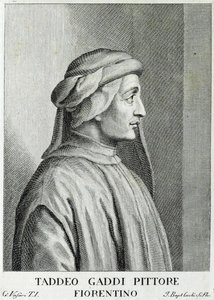
Taddeo Gaddi

Italian Born in Florence Early Renaissance Wikipedia in 23/32 languages

Taddeo Gaddi

As one of the most distinguished pupils of the legendary Giotto di Bondone, Gaddi did not merely inherit a style; he expanded the visual vocabulary of his era.

Pupil of Giotto #1

Signature works · The 100 signature works

7of 12

Bernardo Daddi

Italian Born in Florence Early Renaissance Wikipedia in 17/32 languages

Bernardo Daddi

Daddi’s precise birthdate remains shrouded in some mystery, though records indicate he was first mentioned in 1312. His initial works demonstrate a clear connection to Giotto’s followers – masters like the “Master of Santa Cecilia” and other Florentine painters of the first quarter of the 14th century—reflecting a direct lineage of artistic influence. His last known work dates back to 1347, and sadly, he passed away shortly thereafter.

Pupil of Giotto #1

Signature works · The 100 signature works

8of 12

Andrea Pisano

Italian Born in Pontecorvo Gothic

Andrea Pisano

Born in Pontecorvo, Lazio, Pisano’s early life remains shrouded in some mystery, though he honed his craft initially as a goldsmith before dedicating himself wholeheartedly to sculpting around 1300 under the tutelage of Mino di Giovanni. The four colossal panels depicting prophets—Isaiah, Jeremiah, Ezekiel, and Daniel—are considered among the finest examples of Gothic sculpture in Italy.

Signature works · The 100 signature works

9of 12

Giovanni da Milano

Italian Born in Lombardy Proto-Renaissance

Giovanni da Milano

He wasn't merely a copyist, however; rather, he absorbed Giotto’s innovations—the emphasis on naturalistic representation, emotional expressiveness, and spatial depth—and filtered them through his own artistic sensibility. He wasn’t working in isolation; Giovanni collaborated with other prominent artists of the time, including Giottino— Giotto's own son—and the sons of Taddeo Gaddi, further exposing him to cutting-edge artistic approaches and contributing to his stylistic development.

Signature works · The 100 signature works

10of 12

Giovanni Pisano

Italian Born in Pisa Gothic & Roman blend

Giovanni Pisano

The true blossoming of Giovanni Pisano’s individual genius is marked by a palpable shift away from the serene echoes of his father's work. It was here that Giovanni began to weave together disparate threads of history: the soaring verticality of French Gothic architecture mingling with the robust, classical dignity drawn from ancient Roman art. By confidently blending the soaring spirituality of Gothic design with the grounded musculature and idealized forms of Roman antiquity, Giovanni Pisano forged a visual language that bridged the medieval world toward the burgeoning Renaissance.

Signature works · The 100 signature works

11of 12

Arnolfo Di Cambio

Chinese Born in Colle Val D'Elsa Yuan Dynasty painting

Arnolfo Di Cambio

He possessed the rare ability to bridge disparate historical styles—the weight of Roman antiquity, the soaring aspiration of the Gothic period, and the nascent humanism that would blossom into the Renaissance.

Signature works · The 100 signature works

12of 12

Luca Di Tommè

Italian Born in Siena Sienese Proto Renaissance Wikipedia in 9/32 languages

Luca Di Tommè

His most celebrated works include “ Virgin and Child with Saints,” a poignant depiction of the Madonna surrounded by a haloed assembly of holy men, and “ Virgin and Child with Sts. Louis of Toulouse and Michael,” which showcases his skill in rendering delicate drapery and conveying a sense of serene spirituality. He was undoubtedly influenced by the pioneering work of Duccio, Simone Martini, Pietro Lorenzetti, and Ambrogio Lorenzetti – artists who had revolutionized painting with their innovative use of color, perspective, and emotional expression.

Signature works · The 100 signature works

Signature works

Signature Proto-renaissance works

  1. Lamentation (The Mourning of Christ) by Giotto

    Lamentation (The Mourning of Christ)

    Giotto

    1306

  2. Maestà (Madonna with Angels and Saints) by Duccio di Buoninsegna

    Maestà (Madonna with Angels and Saints)

    Duccio di Buoninsegna

    1308 · Museo dell'Opera del Duomo, Siena

  3. The Mocking of Christ by Cimabue

    The Mocking of Christ

    Cimabue

    1280 · The Louvre, Paris

  4. Saint Elizabeth of Hungary by Ambrogio Lorenzetti

    Saint Elizabeth of Hungary

    Ambrogio Lorenzetti

    1333 · Isabella Stewart Gardner Museum, Boston

  5. The Apostles Saint Andrew and Saint James the Lesser, with a Prophet by Pietro Lorenzetti

    The Apostles Saint Andrew and Saint James the Lesser, with a Prophet

    Pietro Lorenzetti

    1328 · Yale University Art Gallery, New Haven

  6. Two Apostles Saints by Taddeo Gaddi

    Two Apostles Saints

    Taddeo Gaddi

    1320 · Collezione Vittorio Cini, Venice

  7. Madonna and Child Enthroned with Saints by Bernardo Daddi

    Madonna and Child Enthroned with Saints

    Bernardo Daddi

    1339 · Minneapolis Institute of Art

  8. Sculpture by Andrea Pisano

    Sculpture

    Andrea Pisano

    1336 · Museo dell'Opera del Duomo, Florence

A timeline

Proto-renaissance through its signature works

  1. 1280
  2. 1280
  3. 1306
  4. 1308
  5. 1310
  6. 1320
  7. 1328
  8. 1333
  9. 1336
  10. 1339
  11. 1362

Figures

The figures

Country of birth
Italy12
Decade of birth
1240s3
1250s1
1260s1
1280s1
1290s3
1300s1
1330s1
1340s1
Museums holding their key works
Museo dell'Opera del Duomo3
Galleria degli Uffizi3
Harvard Art Museums3
National Gallery of Art2
The Louvre2
Isabella Stewart Gardner Museum1
Palazzo Pubblico1
Yale University Art Gallery1

Every name

List of 12 famous Proto-renaissance artists, every name

  1. 1GiottoGiotto1267–1337
  2. 2Duccio di BuoninsegnaDuccio di BuoninsegnaItalian · 1255–1319
  3. 3CimabueCimabue1240–1302
  4. 4Ambrogio LorenzettiAmbrogio LorenzettiItalian · 1290–1348
  5. 5Pietro LorenzettiPietro LorenzettiItalian · 1280–1348
  6. 6Taddeo GaddiTaddeo GaddiItalian · 1300–1366
  7. 7Bernardo DaddiBernardo DaddiItalian · 1290–1348
  8. 8Andrea PisanoAndrea PisanoItalian · 1290–1348
  9. 9Giovanni da MilanoGiovanni da MilanoItalian · 1346–1369
  10. 10Giovanni PisanoGiovanni PisanoItalian · 1248–1318
  11. 11Arnolfo Di CambioArnolfo Di CambioChinese · 1245–1310
  12. 12Luca Di TommèLuca Di TommèItalian · 1330–1389

Questions

Your questions

  • Which Proto-renaissance artist is the most famous?

    First place goes to Giotto (#1); Duccio di Buoninsegna (#2) and Cimabue (#3) complete the podium.

  • Who are the 5 most famous Proto-renaissance artists?

  • Who was the first Proto-renaissance artist?

    The earliest-born artist in this list is Cimabue (#3), born in 1240.

  • Who are the most famous Proto-renaissance artists from Italy?

    The highest-ranked artists born in Italy are Giotto (#1), Duccio di Buoninsegna (#2), Cimabue (#3), Ambrogio Lorenzetti (#4) and Pietro Lorenzetti (#5).

  • Who taught the famous Proto-renaissance artists?

    Giotto (#1) taught Taddeo Gaddi (#6), Bernardo Daddi (#7) and Pietro Lorenzetti (#5); Cimabue (#3) taught Giotto (#1).

  • Where are the great works of Proto-renaissance art today?

    The museums holding the most key works of this list are Museo dell'Opera del Duomo (3), Galleria degli Uffizi (3) and Harvard Art Museums (3).

  • In which period did Proto-renaissance art flourish?

    Most artists in this list were born in the 1240s (3 of 12), between 1240 and 1346 overall.

  • Which city was home to the most Proto-renaissance artists?

    Siena: 4 of the artists in this list were born there.

  • Which techniques define Proto-renaissance art?

    “This work required a different kind of precision than the frescoes of his youth, dealing with the permanence of stone and glass to shape a sacred space.” — from our biography of Giotto (#1).

  • Where can I see more works by these artists?

    Our catalogue holds 1,279 works by these artists.

Read

Stories on OriginalUniqueArt.com

Other movements

Famous artists of other movements

Other periods

Famous artists across the periods

Famous paintings

Masterpieces that inspire us, by movement

Discover more

More artists to discover