Neo-expressionist, one artist at a time

13 Famous Neo-expressionist Artists Who Shaped the Movement

Jean Michel Basquiat (1960–1988) is the most famous Neo-expressionist artist, whose singular vision gave us Hollywood Africans in Front of the Chinese and Untitled (ernok). Next stand Anselm Kiefer, Cy Twombly, Julian Schnabel and Georg Baselitz. These 13 artists, from Philip Guston (born 1913) to Chris Ofili (born 1968), came from 5 countries.

Our selection. Artists whose works our catalogue attaches to Neo-expressionist, in the order of our fame ranking. Artists born after 1955 with no Wikidata identifier stay out until verified. The Wikipedia figure counts our 32 languages with an article on the artist.

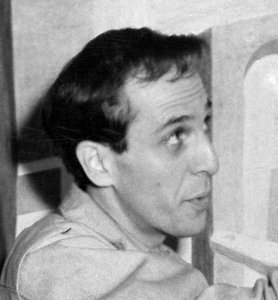
  1. Hollywood Africans in Front of the Chinese by Jean Michel Basquiat1Jean Michel Basquiat
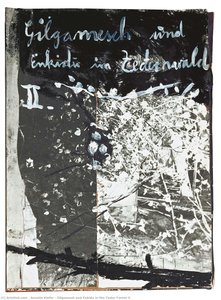
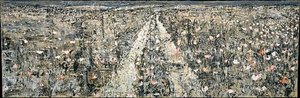
  2. Böhmen liegt am Meer (Bohemia Lies by the Sea) by Anselm Kiefer2Anselm Kiefer
  3. Cold Stream by Cy Twombly3Cy Twombly

In brief

Neo-expressionist in brief

  • 13Artists
  • 1913–1968Years of birth
  • 5Countries of birth
  • 1Women
  • 5Living artists
  • 545Works in our catalogue
Cities with most births
Park Slope (1), Donaueschingen (1), Lexington (1), Brooklyn (1)
The women of this list
Jennifer Bartlett

One artist at a time

13 Neo-expressionist Artists and their signature works

1of 13

Jean Michel Basquiat

American Born in Park Slope Neo-Expressionism Wikipedia in 29/32 languages

Jean Michel Basquiat

By the early 1980s, Basquiat transitioned from graffiti to canvas, rapidly gaining recognition within the New York art world. He became a central figure in the Neo- Expressionist movement, though he resisted easy labeling. In the years since his death, Basquiat’s reputation has only grown.

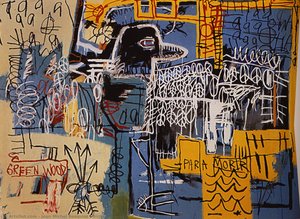
Signature works · The 100 signature works

2of 13

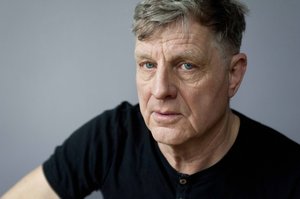
Anselm Kiefer

German Born in Donaueschingen Neo-Expressionism Wikipedia in 23/32 languages

Anselm Kiefer

As his career progressed, Kiefer’s international recognition grew through works that challenged the boundaries between painting, sculpture, and installation.

Signature works · The 100 signature works

3of 13

Cy Twombly

American Born in Lexington Abstract Expressionism, Postmodern Wikipedia in 21/32 languages

Cy Twombly

Throughout the 1960s, Twombly’s style began to coalesce around a distinctive vocabulary of scribbled lines, gestural marks, and fragmented words on expansive canvases. Cold Stream (1966), with its swirling loops and bold text, is a powerful example of this evocative style. He paved the way for painters like Jean-Michel Basquiat, Anselm Kiefer, Francesco Clemente, and Julian Schnabel, who embraced a similar spirit of experimentation and emotional intensity.

Signature works · The 100 signature works

4of 13

Julian Schnabel

American Born in Brooklyn Neo-Expressionism

Julian Schnabel

Ornamental Despair, The Student of Prague, and Fakires exemplify this early period, showcasing a bold rejection of minimalist austerity in favor of maximalist expression. This approach aligned him with the burgeoning Neo- Expressionist movement, a reaction against the conceptual rigor of the preceding decades, which prioritized subjective experience and emotional resonance. Notable Works: Plate Paintings, Basquiat (film), The Diving Bell and the Butterfly (film).

Signature works · The 100 signature works

5of 13

Georg Baselitz

German Born in Deutschbaselitz Neo-Expressionism Wikipedia in 26/32 languages

Georg Baselitz

Throughout his prolific career, Baselitz’s artistic language has been a complex tapestry woven from myriad influences, ranging from the starkness of Socialist Realism and the dramatic tension of Mannerism to the primal rhythms of African sculpture.

Signature works · The 100 signature works

6of 13

Philip Guston

Canadian-American Born in Montreal ['Abstract Expressionism', 'Neo-Expressionism'] Wikipedia in 15/32 languages

Philip Guston

He later embraced abstraction, becoming a prominent figure in the New York School alongside artists like Jackson Pollock and Willem de Kooning. Abstract Expressionism: By the 1950s, Guston achieved recognition for his abstract expressionist paintings, characterized by dynamic compositions and gestural brushwork. His father, a Ukrainian Jewish immigrant, took his own life in 1923.

Signature works · The 100 signature works

7of 13

Chris Ofili

British Born in Manchester Punk art Wikipedia in 10/32 languages

Chris Ofili

His recognition as a member of the Young British Artists group brought him to the forefront of a generation that redefined contemporary painting. A defining moment in his career arrived in 1998 when he was awarded the prestigious Turner Prize, an achievement that highlighted his ability to spark intense public debate through works such as The Holy Virgin Mary.

Signature works · The 100 signature works

8of 13

Richard John Spare

Born in London

Richard John Spare

He has since created a vast body of work comprising over 400 images, primarily inspired by nature and travel. Spare’s works frequently depict wildlife, landscapes, and scenes encountered during his travels, rendered with expressive lines and subtle color palettes. His dedication to traditional printmaking techniques and his commitment to quality have helped preserve this valuable art form.

Signature works · The 100 signature works

9of 13

Rainer Fetting

German Born in Wilhelmshaven Neo-Expressionism Wikipedia in 6/32 languages

Rainer Fetting

Initially, his paintings focused on Berlin cityscapes – gritty, angular representations of buildings and streets that reflected the city's post-war reconstruction and political climate. He also explored portraiture and figurative compositions, often depicting individuals within these urban settings. Beyond painting, Fetting also received notable commissions, creating sculptures for prominent locations like the Willy Brandt House in Berlin and portraits of influential figures such as Henri Nannen and Helmut Schmidt.

Signature works · The 100 signature works

10of 13

Richard Spare

British Printmaking, Oil painting

Richard Spare

Richard John Spare, born in Chelmsford in 1951, embarked on a journey that would establish him as a pivotal figure in British printmaking and a celebrated artist in his own right. Following college, Spare's apprenticeship with Thomas Ross & Son proved invaluable. In 2025, the Open University bestowed upon him an Honorary Doctorate, recognizing his significant “Services to the Arts.” His works now reside in esteemed public collections including the Victoria & Albert Museum, British Library, and Hunterian Art Gallery, cementing his place within the canon of contemporary British art.

Signature works · The 100 signature works

11of 13

Anthony Sims

American Neo-expressionism, Glitch art

Anthony Sims

What sets Sims apart is not just his artistic vision but also his technical background. His interest in blockchain technology extends beyond mere artistic application, envisioning an NFT museum in Memphis dedicated to showcasing local talent and bridging the gap between physical and digital artworks.

Signature works · The 100 signature works

12of 13

Thiago Boecan

Brazilian ['Neo-Figurative Art', 'Abstract Art']

Thiago Boecan

The influence of Brazilian Neo- Figurative Art is palpable – a movement known for its psychological intensity and exploration of the human condition. This process often involves a captivating interplay of vibrant reds and browns, as seen in works like ‘ Color Study C-1 ’, where color itself becomes a vehicle for exploring internal tensions.

Signature works · The 100 signature works

Signature works

Signature Neo-expressionist works

  1. Hollywood Africans in Front of the Chinese by Jean Michel Basquiat

    Hollywood Africans in Front of the Chinese

    Jean Michel Basquiat

    1983

  2. Böhmen liegt am Meer (Bohemia Lies by the Sea) by Anselm Kiefer

    Böhmen liegt am Meer (Bohemia Lies by the Sea)

    Anselm Kiefer

    1996

  3. Cold Stream by Cy Twombly

    Cold Stream

    Cy Twombly

    1966

  4. Ornamental Despair by Julian Schnabel

    Ornamental Despair

    Julian Schnabel

  5. Supper in Dresden by Georg Baselitz

    Supper in Dresden

    Georg Baselitz

    1983 · Kunsthaus Zürich, Zurich

  6. The Pit by Philip Guston

    The Pit

    Philip Guston

    1976

  7. The Holy Virgin Mary by Chris Ofili

    The Holy Virgin Mary

    Chris Ofili

    1996 · MOMA - Museum of Modern Art, New York City

  8. Puffin Pair by Richard John Spare

    Puffin Pair

    Richard John Spare

    2010

A timeline

Neo-expressionist through its signature works

  1. 1966
  2. 1976
  3. 1983
  4. 1983
  5. 1983
  6. 1991
  7. 1996
  8. 1996
  9. 2010

Figures

The figures

Every name

List of 13 famous Neo-expressionist artists, every name

  1. 1Jean Michel BasquiatJean Michel BasquiatAmerican · 1960–1988
  2. 2Anselm KieferAnselm KieferGerman · born 1945
  3. 3Cy TwomblyCy TwomblyAmerican · 1928–2011
  4. 4Julian SchnabelJulian SchnabelAmerican · born 1951
  5. 5Georg BaselitzGeorg BaselitzGerman · 1938–2026
  6. 6Philip GustonPhilip GustonCanadian-American · 1913–1980
  7. 7Chris OfiliChris OfiliBritish · born 1968
  8. 8Richard John SpareRichard John Spareborn 1951
  9. 9Rainer FettingRainer FettingGerman · born 1949
  10. 10Richard SpareRichard SpareBritish ·
  11. 11Anthony SimsAnthony SimsAmerican ·
  12. 12Thiago BoecanThiago BoecanBrazilian ·
  13. 13Jennifer BartlettJennifer BartlettAmerican · 1941–2022

Questions

Your questions

  • Which Neo-expressionist artist is the most famous?

    First place goes to Jean Michel Basquiat (#1); Anselm Kiefer (#2) and Cy Twombly (#3) complete the podium.

  • Who are the 5 most famous Neo-expressionist artists?

  • Who are the most famous female Neo-expressionist artists?

    This list includes 1 women: Jennifer Bartlett (#13).

  • Where were most Neo-expressionist artists born?

    United States: 3 of the 13 artists in this list were born there, then Germany (3) and United Kingdom (2).

  • Who are famous Neo-expressionist artists today?

    The highest-ranked living artists in this list are Anselm Kiefer (#2), Julian Schnabel (#4), Chris Ofili (#7), Richard John Spare (#8) and Rainer Fetting (#9).

  • Which techniques define Neo-expressionist art?

    “Kiefer’s technique is characterized by an intense, thick impasto layering.” — from our biography of Anselm Kiefer (#2).

  • In which period did Neo-expressionist art flourish?

    Most artists in this list were born in the 1940s (3 of 13), between 1913 and 1968 overall.

  • Who was the first Neo-expressionist artist?

    The earliest-born artist in this list is Philip Guston (#6), born in 1913.

  • Where are the great works of Neo-expressionist art today?

    The museums holding the most key works of this list are Solomon R. Guggenheim Museum (1), Guggenheim Museum Bilbao (1) and Albertina Klosterneuburg (1).

  • Where can I see more works by these artists?

    Our catalogue holds 545 works by these artists.

Read

Stories on OriginalUniqueArt.com

Other movements

Famous artists of other movements

Other periods

Famous artists across the periods

Famous paintings

Masterpieces that inspire us, by movement

Discover more

More artists to discover